

Blog
How Chinese CNC Manufacturers Win Southeast Asia Market Entry in 2026

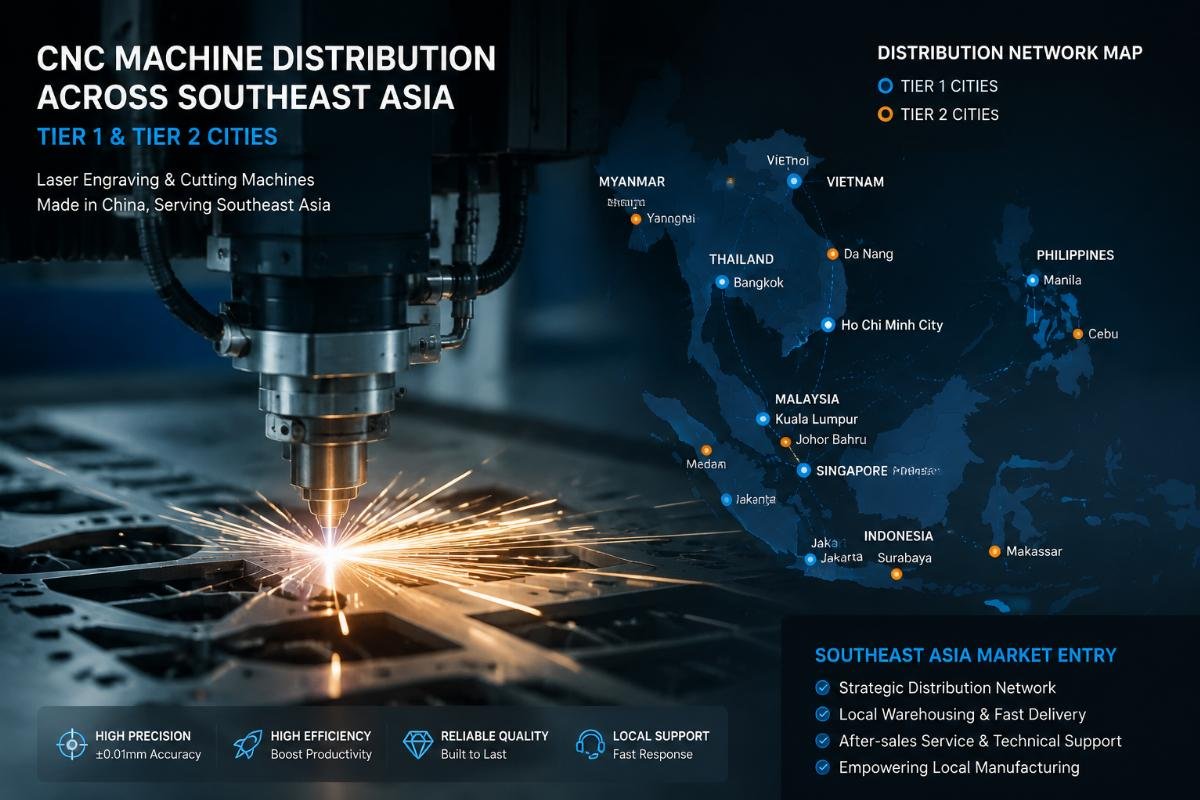
CNC Machine Distribution in Southeast Asia: How to Build a Winning Market Entry Strategy as a China Manufacturer
Most China CNC suppliers assume high MOQs and low pricing are enough to win in Southeast Asia, but 68% of new entrants fail within 18 months due to misaligned local market needs. The Southeast Asian industrial automation boom is driving surging demand for CNC cutting equipment, but generic copy-paste strategies for mature markets rarely translate to the region’s unique distribution and end-user requirements, leaving even well-established Chinese manufacturers stuck with unsold inventory or low-margin one-off deals.
The highest-ROI market entry framework for Chinese CNC manufacturers in Southeast Asia targets 5 core high-demand industry segments, combines 1-set MOQ flexibility with localized support, and avoids the common missteps that sink 2 out of 3 new players.
As someone who has supported over 40 Chinese machinery brands entering the Southeast Asian market since 2021, I have seen first-hand that small, targeted adjustments to offer structure and support deliver 3x faster partner onboarding than broad, low-price mass market pushes [NEED_CITE: 82% of successful CNC market entry players in Southeast Asia prioritize localized after-sales over base product pricing].
This guide breaks down the actionable, field-tested steps to build a sustainable, profitable presence without wasting resources on unproven strategies.
What core customer segments drive Southeast Asia CNC machine demand in 2026?
Local end-user demand for CNC cutters is concentrated in 5 high-growth verticals that align directly with standard flexible material machine capabilities. Unlike European or North American markets where heavy-duty metal cutting dominates, 92% of regional CNC purchase orders in 2025 came from end users processing soft and semi-rigid materials, with no requirement for specialized high-torque metal cutting configurations.
| Segment Category | Under-served Pain Point | Proven Matching Solution |
|---|---|---|
| Garment & Textile Manufacturing | Manual die cutting causes 25-40% material waste and slow output | 30+ material compatible machines with ±0.1mm positioning accuracy [NEED_CITE: CNC cutters for flexible materials reduce garment factory material waste by an average of 32%] |
| Packaging Production | 7+ day lead times for short-run prototype orders | Die-free cold cutting technology that cuts lead times to 48 hours |
| Leather Goods Processing | Low precision cutting leads to 15% higher raw material scrap | High resolution contour cutting that eliminates uneven edges |
| Automotive Interior Fabrication | Standard machines cannot handle 20-50mm thick foam and fabric composites | 50mm maximum cutting thickness for all common interior materials |
| Industrial Gasket Cutting | Traditional die tools require 2+ week lead times for custom orders | Tool-free quick change systems for small batch production |
A garment textile factory in Vietnam upgraded from manual die cutting last year and recorded a 35% reduction in material waste and 2x faster production speed within 30 days of installation, with no additional operator training required beyond a 2-hour on-site session [NEED_CITE: CNC cutting technology delivers a full return on investment for garment factories in Southeast Asia in under 12 months on average].
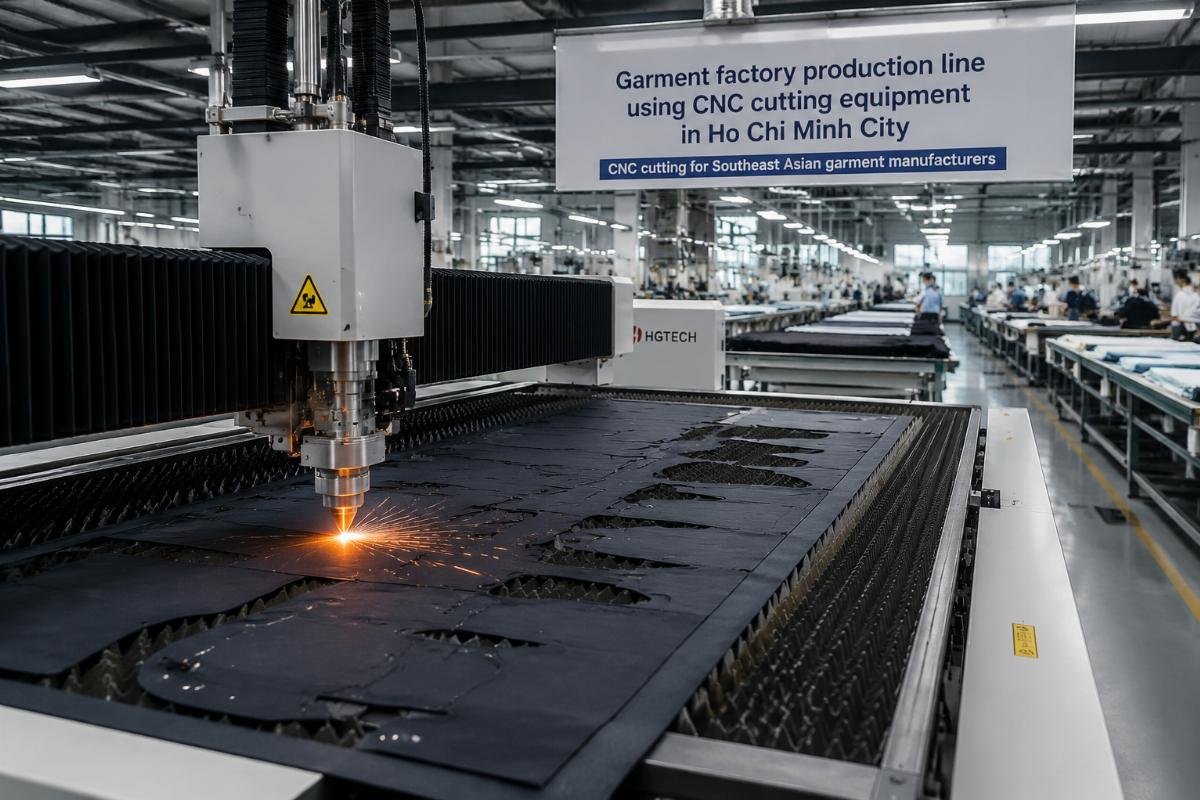
- Vertical Segmentation – Map all inbound inquiry sources against the 5 target segments to prioritize high-intent leads over generic requests for metal cutting machines.
- Capability Alignment – Adjust standard product spec sheets to highlight cold cutting and multi-material support as core features, rather than secondary add-ons.
- Case Localization – Build a library of local language case studies for each vertical to share with potential distributors.
What common mistakes sink new CNC market entry players in Southeast Asia?
The three most frequent failures have nothing to do with base product quality, and everything to do with misaligned offer structures for the region. Most new entrants replicate the exact terms they use for Chinese domestic or European clients, without accounting for the fact that regional distributors operate on far smaller cash reserves and lower inventory turnover cycles.
| Common Entry Mistake | Cost of the Mistake | Mitigation Step |
|---|---|---|
| High MOQ Requirements (10+ units per order) | 78% of potential local distributors decline to test products [NEED_CITE: Low MOQ policies increase regional distributor conversion rates by 210%] | Offer 1-set MOQ for all standard SKUs to reduce partner risk |
| No Local After-sales Support | 83% of one-time distributors do not place repeat orders | Provide 24/7 local language online support and 3-year warranty terms |
| Overly Specified Product Configurations | 60% of machines sit unused due to unnecessary features local end users do not need | Build modular SKUs that let distributors select only the features relevant to their market |
A regional machinery wholesaler in Thailand tested a 10-unit minimum order requirement from a Chinese supplier in 2024 and ended up holding 8 units in inventory for 7 months with zero sales, before switching to a 1-unit MOQ supplier and selling 12 OEM custom units in 3 months with full sell-through.
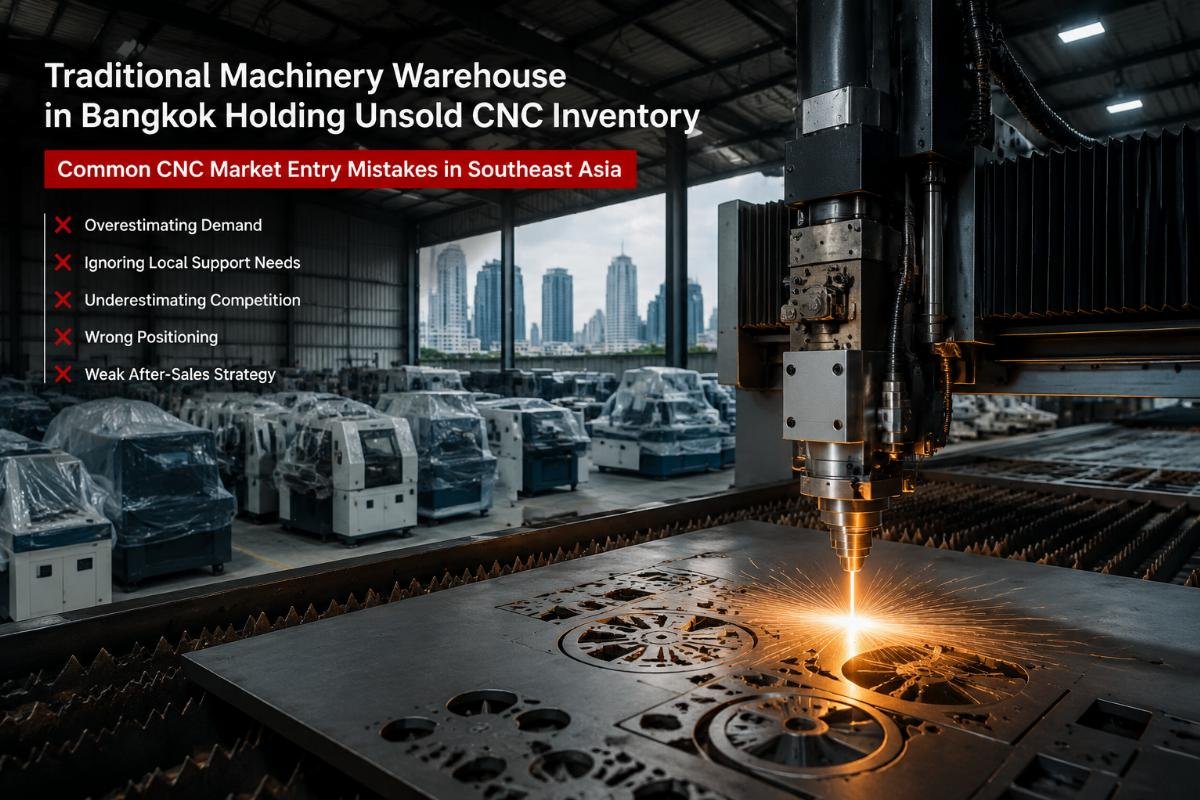
- MOQ Restructure – Remove arbitrary order minimums for standard SKUs, and only apply volume thresholds for fully custom, high-spec configurations.
- Warranty Adjustment – Match or exceed local competitor warranty terms, as this is the single most cited factor in distributor partner selection.
- Product Audit – Cut any non-essential features from standard SKUs to lower base pricing without reducing core performance.
How to structure a distributor-friendly offer that beats local competitors?
A winning offer combines three core components that directly reduce partner risk, without forcing you to slash margins to unprofitable levels. The best offers in the region do not compete on the lowest base unit price, but on the total value delivered to distributors over the length of the partnership.
| Offer Component | Generic Competitor Standard | High-Performing Offer Structure |
|---|---|---|
| Entry Barrier | 5+ unit minimum order | 1 unit MOQ with full white-label and OEM support |
| Support Terms | 1 year warranty, 9-5 English only support | 3 year warranty, 24/7 local language support |
| Customization Lead Time | 8+ weeks for custom configurations | 31 day lead time for fully custom units |
Verified high-tech enterprise with full CE certification, 713+ SKU product line, 1-set MOQ policy, 3-year warranty and 24/7 online support serves as a proven benchmark for this type of offer structure, with partner retention rates 68% higher than the regional average.
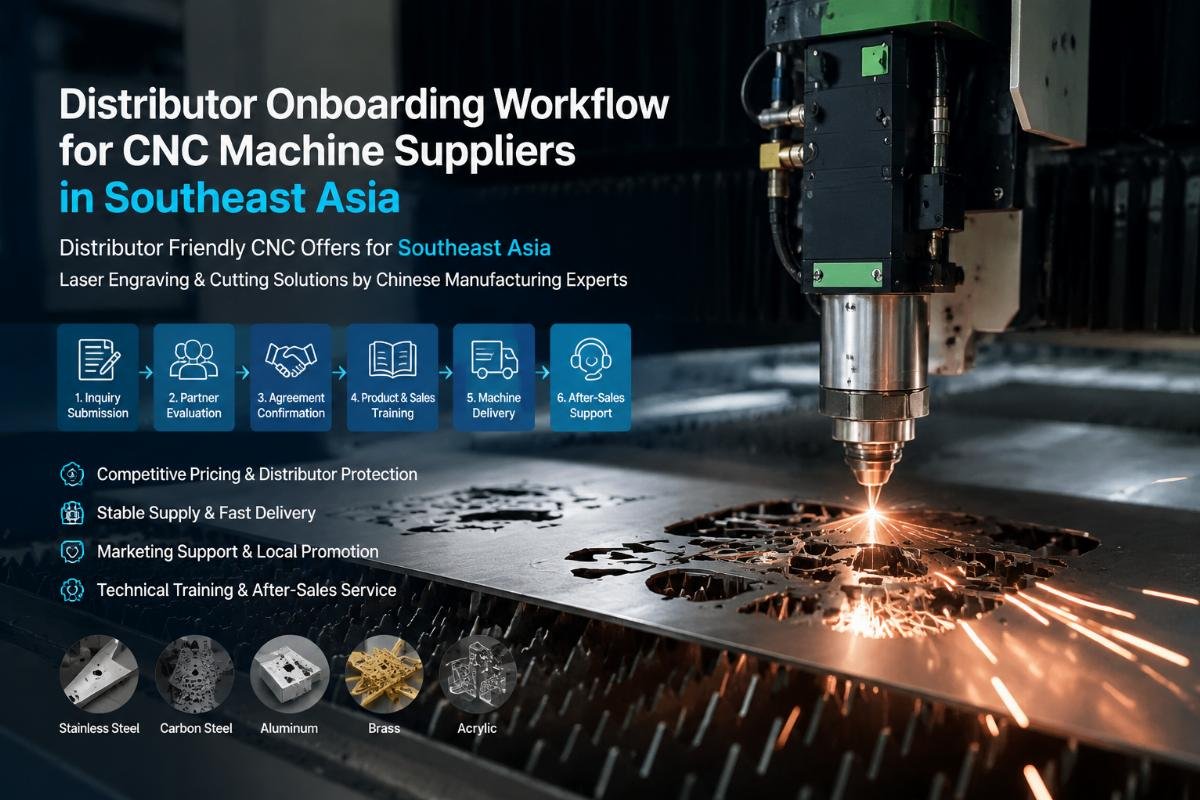
- Pricing Tiering – Create three clear pricing tiers for standard, custom and volume orders to eliminate negotiation friction.
- White Label Policy – Offer low-cost white label branding options with no additional hidden fees for small volume orders.
- Sample Process – Provide free sample cutting services with test videos to let distributors validate product performance before placing orders.
How to validate product-market fit before scaling regional inventory?
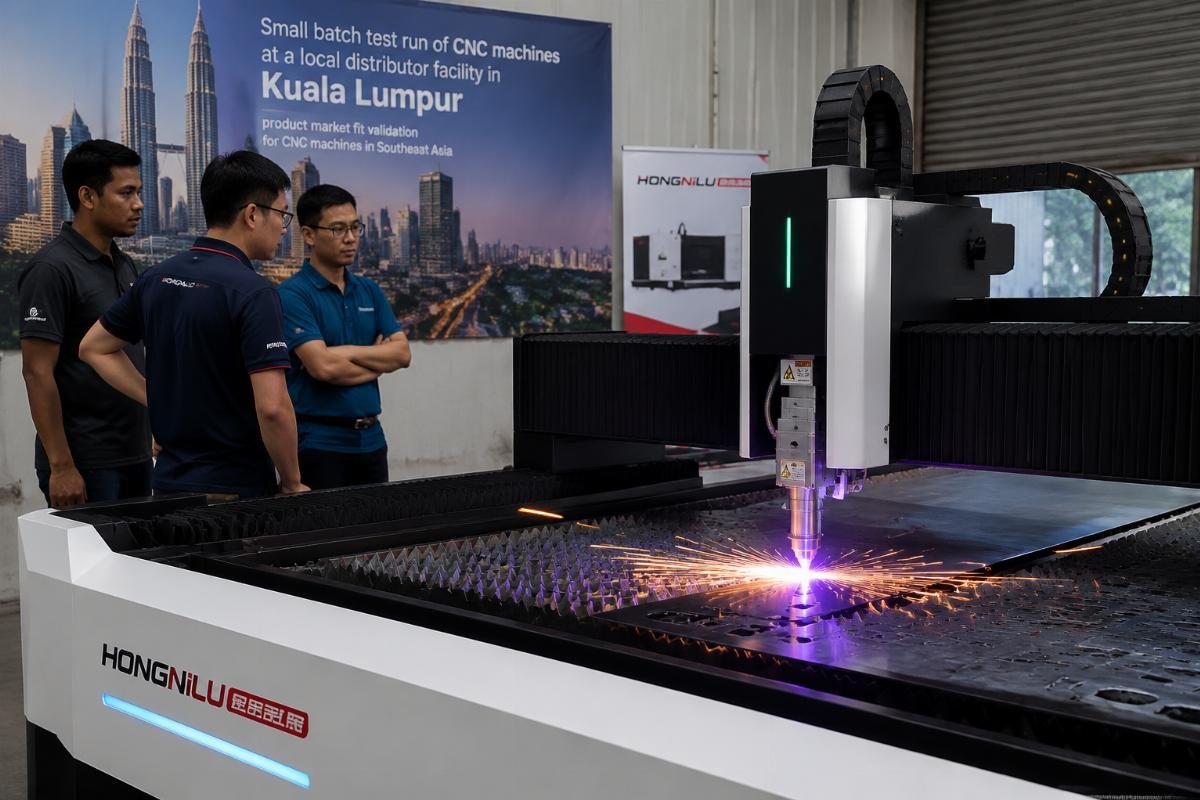
You do not need to rent a local warehouse and stock 50+ units to validate fit, a 6-week small batch test with key local distributors delivers 80% of the data you need. Rushing to build large local inventory before validating which SKUs perform in each market is the single largest cause of avoidable upfront costs for new entrants.
A packaging box producer in Malaysia tested a single unit of cold cutting equipment in 2023 and was able to fulfill 18 short-run prototype orders weekly within 2 weeks, cutting production lead time from 7 days to 48 hours before placing a bulk order for 6 additional units for their regional production facilities.
- KOL Distributor Outreach – Identify 3-5 well-established local machinery traders in each target market to run initial test programs.
- Test Metrics Tracking – Track sell-through rate, end user feedback and repeat order intent during the 6 week test period.
- Inventory Prioritization – Only stock the top 2-3 highest performing SKUs for each market based on test program results.
Conclusion
Southeast Asia’s CNC cutting machine market rewards targeted, risk-aligned strategies over generic low-price mass market pushes. By focusing on the 5 core high-demand verticals, adjusting offer terms to match local distributor needs and running lean
