




-
 Courier delivery
-
 DHL Courier delivery
-
 Warranty 1 year
-
 Free 30-Day returns

Voltage Confirmation Protocol — Every RT-D2516/RT-S2516 ships only after three photographed voltage label checks, preventing the three-week transformer delays that stall gasket production lines on site.
Technical Specifications
| Parameter | Value |
|---|---|
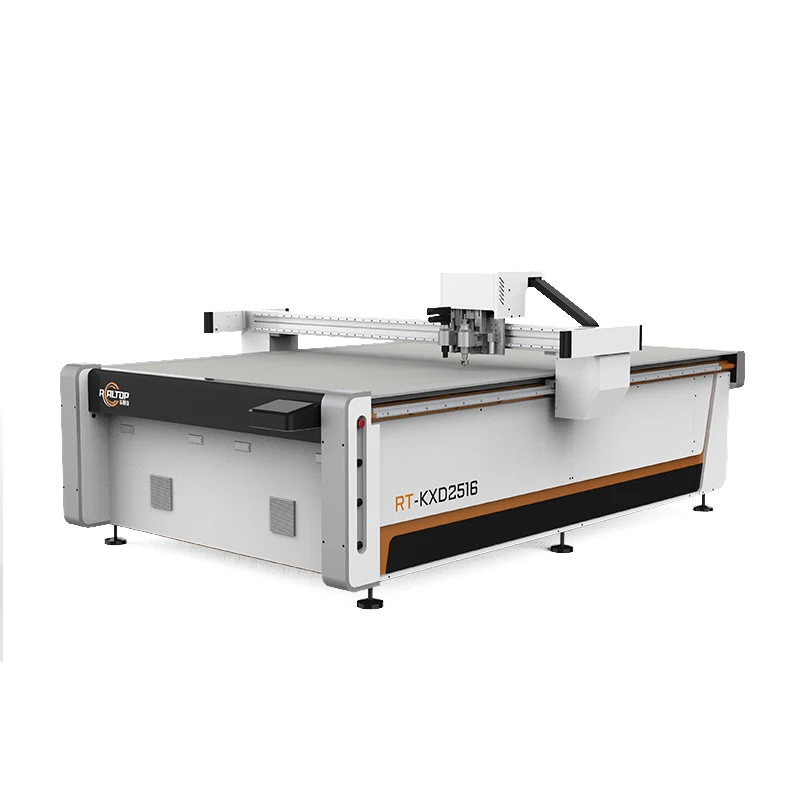
| Model | RT-D2516/RT-S2516 |
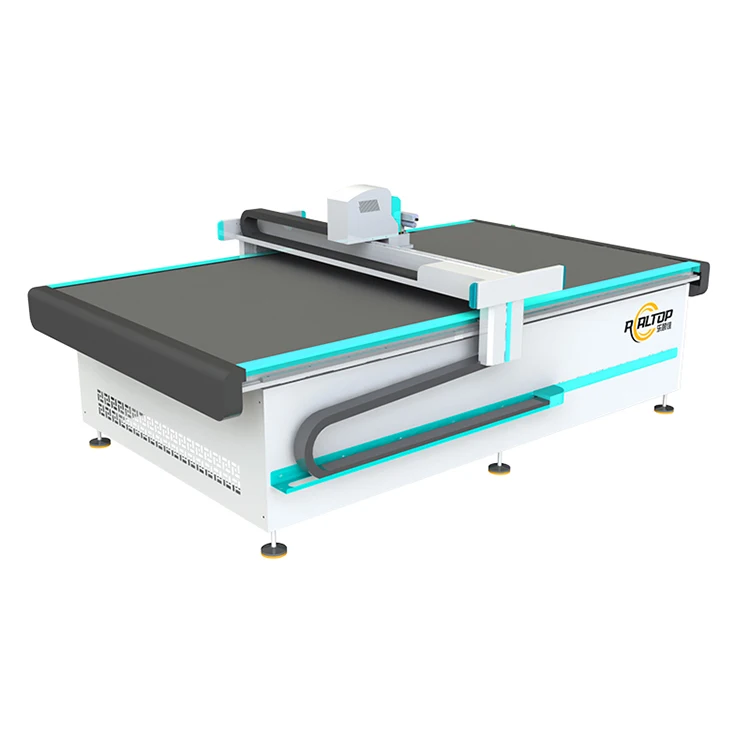
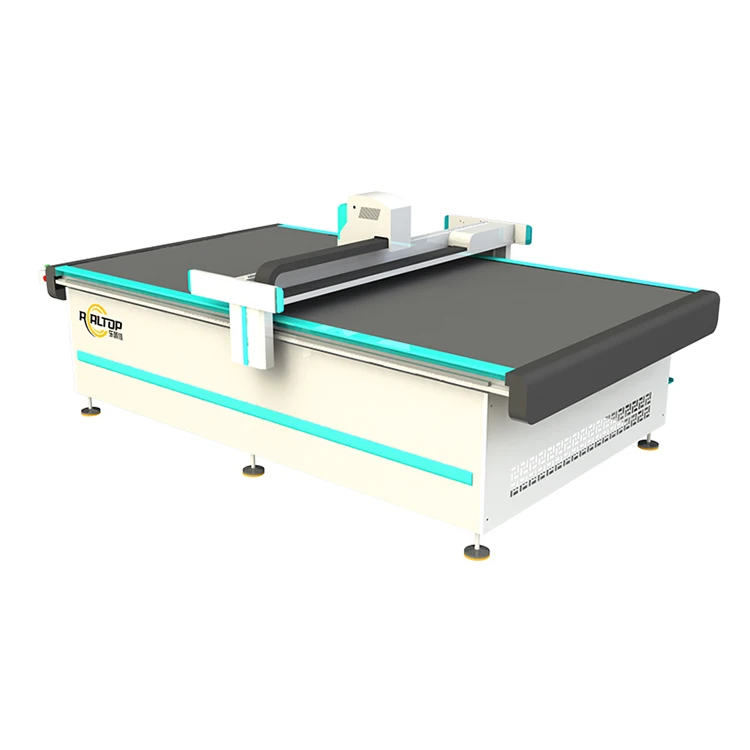
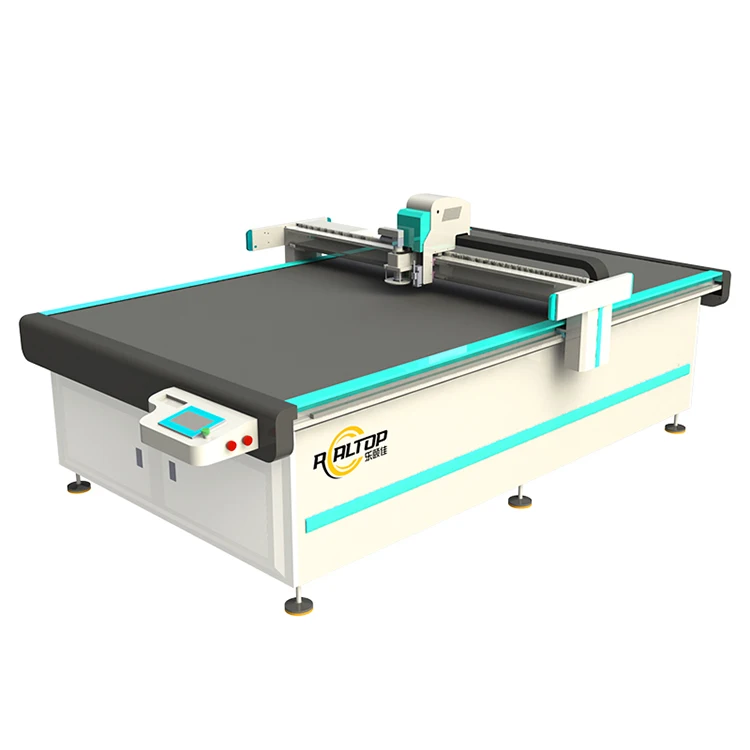
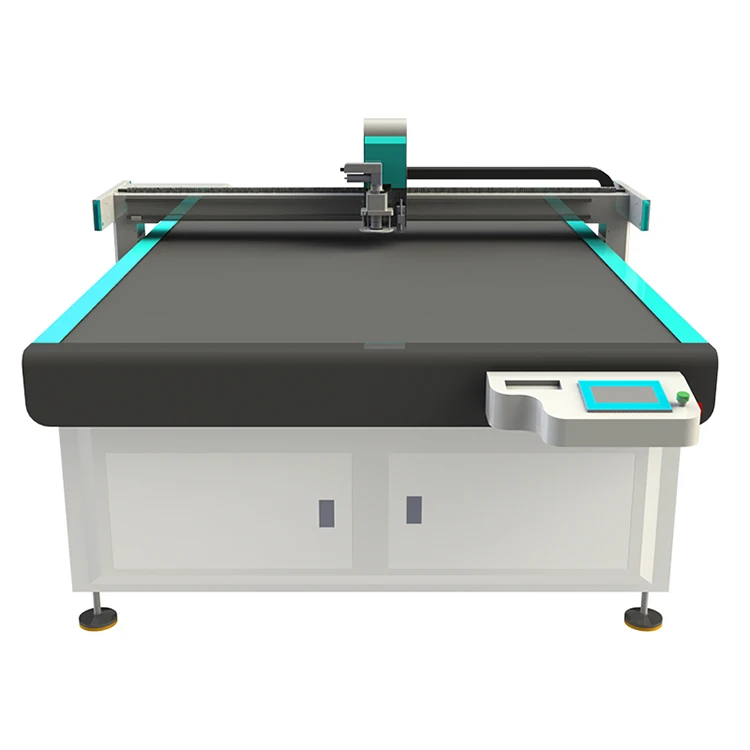
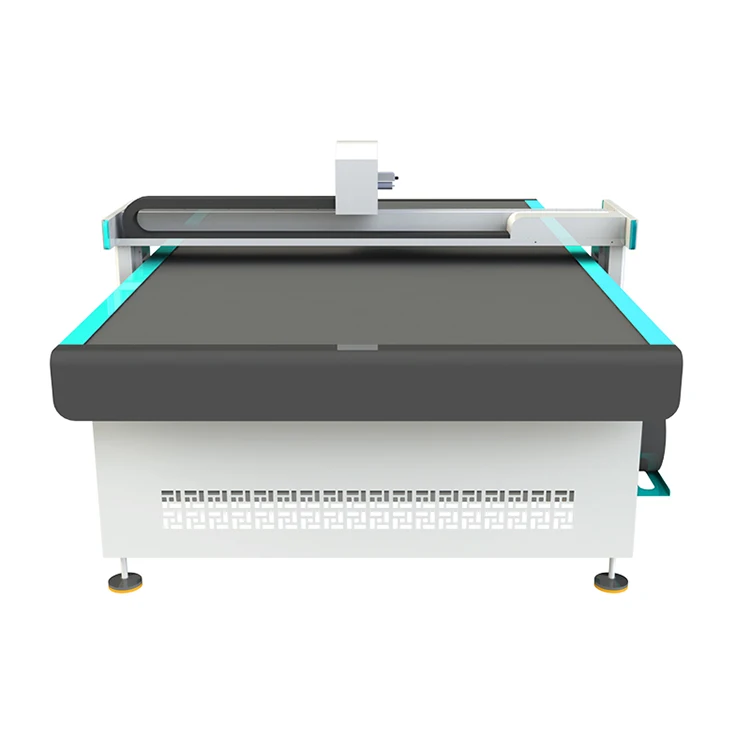
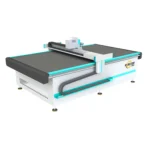
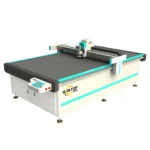
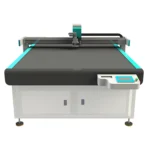
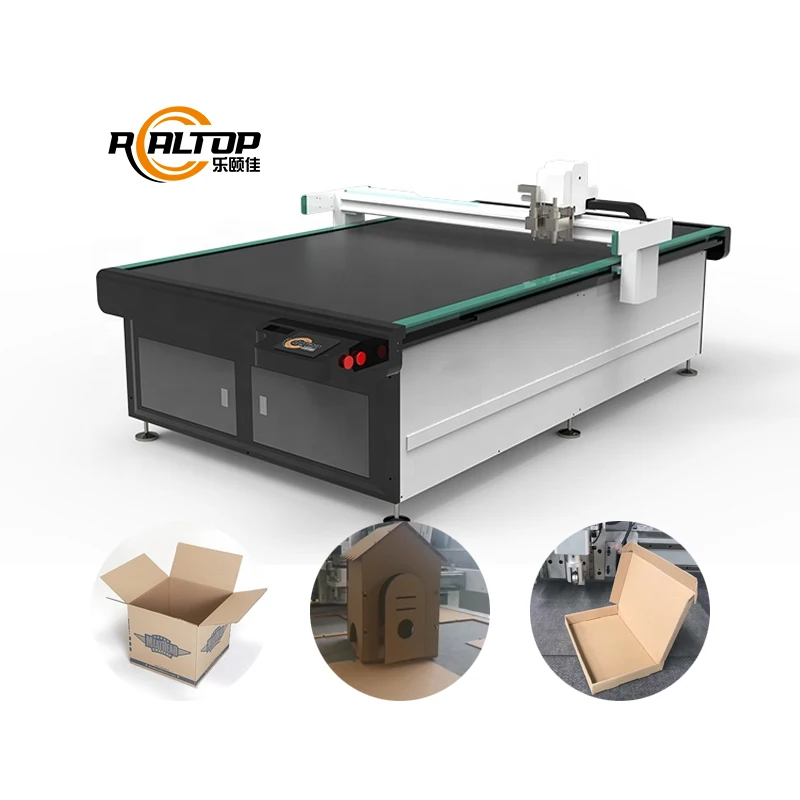
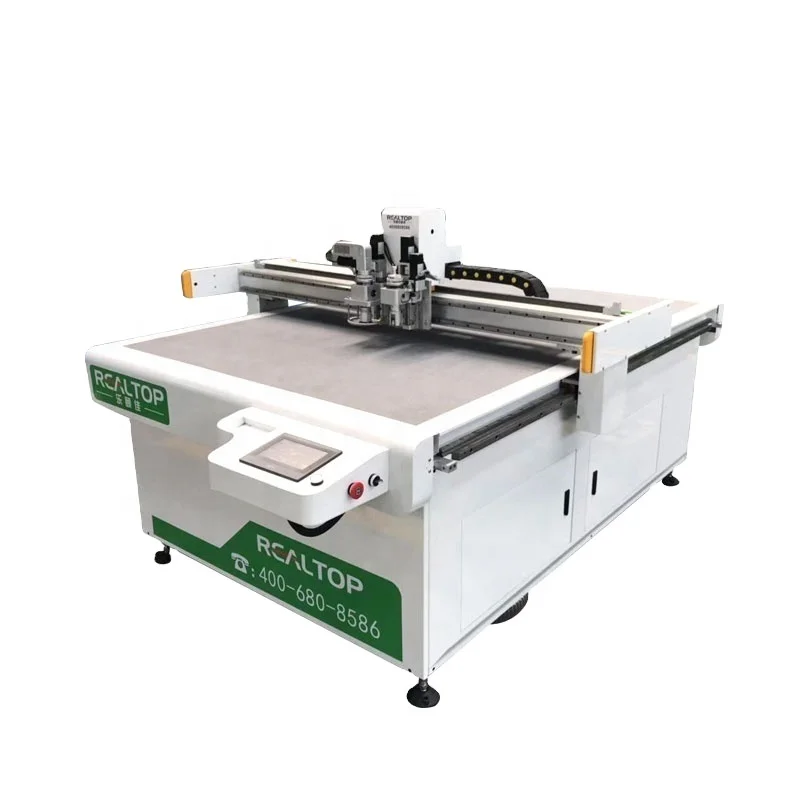
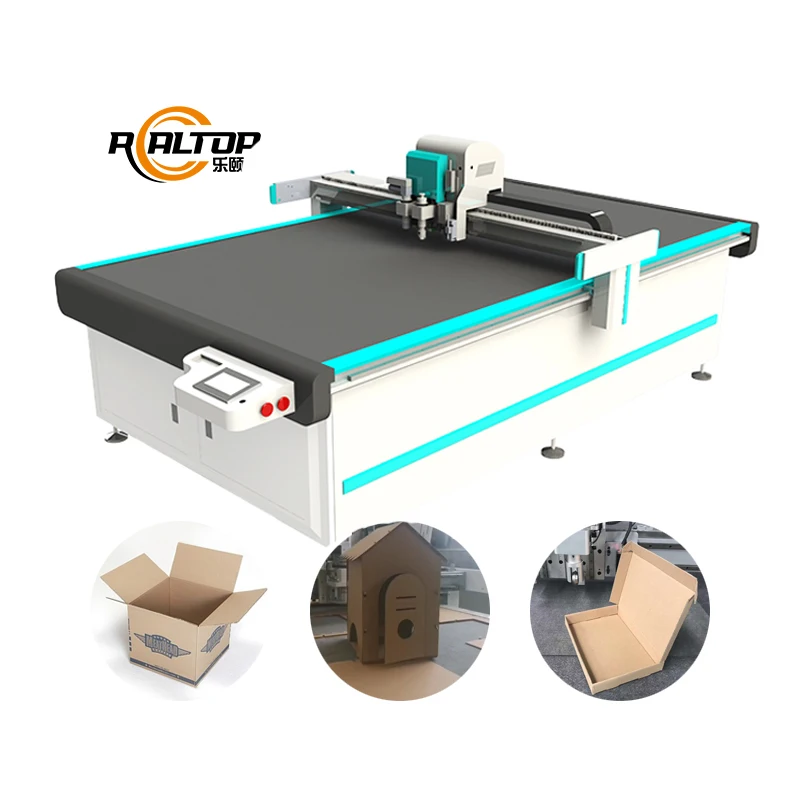
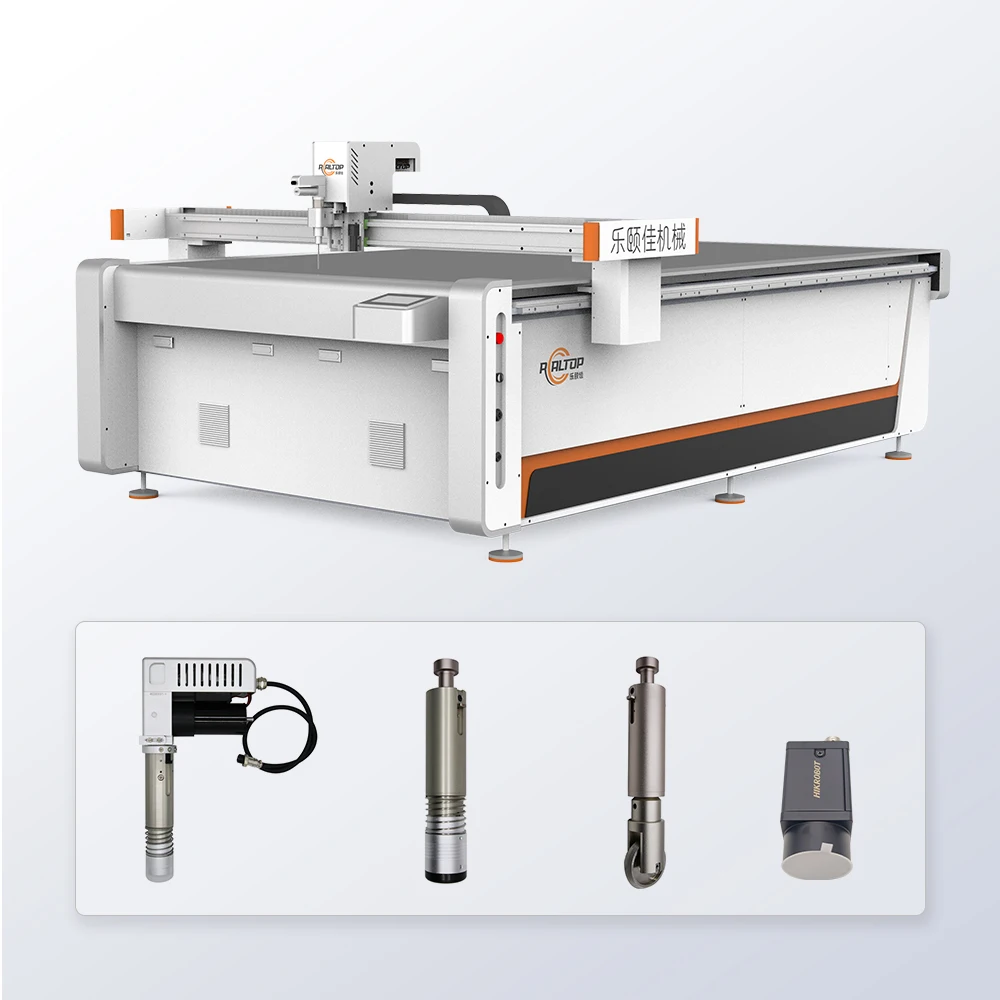
| Product Type | CNC Oscillating Knife Digital Cutting Machine |
| Working Area | 1600×2500 mm |
| Overall Dimensions (L×W×H) | 3450×2300×1250 mm |
| Rated Power | 9 kW |
| Vacuum Pump | 7.5 kW |
| Table Type | Flat working table with auto-feeding conveyor |
| Tool Head | Multifunctional head with Swiss imported knife (vibration full cut, half cut, cursor location) |
| Translational Velocity | 800–1200 mm/s |
| Cutting Speed | 200–800 mm/s (basis not stated in source — confirm material and thickness) |
| Repeated Accuracy | ≤0.1 mm |
| Servo Motor | Japanese Yaskawa |
| Guide Rail | Taiwan Hiwin |
| Transmission | Digital servo motor, linear guide, synchronous belt, imported ball screw |
| Instruction System | HP-GL compatible format |
| Voltage | 380V ±10% (customizable for export markets) |
| Safety Device | Infrared sensors |
| Conveyor Belt | Germany imported |
| Assembly State | Fully assembled before shipment |
| Warranty | 12 months for whole machine |
Application Suitability
| Application | Material or Output |
|---|---|
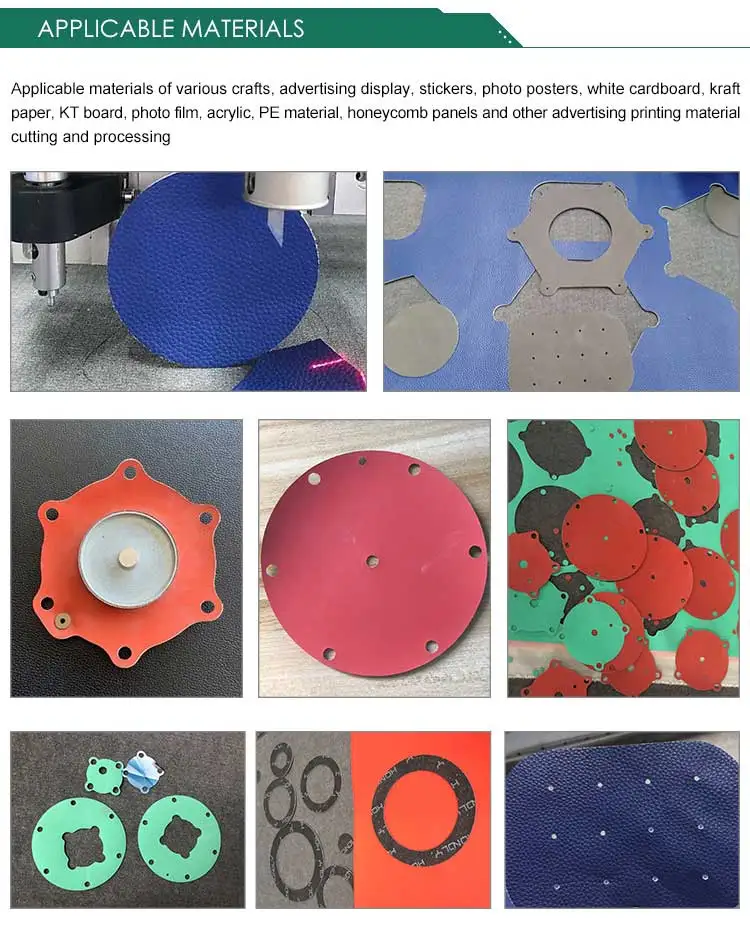
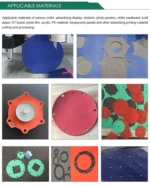
| Industrial gasket fabrication | Rubber, silicone, cork-rubber composites up to moderate thickness |
| Automotive sealing components | EPDM, neoprene, nitrile rubber sheets |
| Leather goods and footwear | Natural and synthetic leather, sponge composite leather |
| Flexible packaging and insulation | PVC, soft glass, silicon sheets |
| Garment and textile processing | Flexible clothing materials, multi-layer fabric lay |
| Foam and sponge conversion | Sponge, low-density foam for cushioning inserts |
Why the Voltage Question Must Precede the Cutting Test
Confirming site voltage before configuration prevents weeks of idle equipment on the factory floor.
A few years back I supervised the dispatch of an oscillating knife cutter to a gasket workshop in Lagos. The purchase order confirmed 380V, but the facility ran on a 415V industrial supply common across West Africa. The machine sat unpowered for three weeks while a step-down transformer was air-freighted in, and the buyer’s entire gasket order backlog piled up [NEED_CITE: voltage and frequency standards by export market]. That single mismatch cost more in downtime than the transformer itself. Now every RT-D2516/RT-S2516 leaves the floor only after the voltage label is photographed from three angles and signed off by the buyer, because a CNC oscillating knife cutting machine manufacturer who skips this check is selling you a problem, not a solution.
Servo Precision Meets Gasket Tolerance Requirements
Gasket cutting demands tight dimensional control because a seal that is even slightly oversized or undersized fails under compression. The Yaskawa servo motors paired with Hiwin linear guides deliver ≤0.1 mm repeatability across the full 1600×2500 mm bed, which keeps flange gaskets and O-ring blanks within the tolerances that hydraulic and pneumatic assemblies require. When the CNC oscillating knife cutting machine manufacturer builds the motion system around these components, the cutter follows complex gasket profiles — bolt hole patterns, irregular perimeters, internal cutouts — without the drift that accumulates on lesser drive trains over long production runs.
Material-Matched Tooling Instead of a Single Universal Head
Rubber, silicone, and composite gasket stock each respond differently to blade oscillation frequency and cutting pressure. The multifunctional head on this platform carries a Swiss imported knife that handles full cutting, half cutting, and cursor location in a single setup. This matters when a gasket job requires kiss-cutting a release liner without damaging the backing, then switching to a full-depth cut on 6 mm neoprene. Rather than forcing one blade through every material, the head configuration is specified against the buyer’s actual stock before the order is finalized [NEED_CITE: oscillating knife cutting parameters for elastomeric gasket materials].
Reading the Specs That Actually Shape Daily Output
The 7.5 kW vacuum pump is not just a hold-down number — on a 1600×2500 mm flat table, that suction level keeps thin PTFE gasket sheets and lightweight silicone foils flat during high-speed oscillation, preventing the edge lift that ruins contour accuracy on small flange gaskets. The HP-GL compatible instruction system means nesting software from established gasket design platforms exports directly without file conversion, which eliminates the geometry errors that appear when DXF files are reinterpreted. Cutting speed spans 200–800 mm/s, and where your material sits within that range depends on thickness and density — dense 8 mm nitrile rubber will sit at the lower end while thin silicone sheet can run toward the upper boundary. The German-imported conveyor belt paired with auto-feeding enables continuous sheet loading, so operators spend time cutting rather than repositioning stock.
The Hidden Cost of Skipping Material-Specific Configuration
When a buyer selects a cutting table based only on working area without matching the tool head to the material, the consequences appear on the first production day. Ragged edges on compressed non-fiber gasket material mean the seal leaks under pressure and the batch is rejected. A vacuum table with insufficient zoning lets small gasket blanks lift mid-cut, producing scrap instead of finished parts. I have seen workshops attempt to cut 10 mm rubber with a drag knife meant for vinyl — the blade chatters, the edge compresses, and the operator spends hours cleaning up what should have been a finished cut [NEED_CITE: tool head selection criteria for gasket material density ranges]. These failures trace back to a specification conversation that never happened before the order was placed.
What the Build Process Delivers Before Shipment
The design team and core factory operate under one roof, so the oscillating knife configuration and vacuum table zoning are set based on the buyer’s material samples rather than a default catalog build. Tool head selection is matched to the specific gasket stock — rubber, silicone, cork composite — before production begins. Electrical schematics and voltage configurations are confirmed against the buyer’s local supply standard, not assumed from a regional default. Sample cutting on the buyer’s own material runs before commitment, producing an edge quality report that both parties review. Factory test records with photographic evidence ship with the machine, so the buyer knows the unit performed on relevant stock before it was crated.
Documentation & Verification
- Machine specification sheet listing the exact tool head and table build for your gasket material
- Electrical schematic confirming voltage, phase, and plug type for your facility supply
- Sample cutting report produced on your rubber or silicone stock before order commitment
- Factory test record with photographs showing cutting accuracy on your specified material
- Spare parts list identifying blade, belt, and wear items for the first operational year
- Operation manual with HP-GL file format compatibility and nesting workflow notes
Installation, Commissioning & Support
- Requires a level concrete floor capable of supporting the 3450×2300 mm footprint plus operator clearance
- Dedicated 380V ±10% circuit rated for 9 kW machine draw plus 7.5 kW vacuum pump
- Arrives fully assembled — position, level, connect power and vacuum, then calibrate
- First-run commissioning includes vacuum zone testing on your smallest gasket blank size
- Operator training covers blade change intervals, oscillation frequency adjustment, and HP-GL file loading
- Twelve-month warranty covers servo motors, guide rails, and control electronics
What to Include in Your Inquiry
To move from general interest to a configured quotation, share the specific gasket materials you process — type, thickness, and sheet dimensions — along with your daily cutting volume. Confirm your facility voltage and frequency, the control language your operators prefer, and whether your current nesting software outputs HP-GL or requires a different format. If you have sample stock available, send a sheet so we can run a cutting test and return an edge quality report before you commit.
Frequently Asked Questions
Q: How is cutting thickness verified for my specific gasket material before purchase?
A: We request a sample of your actual rubber, silicone, or composite stock and run it on the RT-D2516/RT-S2516 before the order is confirmed. The resulting sample cutting report documents edge quality, achievable cutting depth, and the recommended oscillation frequency, so you see real results on your material rather than a generic specification claim.
Q: What voltage and plug configurations are available for export markets?
A: The standard build runs on 380V ±10%, but the electrical system is configurable for common industrial voltages including 220V, 415V, and 440V depending on your local supply. The plug type and wiring standard are confirmed against your country’s code before assembly, and the voltage label is photographed for your approval prior to crating.
Q: Can the control interface language be set to match my operators?
A: Yes. The control system supports multiple language options that are loaded during factory setup. Specify your preferred language during the inquiry stage so it is active when the machine arrives, eliminating the need for on-site reconfiguration before your team begins production.
Q: How do I confirm the vacuum table zoning works for small gasket parts?
A: Share the dimensions of your smallest gasket blank during the inquiry. We test vacuum hold-down on parts of that size during the factory sample run and include the results in your cutting report. If standard zoning does not provide sufficient suction for your part geometry, we adjust the zone layout before the table is finalized.
You may also like

商品评价
Clear filtersThere are no reviews yet.