




-
 Courier delivery
-
 DHL Courier delivery
-
 Warranty 1 year
-
 Free 30-Day returns

Precision Configuration — Tool head and vacuum zoning are matched to your actual corrugated and honeycomb board density rather than quoting a generic bed size.
Technical Specifications
| Parameter | Value |
|---|---|
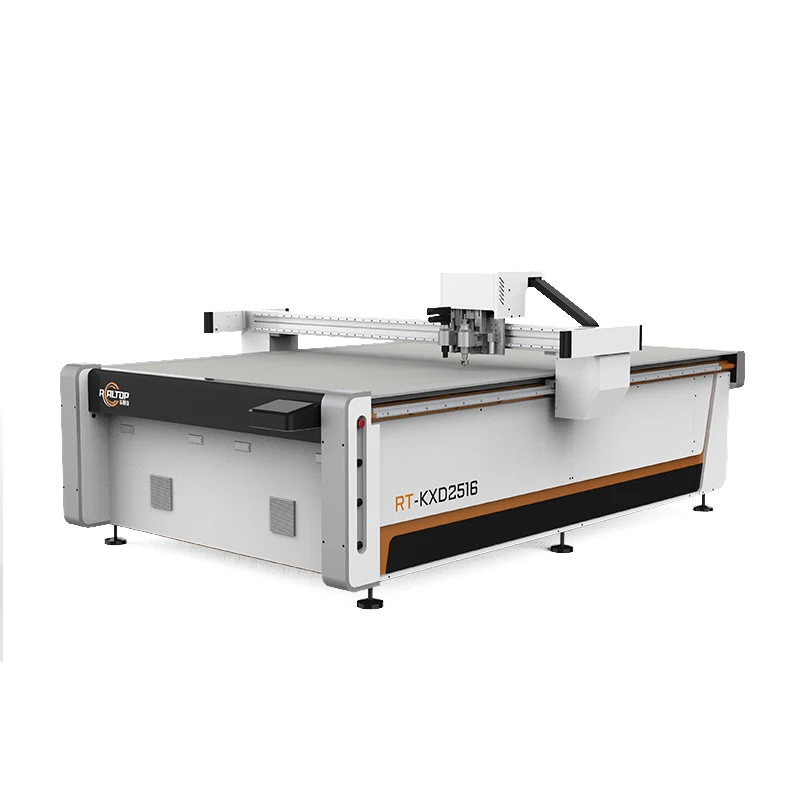
| Model | RT-D2516/RT-S2516 |
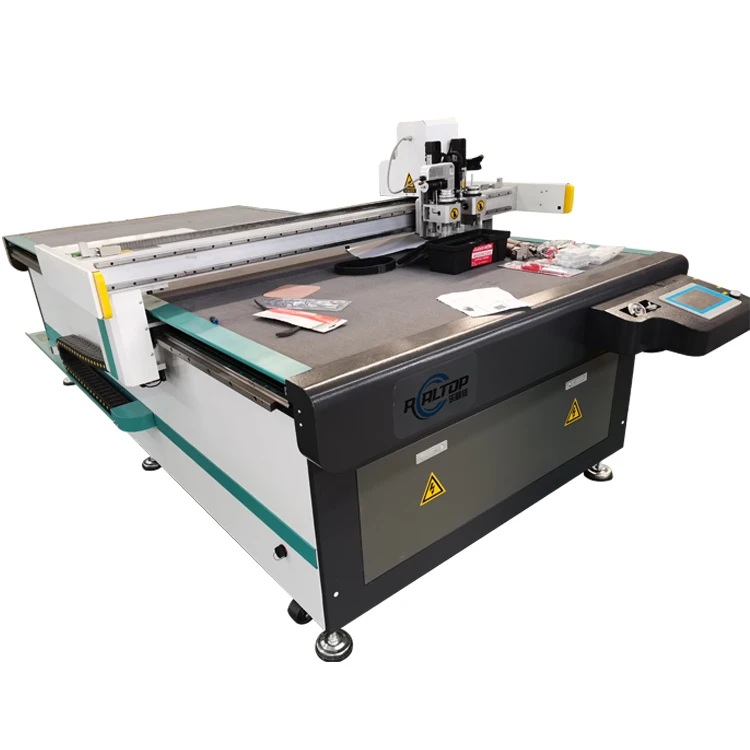
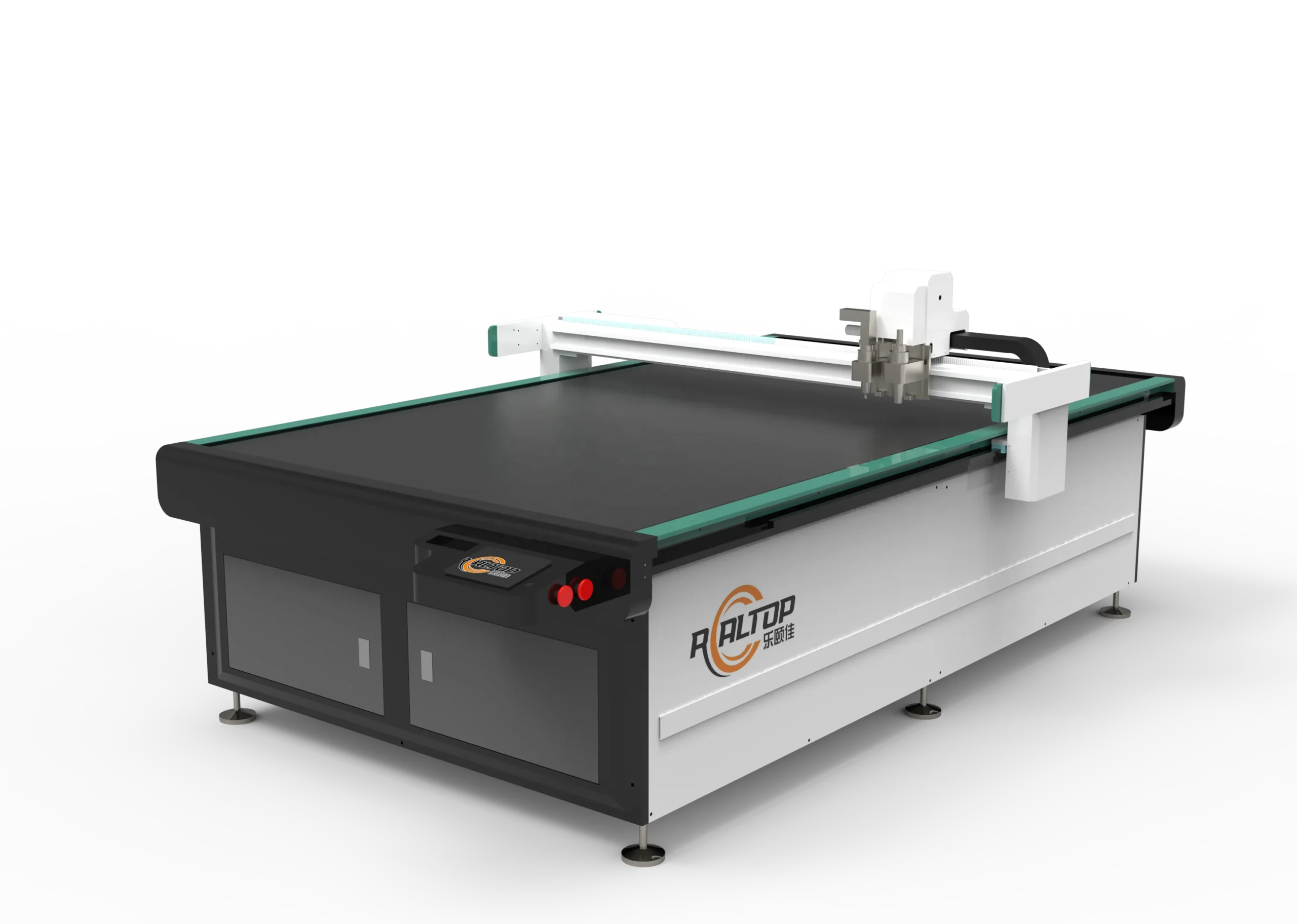
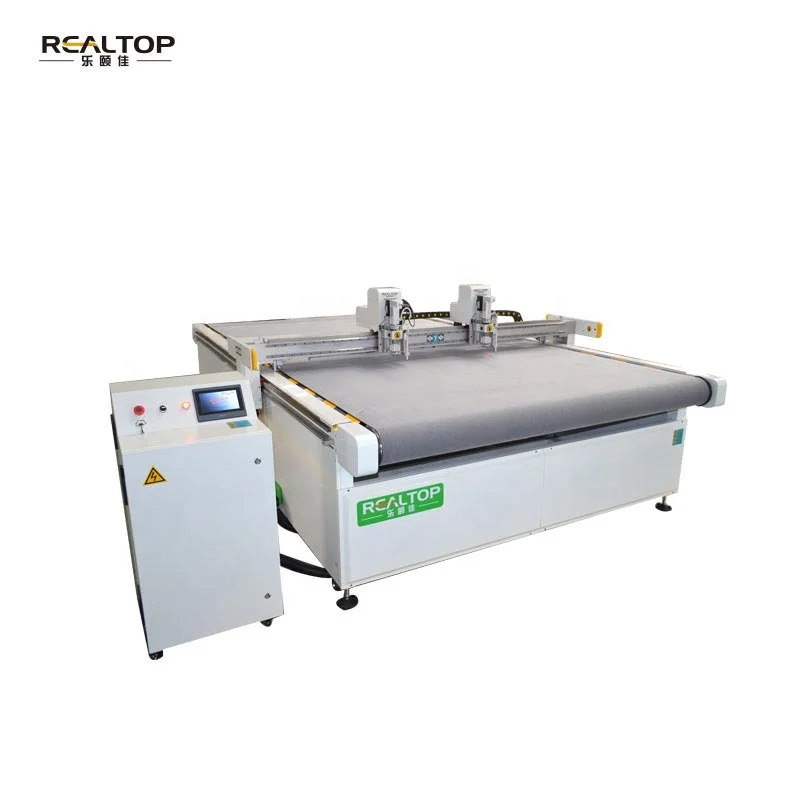
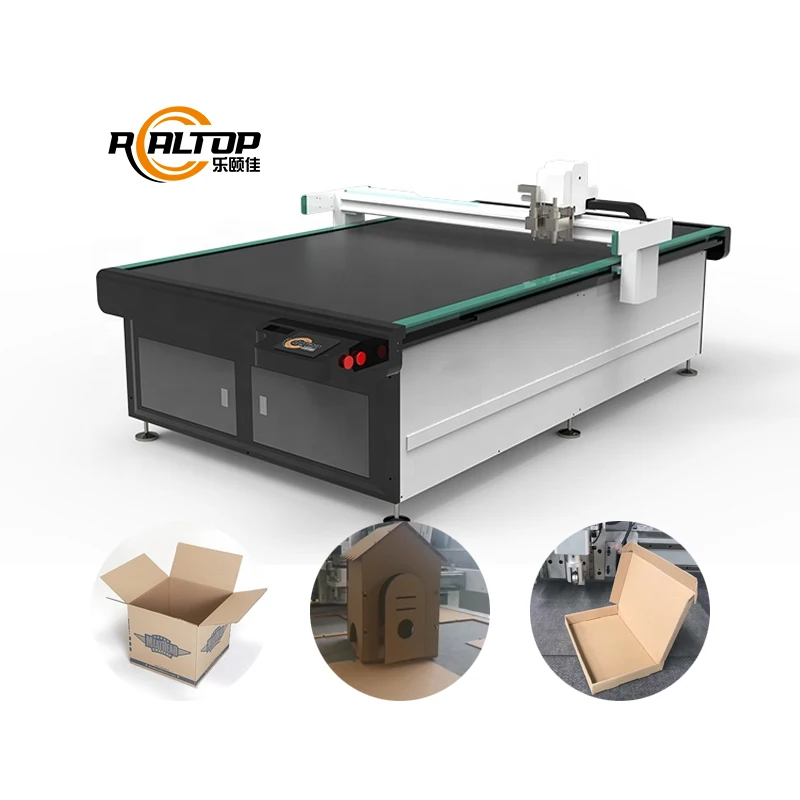
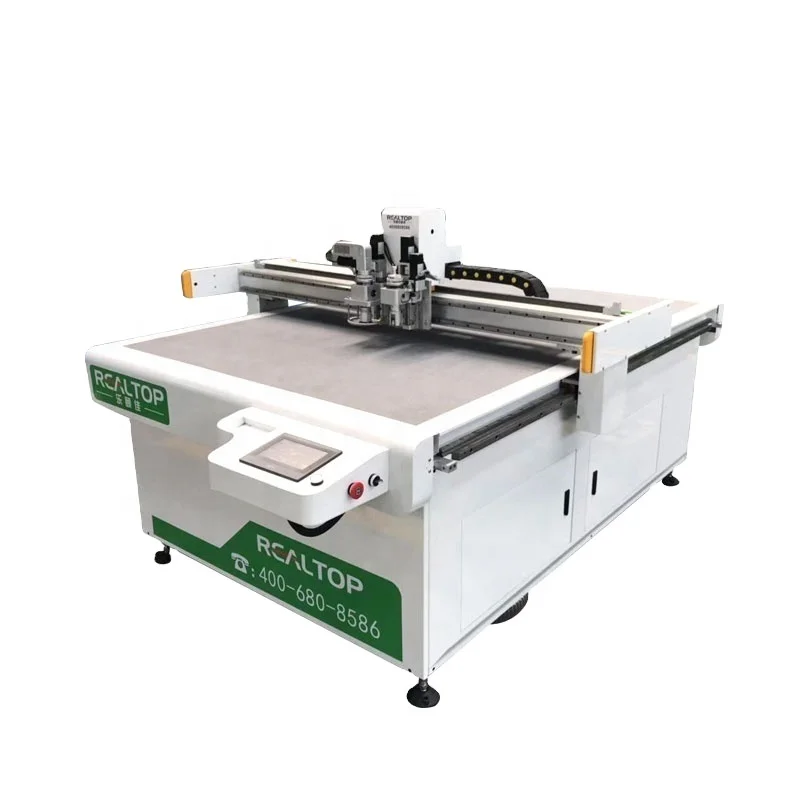
| Product Type | Automatic Flatbed Digital Cutting Machine |
| Working Area | 1600 × 2500 mm |
| Machine Dimensions | 3450 × 2300 × 1250 mm |
| Rated Power | 9 kW |
| Working Table | Flatbed vacuum table with auto feeding conveyor |
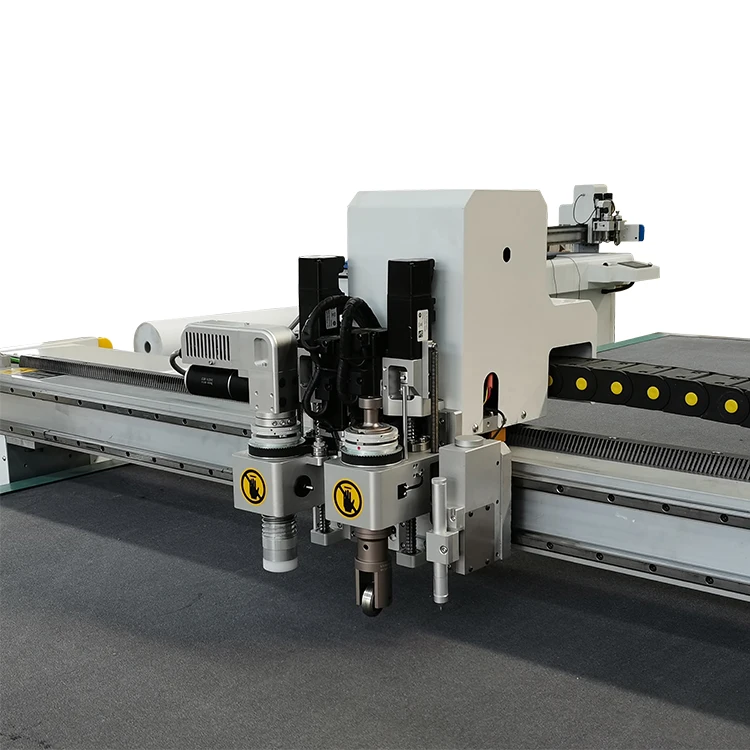
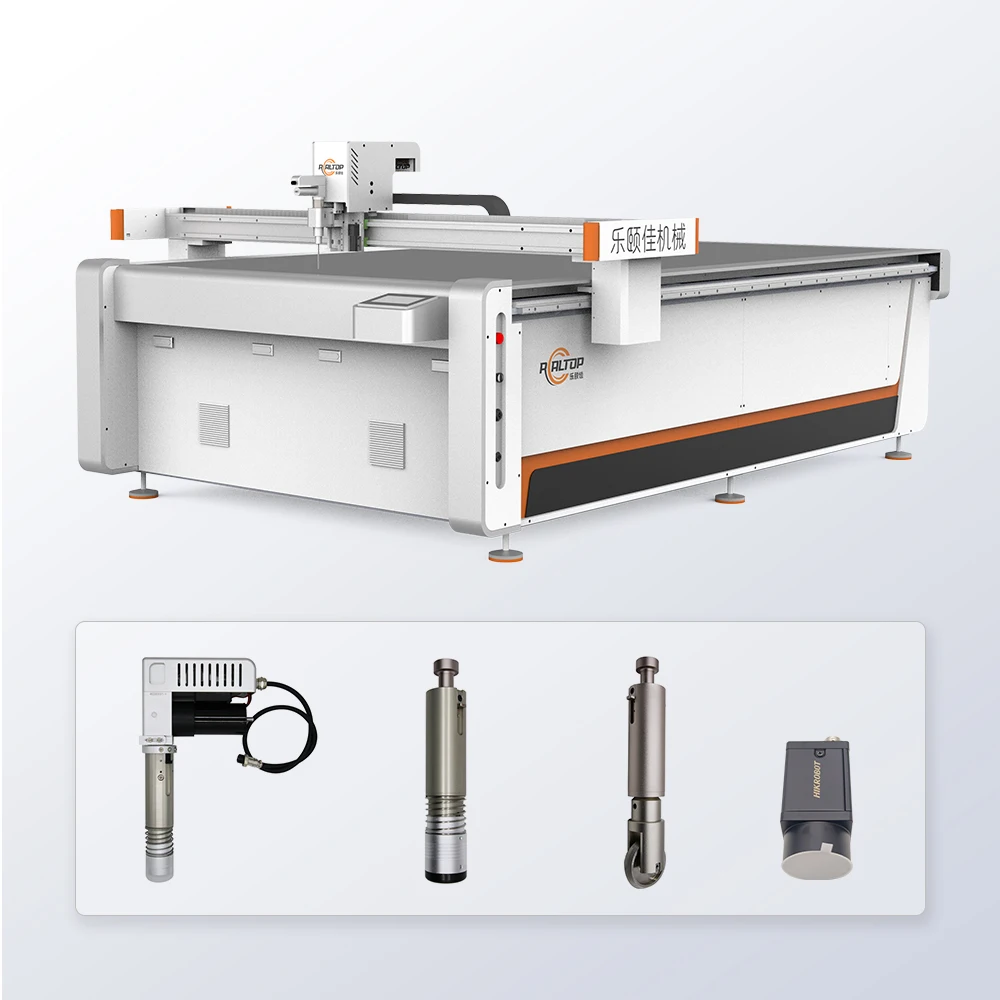
| Tool Head | Swiss imported knife (vibration full cut, half cut, cursor location) |
| Safety Device | Infrared sensors |
| Translational Velocity | 800–1200 mm/s |
| Cutting Speed | 200–800 mm/s (according to different cutting materials) |
| Cutting Materials | Leather, clothing flexible material, sponge composite leather, PVC, soft glass, silicon, rubber |
| Repeated Accuracy | ≤0.1 mm |
| Transmission System | Digital servo motor, linear guide, synchronous belt, imported ball screw |
| Instruction System | HP-GL compatible format |
| Voltage | 380V ± 10% |
| Servo Motor | Japanese Yaskawa |
| Conveyor Belt | Germany imported |
| Vacuum Pump | 7.5 kW |
| Linear Guide | Taiwan Hiwin rail |
| Feeding Method | Auto feeding |
| Pneumatic Cutting Capacity | Up to 70 mm thickness (basis not stated in source) |
| Functions | Cutting, creasing and marking |
Application Suitability
| Application | Material or Output |
|---|---|
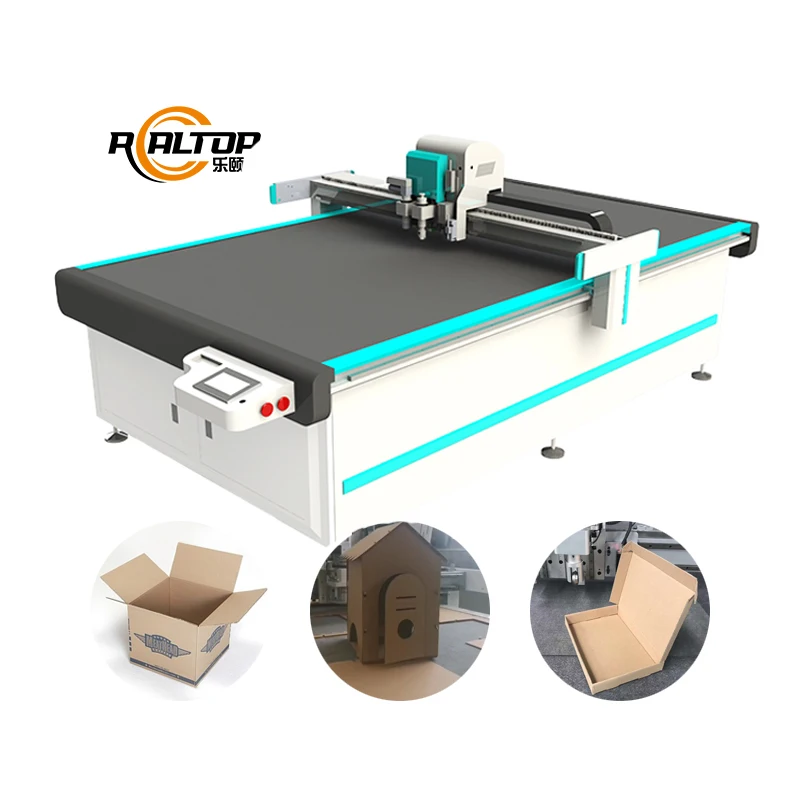
| Carton Sample Making | Corrugated board, grey board, honeycomb board |
| Packaging Prototype Production | Short-run die-free box and insert samples |
| Box Making Industry | Single and multi-layer cardboard cutting and creasing |
| Sticker and Label Cutting | Printed vinyl and adhesive substrates on flatbed |
| Gifts Box Production | Rigid board and decorative paper contour cutting |
| Honeycomb Board Processing | Structural core cutting and edge profiling |
Why the Voltage Question Should Come Before the Price
A machine specified on working area alone often fails when the buyer’s material thickness exceeds the tool head’s real capacity — the cutting method must match the substrate, not just the bed dimensions.
Configuration must be validated against your actual board grade and thickness before the quotation is finalized.
I spent years on the assembly floor tightening rails and aligning linear guides before moving into technical sales. The most painful call I ever received came from a carton plant that had ordered a flatbed based solely on price and table size. When their honeycomb board arrived on the machine, the standard knife head could not penetrate the core cleanly, leaving ragged edges that shut down their finishing line for two days while we shipped a replacement tool block. That line never should have stopped. The root cause was a missing conversation about material density and tool selection at the inquiry stage [NEED_CITE: tool head selection criteria by corrugated board flute profile].
In-House Design Covers Both Knife and Laser Methods
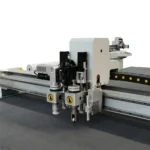
When a packaging buyer evaluates a CNC flatbed digital cutting machine manufacturer, the first question should be whether the factory builds both knife and laser systems under one roof. Realtop designs and produces oscillating knife tables and laser cutters in the same Jinan facility, which means the engineering team can recommend the cutting method that suits the material rather than forcing every job onto a single platform. For the RT-D2516/RT-S2516, the Swiss imported vibrating knife handles full-depth cuts through honeycomb and grey board while the creasing wheel scores fold lines in the same pass, eliminating a second operation on a separate press.
Build Quality and Motion Components on the RT-D2516/RT-S2516
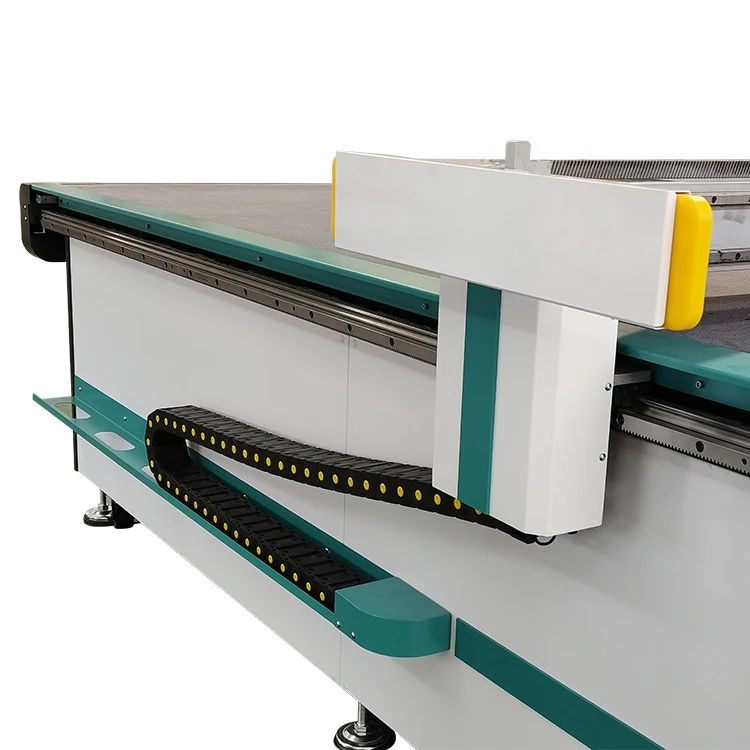
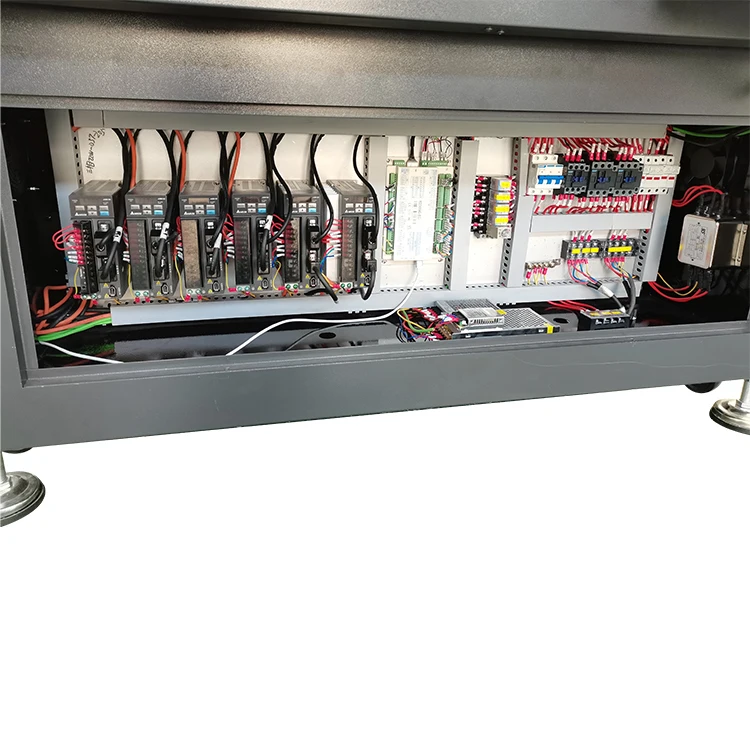
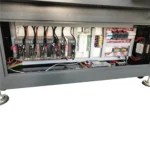
The frame and gantry are assembled in-house, and the motion system pairs Japanese Yaskawa digital servo motors with Taiwan Hiwin linear rails and imported ball screws to hold repeated accuracy within ≤0.1 mm across the 1600 × 2500 mm table. The German imported conveyor belt works with the auto feeding system to advance sheet stock continuously, reducing manual handling between cuts. A 7.5 kW vacuum pump provides the hold-down force required to keep lightweight corrugated and sticker stocks flat during high-speed oscillation, preventing the edge lift that causes dimensional drift on nested layouts [NEED_CITE: vacuum hold-down requirements for thin corrugated substrates].
How Core Specifications Translate to Daily Production
The 9 kW rated power covers the servo drives, vacuum pump, and oscillating knife head simultaneously, so buyers should verify their workshop circuit can supply a dedicated 380V ± 10% three-phase feed before the machine arrives. Translational velocity reaches 800–1200 mm/s for rapid positioning between cut paths, while actual cutting speed ranges from 200–800 mm/s depending on material hardness and thickness — a dense grey board will run at the lower end, whereas thin sticker vinyl allows the higher range. The HP-GL compatible instruction system accepts file output from most packaging CAD platforms, and the Swiss knife’s vibration full-cut, half-cut, and cursor location modes let a single head produce through-cuts, kiss-cuts, and registration marks without a manual tool change. Pneumatic cutting tool capacity is listed at up to 70 mm thickness, though the actual usable depth depends on the specific board density and flute structure being processed.
The Hidden Cost of a Mis-Matched Tool Head
Choosing a generic knife block for a material that requires a specific oscillation frequency produces crushed flutes on corrugated board and delaminated edges on honeycomb cores. Operators then compensate by slowing the feed rate, which increases cycle time without solving the edge quality problem. Small sticker parts lift off the table when vacuum zoning is too broad for the nested layout, causing mis-registration on subsequent cuts and scrapped sheets. Voltage fluctuations on an unstable workshop supply can trip the servo drives mid-job, leaving half-finished samples that must be re-run from scratch [NEED_CITE: CE machinery directive requirements for industrial equipment].
Why Source This Flatbed from Realtop
Realtop maintains in-house design and production covering both knife and laser technologies, so a packaging buyer can match the cutting method to the board grade rather than forcing one method onto every substrate. Tool head and vacuum table configurations are specified per material and production volume during the inquiry stage, not left to a default package. CCD camera positioning is available for printed contour work where registration marks must be tracked at production speed. Software compatibility and file format acceptance are confirmed before the order is released to the factory floor. Every RT-D2516/RT-S2516 undergoes sample cutting on the buyer’s own material before the commitment is finalized, ensuring the configuration handles the actual board rather than a catalog assumption. Voltage, control language, and plug type are documented and verified against the destination market’s electrical standards before shipment [NEED_CITE: voltage and frequency standards by export market].
Documentation & Verification
- Machine specification sheet listing the exact tool head and vacuum zoning configuration for your board type
- Sample cutting report produced on your honeycomb or corrugated material before dispatch
- Electrical schematic with confirmed voltage and plug type for your local supply
- HP-GL software licence and file format compatibility note for your existing CAD workflow
- CE declaration covering the mechanical and electrical safety requirements of the RT-D2516/RT-S2516
- Factory test record documenting repeated accuracy and cut quality on your specified material
Installation, Commissioning & Support
- Dedicated 380V ± 10% three-phase circuit with sufficient capacity for the 9 kW rated load
- Level floor area accommodating the 3450 × 2300 × 1250 mm machine footprint plus conveyor infeed space
- First-run parameter tuning on your specific board thickness to calibrate knife depth and vacuum zones
- Operator training covering HP-GL file import, tool head changeover, and nesting layout setup
- Spare parts list including Swiss knife blades, conveyor belt segments, and vacuum seals
- Scheduled maintenance intervals for Hiwin rail lubrication and Yaskawa servo drive inspection
Before You Send an Inquiry
To match the RT-D2516/RT-S2516 configuration to your production floor, provide the board type and thickness range you run most frequently, along with your daily sample or short-run volume. Confirm your workshop’s available voltage and frequency so the electrical package can be built to your local standard. If you work with printed contour stock, note whether your design files are already in HP-GL format or require conversion from another CAD platform.
Frequently Asked Questions
Q: How do I match the tool head to my honeycomb or corrugated board thickness?
A: Send a sample of your most common board grade to the factory. The engineering team tests the Swiss oscillating knife at different frequencies and depths, then records the cleanest cut configuration in a sample cutting report before the machine is built. This prevents the crushed-edge problem that occurs when a generic tool block is used on a dense flute profile.
Q: What voltage confirmation do I need before the machine ships?
A: Provide your workshop’s actual supply voltage and frequency, including the plug type standard in your country. The electrical team issues a schematic and voltage confirmation document showing the 380V ± 10% range or an alternative transformer arrangement if your local grid differs, ensuring the Yaskawa servo drives and vacuum pump receive stable power on day one.
Q: Will my existing packaging design files work with the instruction system?
A: The HP-GL compatible system accepts output from most mainstream packaging CAD platforms. Share a sample file during the inquiry stage so the software team verifies import accuracy, nesting compatibility, and crease-line recognition before the order is confirmed, avoiding workflow delays after delivery.
Q: Is the vacuum table zoning adequate for small sticker and label parts?
A: The 7.5 kW vacuum pump feeds a table divided into selectable zones. During configuration, the factory maps the zone layout to your typical nesting pattern so that small contour-cut stickers remain held flat without edge lift. Specify your smallest part dimension when requesting a quotation.
Q: How is the machine tested before it leaves the factory?
A: Every RT-D2516/RT-S2516 runs a full production cycle on the buyer’s own material during the factory test. The test record documents cutting speed, edge quality, repeated accuracy, and vacuum hold-down performance across the working area, and is shared with the buyer before crating and shipment.
You may also like

商品评价
Clear filtersThere are no reviews yet.