






-
 Courier delivery
-
 DHL Courier delivery
-
 Warranty 1 year
-
 Free 30-Day returns

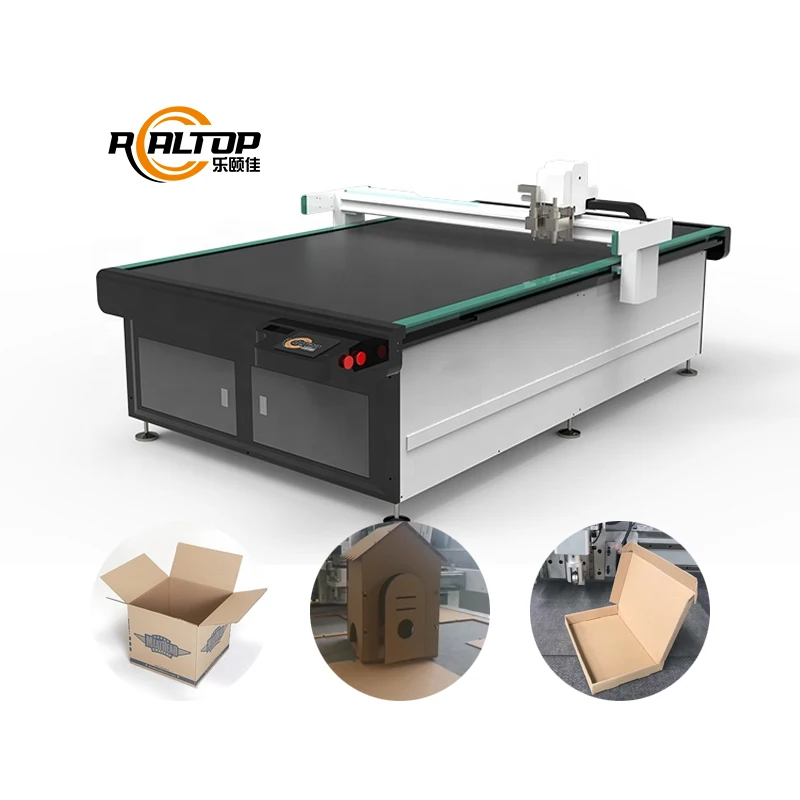
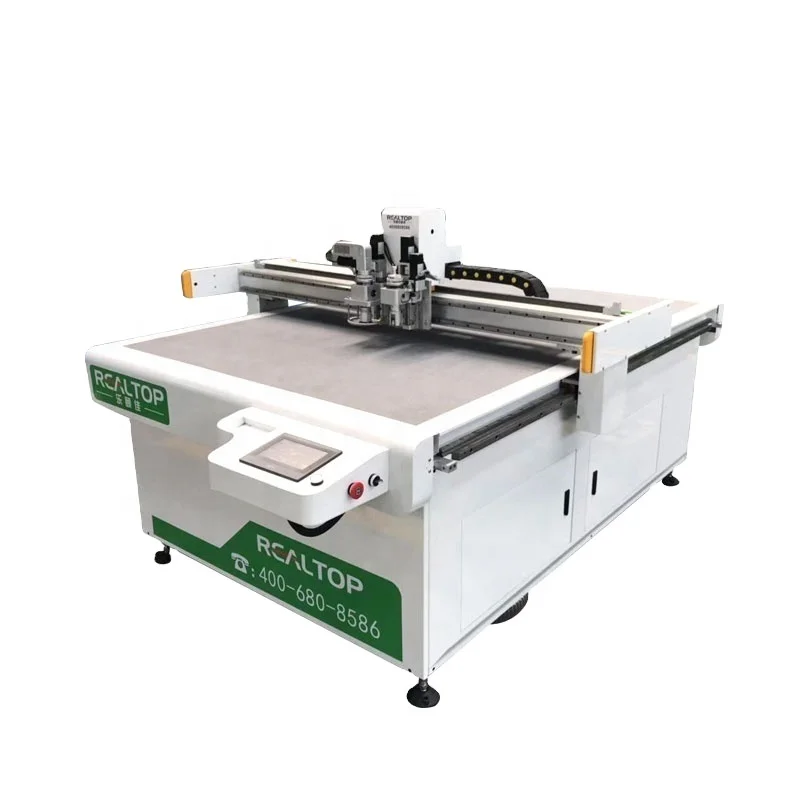
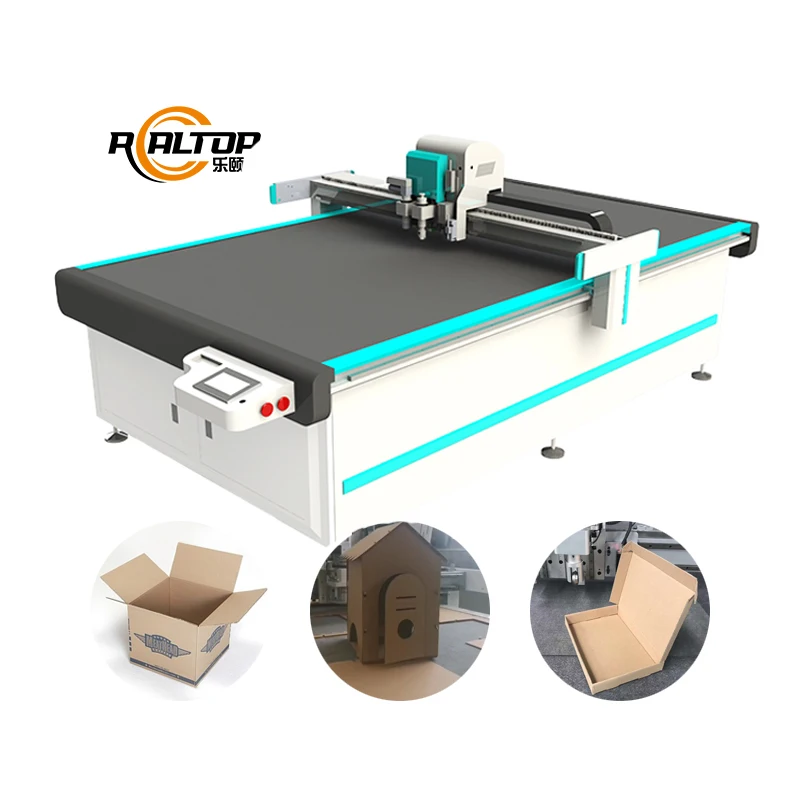
Direct Factory Engineering — in-house design team covers frame kinematics, tooling interface and motion control on every 1625 unit shipped, eliminating the trading-company gap between quoted and delivered configuration.
Technical Specifications
| Parameter | Value |
|---|---|
| Product Type | CNC Oscillating Knife Cutting Machine |
| Model | 1625 |
| Working Area | 1600 × 2500 mm |
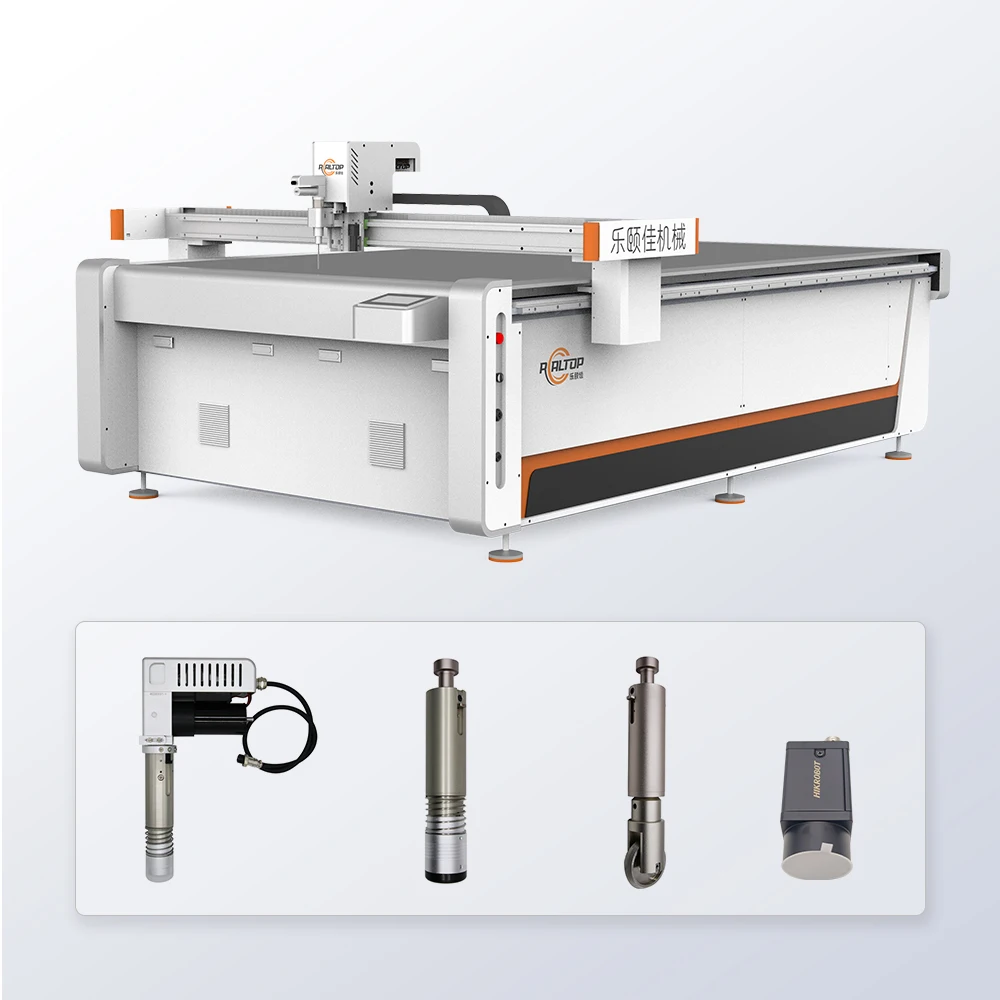
| Tool Head Options | Oscillating knife, Driven rotary knife, Creasing wheel, Kiss cutting tool, Pneumatic knife, Milling tool, V groove knife |
| Cutting Speed | 0–2000 mm/s |
| Cutting Thickness | ≤ 30 mm (basis not stated in source — confirm material type and density) |
| Cutting Accuracy | ±0.1 mm |
| Vacuum Pump Power | 9 kW |
| Voltage Options | 110V, 220V, 380V (frequency not specified in source) |
| Control System | PLC with dedicated packaging box structure design software |
| Supported File Formats | PLT, DXF, AI, PDF |
| Vacuum Table | Aluminum bellows construction, full-surface adsorption |
| Servo Motor Options | Panasonic, Delta, Dorna (source value — verify against manufacturer catalog) |
| Safety Devices | Infrared sensor, Emergency stop |
| Machine Dimensions (L×W×H) | 3300 × 2100 × 1350 mm |
| Language Options | English, Russian, Italian, Chinese (custom languages available) |
| Standards | CE (based on site documentation note — verify certificate availability) |
Application Suitability
| Application | Material or Output |
|---|---|
| Aerospace gasket and composite panel processing | Carbon fiber prepreg, aramid honeycomb, fiberglass cloth, ceramic fiber, thermal and acoustic insulation foam |
| Automotive interior and rail transit components | Headliners, floor carpets, acoustic felt, damping pads, battery insulation pads, sealing strips, seat foam |
| Wind power and new energy assemblies | Infusion mesh, core material preforms, carbon spar caps, battery insulation sheets, module thermal pads |
| Sporting goods and leisure equipment | Helmet liners, surfboards, kayak components, skis, backpack frames |
| General industrial gasket production | Rubber, asbestos, graphite, PTFE sheets |
Why the Voltage Question Should Come Before the Price
Confirming destination voltage, plug type and control language before production begins prevents the most frequent and costly import failure in CNC cutting equipment.
I spent years doing installations across African job sites before moving into technical support, and the pattern is always the same: a machine arrives, the local team plugs it in, and nothing happens. The panel was wired for a different grid standard than the facility uses. I once had a gasket cutter sitting idle in Nigeria for three weeks while the client waited for an electrician to rewire the entire electrical cabinet. That production line was stuck at my station the whole time. The 1625 CNC oscillating knife cutting machine factory configuration process now requires written confirmation of voltage, frequency and language before any unit enters production — because discovering a mismatch at the destination costs far more than a two-day email exchange [NEED_CITE: voltage and frequency standards by export market].
Single-Source Design Authority Over the Complete Machine Architecture
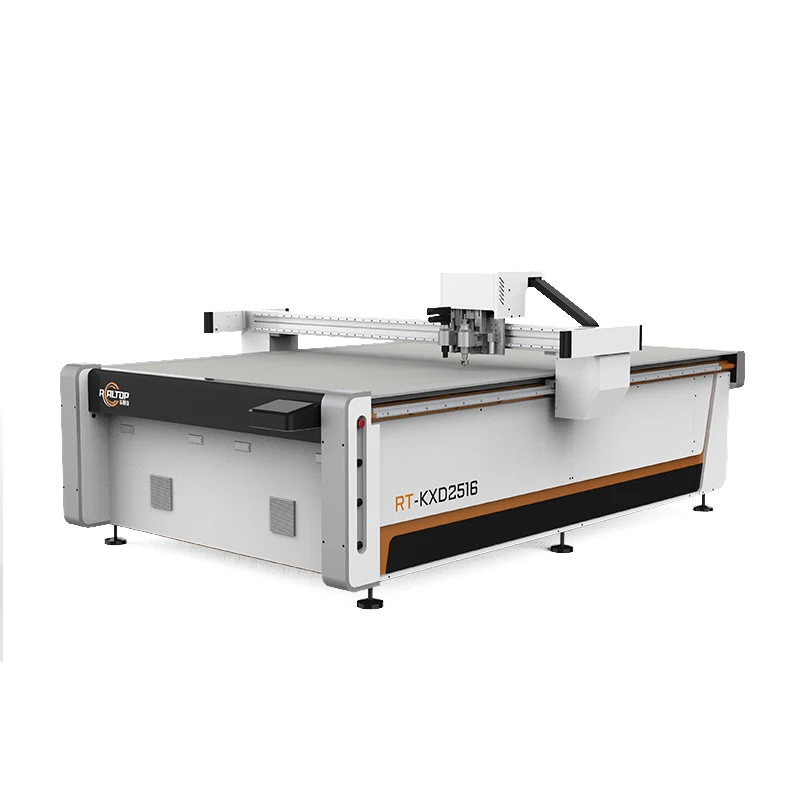
When a distributor or importer evaluates a knife-cutting line, the critical question is whether the supplier controls the design decisions that determine long-term reliability. The 1625 is engineered in-house by REALTOP’s design team, meaning the frame geometry, motion system and tooling interface are developed under one engineering authority rather than assembled from sourced sub-assemblies with undocumented tolerances. This matters when you need to request a non-standard working area or a specific servo brand — the response comes from the team that designed the motion profile, not from a sales office relaying questions to a third party.
How the Frame and Vacuum Table Address the Real Stability Concerns
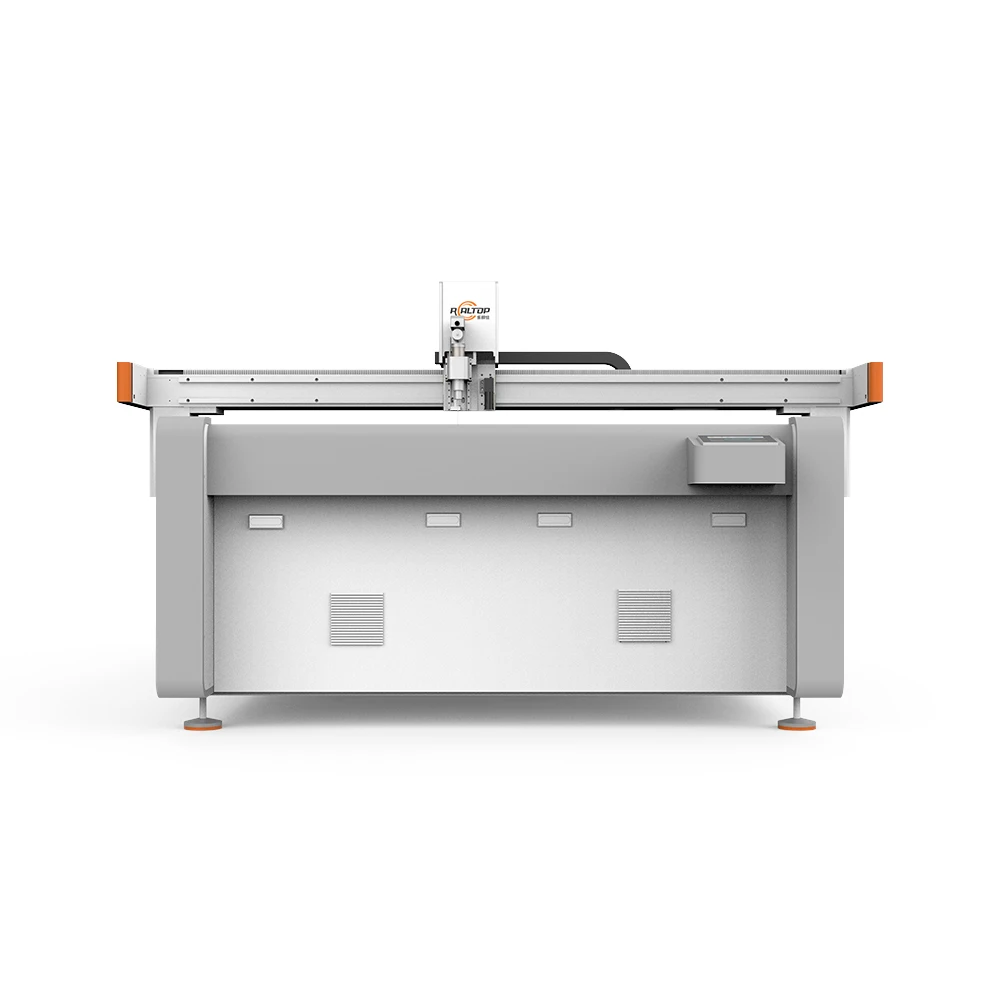
The heavy-duty precision-ground frame on this CNC oscillating knife cutting machine factory build is not a marketing claim — it is the physical foundation that determines whether ±0.1 mm accuracy holds after thousands of cutting cycles in a production environment. The aluminum bellows vacuum table with full-surface adsorption addresses a specific failure mode common in gasket work: small parts lifting off the bed mid-cut when vacuum zoning is insufficient. For composite fabricators cutting intricate sealing profiles or automotive damping pads, that lift produces scrapped material and forces the operator to slow the feed rate [NEED_CITE: vacuum hold-down requirements for small-part cutting on oscillating knife systems].
Decoding the Specifications That Actually Govern Gasket Cutting Quality
The tool head selection is the single most consequential specification on this machine. An oscillating knife handles dense rubber and PTFE with clean vertical edges, while a driven rotary knife is better suited to continuous contour cuts on softer foams and textiles. Choosing the wrong head for the material produces ragged edges or crushed foam cores — a defect that typically only shows up after the machine is installed and running buyer-supplied stock. The PLC control system with dedicated packaging box structure design software processes PLT, DXF, AI and PDF files, but file format compatibility must be verified against the buyer’s existing nesting workflow before the order is placed. The 9 kW vacuum pump delivers the suction required for full-surface adsorption, and its rating should be evaluated against the porosity of the specific gasket material being processed. Voltage options span 110V, 220V and 380V, but frequency must also be confirmed — a 60 Hz motor running on a 50 Hz supply will overheat and fail prematurely [NEED_CITE: CE machinery directive requirements for industrial equipment].
The Hidden Cost of Skipping Material-Specific Configuration
When a buyer specifies a machine purely on working area and ignores the tool head and vacuum configuration, the consequences cascade through production. A machine specified for a 1600 × 2500 mm bed but equipped with a general-purpose drag knife instead of a pneumatic knife will struggle with dense rubber gaskets, producing compressed edges that fail sealing specifications. Insufficient vacuum zoning causes small aerospace gasket profiles to shift during cutting, generating scrap that exceeds the cost of the correct table configuration. Software that cannot import the buyer’s nesting files forces manual reprogramming of every job, negating any throughput advantage the machine was supposed to deliver. These failures are not machine defects — they are specification errors that originate in the inquiry stage [NEED_CITE: tooling selection errors in CNC digital cutting procurement].
Why Sourcing This Machine Directly from the Core Factory Matters
The in-house design and production model means a buyer can match the cutting method to the material rather than being forced into a single-tooling configuration. Tool head and table specifications are confirmed per material and production volume before the order is locked, not substituted during assembly. CCD camera positioning is available for printed contour work, with tracking performance verified at production speed rather than demonstrated only at trade-show feed rates. Software compatibility is confirmed against the buyer’s actual file formats and nesting system before commitment. Voltage, language and specification customization are handled within the factory, not outsourced to a third-party integrator after shipment. Sample cutting on the buyer’s own material is conducted and documented before the purchase decision, giving distributors physical evidence of edge quality and dimensional accuracy on the specific stock they will sell into.
Documentation & Verification
- Machine specification sheet with voltage, frequency and tool head configuration confirmed for your destination market
- Electrical schematic showing panel layout and circuit protection rated for local grid conditions
- Sample cutting report on your own gasket material documenting edge quality and ±0.1 mm accuracy
- Tool head and table configuration list matched to your material type and thickness range
- Software licence and file format compatibility note covering PLT, DXF, AI and PDF import
- Factory test record with video evidence of your specific machine running before dispatch
Installation, Commissioning & Support
- Foundation leveling requirements based on the 3300 × 2100 × 1350 mm footprint and heavy-duty frame mass
- Dedicated power circuit specified for the selected voltage option and 9 kW vacuum pump load
- Assembly state and crating configuration confirmed before shipment to match site access and lifting equipment
- First-run parameter calibration on your material thickness and tool head combination during commissioning
- Operator training covering tool change procedures, vacuum zone settings and PLC control navigation
- Spare parts list with wear item part numbers and recommended reorder intervals for knives and belts
What to Include in Your Inquiry
To move from a general inquiry to a confirmed configuration, we need to know the specific gasket or composite materials you will process, including type, sheet thickness and maximum dimensions. Provide your facility’s voltage and frequency standard, preferred control language, and the file formats your design team currently uses for nesting. If you require sample cutting before commitment, ship a representative sheet of your production material so we can document edge quality and cutting accuracy on the exact stock your customers will receive.
Frequently Asked Questions
Q: What OEM and customization options are available for distributor partners?
A: The factory supports customization across frame dimensions, tool head selection, voltage configuration, control language and software branding. Distributors can request specific servo brands from the available options and specify panel layout modifications. Each customization is documented in the machine specification sheet before production begins, ensuring the delivered unit matches the agreed configuration.
Q: How are voltage, plug type and control language confirmed before shipment?
A: Written confirmation of destination voltage, frequency, plug standard and control interface language is required before the machine enters production. The electrical schematic is reviewed against the buyer’s local grid specifications, and any mismatch is resolved at the design stage rather than discovered during installation.
Q: Can I receive a factory test report and video before dispatch?
A: Every unit undergoes a factory test running the buyer’s specified tool head and material parameters. A test record documenting cutting accuracy and edge quality is provided, and video of the machine operating under test conditions can be supplied for remote verification before the crate is sealed.
Q: What spare parts and wear parts documentation comes with the machine?
A: A detailed spare parts list is included with every shipment, identifying wear items such as oscillating knife blades, vacuum seals and belts by part number. The list includes recommended reorder intervals based on typical production use, enabling distributors to maintain local stock for end-user support.
Q: How does the factory determine which tool head suits a specific gasket material?
A: The design team evaluates the material type, density and thickness range, then recommends a tool head from the available options — oscillating knife, driven rotary, pneumatic or V groove. A sample cut on the buyer’s own material is conducted to verify edge quality before the configuration is finalized for production.
You may also like

商品评价
Clear filtersThere are no reviews yet.