

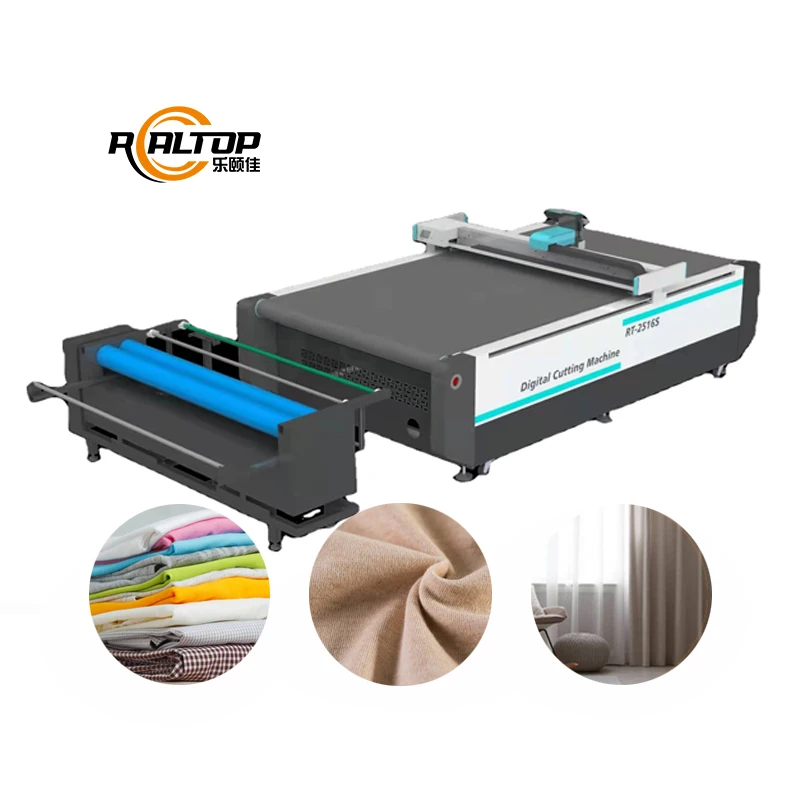
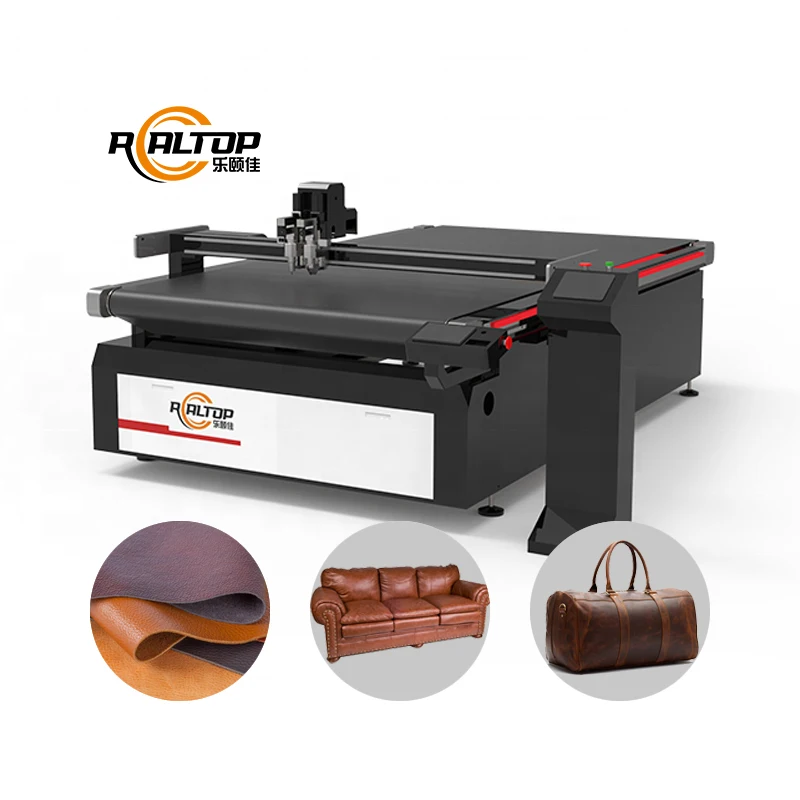
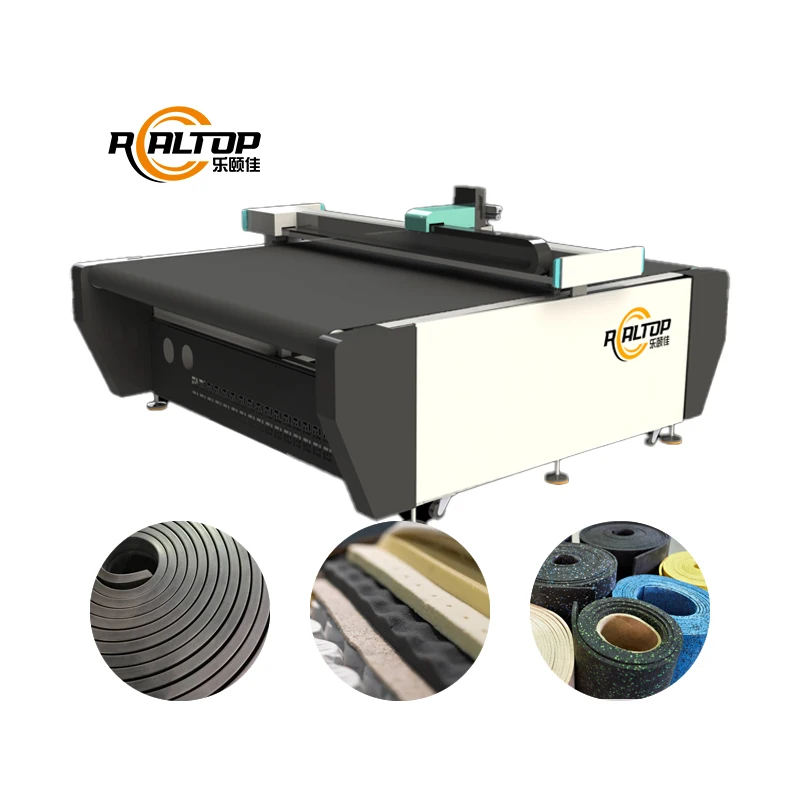
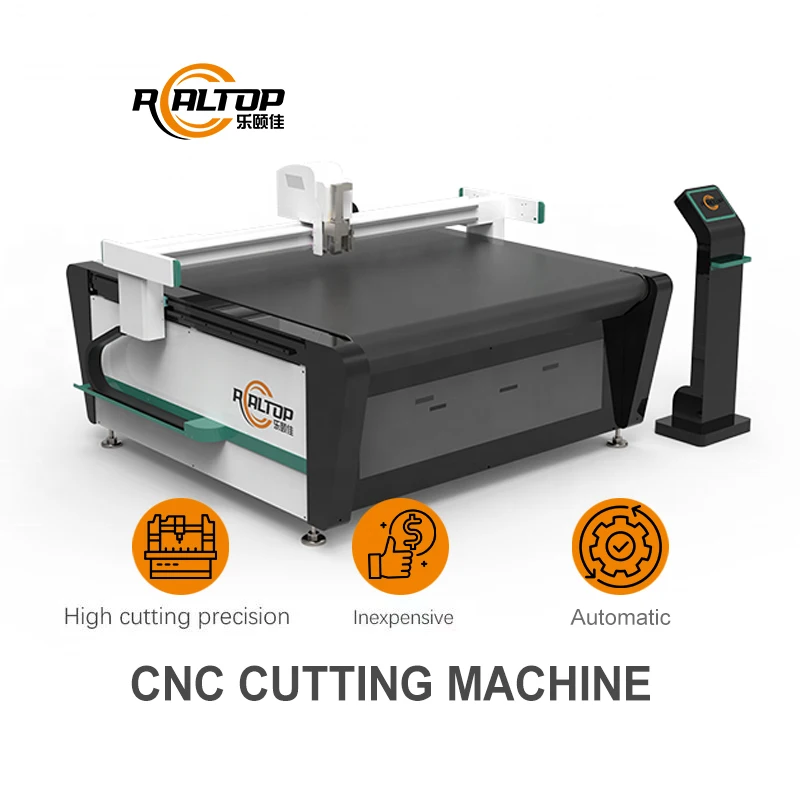

-
 Courier delivery
-
 DHL Courier delivery
-
 Warranty 1 year
-
 Free 30-Day returns

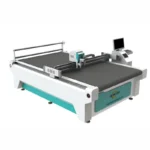
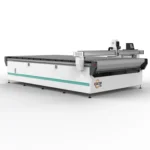
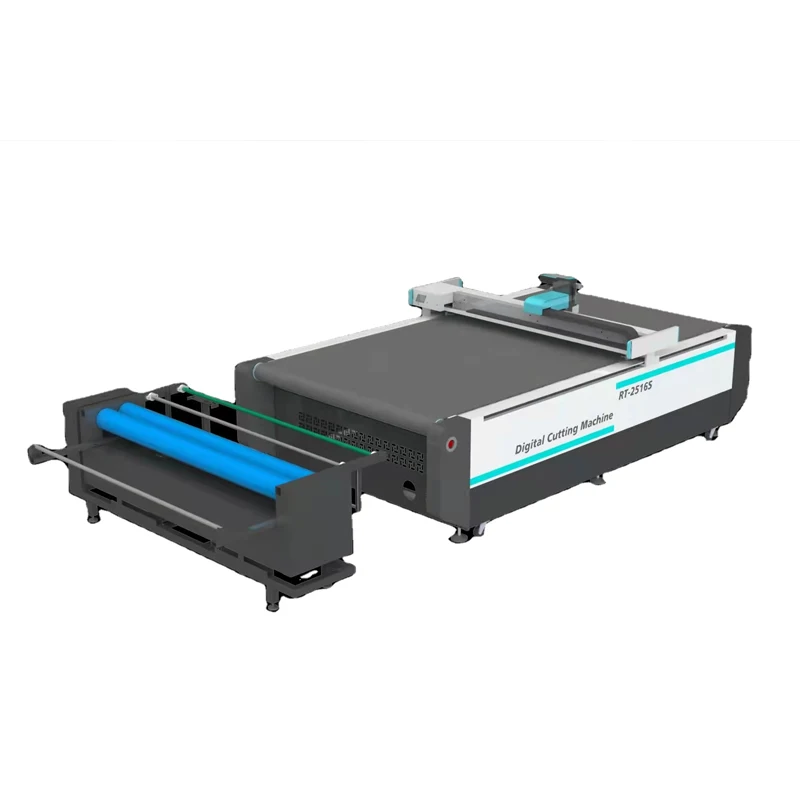
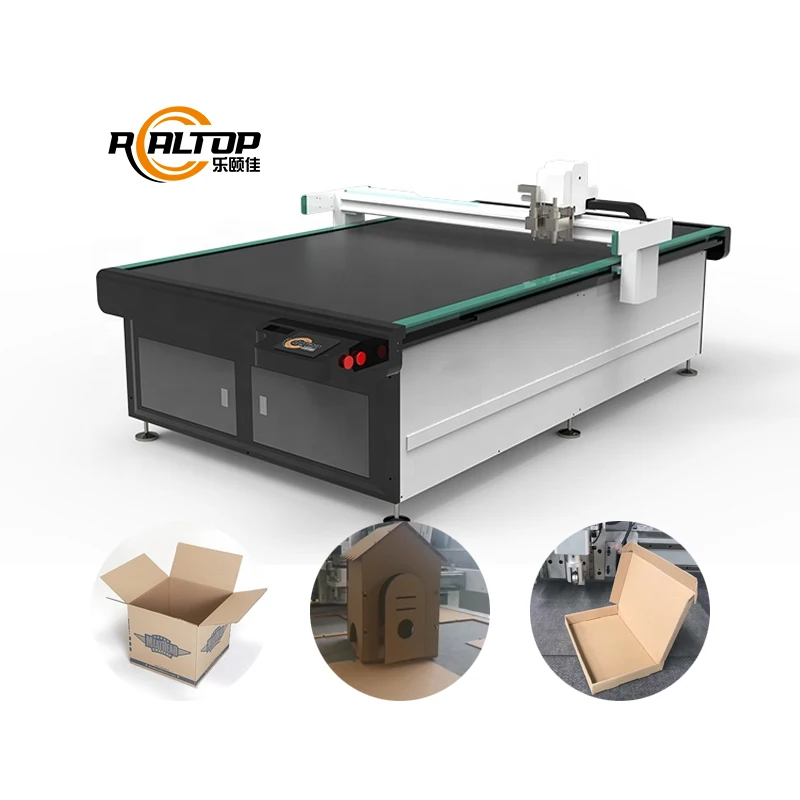
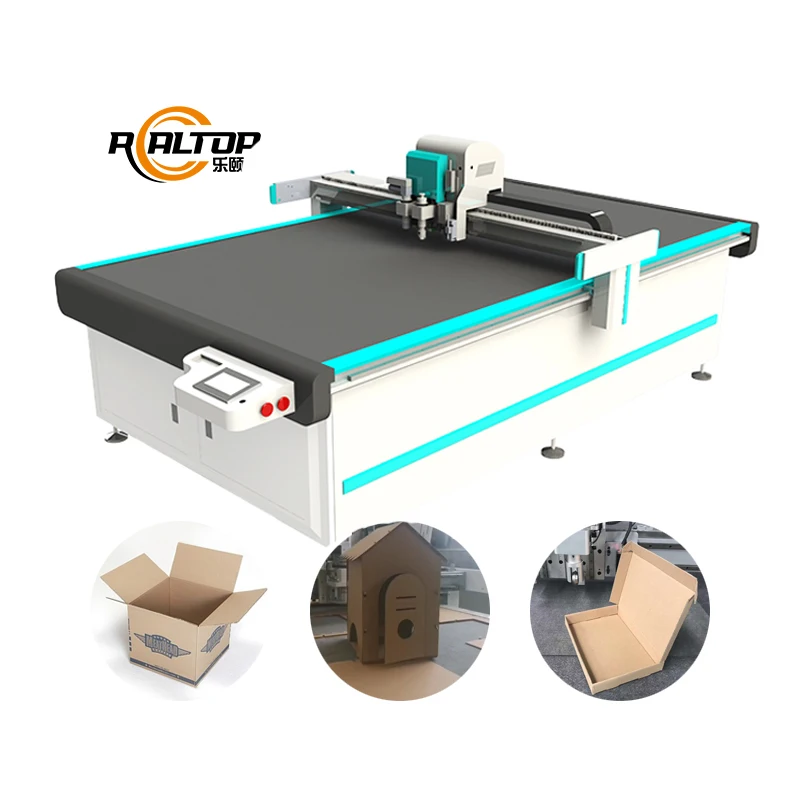
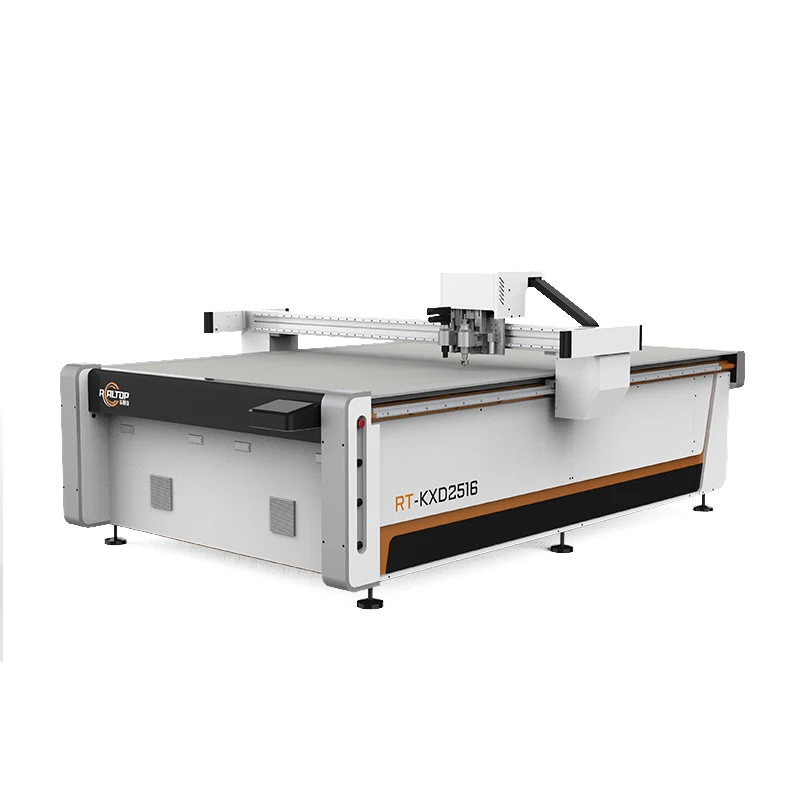
In-house design and production — tool head, vacuum table and CCD positioning configured per material type and thickness before the RT-D2516/RT-S2516 leaves our Jinan factory.
Technical Specifications
| Parameter | Value |
|---|---|
| Model | RT-D2516/RT-S2516 |
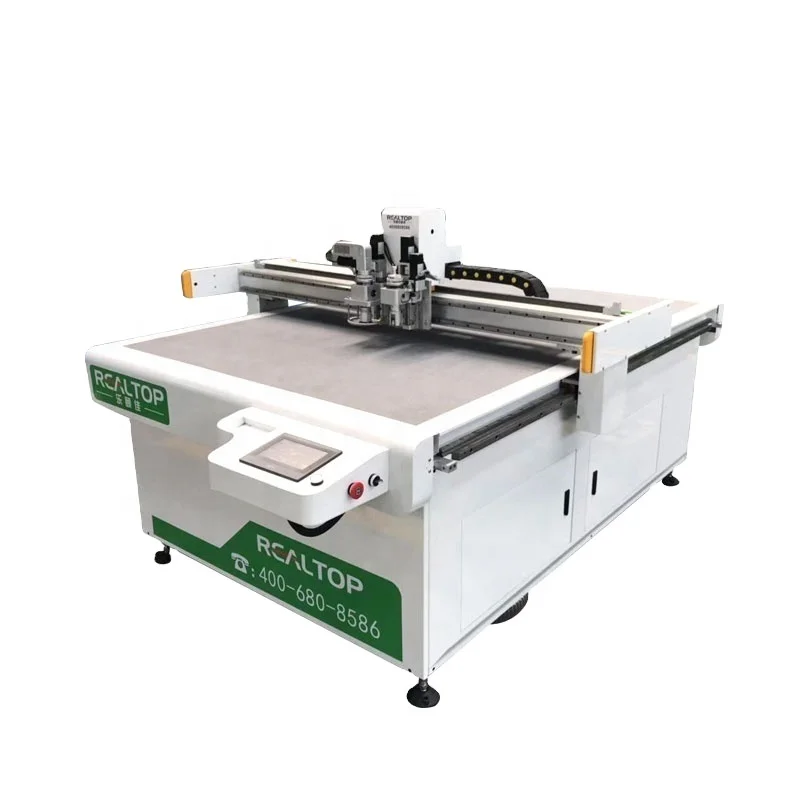
| Product Type | CNC Oscillating Knife Cutting Machine |
| Working Area | 1600 × 2500 mm |
| Machine Size (L × W × H) | 3450 × 2300 × 1250 mm |
| Rated Power | 9 kW |
| Voltage | 380V ±10% (frequency to be confirmed for target market) |
| Table Type | Flat magnesium-aluminum alloy table with PVDF coating (conveyor optional) |
| Vacuum Pump | 7.5 kW |
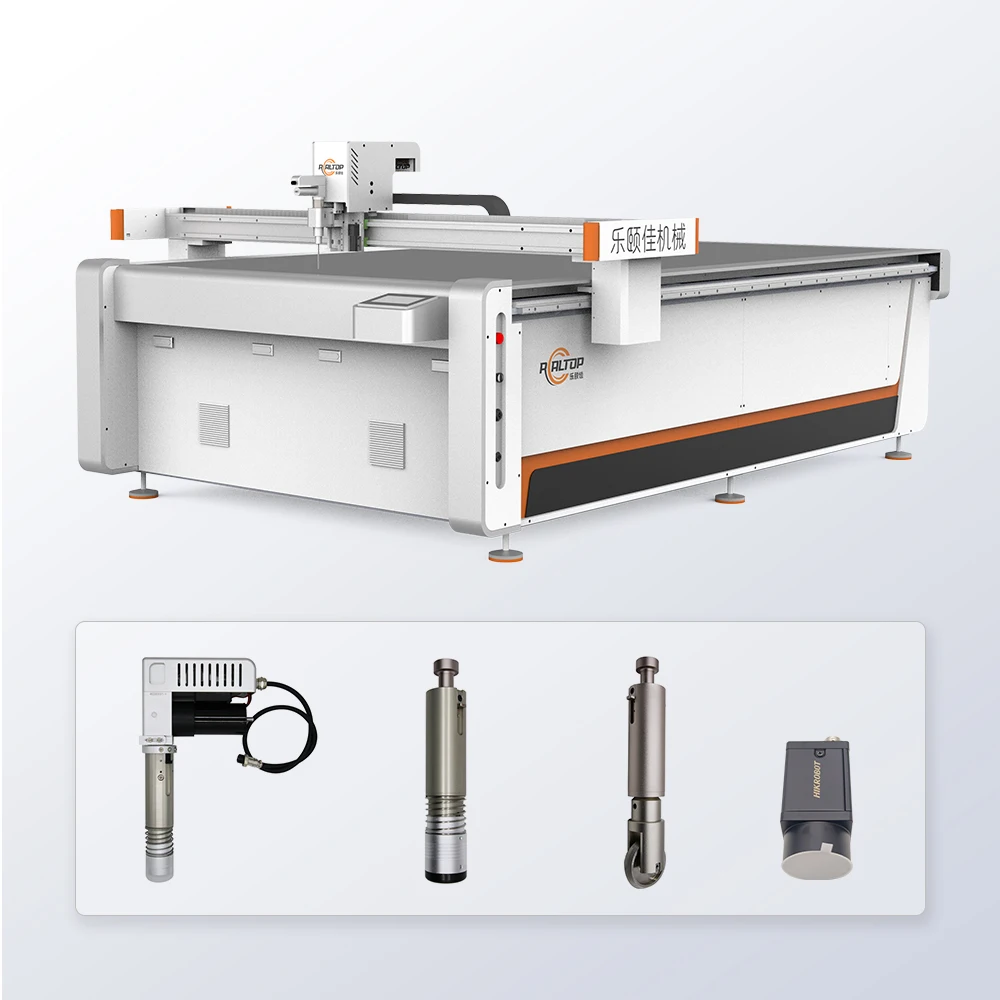
| Multifunctional Tool Heads | Swiss imported vibrating knife (full/half cut), pneumatic knife, high-power vibrating knife, circular knife, V-cutting knife, drag knife, creasing wheel, dotted-line knife, punching tool, brush |
| Visual Positioning | Small CCD mark-point positioning, panoramic camera recognition, projection positioning (configuration to be confirmed) |
| Translational Velocity | 800–1200 mm/s |
| Cutting Speed | 200–800 mm/s (varies by material and thickness) |
| Repeated Accuracy | ≤ 0.1 mm |
| Maximum Cutting Thickness | ≤ 100 mm (material dependent) |
| Transmission System | Digital servo motor (Delta or Panasonic optional), linear guide, synchronous belt, ball screw; Taiwan Hiwin rail |
| Instruction Format | HP-GL compatible |
| Safety Devices | Infrared induction blocking, anti-collision, emergency stop |
| Control Language | English, Russian, Italian, Chinese (custom languages available) |
| Warranty | One year free warranty; lifetime technical support and parts service |
Application Suitability
| Application | Material or Output |
|---|---|
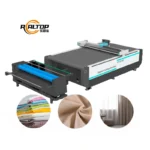
| Garment and footwear production | Fabric, clothing cloth, shoe material, non-woven fabric, luggage material |
| Automotive interior trimming | Composite materials, sponge, PU, EVA, XPE, sealing pads |
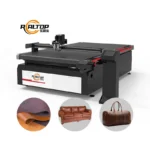
| Leather goods manufacturing | Leather, PU leather, synthetic leather for bags and accessories |
| Packaging and sample making | Corrugated cardboard, plastic box, cardboard, sticker, film |
| Carpet and floor mat cutting | Carpet, PVC soft glass, rubber mats, foam board |
| Gasket and sealing production | PTFE, ETFE, rubber, gasket material, fiberglass |
| Advertising and signage | Vinyl, sticker, film, corrugated cardboard, foam board |
Why the Material Sample Must Arrive Before the Quotation
A machine specified on working area alone will fail when the material fights back.
I spent years on the assembly floor before moving into technical specification, and the most expensive mistakes I have witnessed were not mechanical failures — they were specification mismatches. A buyer orders a flatbed cutter based on bed size, ships it across an ocean, and then discovers the standard oscillating knife cannot penetrate their 40 mm fiberglass-reinforced composite. The edge comes out ragged, the knife wears out in hours, and the vacuum table cannot hold the small offcuts flat. Every one of these problems could have been caught by cutting a sample of the buyer’s actual material before the order was confirmed. A CNC oscillating knife cutting machine manufacturer that skips this step is selling a frame, not a solution. [NEED_CITE: material-specific cutting test procedures in CNC equipment procurement]
Frame Rigidity and Long-Term Cutting Accuracy
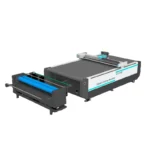
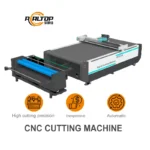
The RT-D2516/RT-S2516 is built on a thick-walled seamless steel frame that undergoes high-temperature tempering and CNC machining center finishing. This process relieves internal stress from welding and ensures the frame geometry remains stable under continuous vibration loads. When an oscillating knife vibrates at high frequency against dense composite materials, any frame flex translates directly into positional drift at the tool tip. The rigid frame keeps repeated accuracy within ≤ 0.1 mm across the full 1600 × 2500 mm working area, which matters when nesting dozens of garment pattern pieces from a single fabric lay.
Vacuum Table Engineering for Flexible Materials
The magnesium-aluminum alloy vacuum table with fluorocarbon PVDF powder spraying and hard oxidation serves a specific purpose beyond holding material down. Flexible textiles and thin films tend to lift at cut edges, especially when small parts are nested closely together. The 7.5 kW vacuum pump paired with this table surface provides uniform suction across the working zone, keeping material flat during high-speed traversal at up to 1200 mm/s translational velocity. The PVDF coating also resists chemical exposure from adhesive-backed materials like stickers and vinyl, which would degrade an untreated aluminum surface over time. [NEED_CITE: vacuum adsorption flatness requirements for CNC textile cutting]
Tool Head Selection by Material Behavior
Cutting speed on this CNC oscillating knife cutting machine ranges from 200 to 800 mm/s, but that number means nothing without context. A Swiss imported vibrating knife handles fabric and textile layers cleanly, while a high-power vibrating knife is necessary for dense foam or thick EVA used in automotive interiors. The pneumatic knife cuts through carpet and sponge that would stall a standard blade. For packaging sample work on corrugated cardboard, the creasing wheel scores fold lines without severing the board. Selecting the wrong head for the material produces crushed foam cores, frayed fabric edges, or incomplete cuts through multi-layer composites — all of which are discovered too late if no sample test was run.
Interpreting the Specifications for Your Production Floor
The 9 kW rated power covers the servo drives, spindle motor for the oscillating head, and the vacuum pump simultaneously — confirm that your workshop electrical panel can supply a dedicated 380V ±10% circuit at the correct frequency for your region before installation. The Delta or Panasonic servo motors, paired with Taiwan Hiwin linear guides and ball screws, provide the motion precision that keeps repeated accuracy at ≤ 0.1 mm; this matters for nested garment patterns where a 0.5 mm cumulative error across a 2.5-meter cut path wastes an entire fabric panel. The HP-GL compatible instruction system accepts standard plotting formats, but you should verify whether your existing DXF, AI, or PLT nesting files import correctly into the control software before finalizing the order. The ≤ 100 mm maximum cutting thickness is achievable only on specific low-density materials like sponge or foam — denser composites and leather will cut reliably at a fraction of that depth, which is why a sample test on your exact material is non-negotiable. [NEED_CITE: servo motor and linear guide specification standards for CNC cutting tables]
The Hidden Cost of Skipping Configuration Verification
When a buyer accepts a standard configuration without matching it to their material stack, the problems surface within the first production week. A vacuum table with insufficient zoning leaves small pattern pieces lifting during the final cuts, producing reject parts that were already nested and paid for in material cost. A CCD camera specified for mark-point recognition may struggle with panoramic contour tracking on large-format printed textiles if the camera type was not confirmed against the application. Control language set to a default that the operators cannot read adds minutes to every job setup and invites parameter errors on the shop floor. These are not warranty claims — they are specification failures that the buyer absorbs. [NEED_CITE: CNC machine specification verification practices for export equipment]
Why Buyers Source This Machine Directly from the Factory
Our design team engineers both oscillating knife and laser cutting systems under one roof, so a buyer cutting mixed materials can match the technology to each job rather than forcing everything through one machine type. Every RT-D2516/RT-S2516 is configured with tool heads and vacuum zoning selected against the buyer’s material sample before production begins. We confirm voltage, plug type, frequency, and control language against the destination market’s electrical standards before the machine enters assembly. The sample cutting report documents edge quality, achievable speed, and maximum clean-cut thickness on your specific material — not on a generic test piece. In-house CNC machining of the frame and motion assembly means dimensional accuracy is controlled at the source rather than outsourced and hoped for.
Documentation & Verification
- Machine specification sheet listing confirmed tool heads, vacuum configuration, and CCD type for your material
- Electrical schematic showing 380V wiring, circuit protection, and frequency matched to your local grid
- Sample cutting report on your fabric, leather, or composite material with edge quality photographs
- Factory test record documenting repeated accuracy and cutting speed on your specified material
- Software license and file format compatibility note confirming your existing nesting workflow imports correctly
- Packing photographs of the RT-D2516/RT-S2516 before crate closure for shipping verification
Installation, Commissioning & Support
- Dedicated 380V ±10% circuit with correct frequency and appropriate breaker rating for the 9 kW total load
- Machine arrives fully assembled — confirm workshop door clearance for the 3450 × 2300 × 1250 mm frame dimensions
- Vacuum pump requires dedicated extraction routing; plan exhaust ducting before the machine is positioned
- First-run commissioning includes tool head calibration, vacuum zone testing, and CCD alignment on your material
- Operator training covers HP-GL file import, nesting workflow, and tool head changeover procedures
- Spare parts list identifies consumable knife blades, CCD camera replacement, and vacuum table seal components
- One-year warranty with lifetime technical support and parts service through direct factory communication
Preparing Your Specification Inquiry
To move past the brochure stage, send us your material type, thickness range, and maximum sheet or roll dimensions along with your typical daily cutting volume. If your workshop runs a voltage or frequency different from 380V/50Hz, state this upfront so the electrical system is specified correctly before production. Tell us which file formats your existing design and nesting software exports — we will confirm compatibility in writing before you commit. And if you have not already done so, ship a sample of your actual production material to our Jinan facility so we can run cutting tests and send you the results before the order is placed.
Frequently Asked Questions
Q: How do you determine which tool head is right for my material?
A: We ask for a sample of your actual production material — not a catalog description — and run cutting tests using multiple tool heads from our range. The sample report shows edge quality, achievable cutting speed, and blade wear rate for each head type. This test is completed before quotation so you know exactly which configuration is specified in your order.
Q: Can I send my own material for sample cutting before ordering?
A: Yes, and we strongly recommend it. Ship a representative sample of your fabric, leather, foam, or composite to our factory. We cut it on the RT-D2516/RT-S2516 with the tool heads suited to your application, document the results including edge photographs and cutting parameters, and include the report with your quotation.
Q: What voltage and control language will the machine ship with?
A: These are confirmed in writing before production starts. The standard is 380V ±10%, but we configure for your local grid frequency and plug type. Control language options include English, Russian, Italian, and Chinese, with custom languages available on request. All electrical details are documented in the schematic provided before shipment.
Q: What OEM and customization options are available from the factory?
A: As the CNC oscillating knife cutting machine manufacturer, we configure working area size, tool head combination, CCD positioning type, conveyor or flat table, and voltage to your requirements. Custom control languages and software integration are also available. All customizations are documented in the specification sheet before the machine enters production.
Q: How is after-sales support handled once the warranty period ends?
A: The one-year warranty covers parts and technical support, and lifetime service continues beyond that. We supply replacement knife blades, CCD cameras, vacuum seals, and other consumable parts directly from the factory. Technical troubleshooting is handled through direct communication with our engineering team for the life of the machine.
You may also like

商品评价
Clear filtersThere are no reviews yet.