

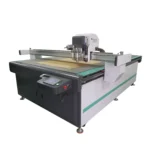
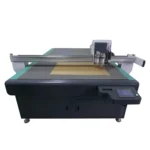
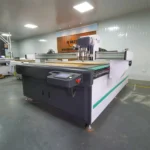

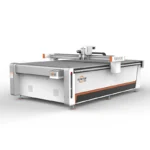

-
 Courier delivery
-
 DHL Courier delivery
-
 Warranty 1 year
-
 Free 30-Day returns

In-house knife and laser design capability — a buyer can match the cutting method to the corrugated flute profile and board grade rather than force one tooling setup across every job.
Technical Specifications
| Parameter | Value |
|---|---|
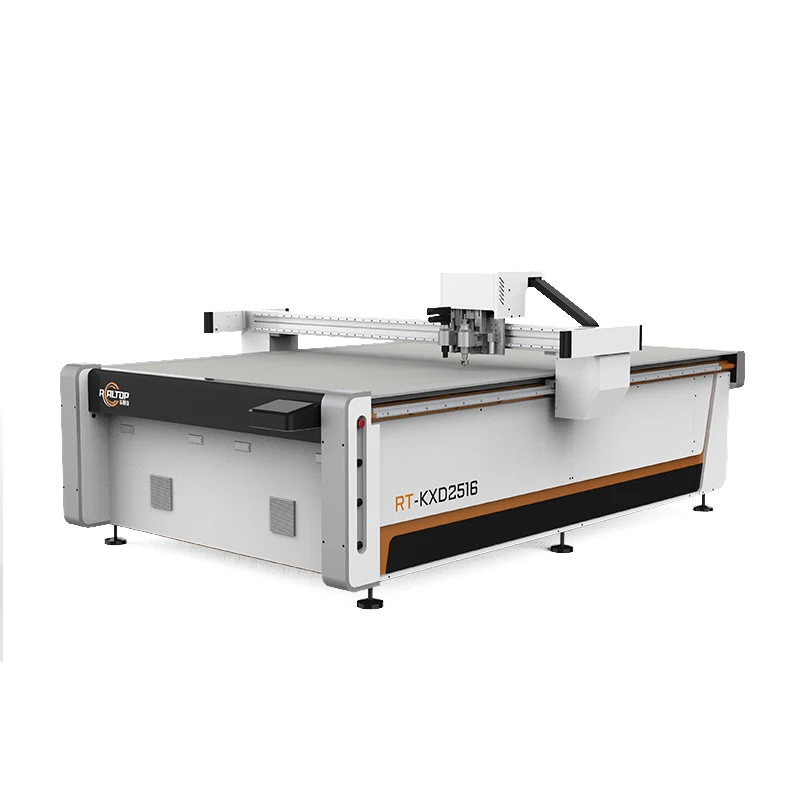
| Model | RT-D2516/RT-S2516 |
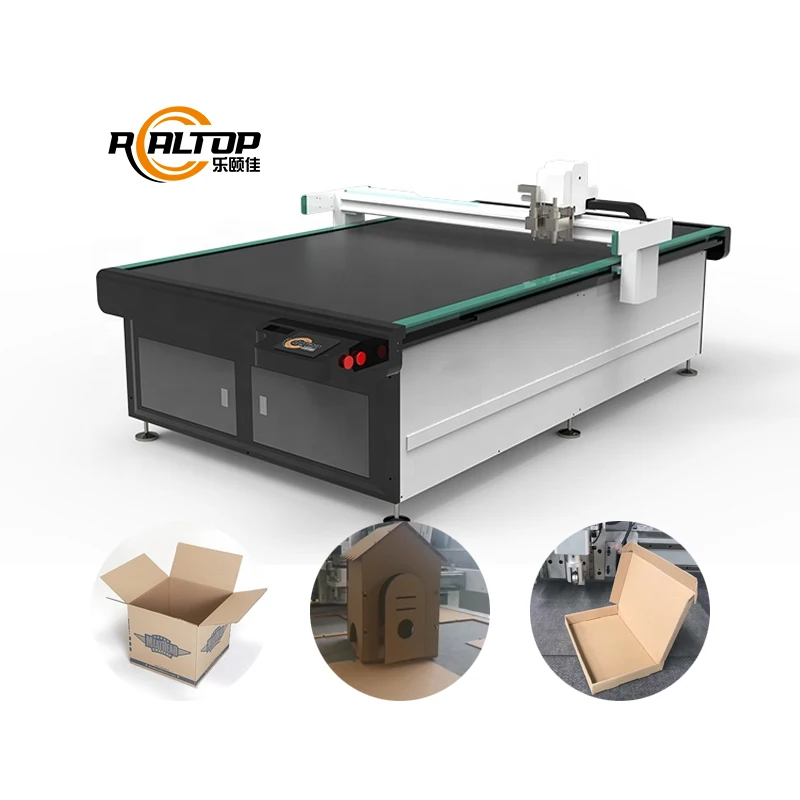
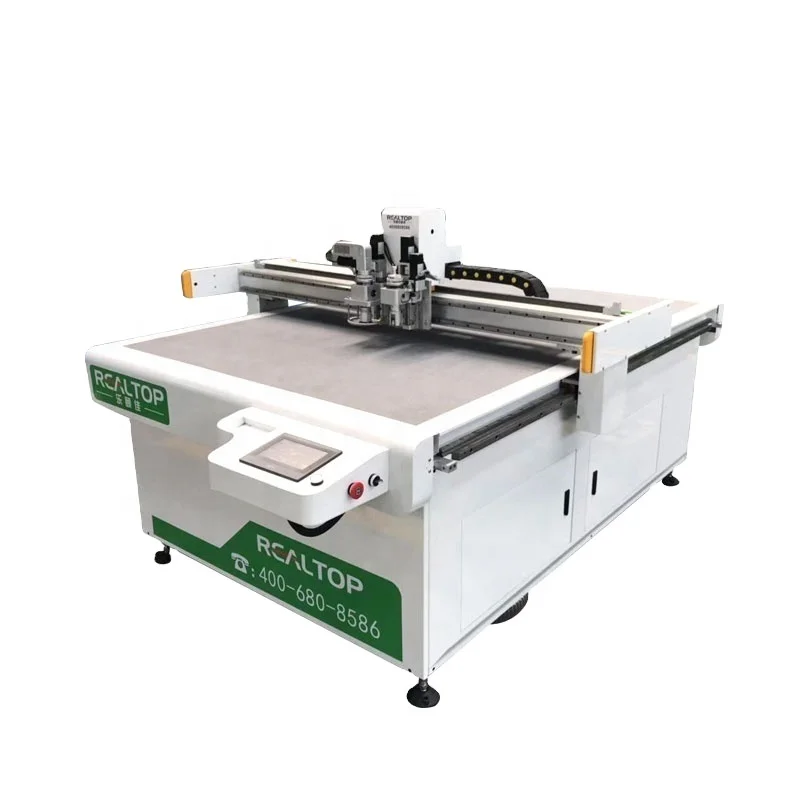
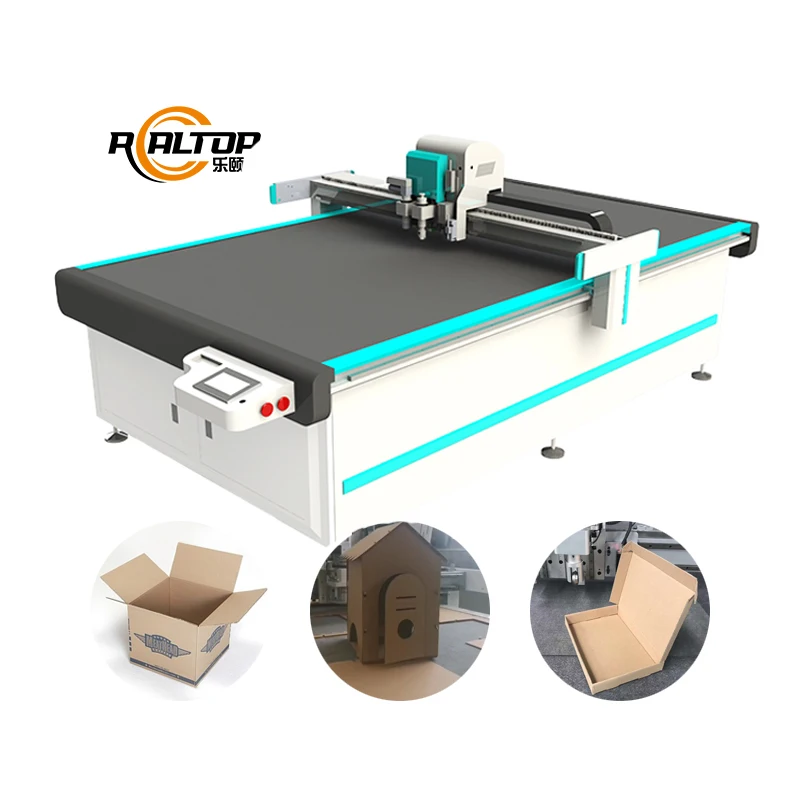
| Product Type | CNC Oscillating Knife Cutting Machine |
| Working Area | 1600 * 2500 mm |
| Machine Dimensions | 3450 × 2300 × 1250 mm |
| Rated Power | 9 kW |
| Vacuum Pump | 7.5 kW |
| Table Type Options | Flated working table / Auto feeding table |
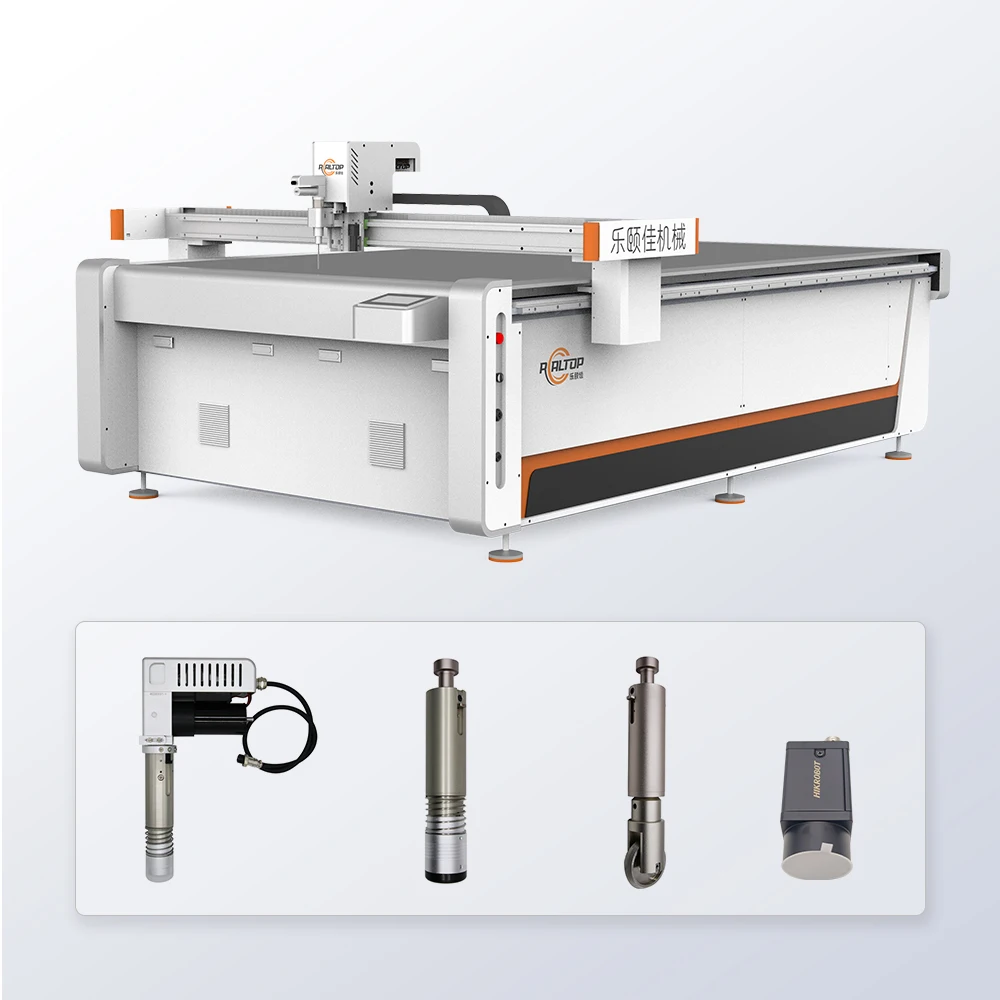
| Tool Head Options | Swiss imported knife, oscillating knife, pneumatic knife, high-power vibrating knife, circular knife, V cutting knife, drag knife, creasing wheel, dotted line knife, punching, brush |
| Translational Velocity | 800 – 2000 mm/s |
| Cutting Speed | 200 – 800 mm/s (varies with material) |
| Cutting Thickness | ≤100 mm (varies with material) |
| Repeated Accuracy | ≤0.1 mm |
| Transmission System | Digital servo motor, linear guide, synchronous belt, ball screw |
| Servo Motor Options | Delta (China) or Panasonic (Japan) |
| Visual Positioning Options | Small CCD camera mark point, panoramic camera recognition, projection positioning |
| Control Interface | Touch screen, multi-language supported |
| Compatible File Formats | PLT, DXF, AI |
| Voltage | 380V ± 10% |
| Safety Devices | Infrared sensors, anti-collision, emergency stop |
Application Suitability
| Application | Material or Output |
|---|---|
| Carton box prototyping and sample making | Corrugated cardboard, honeycomb board |
| Short-run packaging production | Multi-layer corrugated board with creasing and slotting |
| Gasket and industrial sealing | Rubber, PTFE, fiberglass, composite sheets |
| Graphic and signage finishing | Sticker film, PVC board, foam board |
| Textile and soft furnishing cutting | Fabric, non-woven fabric, carpet, leather |
Why Board Thickness Defines the Machine, Not the Working Area
A flatbed specified only by table size will fail the moment it meets a material it was never configured to hold.
I once watched a standard oscillating knife setup chew through its blade holders in two days on a five-layer corrugated job because the vacuum zoning and spindle load were sized for single-face board. The buyer had focused on the 2500 mm length, assuming any CNC oscillating knife cutting machine manufacturer would handle the rest. When the machine arrived, the small-part zones could not grip the stock, the board lifted mid-cut, and production stopped [NEED_CITE: vacuum hold-down requirements for multi-wall corrugated board]. The RT-D2516/RT-S2516 is configured after the buyer confirms their flute profile, board grade and maximum ply count, not before.
Tool Head Matching to Corrugated Grade and Flute Profile
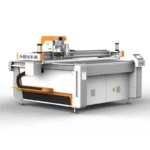
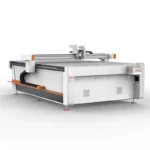
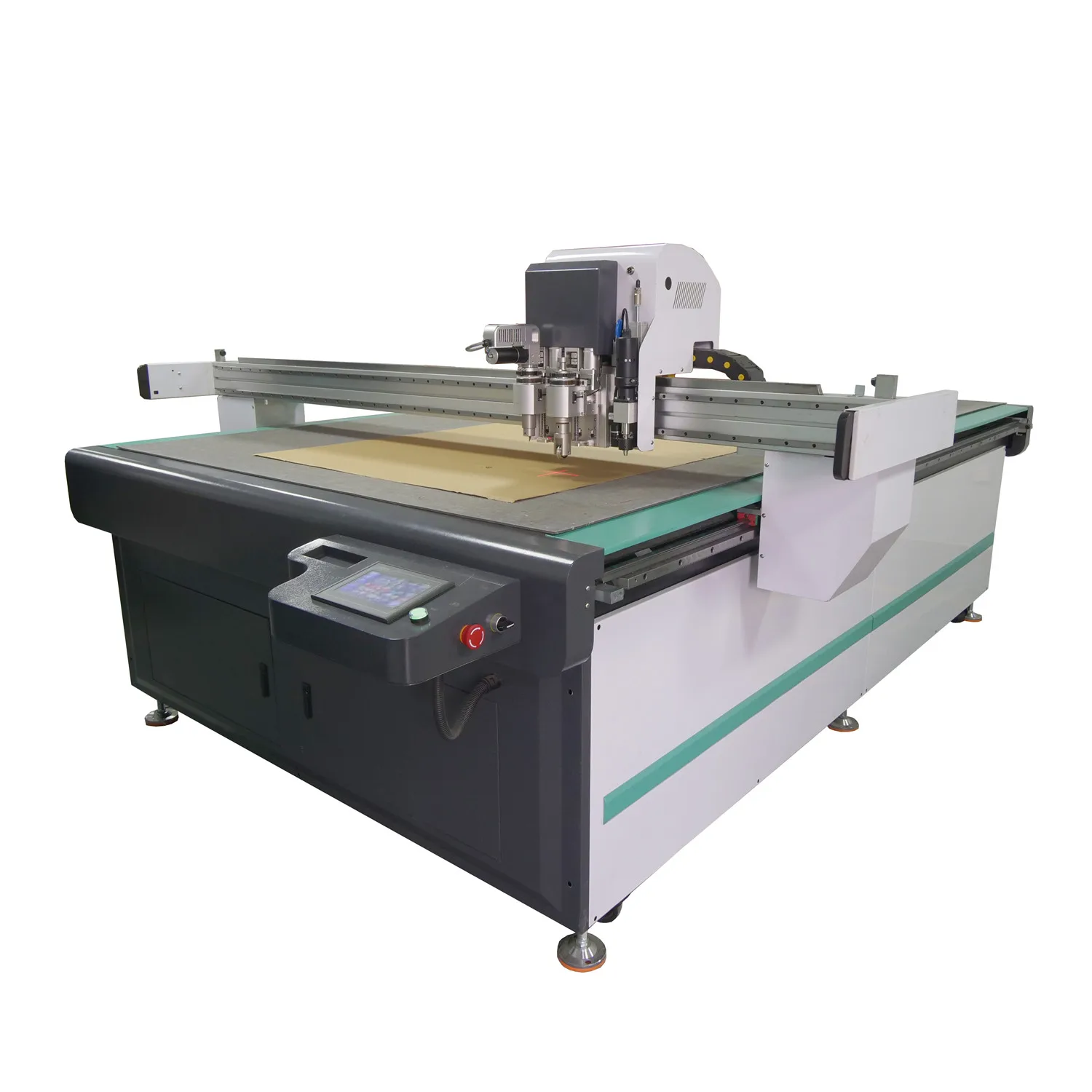
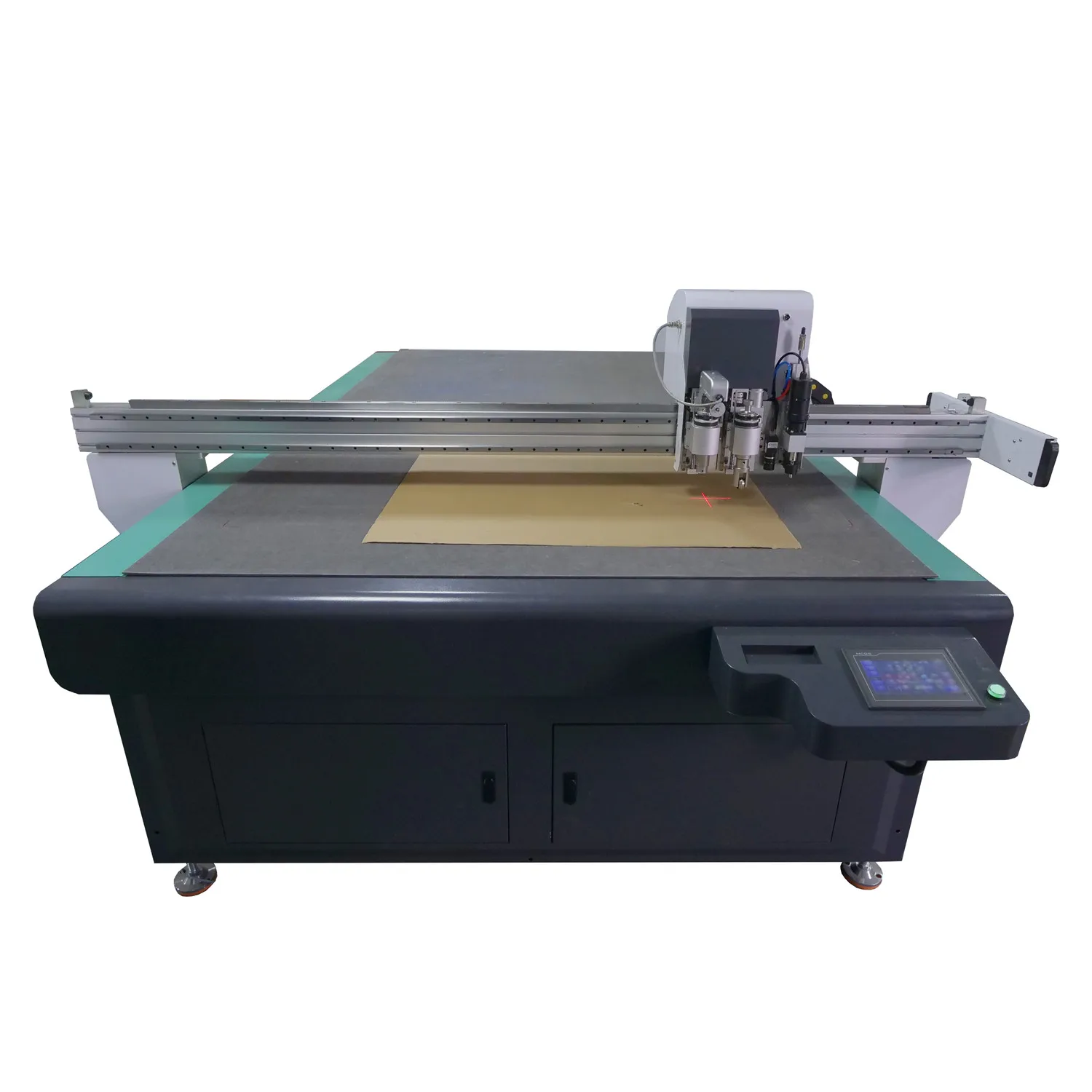
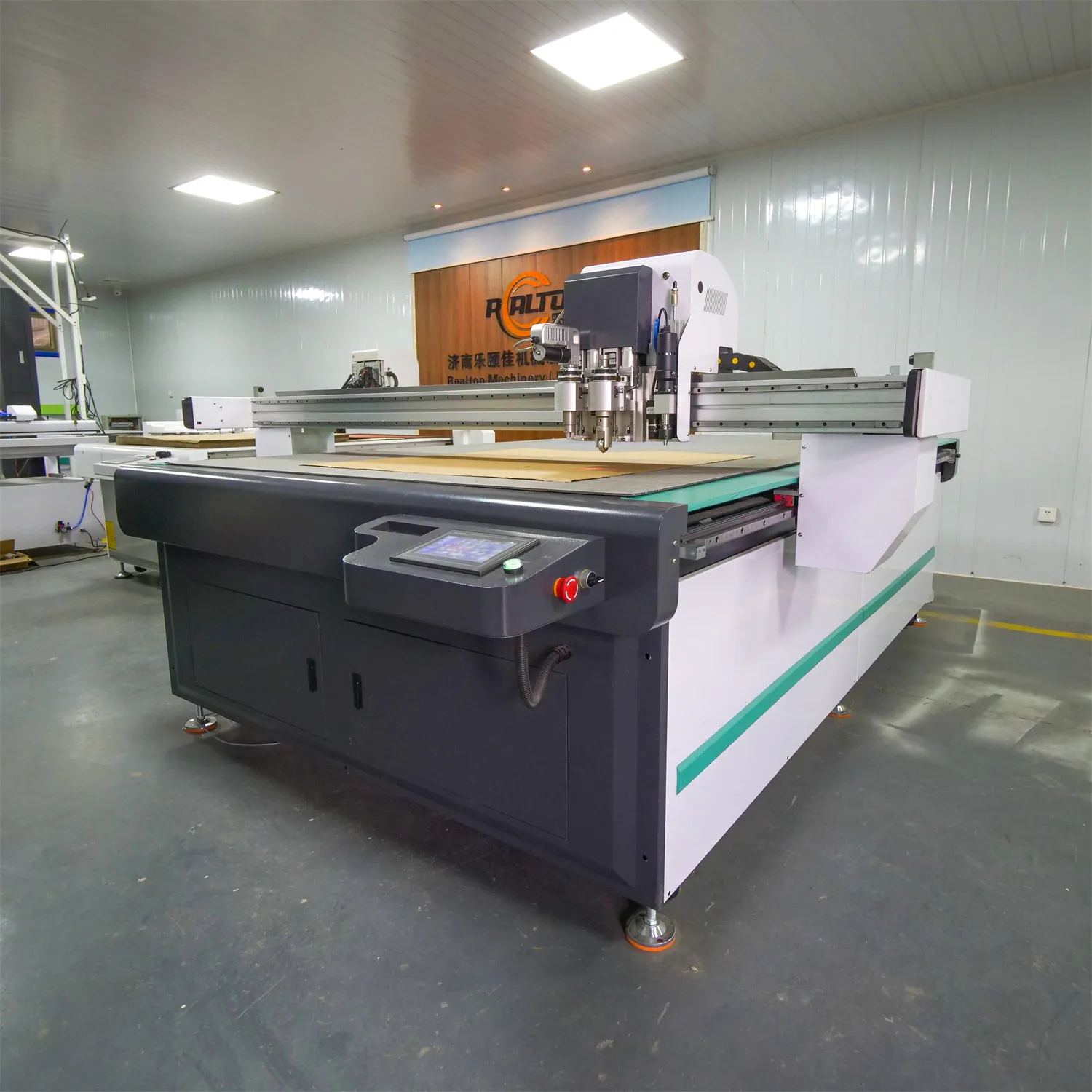
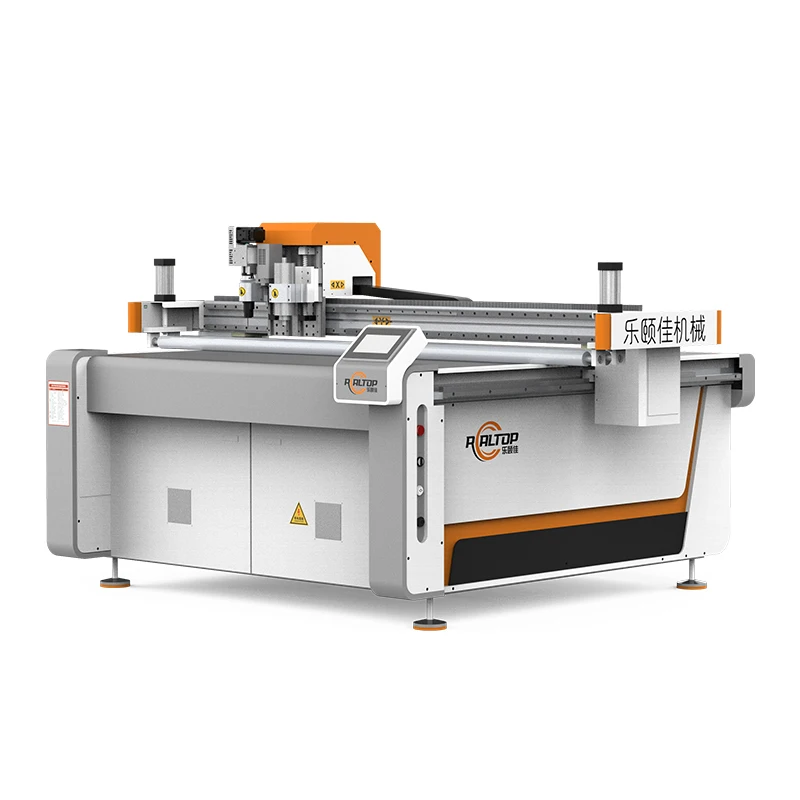
The RT-D2516/RT-S2516 supports a multi-tool head block that can carry an oscillating knife, a creasing wheel, a V-cutting knife and a drag knife simultaneously. For carton box making, this means a single pass can deliver a full cut on the outline, a crease on the fold line and a V-groove for rigid corner construction — without a manual tool change. The specific combination loaded onto the machine is decided by the buyer’s board grade and flute type, so an E-flute cosmetics box and a BC-flute shipping carton each get the tooling they actually need.
Magnesium-Aluminum Vacuum Table and Zoning for Small Parts
Holding corrugated board flat during high-speed cutting is a constant tension between suction force and air leakage through the flutes. The integrated air box design on this flatbed distributes suction across multiple independent zones. When the nesting software places small carton blanks near the edge of the sheet, the control system activates only the zones under those parts, preventing the lift that causes ragged edges or missed cuts. This CNC oscillating knife cutting machine manufacturer approach treats vacuum zoning as a configuration decision, not a fixed specification [NEED_CITE: vacuum zoning strategies for flatbed digital cutting tables].
What the Specs Mean on the Shop Floor
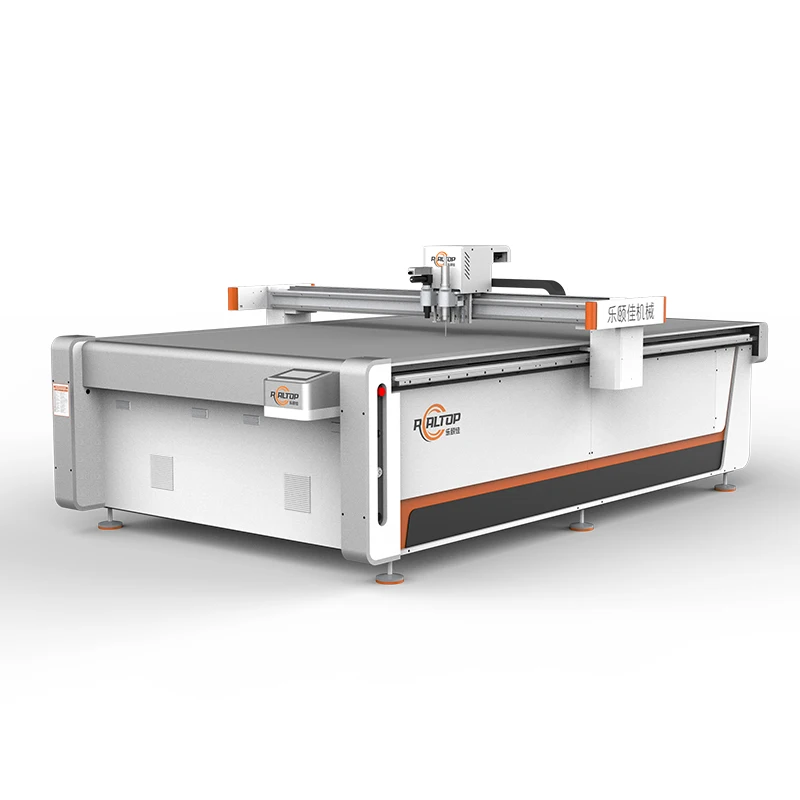
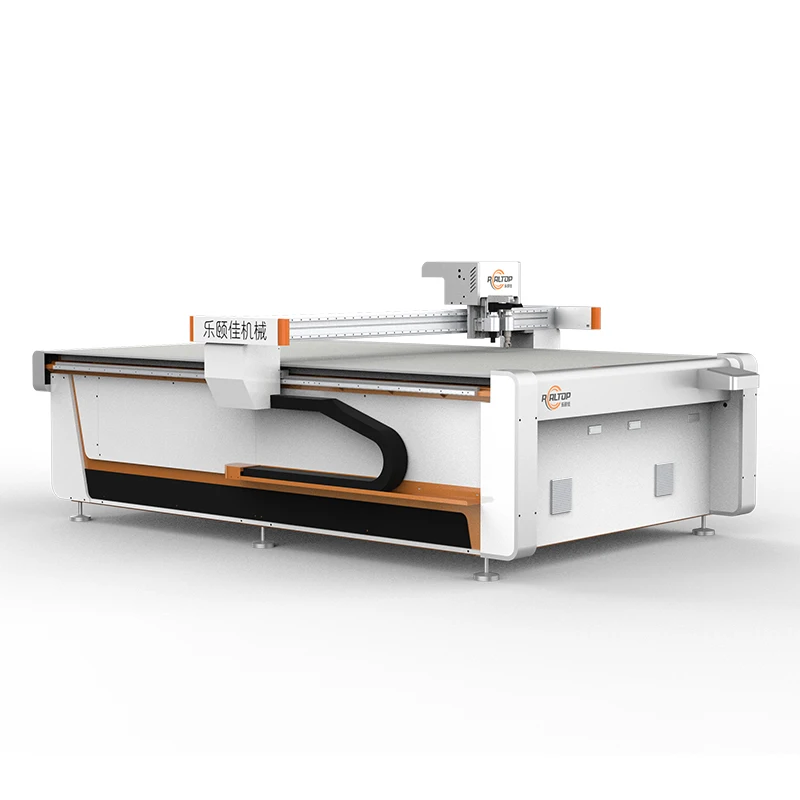
The 1600 × 2500 mm working area accommodates most standard corrugated sheet sizes used in packaging sample making and short-run production. The ≤0.1 mm repeated accuracy matters when crease lines must align with printed graphics across hundreds of blanks. The 9 kW rated power covers the simultaneous draw of the spindle, vacuum pump and servo drives under continuous load. The option between Delta and Panasonic servo motors lets a buyer balance cost against the response speed needed for intricate contour work. Cutting speed is listed as 200–800 mm/s because the actual achievable rate depends entirely on the board thickness and the tool head in use — a figure that only becomes meaningful once the buyer’s material is on the table.
The Hidden Cost of Skipping the Sample Cut
When a flatbed arrives without a prior sample cutting report on the buyer’s actual board, the first week of production becomes the commissioning period. Tool head swaps, vacuum zone re-mapping and feed rate adjustments all happen on the buyer’s floor, on the buyer’s time. I have seen carton sample makers lose an entire short-run order waiting for the right creasing wheel pressure to be dialed in after delivery [NEED_CITE: commissioning delays from untested material-machine pairings]. Requesting a sample cut before the order is confirmed collapses that risk into the quotation stage.
Why Source This Machine from the Jinan Factory
The design team and production floor operate under one roof, so a tool head modification requested during sample testing can be incorporated into the build without passing through a third-party integrator. The thick-walled seamless steel frame undergoes high-temperature tempering and CNC machining center finishing for dimensional stability, a process the buyer can verify in the factory test record. Voltage, plug type and control panel language are confirmed against the buyer’s local electrical standard before production starts, not discovered at the port of entry. The same engineering group builds both knife and laser systems, so if a buyer’s material portfolio shifts toward acrylic or textile, the conversation about switching cutting methods happens with people who already know the machine frame.
Documentation & Verification
- Machine specification sheet listing confirmed tool heads and vacuum zone map
- Electrical schematic with voltage and frequency matched to target market
- Sample cutting report produced on buyer’s own corrugated board grade
- Factory test record documenting repeatability and cutting edge quality
- Software licence and file format compatibility note for PLT, DXF and AI workflows
- Spare parts list with recommended consumables for the configured tool heads
Installation, Commissioning & Support
- Floor space planning around the 3450 × 2300 mm footprint and material infeed clearance
- Dedicated 380V circuit sized for the 9 kW machine load plus 7.5 kW vacuum pump
- Touch screen language set to buyer’s preference before first power-on
- Creasing wheel pressure and oscillating knife stroke calibrated on buyer’s board
- Operator training covering tool head changes, nesting import and zone activation
- Consumable blade and creasing wheel inventory aligned with daily production volume
What to Prepare Before Requesting a Quotation
Send the corrugated board grade, flute profile and maximum ply count you intend to cut, along with a representative DXF or AI file of your most complex carton blank. Confirm your workshop voltage and frequency, the control panel language your operators need, and whether your production volume justifies an auto-feeding table over a static flatbed. If you have printed sheets requiring contour-following cuts, specify which camera positioning option matches your print registration marks.
Frequently Asked Questions
Q: How is the tool head and table configuration specified for my corrugated board grade and thickness?
A: The buyer submits a sample of the actual board, including flute profile and ply count. We run test cuts with different tool head combinations and vacuum zone settings, then document the result in a sample cutting report. The confirmed tool heads and zone map are written into the machine specification sheet before production begins.
Q: What voltage, plug type and control language options are confirmed before shipment?
A: The electrical schematic is prepared with the buyer’s local voltage and frequency, and the plug type is matched to the destination market. The touch screen control panel is set to the requested language from the supported list — English, Russian, Italian, Chinese — or a custom language is arranged. All three are confirmed in writing before the machine enters assembly.
Q: Can I send my own material for sample cutting before placing the order?
A: Yes. Sending your own corrugated board or packaging material is the standard first step. We produce a sample cutting report showing edge quality, crease definition and cutting speed on that specific material. The buyer reviews the report before committing to the order, so there are no surprises when the machine arrives.
Q: How does CCD contour recognition perform on printed corrugated sheets at production speed?
A: The CCD camera options — small mark point positioning or panoramic recognition — are tested during the sample cutting phase using the buyer’s actual printed sheets. The test confirms whether the camera tracks the registration marks reliably at the cutting speed required for that board grade. The result is included in the sample cutting report.
You may also like

商品评价
Clear filtersThere are no reviews yet.