




-
 Courier delivery
-
 DHL Courier delivery
-
 Warranty 1 year
-
 Free 30-Day returns

Precision tool-head selection before the order is signed — DTCP-A4 configurations are matched to your exact sticker stock and board grade, sample-cut at our Jinan factory, and verified against your artwork registration marks before production begins.
Technical Specifications
| Parameter | Value |
|---|---|
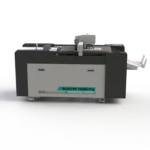
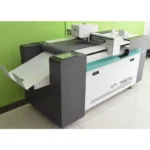
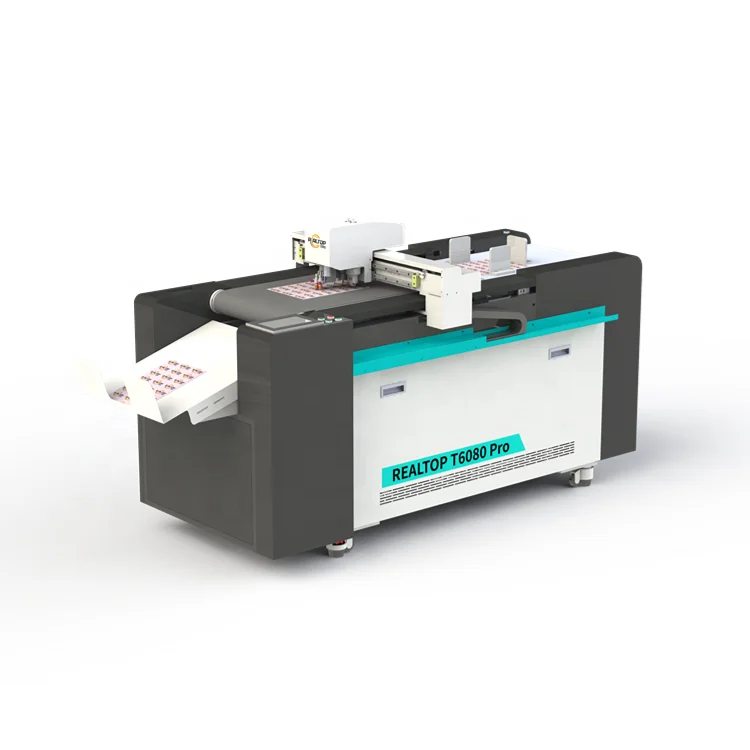
| Model | DTCP-A4 (RTT6080 / RTT6080 Pro) |
| Product Type | CNC Flatbed Digital Cutting Machine |
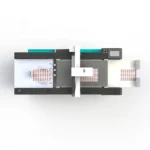
| Max Working Area | 600 mm × 800 mm |
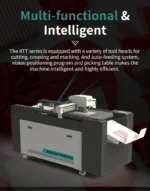
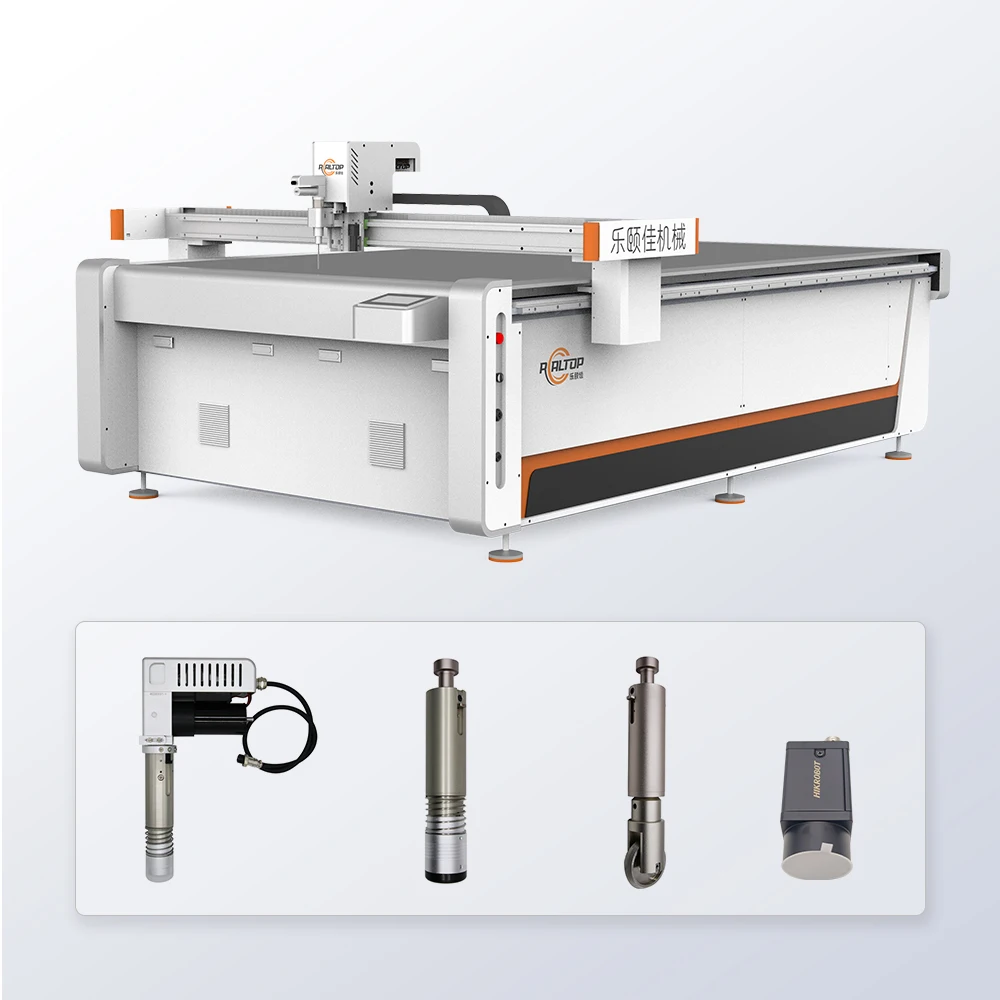
| Tool Group | Cutting tool, kiss cutting tool, creasing tool, CCD camera, high speed oscillating knife (Pro version) |
| Max Cutting Speed | 1500 mm/s (according to the material) |
| Cutting Thickness | ≤ 2 mm (RTT6080); ≤ 5 mm (RTT6080 Pro) |
| Positioning Accuracy | 0.05 mm |
| File Format Compatibility | DXF, PLT, PDF, AI |
| Transfer Method | Ethernet port |
| Rated Power | 3.2 kW |
| Voltage | 220 V / 380 V, 50 Hz |
| Control System | CNC |
| Warranty | One year for whole machine |
Application Suitability
| Application | Material or Output |
|---|---|
| Sticker and label contour cutting | Vinyl, self-adhesive film, printed decals on release liner |
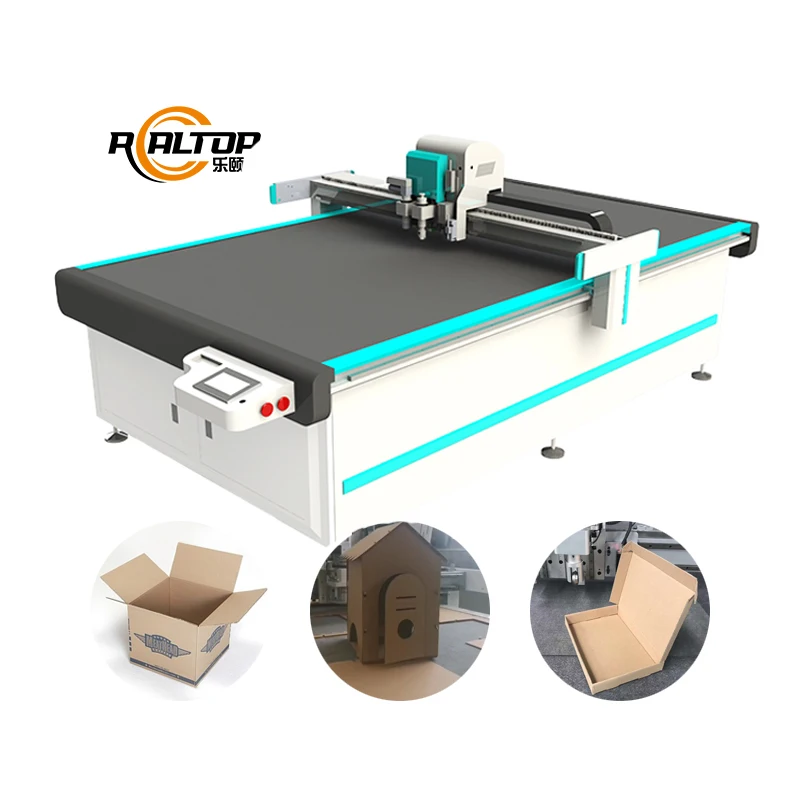
| Packaging prototyping and sample making | Thin card, grey board, corrugated E-flute, folding carton stock |
| Creasing and kiss-cut operations | Coated and uncoated board up to 2 mm (standard) or 5 mm (Pro) |
| Small-format flexible material cutting | Thin foam, gasket sheet, PVC, soft leather for specialty parts |
Why the Wrong Tool Head Fails on Printed Sticker Stock
Buyers who specify a cutting table on working area alone often discover mid-production that a standard drag knife tears vinyl edges or that the CCD camera cannot lock onto low-contrast registration marks at full travel speed. Confirming tool head, blade geometry and CCD performance on your own printed material eliminates this class of failure before the machine ships. A CNC knife cutting machine manufacturer that skips pre-order sample runs leaves the buyer absorbing the cost of on-site tool changes and re-commissioning downtime.
I once watched a packaging shop burn two days swapping blades and re-tuning offsets after a standard drag knife crushed the flute on short-run E-board. The fix was a different oscillating tool and revised vacuum zoning, but only after the fact.
Machine Build and Motion Architecture
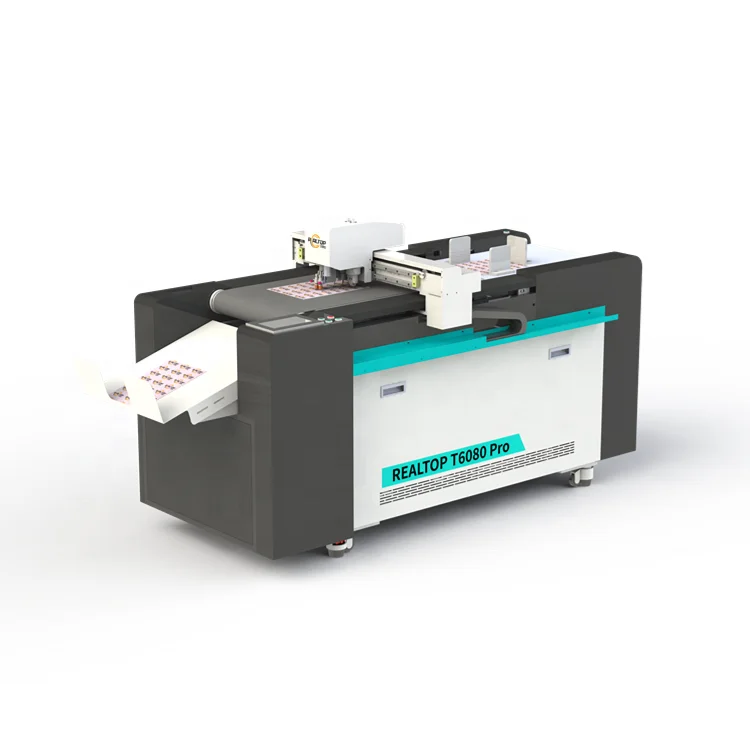
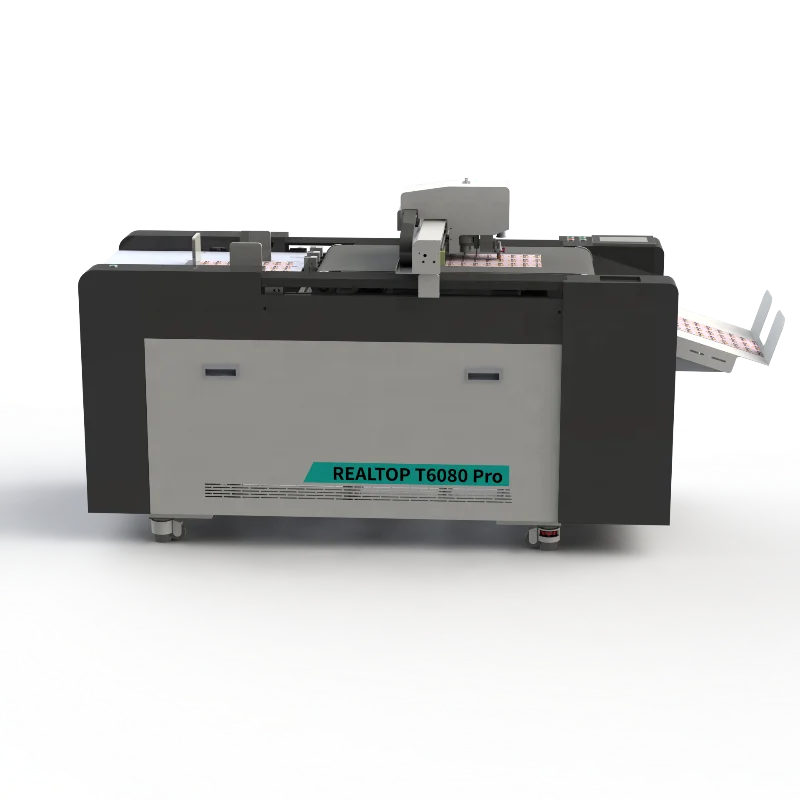
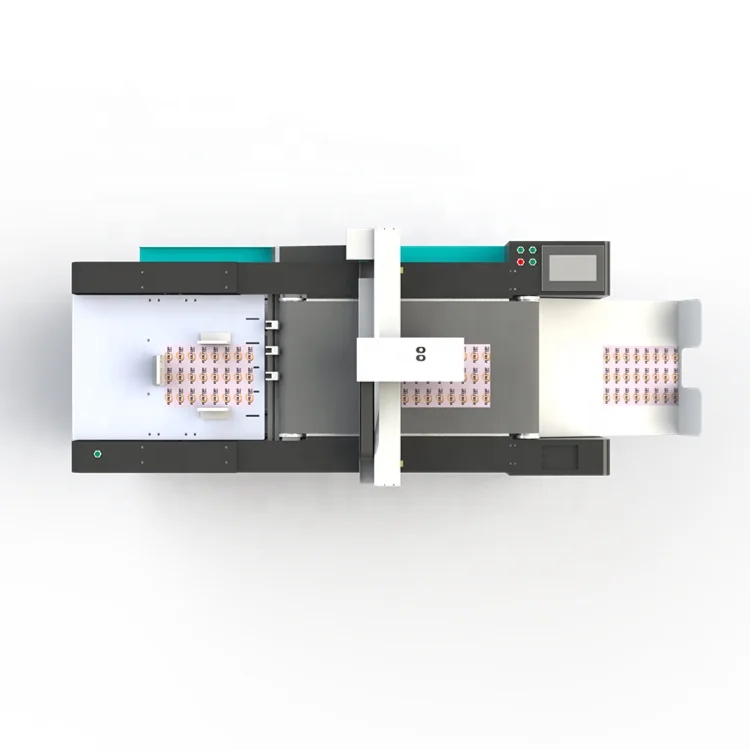
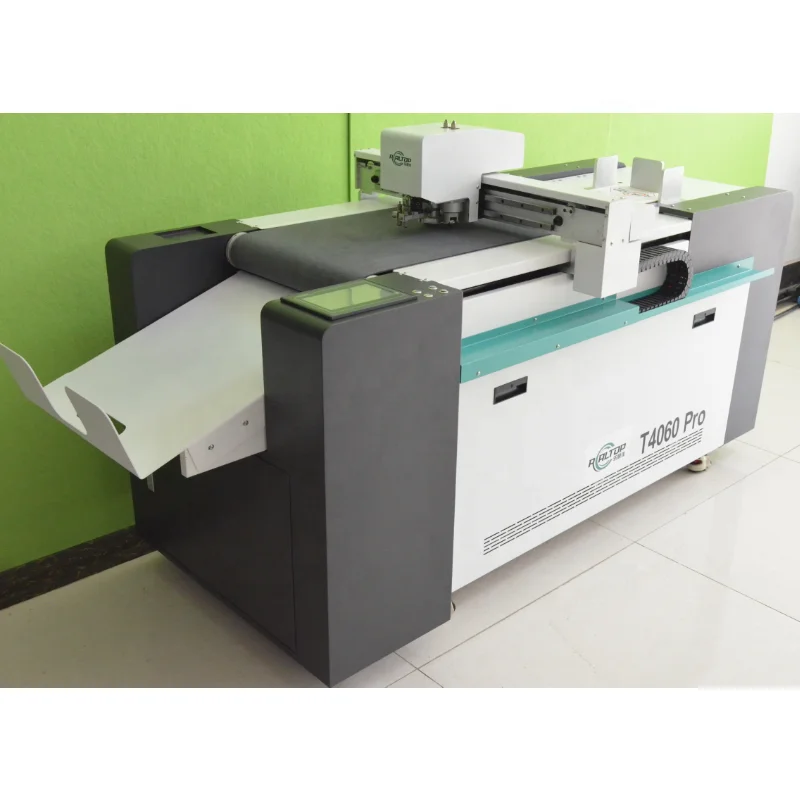
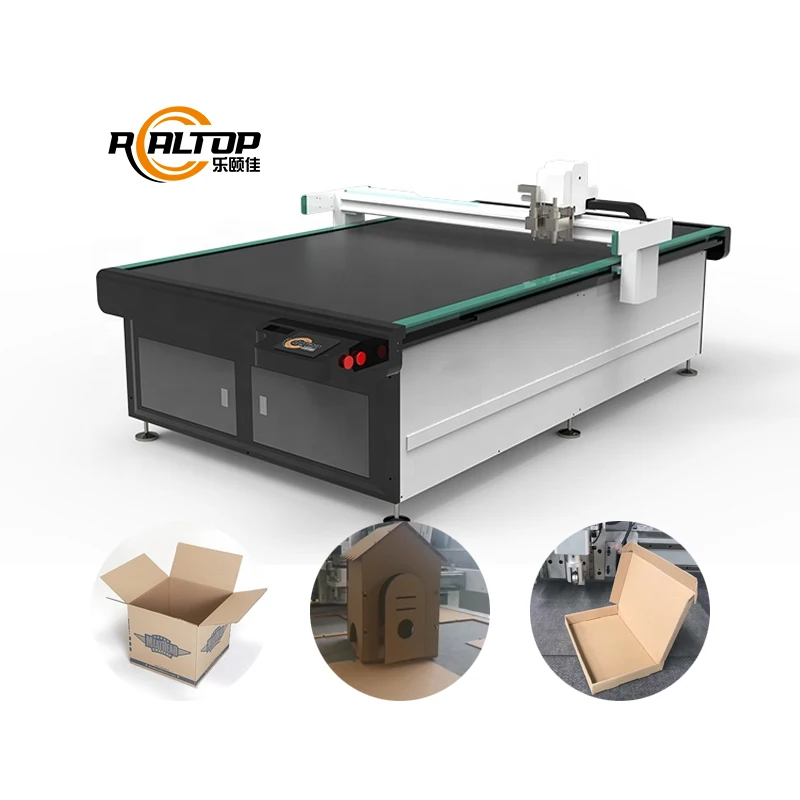
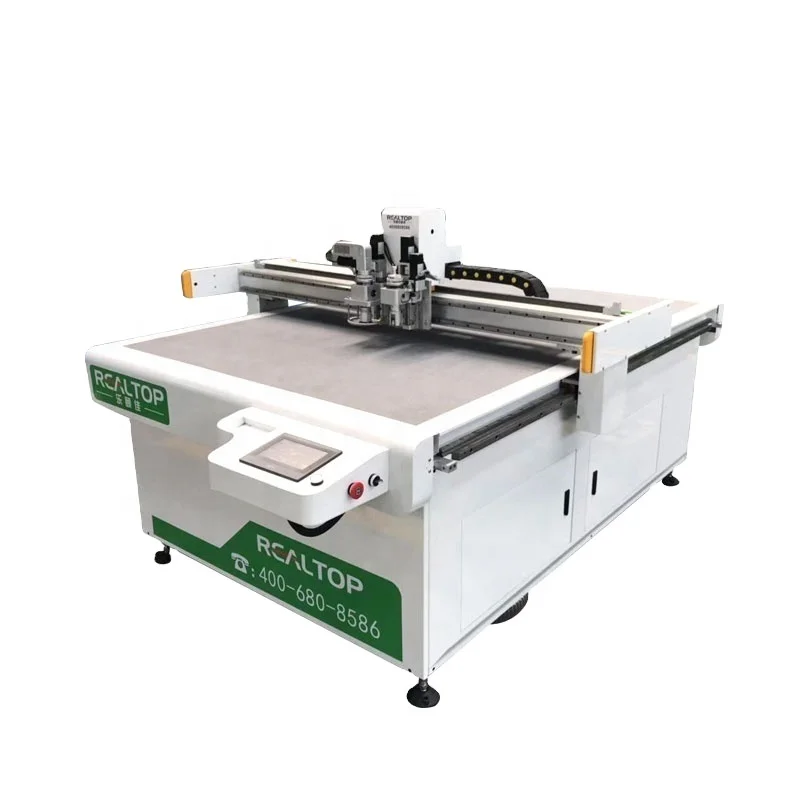
The DTCP-A4 is designed and assembled under one roof at our Jinan production facility, which means the frame, gantry and motion components are specified together rather than sourced as isolated sub-assemblies. The 600 × 800 mm bed is sized for short-run sticker sheets and packaging blanks where full-format tables would waste floor space and vacuum capacity. Gantry rigidity over this span keeps the 0.05 mm positioning accuracy consistent from corner to corner.
Tool Head Flexibility on a Single Gantry
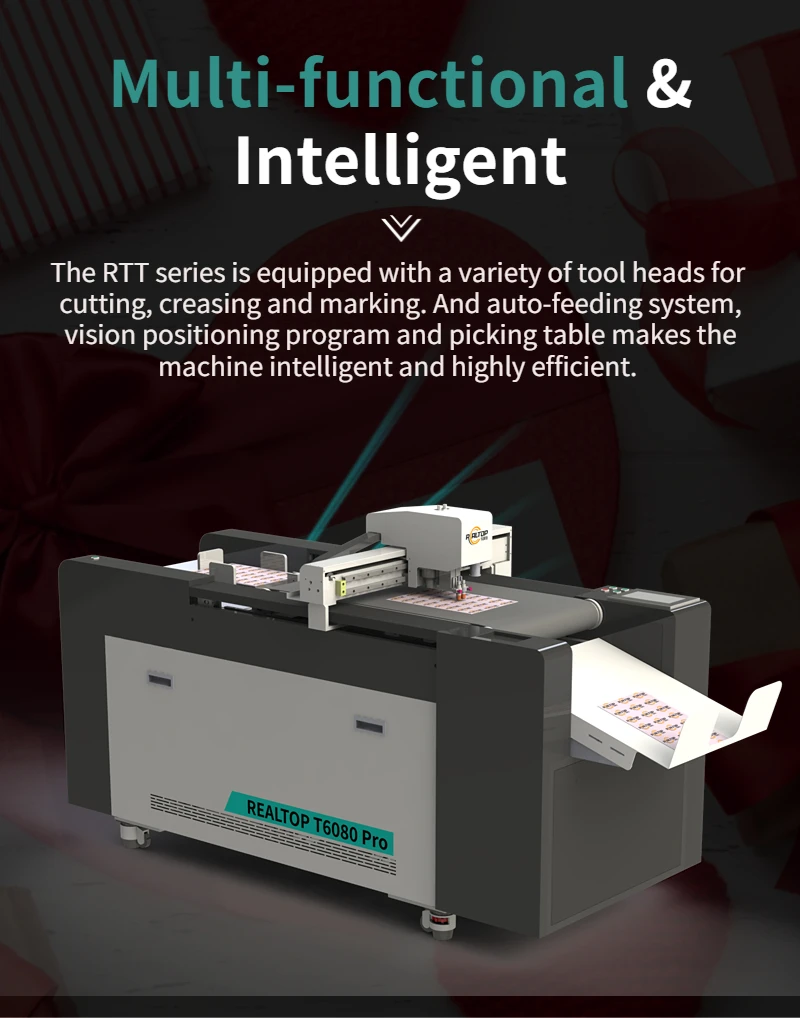
Four tool positions — cutting knife, kiss-cut blade, creasing wheel and, on the Pro variant, a high-speed oscillating knife — mount on one gantry so a single operator can switch between through-cut and kiss-cut jobs without re-fixturing the sheet [NEED_CITE: typical tool change intervals on short-run digital finishing]. The CCD camera sits alongside the tool block and reads printed contour marks directly in the cutting coordinate system, avoiding a separate registration pass. This layout suits producers running dozens of SKU variants per shift where makeready minutes matter more than raw traverse speed.
Reading the Specs That Actually Affect Cut Quality
Positioning accuracy at 0.05 mm is the figure that governs how tightly the kiss-cut blade follows a printed contour without nicking the release liner — a tolerance that matters when sticker designs have sub-millimetre bleed zones. The 1500 mm/s maximum cutting speed is material-dependent; dense vinyl will pull that number down while thin film allows full travel. Cutting thickness splits cleanly between the standard RTT6080 at 2 mm and the Pro at 5 mm, so a buyer working grey board above 2 mm must specify the Pro at order stage, not attempt to force depth through a standard head. File format support across DXF, PLT, PDF and AI means the machine accepts artwork from the major packaging and label design platforms without an intermediate conversion step [NEED_CITE: file format interoperability in digital finishing workflows]. Ethernet transfer avoids USB stick handling on the shop floor and supports networked file push from a central nesting station.
The Hidden Cost of Skipping Voltage and Software Verification
Voltage mismatches are the most common avoidable commissioning delay on export orders. A machine wired for 380 V three-phase that arrives at a 220 V single-phase shop cannot run until a transformer or rewire is completed, and control electronics can be damaged if energised at the wrong potential. The same applies to control language: an interface locked to a language the local operator cannot read doubles training time and invites parameter-entry errors. These issues are solvable at the quotation stage but expensive once the crate is open [NEED_CITE: electrical supply standards for exported industrial equipment].
Why Buyers Source This CNC Flatbed Cutting Table From Realtop
In-house design covering both knife and CCD integration means the camera alignment is tuned against the knife path at the factory, not calibrated for the first time on the buyer’s floor. Tool head and table configuration are signed off per material sample before production starts, so the machine arrives matched to the buyer’s stock rather than generic. Sample cutting on the buyer’s own sticker or board material is standard, generating a written report that documents edge quality, hold-down behaviour and achievable speed.
Software compatibility is confirmed at order — the buyer sends a production file, we run it through the nesting and cutting workflow and return the result before the deposit is placed. Voltage, plug type and control language are locked in writing on the electrical schematic, preventing the most common export commissioning surprises.
Documentation & Verification
- Machine specification sheet listing confirmed tool heads and bed configuration for DTCP-A4
- Electrical schematic with voltage and frequency confirmation before build start
- Sample cutting report on buyer’s own sticker or board material with edge photographs
- Tool head and table configuration list signed off prior to production
- Software licence and file format compatibility note shipped with machine
- CE declaration where applicable with export documentation package
Installation, Commissioning & Support
- 3.2 kW rated power requires a dedicated 16 A circuit; confirm local supply matches 220 V or 380 V selection
- 600 × 800 mm bed footprint fits standard workshop door widths for placement without structural modification
- Ethernet port enables network file transfer; confirm CAT5 run to intended machine location before delivery
- Vacuum table zoning is configured for small sticker formats during commissioning to prevent edge lift
- First-article test on buyer’s sticker stock conducted on-site to validate CCD tracking and kiss-cut depth
- Spare blade and creasing wheel kit included to cover consumable replacement during initial production months
Request a Material-Specific Configuration Quote
Send your typical sticker substrate, board grade and thickness range along with a sample printed sheet so we can run CCD tracking and edge quality tests on the DTCP-A4 before quoting. Specify your local voltage and frequency, preferred control language and whether your existing workflow outputs DXF, PLT, PDF or AI. If you run a Pro-depth requirement above 2 mm, flag the thickest material in the enquiry so the correct head is priced from the start.
Frequently Asked Questions
Q: How do I confirm the right tool head for my sticker material before ordering?
A: Send a sample roll or sheet of your actual stock — we run it on the DTCP-A4 with the candidate tool heads and provide a sample cutting report showing edge quality, hold-down behaviour and achievable speed. The configuration is then locked into the order specification so the machine ships matched to your material, not a generic default.
Q: Can the CCD camera track my printed marks at the speed I need to run?
A: The CCD on the DTCP-A4 reads registration marks in the cutting coordinate system, but tracking reliability depends on mark contrast, size and print consistency. We test your printed sheet at progressively higher speeds during sample cutting and report the maximum reliable feed rate so you know the production envelope before committing to the order.
Q: What voltage and control language options are confirmed before shipment?
A: The DTCP-A4 supports 220 V or 380 V at 50 Hz, and the exact configuration is recorded on the electrical schematic signed at order stage. Control language is selected from available options and documented on the same sheet, so the operator interface matches your shop floor requirements when the machine is powered on for the first time.
Q: What sample cutting is done on my material before I commit?
A: We cut your supplied sticker or board stock using the proposed tool heads and CCD settings, then issue a written report covering edge finish, registration accuracy, material hold-down performance and recommended cutting parameters. This report accompanies the quotation so the buyer sees measured results, not generic capability claims, before the deposit is placed.
Q: What OEM and custom configuration options are available from the factory?
A: Because design and assembly happen at the same facility, the DTCP-A4 can be configured with specific tool head combinations, vacuum zoning layouts and bed accessories to match a buyer’s production mix. OEM branding, custom control panel layouts and specialised software integrations are discussed at enquiry stage and quoted with confirmed lead times.
You may also like

商品评价
Clear filtersThere are no reviews yet.