





-
 Courier delivery
-
 DHL Courier delivery
-
 Warranty 1 year
-
 Free 30-Day returns

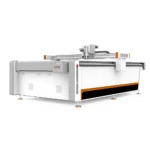
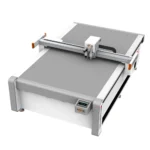
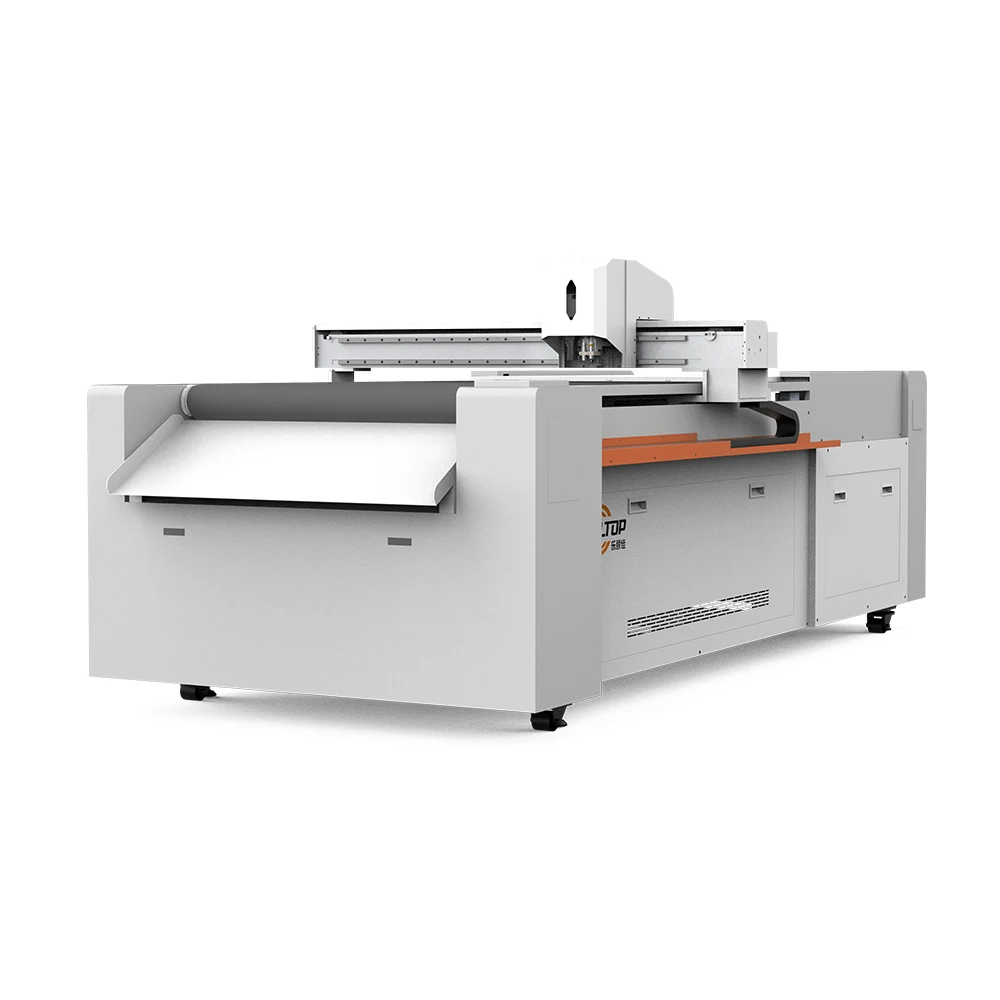
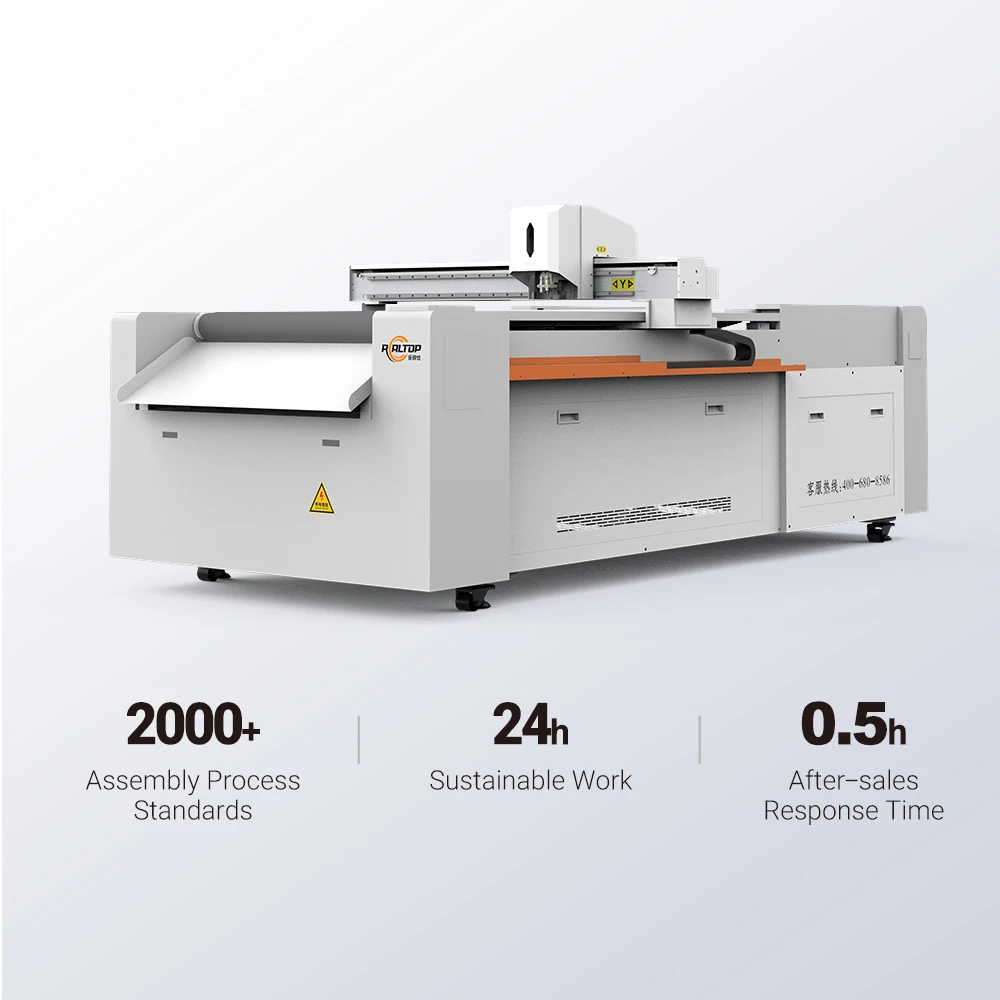
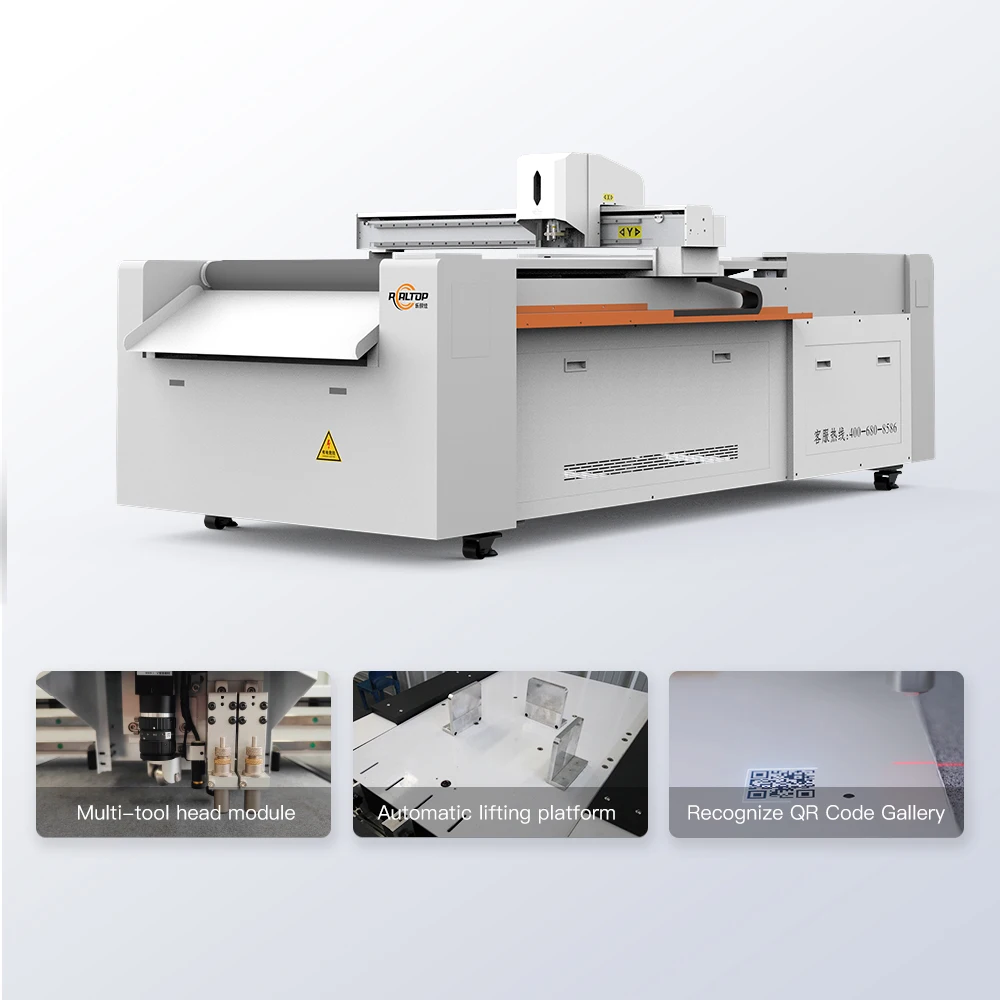
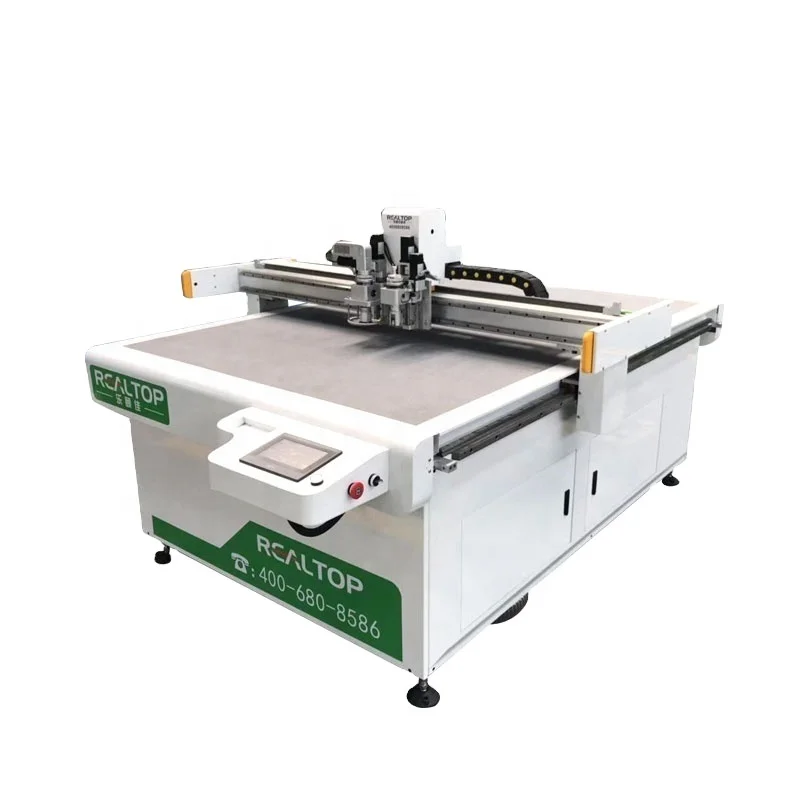
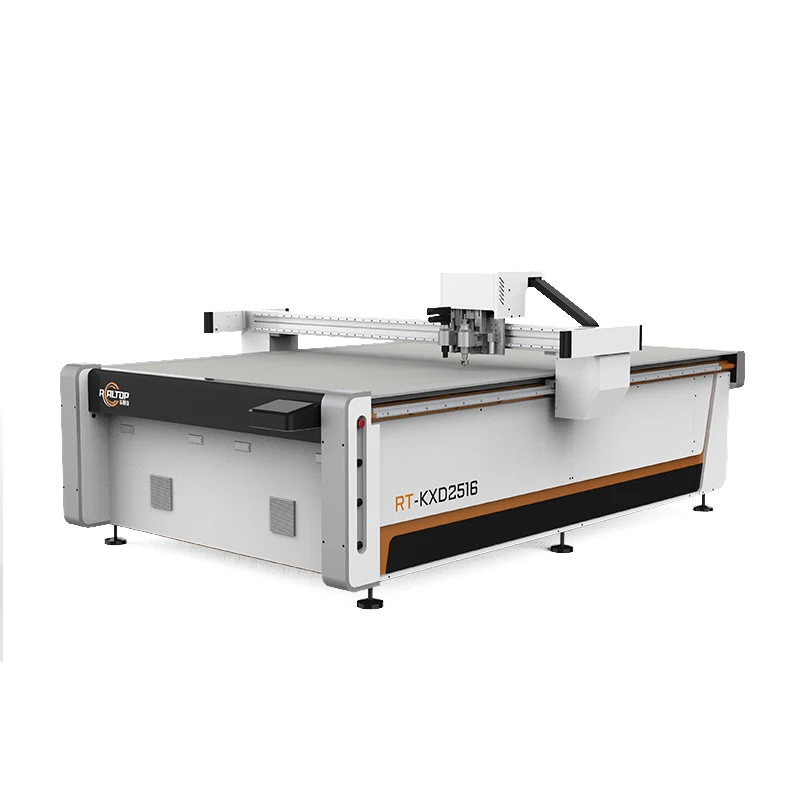
Material-Matched Configuration — Realtop designs and builds each T-series plotter in-house, selecting knife tooling, vacuum zoning and CCD optics based on the buyer’s actual stock rather than a fixed catalogue page.
Technical Specifications
| Parameter | Value |
|---|---|
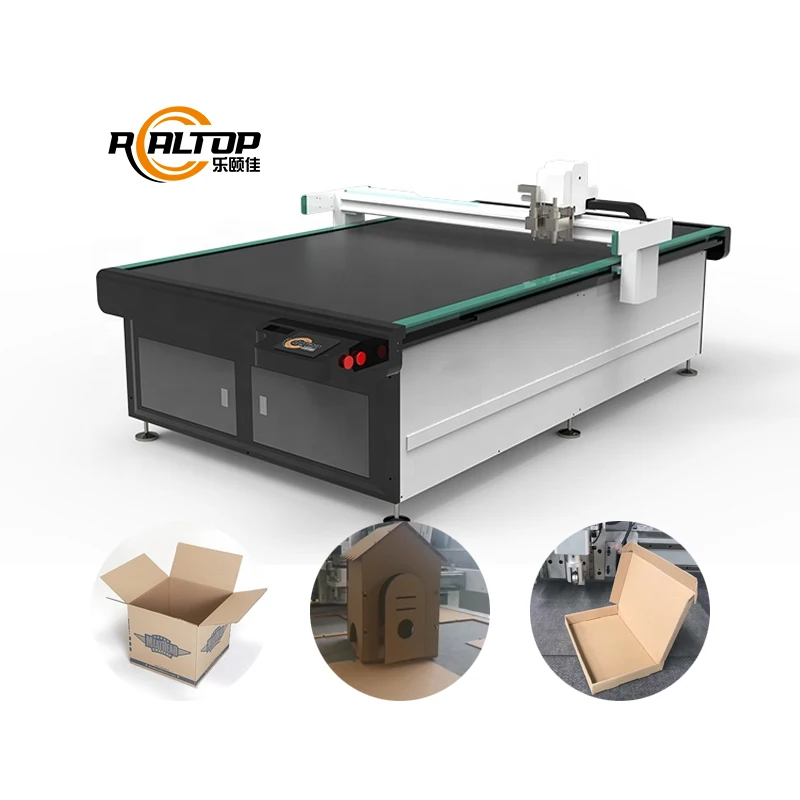
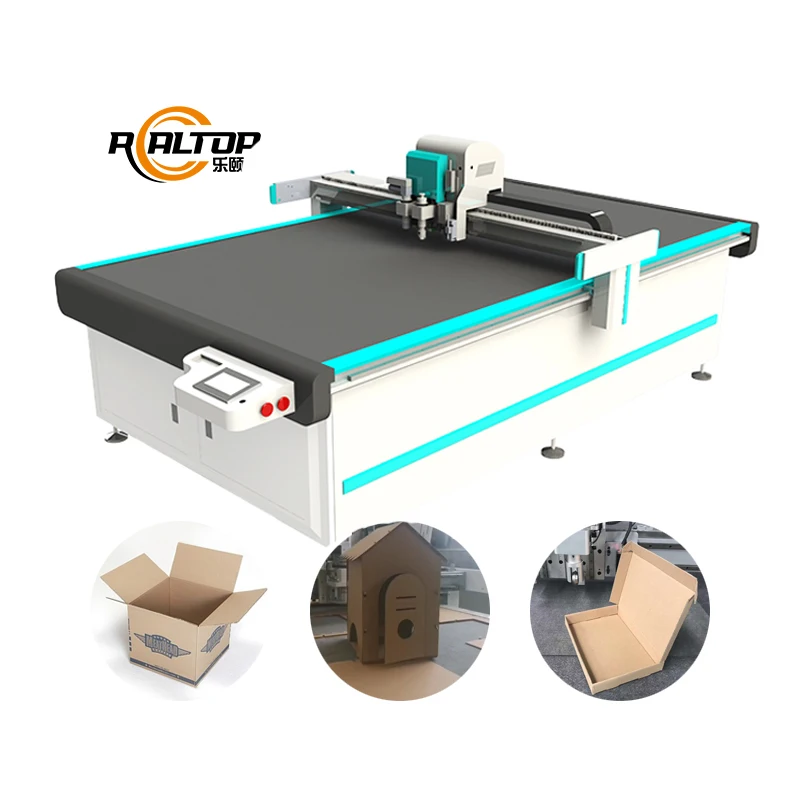
| Product Type | CNC Oscillating Knife Cutting Machine |
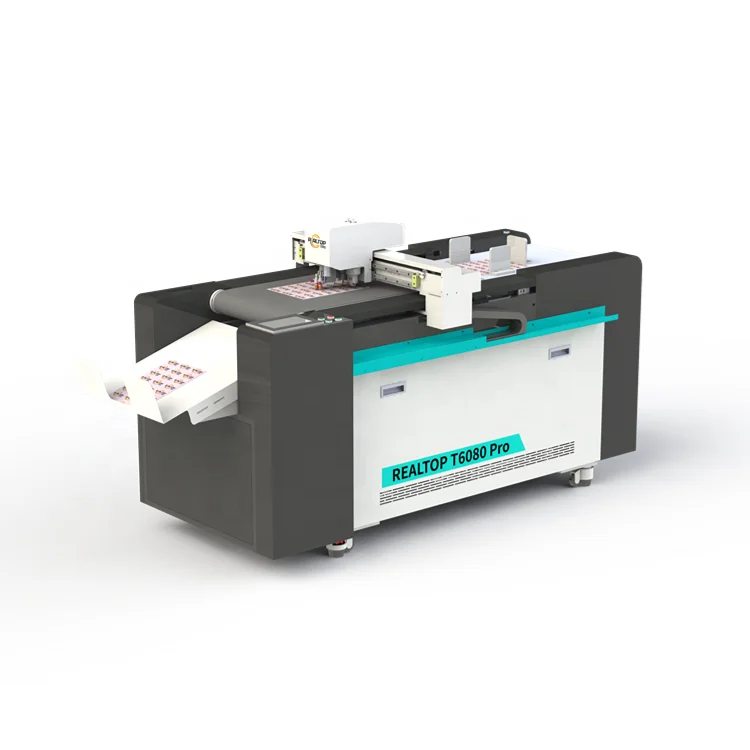
| Working Area Options | 400×600 mm / 600×800 mm / 900×1200 mm |
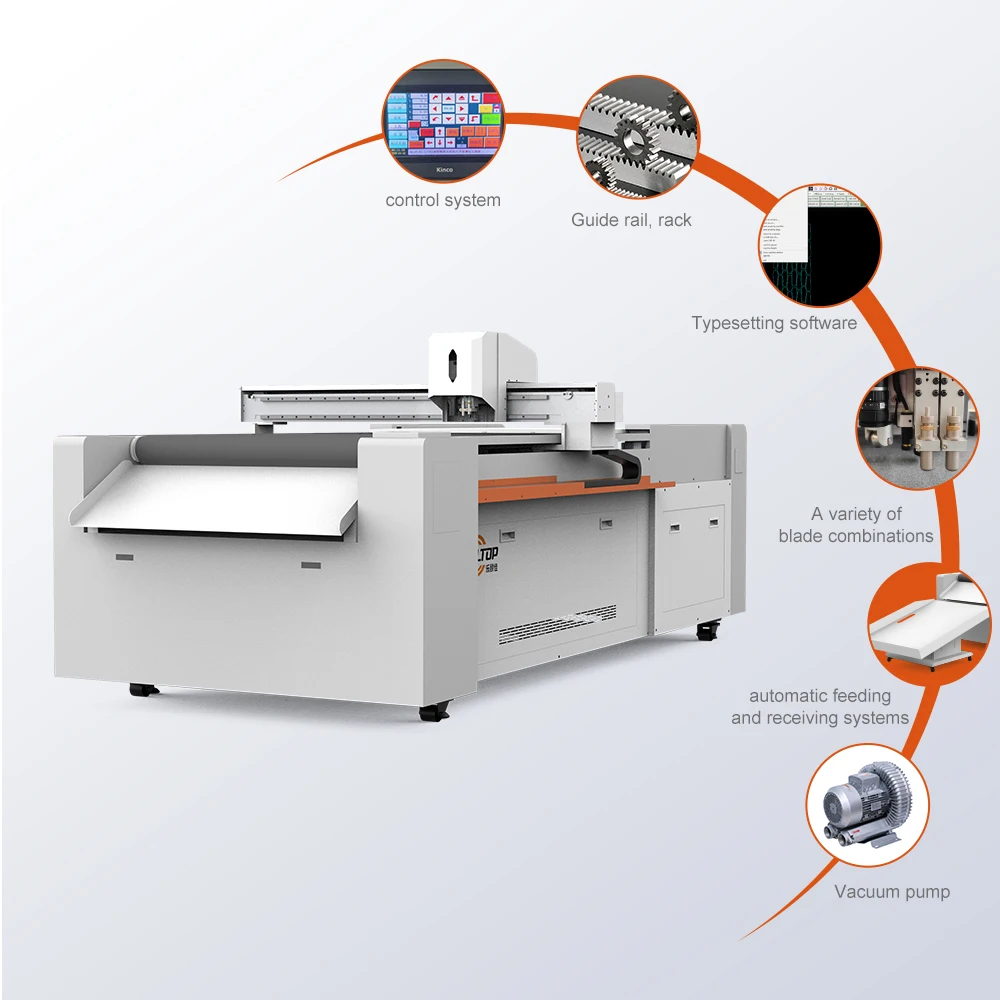
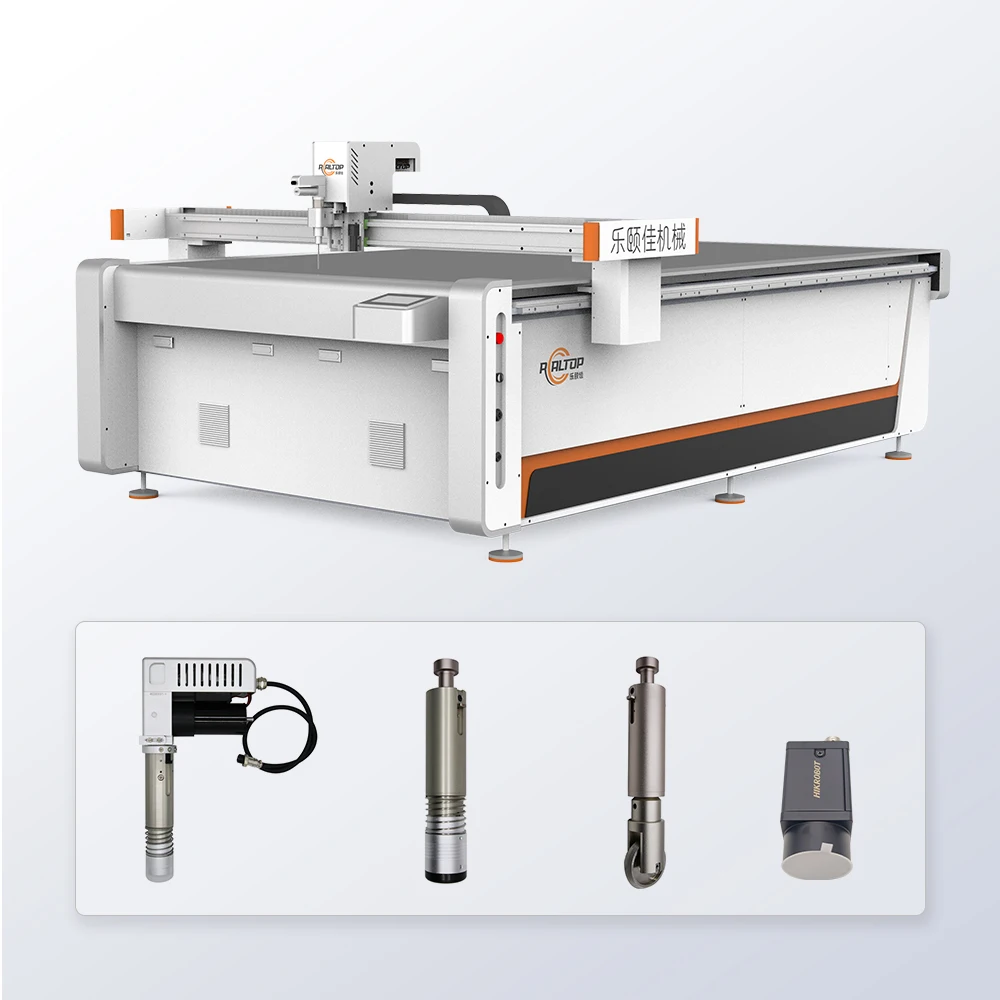
| Tool Head Options | Oscillating knife, creasing wheel, kiss cutting tool, CCD camera, marking pen |
| Cutting Speed Range | 0–1500 mm/s |
| Maximum Cutting Thickness | Up to 20 mm (basis to be confirmed per material density) |
| Repeat Positioning Accuracy | ±0.1 mm |
| Vacuum Pump Power | 2.5 kW or 3.2 kW |
| Voltage Options | 110V / 220V |
| Control System | CNC with auto-registration mark recognition |
| Supported File Formats | PLT, DXF, AI, PDF |
| Safety Devices | Infrared sensor barrier, emergency stop |
| Interface Language Options | English, Russian, Italian, Chinese (customizable) |
Application Suitability
| Application | Material or Output |
|---|---|
| Packaging prototype sampling | Corrugated board, folding carton, greyboard with crease-and-cut workflow |
| Printed sticker and label contour cutting | Vinyl, adhesive-backed cardstock with printed registration marks |
| Advertising graphics production | Foam board, PVC sheet, window cling film |
| Small-batch gasket fabrication | Compressed fiber, cork composite, closed-cell foam |
| Craft and cultural product runs | Leather stock, heavy paper stock, laminated template sheets |
Why Specifying Working Area First Leads to Costly Surprises
The cutting area tells you nothing about whether the tool head can handle your stock at production speed.
Many buyers narrow their search to a bed size, place the deposit, then discover the oscillating knife cannot penetrate a dense three-layer board or the creasing wheel fractures coated cardstock. I have watched entire sample-room lines stall because the vacuum zoning could not hold small nesting pieces flat during high-speed contour passes. The T-series range is configurable across tool heads and table zones precisely to prevent that mismatch, but the configuration only works if the buyer’s material is tested before the build is finalized [NEED_CITE: tool head selection criteria for oscillating knife cutting systems].
How the Factory Matches Tooling to Your Stock
A packaging sample maker cutting 300 gsm coated card needs a different knife amplitude and stroke frequency than a gasket shop running 8 mm closed-cell foam. The T-series platform accepts an oscillating knife, drag knife, creasing wheel, kiss cutting tool and marking pen on one gantry, so the CNC oscillating knife cutting machine factory ships the exact combination the material demands. Swapping heads between jobs takes minutes, and the control system stores separate tool-offset profiles for each material preset.
Why CCD Performance Must Be Proven on Your Print, Not Ours
Auto-registration mark recognition is listed on nearly every digital cutter datasheet, yet contour accuracy degrades when print contrast drops or laminate gloss confuses the optical sensor. Before we confirm an order, we run the buyer’s own printed sheet through the CCD camera loop at full traverse speed and document the deviation across a nested sheet. If the sensor loses tracking on a specific ink density or gloss level, we adjust lighting angle and exposure before the machine leaves Jinan rather than asking the operator to compensate on the shop floor [NEED_CITE: CCD camera contour recognition accuracy under variable print conditions].
Reading the Specs That Actually Matter
The ±0.1 mm repeat positioning accuracy directly affects whether intricate die-line fonts and tight curve radii close cleanly on a packaging prototype. On a 900×1200 mm working area, thermal expansion of the gantry rail can introduce drift over long nesting runs; the linear guide specification and drive belt tension protocol determine whether that drift stays within tolerance. Vacuum pump selection — 2.5 kW versus 3.2 kW — depends less on bed size and more on the porosity of the material and the smallest part in the nest. A gasket shop cutting hundreds of small o-ring shapes from compressed fiber needs higher suction density than a signage producer cutting large-format foam letters. File format compatibility (PLT, DXF, AI, PDF) is confirmed during the pre-order software handshake so the buyer’s existing nesting workflow plugs in without a converter license.
What a Misconfigured Vacuum Zone Costs You Downstream
When the vacuum table zoning is set for large-format sheet hold-down but the nest contains parts smaller than 50 mm across, individual pieces lift off the bed mid-cut, producing ragged edges and broken knife tips. Operators slow the feed rate to compensate, cutting throughput drops noticeably, and the oscillating knife blade wears prematurely. I have replaced three knife assemblies in one week at a client’s facility before we re-mapped the vacuum matrix to match their actual nesting pattern [NEED_CITE: vacuum table zoning impact on small-part cutting quality].
Why Buyers Source This Range from the Core Factory
Realtop designs and assembles the T-series under one roof, so a buyer requesting a custom voltage or non-standard control language deals with the engineering team that built the motion platform, not a trading desk forwarding requests. The in-house design team adjusts vacuum zone maps, CCD lighting angles and tool-head stroke parameters against the buyer’s sample material before the machine ships. Factory test records document actual cut quality on the buyer’s stock, not generic board. Every unit leaves with a software license, file-format compatibility note and spare-parts list matching the specific configuration, and CE-aligned documentation is prepared for markets that require it.
Documentation & Verification
- Sample cutting report on buyer-supplied material showing edge quality and contour deviation
- Electrical schematic reflecting confirmed voltage, plug type and circuit protection rating
- Tool-head and vacuum-zone configuration list matched to buyer’s nesting layout
- Software license key with file-format compatibility note for PLT, DXF, AI, PDF workflows
- Factory test record documenting positioning accuracy and CCD tracking on buyer’s printed sheet
Installation, Commissioning & Support
- Dedicated 110V or 220V circuit with breaker rating matching the confirmed vacuum pump power
- Level floor area exceeding the 900×1200 mm maximum working footprint plus operator clearance
- Gantry and tool-head assembly verified on-site against factory alignment records
- First-run parameter tuning using buyer’s production files and material stock
- Spare oscillating knife blades and creasing wheels included in initial shipment kit
- Multi-language control interface set to confirmed operator language before power-on
Before You Request a Quote
Send the specific material type, thickness and maximum sheet size along with a sample DXF or AI file from your production library. Specify the local voltage, frequency and the control language your operators need. If printed contour cutting is part of the workflow, include a sheet printed on your actual press so we can verify CCD recognition before the build starts.
Frequently Asked Questions
Q: How do I confirm the cutting thickness my material can handle on this machine?
A: We run a sample cutting test on your actual material before the order is confirmed. The test uses your specified thickness and density, and we document edge quality, knife pressure and achievable speed. You receive the sample report and physical cut pieces for evaluation, so the maximum practical thickness is established from real production conditions rather than a generic chart.
Q: What voltage and language options can be configured for my market?
A: The T-series ships in 110V or 220V configurations with plug type matched to the destination country. Control interface languages include English, Russian, Italian and Chinese, with other languages configurable before shipment. Voltage, frequency and plug standard are confirmed during the pre-order specification review to prevent on-site incompatibility.
Q: How does the CCD camera perform on my printed material at full speed?
A: We test the CCD camera using your own printed sheets before the machine is built. The test measures registration mark recognition accuracy across a full nesting layout at production traverse speed. If gloss laminate or low-contrast ink affects detection, we adjust lighting angle and sensor exposure in the factory so the machine arrives calibrated to your print standard.
Q: Can I visit the factory or request a live video test run before ordering?
A: Factory visits are available for buyers who want to witness assembly and testing in person. If travel is not practical, we arrange a live video test run cutting your supplied material file and stream the CCD tracking, edge quality and vacuum hold-down performance in real time for your review.
Q: What spare parts and after-sales support come with the shipment?
A: Each machine ships with an initial spare parts kit including oscillating knife blades, creasing wheels and vacuum seals sized to the specific configuration. The documentation package contains an operation manual, maintenance schedule and spare parts list. Technical support is available via online channels for parameter adjustments and troubleshooting.
You may also like

商品评价
Clear filtersThere are no reviews yet.