

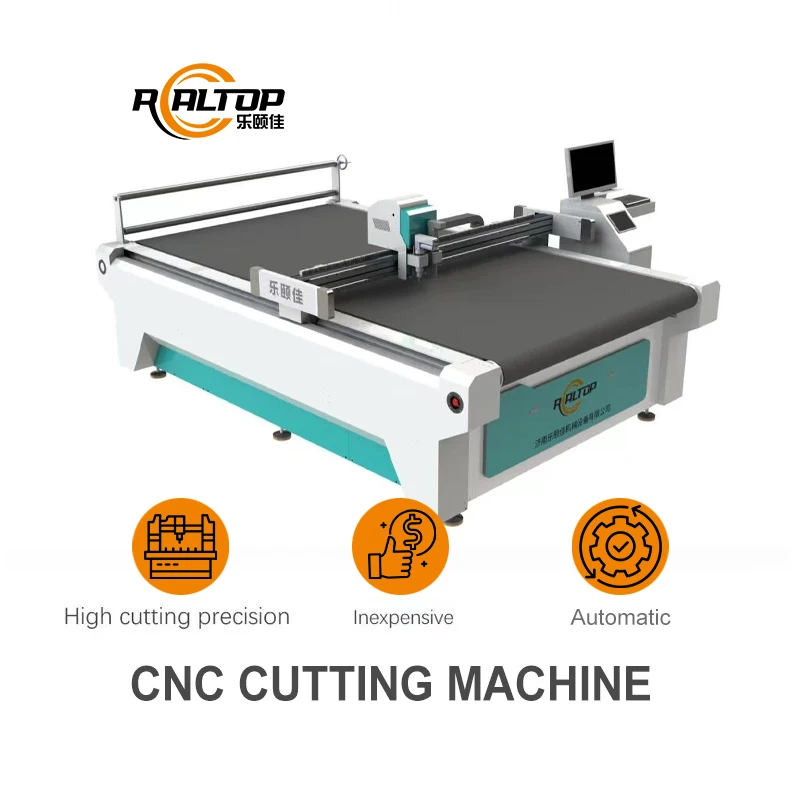
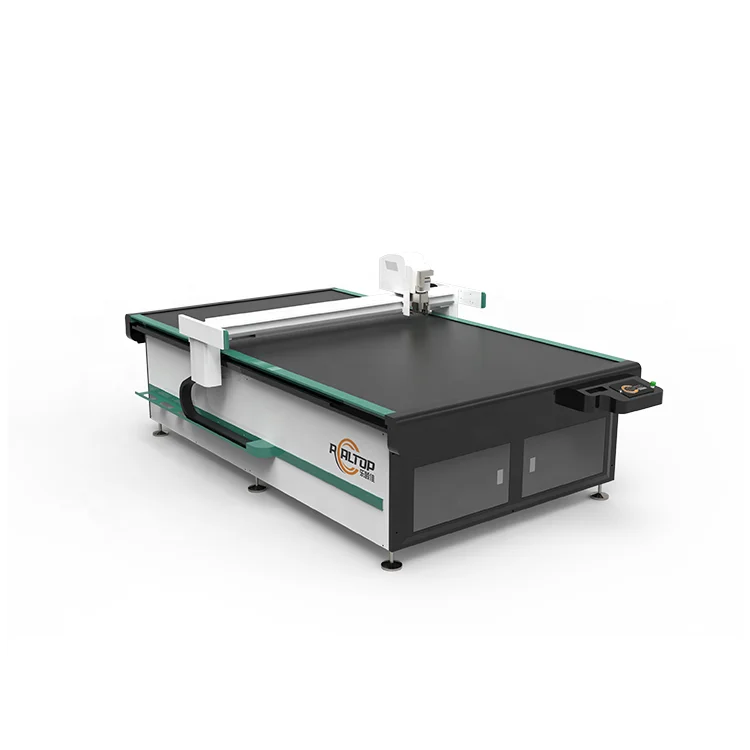
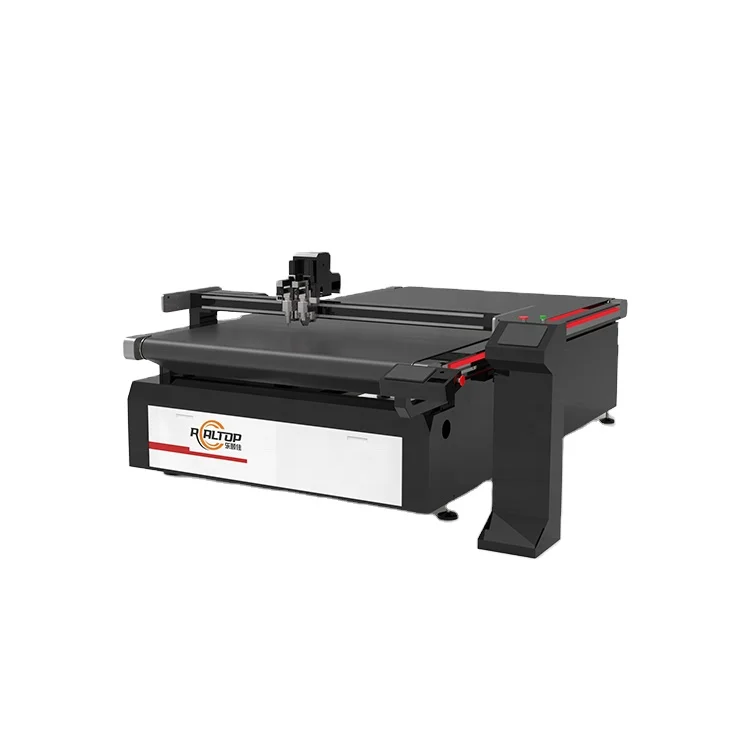
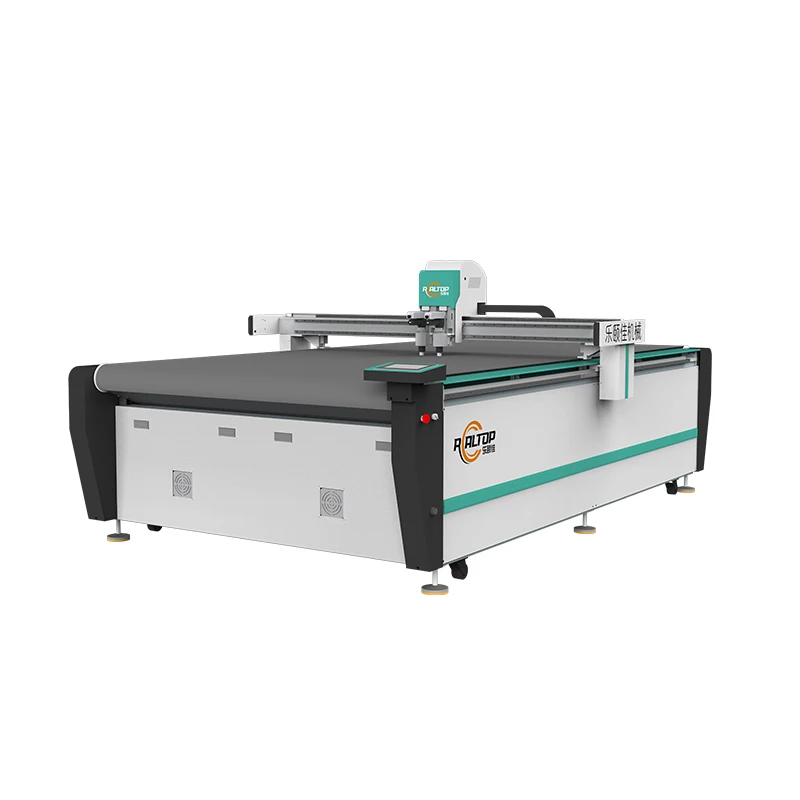

-
 Courier delivery
-
 DHL Courier delivery
-
 Warranty 1 year
-
 Free 30-Day returns

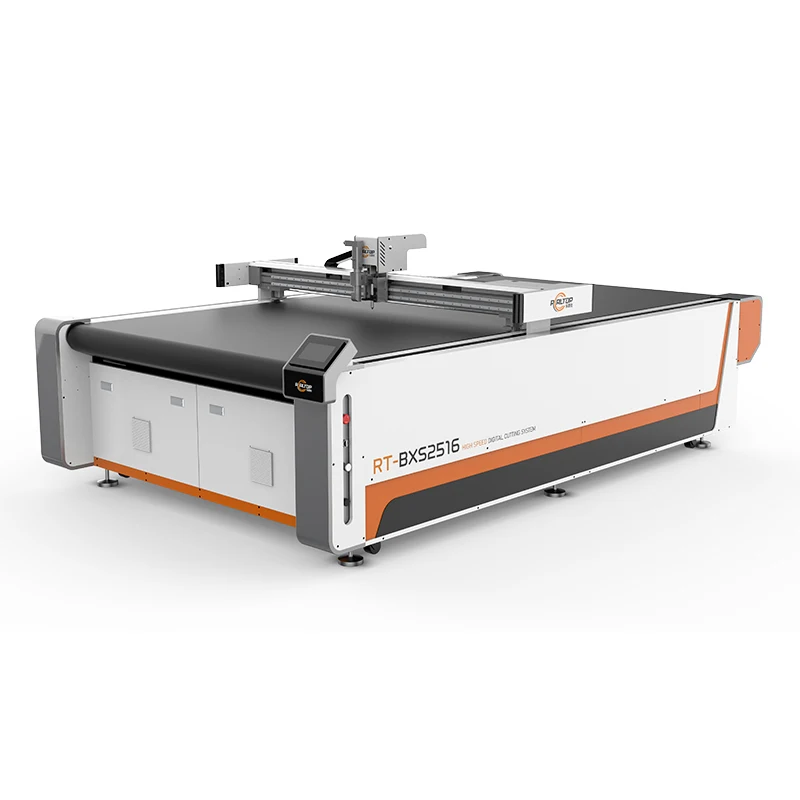
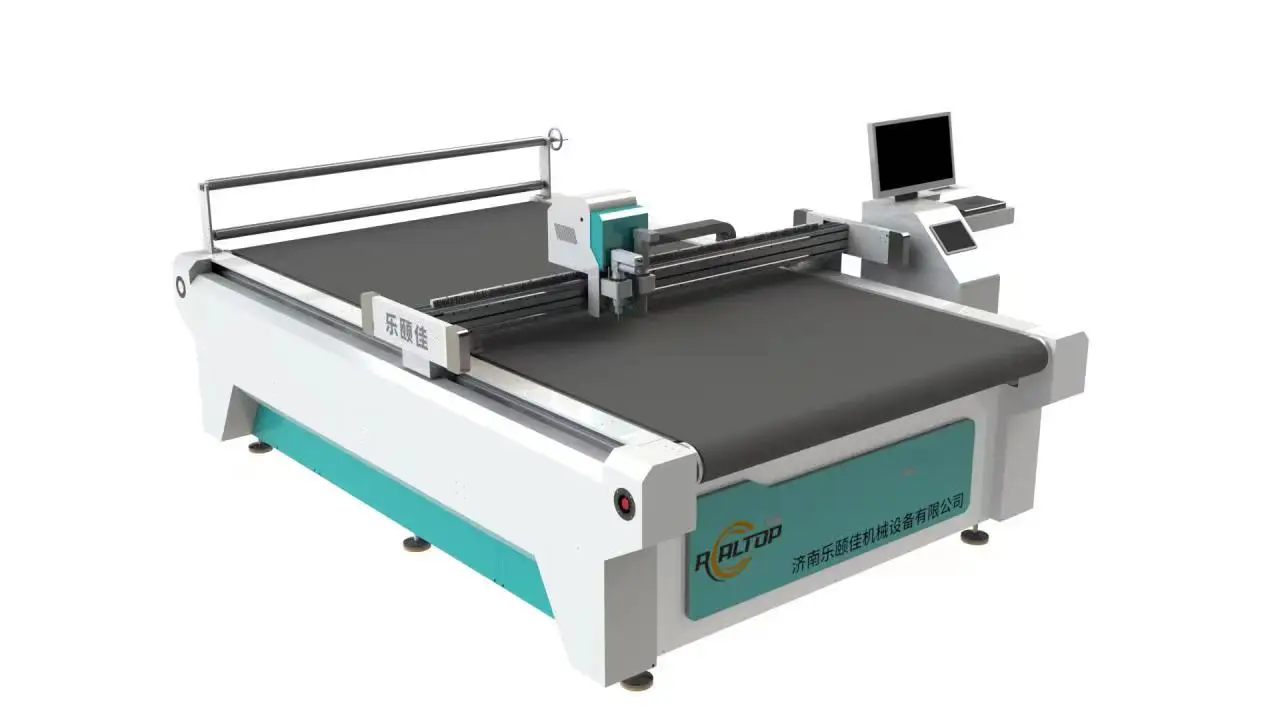
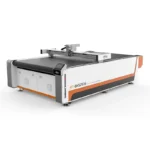
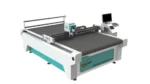
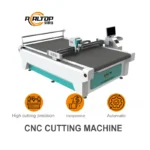
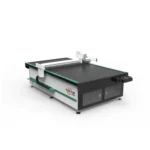
In-House Frame and Motion Engineering — Realtop designs and builds the structural frame and motion systems of each CNC oscillating knife cutting machine internally, ensuring long-term dimensional stability from welding to final CNC finishing.
Technical Specifications
| Parameter | Value |
|---|---|
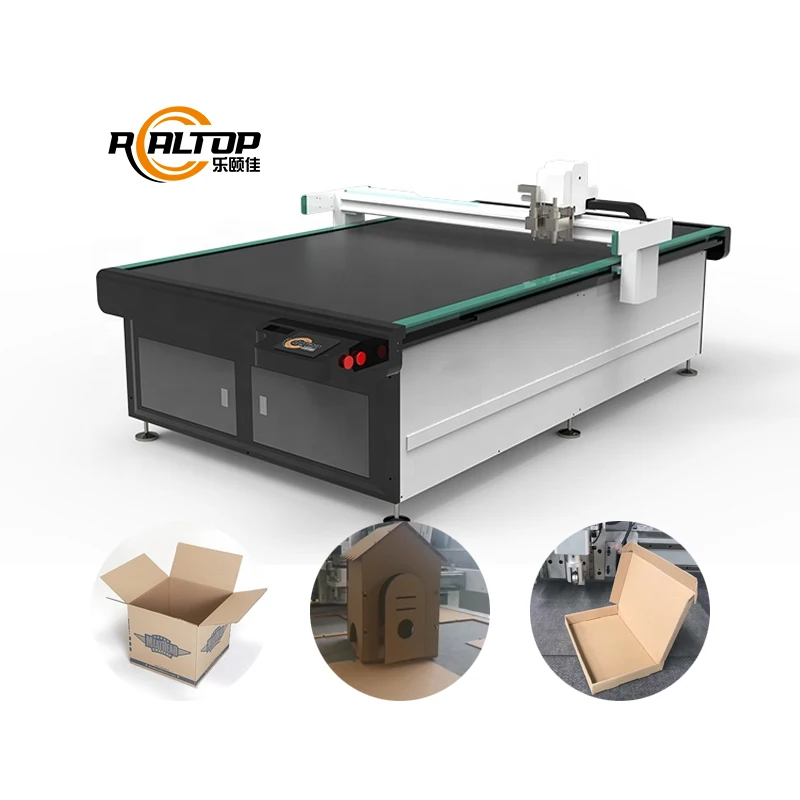
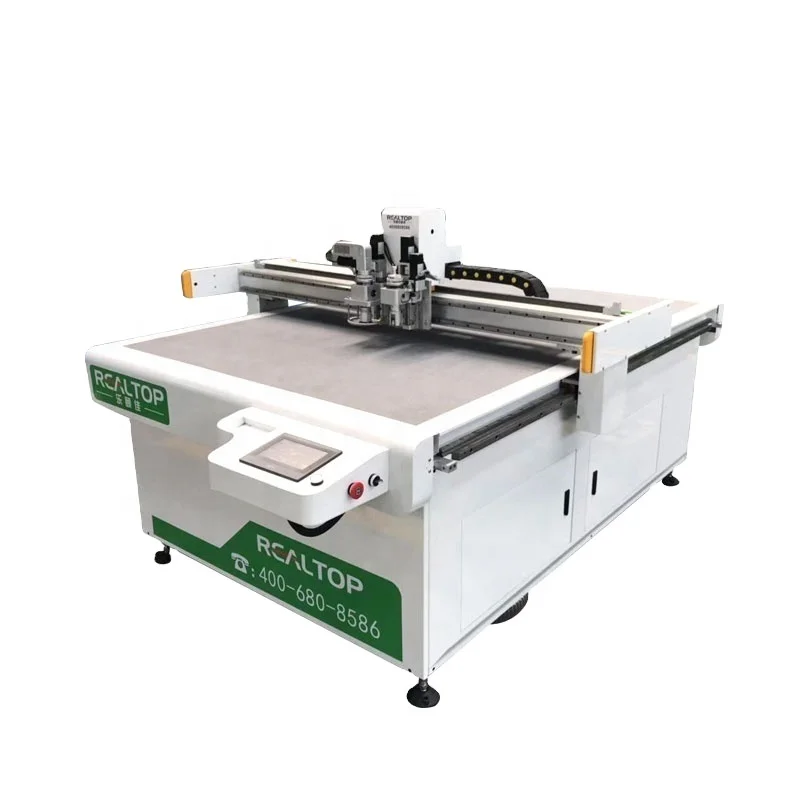
| Product Type | CNC Oscillating Knife Cutting Machine |
| Working Area | 1600×2500 mm |
| Machine Dimensions (L×W×H) | 3450×2300×1250 mm |
| Rated Power | 9 kW |
| Voltage | 380V ±10% |
| Translational Velocity | 800–1200 mm/s |
| Cutting Thickness | 20–80 mm (varies by material) |
| Repeatability | ≤0.1 mm |
| Working Table Type | Flat vacuum adsorption table, magnesium-aluminum alloy with PVDF powder coating, anodized and hard oxidized |
| Vacuum Pump | 7.5 kW, aviation aluminum shell with built-in silencer sponge |
| Servo Motor | Imported digital servo (Delta or Panasonic optional), IP67 waterproof |
| Transmission System | Linear guide, synchronous belt, ball screw |
| Instruction System | HP-GL compatible format |
| Visual Positioning Options | Small CCD camera mark point, panoramic camera recognition, projection positioning |
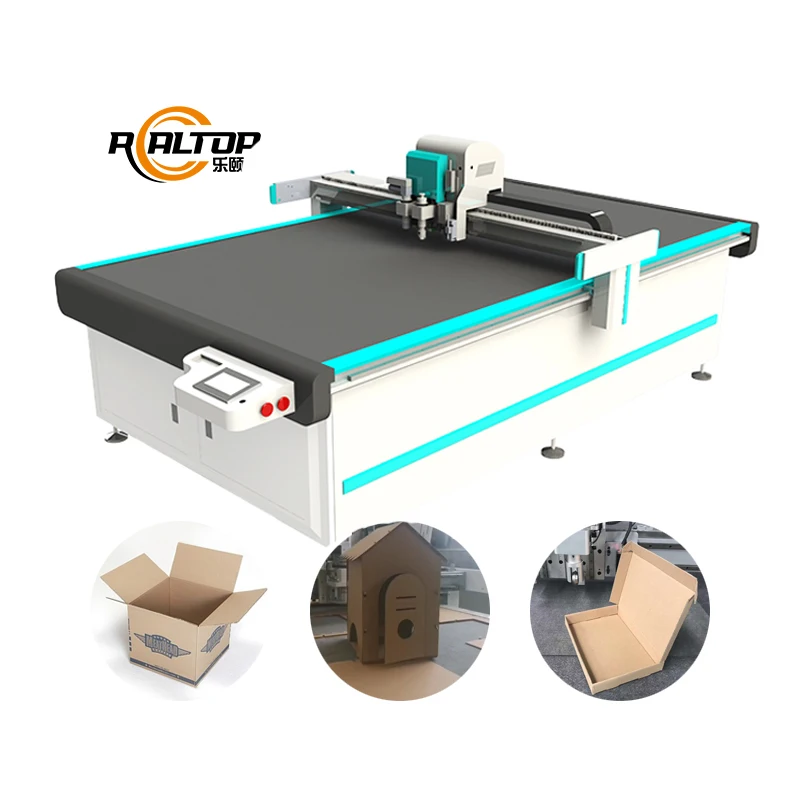
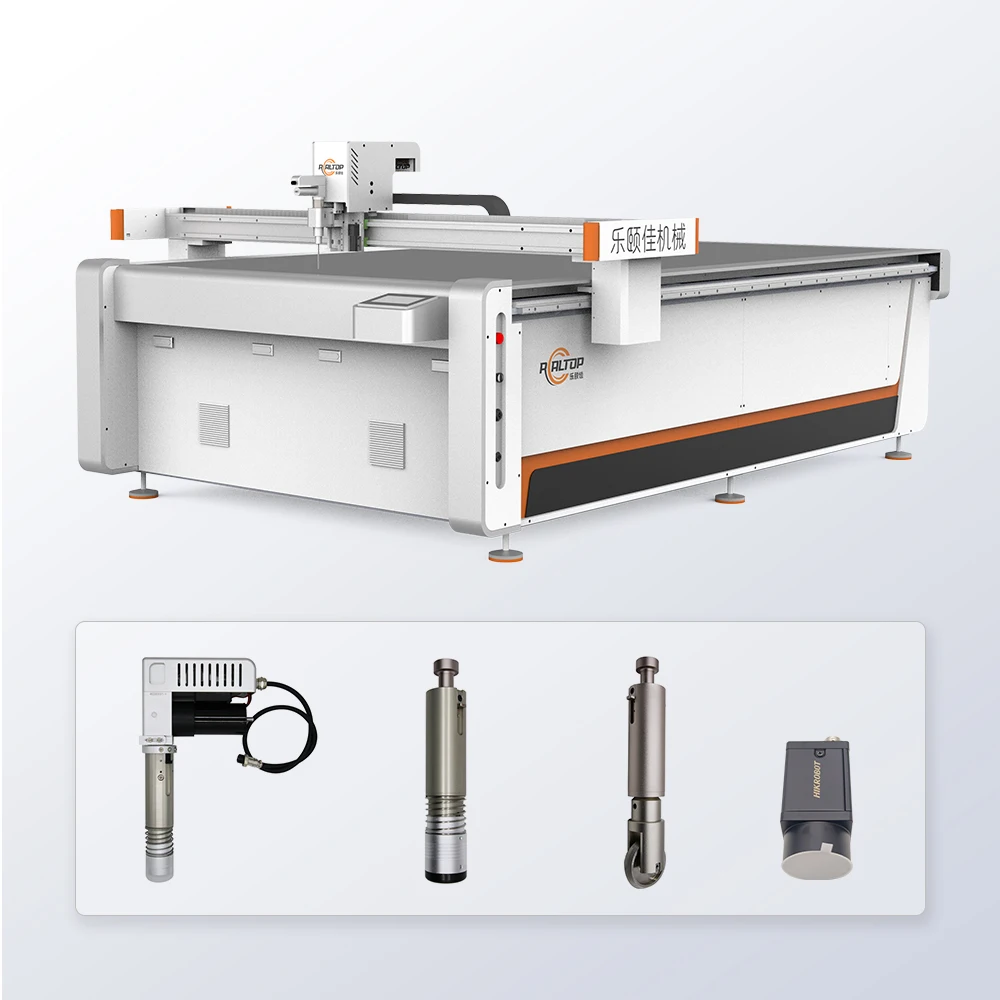
| Multifunctional Tool Head | Swiss imported knife with vibration full/half cutting and cursor location; additional tools: pneumatic knife, high-power vibrating knife, circular knife, V-cutting knife, drag knife, creasing wheel, dotted line knife, punching tool, brush |
| Safety Devices | Infrared induction blocking, anti-collision beam sensors, emergency stop with in-situ resume |
| Frame Construction | Thick-walled seamless steel, high-temperature tempered, CNC machining center finished |
| Optional Configuration | Germany imported conveyor belt, auto feeding system, Taiwan Hiwin rail |
| Assembly State | Fully assembled |
| Standards | CE |
Application Suitability
| Application | Material or Output |
|---|---|
| Garment and clothing production | Woven fabric, non-woven fabric, textile layers |
| Automotive interior trimming | Leather, PU, EVA, composite upholstery panels |
| Footwear and luggage manufacturing | Shoe material, luggage material, leather, PVC |
| Soft furnishing and carpet cutting | Carpet, sponge, foam board, cloth |
| Packaging and carton sample making | Corrugated cardboard, cardboard, plastic box |
| Sports and outdoor gear production | XPE, PE, PP, composite materials |
| Sealing gasket fabrication | Rubber, PTFE, ETFE, gasket material |
| Graphic advertising and signage | Sticker, film, PVC, fiberglass |
Why Voltage Verification Matters Before You Sign the Order
Specifying the electrical standard at inquiry stage prevents weeks of delay at commissioning.
I watched a distributor in Southeast Asia receive a machine wired for 50 Hz operation while their local grid ran on 60 Hz. The servo motors overheated within the first shift, and the control board threw fault codes the operator could not read — the manual was in a language the floor crew did not speak. A CNC oscillating knife cutting machine factory that ships before confirming these details creates problems that no amount of remote troubleshooting can solve [NEED_CITE: voltage and frequency standards by export market]. The machine sat idle while replacement components were air-freighted, and the end user lost production time they could not recover.
Frame Construction That Holds Tolerance Over Years
The frame begins as thick-walled seamless steel, welded into a single rigid structure and then subjected to high-temperature tempering. This stress-relief cycle removes internal tensions introduced during welding, so the frame does not gradually warp as ambient workshop temperatures fluctuate across seasons. After tempering, the entire structure passes through a CNC machining center that mills the mounting surfaces for the linear guides and gantry supports to a consistent flatness.
When a cloth CNC cutting machine frame shifts even slightly over months of operation, the cutting head drifts from its programmed path and edge accuracy degrades. The tempering and machining sequence is the reason repeatability stays within ≤0.1 mm long after installation. Distributors evaluating a CNC oscillating knife cutting machine factory should request the factory test record that documents flatness and squareness measurements taken after the frame reaches full thermal equilibrium.
Vacuum Table Engineering for Consistent Material Hold-Down
The working table is machined from magnesium-aluminum alloy, which balances rigidity with lower weight compared to steel plates. The surface then goes through three treatment stages: fluorocarbon PVDF powder coating for chemical resistance against adhesives and solvents, anodizing for corrosion protection, and hard oxidation for wear resistance where material sheets slide across during loading [NEED_CITE: surface treatment standards for industrial vacuum tables].
The 7.5 kW vacuum pump sits in an aviation aluminum shell with integrated silencer sponge that lowers operational noise output noticeably. Zoned suction across the table allows operators to activate only the sections covered by the workpiece, which is important when cutting small parts from large sheets — full-table vacuum on a small piece tends to pull air through gaps and weaken hold-down force where it matters most.
Reading the Spec Sheet Against Your Actual Material
The 20–80 mm cutting thickness range is a material-dependent envelope, not a single guaranteed depth. Dense foam at 80 mm may require a high-power vibrating knife and slower translational velocity, while thin garment fabric at 2 mm runs best with the standard Swiss oscillating knife at higher speed. The tool head selection directly determines edge quality: a drag knife scores clean lines on sticker and film, a circular knife slices through multi-layer textile without fraying, and a V-cutting knife creates fold lines on corrugated cardboard for packaging samples.
CCD camera positioning options — small mark-point camera, panoramic recognition camera, or projection positioning — serve different workflow needs. Printed contour work on graphic advertising materials benefits from the panoramic camera tracking registration marks across the full sheet, while simple mark-point positioning handles repetitive cuts on pre-printed fabric panels. Specifying the correct combination at order stage prevents retrofitting tool heads and cameras in the field.
The Cost of Skipping the Sample Cutting Step
A buyer once specified a machine purely by working area size, assuming any oscillating knife could handle their coated polyester at production speed. The knife stalled on the coating layer, leaving ragged edges that required secondary trimming. The vacuum table zoning had not been matched to their typical nesting layout, so small pattern pieces lifted during cutting and shifted position [NEED_CITE: material hold-down failures in digital cutting].
When the wrong tool head meets an unexpected material coating or laminate, the result is crushed foam, frayed textile edges, or incomplete cuts through gasket rubber. These failures do not appear in the showroom demonstration on sample material — they surface only when the machine runs the buyer’s actual production stock at full speed.
What Distinguishes This Manufacturing Source
Realtop maintains in-house design and production covering both knife and laser cutting technologies, so buyers can match the cutting method to the material rather than forcing one approach. Tool head and table configurations are specified per material and production volume, not sold as a single fixed package.
Voltage, language, and control interface customization is confirmed before production begins, eliminating the guesswork that causes commissioning delays. Every machine undergoes sample cutting on the buyer’s own material before commitment, providing physical proof that the configuration works for the intended application [NEED_CITE: CE machinery directive requirements for industrial equipment]. Full documentation accompanies each shipment, giving importers the paperwork needed for customs clearance and local compliance audits.
Documentation & Verification
- Machine specification sheet confirming all configuration choices against your material profile
- Electrical schematic and voltage confirmation matching your destination market grid standard
- Tool head and table configuration list tied to your documented production requirements
- Sample cutting report produced on your supplied material before order confirmation
- Factory test record showing repeatability and flatness measurements at final inspection
- Operation and maintenance manual with language matched to your operator team
Installation, Commissioning & Support
- Requires a level concrete floor accommodating 3450×2300 mm footprint with clearance for material loading
- Dedicated 380V ±10% circuit rated for 9 kW continuous draw plus vacuum pump startup surge
- Machine ships fully assembled; positioning requires overhead crane or forklift rated for the unit weight
- First-run calibration includes vacuum zone mapping, tool head offset measurement, and servo tuning
- Operator training covers tool change procedures across the full multifunctional head configuration
- Spare parts list provided with recommended consumable intervals for knives and vacuum seals
- Daily maintenance focuses on guide rail cleaning and vacuum table surface inspection
What to Include in Your Inquiry
Send us your material type, thickness range, and typical sheet dimensions so we can recommend the correct tool head and vacuum zoning. Specify your local voltage and frequency, preferred control language, and whether your workflow requires CCD contour recognition or projection positioning. If you have existing nesting software, share a sample file so we confirm format compatibility before production begins.
Frequently Asked Questions
Q: How can I verify the factory actually designs and builds the machine in-house?
A: Request the electrical schematic, frame welding records, and CNC machining center finishing documentation. An in-house manufacturer provides these directly and can arrange a factory visit or video call showing the production floor where frames are welded, tempered, and machined. Trading companies typically cannot produce these internal records.
Q: What OEM customization is available for distributors entering new markets?
A: Voltage can be configured to match destination grid standards, control language customized beyond the default English, Russian, Italian, and Chinese options, and tool head configurations adjusted for the materials your end users process. Table size and conveyor options are also adjustable to fit specific workshop layouts and production volumes.
Q: How do I confirm the electrical system matches my country’s standards?
A: Provide your local voltage, frequency, and plug type at inquiry stage. The factory produces an electrical schematic and voltage confirmation document for your review before production. This ensures the servo motors, vacuum pump, and control cabinet are wired for your grid, avoiding costly rewiring after delivery.
Q: What happens during the sample cutting test before I commit?
A: You send your actual production material to the factory. The machine runs your material with the proposed tool head and vacuum configuration, and a sample cutting report documents edge quality, cutting speed, and any adjustments made. You review the physical samples and the report before confirming the order.
Q: Which documents ship with the machine for customs and compliance?
A: Each machine ships with a CE declaration where applicable, machine specification sheet, electrical schematic, operation manual, software license note, spare parts list, and packing photographs. These documents support customs clearance, local safety inspections, and insurance requirements at the destination facility.
You may also like

商品评价
Clear filtersThere are no reviews yet.