Carton Creasing Machine with High-Speed Die Cutter – Factory Direct
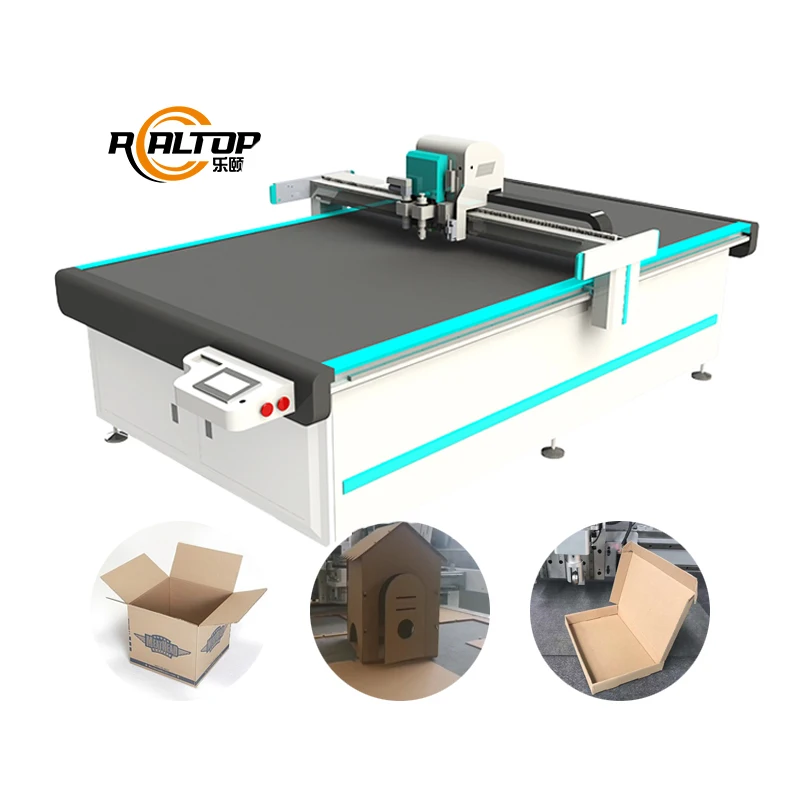
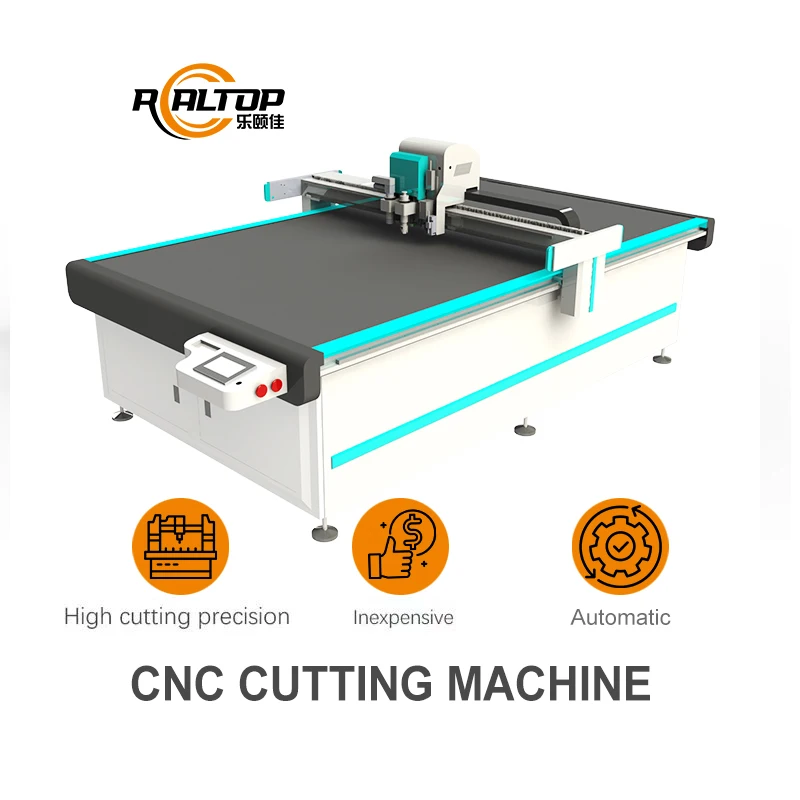
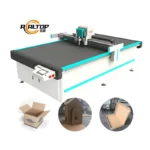
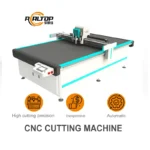
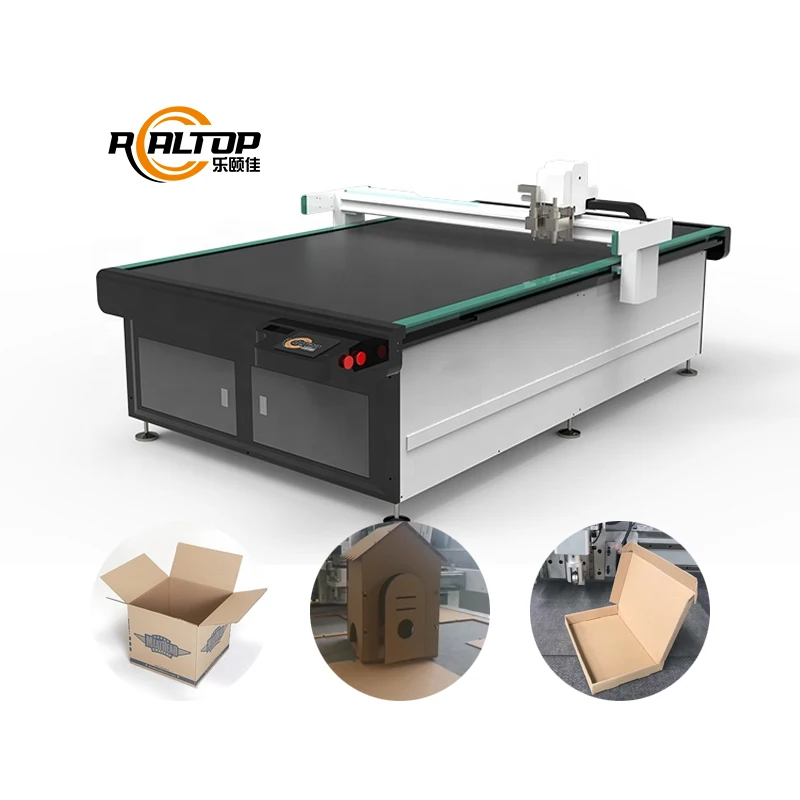
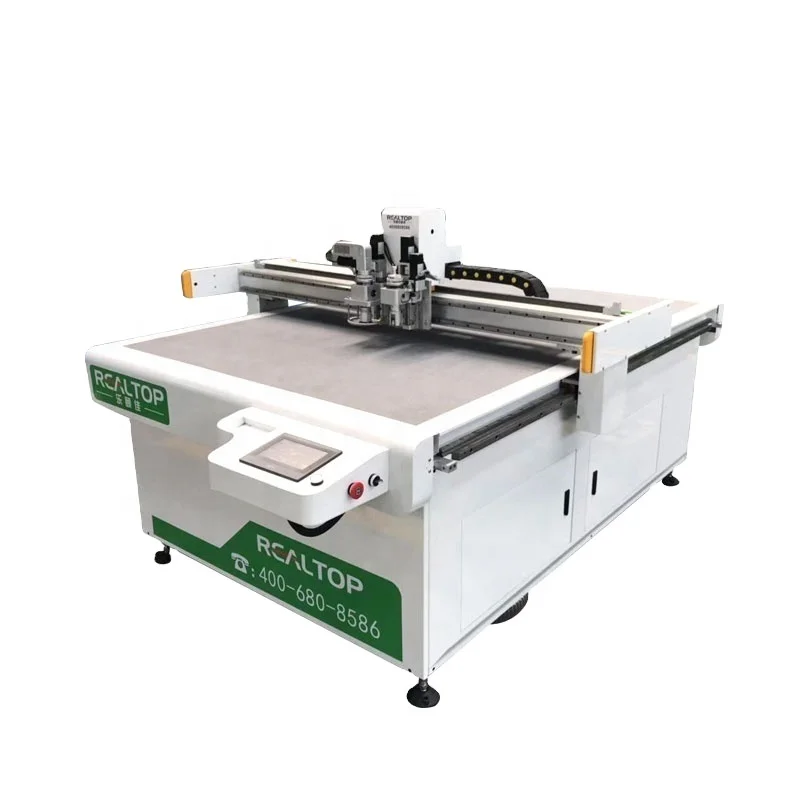
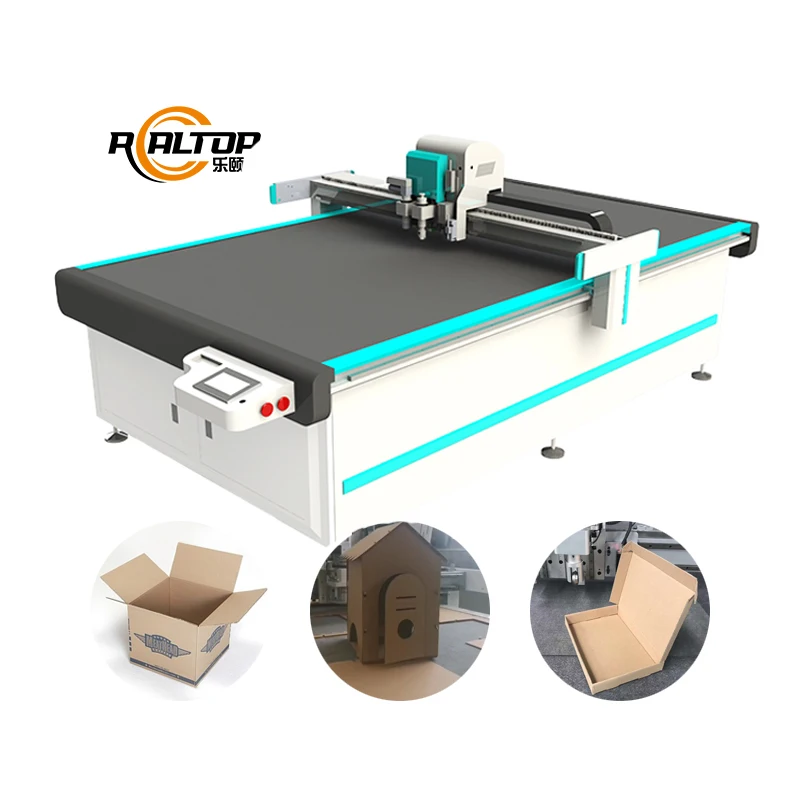
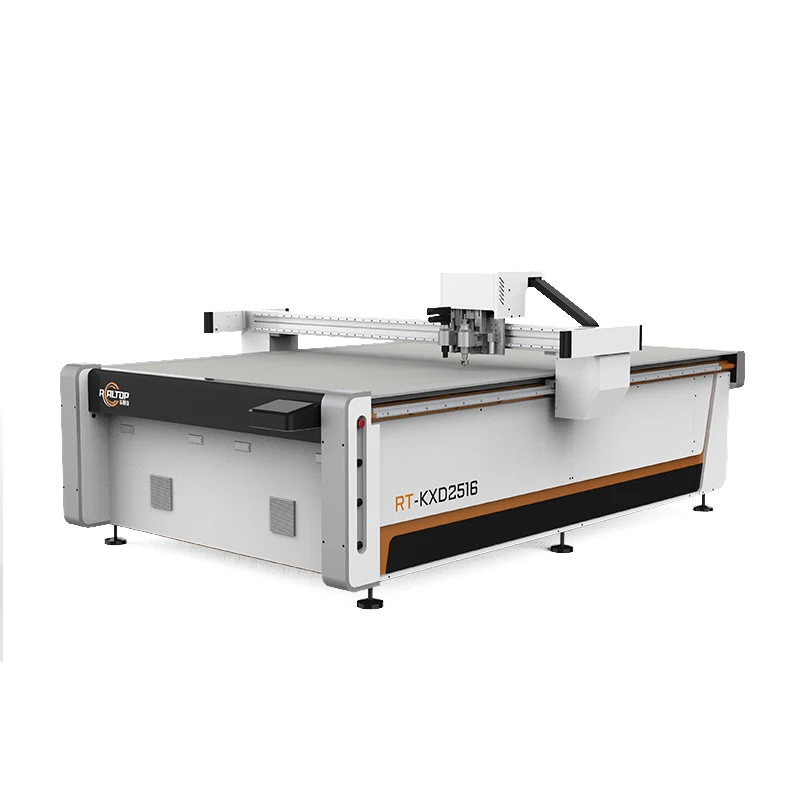
RT-D2516/RT-S2516 CNC Carton Creasing and Digital Cutting Machine, 1600 × 2500 mm, 9 kW — configured for corrugated board sample making and short-run packaging production.
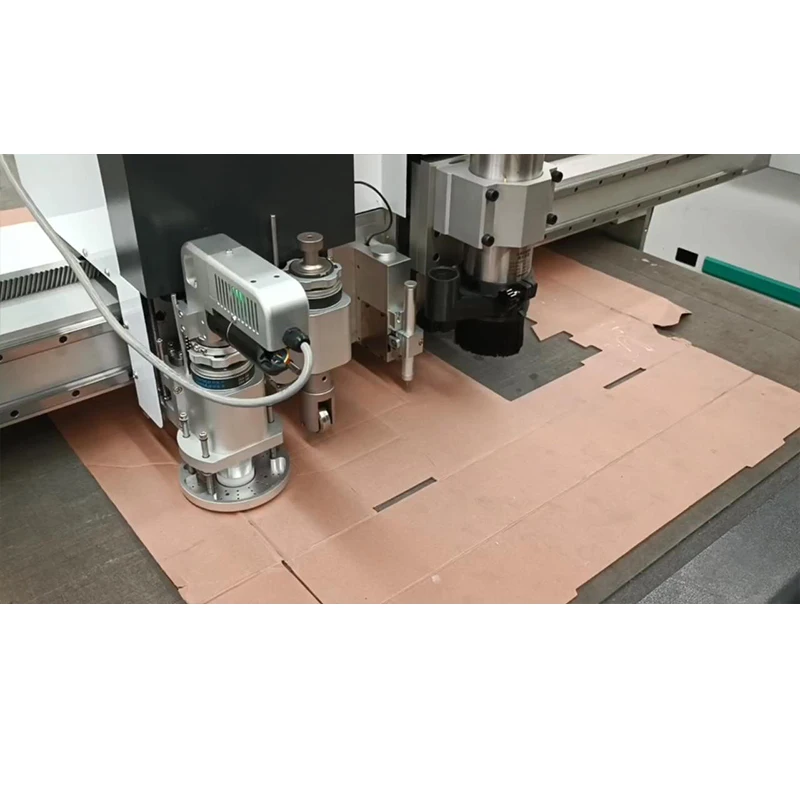
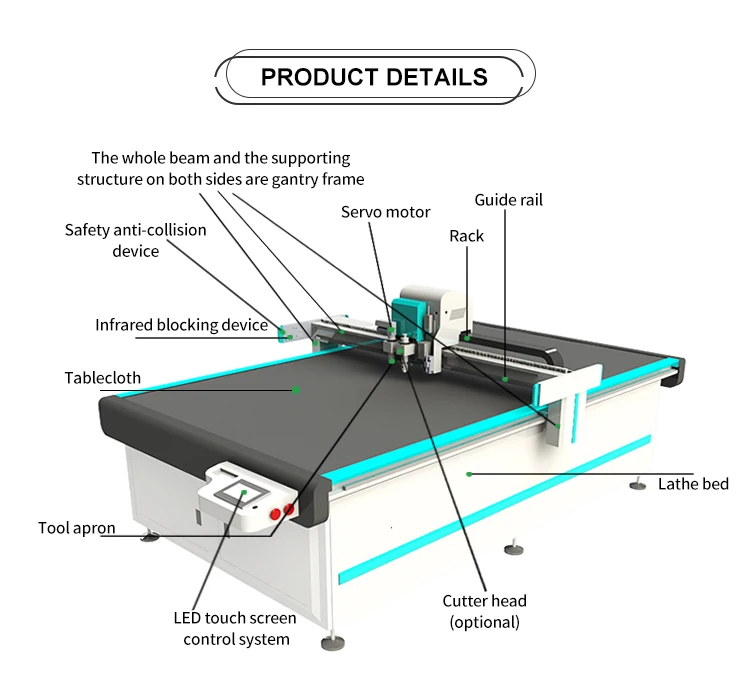
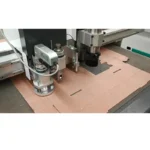
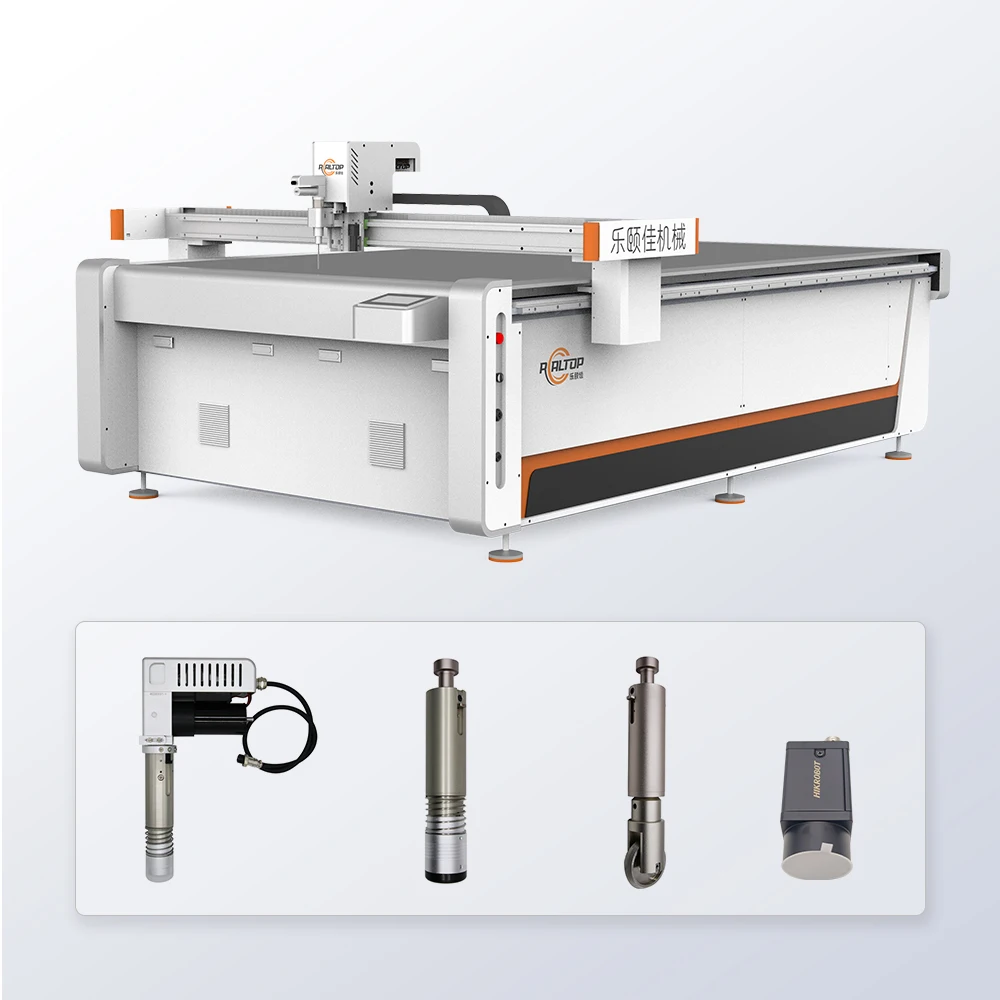
Multifunctional head combines creasing wheel, oscillating knife, drag knife and punching tools, matched to board grade and flute profile
Magnesium-aluminum vacuum table with PVDF coating ensures flat holding across the full work area
CCD camera and panoramic recognition track printed marks for contour-accurate cuts
In-house design covers both knife tooling and table configuration, so each machine is specified against your actual corrugated stock before build.
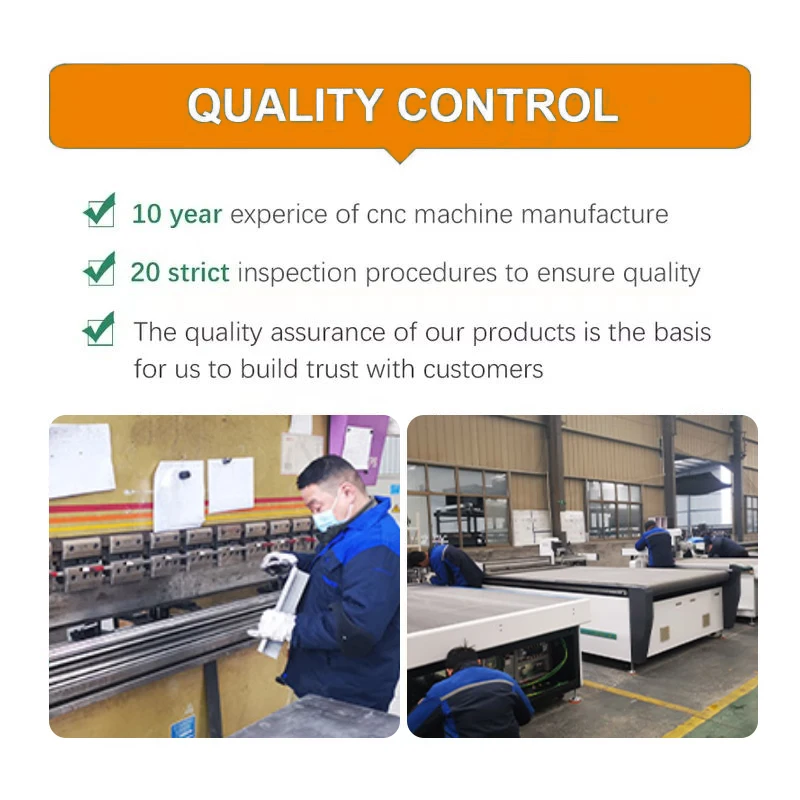
In-House Build Quality — Realtop controls every stage from frame welding to motion component integration on the RT-D2516/RT-S2516, ensuring the magnalium vacuum table and servo transmission are matched to the actual board grades you run.
When a digital cutting table lists a maximum thickness, it rarely specifies the flute profile or board density that number applies to. An 80 mm limit might hold for soft EPE foam but fail completely on dense double-wall corrugated when the creasing wheel lacks sufficient down-pressure. As a CNC Carton Creasing Machine manufacturer, Realtop validates the 20–80 mm range against your specific board grade and flute combination before confirming the machine can handle your daily mix.
The number on the spec sheet means nothing unless it is proven on your actual corrugated substrate at your required production speed.
I have seen packaging sample rooms receive machines rated for thick material, only to discover the vacuum zoning cannot hold small carton blanks flat during high-speed oscillating knife cuts. The edges fray, the crease lines crack, and the entire sample run is scrapped. That is why we require a physical sample of your heaviest and lightest board before we lock in the tool head configuration and vacuum pump sizing [NEED_CITE: vacuum hold-down requirements for corrugated board digital cutting].
Creasing Wheel Configuration for Corrugated Board Grades
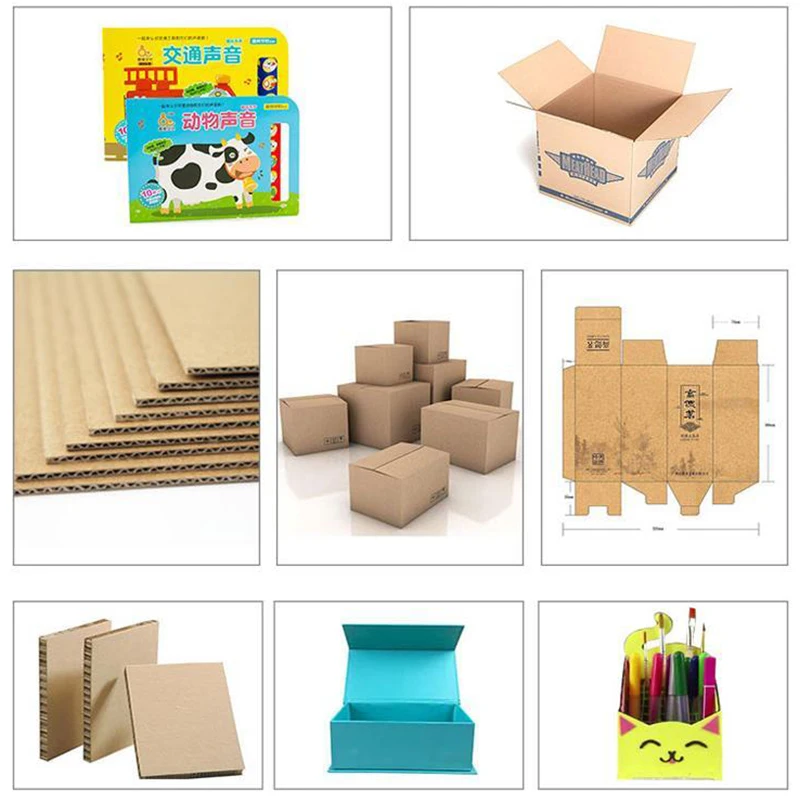
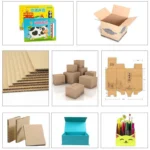
The RT-D2516/RT-S2516 supports a dedicated creasing wheel alongside oscillating and drag knife tools. For B-flute and C-flute corrugated, a narrower wheel with higher down-pressure produces a clean fold without crushing the flute structure. For E-flute and micro-flute stocks used in retail packaging, a wider wheel prevents surface tearing on printed faces.
This CNC Carton Creasing Machine manufacturer configures the wheel diameter and pressure setting based on the buyer’s board caliper and flute type. The multifunctional head allows swapping between creasing and cutting within the same job file, eliminating the need for a separate dedicated creasing press in short-run sample production.
Vacuum Table Flatness and Zoning for Small Carton Blanks
The magnesium-aluminum alloy table with PVDF coating and hard oxidation provides the surface flatness required for precision die-cutting without hard tooling. Uniform suction across the 1600 × 2500 mm area prevents board lift during 800–1200 mm/s translational moves.
For packaging houses running multiple small carton blanks nested on a single sheet, vacuum zoning allows selective activation of table sectors. This concentrates suction where material is present rather than bleeding vacuum through empty zones, maintaining hold-down force on intricate cutouts [NEED_CITE: vacuum zoning impact on small-part digital cutting accuracy].
How Transmission Components Affect Crease-and-Cut Registration
The Taiwan Hiwin linear guides and digital servo motors deliver ≤0.1 mm repeated accuracy, which directly determines whether the crease line lands exactly on the printed score mark. When a carton blank has pre-printed graphics, even minor drift causes the fold to misalign with the visual design.
The synchronous belt and ball screw transmission maintain positional stability during rapid direction changes between cutting and creasing moves. This is critical for complex box structures where multiple crease lines intersect at tight corners and the tool head must decelerate, execute a precise crease, and accelerate back to cutting speed without losing registration.
The Cost of Skipping Material-Specific Tool Head Validation
Selecting a generic oscillating knife for all materials seems efficient until you cut high-density EVA foam and discover the blade deflection produces tapered edges instead of vertical walls. Or you run abrasive fiberglass composite and find the standard knife wears out mid-shift, halting production.
The RT-D2516/RT-S2516 tool head options exist because no single blade geometry works across corrugated board, rubber gasket material, and woven textile simultaneously. When buyers skip the sample cutting validation step, they commit to a configuration that may handle one material well but fail on the rest of their production mix [NEED_CITE: tool head wear rates across abrasive versus fibrous substrates].
Why Sourcing Direct from the Factory Floor Matters
Realtop designs and builds the RT-D2516/RT-S2516 in-house, which means the engineering team that specifies the servo motor rating is the same team that troubleshoots the vacuum pump noise level during final assembly. There is no disconnect between the sales promise and the machine that arrives at your dock.
The factory test record documents actual cutting performance on your material, not a generic demonstration on stock cardboard. Voltage, plug type, and control language are confirmed before the machine enters the paint booth, not discovered as a mismatch during commissioning. Tool head combinations are documented per order, so replacement knives and creasing wheels match the original specification.
CE declaration is issued where applicable, with electrical schematics provided for local inspection authorities. Software compatibility is verified against your existing carton design files before the order is finalized, ensuring HP-GL imports and nesting workflows function from day one.
Documentation & Verification
Machine specification sheet listing exact tool head combination and vacuum table zoning configuration
Electrical schematic with 380V ±10% validation and plug type confirmation for your site
Sample cutting report on your corrugated board grade showing crease depth and edge quality
Software licence documentation with HP-GL compatibility and carton design seat count confirmed
Factory test record with photographic evidence of cutting performance before crating
Spare parts list with OEM part numbers for oscillating knives, creasing wheels, and vacuum pump filters
Installation, Commissioning & Support
Flat concrete floor required; 3450 × 2300 × 1250 mm machine size plus operator clearance on all sides
Dedicated 380V ±10% circuit with 9 kW capacity; separate breaker for 7.5 kW vacuum pump
Machine ships fully assembled; position with forklift, connect power and dust extraction, verify table level
First-run commissioning includes vacuum suction test, tool head calibration, and CCD mark point registration
Operator training covers carton design software import, nesting setup, and tool change procedures
Provide your most common board grade, flute type, and maximum sheet size so we can confirm the vacuum table zoning and creasing wheel pressure are matched to your workload. If you run pre-printed carton blanks, specify the mark style and location for CCD camera recognition setup.
Include your facility voltage, frequency, and plug standard so the electrical cabinet is built to match before shipment. Let us know which carton design software you currently use or whether you need the professional carton design software seat included with the machine.
Frequently Asked Questions
Q: How do you verify the 20–80 mm cutting thickness applies to my specific corrugated board?
A: We cut samples on your actual board grade and flute profile, measuring edge quality and crease depth at production speed. The test report documents the tool head configuration, vacuum hold-down performance, and any limitations observed, so you know the machine handles your material mix before you commit.
Q: Which tool heads come standard and which are optional on the RT-D2516/RT-S2516?
A: The multifunctional head supports oscillating knife, drag knife, creasing wheel, V-cutting knife, and punching tools. The exact combination shipped is configured per your material list and documented in the order specification. Swapping tools for different applications is done via software selection, not physical head changes.
Q: What voltage, plug, and control language options are confirmed before the machine ships?
A: The standard is 380V ±10% with configurable plug type and control language options including English, Russian, Italian, and Chinese. Special languages are customizable. Voltage and phase are validated against your site supply during the order confirmation stage, not at commissioning.
Q: Can the software import my existing carton design files and handle nesting?
A: The system accepts HP-GL compatible format and includes professional carton design software. We verify file import and nesting workflow against your existing design files before order finalization, ensuring no translation issues when you transition production to the digital cutting table.
Q: What does the factory acceptance test cover before dispatch?
A: The test runs your specific material through the complete crease-and-cut cycle, verifying registration accuracy, vacuum hold-down at full translational speed, and tool head performance. Photographic evidence and the cutting sample are included in the acceptance record shipped with the machine.




 Courier delivery
 DHL Courier delivery
 Warranty 1 year
 Free 30-Day returns


商品评价
Clear filtersThere are no reviews yet.