


-
 Courier delivery
-
 DHL Courier delivery
-
 Warranty 1 year
-
 Free 30-Day returns

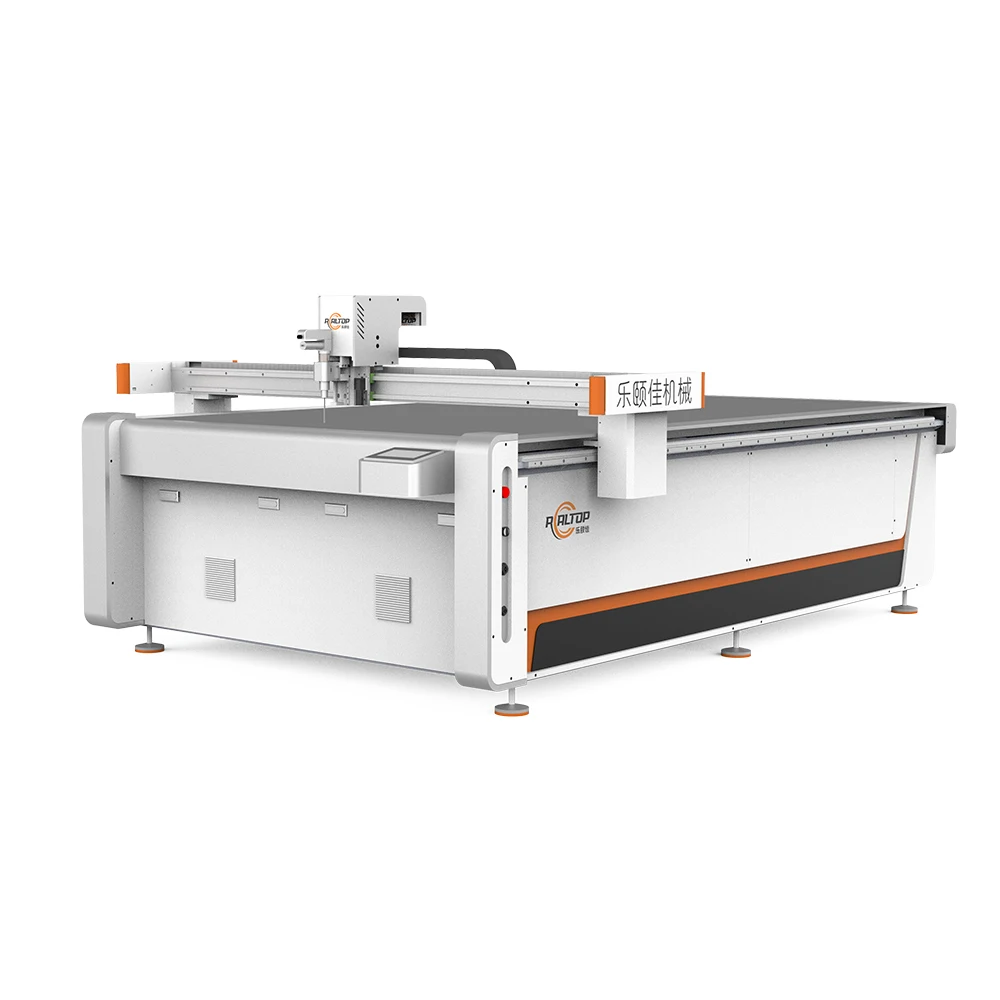
Precision Build Integrity — Every Realtop 1625 frame is stress-relieved and precision-ground before assembly, ensuring long-term accuracy when cutting demanding composite materials.
Technical Specifications
| Parameter | Value |
|---|---|
| Model | 1625 |
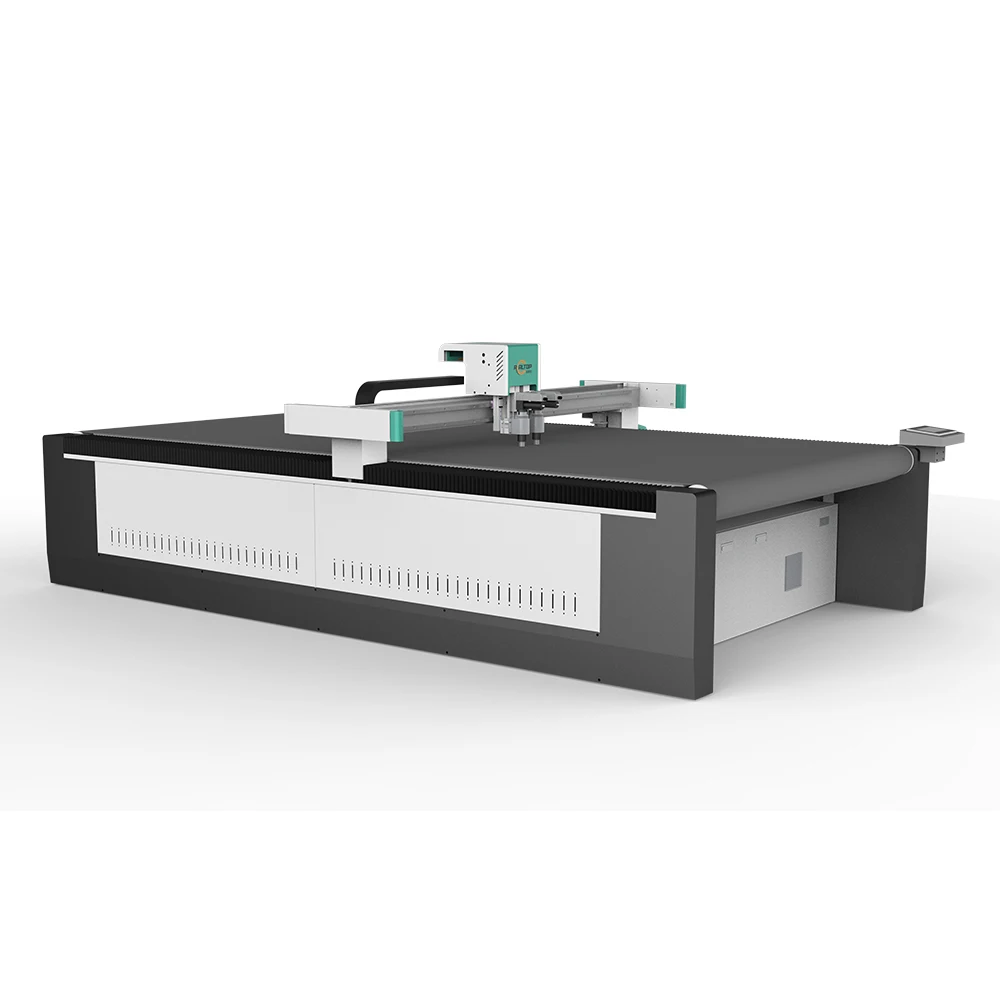
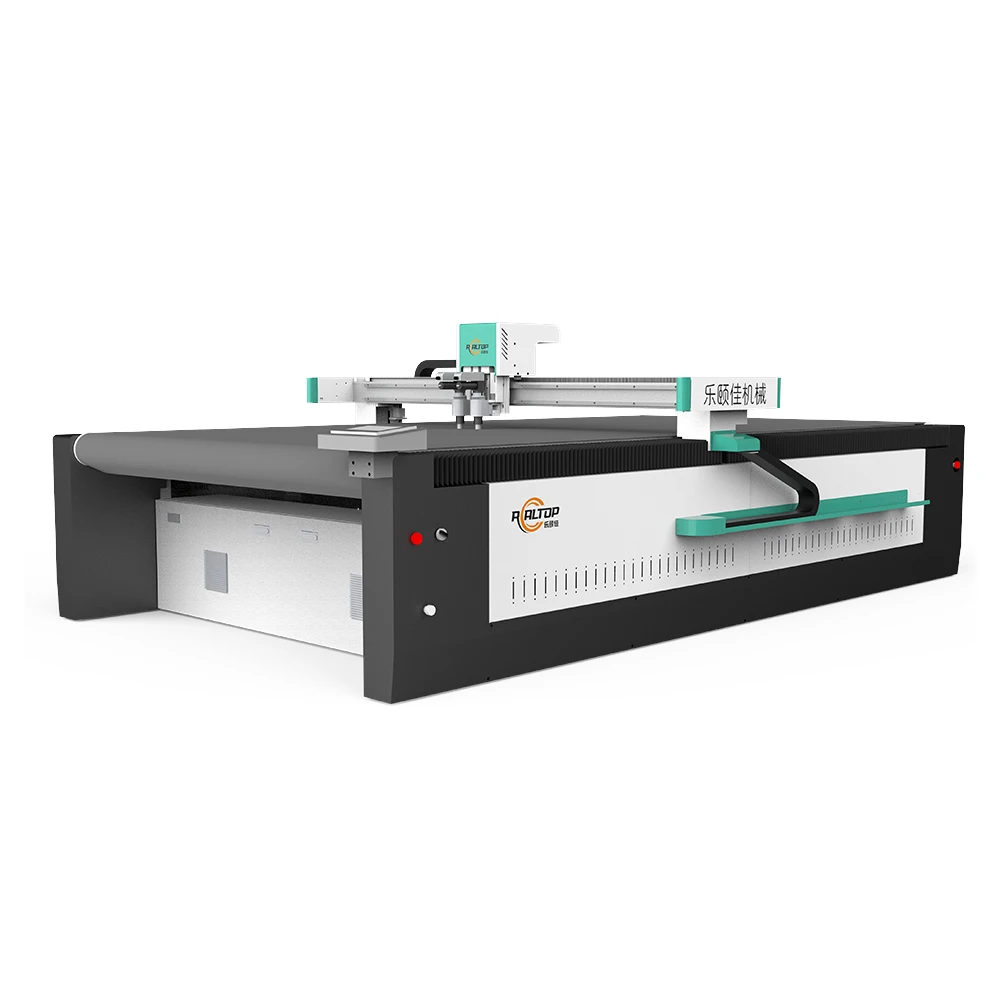
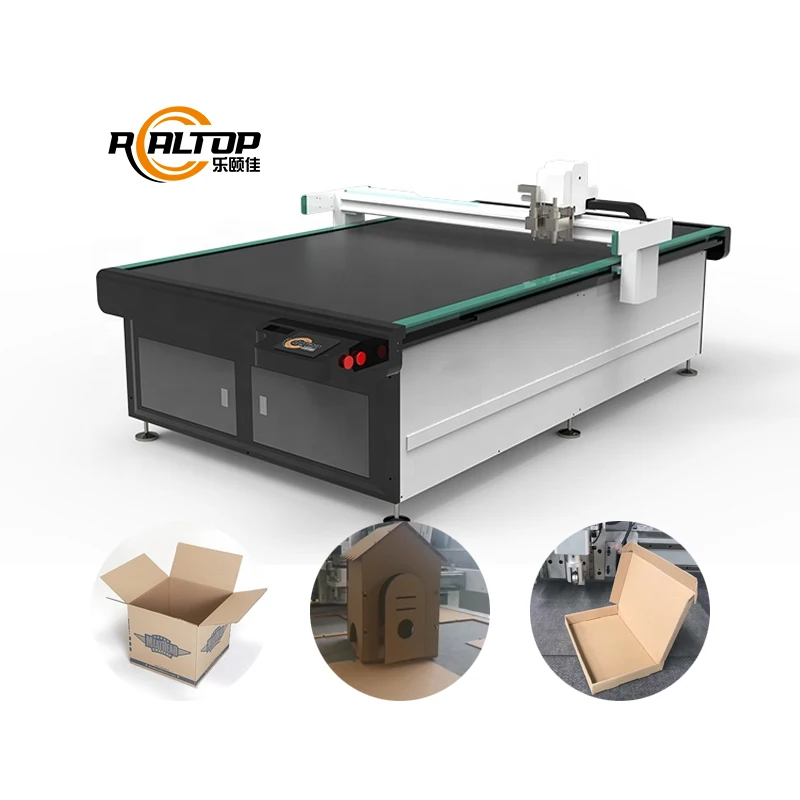
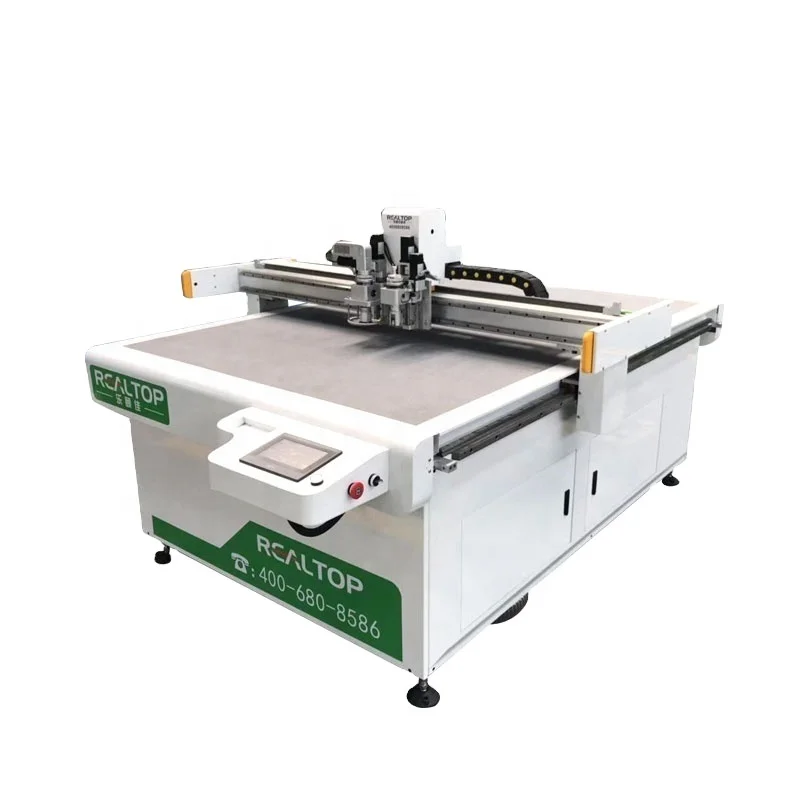
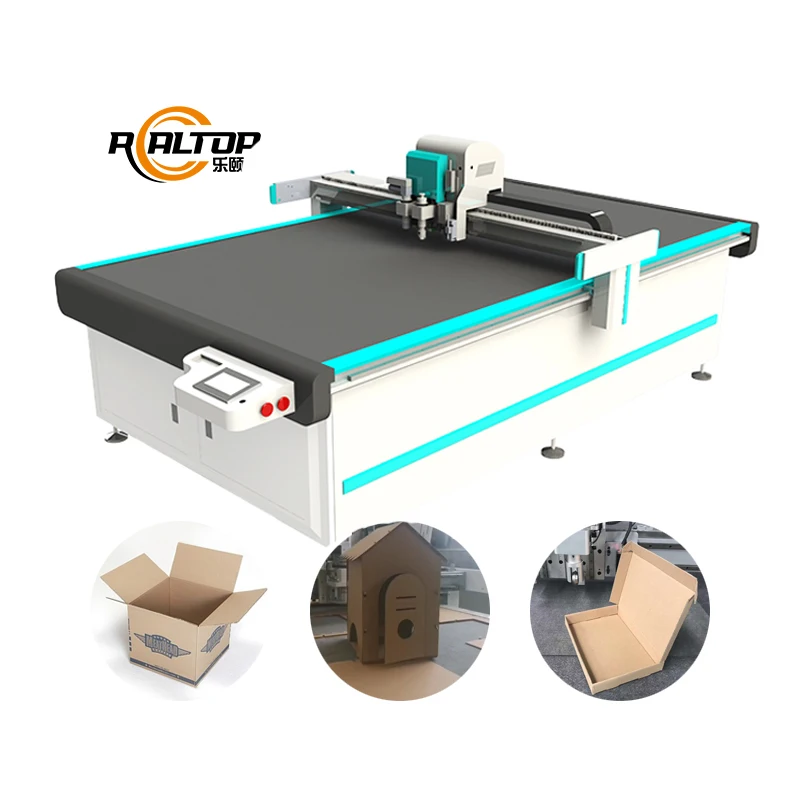
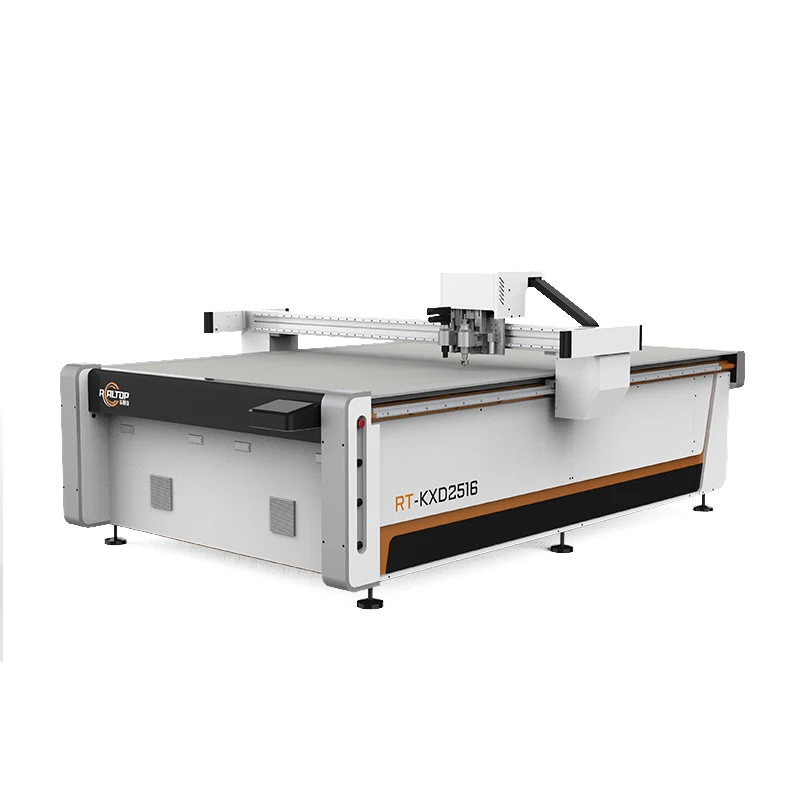
| Product Type | CNC Oscillating Knife Cutting Machine |
| Working Area | 1600 × 2500 mm |
| Cutting Thickness Capacity | ≤ 30 mm |
| Cutting Accuracy | ±0.1 mm |
| Cutting Speed Range | 0–2000 mm/s |
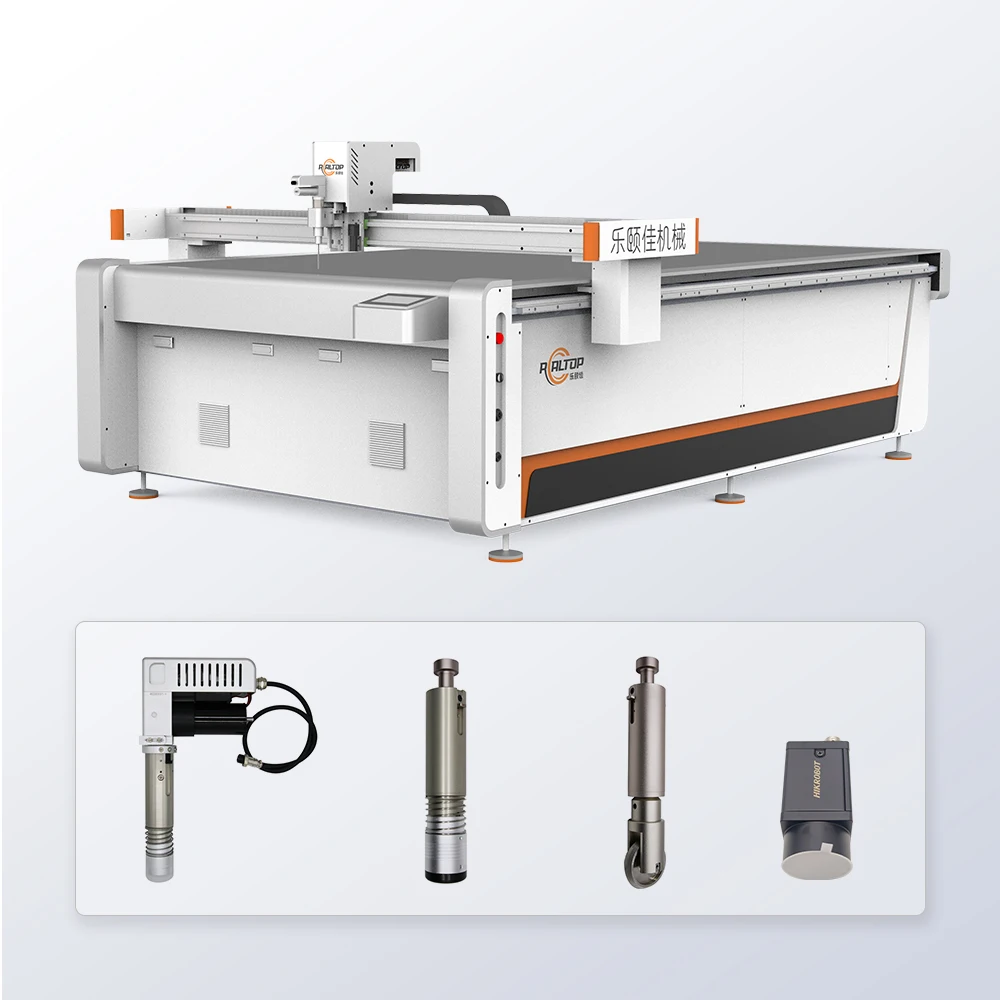
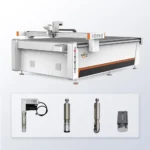
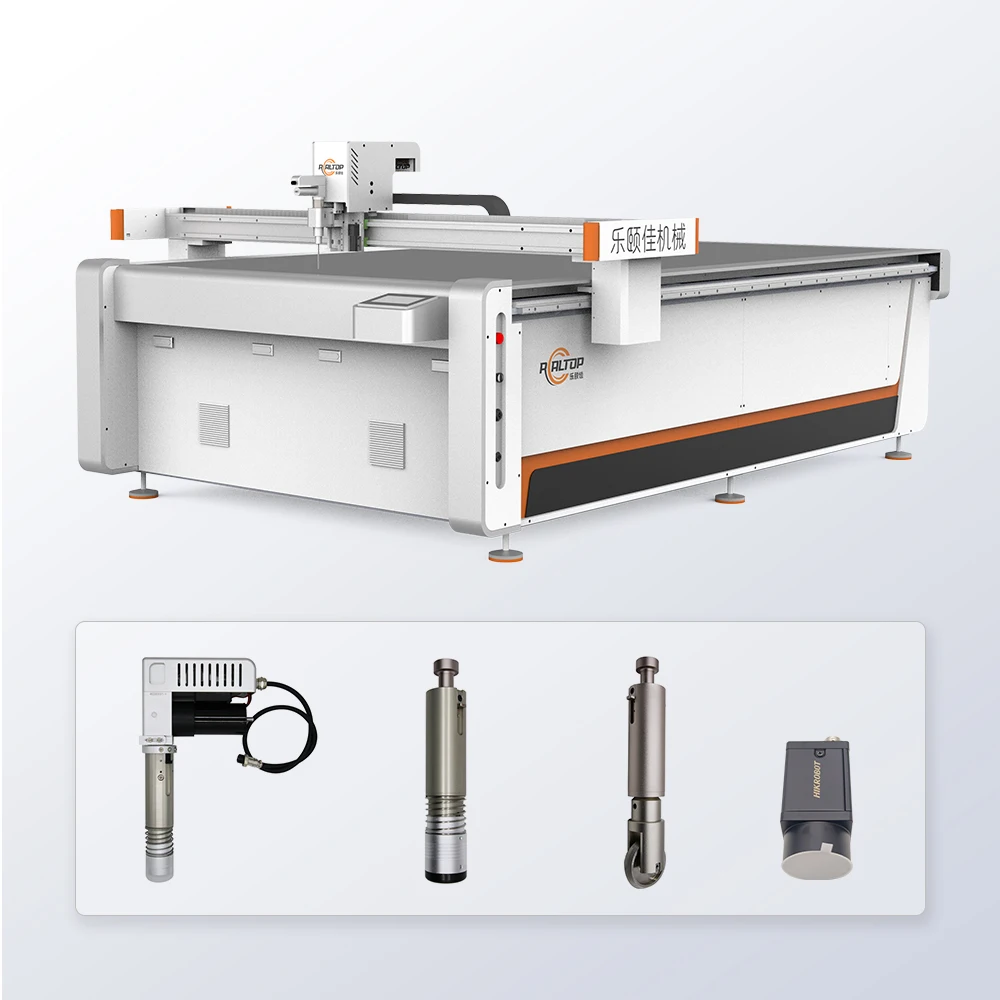
| Tool Head Options | Oscillating knife, Driven rotary knife, Creasing wheel, Kiss cutting tool, Pneumatic knife, Milling tool, V groove knife |
| Vacuum Table | Aluminum bellows vacuum table |
| Vacuum Pump Power | 9 kW |
| Servo Motor Options | Panasonic, Delta, Dorna |
| Control System | PLC control panel |
| Compatible File Formats | PLT, DXF, AI, PDF |
| Voltage Configuration | 110V, 220V, 380V (basis not stated in source — confirm frequency Hz and phase) |
| Software Language Options | English, Russian, Italian, Chinese (special languages customizable) |
| Safety Features | Infrared sensor device, emergency stop device |
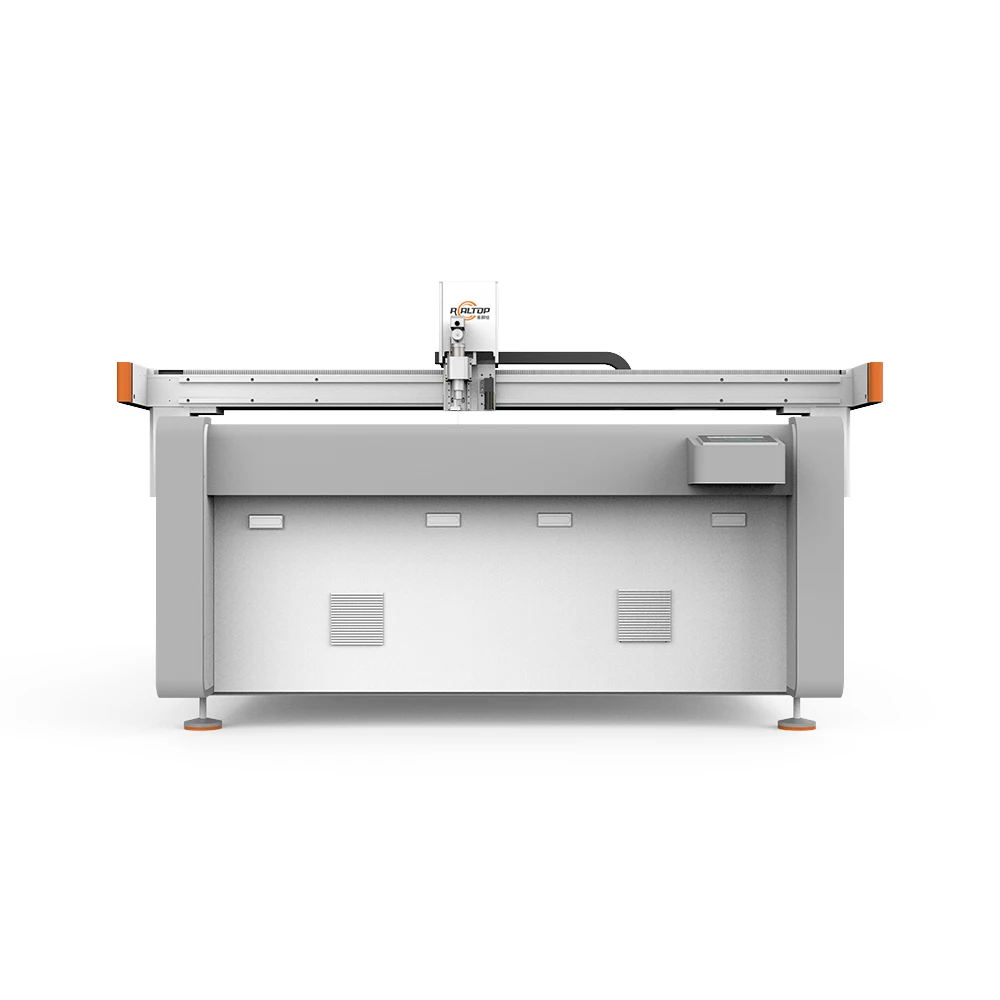
| Machine Dimensions | 3300 × 2100 × 1350 mm |
| Assembly State | Fully assembled |
| Compliance | CE |
Application Suitability
| Application | Material or Output |
|---|---|
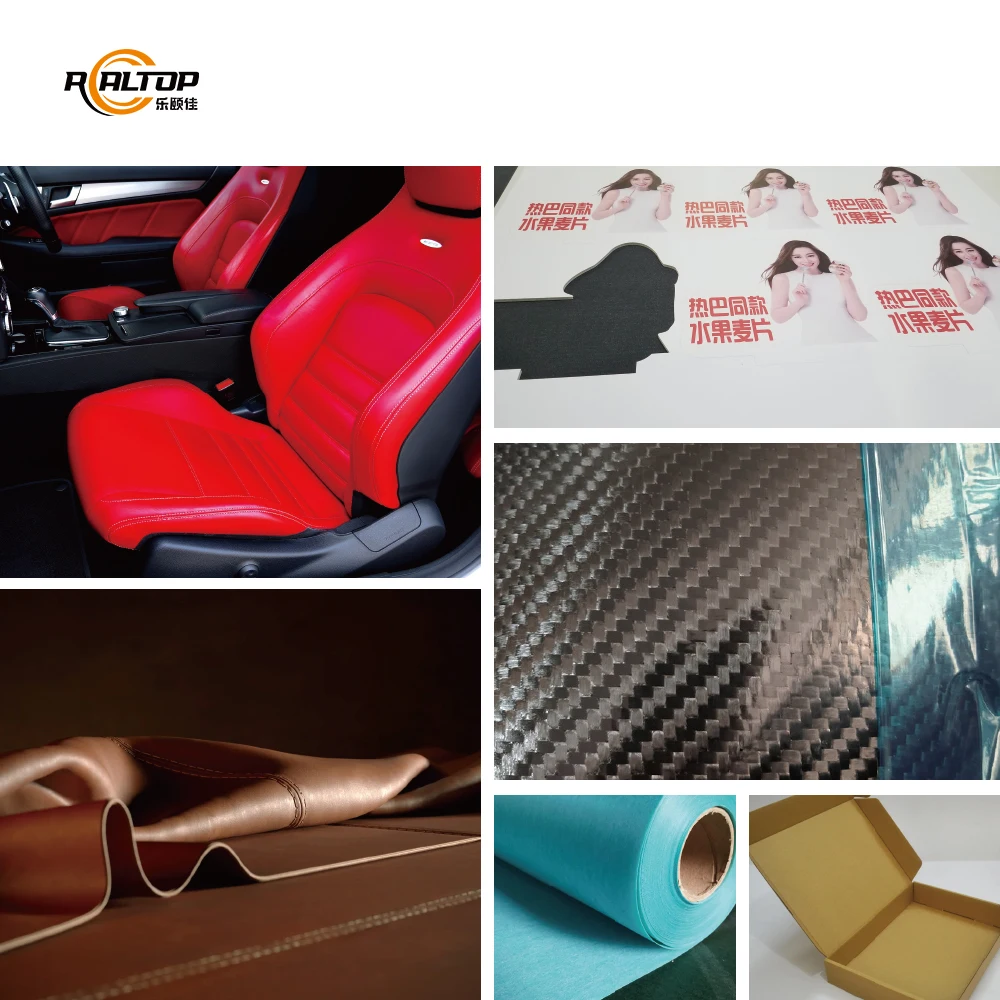
| Aerospace composite layup | Carbon fiber prepreg, aramid honeycomb cores, thermal and acoustic insulation foam for wing panels, fairings and interior trim |
| Automotive and rail interior components | FRP panels, acoustic felt, damping pads, carpets, headliners, battery insulation pads, seat foam |
| Wind turbine blade preform fabrication | Fiberglass cloth, carbon fiber cloth, vacuum infusion mesh, PET and PVC foam core materials |
| Sporting goods manufacturing | Carbon fiber sheets and fabric, Kevlar, high-performance foam for bicycle frames, helmet liners, surfboards and kayak components |
Why Material Verification Must Precede Any Quotation
A cutting configuration only performs as well as the test material used to validate it.
Many buyers submit an inquiry based on a working area size alone, without providing the exact resin system, fiber architecture or material thickness they intend to run. A machine set up for standard carbon fiber prepreg will behave very differently when faced with a high-resin-content fiberglass mat or a rigid G10 epoxy board. The tool head selection, oscillation frequency and vacuum zoning all depend on these variables. Without a physical sample run, the CNC Oscillating Knife Cutting Machine manufacturer cannot guarantee edge quality or prevent delamination on the buyer’s actual production material [NEED_CITE: composite cutting edge quality standards for aerospace materials].
Cold Cutting Integrity for Resin-Sensitive Materials
Thermal cutting processes compromise the structural matrix in composites. This CNC Oscillating Knife Cutting Machine uses high-frequency mechanical oscillation to shear through carbon fiber, Kevlar, fiberglass and honeycomb cores without generating heat at the cut zone. The result is an edge free from melted resin, scorching, or the hazardous particulates associated with laser processing of organic matrices. Cold cutting preserves the mechanical properties of prepreg systems where resin integrity directly affects downstream curing and bonding performance.
Factory Engineering and Frame Construction
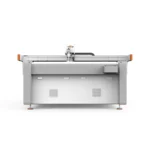
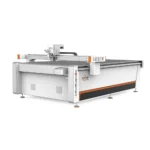
The 1625 platform is built on a heavy-duty frame with precision-ground surfaces that maintain flatness across the full 1600 × 2500 mm working area. The aluminum bellows vacuum table provides consistent hold-down pressure for composite sheets that might otherwise lift or shift during high-speed knife passes. Realtop designs and manufactures both knife and laser cutting systems in-house, meaning the buyer can match the cutting method to the composite type rather than being forced into a single technology. Servo drive options from Panasonic, Delta and Dorna allow configuration based on the precision demands of each application [NEED_CITE: servo motor performance criteria in CNC cutting equipment].
Decoding the Specifications That Matter
The ±0.1 mm cutting accuracy is achievable because the oscillating knife action combines with servo-driven axis control to maintain consistent blade geometry through each pass. Cutting speed ranges from 0 to 2000 mm/s, but the effective production speed depends on material thickness and fiber density — a 3 mm fiberglass cloth cuts considerably faster than a 20 mm aramid honeycomb block. The 9 kW vacuum pump generates sufficient negative pressure across the aluminum bellows table to secure small offcuts that larger vacuum systems might allow to drift. File format compatibility with PLT, DXF, AI and PDF ensures integration with existing nesting software workflows without requiring file conversion steps that can introduce dimensional errors.
When Configuration Choices Come Back to Haunt Production
Selecting a pneumatic knife for a soft fiberglass cloth results in compression and fraying where an oscillating knife would have produced a clean shear. Conversely, running a standard oscillating knife against a rigid G10 epoxy board without adequate oscillation force causes rapid blade wear and chipped edges. Buyers who skip the sample cutting phase often discover these mismatches only after the machine arrives and production begins. Incorrect vacuum table zoning allows small composite parts to lift during cutting, producing dimensional drift that accumulates across a production run [NEED_CITE: vacuum hold-down requirements for composite sheet materials].
What In-House Manufacturing Means for Your Order
Realtop maintains its own design team and core factory covering both knife and laser technologies, so the cutting method is matched to the composite material rather than forced into whichever machine a trading company has in stock. Tool head and table configurations are specified per material type and production volume, documented before the order is placed. Voltage, plug type, control panel language and software interface are all confirmed against the destination market requirements. Sample cutting on the buyer’s actual composite material is performed before commitment, with edge quality and cutting parameters recorded in a written report. CE compliance documentation and factory test records are provided with each shipment.
Documentation & Verification
- Machine specification sheet listing every tool head and table component installed on your 1625 unit
- Sample cutting report with photographs taken on your specific composite material and thickness
- Electrical schematic confirming voltage, frequency and phase for your destination market
- Software licence documentation and file format compatibility note for your nesting workflow
- Factory test record and CE declaration provided before the machine leaves the production floor
- Packing photographs showing machine condition and crating before container loading
Installation, Commissioning & Support
- Fully assembled 1625 ships with a 3300 × 2100 × 1350 mm footprint requiring level concrete flooring
- 9 kW vacuum pump and machine servos require dedicated electrical circuits matching confirmed voltage and phase
- PLC control panel configured in buyer’s selected language before dispatch from the Jinan factory
- First-run parameter tuning performed with the buyer’s material to establish baseline cutting speeds
- Spare parts list provided with recommended consumable blade stock based on production volume
- Operation and maintenance manual covering daily vacuum table inspection and periodic servo calibration
Preparing Your Inquiry for an Accurate Configuration
To receive a quotation that reflects your actual production needs rather than a generic template, provide your composite material type, resin system, sheet dimensions and target thickness range. Specify the electrical voltage, frequency and phase standard at your facility, along with the preferred control panel and software language. If you are integrating this CNC Oscillating Knife Cutting Machine into an existing workflow, indicate your current nesting software and file format so compatibility can be verified before order confirmation.
Frequently Asked Questions
Q: How is the correct tool head selected for different composite materials and thicknesses?
A: The selection depends on the fiber type, resin content and material thickness. Soft fiberglass cloth requires a high-frequency oscillating knife, while rigid G10 epoxy boards demand a milling tool or heavier oscillation force. The buyer sends actual production material for sample cutting, and the tool head is validated before the machine configuration is finalized.
Q: What voltage, frequency and control language options are confirmed before shipment?
A: The machine is available configured for 110V, 220V or 380V systems, but frequency and phase must be confirmed for your destination market. The PLC control panel and software interface are set to English, Russian, Italian or Chinese as standard, with special languages available on request. All electrical parameters are documented in the schematic before dispatch.
Q: Can you provide sample cutting on our specific composite material before we commit to an order?
A: Yes. The buyer ships a representative sample of their actual production material to the factory, where it is cut using the proposed tool head and table configuration. A sample cutting report with edge quality photographs and recorded cutting parameters is returned before any purchase commitment is required.
Q: How does the factory quality control process ensure build consistency across units?
A: Each frame is stress-relieved and precision-ground before assembly. Servo motors, vacuum table components and the PLC control panel are tested under load on the production floor. A factory test record documenting cutting accuracy and system performance is generated for every machine before it is cleared for packing and shipment.
You may also like

商品评价
Clear filtersThere are no reviews yet.