


-
 Courier delivery
-
 DHL Courier delivery
-
 Warranty 1 year
-
 Free 30-Day returns

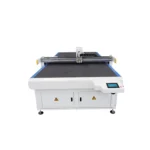
Custom tooling matched to fabric density — REALTOP configures each oscillating knife cutting table against your actual material sample, verifying edge quality, layer count and vacuum hold-down before the order is placed.
Technical Specifications
| Parameter | Value |
|---|---|
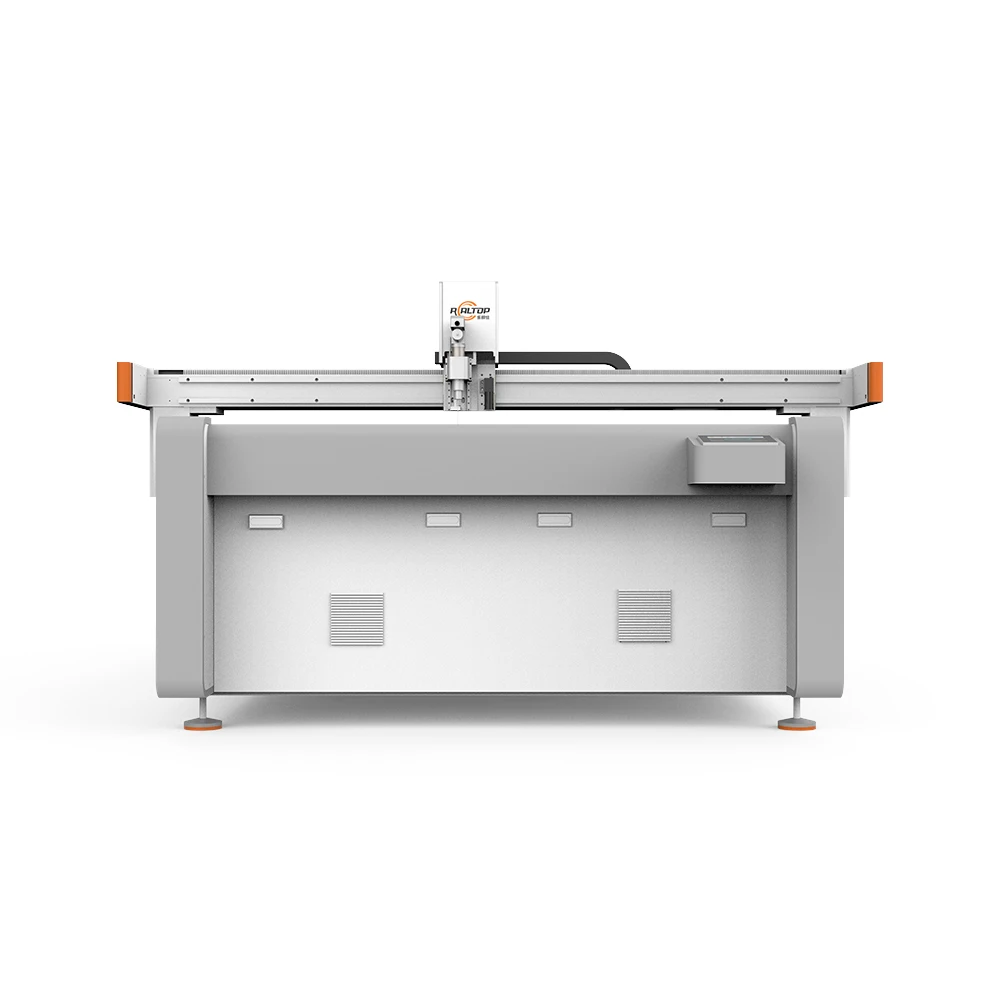
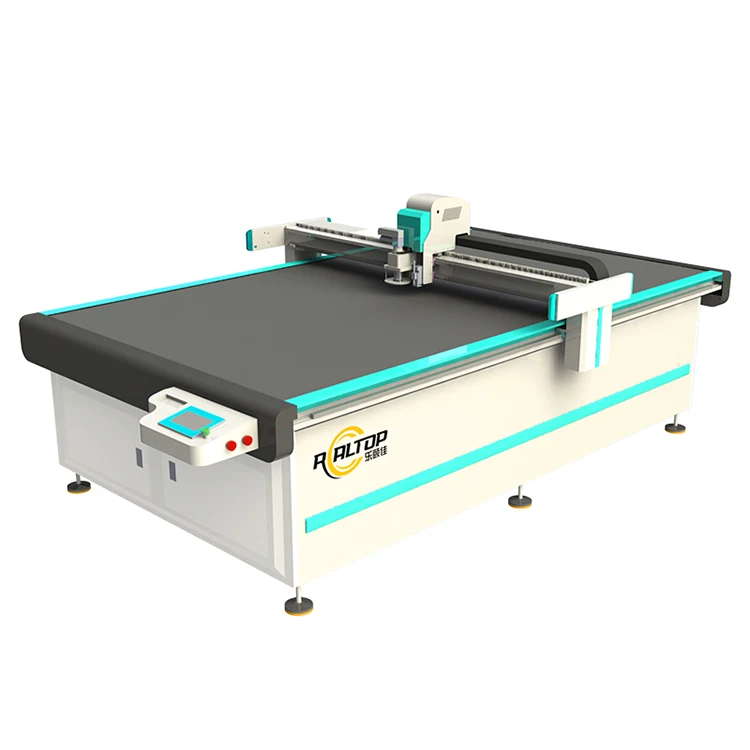
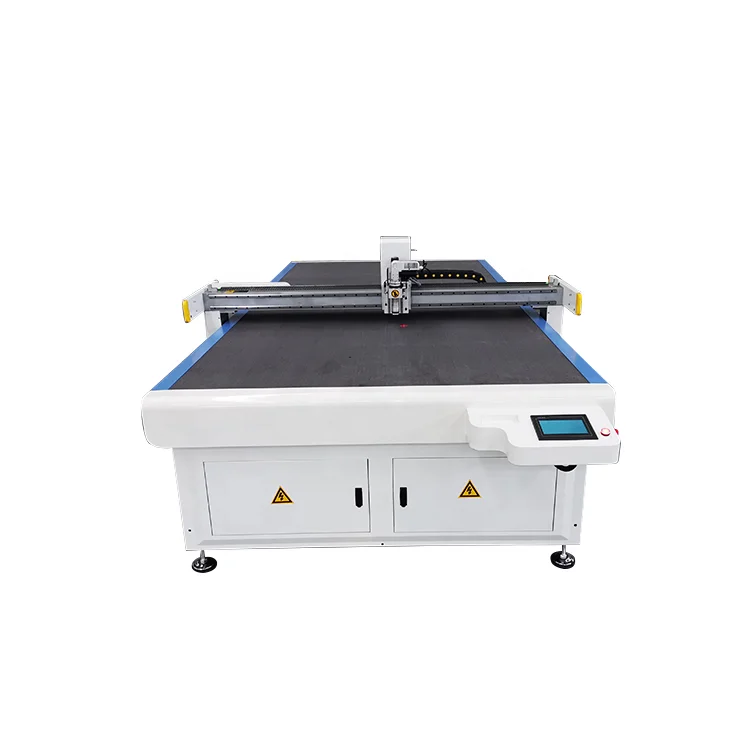
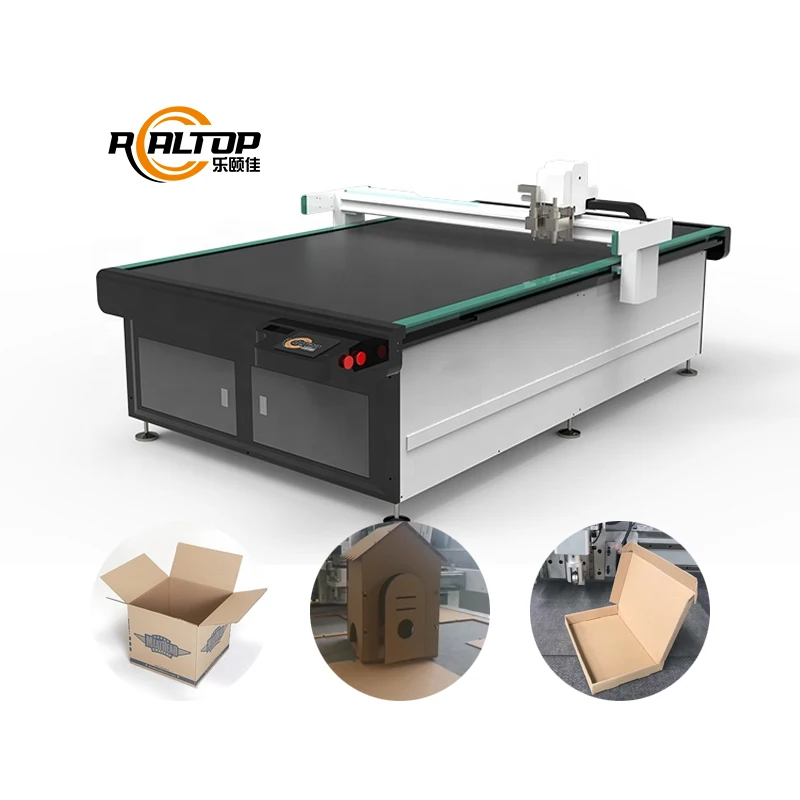
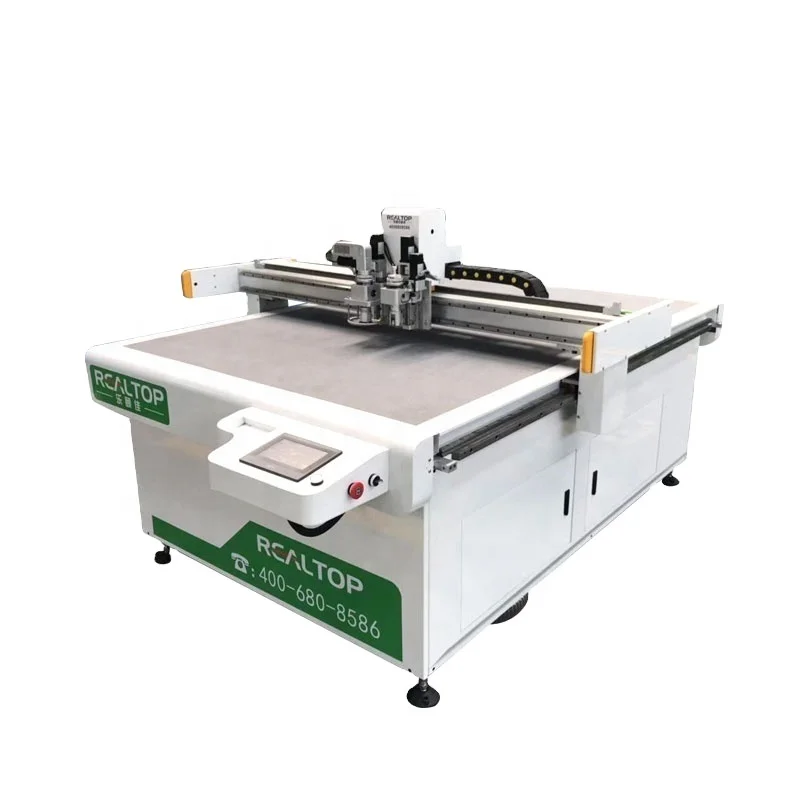
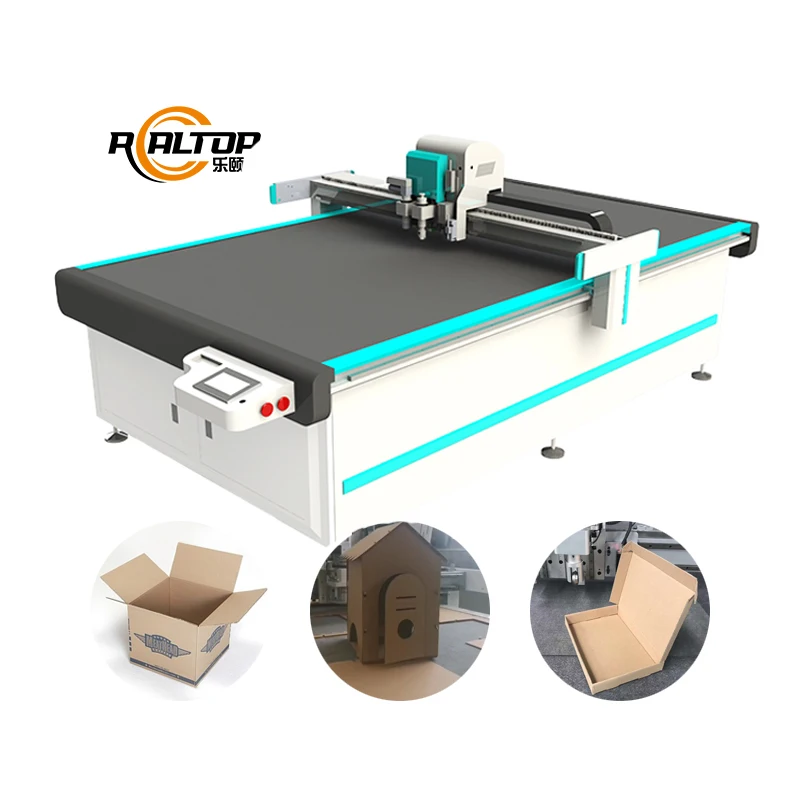
| Product Type | CNC Oscillating Knife Cutting Machine |
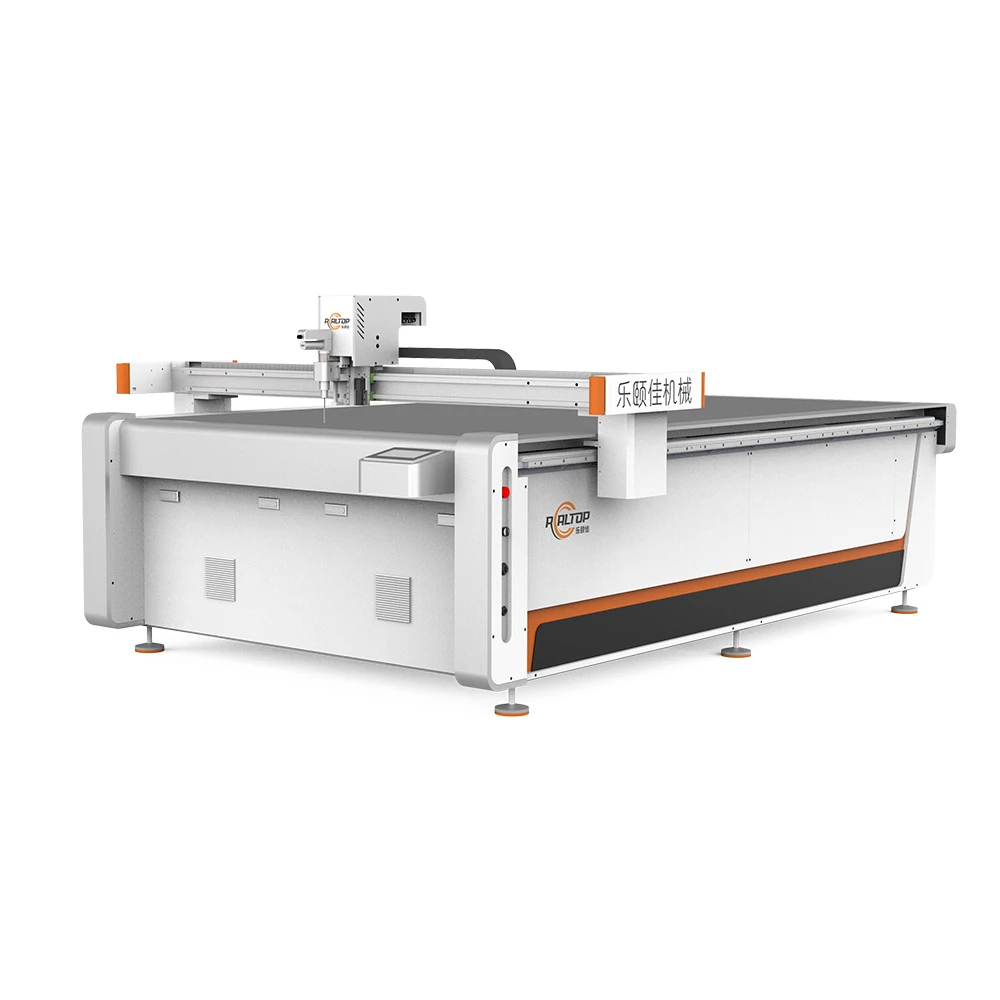
| Working Area | 1600×2500 mm |
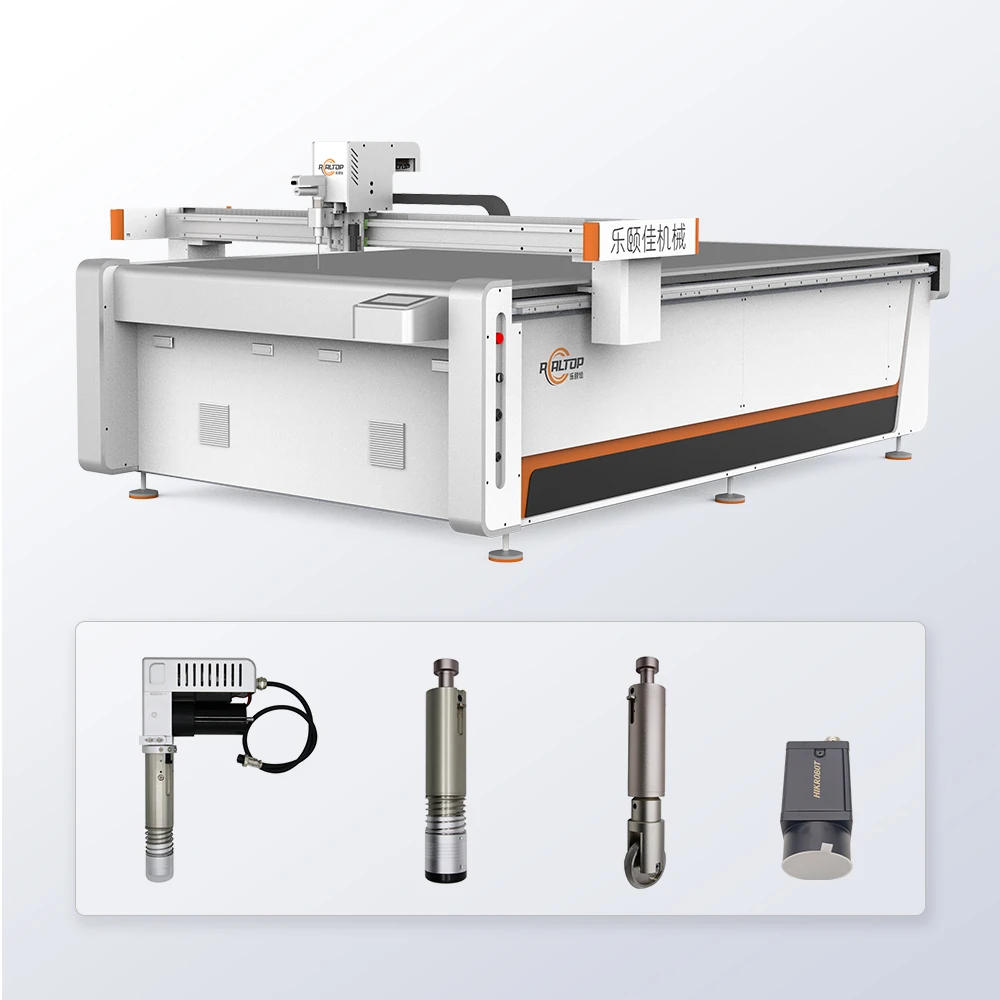
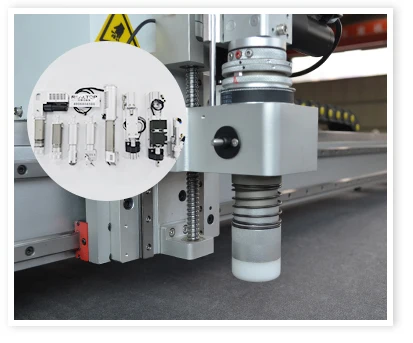
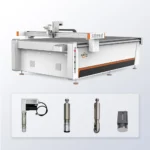
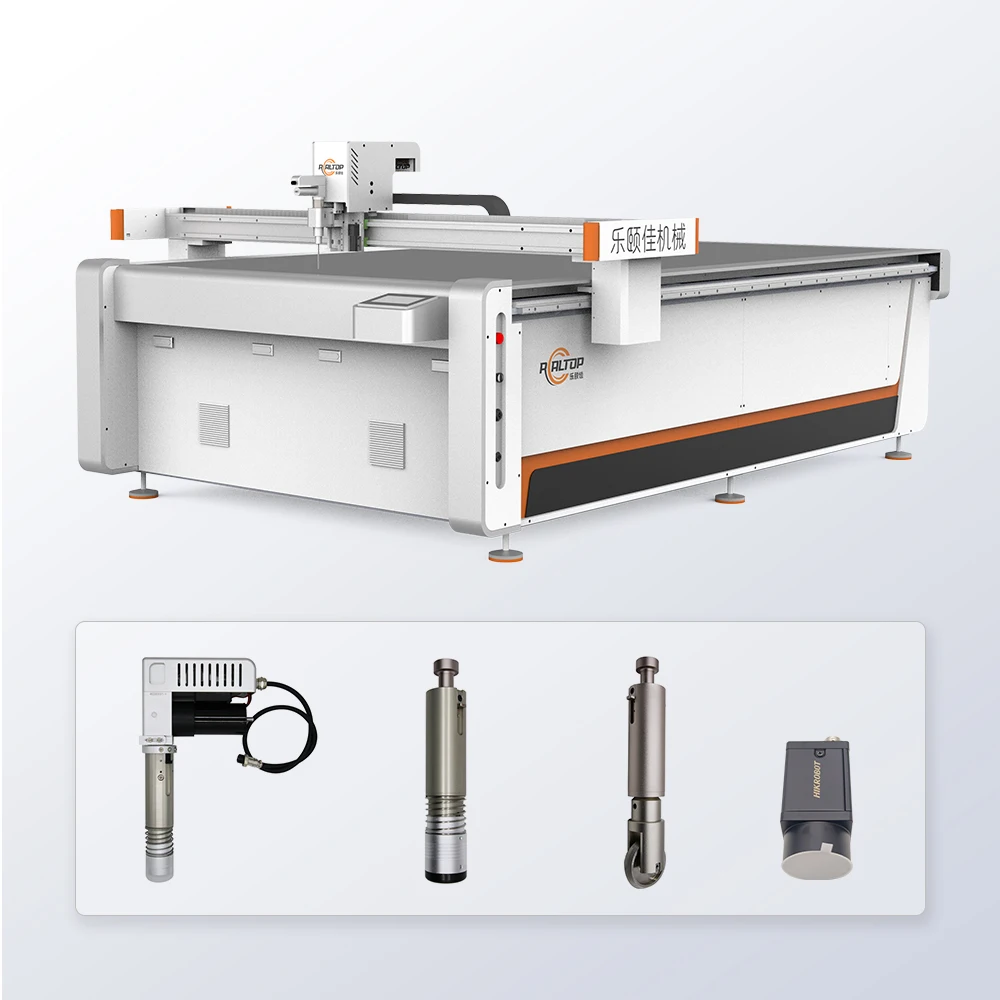
| Tool Head Options | Oscillating knife, Driven rotary knife, Creasing wheel, Kiss cutting tool, Pneumatic knife, Milling tool, V groove knife |
| Cutting Thickness Capacity | ≤30 mm (basis to be confirmed — depends on material type and density) |
| Positioning Accuracy | ±0.1 mm |
| Cutting Speed Range | 0–2000 mm/s |
| Vacuum Pump Power | 9 kW |
| Voltage Configuration | 110V / 220V / 380V (frequency to be confirmed per market) |
| Servo Motor Options | Panasonic, Delta, Dorna |
| Vacuum Table Type | Aluminum bellows with full-surface adsorption |
| Control System | PLC with dedicated packaging box structure design software |
| File Format Compatibility | PLT, DXF, AI, PDF |
| Software Interface Languages | English, Russian, Italian, Chinese (other languages configurable) |
| Safety Devices | Infrared sensor, emergency stop |
| Overall Dimensions | 3300×2100×1350 mm |
| Compliance | CE marked |
Application Suitability
| Application | Material or Output |
|---|---|
| Apparel manufacturing | Suits, knitwear, lace, pattern-matched layouts on woven and knit textiles |
| Automotive interior trimming | Seat fabrics, carpets, PVC mats requiring burr-free edges |
| Home textile production | Sofa upholstery fabrics, curtains, rugs cut in multi-layer stacks |
| Composite material processing | Carbon fiber prepreg, aramid weaves, specialty technical textiles |
Why Stated Thickness Ratings Rarely Survive First Contact With Real Fabric
The ≤30 mm cutting depth on this CNC oscillating knife cutting machine only holds meaning when tied to a specific fabric type, ply height and layer density.
I once watched a production line stall for three weeks because a cutting table was specified purely by working area. The buyer was running coated composite material, and the selected tool head could not hold an edge through the coating layer. Output dropped to half of what everyone expected, and the entire line backed up at that one station. That is why REALTOP runs sample cutting on your exact material before the specification is locked down. A thickness number without context is just a number on a brochure [NEED_CITE: fabric density and ply height variables in multi-layer cutting].
Building the Knife Station Around Your Fabric, Not the Other Way Around
Different textiles demand fundamentally different cutting mechanics. A woven suit fabric needs a clean oscillating stroke to prevent fraying, while a plush automotive carpet responds better to a driven rotary knife that slices through the pile without crushing it. This platform supports seven distinct tool head options on the same gantry, so the cutting action is selected based on how your material actually behaves under load rather than forcing every job through a single blade type. As a CNC Oscillating Knife Cutting Machine manufacturer, REALTOP matches the tooling to the textile during the sample stage, not after delivery.
Vacuum Hold-Down Is Where Multi-Layer Cutting Succeeds or Fails
Holding fabric flat at high traverse speed is a physics problem, not a marketing claim. The aluminum bellows vacuum table on this system provides full-surface adsorption, meaning suction is distributed across the entire bed rather than concentrated in fixed zones. Small pattern pieces — collar curves, pocket flaps, gusset panels — stay pinned during rapid directional changes where zoned tables often lose grip. When a single ply shifts mid-cut, the entire stack below it is compromised, and the waste is already on the floor before the operator notices [NEED_CITE: vacuum distribution requirements for small-part fabric cutting].
Reading the Specification Sheet Like a Production Manager
The ±0.1 mm positioning accuracy matters most when cutting pattern-matched layouts where a 0.3 mm drift across a 2500 mm traverse puts the plaid off-register on the finished garment. Servo motor selection — Panasonic, Delta or Dorna — affects how service technicians in your local market source replacement drives two years from now, so this choice should align with what your maintenance team already stocks. The 9 kW vacuum pump must be evaluated against the porosity of your thinnest material; fine silks leak air differently than denim, and pump capacity determines whether the table can actually hold both. Software compatibility with PLT, DXF, AI and PDF files eliminates the need to rebuild patterns from scratch when migrating from manual or die-cut workflows. The PLC control system supports multiple interface languages, which reduces operator error in facilities where the floor crew does not read the same language as the engineering documentation.
What Happens When Configuration Gets Skipped
Choosing the wrong tool head for a coated or laminated fabric produces ragged edges that fail quality inspection, and no amount of downstream finishing corrects a cut that was wrong from the blade. Inadequate vacuum zoning allows small pieces to lift during high-speed directional changes, generating scrap that accumulates silently across a shift. When the control software cannot import your existing nesting files, operators spend hours redrawing patterns that your design team already finalized, and that delay compounds every single day the machine runs [NEED_CITE: hidden costs of mismatched tooling in textile cutting operations].
Why Procurement Teams Specify REALTOP
REALTOP designs both knife and laser platforms under one roof, so the cutting method is selected based on what your fabric actually requires rather than what a single-technology vendor can offer. Every configuration is built around your sample material — tool head, vacuum zoning and cutting depth are all confirmed against real production stock before the purchase order is issued. Voltage, plug standard and control language are verified against your facility specifications prior to shipment, eliminating the costly rewiring and reprogramming that happens when these details are left to chance. The intelligent nesting system supports defect avoidance, allowing operators to route around fabric flaws rather than cutting through them and generating rework. Factory testing covers your exact material profile, so the machine that arrives has already proven it can run your production job.
Documentation & Verification
- Factory test record generated on your specific fabric type, ply height and daily volume target
- Electrical schematic with voltage, frequency and plug type confirmed for your facility location
- Tool head and vacuum table configuration list matched to your material specification sheet
- Software licence document with file format compatibility verified against your existing design workflow
- Spare parts list identifying wear components by part number and recommended replacement interval
- Packing photographs documenting machine condition at point of dispatch
Installation, Commissioning & Support
- 3300×2100 mm footprint requires level concrete floor with clearance for material loading on both long sides
- 9 kW vacuum pump draws dedicated circuit separate from the PLC control and servo drives
- Machine ships partially assembled; gantry and tool head carriage require on-site alignment to the aluminum table
- First-run commissioning includes vacuum pressure calibration against your thinnest and thickest production fabrics
- Operator training covers tool head changeover, nesting software import and emergency stop response procedures
- Wearing parts inventory includes oscillating blades, rotary knife discs and vacuum bellows seals sized to your configuration
How to Structure Your Inquiry
To move from catalogue browsing to a usable quotation, the conversation needs your fabric type, typical ply height and daily cut volume so the tool head and vacuum configuration can be scoped accurately. Confirm your facility voltage and frequency, and specify which software language your operators require on the control interface. If you run patterned or printed textiles, indicate whether contour recognition from registration marks is part of your workflow so the appropriate positioning hardware is included in the specification.
Frequently Asked Questions
Q: How is the ≤30 mm cutting thickness actually verified for my fabric?
A: The rating depends entirely on material density and layer count. We cut your sample fabric at your production ply height, measure edge quality and dimensional accuracy, and document the results before any configuration is finalized. A woven denim stack behaves differently than a knit fleece stack at the same thickness, so verification on your specific material is the only reliable method.
Q: Which tool head should I choose for my fabric type?
A: Woven and tightly structured fabrics typically use the oscillating knife for clean edges, while plush or pile materials respond better to the driven rotary knife. Coated composites may require the pneumatic knife for sufficient downward force. The decision is made during sample cutting on your actual material, not from a generic recommendation chart.
Q: How do I confirm electrical and software specifications before shipment?
A: Voltage, plug type and frequency are documented on the electrical schematic and confirmed against your facility standards before production begins. Software interface language and file format compatibility are verified using your actual design files. No machine leaves the factory until these items are signed off.
Q: Can I send my own fabric for a sample cutting test?
A: Yes. Send a representative sample of your production fabric, including any coatings or laminations. The test report covers edge quality at your target ply height, dimensional accuracy, vacuum hold-down performance and recommended tool head selection. This report becomes part of your order documentation.
Q: What servo motor brand should I specify for long-term serviceability?
A: Panasonic, Delta and Dorna are all available. The practical choice depends on which brand your local maintenance suppliers stock and service. Selecting a servo brand already supported in your market reduces downtime risk when drives or encoders eventually need replacement.
You may also like

商品评价
Clear filtersThere are no reviews yet.