


-
 Courier delivery
-
 DHL Courier delivery
-
 Warranty 1 year
-
 Free 30-Day returns

In-house dual-process design — Realtop engineers both oscillating knife and CO2 laser cutting systems under one roof, allowing fabric processors to match the cutting method to the textile rather than force a single-method compromise.
Technical Specifications
| Parameter | Value |
|---|---|
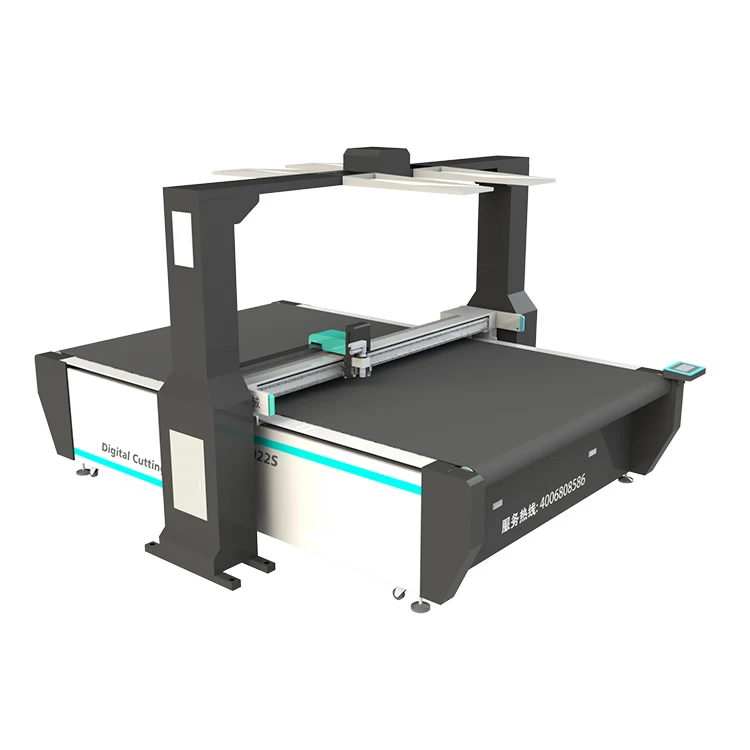
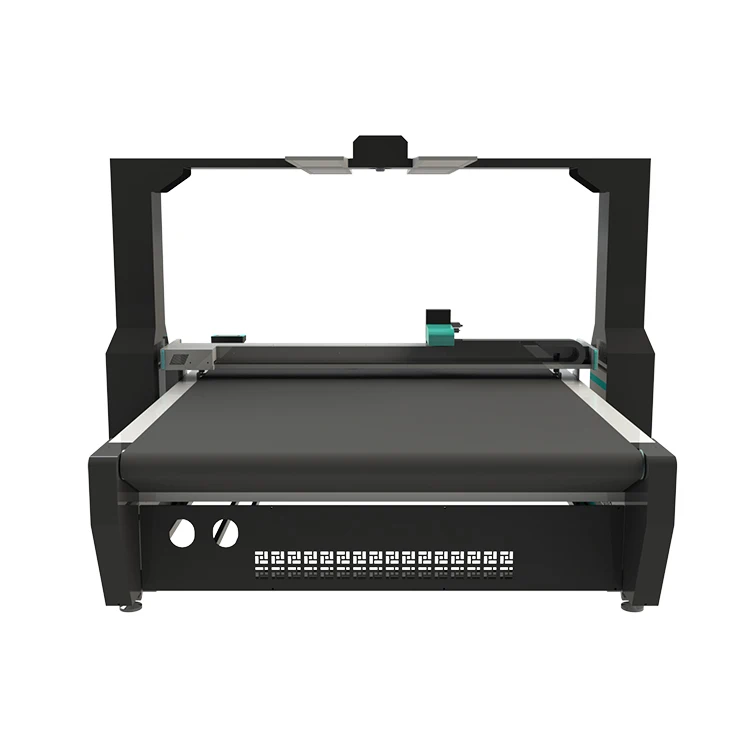
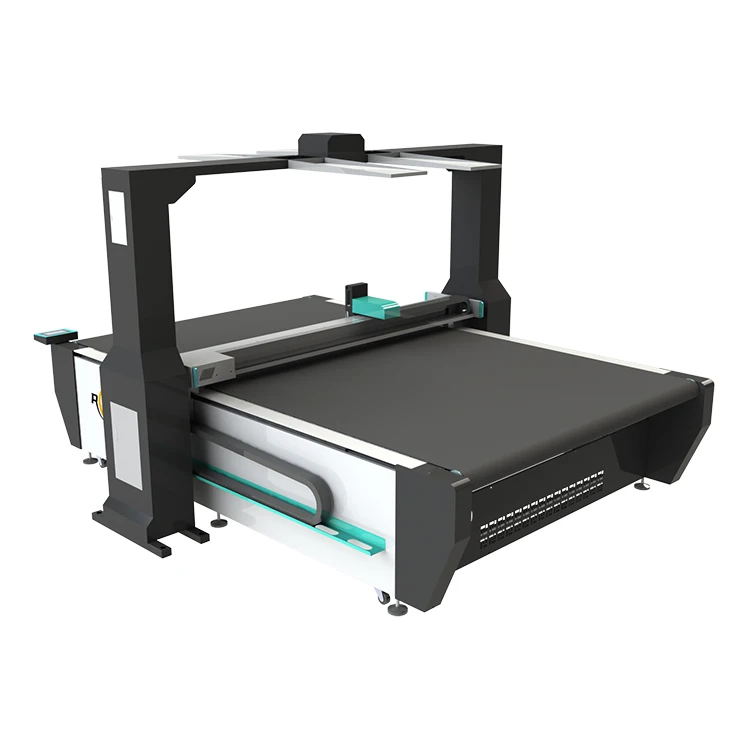
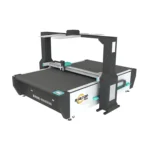
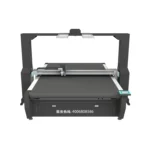
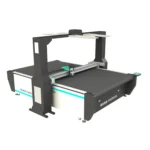
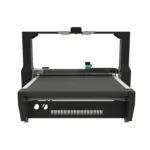
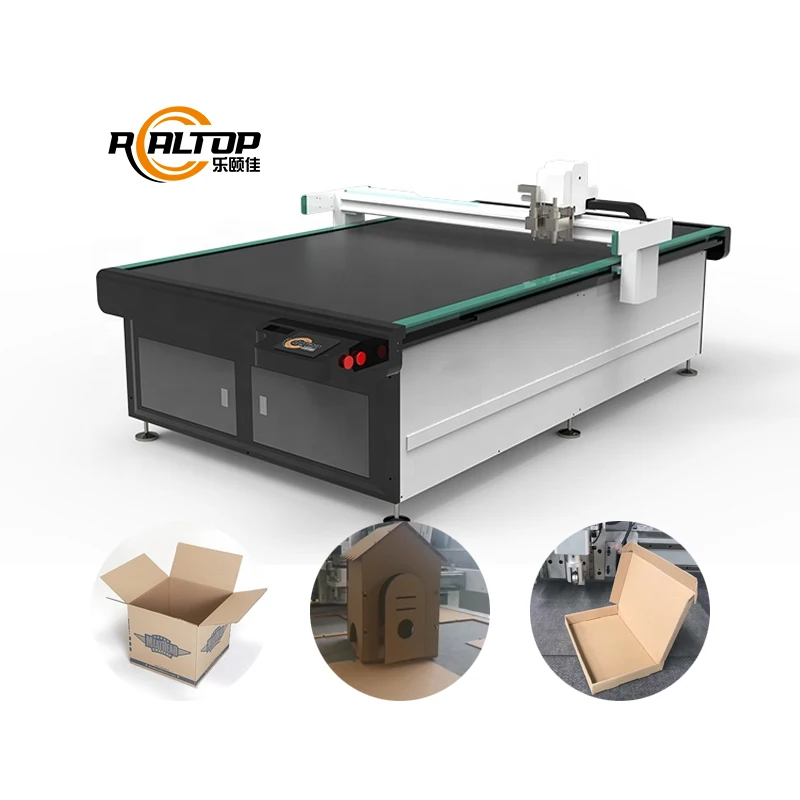
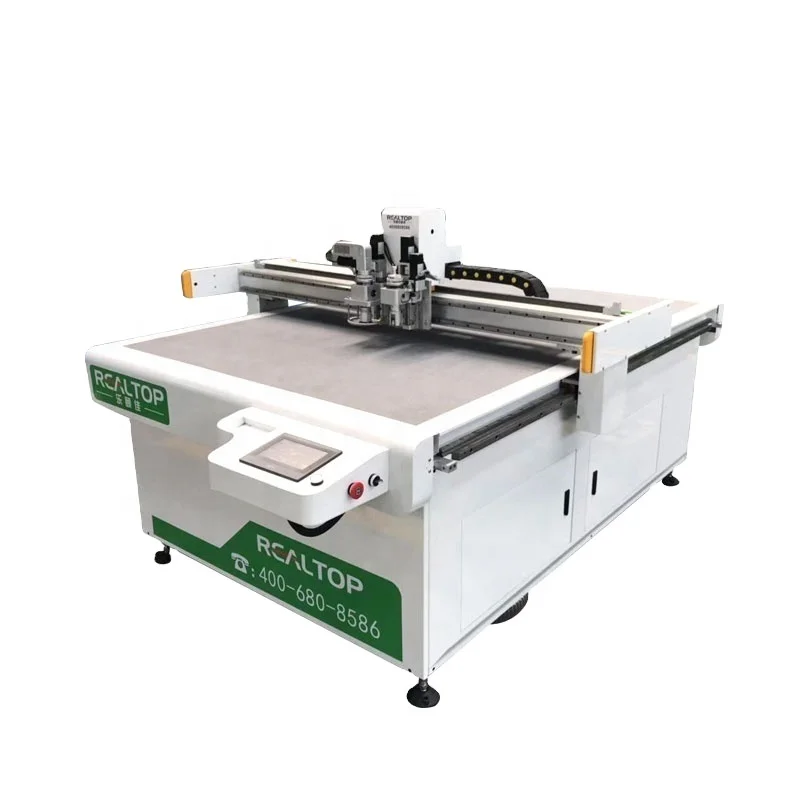
| Product Type | CNC Oscillating Knife and CO2 Laser Cutting Machine for Fabric |
| Effective Cutting Area | 2500×1600 / 2500×1800 / 2500×2000 / 3000×1600 / 3000×2000 mm |
| Max Idle Speed | 2500 mm/s |
| Actual Cutting Speed | 500–2000 mm/s (depending on material thickness and hardness) |
| Repeated Positioning Accuracy | ±0.1 mm |
| Cutting Depth Control Accuracy | 0.03 mm |
| Repeatability | ±0.01 mm |
| Laser Power | 150W CO2 |
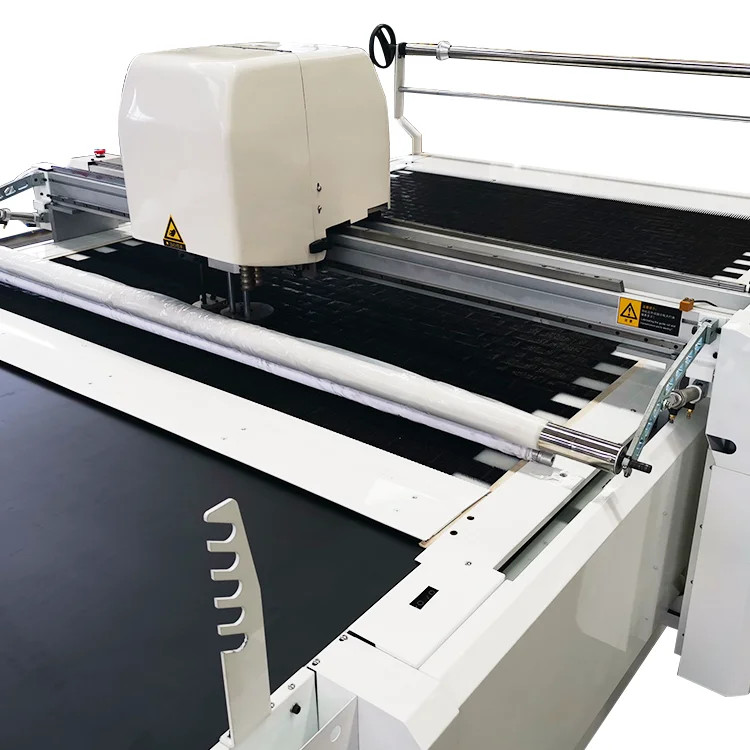
| Cutting Head | Imported MAXON vibrating cutter head |
| Servo Motor | Delta drive (optional Yaskawa or Panasonic) |
| Main Motor Power | 2 kW |
| Air Pump Power | 9 kW |
| Linear Guide | Taiwan HIWIN |
| Rack | Taiwan YYC |
| Cable | German igus high-flex shielded |
| Pneumatic Components | Taiwan AirTAC |
| Electrical Components | Schneider (France), Chint |
| Photoelectric Switch | Japan OMRON |
| Control Interface | 7-inch LCD touch screen |
| Nesting Module | Computer intelligent automatic nesting |
| Software | CUT-REALTOP; format conversion via Laser, JDsoft |
| Feeding Method | Fixed table or auto-feeding (optional) |
| Conveyor Belt | 4 mm Holland Ammeraal |
| Blade Options | Tungsten steel 35#, 26#, 16# |
| Safety | Infrared blocking stop, anti-collision protection |
| Framework | CO2 welded bed, secondary vibration aging treatment |
| Total Weight | 1300 kg |
| Voltage | 380V or 220V (configurable) |
| Data Transfer | Internet interface |
| Red Light Preview | Yes |
| Fault Detection | Intelligent auto-detection with code push on power-up |
Application Suitability
| Application | Material or Output |
|---|---|
| Garment and footwear production | Multi-layer woven fabric, cotton, polyester blends |
| Automotive interior trimming | Synthetic textile composites, non-woven fabrics |
| Leather goods manufacturing | Natural leather, PU leather, synthetic suede |
| Soft signage and banners | PVC vinyl, banner fabric, mesh textile |
| Technical textile processing | Aramid, fiberglass cloth, coated fabric |
| Multi-layer nesting production | Roll-fed fabric stacks for high-volume cutting |
Why Material Thickness Matters More Than Table Size for a CNC Fabric Cutting Machine Manufacturer
Cutting depth and tool selection must match the actual ply count and density — not just the sheet dimensions.
A common mistake I have seen in workshops is specifying a machine based solely on working area, then discovering the oscillating knife cannot penetrate the full fabric stack. When an automotive interior buyer sent us high-density composite foam after their previous supplier’s blade wore out in weeks, the real issue was never the table size. It was the wrong tool head against a material the machine was never configured to handle. [NEED_CITE: tool head selection criteria for multi-layer textile cutting]
That experience changed how I approach every inquiry. Before discussing price or lead time, I ask for the specific fabric type, layer count, and daily volume. A CNC fabric cutting machine manufacturer should confirm those details first, because the wrong blade angle on dense foam produces ragged edges that no amount of speed can fix.
Matching Knife and Laser to Your Fabric Type
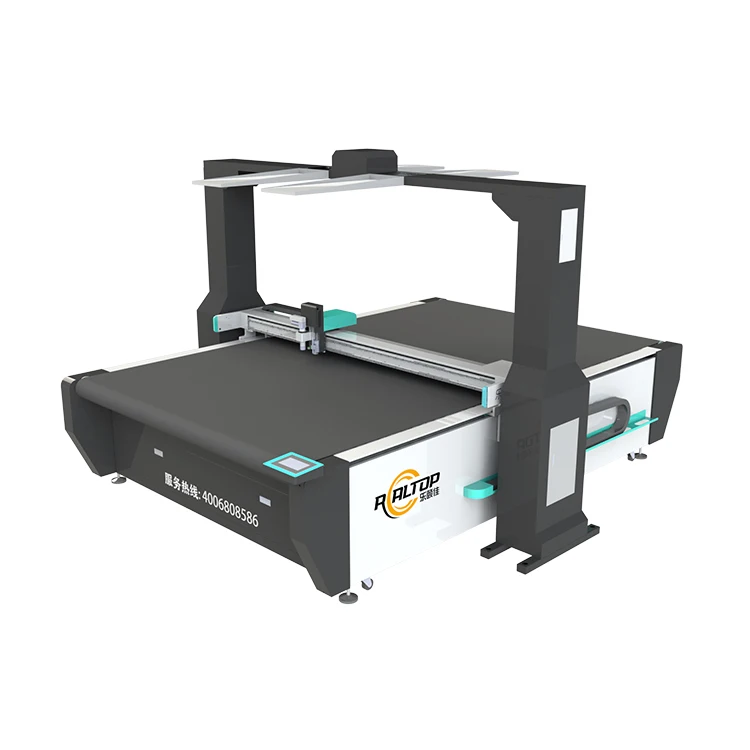
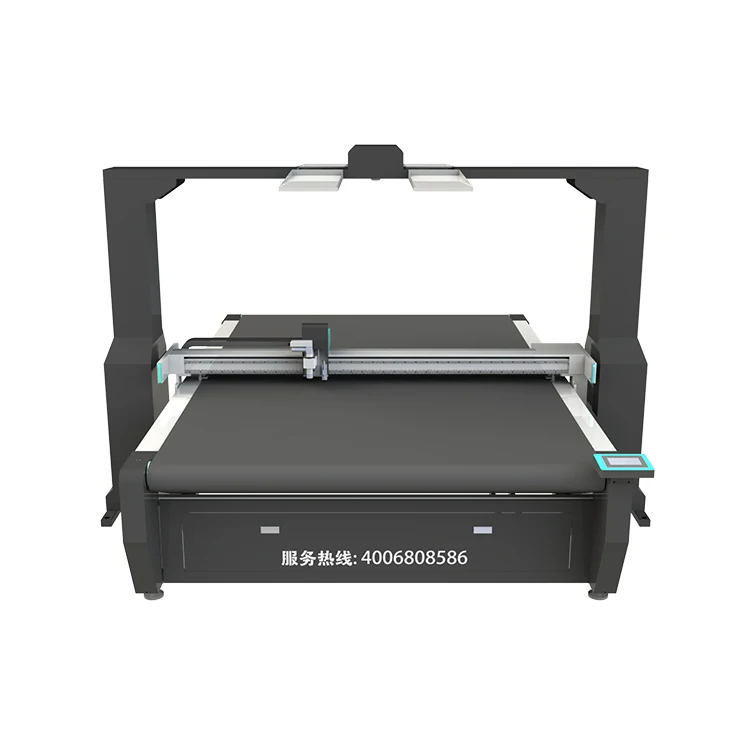
This platform combines a MAXON oscillating knife head with a 150W CO2 laser on a single flatbed, so the cutting method follows the material. Natural fabrics like cotton and denim cut cleanly with the vibrating knife, which shears through stacked plies without fusing edges. Synthetic textiles such as polyester banner material and nylon composites often benefit from laser cutting, where the thermal process seals edges and prevents fraying during handling.
The decision between knife and laser depends on fiber composition, weave density, and edge-quality requirements rather than operator preference. Having both tools available means a garment factory can cut cotton linings with the knife and switch to laser for synthetic shell panels on the same CNC fabric cutting machine manufacturer platform, eliminating the need for two separate machines.
Frame Stability and Motion Accuracy in Continuous Textile Production
The bed uses CO2 welded steel construction with secondary vibration aging treatment, which relieves internal stress before the linear guides and racks are mounted. This matters in fabric cutting because the machine accelerates and decelerates constantly as the knife follows complex nesting patterns across the table. Any residual stress in the frame would gradually shift the HIWIN linear guide alignment, pushing repeated positioning accuracy beyond the stated ±0.1 mm tolerance over months of operation.
German igus high-flex shielded cables run inside the cable carrier, rated for the continuous bending cycles that textile cutting demands. Japan OMRON photoelectric switches handle the home-position reference, and Taiwan YYC racks drive the gantry with the servo motors. [NEED_CITE: linear guide alignment standards for flatbed cutting machines] When you cut dozens of nested garment pieces per cycle, even slight deviation compounds across the sheet, making frame rigidity a direct factor in material yield.
Reading the Specs That Actually Affect Your Output
The 150W CO2 laser is rated for continuous operation on synthetics, which is the relevant figure for edge sealing on banner fabric and coated textiles — peak power claims on some machines do not translate to sustained cutting depth. The MAXON vibrating cutter head oscillates at high frequency, allowing it to slice through multi-layer fabric stacks without dragging or displacing lower plies. Blade options in tungsten steel (35#, 26#, 16#) cover different material thicknesses, and selecting the right profile prevents the crushed-edge problem common when a thick blade meets thin fabric.
The intelligent automatic nesting module arranges pattern pieces to reduce fabric waste, which directly affects cost per garment in high-volume production. Actual cutting speed ranges from 500 to 2000 mm/s depending on material thickness and hardness — a dense leather hide cuts slower than a single ply of woven cotton. The 9 kW air pump powers the vacuum table zoning, which must hold small pattern pieces flat against the conveyor without lifting during high-speed knife passes. [NEED_CITE: vacuum hold-down requirements for flatbed digital cutters]
The Hidden Cost of Wrong Configuration
When a buyer selects a tool head based on catalog defaults rather than material testing, the consequences show up weeks later. Ragged edges on synthetic foam mean rejected pieces in automotive interior assembly. Insufficient vacuum zoning lets small gasket patterns lift off the table mid-cut, ruining both the part and the blade. A conveyor felt that does not match the material surface causes feed slippage on smooth vinyl, shifting the entire nest off register. [NEED_CITE: common causes of cutting edge defects in textile processing]
These are not defects in the machine itself — they are configuration mismatches that a sample cutting test on the buyer’s own material would have revealed before shipment.
Why Buyers Source This Equipment From Realtop
Realtop maintains an in-house design team that covers both knife and laser cutting technologies, so the engineering decision starts with your material rather than a fixed product line. Every machine leaves the Jinan facility with a factory test record run on the buyer’s specified fabric type, ply count, and nesting pattern.
Voltage, plug configuration, and control panel language are confirmed before production begins, matching the destination market’s electrical standards. Software file format compatibility — DXF, PLT, AI — is verified against the buyer’s existing nesting workflow so there are no surprises at commissioning. The CCD camera positioning option is available for printed contour work, specified only when the application requires it rather than included as a standard cost on every unit.
Documentation & Verification
- Machine specification sheet listing selected tool head, laser power, and table configuration for your fabric type
- Electrical schematic with confirmed voltage, frequency, and plug type for destination market
- Sample cutting report on your actual fabric with documented edge quality and ply count
- Factory test record showing cutting accuracy and nesting layout before dispatch
- Software license and file format compatibility note matching your workflow
- Operation and maintenance manual in confirmed control language with spare parts list
Installation, Commissioning & Support
- Foundation must support 1300 kg total weight with level tolerance across the full cutting bed footprint
- Dedicated electrical circuit required matching confirmed 380V or 220V supply with proper grounding
- Machine ships as a single assembled unit; gantry and cutting heads are calibrated at factory
- First power-up runs intelligent auto-detection with fault code push before any cutting begins
- Operator training covers knife blade changeover, laser focal adjustment, and nesting software workflow
- Tungsten steel blade stock and Ammeraal conveyor belt listed in spare parts for routine replacement
What We Need to Quote the Right Configuration
To recommend the correct cutting method and table size, share your primary fabric type, maximum ply count, and standard roll or sheet dimensions. Let us know your local voltage and frequency, preferred control panel language, and which file formats your design team currently uses. If you can send a sample of the actual material, we will run a cutting test and include the results with the quotation.
Frequently Asked Questions
Q: Should I use the oscillating knife or the CO2 laser for my fabric?
A: Natural fibers like cotton, wool, and denim generally cut cleaner with the oscillating knife, which shears without heat. Synthetic materials such as polyester, nylon, and coated textiles often benefit from laser cutting because the thermal process seals edges and prevents fraying. We run sample cuts on your actual fabric with both methods so you can compare edge quality before deciding.
Q: How do I choose the right working area and feeding configuration?
A: The effective cutting area ranges from 2500×1600 mm to 3000×2000 mm, selected based on your standard roll width and pattern length. For continuous roll-fed fabric production, the auto-feeding option with the Ammeraal conveyor belt advances material automatically between nests, reducing manual handling and improving throughput for high-volume garment runs.
Q: Can the voltage and control language be customized for my market?
A: Yes. Voltage is configurable between 380V and 220V to match your facility’s electrical supply. The 7-inch LCD touch screen control interface language is set before production based on your operator requirements. We confirm plug type, frequency, and all electrical specifications against your local standards before the machine enters assembly.
Q: Will the nesting software work with my existing design files?
A: The CUT-REALTOP software handles standard vector formats, and format conversion tools are included. Before order confirmation, we verify compatibility with your specific file types and nesting workflow. If your team uses particular DXF layer structures or PLT conventions, we test import and nesting on those files during the sample cutting stage.
Q: Can I send my own fabric for a sample cutting test before ordering?
A: Yes, and we recommend it. Send a representative sample of your fabric with the ply count you typically cut. We run both knife and laser tests, document edge quality, cutting speed, and any blade or power adjustments needed, then include a full sample cutting report with your quotation so the configuration is confirmed before commitment.
You may also like

商品评价
Clear filtersThere are no reviews yet.