



-
 Courier delivery
-
 DHL Courier delivery
-
 Warranty 1 year
-
 Free 30-Day returns

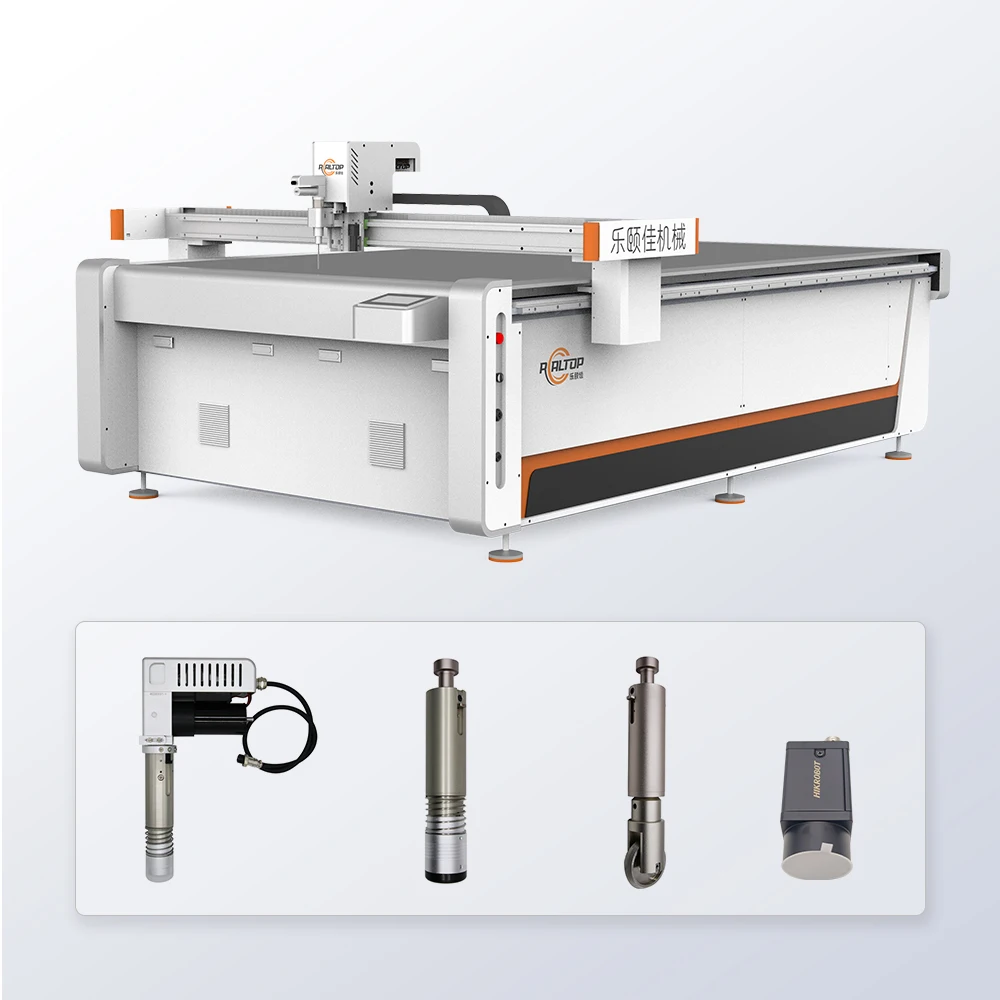
In-house design and production — Realtop engineers configure oscillating knife, creasing wheel and vacuum zoning specifically for your corrugated flute grade rather than shipping a generic flatbed.
Technical Specifications
| Parameter | Value |
|---|---|
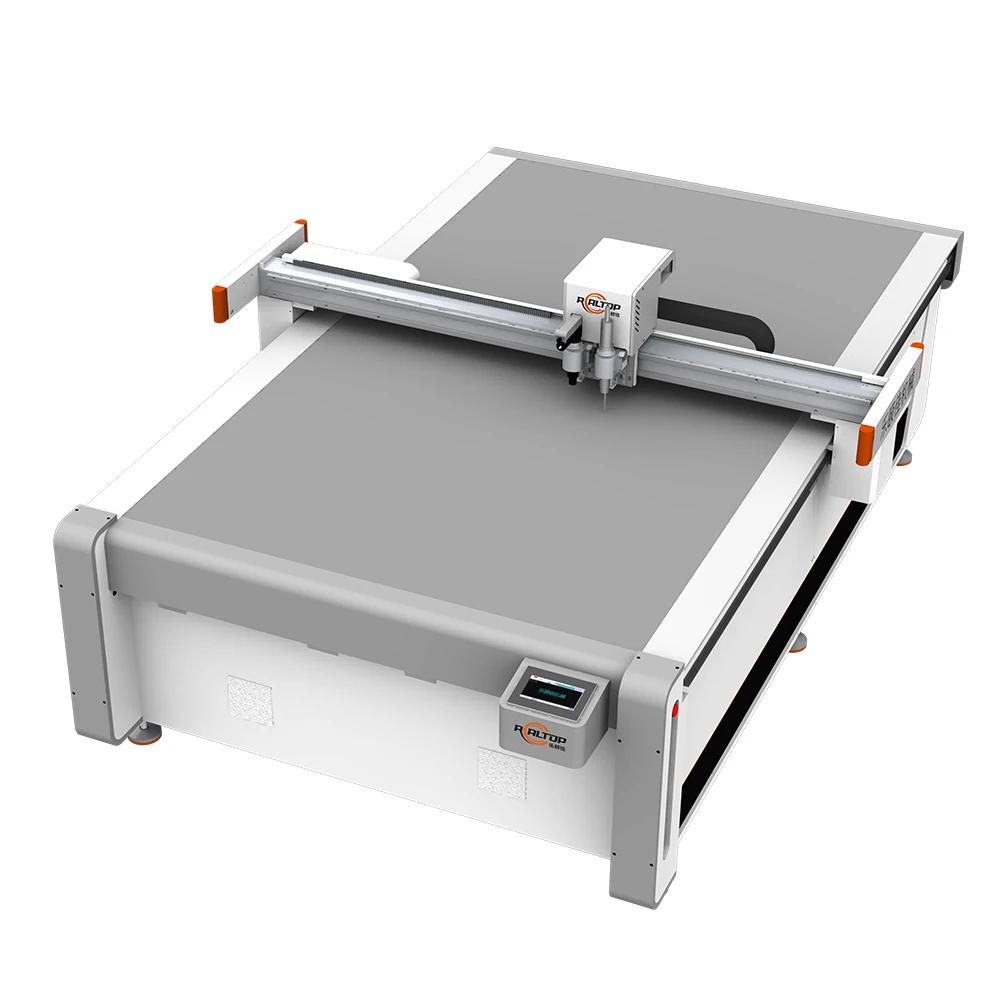
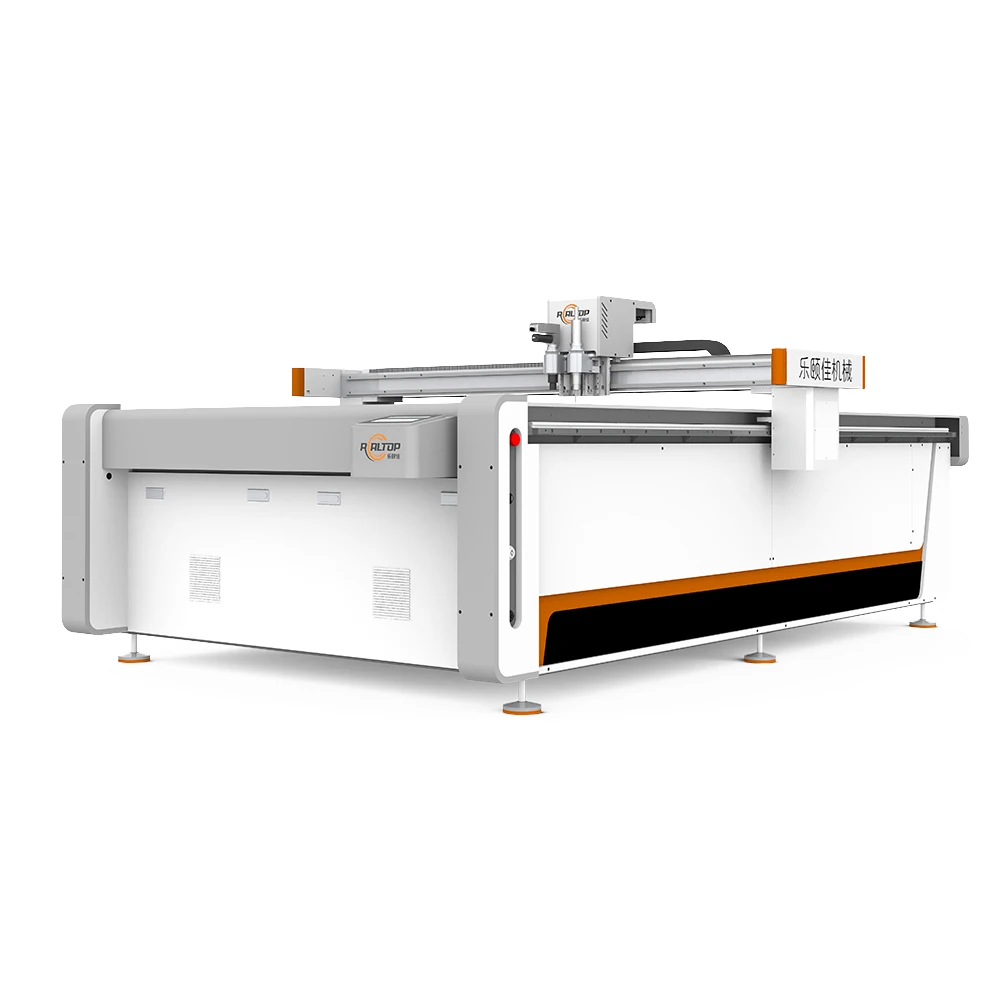
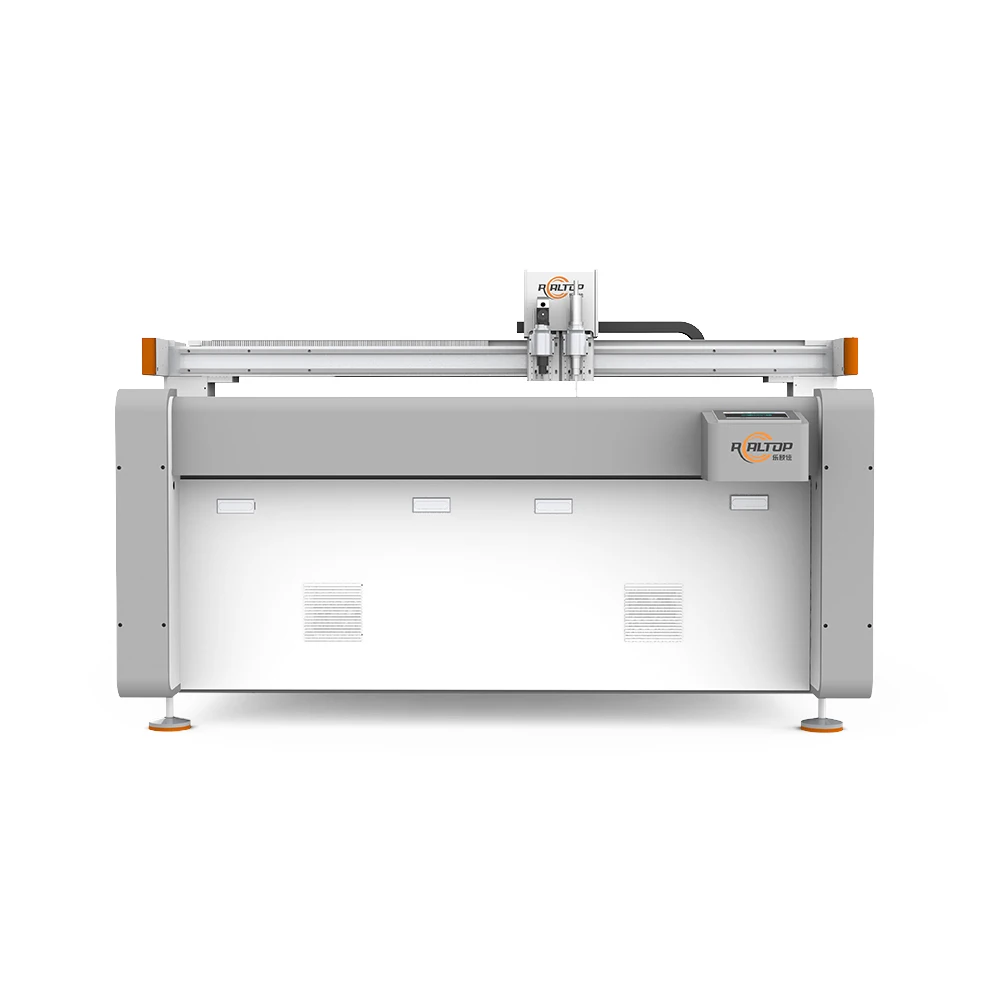
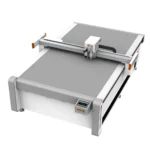
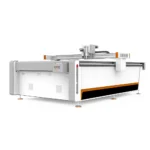
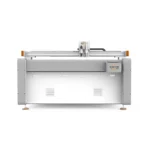
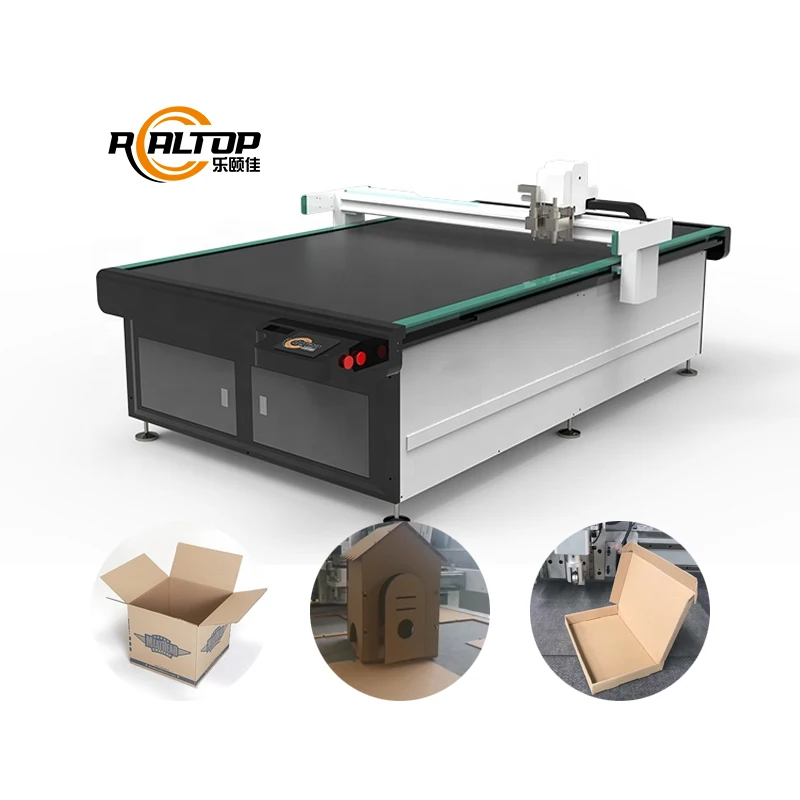
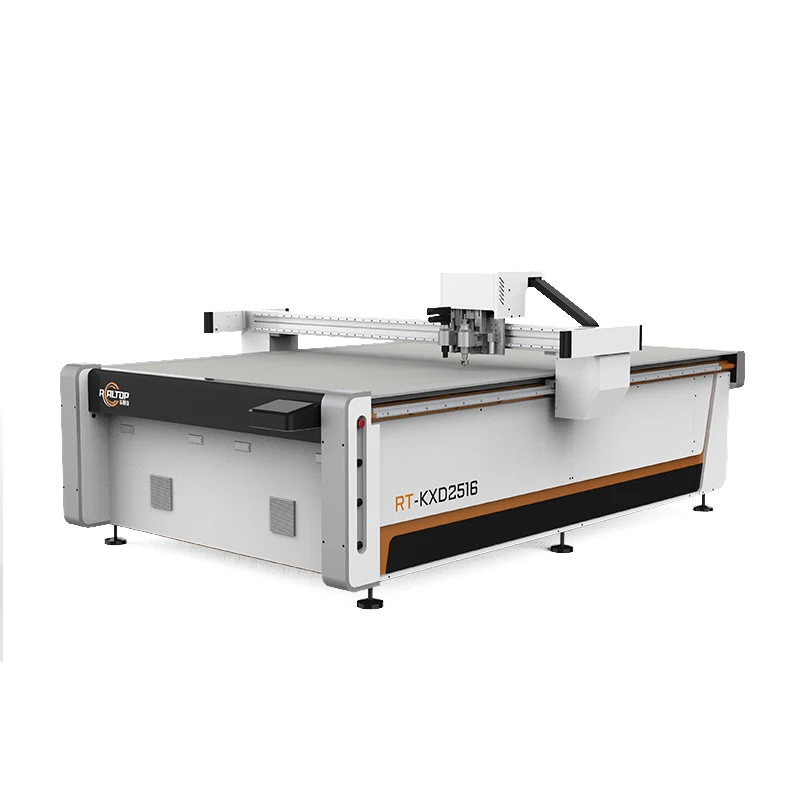
| Product Type | CNC Oscillating Knife Cutting Machine |
| Working Area | 1600 × 2500 mm |
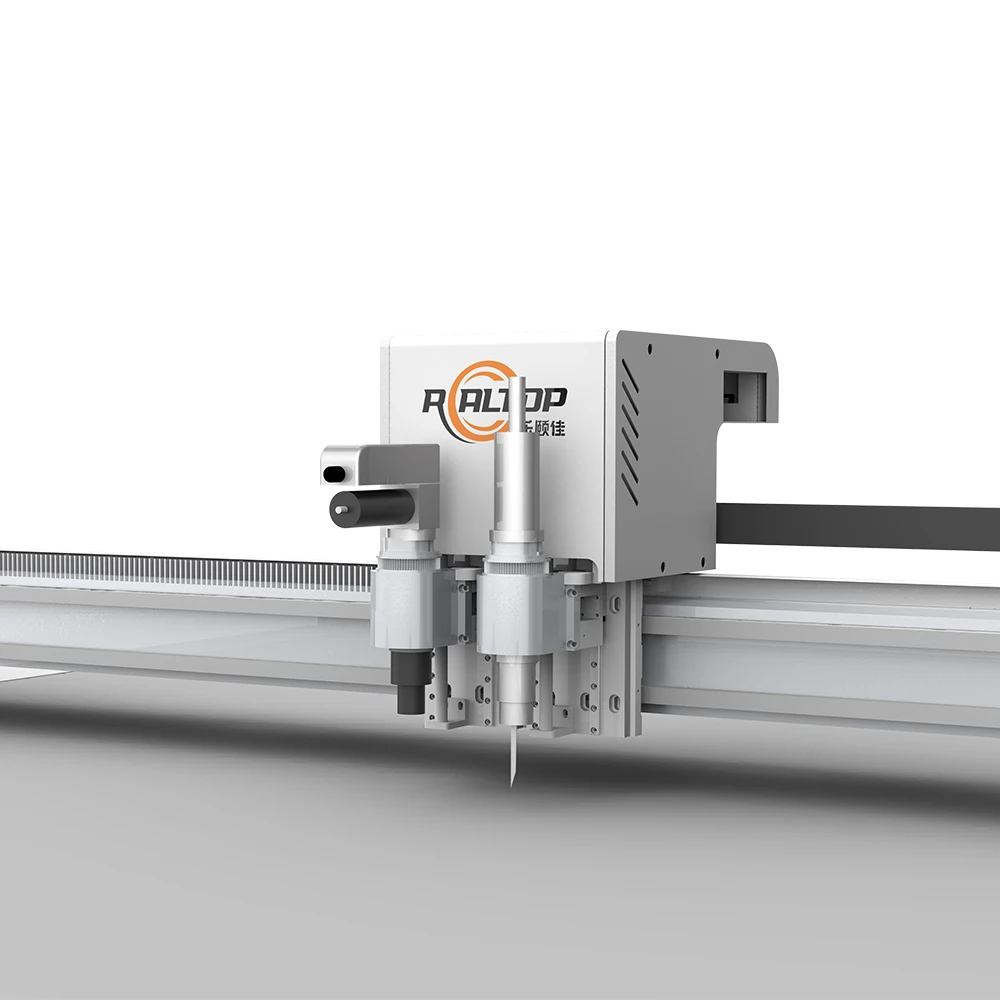
| Tool Head Options | Oscillating knife, Driven rotary knife, Creasing wheel, Kiss cutting tool, Pneumatic knife, Milling tool, V-groove knife |
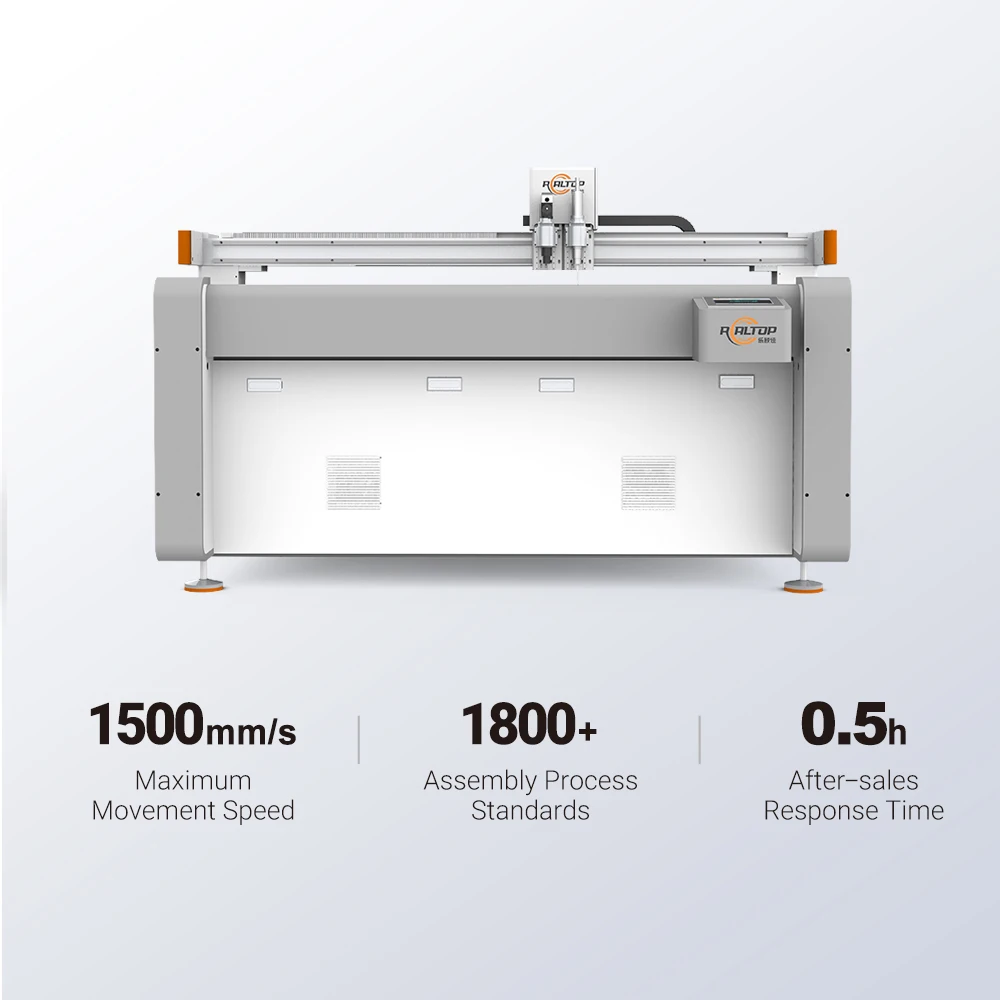
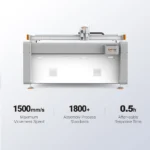
| Cutting Speed | 0–1500 mm/s |
| Cutting Thickness | ≤ 40 mm (basis not stated in source — confirm material density and flute type) |
| Cutting Accuracy | ±0.1 mm |
| Vacuum Table | Aluminum bellows vacuum table |
| Vacuum Pump Power | 9 kW |
| Control System | PLC control panel |
| Servo Motor Options | Panasonic, Delta, Dorna |
| Profile Format Compatibility | PLT, DXF, AI, PDF |
| Voltage Options | 110V, 220V, 380V |
| Safety Device | Infrared sensor and emergency stop |
| Machine Size | 3300 × 2100 × 1350 mm |
Application Suitability
| Application | Material or Output |
|---|---|
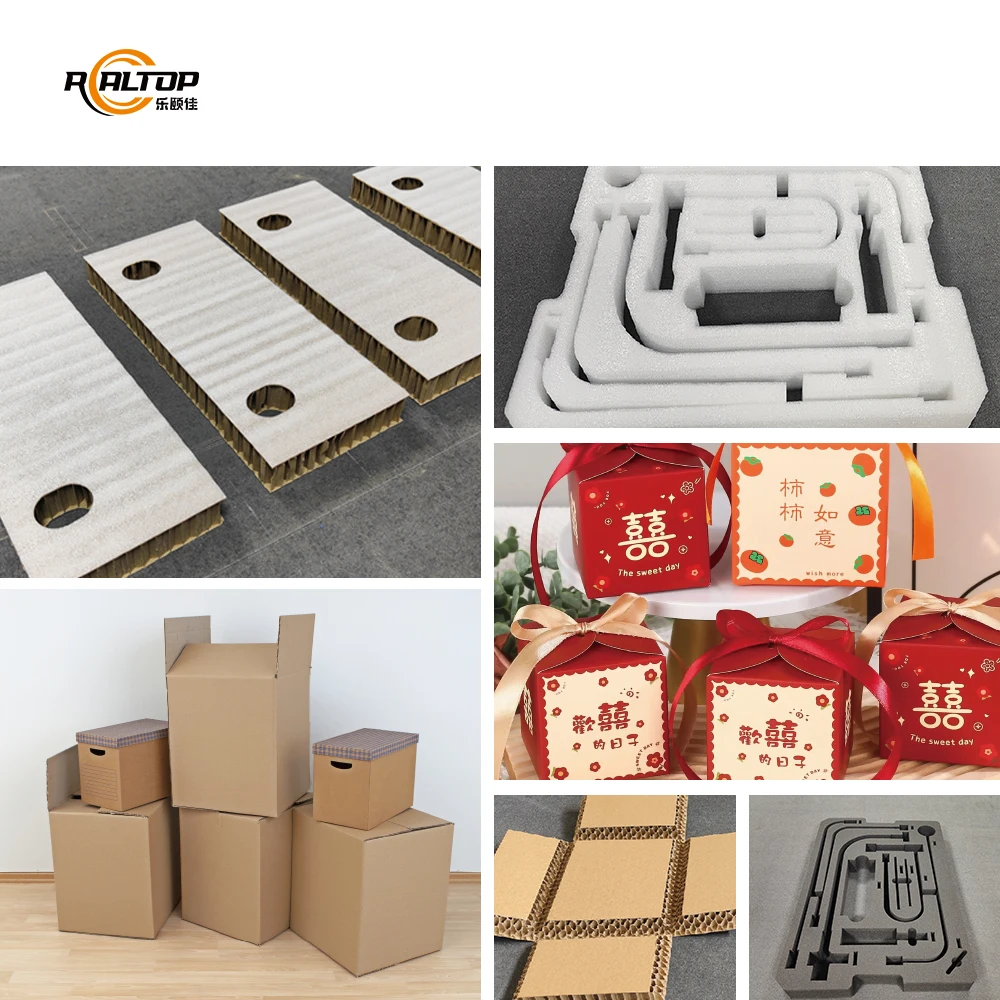
| Packaging sample making and carton prototyping | E-flute, B-flute and BC-flute corrugated cardboard |
| Short-run customized packaging production | Single and double-wall corrugated board up to confirmed thickness |
| Foam insert fabrication for protective packaging | EVA, EPE and PU foam sheets |
| Gasket and composite part cutting | PTFE, rubber and non-metallic composites |
| Graphic and display board production | PVC foam board and acrylic sheet |
Why Specified Cutting Depth Fails on Actual Corrugated Board
A machine rated for 40 mm cutting depth on paper specifications often struggles when the operator loads dense double-wall BC-flute or high-GSM honeycomb board. Real cutting capacity depends on flute profile, board density and tool head selection, not a single thickness number.
I remember walking through a workshop in Shandong where a packaging sample maker had just received a new flatbed cutter. The specification sheet said 40 mm, so they stacked five layers of double-wall corrugated and ran the oscillating knife at full speed. The blade deflected, the edge crushed, and the vacuum table could not hold the smaller offcuts flat. Within three months, the tool head was swapping blades almost daily. That machine was not broken — it was simply misconfigured for the actual board grade on the table [NEED_CITE: corrugated flute density and cutting force requirements]. When you evaluate a CNC oscillating knife cutting machine manufacturer, ask for a sample cutting report on your exact board before committing to a purchase order.
Matching the Tool Head to the Board Grade
Every corrugated flute reacts differently to blade oscillation frequency and stroke length. An oscillating knife handles through-cutting on single-wall E-flute cleanly, but BC-flute demands a higher-amplitude stroke or a pneumatic knife to push through the combined liner and medium without delaminating the face paper. The creasing wheel must be matched to the board caliper so the fold line compresses the flutes without cracking the outer liner. This tool head selection happens at the configuration stage, not after the machine arrives on your floor. Our CNC oscillating knife cutting machine manufacturer process requires the buyer to send actual board samples before we finalize the tool head list.
Vacuum Zoning and Small Part Hold-Down
Corrugated packaging sample making involves nested geometries where small gussets, locking tabs and internal dividers sit next to large blank panels. A single-zone vacuum table pulls air evenly across the full 1600 × 2500 mm surface, which means the suction pressure drops on the smaller pieces once the knife cuts through and releases the surrounding board. An aluminum bellows vacuum table with independent zoning allows the operator to activate only the zones under the current cutting path, keeping small parts flat against the table until the head passes. This zoning configuration is specified per typical job layout, not left as a default setting [NEED_CITE: vacuum hold-down requirements for flatbed digital cutting].
Reading the Parameter Sheet Against Your Production Reality
The 9 kW vacuum pump delivers the airflow needed to maintain suction across the full aluminum bellows table, but actual hold-down performance depends on how the table surface is sealed and how many zones are active simultaneously. Cutting speed ranges from 0 to 1500 mm/s, yet running at maximum speed on thick BC-flute causes the oscillating knife to lag behind the programmed path, producing angled edges instead of vertical cuts. The PLC control panel manages acceleration curves to compensate, but only if the operator enters the correct material profile before starting the job. Profile formats including PLT, DXF, AI and PDF are supported, and software compatibility is confirmed against the buyer’s existing nesting workflow before the order is placed. Panasonic, Delta or Dorna servo motors are available depending on the positioning repeatability the application demands.
What Happens When Configuration Is Skipped
A buyer who specifies a flatbed cutter on working area alone, without matching the tool head to the actual flute type, will see ragged edges on thicker board and crushed flutes on softer inserts. The vacuum table holds the large blanks but lets the small tabs lift during cutting, forcing the operator to add manual weights and re-run the job. Software that has not been tested against the buyer’s file format will fail to import nested layouts, requiring manual redraw that erases any throughput advantage the machine was supposed to deliver [NEED_CITE: file format compatibility in CNC cutting workflows]. These problems do not show up in the factory acceptance test because the test material is rarely the buyer’s actual production board.
Why Buyers Source This Equipment Here
The design team in Jinan covers both knife and laser cutting technologies, so the cutting method is chosen to match the material rather than forcing one method onto every substrate. Tool head and table configurations are specified per material type and daily production volume, not picked from a standard catalogue page. CCD camera positioning is available for printed contour work on pre-printed corrugated packaging. Voltage, control language and plug type are confirmed against the destination market before the machine leaves the assembly line. Sample cutting on the buyer’s own corrugated board or foam is completed and documented before any commitment is made [NEED_CITE: sample-based machine validation in industrial equipment procurement].
Documentation & Verification
- Machine specification sheet listing the exact tool head and vacuum zoning configuration matched to your board grade
- Sample cutting report on your corrugated board or foam, covering edge quality, cutting depth and cycle time
- Electrical schematic with voltage, frequency and plug type confirmed for your facility before production
- Software licence and file format compatibility note verifying PLT, DXF, AI or PDF import without conversion issues
- Factory test record showing the configured machine running your material profile before dispatch
Installation, Commissioning & Support
- Foundation must support 3300 × 2100 × 1350 mm footprint with level tolerance across the aluminum bellows vacuum table
- Dedicated electrical circuit matching confirmed voltage (110V, 220V or 380V) with isolation for the 9 kW vacuum pump
- Machine ships partially assembled; table frame and gantry require on-site alignment and belt tensioning
- First-run commissioning includes material profile setup in the PLC control panel for your specific flute types
- Operator training covers tool head changeover between oscillating knife, creasing wheel and V-groove knife
- Spare parts list includes oscillating knife blades, creasing wheel inserts and vacuum table sealing strips
What We Need to Quote the Right Configuration
Send us the specific corrugated flute types you run most often — E-flute, B-flute, BC-flute or a combination — along with the maximum board thickness and typical sheet size. Let us know your local voltage and frequency, the control language your operators prefer, and whether your existing CAD files are in PLT, DXF, AI or PDF format. If you need creasing, kiss cutting or V-grooving on the same machine, specify which operations apply to which board grades so we can configure the tool head array and run a sample cutting test on your material before building the machine.
Frequently Asked Questions
Q: How is the cutting thickness verified for my specific corrugated board?
A: The ≤ 40 mm figure is a general reference. We run sample cuts on your actual corrugated board — noting flute type, GSM and density — then document the achievable cutting depth, edge quality and recommended tool head. The sample cutting report becomes part of your order file before production begins.
Q: Which tool head should I choose for creasing versus through-cutting?
A: Through-cutting on single-wall board typically uses the oscillating knife, while the creasing wheel scores fold lines without cutting through the liner. For double-wall or heavy BC-flute, a pneumatic knife or higher-stroke oscillating knife may be specified. We confirm the selection during sample testing on your board grade.
Q: Can the PLC control language and software interface be set before shipment?
A: Yes. The PLC control panel supports multiple language options, and the interface language is configured to match your operators before the machine ships. Software compatibility with your existing PLT, DXF, AI or PDF files is tested and documented in the file format compatibility note included with your documentation.
Q: What vacuum table zoning is available for small packaging parts?
A: The aluminum bellows vacuum table can be configured with independent zones so that suction is concentrated under the current cutting path. This prevents small tabs, gussets and dividers from lifting during cutting. Zoning layout is planned around your typical nesting layout during the configuration stage.
Q: How do we arrange sample cutting on our material?
A: Send us a representative sheet of your corrugated board or foam along with the CAD file you normally use. We run the cut on a configured machine, record edge quality, cutting depth and cycle observations, then share the sample cutting report with photos and tool head recommendations before you place the order.
You may also like

商品评价
Clear filtersThere are no reviews yet.