





-
 Courier delivery
-
 DHL Courier delivery
-
 Warranty 1 year
-
 Free 30-Day returns

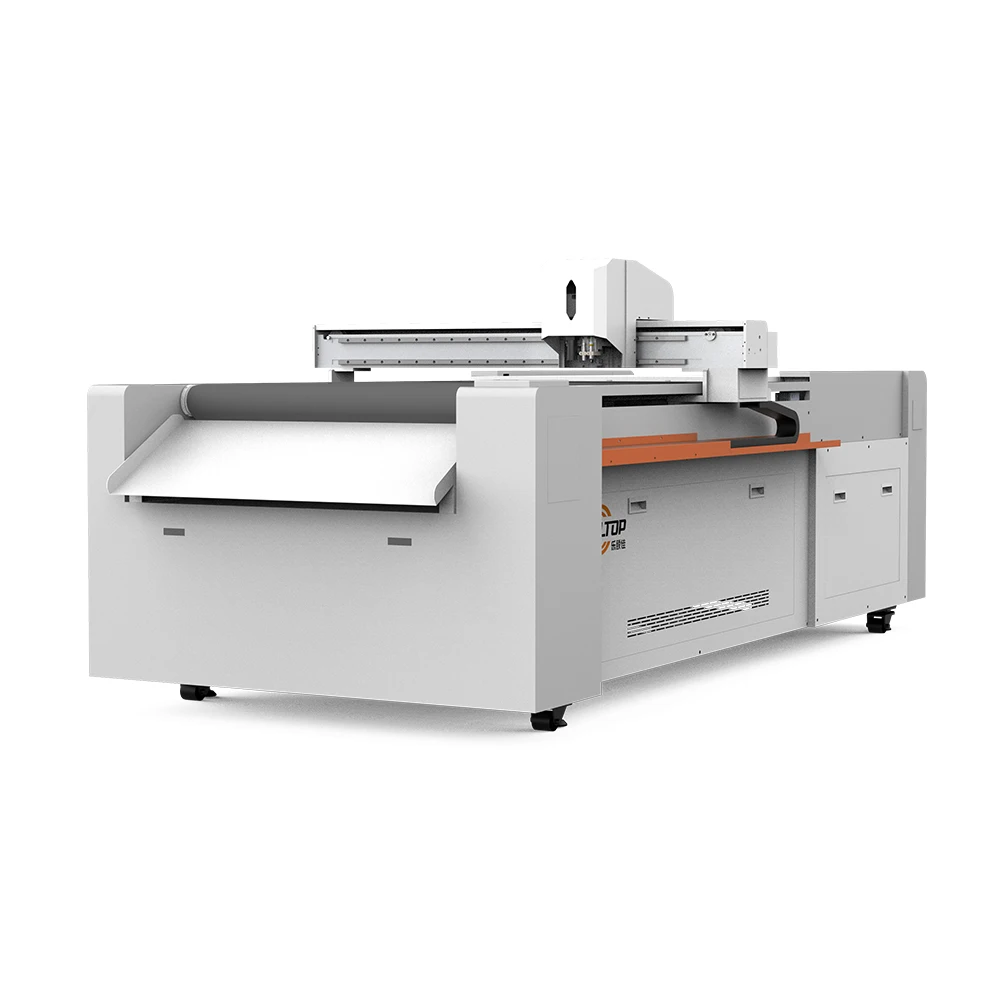
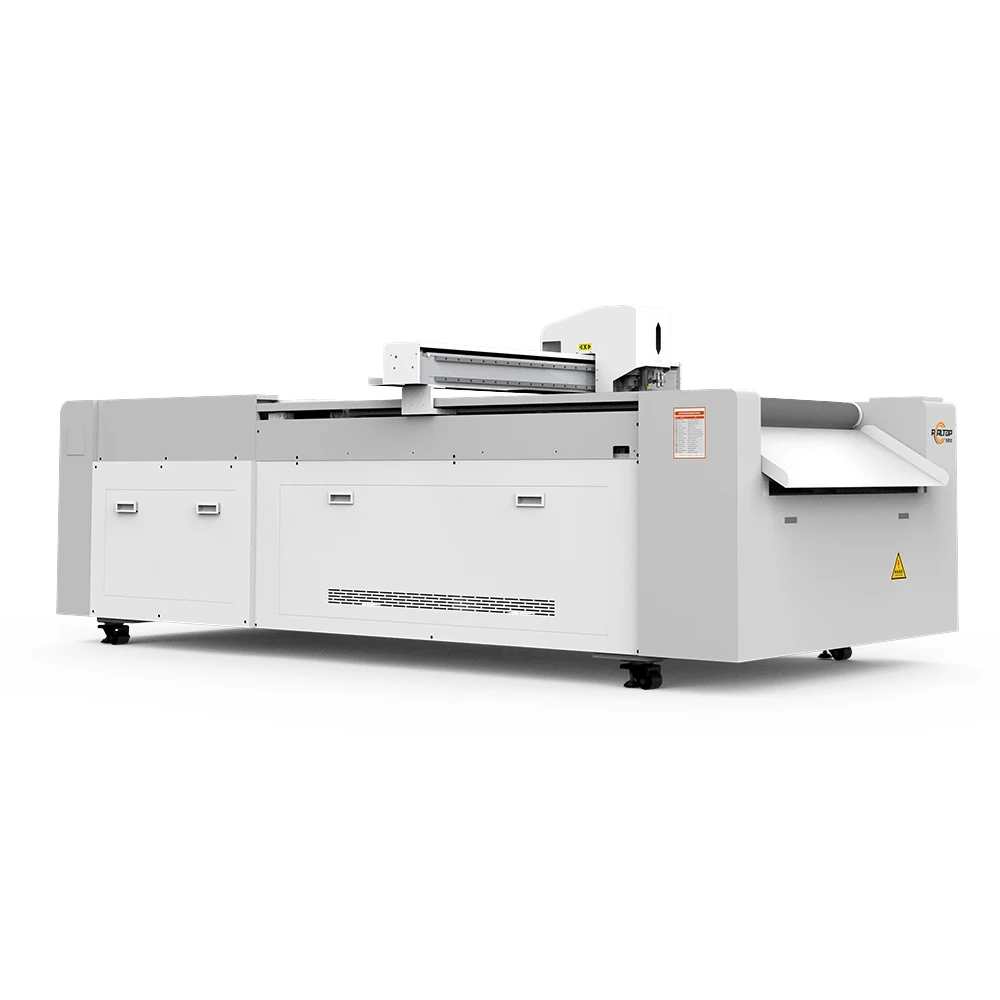
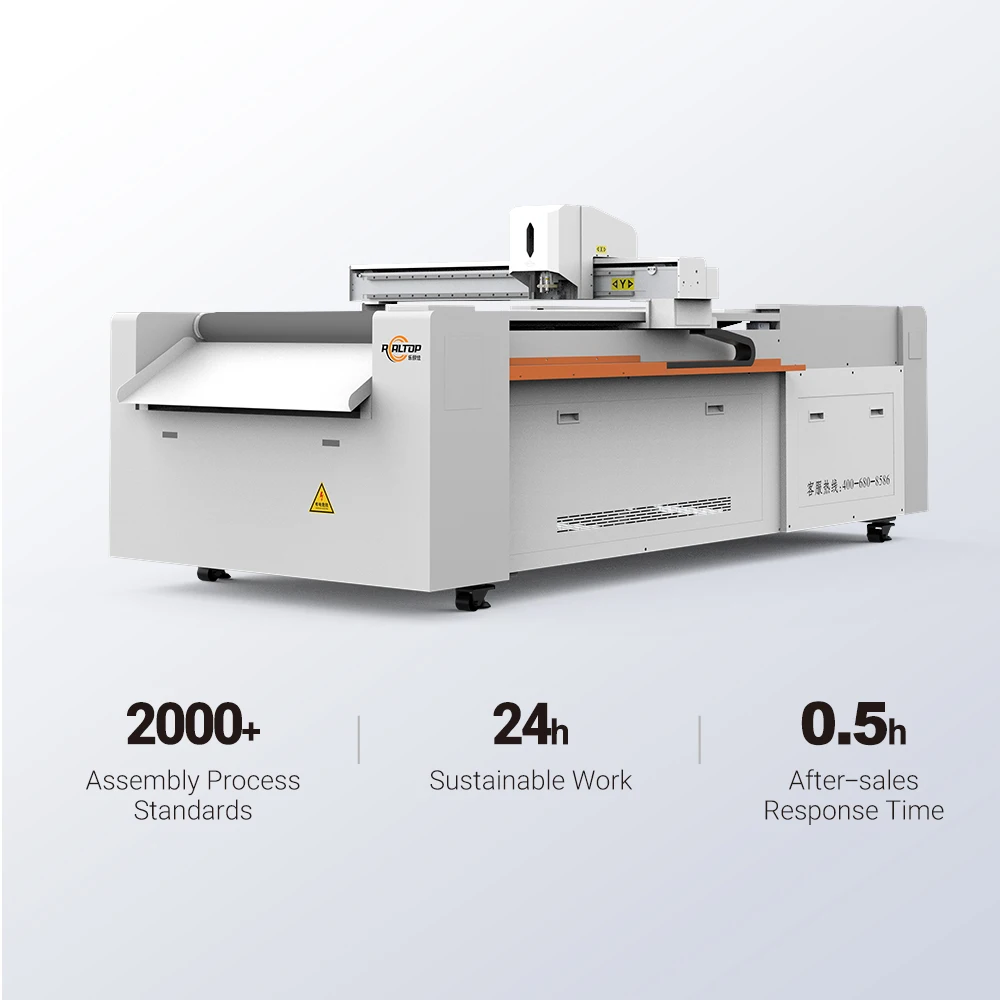
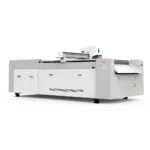
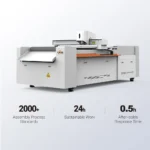
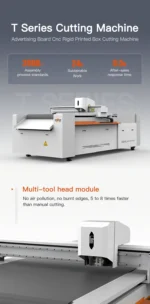
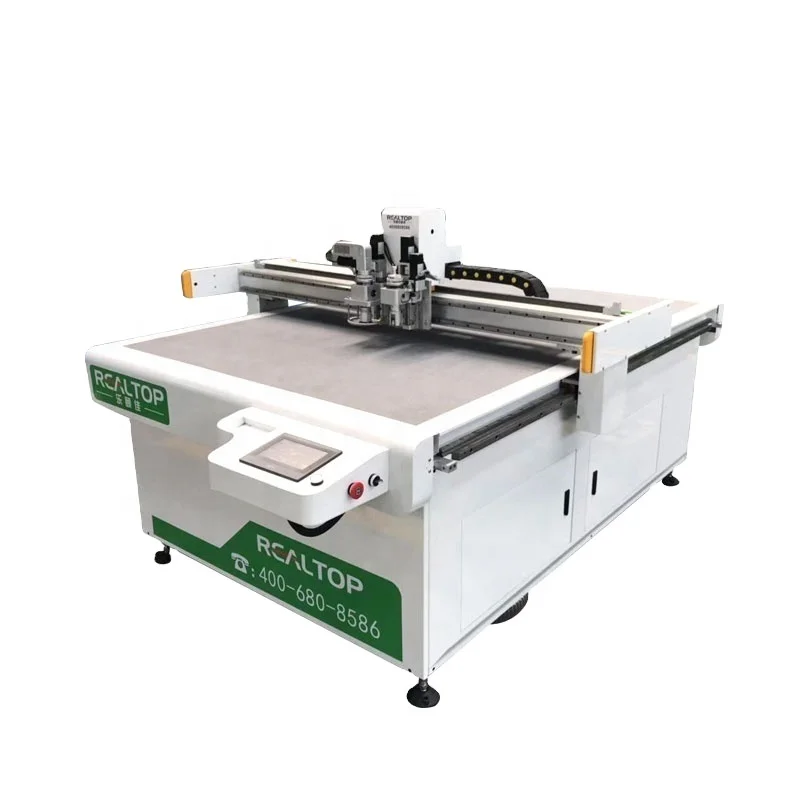
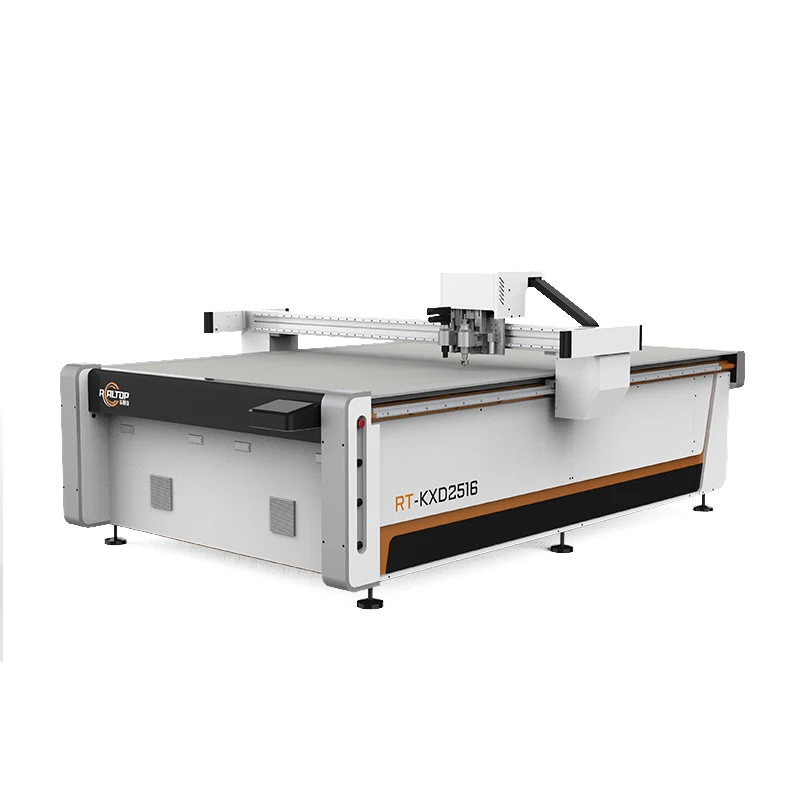
Built in-house from frame to motion system — the T-series flatbed cutting plotter is manufactured at our core Jinan facility, where design, fabrication, and quality control stay under one roof rather than outsourced across multiple workshops.
Technical Specifications
| Parameter | Value |
|---|---|
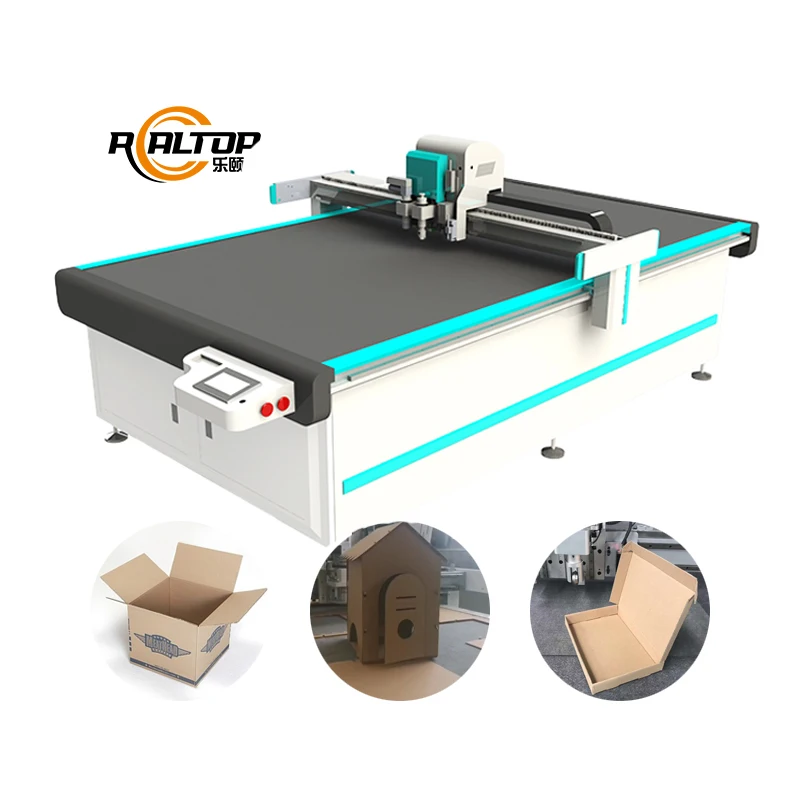
| Product Type | CNC Flatbed Digital Cutting Plotter |
| Working Area Options | 400×600 / 600×800 / 900×1200 mm |
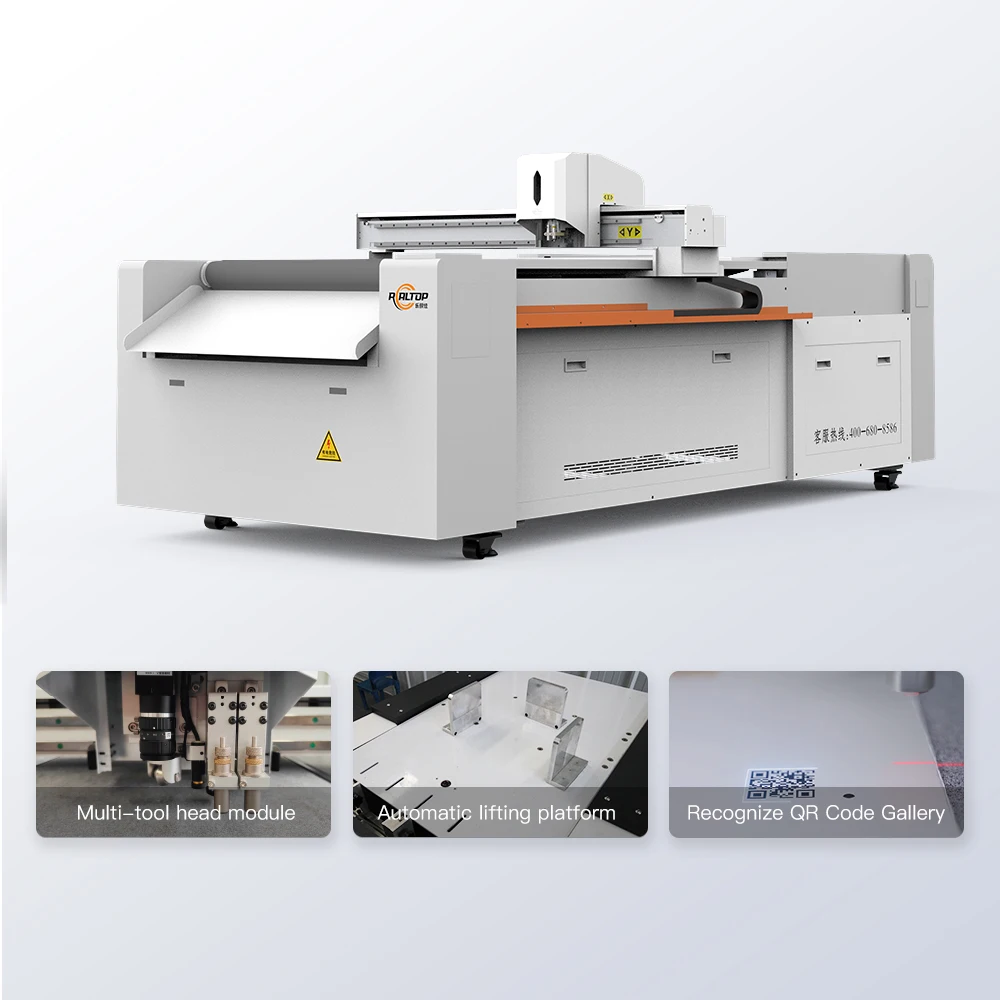
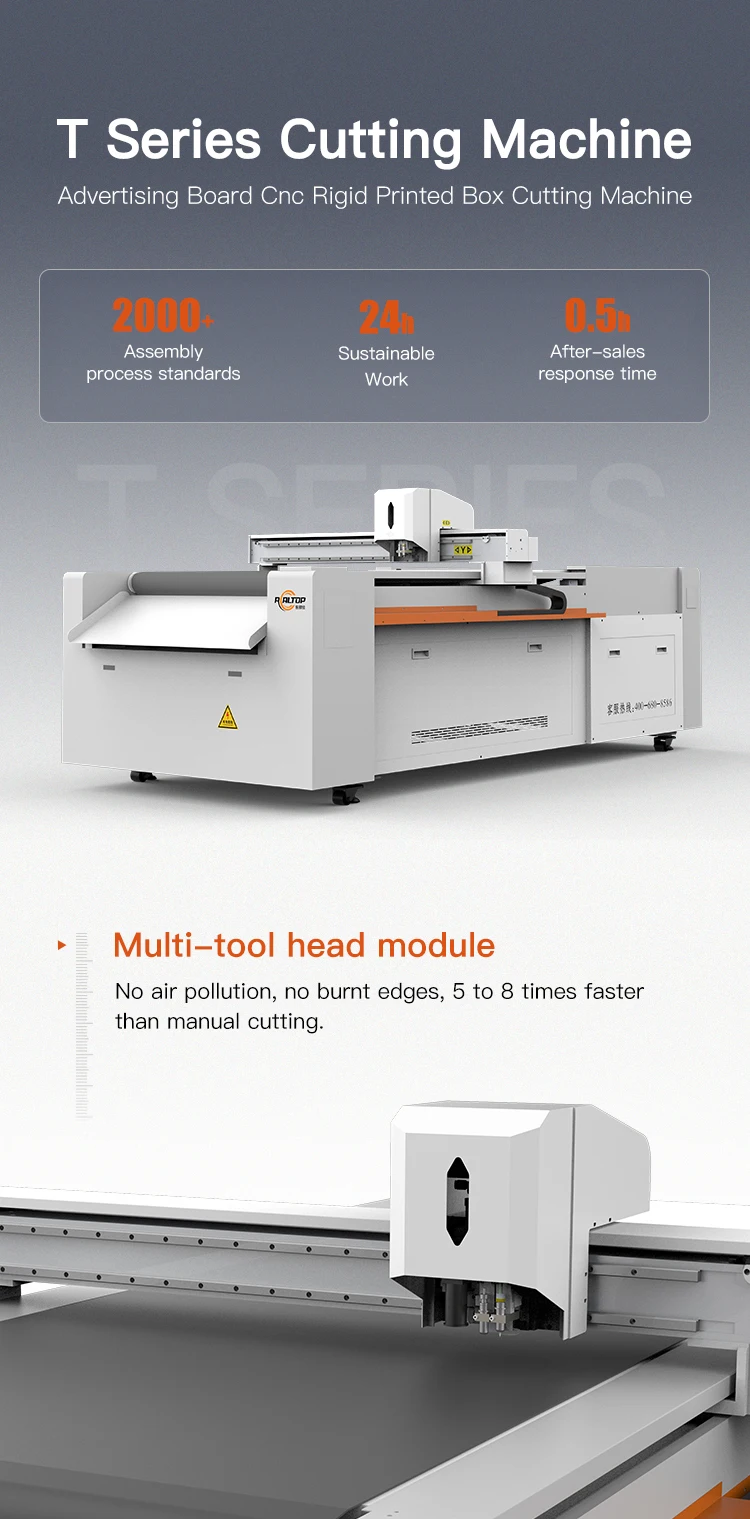
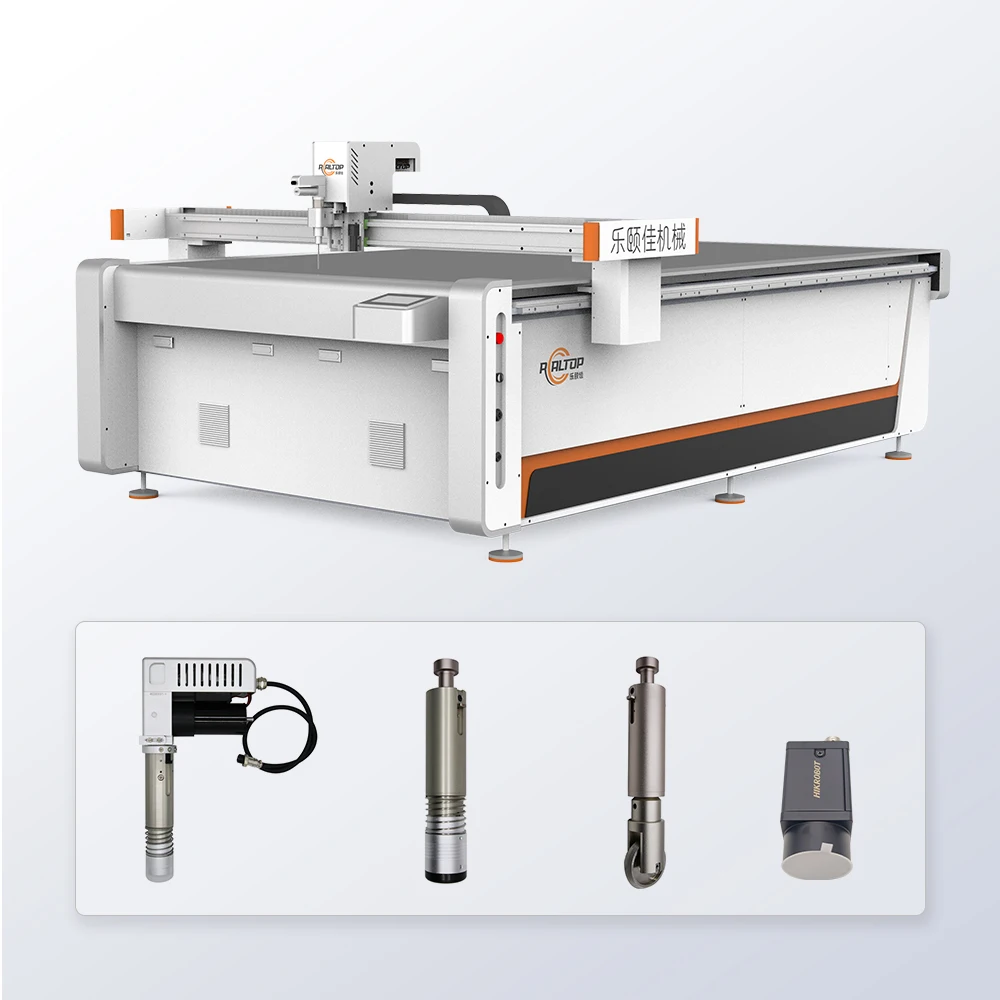
| Tool Head Options | Oscillating knife, Creasing wheel, Kiss cutting tool, CCD camera, Marking pen |
| Cutting Speed Range | 0–1500 mm/s |
| Maximum Cutting Thickness | ≤ 20 mm (basis not stated in source — confirm material type and density) |
| Cutting and Repeat Positioning Accuracy | ±0.1 mm |
| Vacuum Pump Power | 2.5 kW or 3.2 kW |
| Operating Voltage | 110V / 220V (frequency to be confirmed before order) |
| Compatible File Formats | PLT, DXF, AI, PDF |
| Safety Devices | Infrared sensor and emergency stop |
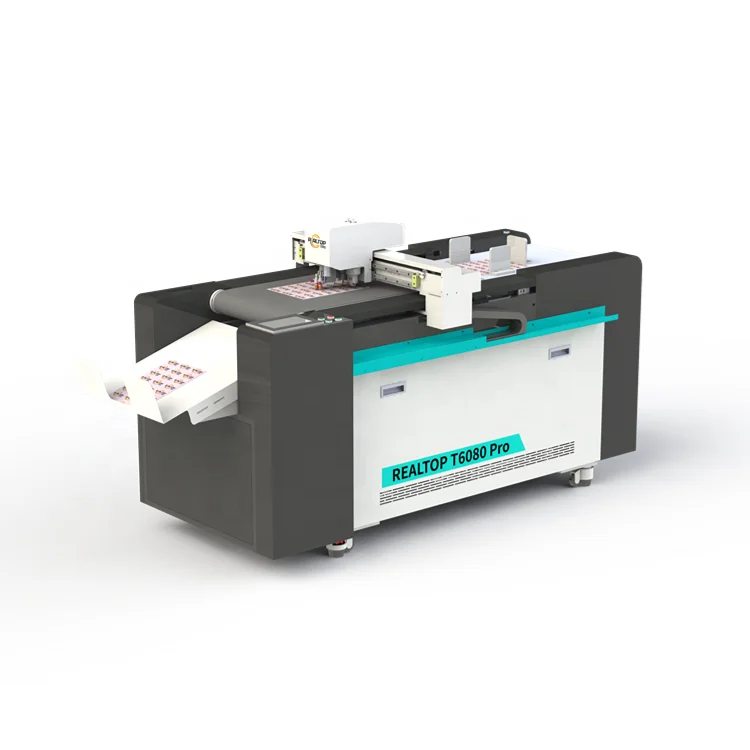
| Desktop Footprint | 60×40 cm standard base for space-constrained environments |
| Control Language Support | English, Russian, Italian, Chinese; other languages configurable |
| Certification | CE (documentation available) |
Application Suitability
| Application | Material or Output |
|---|---|
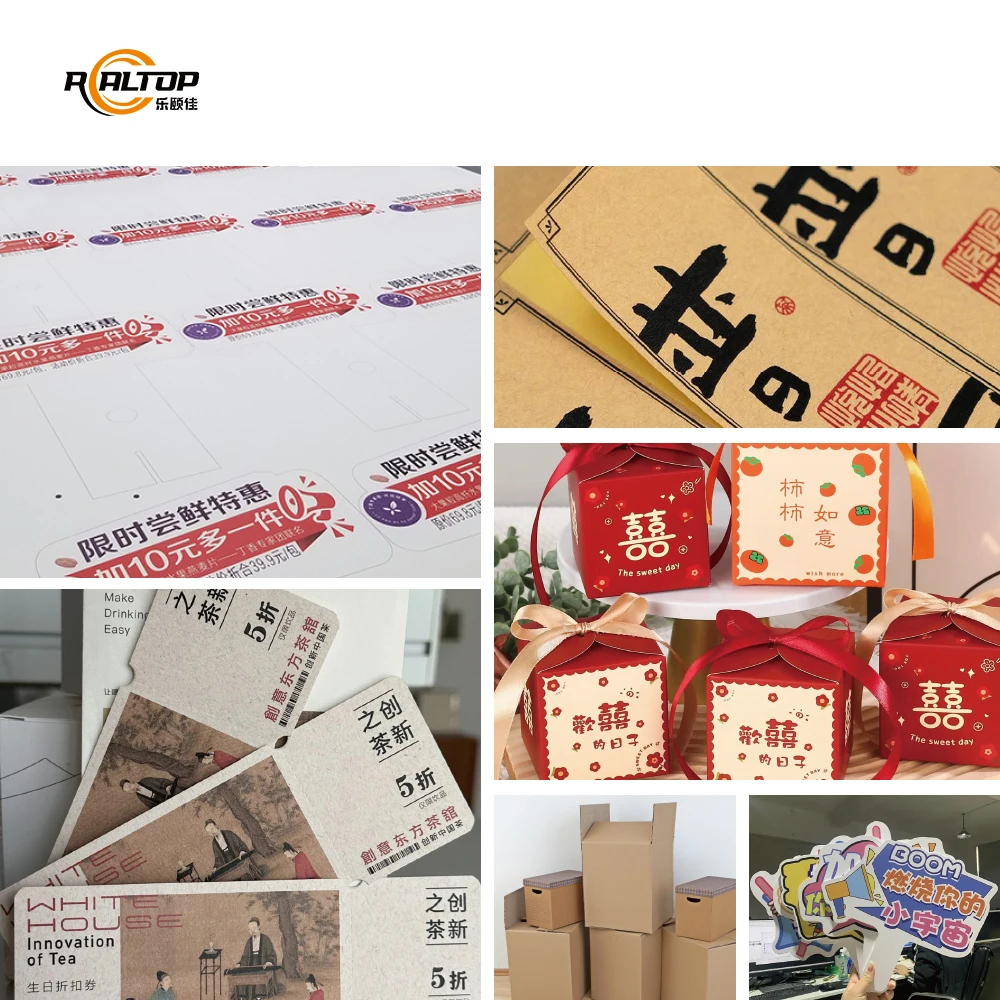
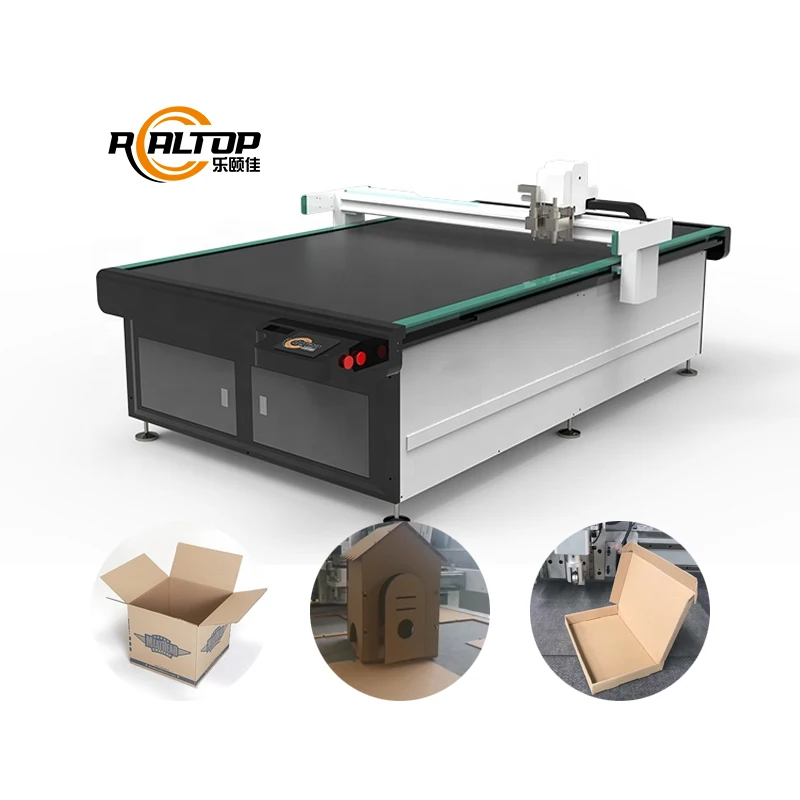
| Packaging sample making | Cardstock, corrugated board, printed carton, paper |
| Advertising and signage production | Self-adhesive vinyl, PVC stickers, window clings, acrylic signs |
| Educational and craft workshops | Puzzles, cards, science templates, teaching aids |
| Cultural and decorative products | Paper-cut lamps, leather bookmarks, keychains, 3D greeting cards |
| Light industrial gasket work | Electronic foam gaskets, thin rubber sheets |
Why "Cutting Speed 1500 mm/s" Means Nothing Without Context
A Digital Flatbed Cutting Plotter manufacturer can publish a maximum traverse speed and leave buyers to assume that number holds across every material and contour.
Real production speed depends on material density, sheet thickness, and whether the CCD camera must track registration marks at that pace.
I have seen workshops in the Middle East where operators ran vinyl at full speed with no issue, then switched to 2 mm cardstock for packaging samples and found the edges tearing because the oscillating knife could not complete its stroke cycle at the same rate. The machine was technically capable of the headline speed — just not on every job [NEED_CITE: relationship between oscillating knife stroke frequency and traverse speed on dense substrates]. Buyers evaluating a Digital Flatbed Cutting Plotter manufacturer should always request a sample cutting report on their own material, documenting which tool head, speed setting, and vacuum zone configuration produced acceptable edge quality.
Motion System and Frame Rigidity at Compact Scale
Compact desktop cutters often sacrifice structural stiffness to keep weight and footprint low. The T-series frame is built at our core factory using the same motion component standards applied to our full-size oscillating knife tables, which means the linear guides and servo-driven belts maintain ±0.1 mm repeat positioning even during tight-radius contour cuts on intricate fonts or curved packaging crease lines. This matters most when you are producing short-run carton samples where every crease must align precisely with the cut outline.
CCD Contour Recognition Beyond Static Testing
Many flatbed plotters ship with a CCD camera listed in the specifications, yet the recognition routine only works when the sheet is perfectly flat and the printed marks are high-contrast black on white. The T-series camera system is validated at the configured production speed before dispatch, reading registration marks on the buyer’s actual printed sheet — whether that is a full-color vinyl decal or a kraft-colored carton prototype with subtle fiducial marks [NEED_CITE: CCD registration mark contrast requirements across substrate colors]. This prevents the common failure mode where the camera tracks fine during factory acceptance but loses the mark once real production sheets introduce slight curl, gloss variation, or ink density inconsistency.
Reading the Specs Against Your Actual Workflow
The 900×1200 mm working area covers most packaging sample and signage jobs, but buyers producing larger display graphics should confirm whether nested sheet indexing is supported by the software before committing. The 2.5 kW and 3.2 kW vacuum pump options address a frequent mismatch: a lower-power pump struggles to hold small vinyl decals flat during kiss cutting, while the higher-power option provides sufficient suction zoning for mixed small-and-large part layouts. Creasing wheel compatibility alongside the oscillating knife means a packaging sample maker can switch from cutting corrugated board to scoring fold lines on cardstock without changing machines or re-fixturing the sheet. File format support across PLT, DXF, AI, and PDF reduces the friction of importing artwork directly from Adobe Illustrator or CAD platforms without intermediate conversion steps that can corrupt curve data.
What Happens When the Wrong Tool Head Ships
A buyer once specified a flatbed plotter based purely on working area and price, without confirming the tool head configuration against the material stack. The machine arrived with a drag knife suited for thin vinyl, but the shop’s primary job was 3 mm foam gaskets for electronics enclosures. The drag knife compressed the foam instead of slicing it, producing ragged edges that failed the customer’s quality inspection. The cost of return shipping and re-tooling exceeded what a proper oscillating knife head would have added to the original order [NEED_CITE: cost impact of incorrect tool head selection on rework and shipping]. This is why we require a sample cutting step on the buyer’s actual material before any quotation is finalized.
Why Procure the T-Series from This Factory
The oscillating knife, drag knife, creasing wheel, and laser cutting platforms are all designed and assembled in-house, so a buyer can compare cutting methods against their material rather than being pushed toward whichever machine the sales team happens to stock. Tool head and vacuum table configuration are specified per material type and daily production volume, not selected from a fixed menu. CCD camera calibration and software file format compatibility are confirmed on the buyer’s artwork before the order enters production. Voltage, plug type, and control language are locked in during the specification review, preventing the shipment-day surprises that plague export orders. Every machine ships with a factory test record, and buyers are welcome to send material for sample cutting or visit the Jinan production facility to witness the build process firsthand.
Documentation & Verification
- Electrical schematic with confirmed voltage and frequency for your local grid standard
- Tool head and table configuration list matching your material type and thickness
- Sample cutting report produced on your supplied material before order confirmation
- Factory test record showing cutting accuracy and CCD recognition at working speed
- Software licence and file format compatibility note covering AI, PLT, DXF, PDF import
- Operation and maintenance manual in your specified control language
Installation, Commissioning & Support
- Compact 60×40 cm base requires only a standard workbench, no dedicated floor anchoring
- 110V or 220V connection with dedicated circuit recommended for stable vacuum pump operation
- Ships fully assembled; plug in, power on, and run the calibration routine before first cut
- Initial parameter setup covers blade depth, oscillation frequency, and vacuum zone assignment
- Operator training covers tool head changeover between oscillating knife and creasing wheel
- Spare parts list includes replacement blades, vacuum seals, and CCD lens cleaning supplies
Starting Your Inquiry
Share the material types you cut most often, along with thickness ranges and typical sheet dimensions, so we can recommend the correct working area and vacuum pump specification. Confirm your local voltage and frequency standard, as well as the preferred control interface language. If your workflow involves printed contour cutting, send a sample sheet with your actual registration marks so we can validate CCD tracking at your target production speed before quoting.
Frequently Asked Questions
Q: How do I choose between oscillating knife and drag knife for my materials?
A: Oscillating knives are suited for thicker, compressible materials like foam, gasket, and corrugated board where a vertical slicing action prevents edge crushing. Drag knives work well on thin vinyl, self-adhesive film, and paper where the blade follows the contour by swiveling. We run sample cuts on your material to determine the correct head before finalizing the configuration.
Q: Will the CCD camera track registration marks on my printed carton samples?
A: The camera system is tested on your actual printed sheet before shipment, not just on a standard black-on-white test pattern. We validate recognition at the configured cutting speed to ensure the system handles your ink density, substrate color, and mark size under real production conditions.
Q: Can I switch voltage from 110V to 220V after the machine ships?
A: Voltage configuration is set during production based on your confirmed local grid standard. While some components may tolerate both ranges, the vacuum pump, servo drives, and control transformer are specified for one voltage at the factory. Always confirm your target market standard before the order is placed.
Q: What if my design software exports files the machine cannot read?
A: We verify compatibility with your specific software and file format during the pre-order stage. Supported formats include PLT, DXF, AI, and PDF. If your workflow uses a different format, we test the import path and nesting behavior before committing to the build.
Q: Is it possible to visit the factory and watch the machine being tested?
A: Factory visits are welcome and can be arranged around your production schedule. You can observe the frame assembly, motion system calibration, and sample cutting on your material in person. We also provide video factory test records for buyers who cannot travel before shipment.
You may also like

商品评价
Clear filtersThere are no reviews yet.