




-
 Courier delivery
-
 DHL Courier delivery
-
 Warranty 1 year
-
 Free 30-Day returns

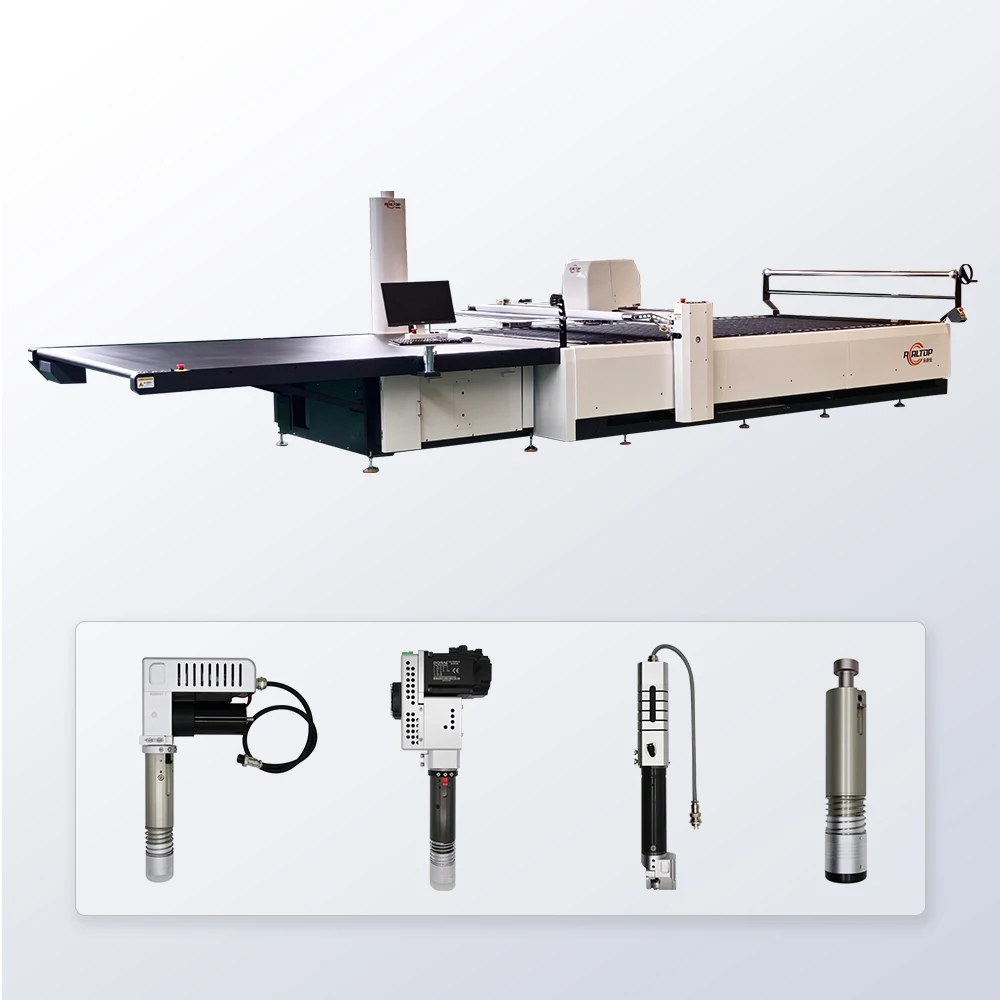
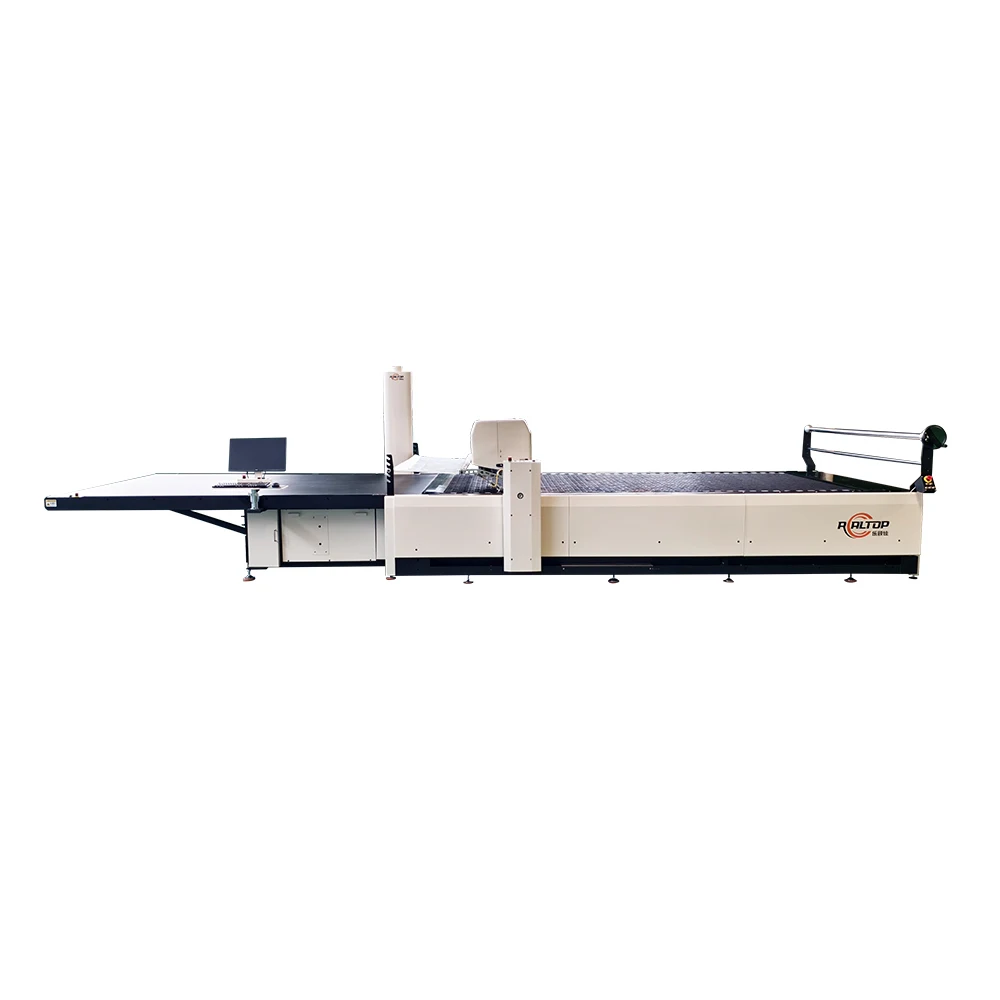
Configurable tooling and table systems — REALTOP matches oscillating knife, vacuum zoning and software to your surgical drape composite stack, verified on your own roll before order.
Technical Specifications
| Parameter | Value |
|---|---|
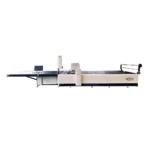
| Product Type | CNC Oscillating Knife Cutting Machine |
| Working Area Options | 1700×2000 mm / 1900×2000 mm / 2300×3300 mm |
| Max Operating Speed | 80 m/min |
| Average Cutting Speed | 12 m/min |
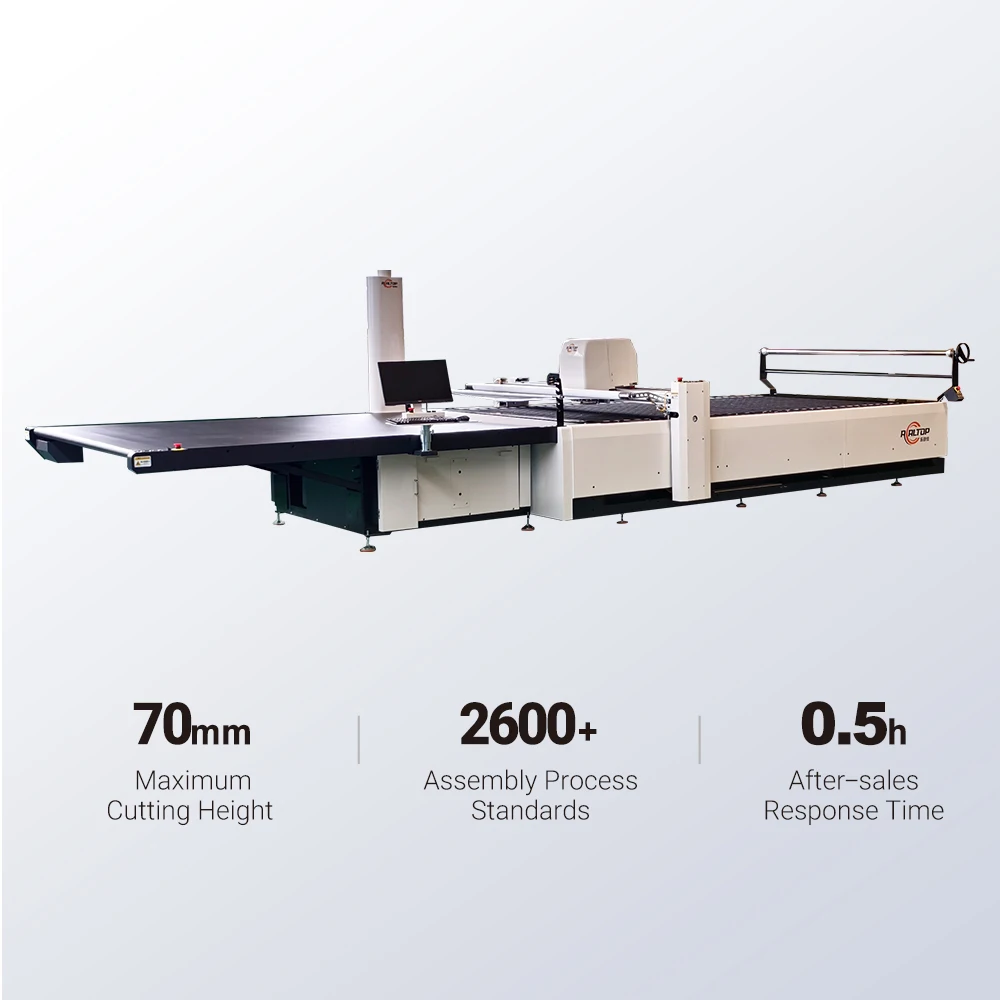
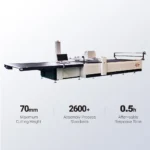
| Cutting Thickness | 70 mm (basis not stated in source — confirm material type and layer count) |
| Multi-Layer Cutting | up to 70 mm after adsorption (basis not stated in source — confirm fabric type and weight) |
| Repeat Positioning Accuracy | ±0.1 mm |
| Voltage & Frequency | 380V / 50Hz (customizable) |
| Max Power | 26 kW (rated or peak not specified in source) |
| Air Flow Volume | 160 L/min |
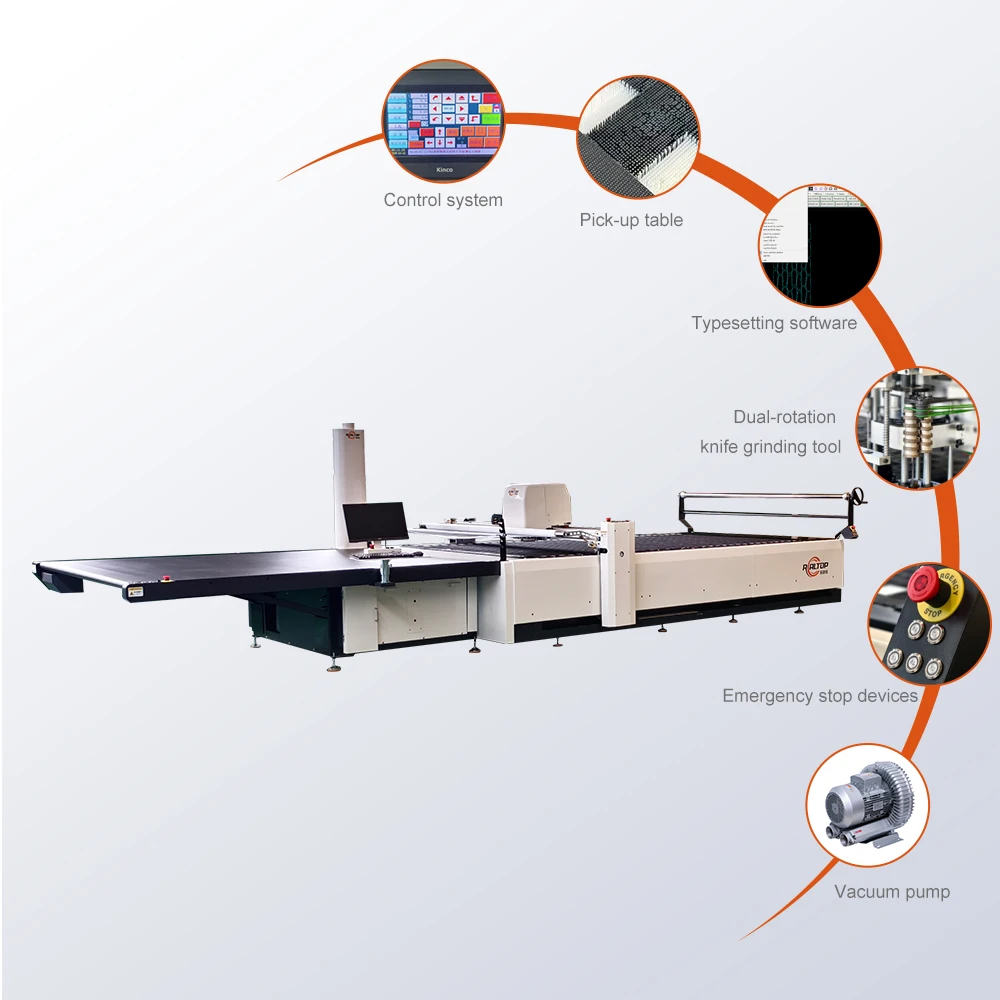
| Control System | PLC with intuitive interface |
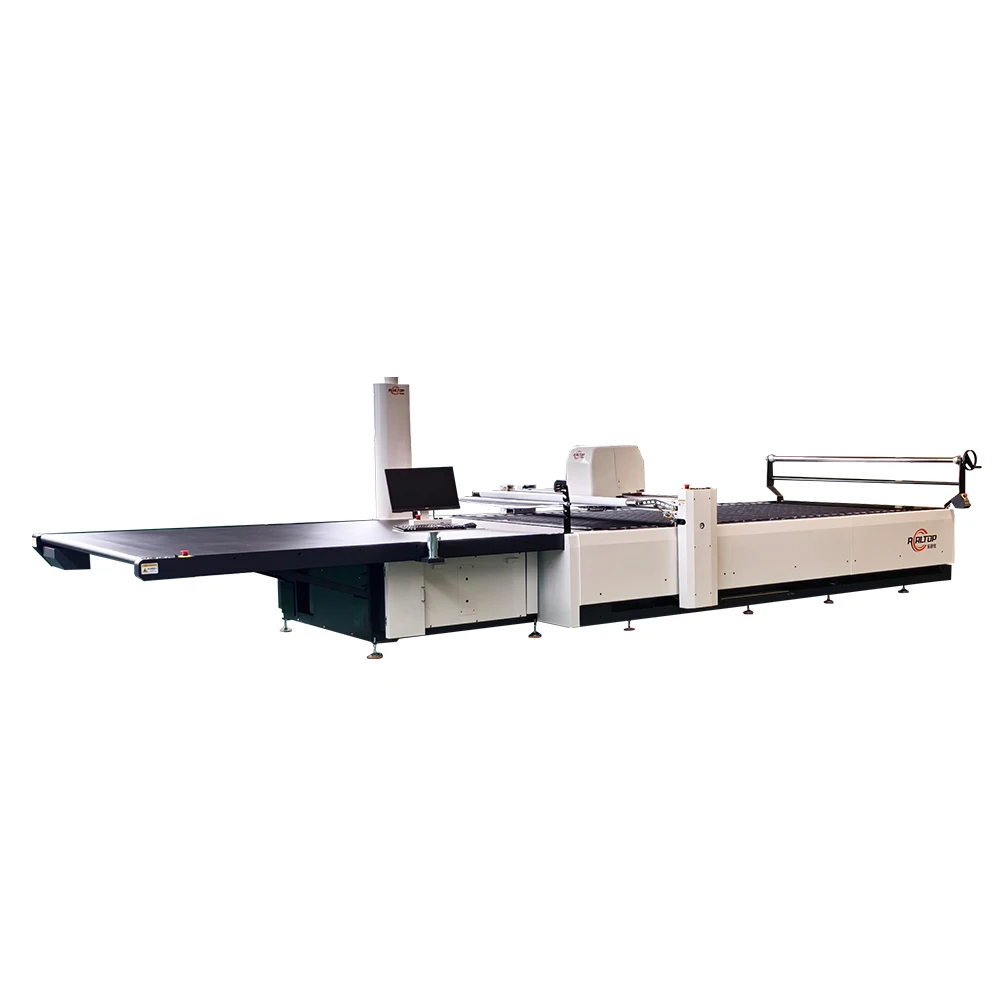
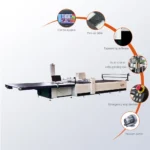
| Vacuum Table | Aluminum bellows vacuum table, full-surface adsorption |
| Vacuum Pump | Custom high-efficiency pump, aerospace-grade aluminum casting |
| Blade Grinding Method | Double rotary sharpener |
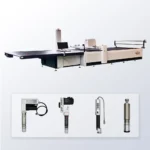
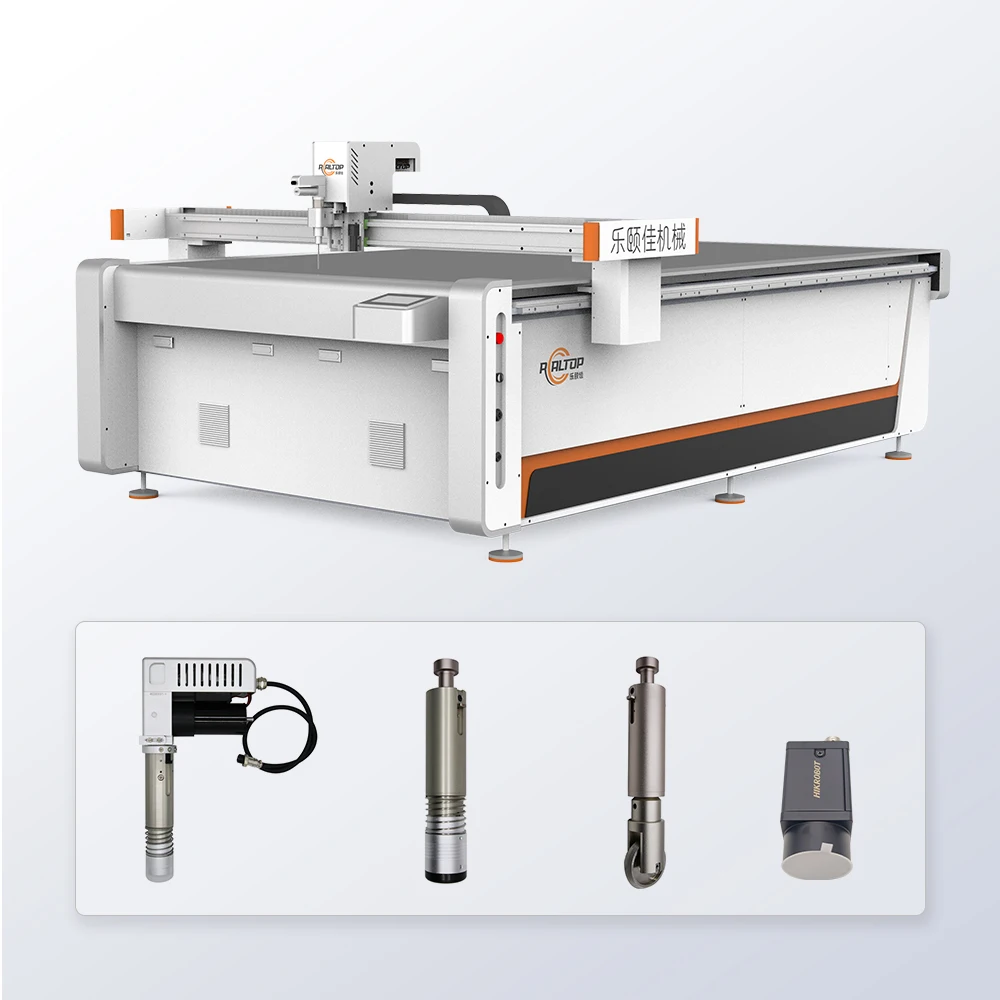
| Tool Head Type | Interchangeable cutting knife handle |
| Software File Formats | DXF / PLT / AI / PDF |
| Language Options | English, Russian, Italian, Chinese; special languages customizable |
| Machine Frame | Heavy-duty, precision-ground surface |
| Standards | CE (verify against manufacturer catalog) |
Application Suitability
| Application | Material or Output |
|---|---|
| Surgical drapes and medical textiles | PE-film laminated nonwovens, SMS composites, multi-layer sterile barrier fabrics |
| Apparel manufacturing | Suits, knitwear, lace, complex pattern-matching woven and knitted fabrics |
| Home textile production | Sofa fabrics, curtains, rugs requiring multi-layer vacuum hold-down |
| Flexible material converting | Knits, wovens, plush, and 30+ flexible materials ranging 0.1–70 mm |
| Footwear and bags | Leather, synthetic uppers, linings and composite reinforcement layers |
| Automotive interiors | Upholstery fabric, headliner foam, gasket and acoustic insulation composites |
Why "Working Area" Is the Wrong Starting Point for a CNC oscillating knife cutting machine manufacturer
Tool head pressure and vacuum zoning matter more than table size when your material stack fights back.
I spent years on the assembly floor before moving into technical sales, and one lesson came at a customer’s expense. We configured a machine for a medical drape producer who sent us standard nonwoven samples. The cut quality was clean, the edges sealed, the nesting software imported their files without issue. Then they switched to a PE-film laminated composite for their actual production run. The knife couldn’t penetrate the film layer consistently, and the edges frayed into unusable strands across an entire batch. Now I ask every buyer working with multi-layer composites to send the actual production roll before we lock in the configuration [NEED_CITE: material substitution risks in multi-layer textile cutting].
A CNC oscillating knife cutting machine manufacturer that only asks for sheet dimensions is building blind. The real specification starts with what you are actually cutting, how many layers you stack, and what happens at the boundary where film meets fiber.
How Tool Head Selection Prevents Edge Failure on Composites
The interchangeable cutting knife handle on this platform accepts multiple tool types — oscillating knife, drag knife, creasing wheel and pen — each engineered for a specific material response. An oscillating knife works through PE-laminated surgical drapes by vibrating at high frequency to slice rather than crush the layers, preserving the barrier integrity of the film. A drag knife dragged across the same composite would drag the film into folds and produce ragged edges. The choice is not optional; it determines whether your cut parts pass or fail quality inspection on the operating room floor.
Full-Surface Vacuum Adsorption for Thin, Slippery Stacks
Surgical drape composites are lightweight and often have a slick PE surface that slides under cutting force. The aluminum bellows vacuum table generates full-surface adsorption across the entire bed, not just in isolated zones. This matters when you are cutting small drape components or narrow reinforcement strips where a zoned table would leave unsupported edges lifting into the knife path. The custom vacuum pump, cast from aerospace-grade aluminum, maintains suction stability through long production runs [NEED_CITE: vacuum hold-down requirements for thin composite textiles].
Reading the Specs That Actually Affect Your Cut Quality
Repeat positioning accuracy of ±0.1 mm means the knife returns to the same coordinate across thousands of cycles, which matters when you are cutting registration marks or nesting identical drape patterns across a multi-layer layup. The average cutting speed of 12 m/min applies to standard material stacks; denser composites with film layers will reduce that figure depending on thickness and knife pressure settings. The double rotary sharpener keeps the blade edge consistent without manual intervention, which directly affects edge quality on long production runs where a dull blade begins to tear rather than cut the PE film layer.
What Happens When Configuration Is Skipped
A buyer who selects a machine based on price or table size alone often discovers the problem during their first real production run. Insufficient vacuum zoning allows thin composite edges to lift, causing the knife to skip or produce incomplete cuts that are only found after the entire stack is processed. Wrong tool head selection on PE-laminated materials creates frayed edges that compromise the sterile barrier performance of surgical drapes. Voltage mismatches between the 380V/50Hz default and the buyer’s local supply cause servo drives to run outside specification, degrading positioning accuracy over time [NEED_CITE: voltage and frequency standards by export market]. These failures do not show up in a factory test on standard nonwoven — they appear when your actual material hits the table.
Why Buyers Source This Platform from REALTOP
REALTOP designs and builds both knife and laser cutting systems under one roof, which means your cutting method is chosen based on your material rather than limited to whatever technology a single-technology vendor happens to offer. Tool head and vacuum table configurations are specified per your actual fabric stack and daily volume, not pulled from a default package. The PLC control system supports English, Russian, Italian and Chinese as standard, with additional languages configurable before the machine ships. Sample cutting on your own surgical drape composite is standard procedure, producing a cutting report that documents edge quality and achievable speed before you commit. Software compatibility with DXF, PLT, AI and PDF formats is confirmed against your existing nesting workflow during the quotation stage, not discovered after installation.
Documentation & Verification
- Machine specification sheet listing tool head, vacuum table zoning and working area matched to your drape composite
- Electrical schematic confirming voltage, frequency and plug type for your facility before production begins
- Sample cutting report on your actual surgical drape material documenting edge quality and speed
- Software licence with file format compatibility note covering DXF, PLT, AI and PDF import verification
- Factory test record showing repeat positioning accuracy across multi-layer composite cutting cycles
- Operation and maintenance manual in your selected control language with blade grinding schedule
Installation, Commissioning & Support
- Foundation must support heavy-duty frame mass with level tolerance across the 1700×2000 mm or larger bed
- Dedicated 380V/50Hz circuit with confirmed amperage for the 26 kW maximum power draw
- Machine ships fully assembled; verify doorway and overhead clearance for the selected working area size
- First-run commissioning includes tool head pressure calibration on your actual composite material stack
- Operator training covers PLC interface navigation, file import and double rotary sharpener maintenance
- Spare parts list includes oscillating knife blades, vacuum table seals and air flow components
What We Need to Quote Accurately
Send us the actual surgical drape composite roll you plan to cut, including any PE film or multi-layer laminate structure. Specify your daily volume target and the maximum layup thickness you intend to run. Confirm your facility voltage, frequency and the control language your operators require. If you have existing nesting files, share a sample so we can verify software import compatibility before the order is placed.
Frequently Asked Questions
Q: How is the 70 mm cutting thickness verified for my specific composite?
A: The 70 mm figure is a maximum specification that depends entirely on your material density and layer composition. We run sample cuts on your actual surgical drape composite to determine the achievable thickness and cutting speed, then document the results in a cutting report before you commit to the order.
Q: How do I confirm voltage, plug type and control language before shipment?
A: The standard configuration is 380V/50Hz with English, Russian, Italian or Chinese interface options. During the quotation stage, we collect your facility electrical specifications and operator language requirements, then confirm them on the electrical schematic and software configuration sheet before production starts.
Q: Which tool head is right for PE-laminated surgical drapes?
A: PE-film laminated composites typically require an oscillating knife that vibrates at high frequency to penetrate the film without crushing or tearing the nonwoven layers. We determine the correct tool head through sample cutting on your actual material, not through catalog assumptions.
Q: Will the software import my existing nesting files?
A: The system supports DXF, PLT, AI and PDF file formats. During the quotation stage, we ask you to share a sample nesting file so we can verify import compatibility and confirm that your existing workflow transfers without reformatting or data loss.
Q: Can I send my own material for sample cutting?
A: Yes — sample cutting on the buyer’s actual production material is standard procedure, especially for multi-layer composites. The resulting cutting report documents edge quality, achievable speed and tool head performance on your specific fabric stack before any order commitment.
You may also like

商品评价
Clear filtersThere are no reviews yet.