


-
 Courier delivery
-
 DHL Courier delivery
-
 Warranty 1 year
-
 Free 30-Day returns

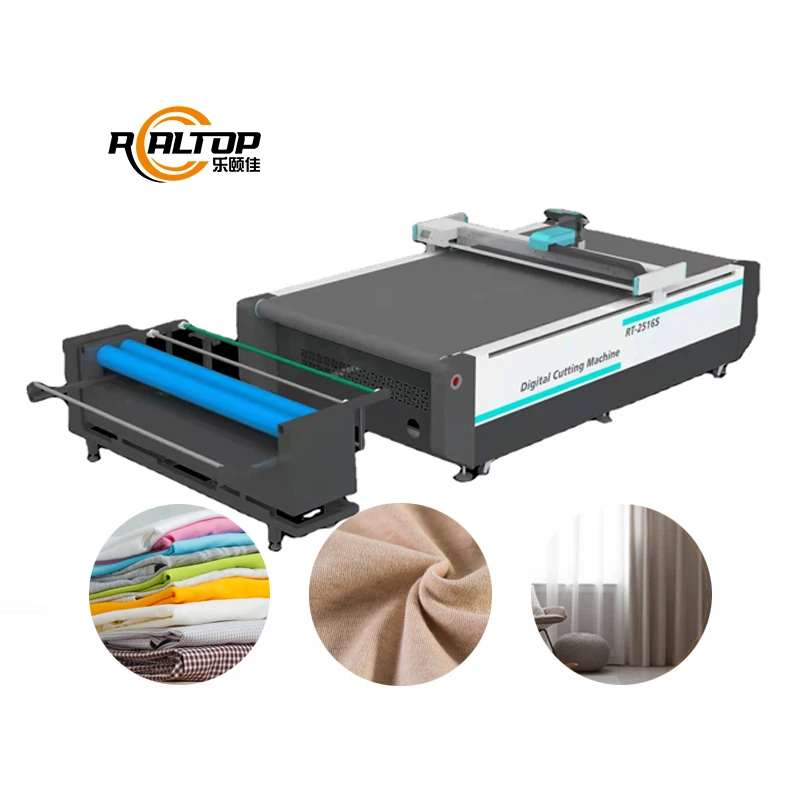
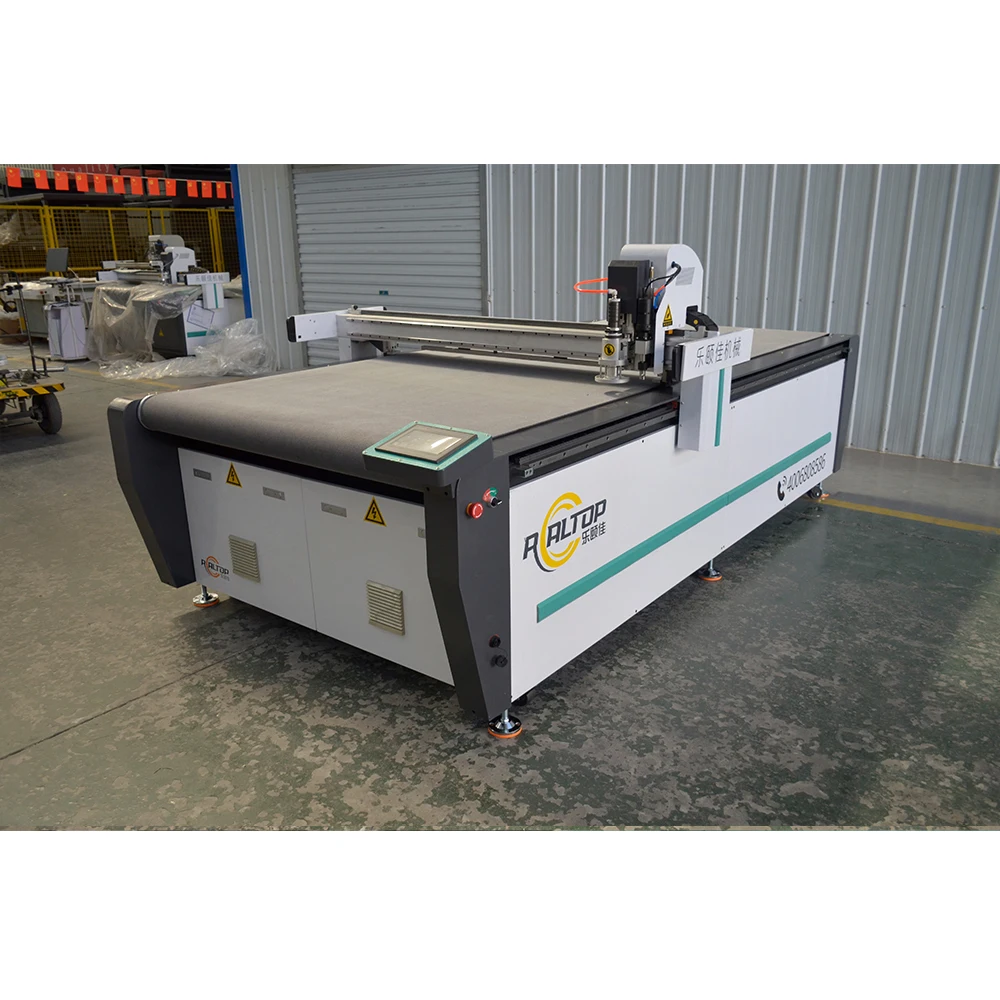
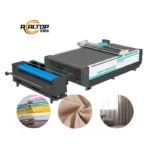
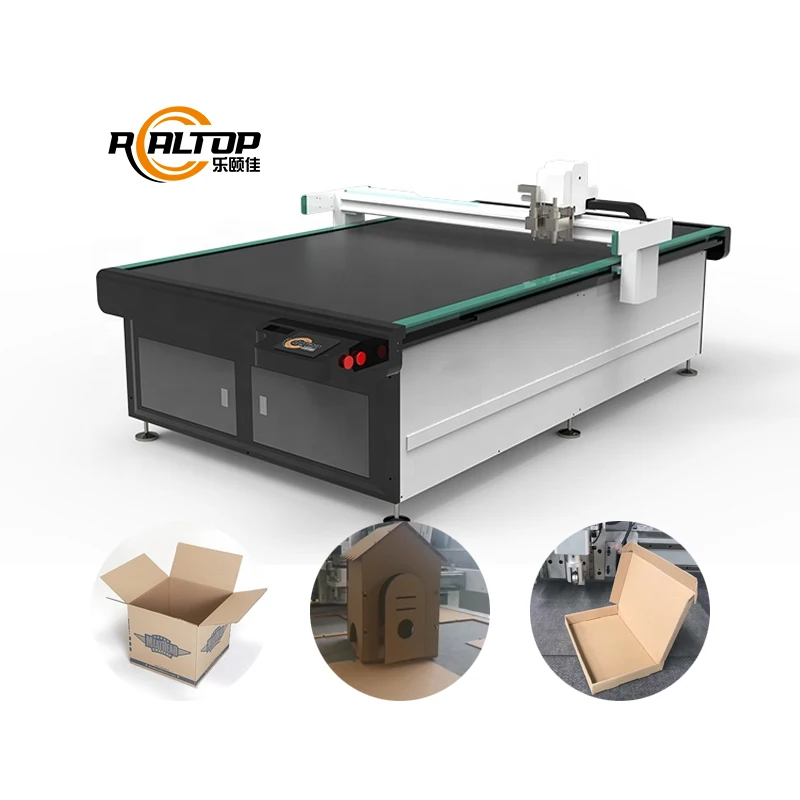
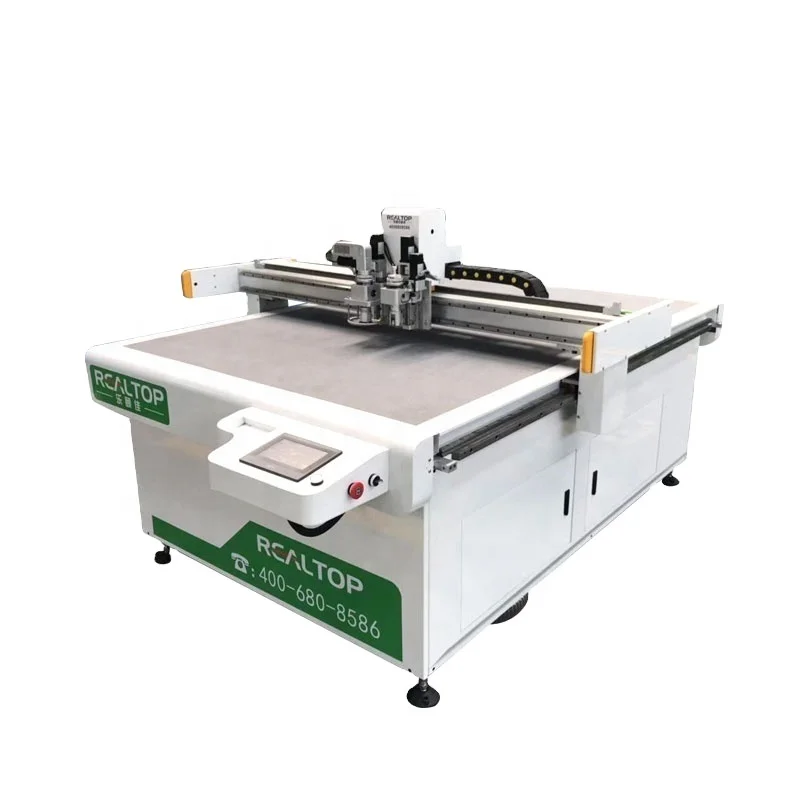
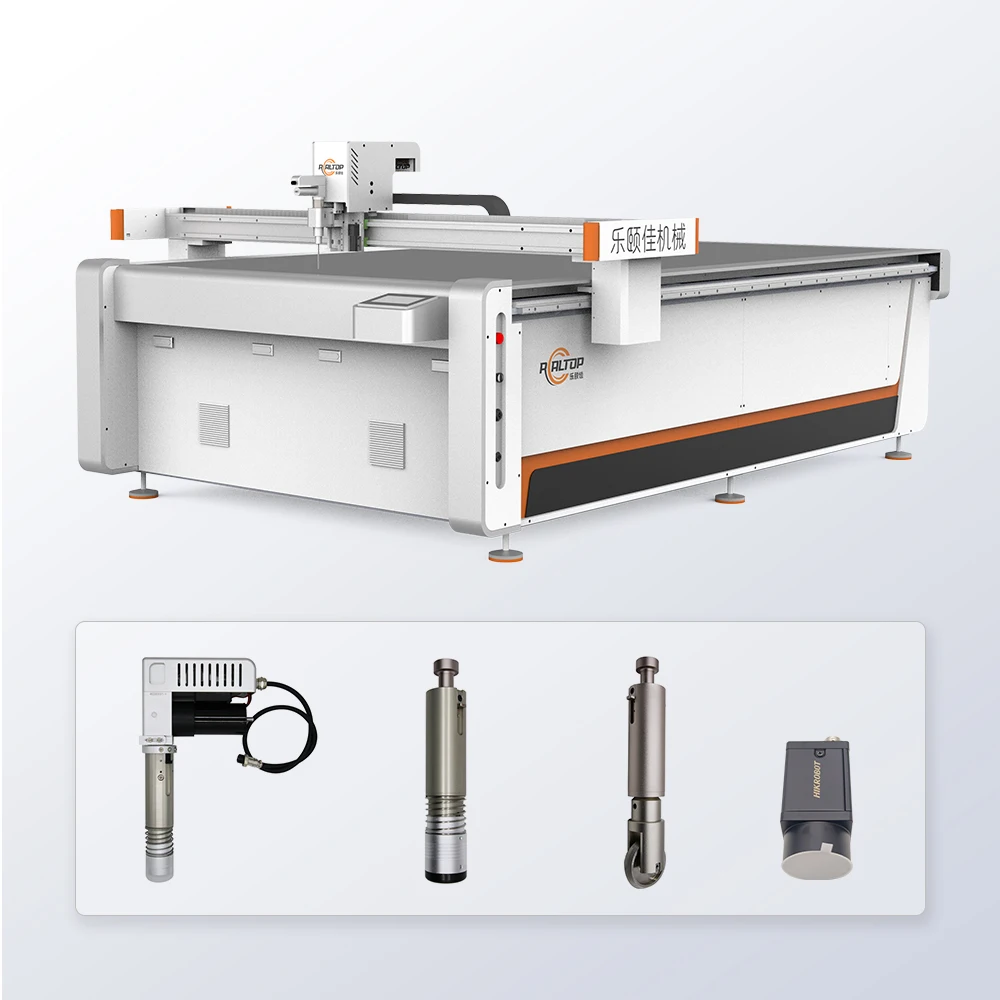
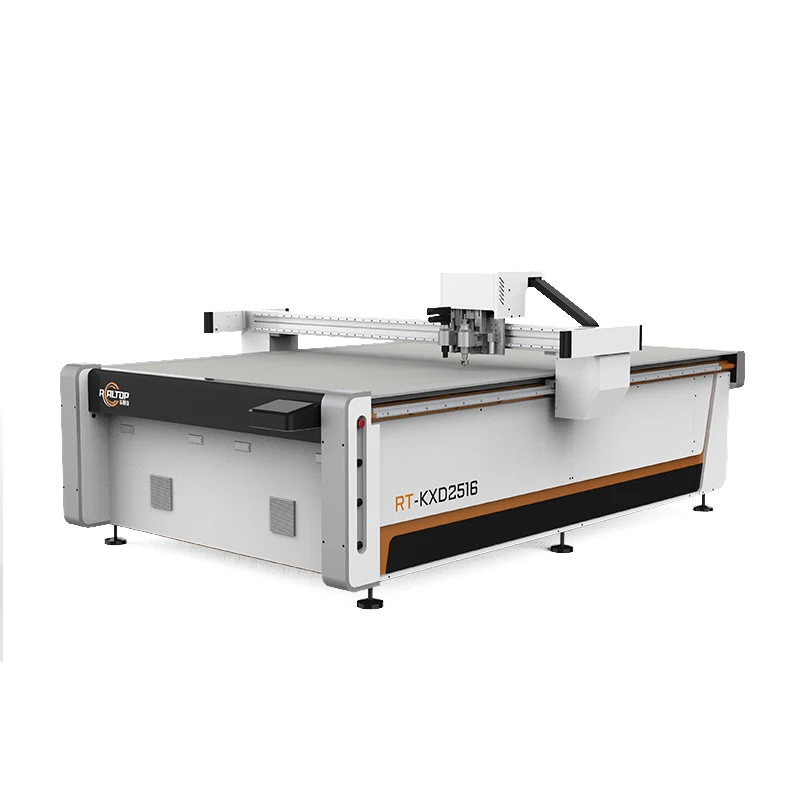
Factory-Built Cutting Platforms — Each RT-D2516/RT-S2516 frame is welded, stress-relieved and machined in-house before assembly, keeping motion tolerances within the repeatability spec.
Technical Specifications
| Parameter | Value |
|---|---|
| Model | RT-D2516 / RT-S2516 |
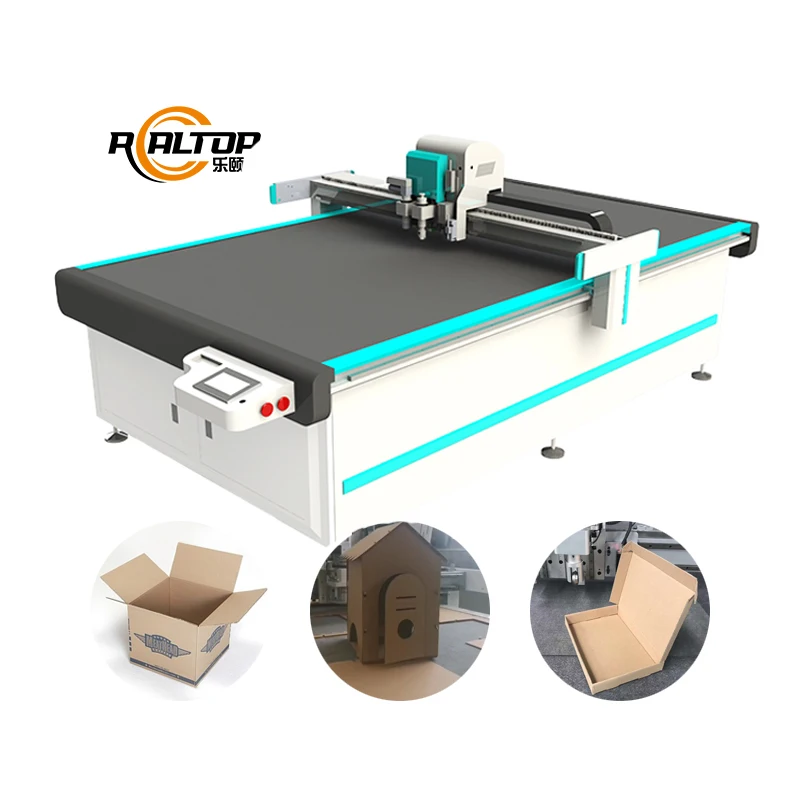
| Product Type | CNC Oscillating Knife Cutting Machine |
| Working Area | 1600 × 2500 mm |
| Machine Size | 3450 × 2300 × 1250 mm |
| Rated Power | 9 kW |
| Vacuum Pump | 7.5 kW |
| Table Type | Flat working table with vacuum and auto feeding |
| Tool Head | Swiss imported knife with vibration full cutting, half cutting and cursor location |
| Safety Device | Infrared sensors |
| Translational Velocity | 800–1200 mm/s |
| Cutting Thickness | ≤50 mm (basis to be confirmed by material density and layer count) |
| Repeated Accuracy | ≤0.1 mm |
| Transmission System | Digital servo motor, linear guide, synchronous belt, ball screw (imported) |
| Servo Motor Brand | Panasonic (Delta available as option) |
| Guide Rail | Taiwan Hiwin |
| Conveyor Belt | Germany imported |
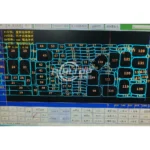
| Instruction System | HP-GL compatible format |
| Voltage | 380V ±10% |
| Control Language Options | English, Russian, Italian, Chinese; special languages customizable |
| Standards | CE |
Application Suitability
| Application | Material or Output |
|---|---|
| Garment and fashion fabric cutting | Single and multi-layer woven, knit and technical textiles |
| Leather goods production | Natural and synthetic leather hides for bags, shoes and upholstery |
| Automotive interior cutting | Leather, sponge composite leather and soft trim materials |
| Flexible material processing | PVC, soft glass, silicon and rubber sheets for gaskets and seals |
| Textile converter workflows | Composite fabrics and sponge-laminated rolls at production volume |
Why Cutting Depth Claims Fail on Real Fabric
Cutting thickness only matters when matched to your exact material density, layer count and ply adhesion.
A 50 mm depth rating on a specification sheet means very little if your production runs involve dense, multi-layer bonded composites rather than loosely stacked cotton. I have watched fabric producers commit to a CNC fabric cutting machine manufacturer based on a headline stroke length, only to discover during commissioning that the oscillating knife deflects on their specific layup. The blade angle, vibration frequency and downforce all interact with the material stack in ways that generic thickness numbers cannot predict. [NEED_CITE: textile cutting resistance varies with fiber density and layer adhesion]
Frame and Motion Integrity Under Continuous Cutting Loads
The RT-D2516/RT-S2516 uses a welded steel frame that is stress-relieved and precision-machined before the Hiwin linear guides and imported ball screws are mounted. This sequence matters because any residual stress in the frame will eventually distort guide alignment, pushing the repeated accuracy beyond the stated ≤0.1 mm tolerance. For a CNC fabric cutting machine manufacturer building machines that run multi-shift schedules, frame stability is the foundation that every other component depends on.
Vacuum Holding Power Across the Full Cutting Bed
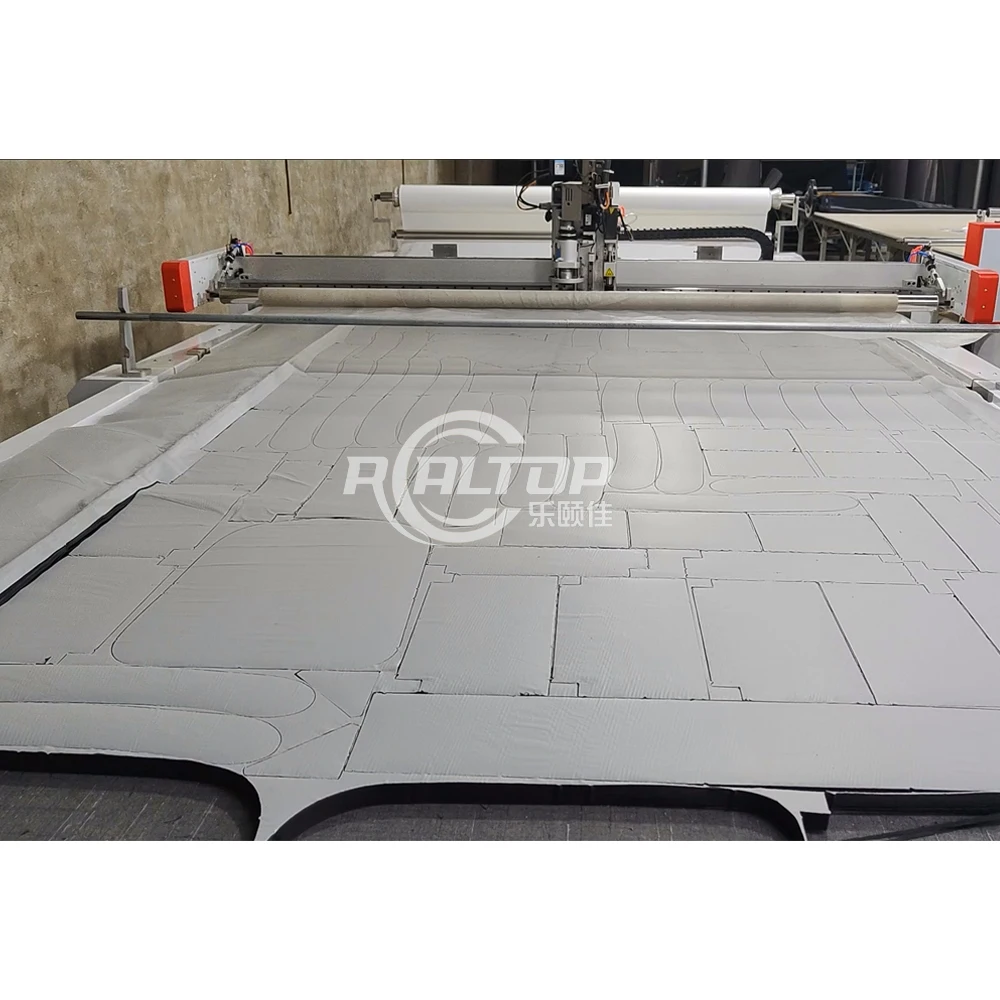
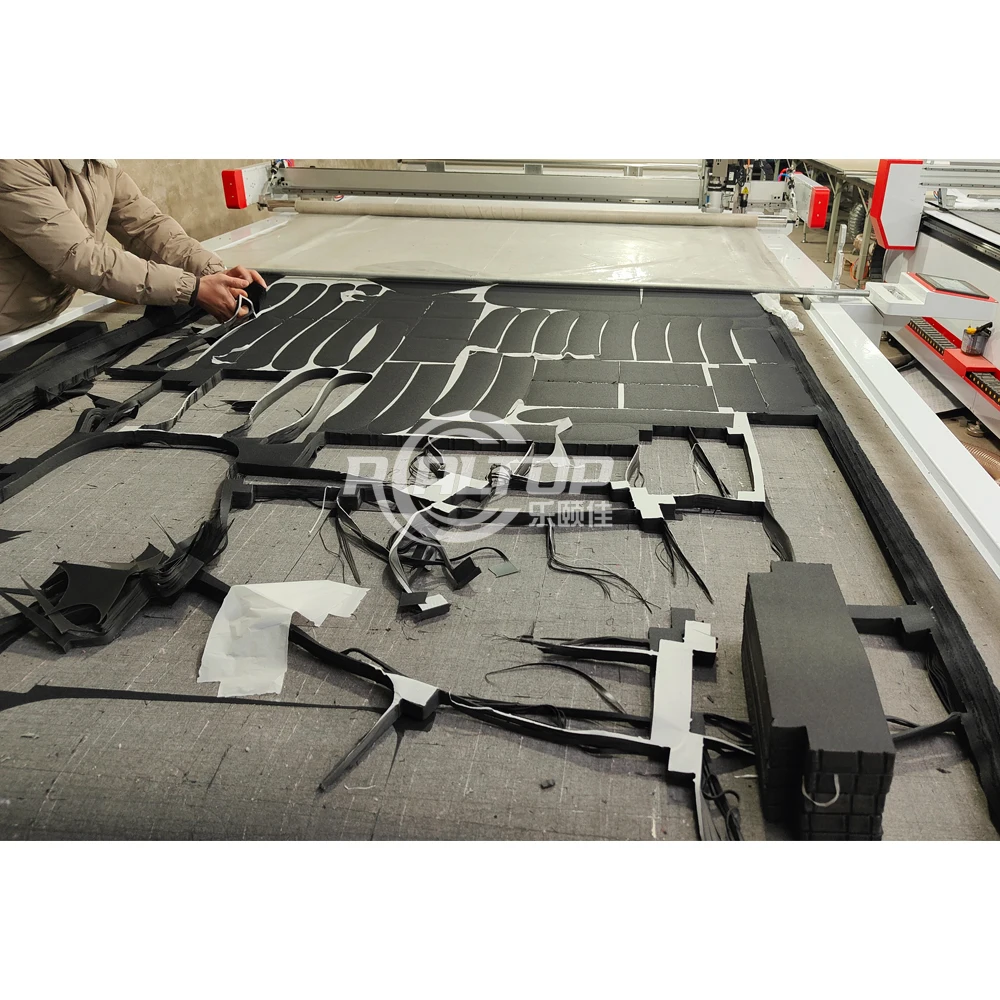
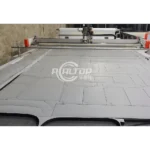
The flat working table incorporates an internal wind structure designed to distribute suction evenly across the entire 1600 × 2500 mm surface. When cutting small garment pattern pieces — collars, cuffs, pocket flaps — uneven vacuum zoning allows material edges to lift into the knife path, producing ragged cuts and forcing manual rescues. The 7.5 kW vacuum pump provides the volume needed to hold porous, air-permeable fabrics flat without crushing the surface texture. [NEED_CITE: vacuum distribution requirements for porous textile materials]
Reading the Specs That Actually Determine Cut Quality
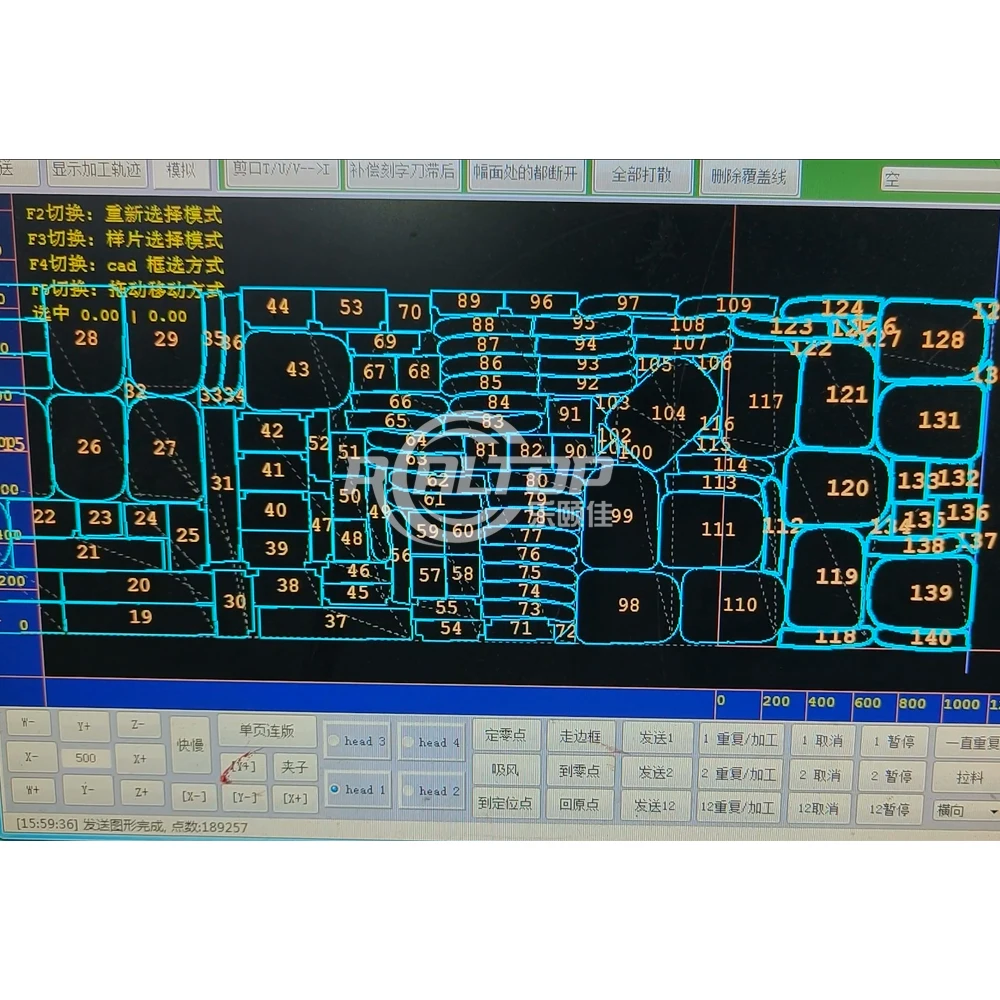
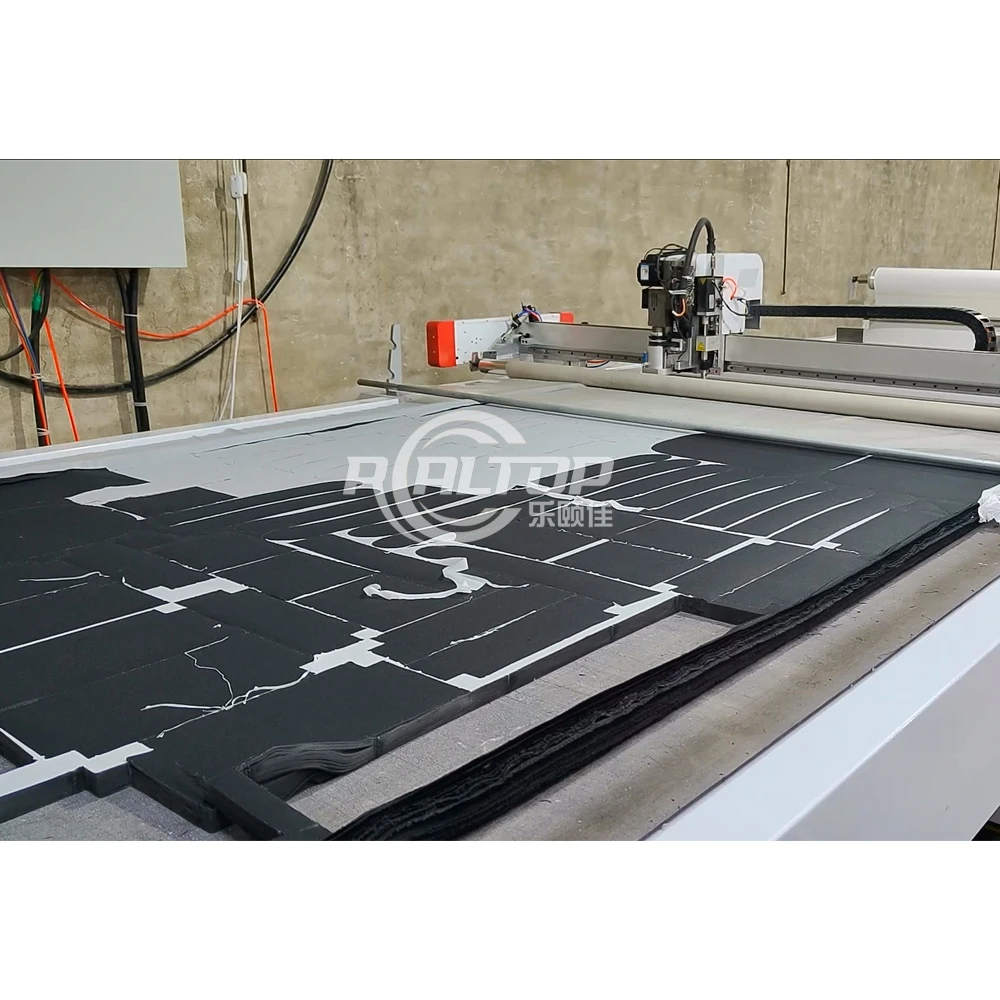
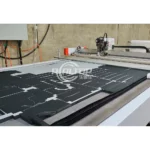
The Swiss imported oscillating knife delivers full cutting, half cutting and cursor location functions from a single tool head, which eliminates the need to stop production for manual knife changes when a pattern mixes through-cuts with kiss-cuts or perforations. Translational velocity of 800–1200 mm/s defines how fast the head traverses between cuts, but actual throughput depends on the nesting layout and the number of direction changes per piece. The Panasonic servo motors provide the rapid acceleration and deceleration needed at each corner without positional drift, while the HP-GL compatible instruction system ensures your existing nesting files transfer without re-drawing. The 380V ±10% voltage specification must be confirmed against your facility supply before the machine is wired, because running a servo drive on an unconfirmed voltage range is a common cause of premature motor failure.
The Hidden Cost of Skipping Material-Specific Configuration
When a buyer specifies a cutting machine by working area alone and skips the tool head and vacuum configuration step, the consequences surface during the first production run. The wrong blade geometry on a dense composite material causes fraying at the cut edge, which downstream sewing operations then reject. Insufficient vacuum in the outer zones allows lightweight single-ply fabrics to drift during high-speed traversal, producing dimensional errors that accumulate across an entire lay. These are not warranty issues — they are specification gaps that could have been caught with a sample cut on the buyer’s actual material before the order was confirmed. [NEED_CITE: cost of material mismatch in CNC cutting procurement]
Why Production Managers Source the RT-D2516/RT-S2516 From This Line
In-house design and manufacturing covers both the knife cutting platform and the laser cutting systems, so buyers can match the cutting method to their material rather than force one technology across every fabric type. Tool head and table configurations are specified per material and production volume, not pulled from a standard catalog page. CCD camera positioning is available for printed contour work where registration marks define the cut path. Software compatibility is confirmed against your existing file formats before the order is placed. Voltage, control language and documentation are all customized to the destination market before the machine leaves the factory floor.
Documentation & Verification
- Machine specification sheet listing every configured option against your confirmed order
- Electrical schematic with 380V ±10% voltage confirmation matched to your facility supply
- Tool head and vacuum table configuration list tied to your tested fabric type
- Sample cutting report documenting edge quality and cycle time on your actual material
- Factory test record with control language setting and servo parameter documentation
- HP-GL software licence and file format compatibility note before dispatch
Installation, Commissioning & Support
- Floor plan check confirming the 3450 × 2300 × 1250 mm footprint plus conveyor clearance
- Dedicated 380V circuit with breaker sizing matched to the 9 kW rated draw plus 7.5 kW vacuum pump
- Machine delivered assembled with guide rails pre-aligned and servo motors pre-calibrated at the factory
- First-run commissioning includes vacuum zoning test across the full 1600 × 2500 mm table surface
- Operator training on oscillating knife blade changes and HP-GL file import workflow
- Spare parts list covering Swiss knife blades, conveyor belt segments and Hiwin guide blocks
Before You Request a Quote
Send the specific fabric or composite material you are cutting, the maximum layer count and single-ply thickness, and your target daily output. Confirm your facility voltage, frequency and preferred control language so the electrical and software configuration is locked before production begins. If your existing design files are in HP-GL or another format, share a sample file so compatibility is verified in advance.
Frequently Asked Questions
Q: How is cutting thickness capacity confirmed for my specific fabric type and layer density?
A: We run a sample cut on your actual material, documenting the knife deflection, edge quality and achievable cutting depth at your production layer count. The ≤50 mm rating is a starting reference; the sample report confirms what your specific layup actually delivers. This test happens before the order is finalized, so there are no surprises at commissioning.
Q: What voltage, plug and control language configurations are available before shipment?
A: The standard electrical configuration is 380V ±10%, but the transformer, plug type and circuit protection are matched to your destination market. Control language options include English, Russian, Italian and Chinese, with additional languages customizable. All electrical and language settings are documented in the factory test record before the machine is crated.
Q: How does the vacuum table zoning handle small garment pattern pieces without material lift?
A: The 1600 × 2500 mm table uses an internal wind structure to distribute the 7.5 kW vacuum pump output evenly, including the outer zones where small pieces like collars and cuffs are typically nested. If your production mix includes many small parts, we can adjust the zoning layout during configuration to prioritize holding power in those areas.
Q: Can the software import my existing nesting files and HP-GL format design library?
A: The instruction system is HP-GL compatible, and we verify file import against a sample from your existing design library before the order is confirmed. If your nesting workflow uses a third-party software, we confirm the export-to-import chain so your operators are not re-drawing patterns from scratch after installation.
Q: What sample cutting and factory visit options are available before commitment?
A: You can send your material to our facility for a documented sample cutting session, or visit the factory to observe the test in person. The sample report includes edge quality photographs, measured cutting depth, cycle time and tool head configuration details, giving you a clear production baseline before deciding.
You may also like

商品评价
Clear filtersThere are no reviews yet.