




-
 Courier delivery
-
 DHL Courier delivery
-
 Warranty 1 year
-
 Free 30-Day returns

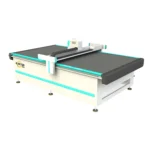
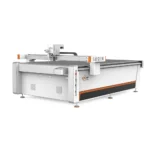
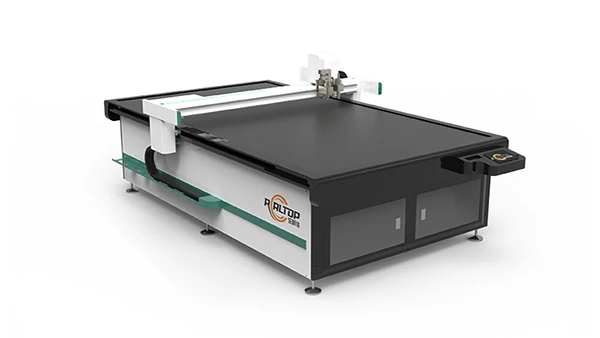
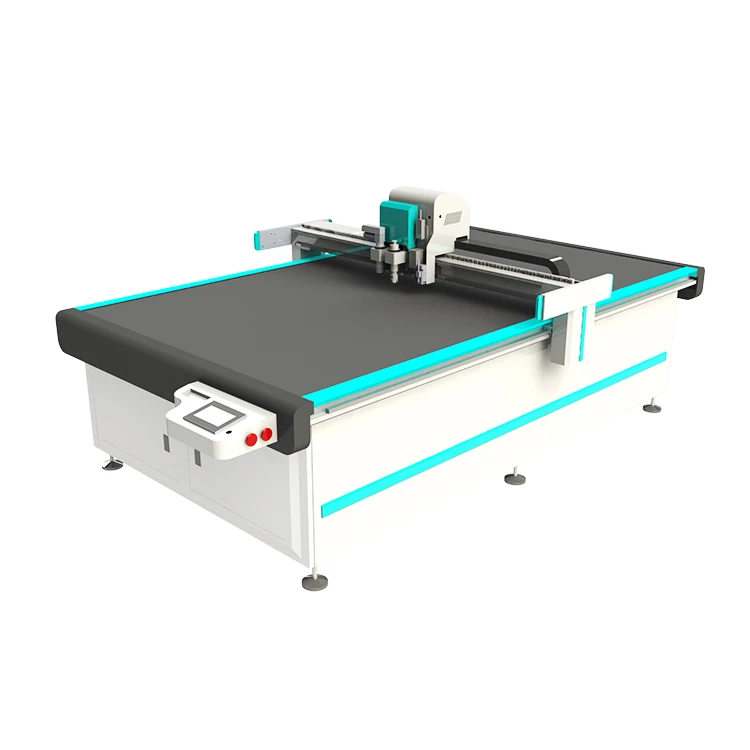
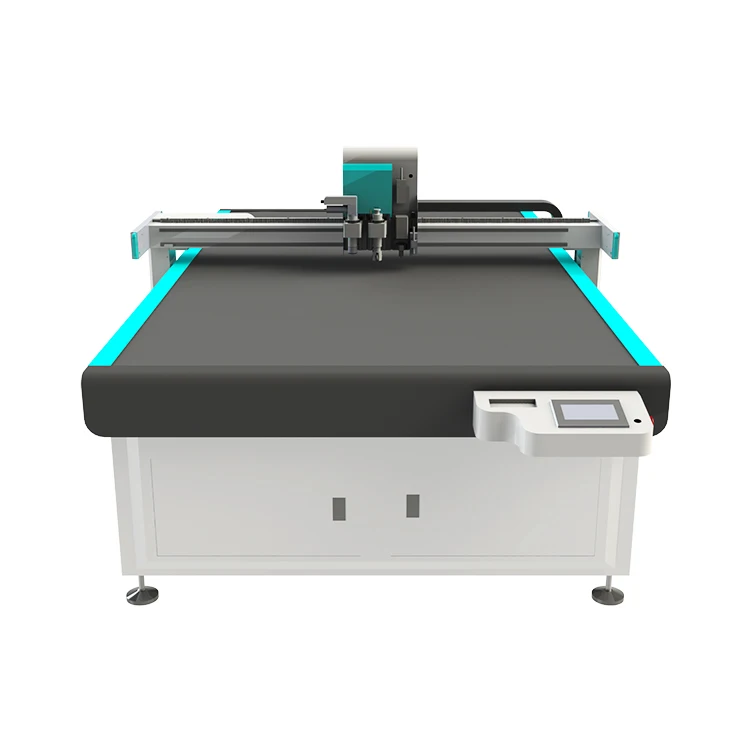
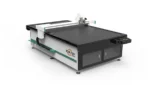
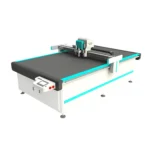
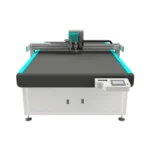
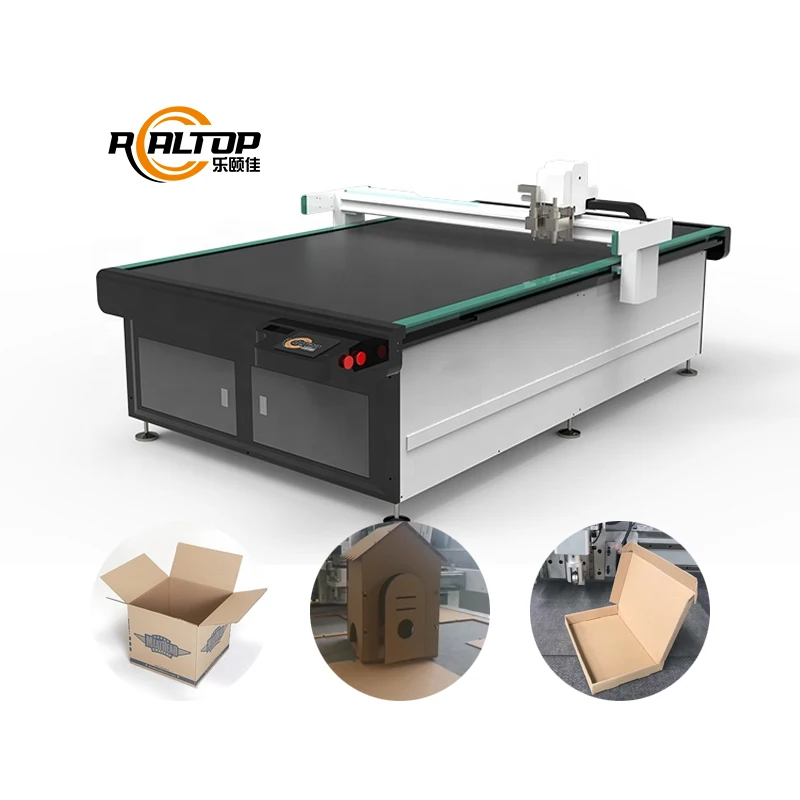
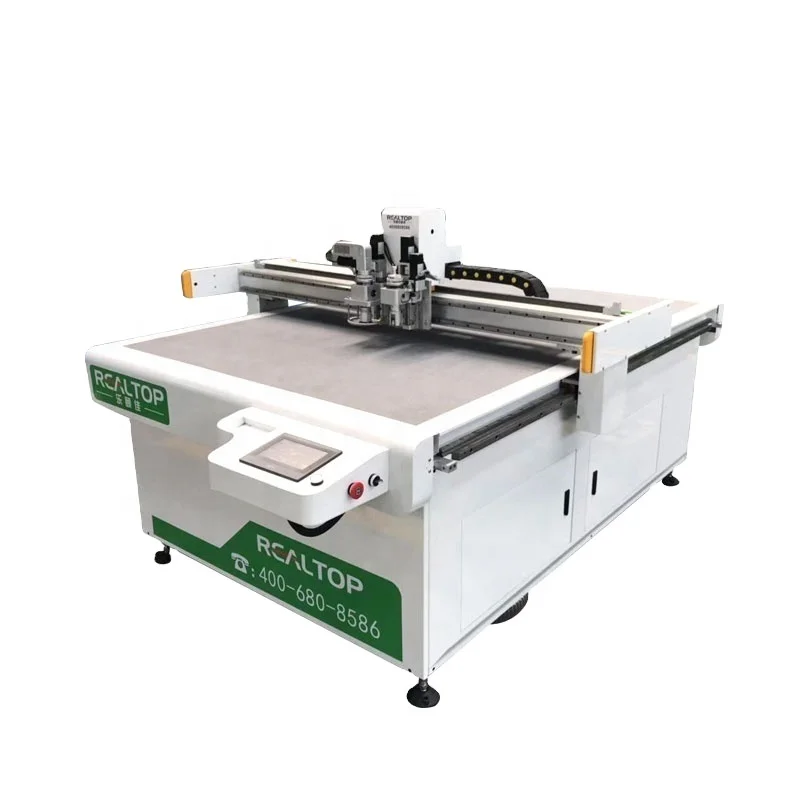
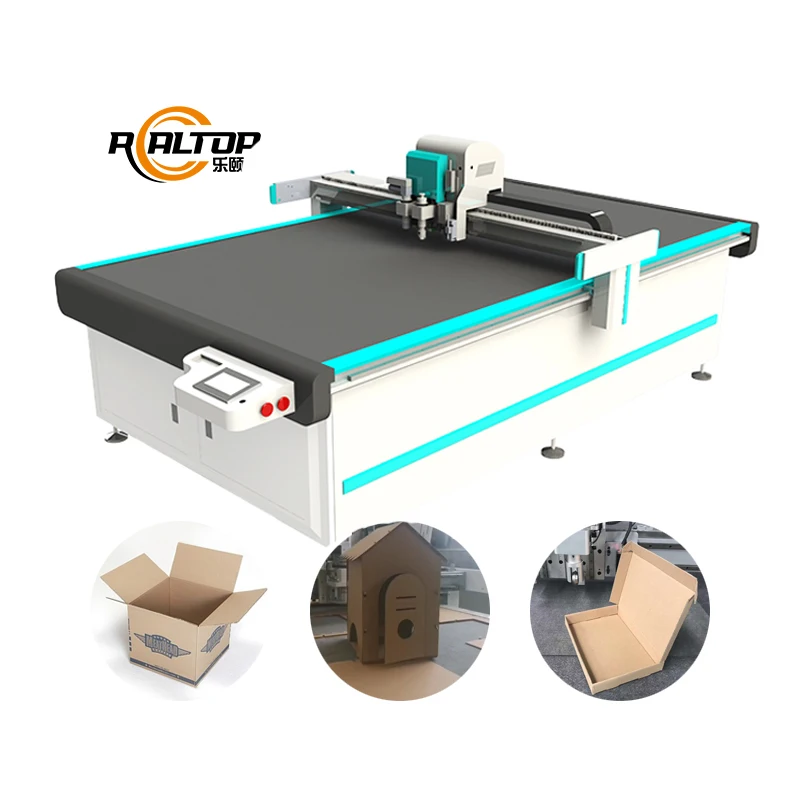
In-house knife and laser design — the RT-D2516 cutting table is built on a single platform where tool head, vacuum zoning and drive spec are matched to your leather type before the order is confirmed.
Technical Specifications
| Parameter | Value |
|---|---|
| Model | RT-D2516 |
| Product Type | CNC Oscillating Knife Cutting Machine |
| Working Area | 1600 × 2500 mm |
| Overall Dimensions (L × W × H) | 3450 × 2300 × 1250 mm |
| Rated Power | 9 kW |
| Voltage | 380V ±10% |
| Table Type | Flat working table with vacuum and auto-feeding conveyor |
| Tool Head | Swiss imported oscillating knife (vibration full cutting, half cutting, cursor location) |
| Translational Velocity | 800–1200 mm/s |
| Repeatability | ≤0.1 mm |
| Transmission System | Digital servo motor, linear guide, synchronous belt, ball screw |
| Servo Motor | Japanese Yaskawa |
| Linear Guide | Taiwan Hiwin rail |
| Conveyor Belt | Germany imported |
| Vacuum Pump | 7.5 kW |
| Instruction System | HP-GL compatible format |
| Safety Device | Infrared sensors |
| Multifunctional Head Capability | Cutting, creasing, marking |
| Pneumatic Cutting Tool Option | Up to 70 mm thickness (basis to be confirmed) |
| Cutting Speed | 200–800 mm/s (basis to be confirmed) |
| Certification | CE (referenced in company documentation; certificate copy to confirm) |
| Warranty | 12 months for whole machine, 3 months for consumables |
Application Suitability
| Application | Material or Output |
|---|---|
| Leather goods and footwear production | Genuine leather, synthetic leather, sponge composite leather |
| Garment and flexible textile cutting | Clothing fabrics, flexible composite materials |
| Gasket and seal fabrication | PVC, soft glass, silicon, rubber |
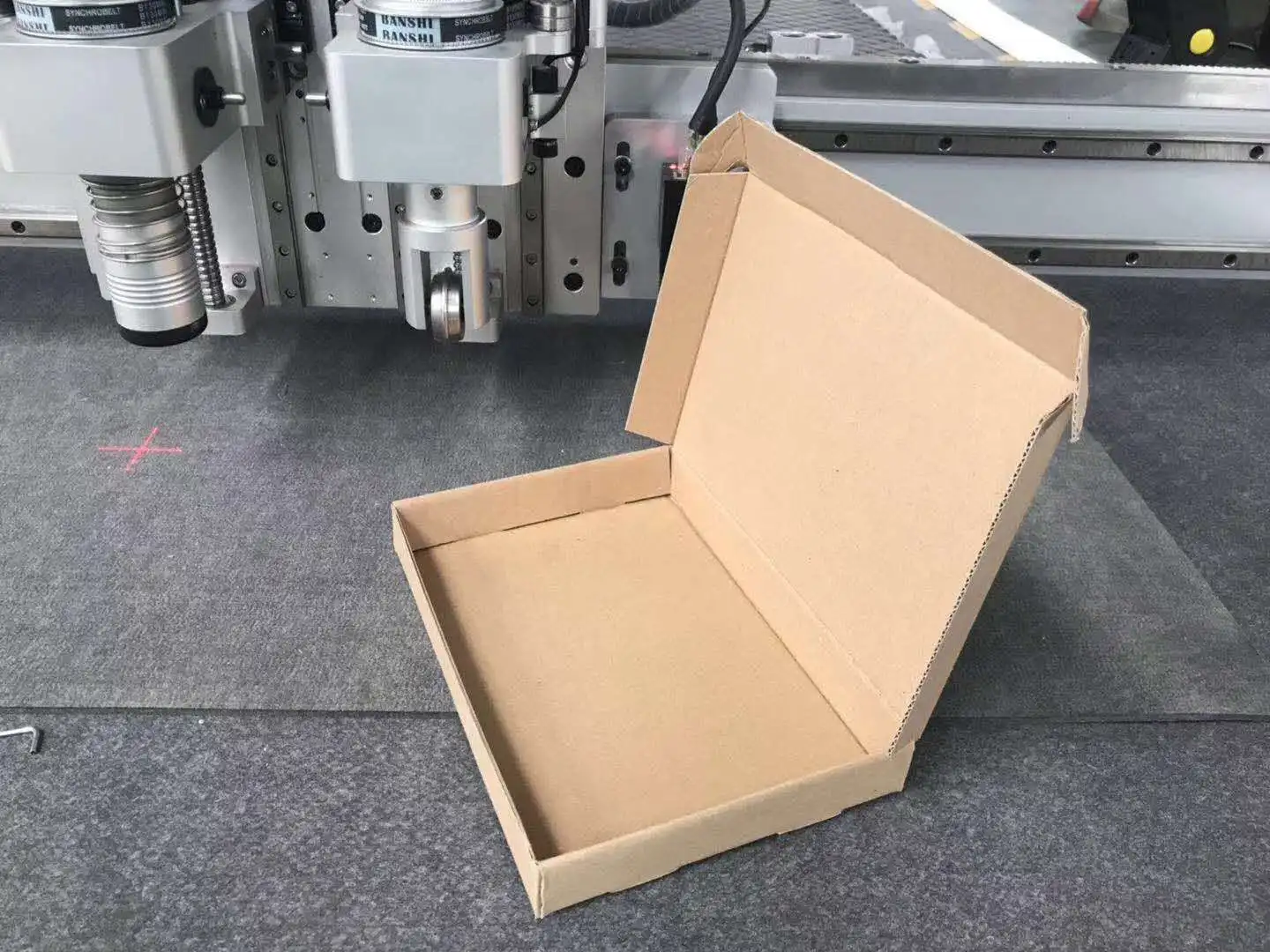
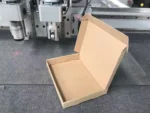
| Packaging sample making | Corrugated cardboard, grey board, carton prototypes |
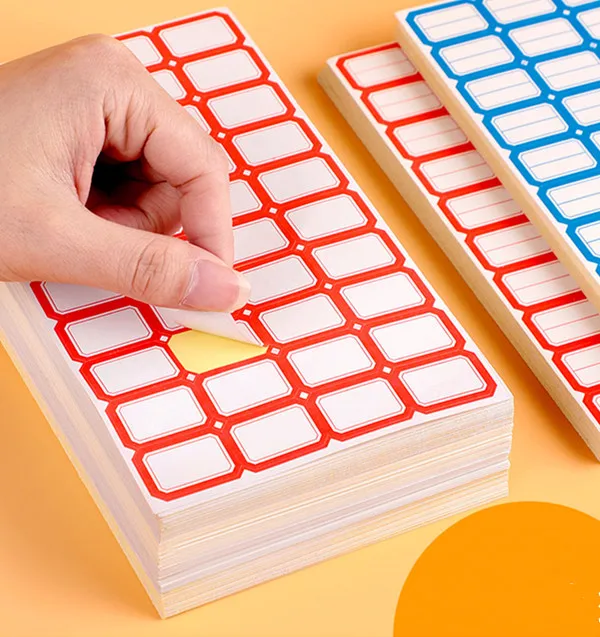
| Signage and sticker contour cutting | Vinyl, sticker stock with printed registration marks |
Why Material Thickness Changes Everything About the Quote
A machine spec’d on bed size alone will fail the moment real leather hits the table.
I spent years on the purchasing side of a shoe factory before moving into equipment sales. The pattern was always the same: a supplier would send a sample cut on thin synthetic leather, the edge would look clean, and the purchase order would go out. Then the first batch of full-grain cowhide arrived — heavier oil content, deeper grain, inconsistent density — and the oscillating knife would tear the surface instead of shearing through it. Entire batches of shoe uppers were scrapped. The RT-D2516 avoids this by forcing a material-first conversation: leather type, thickness range, hide format and daily volume all go on the table before a tool head is selected. [NEED_CITE: oscillating knife cutting behavior on full-grain versus corrected-grain leather]
Frame and Motion Built for Continuous Hide Processing
The 3450 × 2300 mm footprint houses a rigid frame designed to hold the Hiwin linear guide rails in alignment under the lateral forces of thick leather cutting. Yaskawa servo motors drive the gantry through synchronous belts and ball screws, maintaining ≤0.1 mm repeatability across the full 1600 × 2500 mm working area. For a CNC oscillating knife cutting machine manufacturer, matching the drive system to the cutting load — not just the travel speed — is the difference between a machine that holds tolerance on hide number one and hide number five hundred.
Swiss Oscillating Knife Head and What It Means for Edge Quality
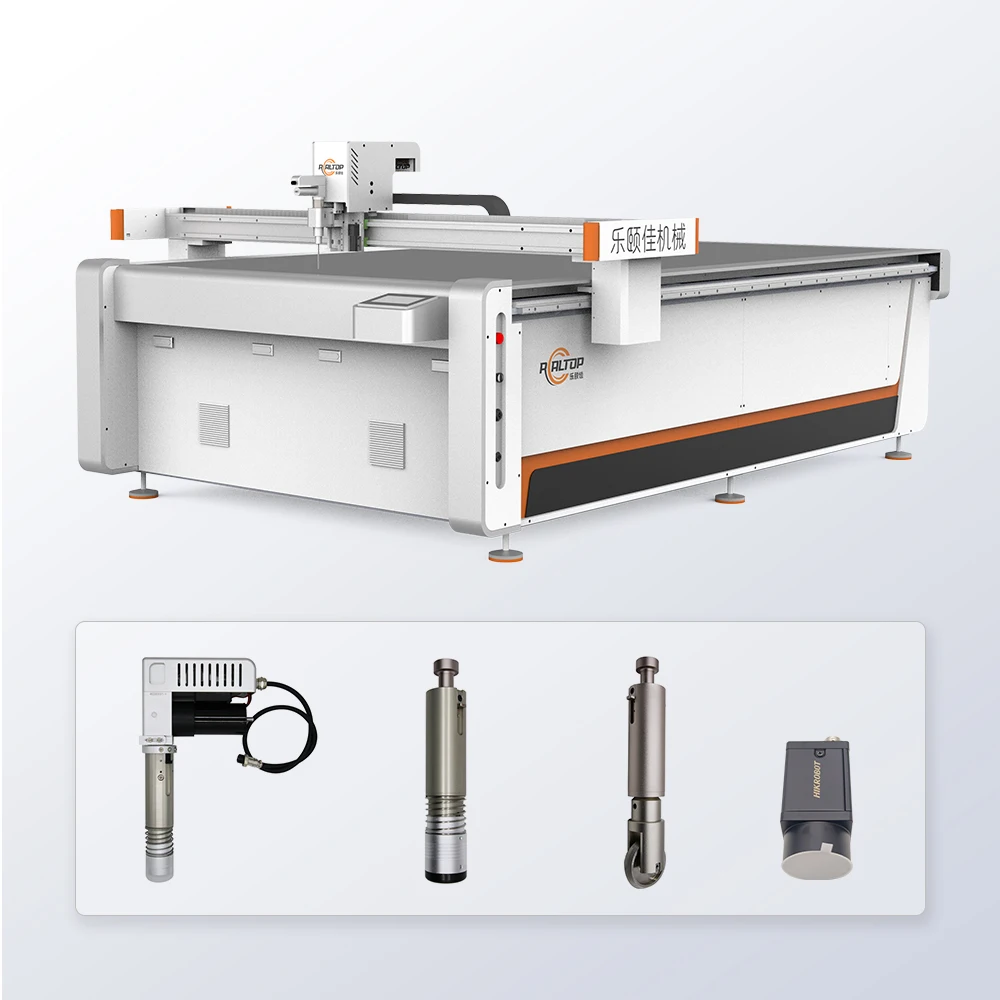
The Swiss-imported oscillating knife head on the RT-D2516 supports full cutting, half cutting and cursor location in a single tool station. Full cutting handles through-cuts on shoe uppers and bag panels, while half cutting scores crease lines without penetrating the backing material. The cursor location function positions the tool for punch holes or hardware placement. When the material is a stiff vegetable-tanned leather versus a soft garment suede, the oscillation frequency and blade geometry must be specified separately. [NEED_CITE: blade geometry selection for natural leather versus synthetic composite materials]
Reading the Spec Sheet Against Your Production Reality
The 7.5 kW vacuum pump paired with the German-imported conveyor belt creates a continuous material feed system that holds hides flat during cutting. On smaller leather pieces — gaskets, insole components, strap segments — vacuum zoning becomes critical; a single-zone table will lose suction on parts that don’t cover the full bed. The 9 kW rated power covers the servo drives, vacuum and conveyor together, so buyers should verify that their workshop electrical supply can dedicate a circuit to this machine at 380V ±10%. The HP-GL compatible instruction system accepts nested cutting files, but confirming software and file format compatibility with your existing CAD workflow before shipment prevents the most common post-delivery delays.
The Cost of Skipping the Material Test
When a cutting table is ordered on working area and price alone, the failures show up within the first week of production. The vacuum table cannot hold small gasket blanks, and they lift during the cut, producing ragged edges. The oscillating knife tears through sponge composite leather because the blade angle was set for flat PVC. The conveyor belt runs, but the software cannot import the nesting files the factory already uses. Each of these problems is fixable — but only if the material, thickness and file format are confirmed before the machine leaves Jinan. [NEED_CITE: material-specific tool head and vacuum zoning configuration for CNC knife cutting tables]
Why Buyers Source This Platform From Jinan
Realtop designs and builds both knife and laser cutting systems in-house, so the RT-D2516 is specified for leather cutting rather than being a generic table repurposed for it. The tool head, vacuum table zoning and conveyor configuration are all matched to the buyer’s material sample before production starts. Electrical schematics and voltage are confirmed against the target market’s standards. Software file format compatibility is verified against the buyer’s existing nesting workflow. Every machine is tested on the buyer’s own leather or flexible material before dispatch, not on a generic demo sheet.
Documentation & Verification
- Machine specification sheet with tool head and table configuration matched to your leather type
- Electrical schematic and 380V ±10% voltage confirmation for your local grid
- Sample cutting report run on your own leather or composite material before commitment
- Software licence and HP-GL file format compatibility note against your nesting system
- Factory test record with dimensional check on your specified cutting pattern
- Spare parts list covering oscillating knife blades and conveyor belt wear items
Installation, Commissioning & Support
- Dedicated 380V ±10% circuit required to support the 9 kW total rated power draw
- Floor space allocation of at least 3450 × 2300 mm with clearance for conveyor feed and offload
- Vacuum pump commissioning and zone calibration matched to your smallest cutting piece
- Yaskawa servo parameter tuning and Hiwin rail alignment check during on-site startup
- Operator training on oscillating knife blade change, half-cut depth setting and cursor location
- Scheduled maintenance plan covering synchronous belt tension, ball screw lubrication and infrared sensor check
What to Include in Your Inquiry
Send the specific leather or flexible material type you cut most often, along with thickness range and hide or sheet dimensions. Note your daily cutting volume and whether your workflow already uses HP-GL files or another nesting format. Confirm your workshop voltage and frequency, and the control language your operators need. If you have sample material available, ship it to the factory for a live cutting test before the order is finalized.
Frequently Asked Questions
Q: How is the tool head specified for my leather type and thickness?
A: The oscillating knife head is selected after your material sample is tested at the factory. Full-grain, corrected-grain, synthetic and composite leathers each require different blade geometry and oscillation settings. The tool head and table configuration list in your documentation reflects the result of that test, not a generic default.
Q: What voltage and control language options are confirmed before shipment?
A: The standard configuration is 380V ±10%, but the electrical schematic and voltage confirmation document is prepared for your specific market before production. Control language options are confirmed during the order process so the operator interface matches your workshop.
Q: Can the machine be tested on my own leather before I commit?
A: Yes. Buyers are asked to ship representative material samples to the factory. A sample cutting report is produced on that material, documenting edge quality, dimensional accuracy and cutting speed, and shared for approval before the production order is placed.
Q: What documentation arrives with the machine?
A: The shipment includes the machine specification sheet, electrical schematic, tool head and table configuration list, sample cutting report, factory test record, operation and maintenance manual, software licence with file format note, and a spare parts list.
Q: What OEM and configuration customization is available?
A: Tool head options, vacuum table zoning, conveyor setup, voltage and control language can all be adjusted. CCD camera contour recognition is available as a configuration option. Each customization is documented in the specification sheet before production begins.
You may also like

商品评价
Clear filtersThere are no reviews yet.