





-
 Courier delivery
-
 DHL Courier delivery
-
 Warranty 1 year
-
 Free 30-Day returns

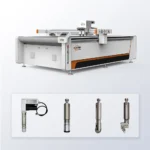
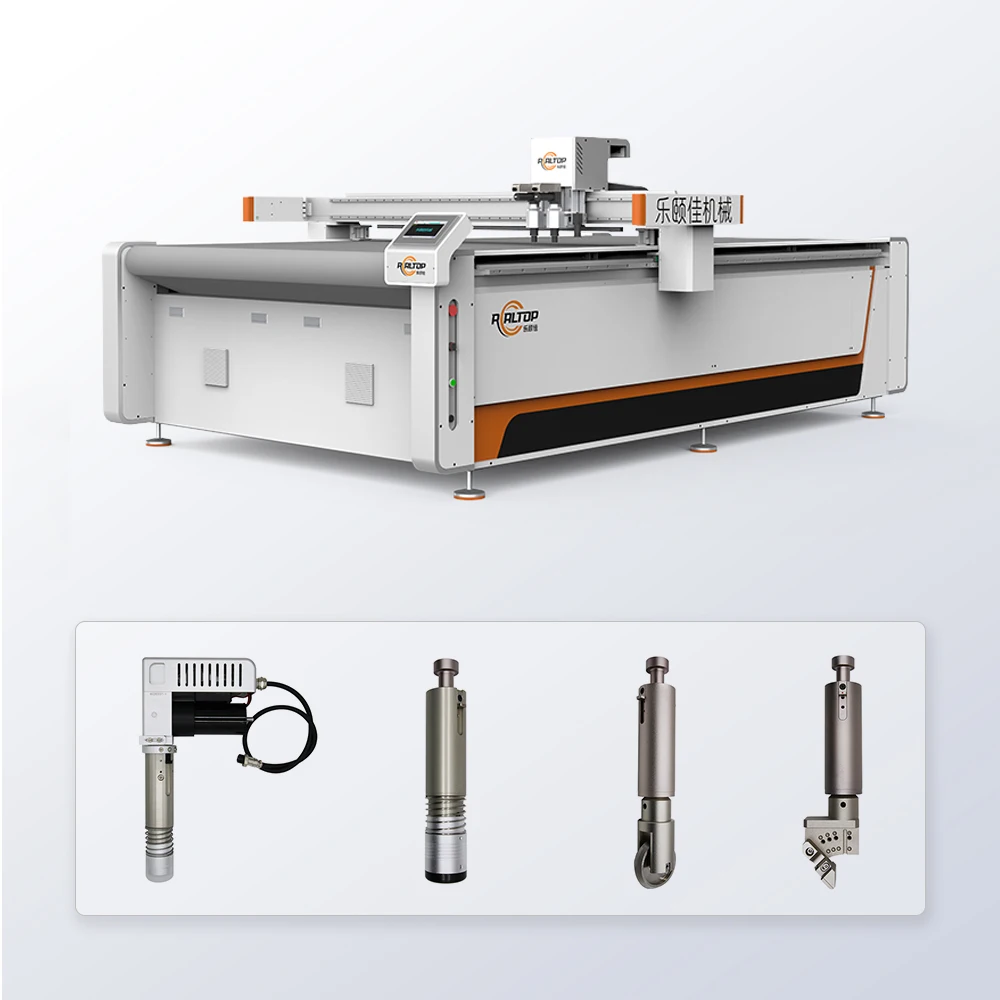
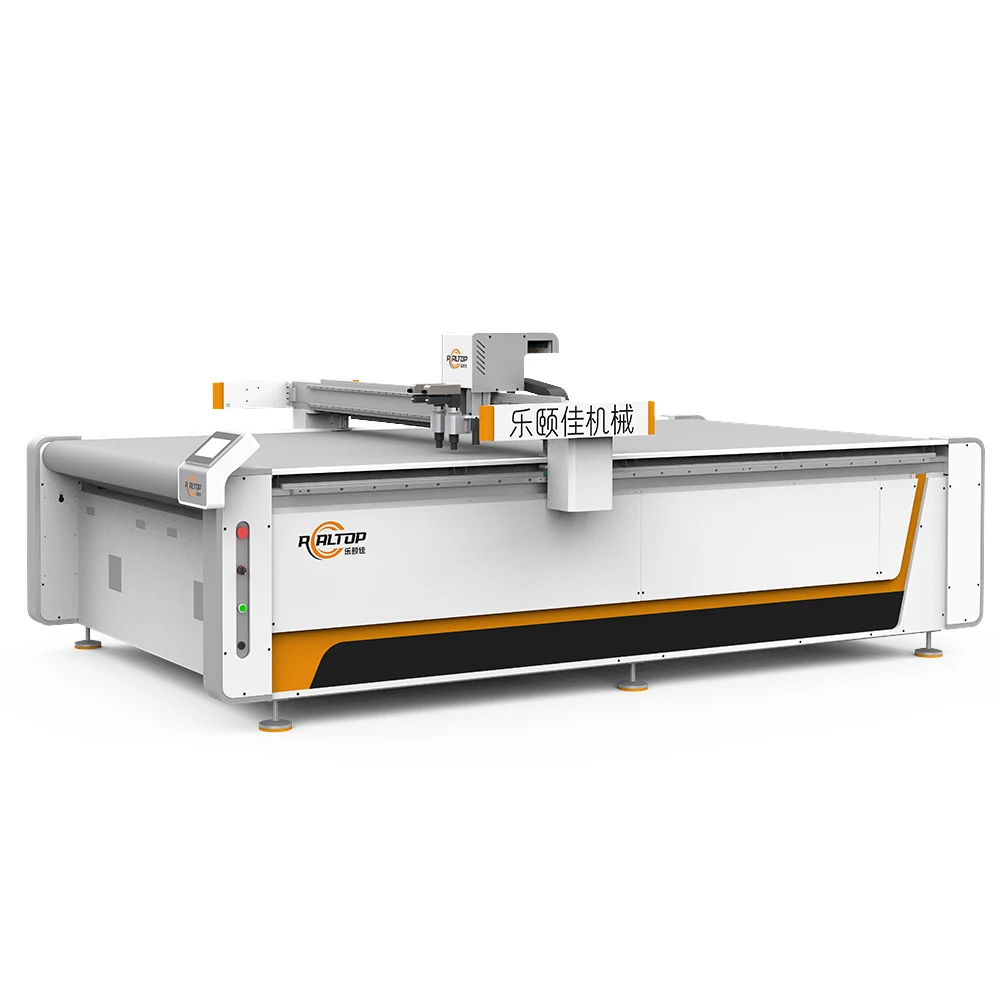
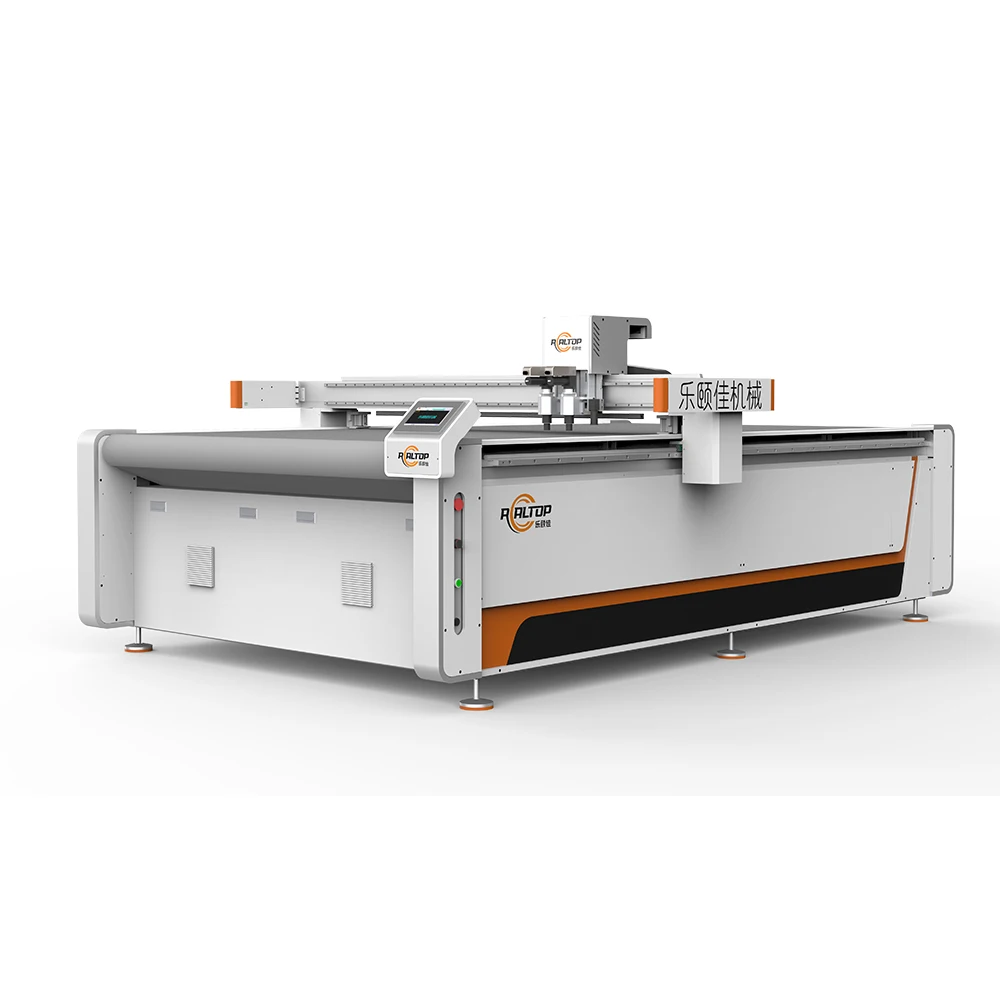
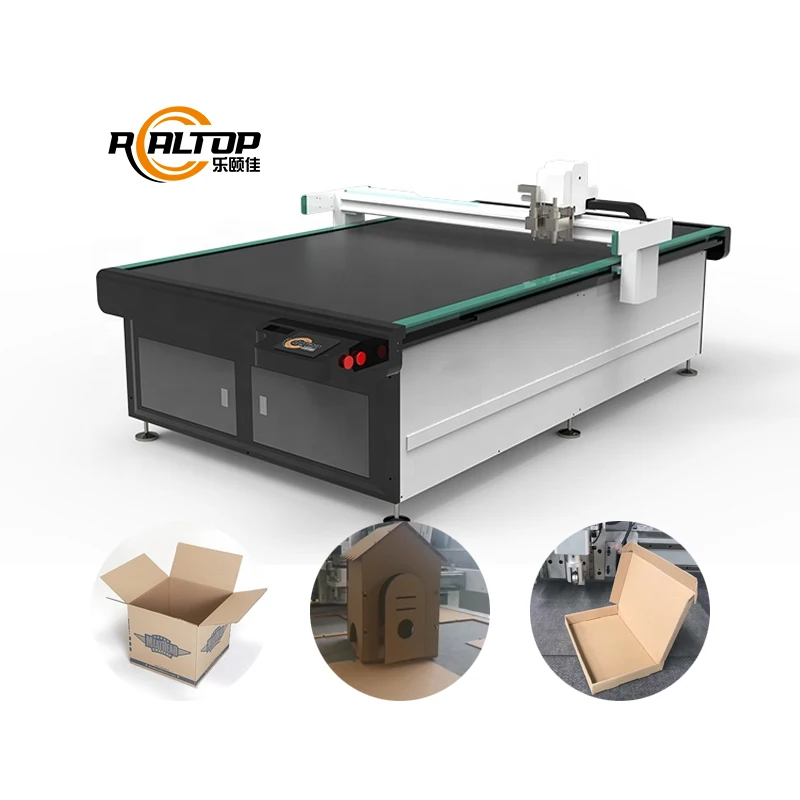
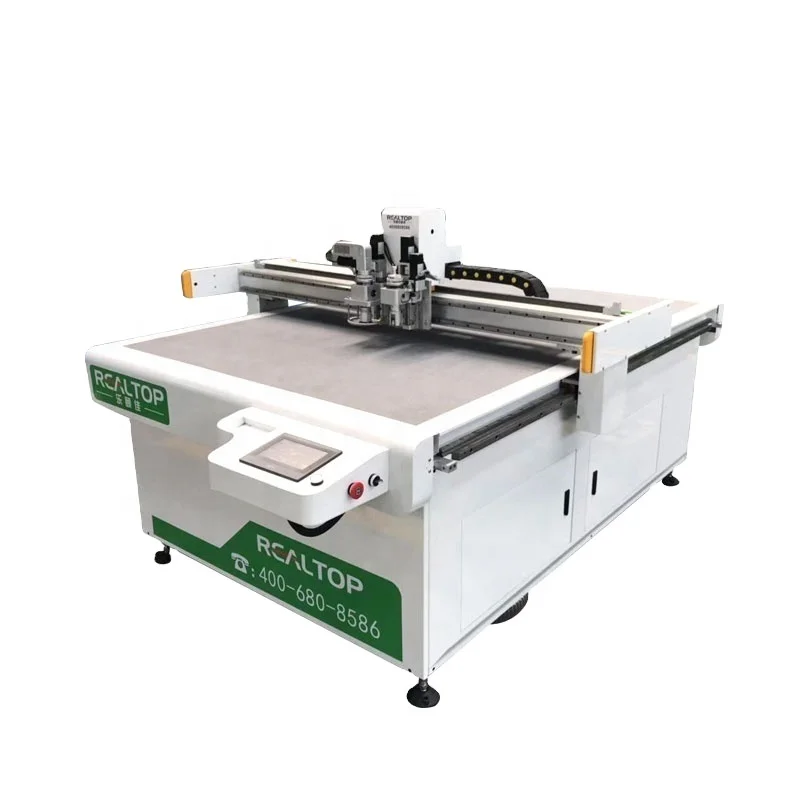
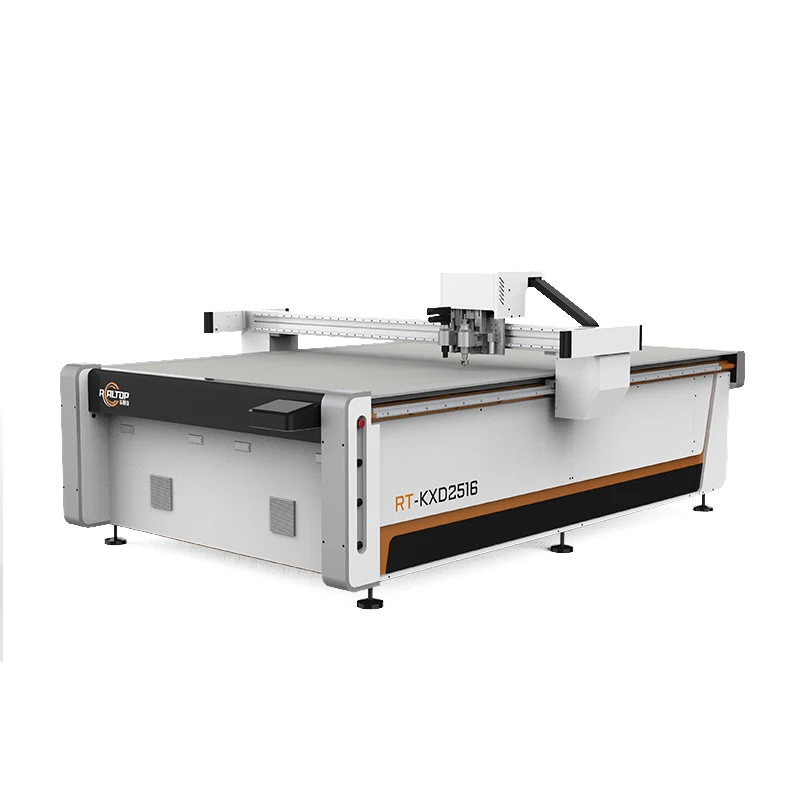
In-house cutting technology design — REALTOP engineers both the oscillating knife mechanics and the flatbed frame for the 1625(std.), ensuring the motion system and tooling match the density and thickness of your specific board stock.
Technical Specifications
| Parameter | Value |
|---|---|
| Model | 1625(std.) |
| Product Type | CNC Oscillating Knife Cutting Machine |
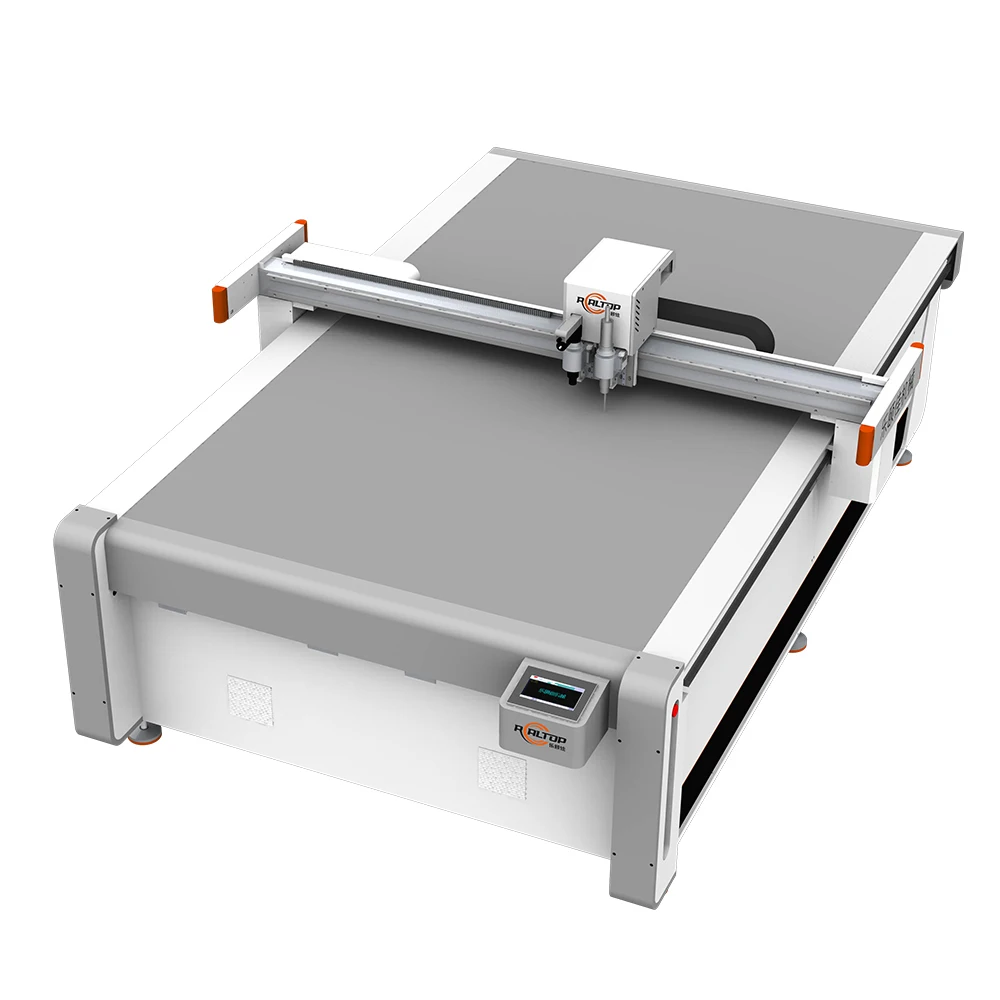
| Working Area | 1600×2500mm |
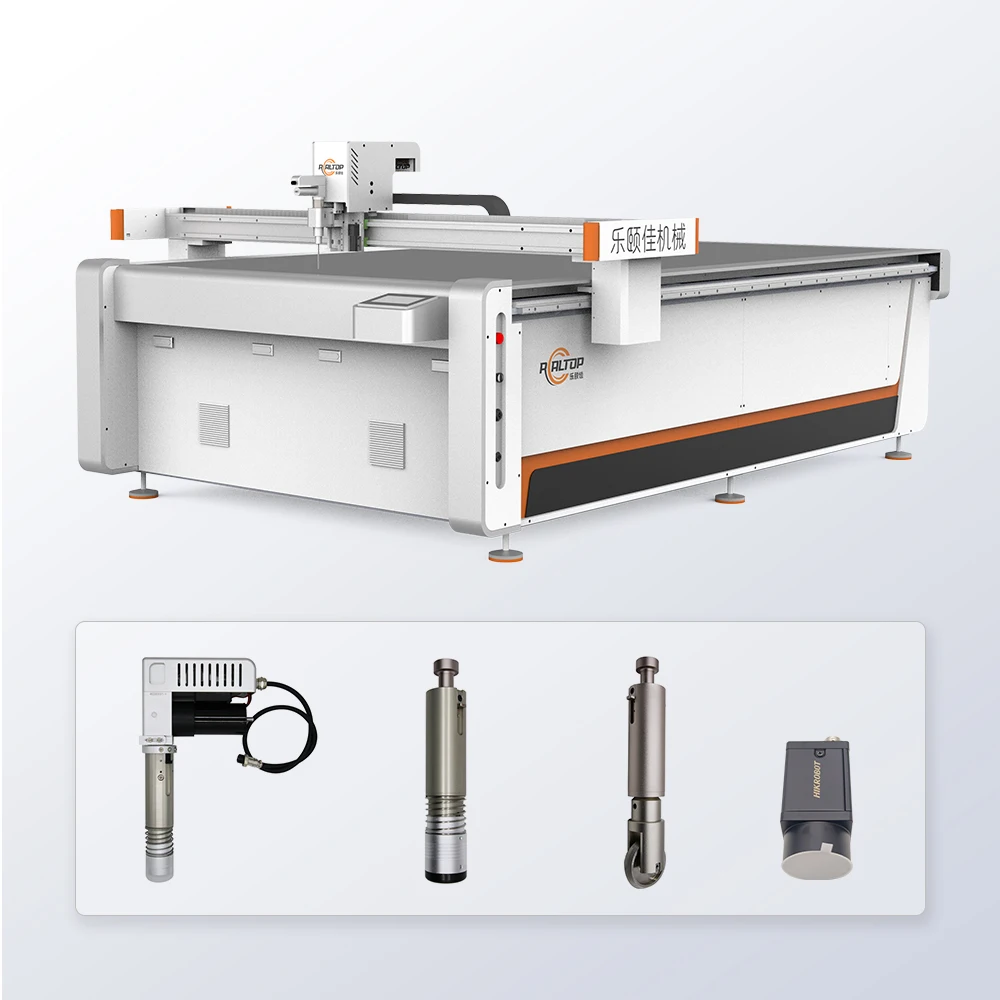
| Tool Head Options | Oscillating knife, Driven rotary knife, Creasing wheel, Kiss cutting tool, Pneumatic knife, Milling tool, V groove knife |
| Cutting Speed | 0-1500 mm/s |
| Cutting Thickness | ≤ 40mm (basis not stated in source — confirm block format / material / thickness) |
| Positioning Accuracy | ±0.1 mm |
| Vacuum Pump | 9KW |
| Vacuum Table | Aluminum bellows vacuum table |
| Servo Motor Options | Panasonic, Delta, Dorna |
| Voltage Options | 110V, 220V, 380V (frequency to be confirmed per destination) |
| Control System | PLC control panel with dedicated packaging box structure design software |
| File Format Compatibility | PLT, DXF, AI, PDF |
| Language Options | English, Russian, Italian, Chinese (special languages customizable) |
| Safety Features | Infrared sensor device and emergency stop device |
| Overall Dimensions | 3300×2100×1350 mm |
| Compliance | CE (certificate availability to be verified) |
Application Suitability
| Application | Material or Output |
|---|---|
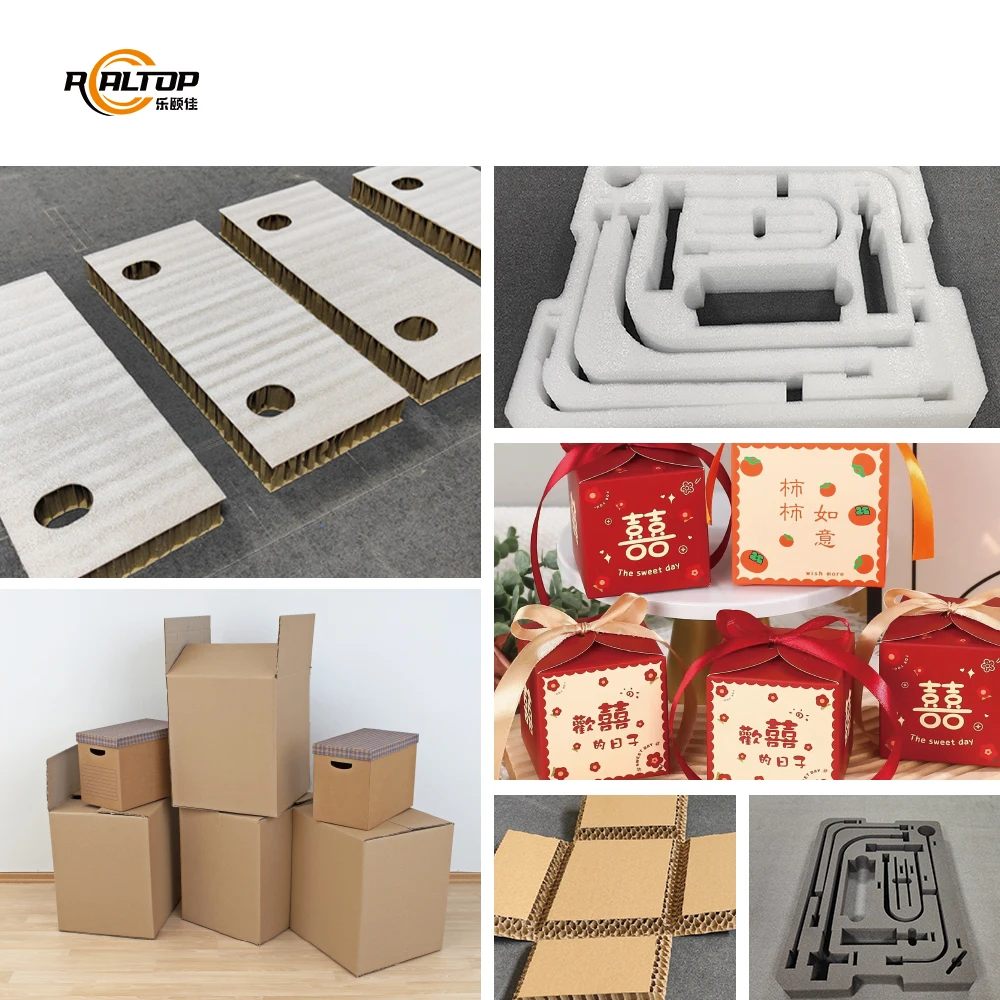
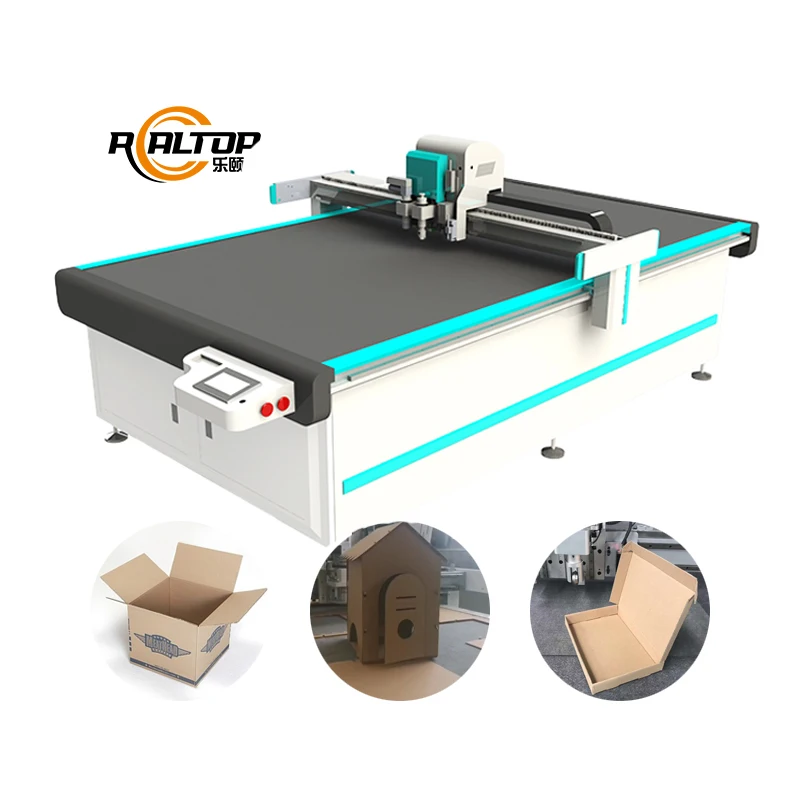
| Packaging prototyping and sample making | Corrugated cardboard (E-flute, B-flute, BC-flute), greyboard, cardstock |
| Protective insert fabrication | EVA, EPE, PU foam sheets for custom packaging cushions |
| Signage and display board processing | KT board, PVC foam board, thin acrylic |
| Gasket and seal cutting | Rubber, PTFE, non-woven fabric, composite sheets |
| Leather and synthetic cutting | Natural leather, PU/PVC synthetic leather for accessories |
| Adhesive-backed material processing | Vinyl, sticker stock, composite laminates |
What a "Working Area Only" Specification Costs You in Production
A buyer who specifies a CNC flatbed based solely on sheet size often discovers the machine cannot handle the actual material thickness or density once it arrives on the factory floor.
Cutting capacity must be proven on your real board stock before the order is signed, not assumed from a brochure number.
I have watched packaging shops receive a machine rated for a working area that matched their sheets, only to find the oscillating knife head could not fully penetrate double-wall corrugated at production speed. The vacuum hold-down was specified as a single zone, so small offcuts lifted during the cut and jammed the tool path. These failures are not equipment defects; they are specification gaps. When a CNC oscillating knife cutting machine manufacturer builds the frame and designs the tool head under one roof, the conversation shifts from "will it fit my sheet" to "will it cut my specific flute profile at the volume I need" [NEED_CITE: common CNC cutting machine specification failures in packaging workshops].
How Tool Head Selection Drives Edge Quality on Board and Foam
The 1625(std.) supports an interchangeable tool head system that includes an oscillating knife, creasing wheel, kiss cutting tool, V groove knife, milling tool, and pneumatic knife. Each tool addresses a different material behavior. An oscillating knife slices through corrugated flutes without crushing the core structure, while a creasing wheel scores fold lines on cardstock so the box blanks fold cleanly without cracking the outer liner. Selecting the wrong tool for a given substrate produces ragged edges, delaminated foam cores, or incomplete kiss cuts that leave the backing paper scored. A CNC oscillating knife cutting machine manufacturer that stocks all seven tool types can configure the machine to the buyer’s actual material mix rather than forcing a single blade to handle every job.
Vacuum Zoning and What It Means for Small-Part Cutting
The aluminum bellows vacuum table paired with a 9KW pump delivers full-surface hold-down, but the zoning configuration determines whether small packaging inserts stay flat during cutting. A single-zone table applies suction uniformly, which works for large signage boards but fails on nested small parts where the airflow bypasses the material through adjacent cut lines. When zones are matched to the nesting layout, the vacuum grips only the area under the material, preventing lift and shift that ruin dimensional accuracy. This is a configuration decision that must be made at order stage based on the buyer’s typical part geometry and nesting pattern [NEED_CITE: vacuum table zoning principles for flatbed digital cutting].
Reading the Specification Sheet Against Real Production Needs
The 1600×2500mm working area accommodates standard packaging sheet sizes, but the ±0.1mm positioning accuracy is what determines whether crease lines align with cut edges on complex box structures. Servo motor selection — available in Panasonic, Delta, or Dorna options — affects how the machine maintains that tolerance over continuous production runs. The cutting speed range of 0-1500 mm/s is a mechanical envelope; actual throughput depends on material hardness, cut path complexity, and whether the tool must pause for creasing passes. The PLC control panel runs dedicated packaging box structure design software, and file format compatibility with PLT, DXF, AI, and PDF must be verified against the buyer’s existing design workflow before the machine ships.
The Hidden Cost of Unconfirmed Voltage and Software Setup
Shipping a machine with the wrong voltage rating or control language is a delay that surfaces only at commissioning. A 380V unit arriving at a workshop wired for 220V single-phase requires a transformer or a complete electrical rework. Control software locked to a language the operator cannot read slows every setup change and nesting adjustment. These are not warranty claims; they are specification omissions that push back production start by weeks. Every electrical schematic and language preference must be locked into the order documentation before the frame leaves the factory [NEED_CITE: industrial equipment voltage and frequency standards by export market].
Why Buyers Source This CNC Oscillating Knife Cutting Machine Manufacturer
The 1625(std.) is designed and built in-house, meaning the frame welding, motion system assembly, and tool head engineering happen under one production chain rather than being assembled from third-party sub-systems. The tool head and table configuration is specified per material, so a buyer cutting EVA foam for protective inserts receives a different setup than one processing BC-flute corrugated for carton samples. Sample cutting on the buyer’s own sheet material is completed before order confirmation, producing a documented report with cutting parameters and edge quality evidence. Voltage, plug type, and control language are confirmed against the destination market’s electrical standards. Software compatibility is tested with the buyer’s actual DXF or AI files to ensure the nesting workflow transfers without manual re-drawing.
Documentation & Verification
- Factory test record with cutting parameters matched to your board thickness and flute profile
- Electrical schematic confirming voltage, phase, and plug type for your destination market
- Tool head and vacuum zoning configuration list specific to your material stack
- Software license and file format compatibility note verified against your design files
- Sample cutting report with recorded video on your own KT board or corrugated stock
- Operation and maintenance manual in your selected control language
Installation, Commissioning & Support
- Floor space allocation based on 3300×2100×1350mm overall dimensions plus material feed clearance
- Dedicated electrical circuit matched to confirmed 110V, 220V, or 380V supply and 9KW vacuum pump draw
- Assembly state confirmed at shipment with on-site reassembly scope documented before dispatch
- First-run commissioning with servo tuning and vacuum zone calibration on your actual material
- Operator training on tool head changeover and packaging software nesting workflow
- Spare parts list covering oscillating knife blades, creasing wheels, and vacuum seals
What We Need to Configure Your Machine
To build a specification that matches your production floor, share the material types you cut most frequently, the thickness range for each, and your typical daily sheet volume. Confirm your workshop voltage and phase supply, preferred control language, and whether your design team works in DXF, AI, or another format. If you have existing nesting software or an upstream design workflow, let us know so compatibility can be verified before build.
Frequently Asked Questions
Q: How should I prepare material samples for cutting tests before ordering?
A: Send sheets of each material you plan to cut, including the exact thickness and flute profile for corrugated boards. We run cutting tests on the 1625(std.) using multiple tool head configurations and record the edge quality, cutting depth, and speed parameters. The sample cutting report documents which tool and vacuum zone setup produced the cleanest result for your specific stock.
Q: Which tool head do I need for a mix of corrugated board and foam inserts?
A: Corrugated board typically requires an oscillating knife for through-cutting and a creasing wheel for fold lines, while EVA or EPE foam cuts cleanly with an oscillating knife at a different frequency setting. The 1625(std.) supports multiple interchangeable tools on one head, so both operations run in a single setup without manual tool changes between jobs.
Q: How is voltage and control language confirmed before shipment?
A: We document your workshop voltage, phase, plug type, and preferred control language in the order specification. The electrical schematic is reviewed with you before production begins, and the PLC control panel is loaded with the confirmed language. Any frequency mismatch between your local grid and the machine’s rated supply is addressed at this stage.
Q: Can the software import my existing DXF or AI packaging design files?
A: The dedicated packaging box structure design software supports PLT, DXF, AI, and PDF file formats. Before order confirmation, we test your actual design files on the machine to confirm that layers, cut lines, and crease paths import correctly and that the nesting workflow matches your production sequence without manual re-drawing.
Q: What does a factory visit for sample cutting involve?
A: You bring or ship your material samples, and we configure the 1625(std.) with the tool heads and vacuum zoning appropriate for your stock. The cutting trial runs at production speed, and you review the edge quality, dimensional accuracy, and cycle time. The results are documented in a sample cutting report that becomes part of your order file.
You may also like

商品评价
Clear filtersThere are no reviews yet.