



-
 Courier delivery
-
 DHL Courier delivery
-
 Warranty 1 year
-
 Free 30-Day returns

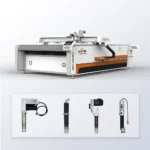
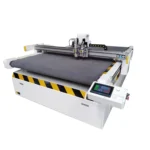
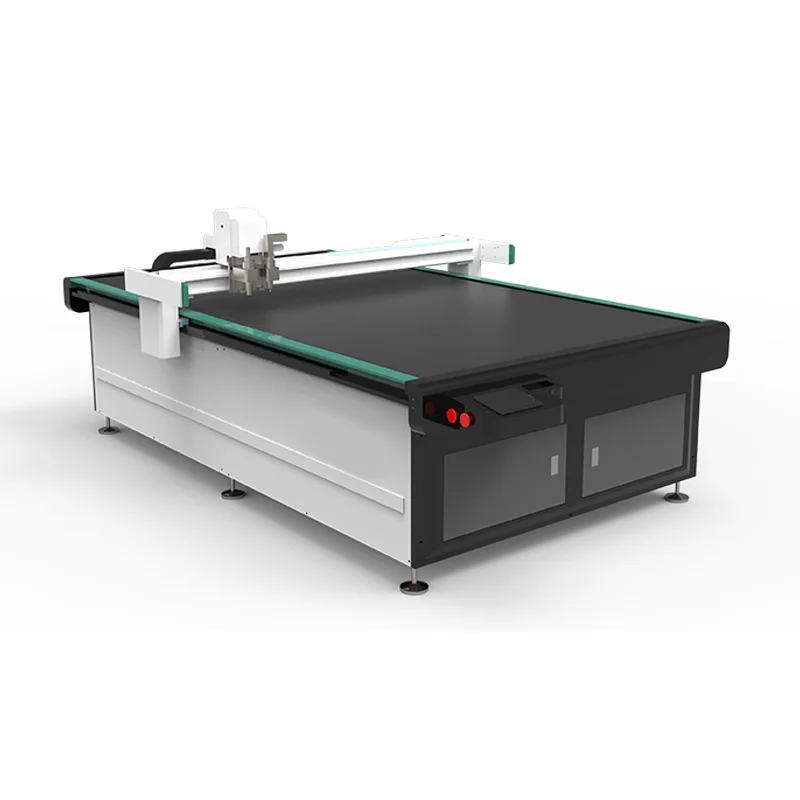
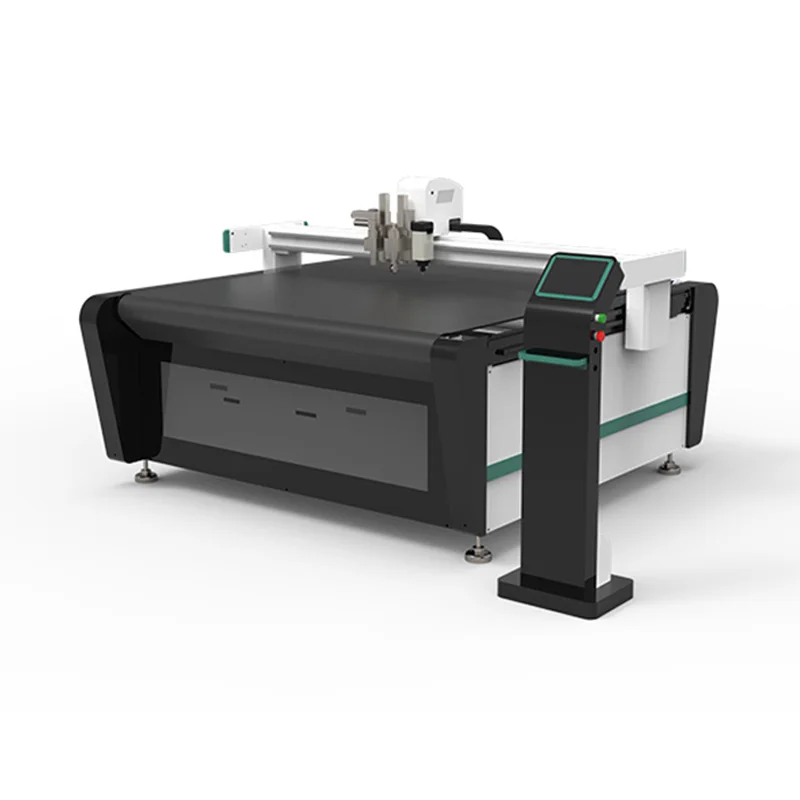
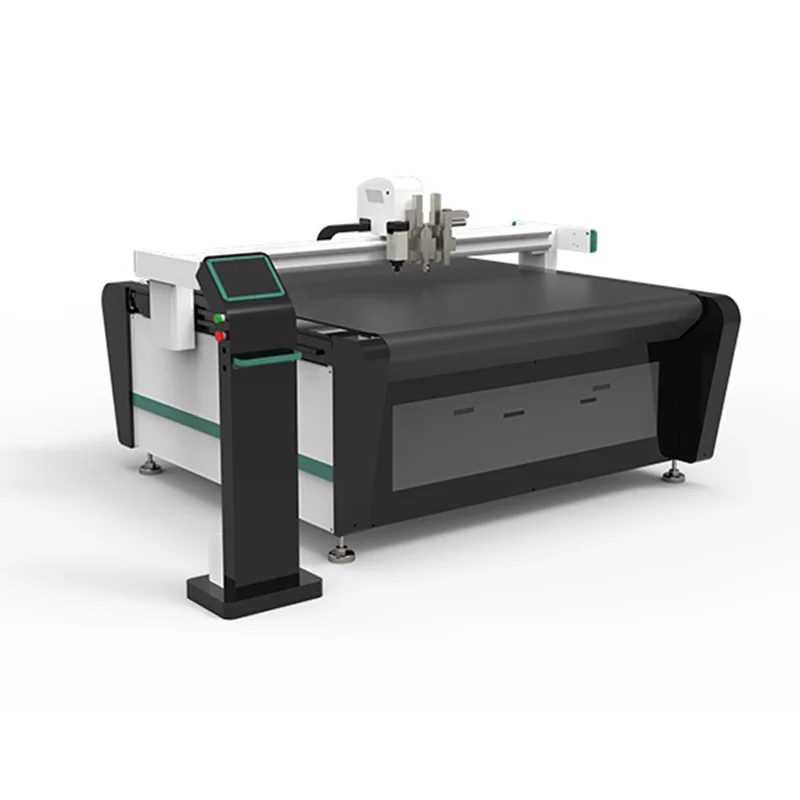
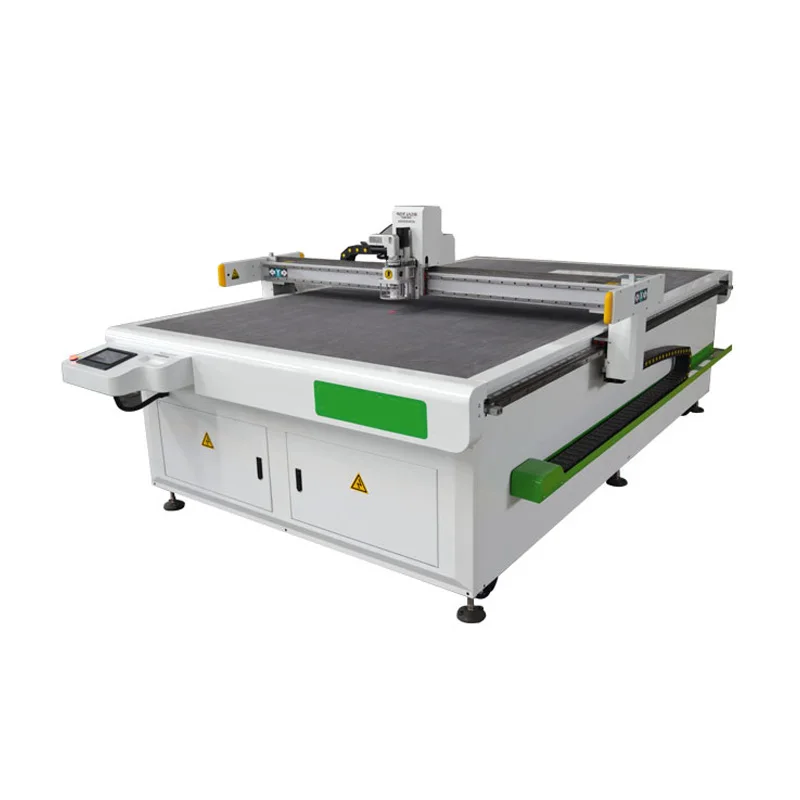
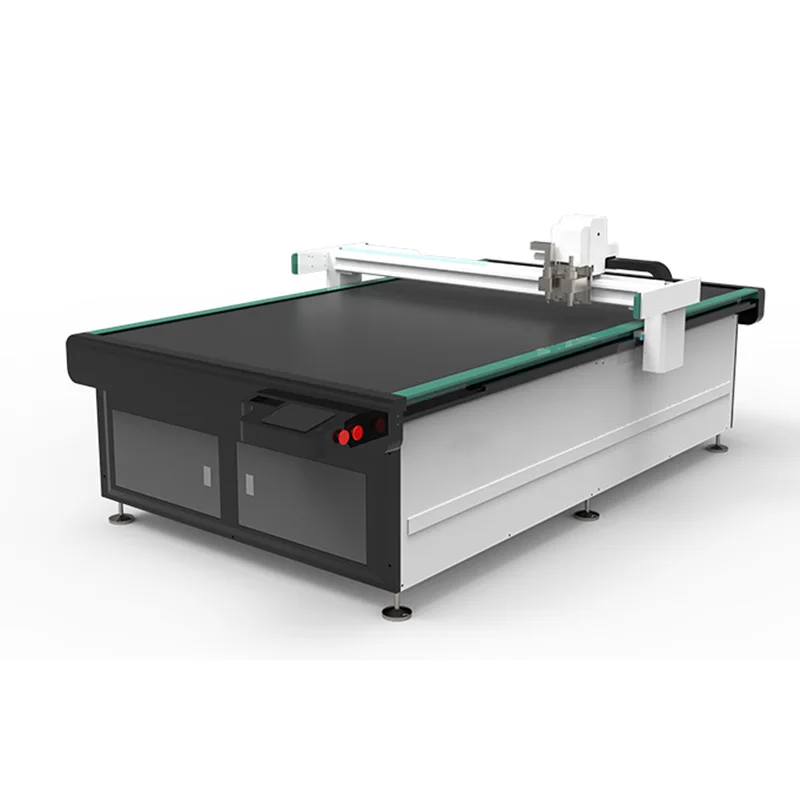
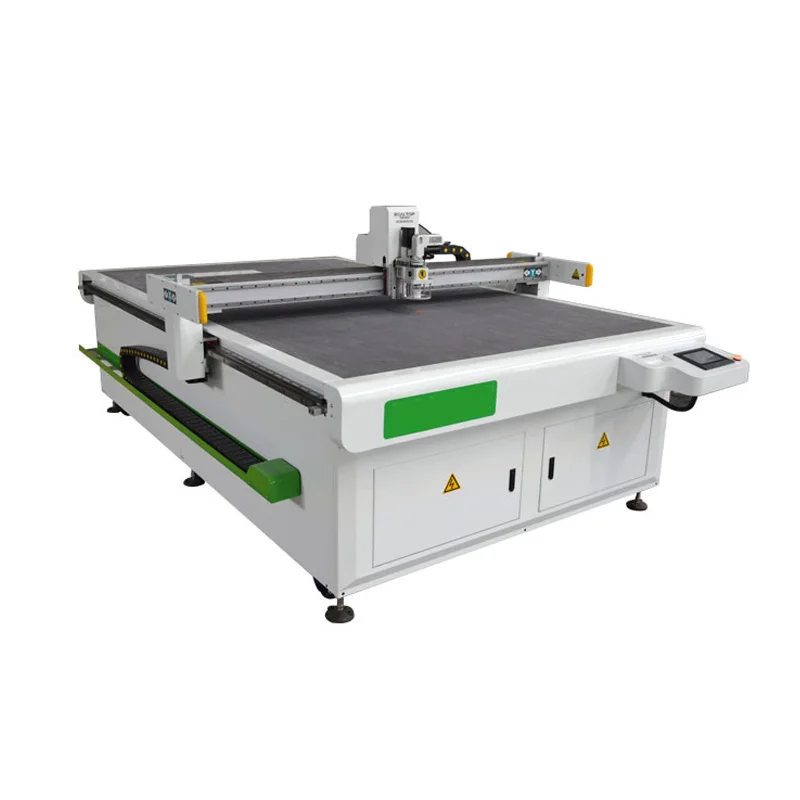
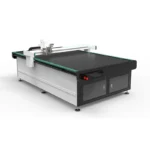
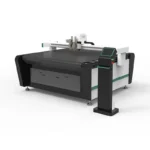
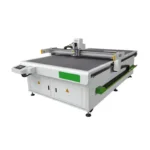
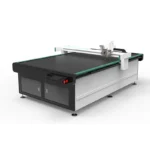
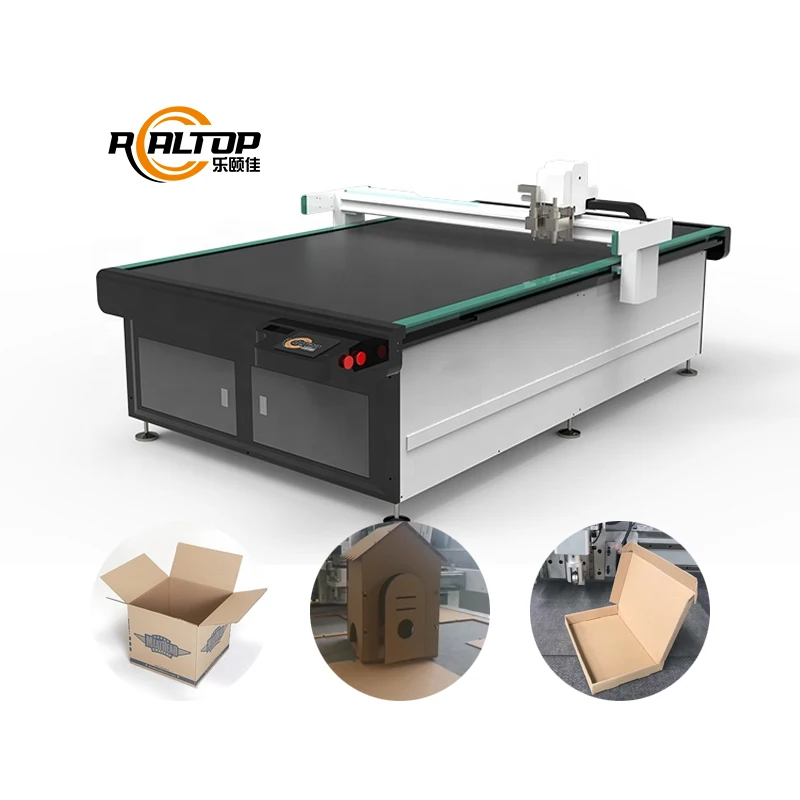
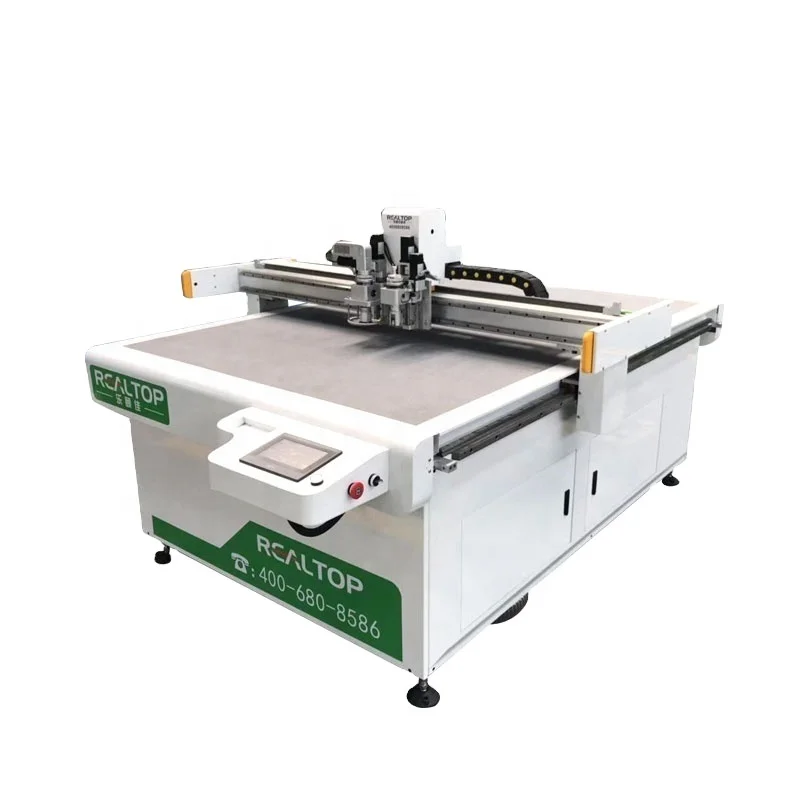
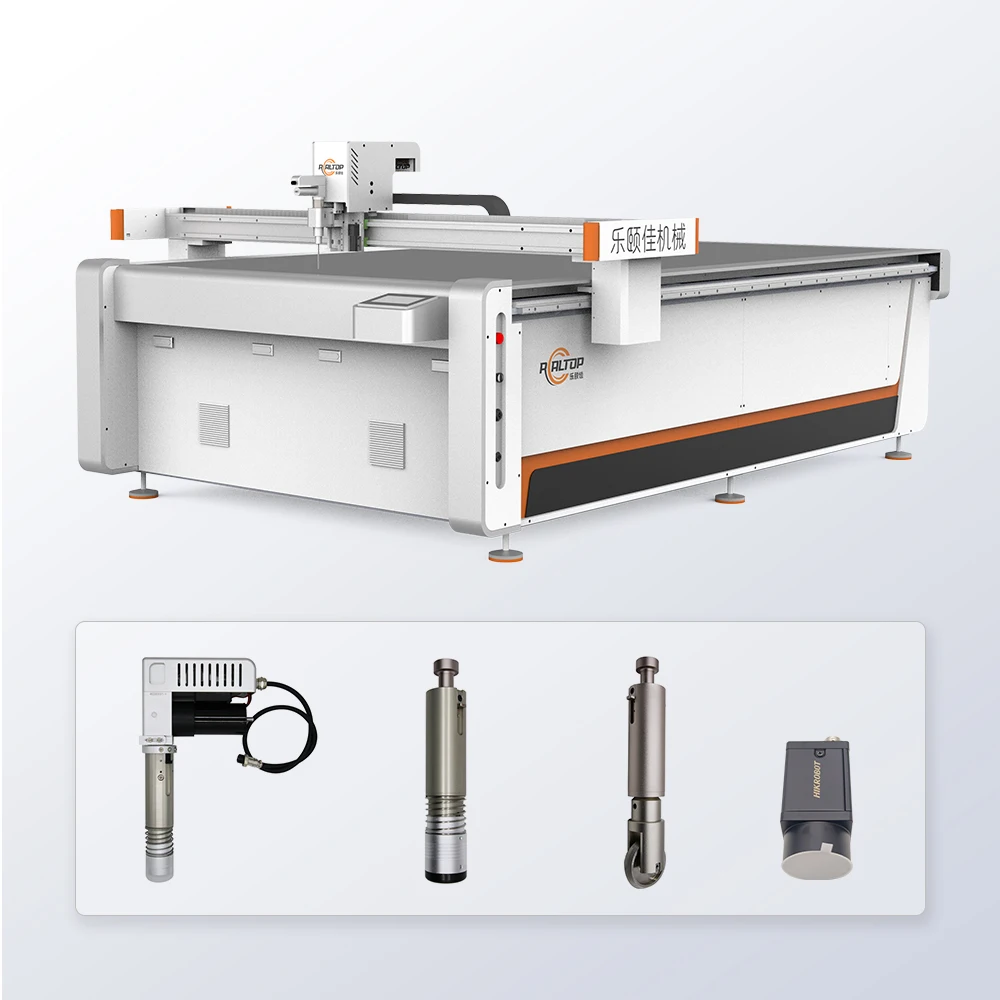
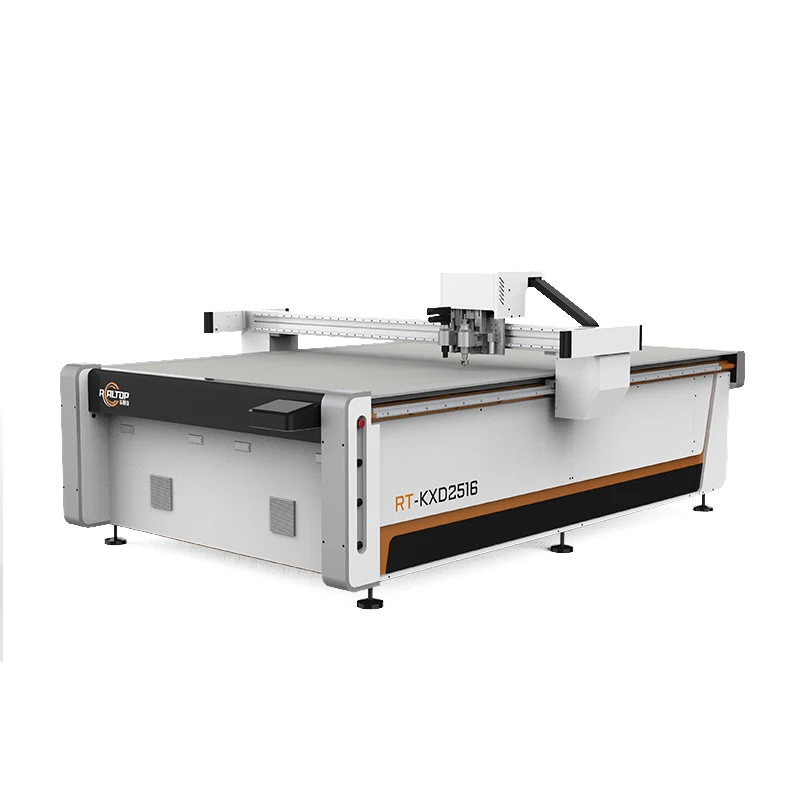
Core Factory Production — Realtop machines are designed and manufactured in-house from frame welding to final assembly, ensuring every RT-D2516/RT-S2516 CNC cloth cutting machine leaving Jinan meets the build standards our Southeast Asian distributors depend on.
Technical Specifications
| Parameter | Value |
|---|---|
| Product Type | CNC Oscillating Knife Cloth Cutting Machine |
| Model | RT-D2516/RT-S2516 |
| Working Area | 1600 × 2500 mm |
| Machine Dimensions | 3450 × 2300 × 1250 mm |
| Rated Power | 11 kW |
| Vacuum Pump | 7.5 kW |
| Translational Velocity | 800 – 1200 mm/s |
| Cutting Speed | 200 – 800 mm/s (basis not stated in source — confirm material type and thickness) |
| Repeatability | ≤ 0.1 mm |
| Table Type | Flat working table with vacuum and conveyor belt |
| Tool Head | Swiss imported knife with vibration full-cut, half-cut and cursor location |
| Servo Motor | Japanese Yaskawa digital servo |
| Linear Rail | Taiwan Hiwin |
| Conveyor Belt | Germany imported |
| Transmission | Digital servo, linear guide, synchronous belt, imported ball screw |
| Instruction Format | HP-GL compatible |
| Voltage | 380V ± 10% |
| Safety Device | Infrared sensors |
| Assembly State | Fully assembled |
Application Suitability
| Application | Material or Output |
|---|---|
| Garment and apparel fabric cutting | Multi-layer textiles, woven and knitted fabrics |
| Leather goods production | Natural leather, PU and composite leather hides |
| Automotive interior soft trim | Sponge composite leather, coated automotive textiles |
| Composite foam and sponge cutting | Flexible foam sheets, laminated sponge materials |
| PVC and soft signage | PVC sheets, soft glass, silicone and rubber gaskets |
Why the Material Test Matters More Than the Brochure Speed
Cutting speed figures mean nothing if they were recorded on a material you will never run in production.
I have watched fabric cutting demonstrations look flawless on standard polyester, only to fall apart when the customer loaded their actual coated automotive leather onto the table. The tool geometry, oscillation frequency and vacuum hold-down that work for a lightweight textile can produce ragged edges or crushed foam on a denser composite. A CNC cloth cutting machine manufacturer who skips the material-specific test is asking the buyer to discover the mismatch after the container arrives [NEED_CITE: industrial fabric cutting edge quality standards for coated textiles].
Frame and Motion Build Quality
The working envelope of 1600 × 2500 mm demands a frame that resists deflection under continuous vibration loading. Realtop welds and stress-relieves the RT-D2516/RT-S2516 bed frame in-house before any motion components are mounted. Taiwan Hiwin linear rails paired with imported ball screws deliver the ≤ 0.1 mm repeatability that pattern-cutting operations in garment workshops require, especially when nesting software places pieces with tight clearance across the full table width. Every CNC cloth cutting machine manufacturer claims precision; the difference is whether the factory controls the frame build or bolts together sourced sub-assemblies.
In-House Design and Assembly Accountability
Having the design team and the production floor under one roof means engineering changes are validated on the factory floor before they reach the shipping crate. The Yaskawa digital servo integration, the Swiss knife head mounting geometry and the 7.5 kW vacuum zoning layout are all specified by the same engineers who sign off the factory test record. For distributors evaluating a CNC cloth cutting machine manufacturer, this matters because it eliminates the blame-shifting that happens when integrators source components from separate vendors and discover integration issues only after installation [NEED_CITE: OEM quality accountability in CNC cutting equipment manufacturing].
Component Selection and What It Means for Daily Production
The Japanese Yaskawa servo motors provide closed-loop position feedback that prevents cumulative drift during long cutting runs, a common problem in garment shops cutting hundreds of nested pieces per shift. The German-imported conveyor belt resists stretching and edge fraying that would otherwise degrade vacuum seal on porous fabrics. The Swiss oscillating knife head combines full-cut, half-cut and cursor location in a single tool station, eliminating the tool-change downtime that separate heads would impose. The HP-GL compatible instruction system means existing pattern files from common nesting software load without conversion, preserving the operator’s established workflow rather than forcing adoption of unfamiliar software.
The Hidden Cost of Underspecified Vacuum Zoning
Buyers often focus on working area size and overlook whether the vacuum table can actually hold small garment pieces flat during cutting. Insufficient zoning means peripheral zones bleed air when the center holds a small pattern, letting fabric lift at the knife edge and producing dimensional errors. On the RT-D2516/RT-S2516, the 7.5 kW vacuum pump paired with the flat working table is configured to maintain hold-down across the cutting zone, but the zoning layout must be matched to the buyer’s typical piece size before shipment. Discovering this mismatch on your production floor means retrofitting vacuum zones or living with scrap rates that erode margins [NEED_CITE: vacuum table zoning requirements for small-part CNC fabric cutting].
Why Procurement Decisions Land Here
Realtop covers both oscillating knife and laser cutting technologies under one design team, so the RT-D2516/RT-S2516 is specified because knife cutting genuinely fits the buyer’s material rather than being the only option the factory offers. Every tool head and table configuration is documented against the buyer’s material sample before the order is finalized. Voltage, control language and electrical schematics are confirmed to match the destination facility, preventing the arrival-day surprises that delay production launches. Sample cutting on the buyer’s own roll or hide generates a cutting report that becomes part of the shipment documentation. The factory test record includes dimensional accuracy measurement on the actual working envelope, giving distributors verifiable build quality before the machine is crated.
Documentation & Verification
- Electrical schematic and 380V ± 10% confirmation matched to your facility supply
- Sample cutting report on your fabric or leather roll confirming edge quality and depth
- Tool head and vacuum zoning configuration list specified per your material type
- Factory test record with repeatability measurement across the 1600 × 2500 mm envelope
- HP-GL format compatibility note confirming your existing nesting files load correctly
Installation, Commissioning & Support
- Flat concrete floor required to support 3450 × 2300 mm machine footprint and vibration loads
- Dedicated 380V ± 10% circuit with capacity for 11 kW rated power plus 7.5 kW vacuum pump
- Machine ships fully assembled; position, level and anchor before first power-up
- Initial commissioning includes servo tuning and vacuum zone calibration on your material
- Operator training covers Swiss knife head changeover, HP-GL file loading and nesting workflow
- Spare parts list covers knife blades, conveyor belt segments and vacuum seals
What to Share When Requesting a Quotation
Send your material type, typical thickness range and maximum sheet or roll width so the tool head and vacuum configuration can be matched before pricing. Specify your local voltage and frequency standard along with preferred control panel language to avoid post-shipment modifications. If you have existing HP-GL pattern files or a nesting software in use, share a sample so compatibility is confirmed before the machine enters production.
Frequently Asked Questions
Q: How is the cutting configuration matched to my specific fabric type and layer thickness?
A: We run sample cuts on your actual material before order confirmation. The knife geometry, oscillation frequency, vacuum zoning and cutting speed are all adjusted based on those results and documented in the sample cutting report shipped with the machine.
Q: What voltage and control language options are available for my market?
A: The standard configuration is 380V ± 10%, but the electrical schematic is confirmed against your facility supply before production. Control panel language is set during assembly to match your operator requirements, avoiding the need for field reprogramming.
Q: Can the machine handle my existing HP-GL or DXF pattern files?
A: The HP-GL compatible instruction system loads files directly from common nesting software. We test your sample files during the factory verification stage and document compatibility in the software licence and file format note included with the shipment.
Q: How is build quality and component sourcing verified at the factory level?
A: Every RT-D2516/RT-S2516 undergoes a factory test that includes dimensional accuracy measurement across the full working envelope. Component sources — Yaskawa servo, Hiwin rail, Swiss knife head, German conveyor belt — are listed in the specification sheet for buyer verification.
Q: Can the working area or tool configuration be customized for my production volume?
A: The in-house design team can adjust table dimensions, vacuum zoning layout and tool head selection based on your material profile and daily output requirements. OEM configuration changes are documented in the tool head and table configuration list before production begins.
You may also like

商品评价
Clear filtersThere are no reviews yet.