

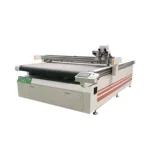
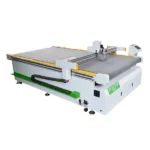
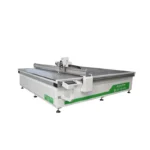

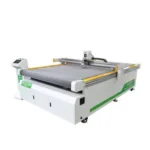

-
 Courier delivery
-
 DHL Courier delivery
-
 Warranty 1 year
-
 Free 30-Day returns

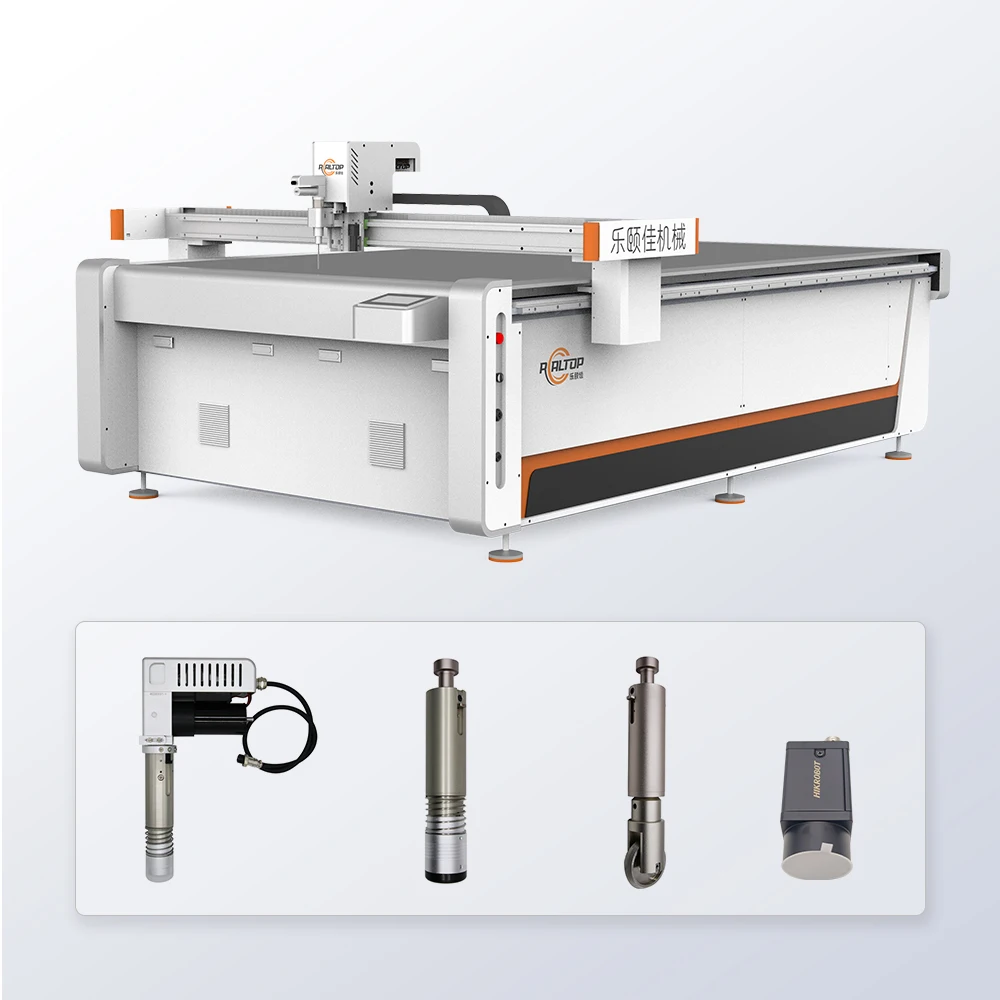
Integrated knife and laser design — REALTOP builds both cutting platforms in-house, letting you match the oscillating knife method to your exact composite or foam material rather than forcing a single-technology compromise.
Technical Specifications
| Parameter | Value |
|---|---|
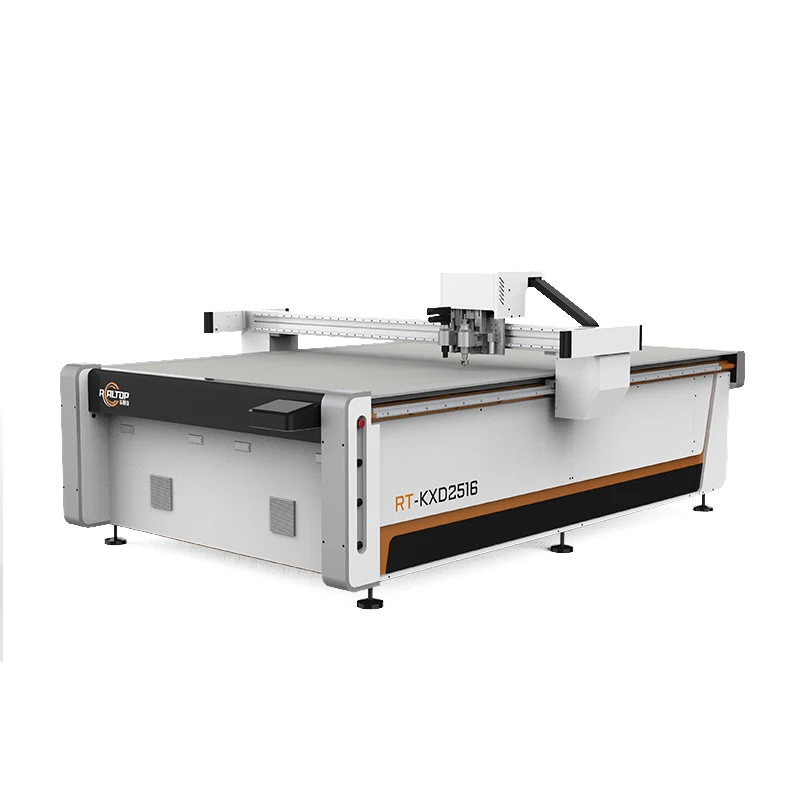
| Model | RT-D2516/RT-S2516 |
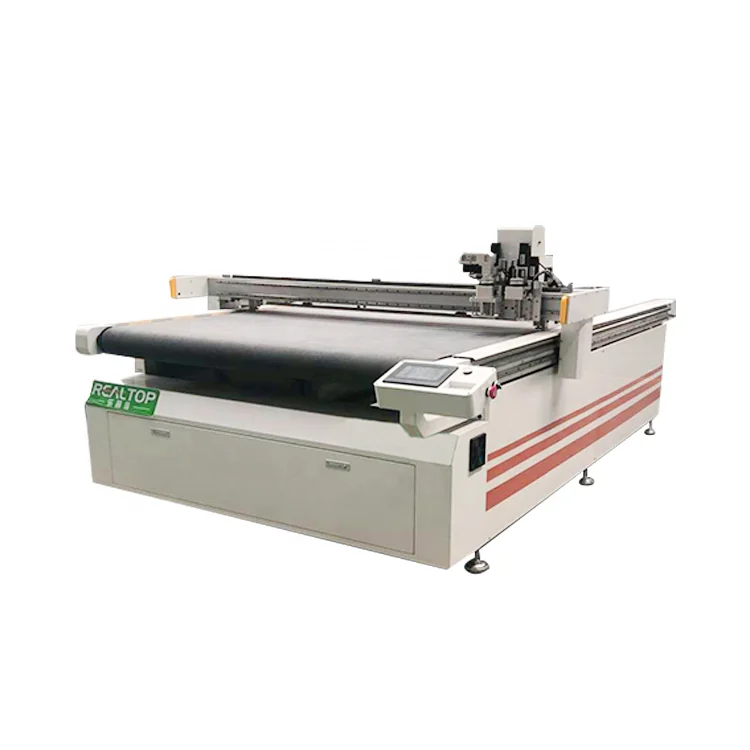
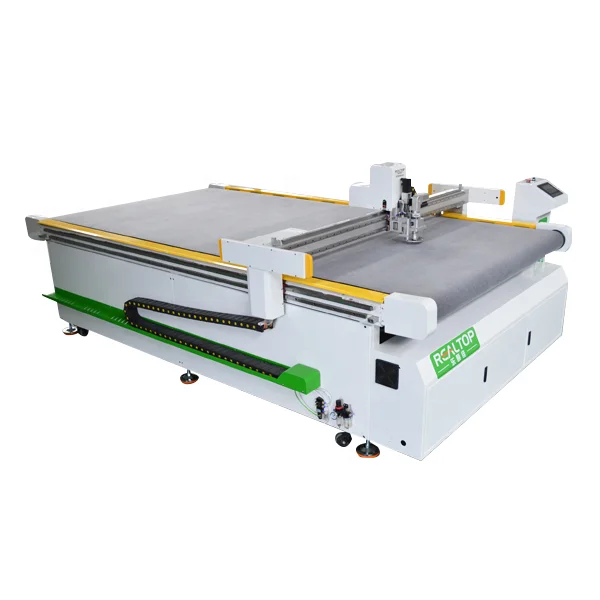
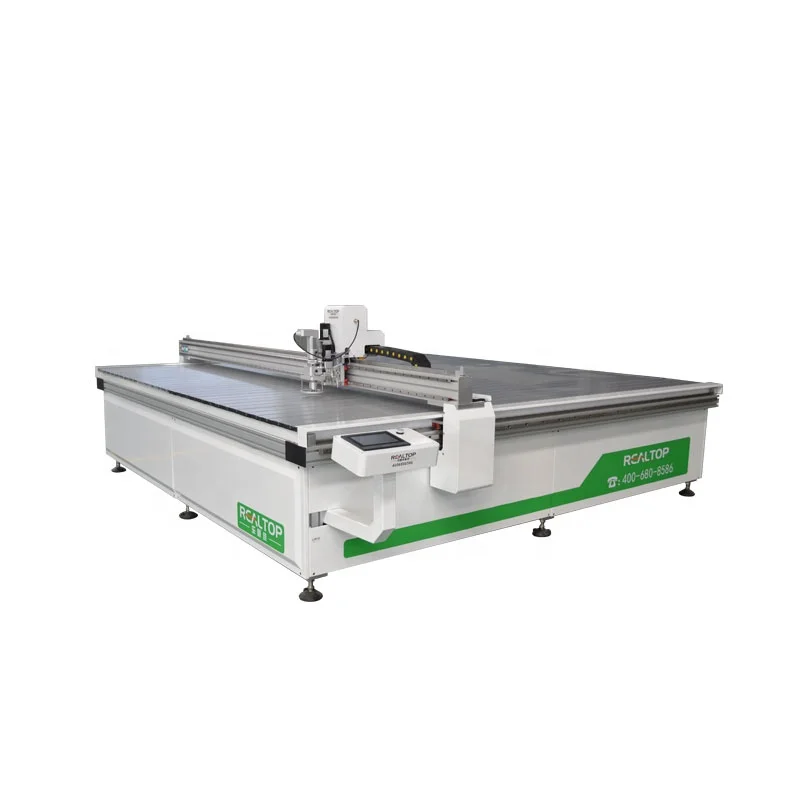
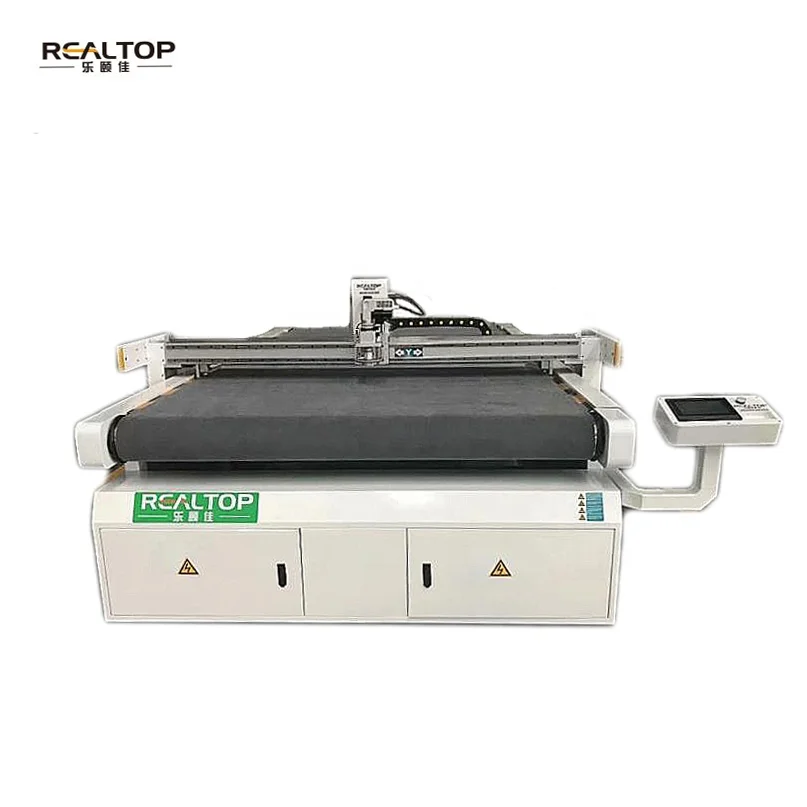
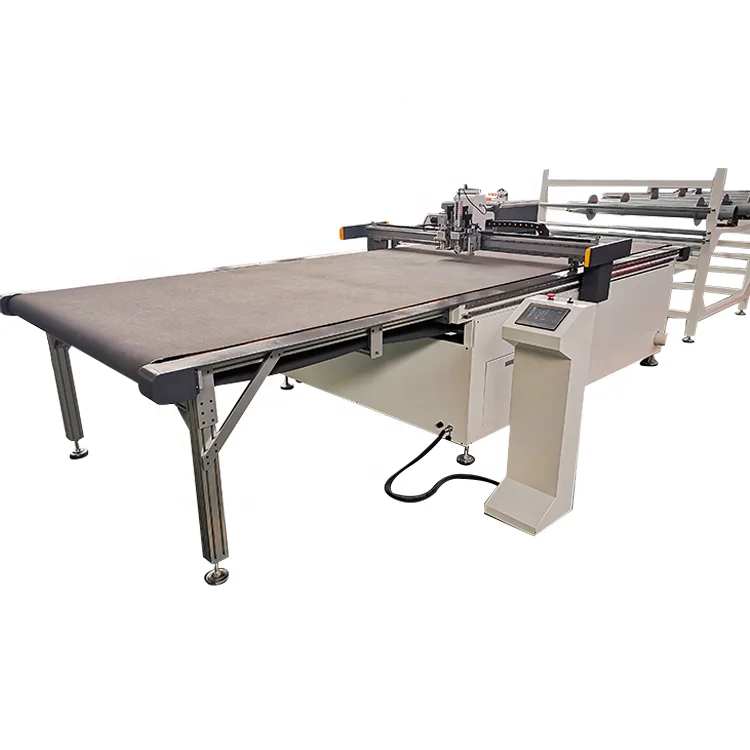
| Product Type | CNC Oscillating Knife Cutting Machine |
| Working Area | 1600×2500 mm |
| Overall Dimensions (L×W×H) | 3450×2300×1250 mm |
| Rated Power | 9 kW |
| Vacuum Pump | 7.5 kW |
| Table Type | Flat working table with vacuum hold-down, auto-feeding conveyor belt (Germany imported) |
| Tool Head | Multifunctional head with Swiss imported oscillating knife — full cut, half cut, cursor location |
| Translational Velocity | 800–1200 mm/s |
| Repeated Accuracy | ≤0.1 mm |
| Transmission System | Japanese Yaskawa digital servo motor, Taiwan Hiwin linear guide, synchronous belt, ball screw |
| Instruction System | HP-GL compatible format |
| Voltage | 380V ±10% (other voltages configurable on request) |
| Safety Device | Infrared sensors |
| Warranty | 12 months for whole machine |
Application Suitability
| Application | Material or Output |
|---|---|
| Composite and foam fabrication | EVA, XPE, PU, sponge, sandwich panels for packaging, sports equipment and industrial inserts |
| Automotive interior and gasket production | Leather, PU, rubber, composite sheets cut to contoured profiles |
| Packaging and carton sample making | Corrugated paper, paper honeycomb, cardboard, folding carton stock |
| Signage and advertising | Foam board, acrylic board, PVC, sticker, vinyl film |
| Garment and footwear manufacturing | Fabric, non-woven textiles, PU leather, garment cloth |
| Sealing and insulation | PTFE, ETFE, rubber, graphite composite gasket material |
Why the Wrong Tool Head Ruins Good Material
A buyer invests in a CNC oscillating knife cutting machine manufacturer based on a clean spec sheet, then watches the machine produce ragged edges on EVA foam or crush the cell structure of PU sponge. The problem is rarely the frame or the servo drives — it is the tool head specification. A multifunctional oscillating head matched to the buyer’s exact material density and thickness eliminates crushed edges and delamination before production starts.
Too many purchase decisions treat the cutting head as an afterthought. A drag knife that scores vinyl perfectly will tear through carbon fiber prepreg. A high-frequency oscillating blade that slices through 20 mm XPE foam cleanly will stall on denser rubber gasket stock. The result is rejected parts, re-cut sheets and a production schedule that slips week after week [NEED_CITE: oscillating knife tooling selection for composite density ranges].
Matching the Oscillating Blade to Composite Density
The Swiss imported knife fitted to the RT-D2516/RT-S2516 oscillates at high frequency to slice through layered and semi-rigid composites without dragging the material across the table. For low-density foam like EVA and sponge, the vibration action prevents the blade from grabbing and tearing the open cell structure. For denser sheets such as rubber gasket material or fiberglass composite, the same head maintains a clean vertical cut face because the oscillation reduces lateral friction on the blade edge. A CNC oscillating knife cutting machine manufacturer should confirm blade geometry and oscillation stroke against the buyer’s sample before the tool head leaves the factory floor.
Vacuum Hold-Down That Actually Holds Small Parts
The 7.5 kW vacuum pump works through zoned channels beneath the flat working table, pulling air through the surface to grip sheet material during cutting. For large-format composite panels, full-table vacuum is straightforward. For nested gasket profiles or small automotive interior pieces, insufficient zoned suction allows the part to lift at the end of a cut path, producing a shifted edge or a ruined contour. Zoning the vacuum table so that only the active cutting region holds suction keeps small parts flat without requiring mechanical clamps that interfere with the tool head travel [NEED_CITE: vacuum table zoning principles for CNC flatbed cutting].
Reading the Specs That Matter on the Shop Floor
The 1600×2500 mm working area accommodates standard composite sheet sizes without repositioning, which matters when cutting full nests of gasket profiles where a mid-sheet shift introduces registration errors. The Japanese Yaskawa servo motors paired with Taiwan Hiwin linear guides deliver ≤0.1 mm repeatability — a figure that translates directly to edge-to-edge consistency when cutting stacked plies of carbon fiber or layered foam-core sandwich panels. The HP-GL compatible instruction system allows nesting software to send cut paths without intermediate format conversion, eliminating a common point of file corruption when importing complex contour geometries. The auto-feeding conveyor belt advances roll stock or sequential sheets onto the cutting zone, reducing the manual handling time between cuts. Translational velocity of 800–1200 mm/s governs head travel between cuts; actual cutting speed depends on material thickness and density, which must be verified on sample stock before quoting throughput figures.
What Happens When Configuration Is Skipped
A flatbed cutting table specified on working area alone will underperform the moment it meets a material the configuration was never built for. A buyer cutting 5 mm rubber gasket sheet on a table set up for corrugated cardboard will burn through blades at an unsustainable rate and produce beveled edges that fail sealing tests. Inadequate vacuum zoning on small contoured automotive interior pieces causes part lift and scrapped nests. A software workflow that cannot import the buyer’s DXF or PLT nesting files forces the operator to redraw every contour manually, adding hours to each production run [NEED_CITE: CNC cutting machine configuration mismatch consequences in composite fabrication].
Why Source This Machine From REALTOP
REALTOP designs and manufactures both knife and laser cutting platforms under one roof, so the RT-D2516/RT-S2516 is specified as an oscillating knife solution because the material demands it — not because the factory only builds one technology. Tool head selection, vacuum zone layout and blade geometry are confirmed against the buyer’s actual sample material before the order enters production. The electrical schematic and voltage confirmation are reviewed against destination market standards, because a machine that cannot be powered on arrival wastes weeks of installation time. Software compatibility is verified by importing the buyer’s own nesting files and confirming the cut path output before shipment. Every unit ships with a factory test record documenting performance on the agreed material specification.
Documentation & Verification
- Machine specification sheet listing confirmed tool head, vacuum zone layout and table configuration
- Electrical schematic with voltage and frequency matched to destination market before dispatch
- Sample cutting report on buyer’s own material covering edge quality, depth and speed
- HP-GL software licence with confirmed file format compatibility note
- Factory test record documenting cutting performance on agreed composite or foam stock
- Operation and maintenance manual with spare parts list matched to installed tooling
Installation, Commissioning & Support
- Level the 3450×2300×1250 mm frame on a flat concrete floor with adequate clearance for sheet loading on all sides
- Connect the 9 kW rated power supply plus dedicated circuit for the 7.5 kW vacuum pump at confirmed voltage and frequency
- Verify auto-feeding conveyor belt tracking and vacuum zone activation during first power-on commissioning
- Run calibration cuts on buyer-supplied material to confirm ≤0.1 mm repeatability and adjust oscillation parameters
- Train operators on Swiss knife blade replacement cycle and infrared sensor safety zone protocols
- Stock recommended spare oscillating blades and vacuum table seals based on daily production volume
Before You Send the Inquiry
Provide your material type, maximum thickness and sheet dimensions so the tool head and vacuum configuration can be specified before quotation. Confirm your local voltage, frequency and plug type along with preferred control language. If you run existing nesting files, share a sample so HP-GL compatibility can be verified against your workflow before the order is placed.
Frequently Asked Questions
Q: How is cutting thickness and speed verified for my specific composite or foam material?
A: We run sample cuts on your actual material at your specified thickness and density before the order is finalized. The sample cutting report documents edge quality, achievable cutting depth and blade wear rate. This ensures the oscillating knife configuration is matched to your production reality rather than generic catalog claims.
Q: Can the vacuum table zoning handle small gasket or contoured parts that lift during cutting?
A: The vacuum table can be zoned to concentrate suction in the active cutting region. For small nested parts or intricate automotive interior contours, zoned vacuum prevents part lift without mechanical clamps that would block the tool head path. Zone layout is confirmed during the sample cutting phase.
Q: What voltage, plug and control language options are confirmed before shipment?
A: Standard voltage is 380V ±10%, with other voltages configurable for destination markets. The electrical schematic, plug type and control language are reviewed and confirmed during the specification stage before production begins. This prevents on-site power incompatibility delays after delivery.
Q: How does the HP-GL compatible system integrate with my existing nesting workflow?
A: The instruction system accepts HP-GL compatible file formats, allowing most mainstream CAD and nesting software to send cut paths directly. We test your actual file imports during the pre-order confirmation stage to verify that contour geometries, cut order and tool paths transfer without manual redrawing.
Q: What does the 12-month warranty cover and which spare parts should I order upfront?
A: The warranty covers the whole machine including servo drives, linear guides and vacuum system. Recommended spare parts at time of order include oscillating knife blades matched to your material type, vacuum table seals and conveyor belt segments based on your daily production volume and material abrasiveness.
You may also like

商品评价
Clear filtersThere are no reviews yet.