



-
 Courier delivery
-
 DHL Courier delivery
-
 Warranty 1 year
-
 Free 30-Day returns

In-house knife and laser design — Realtop engineers both cutting methods under one roof so leather producers get the process matched to the hide rather than forcing every job through a single technology.
Technical Specifications
| Parameter | Value |
|---|---|
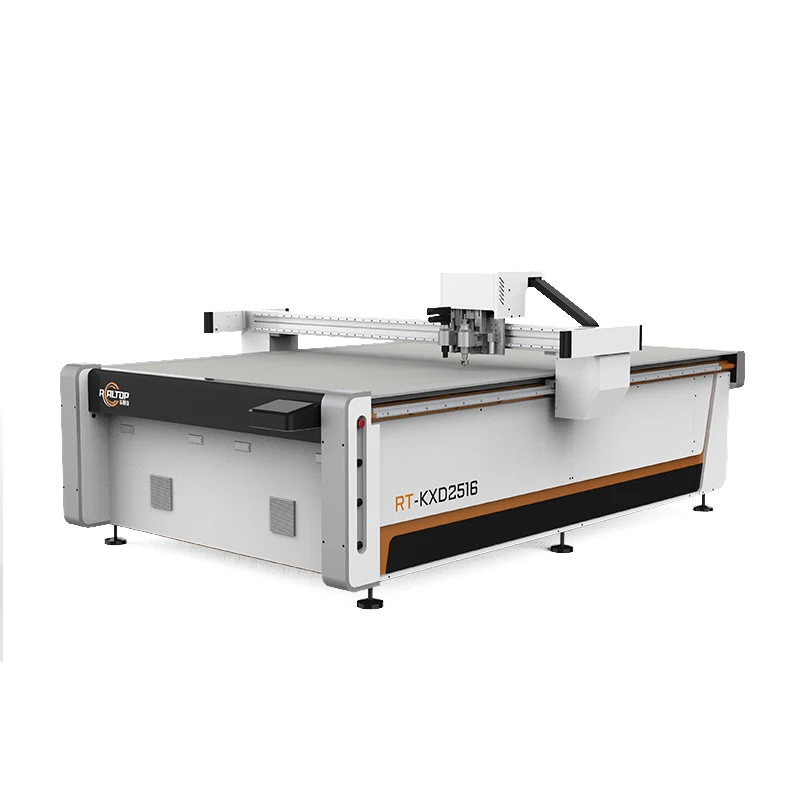
| Model | 1625 |
| Product Type | CNC Oscillating Knife Cutting Machine |
| Working Area | 1600 × 2500 mm |
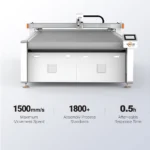
| Cutting Speed | 0–2000 mm/s |
| Cutting Thickness | ≤ 30 mm (basis not stated in source) |
| Cutting Accuracy | ±0.1 mm |
| Vacuum Pump Power | 9 kW |
| Voltage Options | 110V / 220V / 380V (frequency to be confirmed per market) |
| Machine Dimensions | 3300 × 2100 × 1350 mm |
| Vacuum Table | Aluminum bellows type |
| Control Interface | PLC panel, multi-language |
| Servo Drive Options | Panasonic, Delta, or Dorna |
| File Compatibility | PLT, DXF, AI, PDF |
| Safety Hardware | Infrared sensor array and emergency stop |
| Certification | CE declaration where applicable |
Application Suitability
| Application | Material or Output |
|---|---|
| Footwear uppers and leather accessories | Genuine leather, PU, microfiber leather hides |
| Automotive seat covers and soft trim | Leather, synthetic leather, laminated textiles |
| Handbags, wallets and belts | Full-grain, top-grain and split leather hides |
| Sofa and upholstery panels | Leather, heavy textiles, composite fabrics |
| Gaskets and industrial templates | Rubber, PTFE, non-metallic sheet stock |
Why the Voltage Conversation Must Happen Before the Quotation
Confirm the buyer’s local supply, frequency and plug standard in writing before a single component is ordered.
I spent five days in a German workshop last year watching a newly delivered cutting table sit idle because the local 400V/60Hz supply was never reconciled with a 380V/50Hz drive specification. The inverter tripped on first power-up and production stopped for two weeks while replacement parts shipped. A leather CNC cutting machine manufacturer that ships before locking down electrical drawings leaves money on the table — both yours and the buyer’s [NEED_CITE: voltage and frequency standards by export market].
Tool Head Logic for Hides of Varying Density
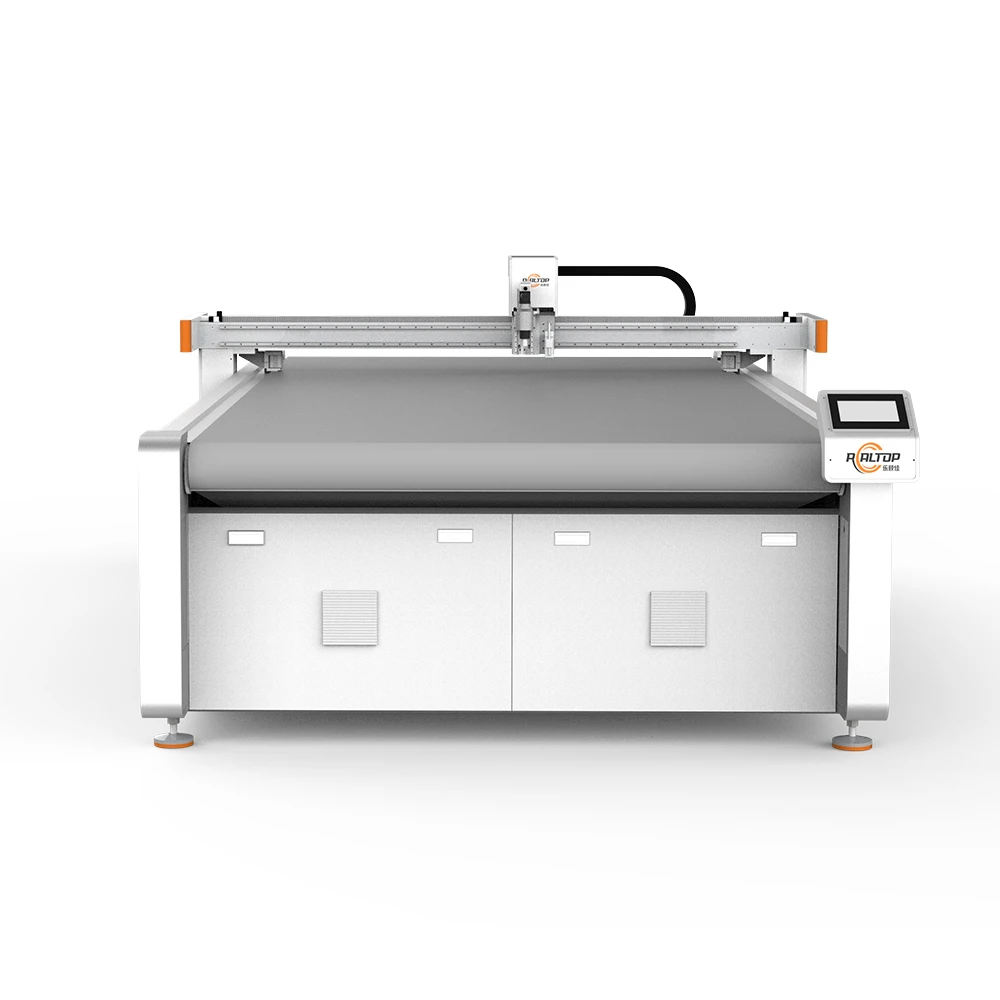
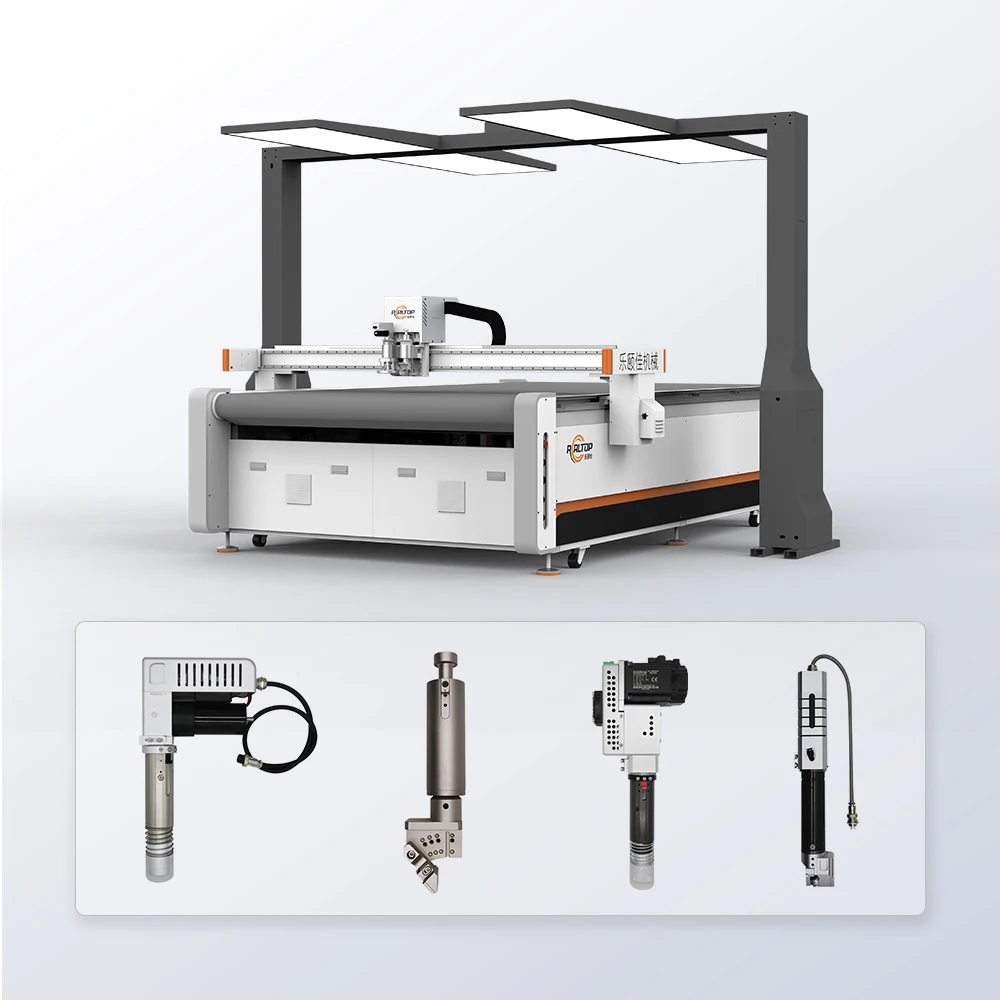
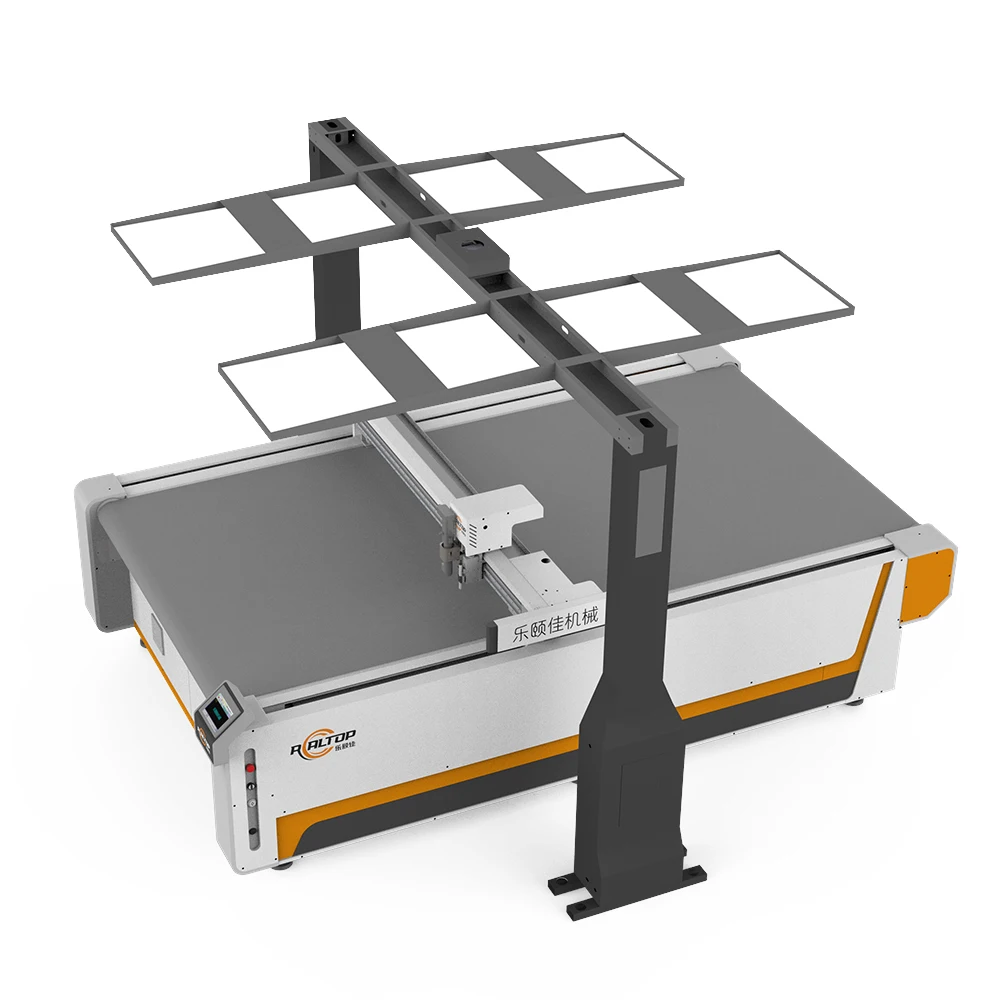
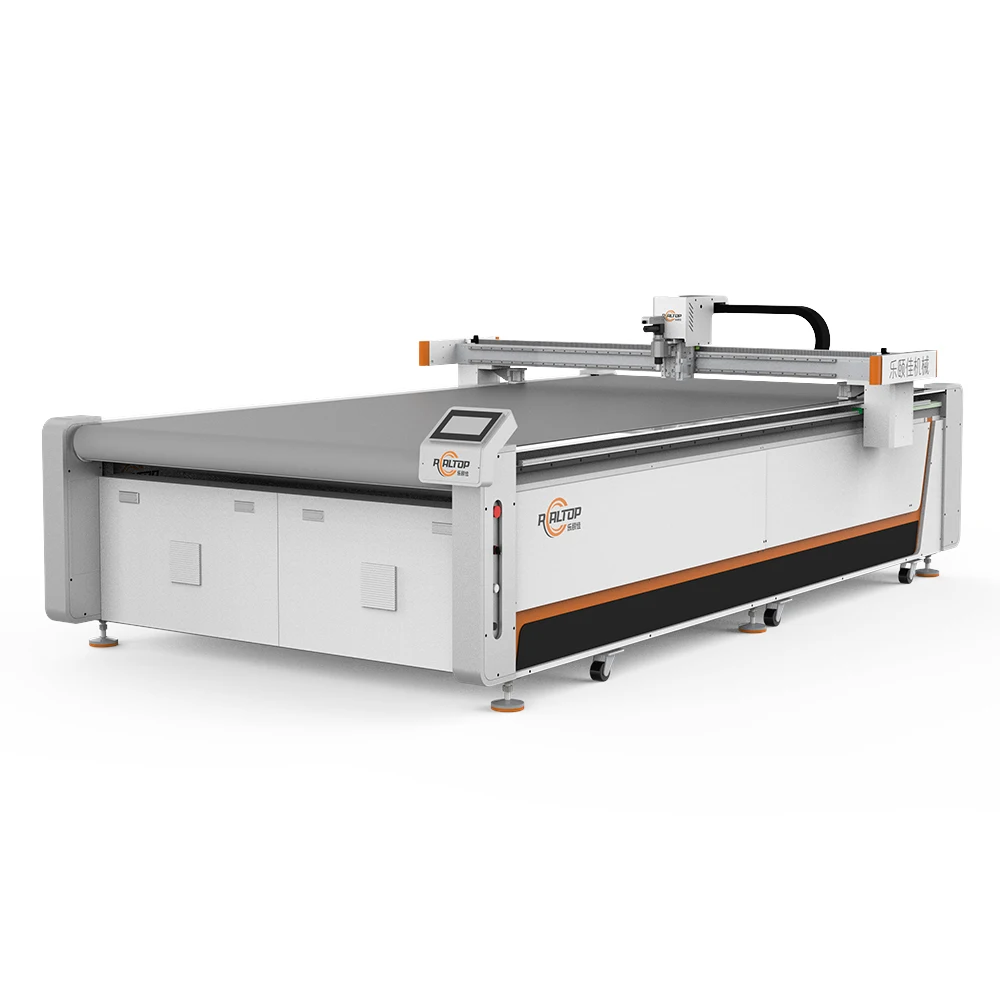
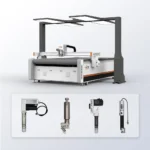
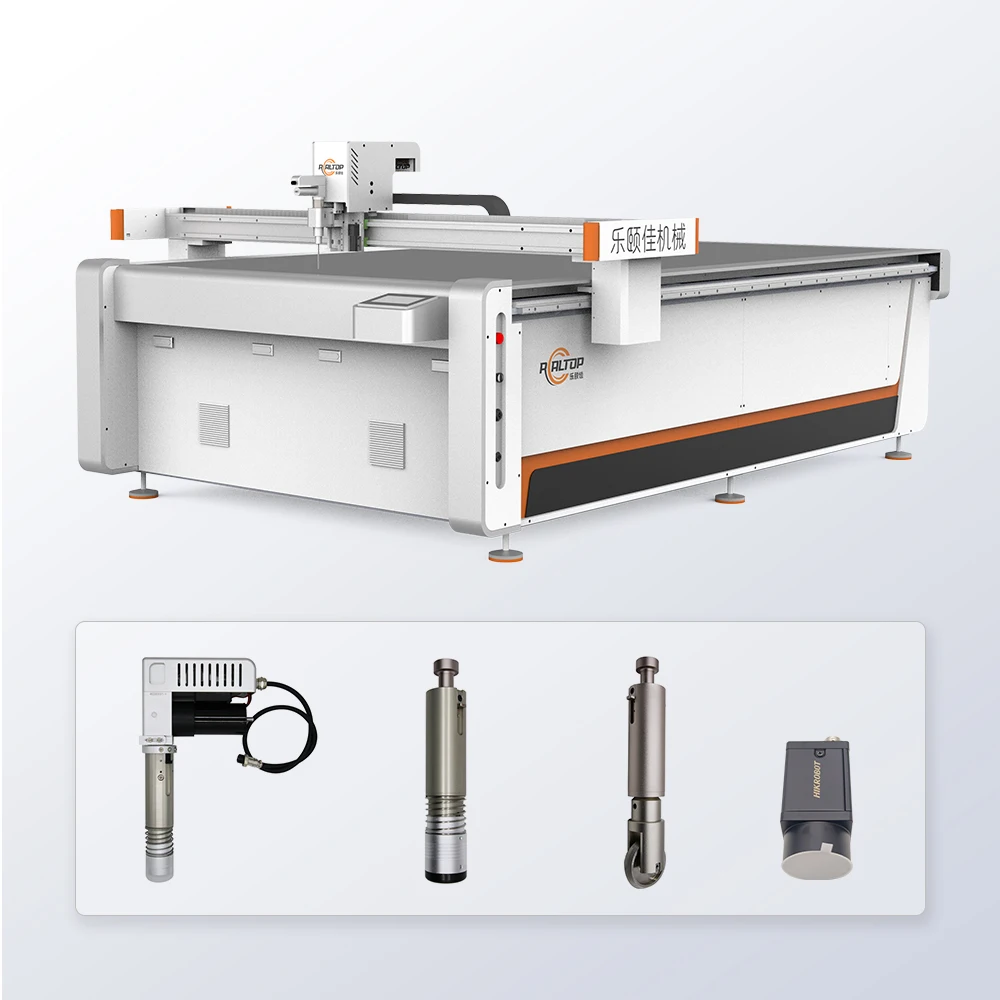
The 1625 platform accepts an oscillating knife, driven rotary knife, pneumatic knife, kiss cutting tool, creasing wheel, milling tool and V-groove knife. For genuine leather, the oscillating knife handles most shoe-upper and bag-panel work up to the machine’s rated thickness. Driven rotary knives suit continuous contour cuts on softer synthetic hides where drag marks must be avoided. Pneumatic knife heads are reserved for dense, multi-layer layups where downward force matters more than edge finish. Specifying the correct head is the first variable that determines whether the edge passes quality inspection or goes straight to the scrap bin.
Vacuum Zoning That Holds Small Leather Parts Flat
The aluminum bellows vacuum table on this CNC oscillating knife leather cutting machine is divided into zones that can be opened or closed independently. When a nest includes small pieces such as strap loops or belt keepers, leaving the entire surface under suction creates turbulence at the edges of the cut and lifts the part. Closing the valves in unused zones concentrates hold-down exactly where material remains, preventing the knife from dragging a partially released piece. This zoning matters more in leather than in rigid board because a hide’s natural stiffness varies from the backbone to the belly.
What the Specification Sheet Actually Means for Daily Output
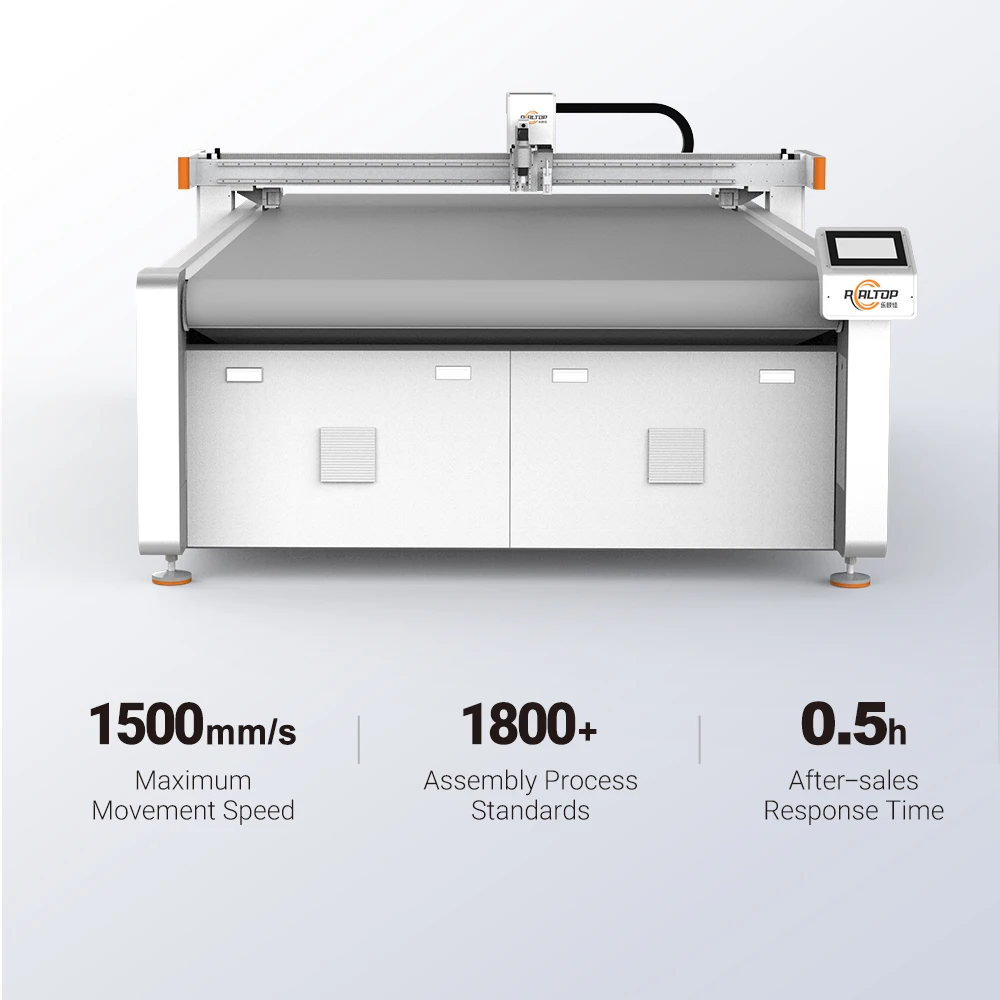
The ±0.1 mm accuracy figure sets the positional tolerance between successive cuts across the 1600 × 2500 mm bed. On a full hide of top-grain leather, that tolerance keeps interlocking pattern pieces within nesting software predictions so that material yield stays close to the planned percentage. The 9 kW vacuum pump is sized to maintain suction across the entire bellows surface even when the table is zoned for mixed part sizes. Servo options from Panasonic, Delta or Dorna allow the buyer to align the drive package with the service network already present in their region, simplifying long-term maintenance [NEED_CITE: servo drive service coverage by region].
The Hidden Cost of Choosing the Wrong Knife on Premium Hides
Selecting a drag knife instead of an oscillating knife on full-grain leather leaves compressed fibers along the cut line that show up as a visible ridge on the finished bag panel. I have watched buyers accept a machine after a successful sample on synthetic PU, only to discover the ragged edge once genuine hide was loaded on their own floor. The rework cost on a premium hide can exceed the tooling upgrade that would have prevented it. Knife oscillation frequency, blade angle and downward pressure all need to be recorded in the sample report so that the production setting is reproducible from day one [NEED_CITE: leather cutting edge quality standards].
Why Procurement Teams Source This Platform Directly from the Builder
Realtop engineers both knife and laser systems internally, so a buyer evaluating leather against acrylic or textile can receive a single technical recommendation rather than two conflicting vendor opinions. Every 1625 unit is sample-cut on the buyer’s own hide before the order is confirmed, producing a written report that documents edge quality, cycle time and achievable nesting yield. Voltage, plug type and control language are frozen in the electrical schematic that the buyer signs, eliminating the on-site mismatch scenario described earlier. The CCD camera contour option is calibrated against the buyer’s printed registration marks, not a generic test pattern. Software file import is verified against the buyer’s existing DXF or PLT workflow before the machine leaves the factory.
Documentation & Verification
- Factory test record showing cut accuracy on the buyer’s leather hide thickness range
- Electrical schematic confirming voltage, frequency and plug type before dispatch
- Tool head and vacuum zone configuration list matched to the buyer’s material schedule
- Software license and file format compatibility note for the buyer’s nesting workflow
- CE declaration documentation package prepared for the destination market
- Packing photographs documenting machine condition at point of shipment
Installation, Commissioning & Support
- Foundation requires a level concrete slab able to support the 3300 × 2100 mm footprint without flex
- Dedicated circuit matching the confirmed voltage and frequency rating, isolated from welding loads
- Machine ships in a single crate; vacuum pump and control cabinet are reconnected on site
- First-day commissioning includes vacuum zone mapping and servo tuning across the 1600 × 2500 mm travel
- Operator training covers tool head changeover, nesting software import and emergency stop response
- Spare blade and knife holder inventory sized to the buyer’s daily cutting volume and shift pattern
- Preventive maintenance schedule aligned with the 9 kW vacuum pump filter and belt inspection intervals
Starting the Technical Conversation
Send the hide type, thickness range and maximum piece dimensions along with your daily cutting volume target. Include the local supply voltage, frequency and the control language your operators read. If your design team already works in a specific nesting file format, attach a sample so software compatibility can be verified before quotation.
Frequently Asked Questions
Q: How is the tool head and vacuum zone configuration matched to my leather type and hide size?
A: The builder runs sample cuts on the buyer’s actual leather before the order is finalized. Oscillation frequency, blade angle and vacuum zone settings are recorded in a written report, so the production configuration is locked to the material rather than left as a generic default.
Q: Can the CCD contour system track printed marks on genuine leather grain at production speed?
A: Yes, provided the registration mark contrast and position are validated during the pre-order sample run. The camera’s recognition parameters are tuned to the buyer’s specific print quality, ensuring reliable tracking across hides whose surface reflectance varies from one batch to the next.
Q: What voltage and control language options are confirmed before the machine ships?
A: Voltage is selectable across 110V, 220V and 380V, with frequency matched to the buyer’s local grid. The PLC panel language is set to English, Russian, Italian or Chinese as standard, with further customization available. All values are locked in a signed electrical schematic before production begins.
Q: Is sample cutting available on my own leather before I commit to an order?
A: The manufacturer cuts the buyer’s supplied leather hide and issues a report documenting edge quality, cycle time and nesting yield. This report forms part of the order documentation and sets the acceptance standard for the machine once it arrives at the buyer’s facility.
Q: How does the software handle nesting and file import from my existing design workflow?
A: The system accepts PLT, DXF, AI and PDF formats. Before the order is placed, the buyer’s own design files are loaded into the nesting software to confirm layer structure, kerf compensation and part naming carry over correctly, avoiding rework on the shop floor.
You may also like

商品评价
Clear filtersThere are no reviews yet.