




-
 Courier delivery
-
 DHL Courier delivery
-
 Warranty 1 year
-
 Free 30-Day returns

Core Factory Build — welded seamless steel frame, CNC-machined motion surfaces, and in-house knife and vacuum table engineering under one roof.
Technical Specifications
| Parameter | Value |
|---|---|
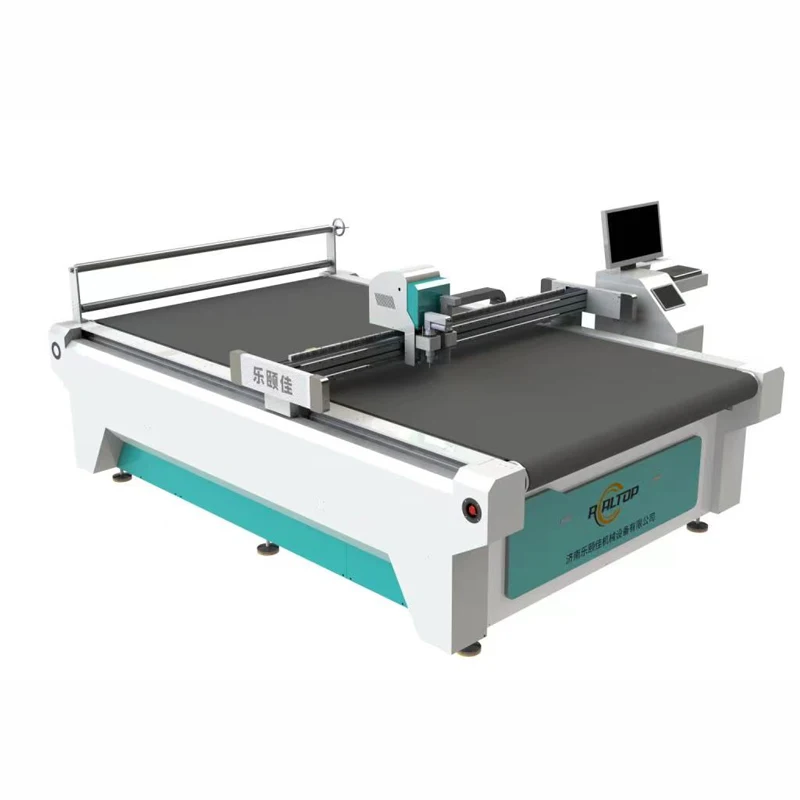
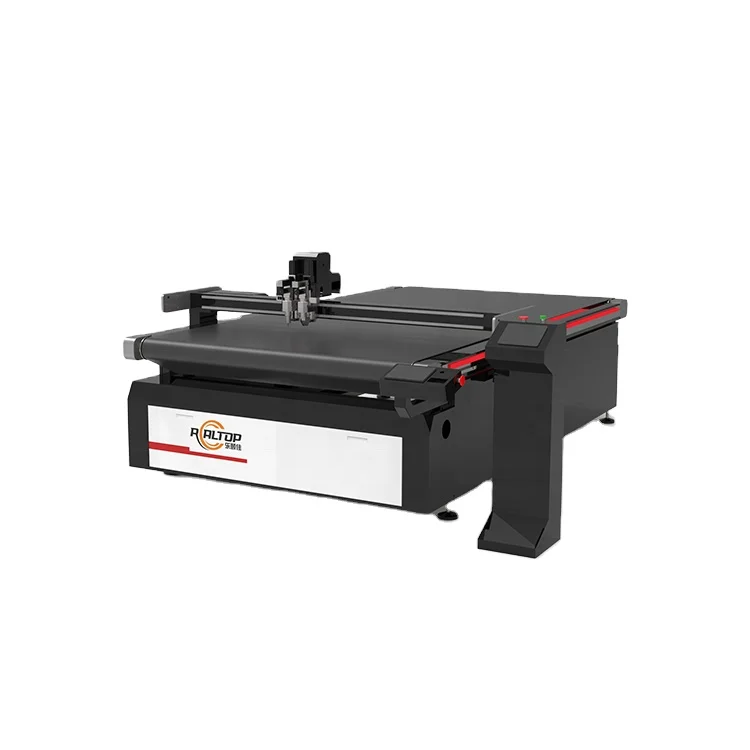
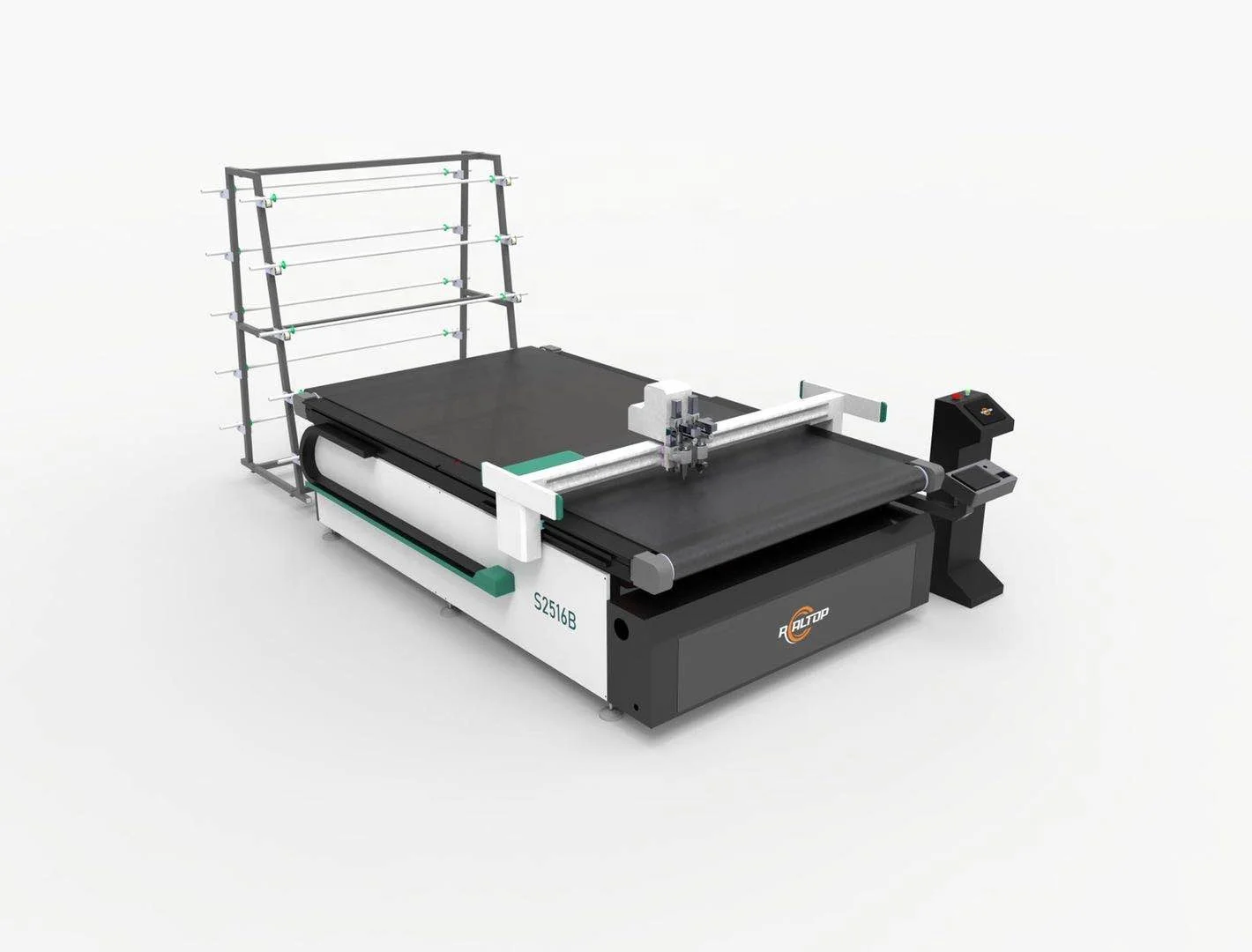
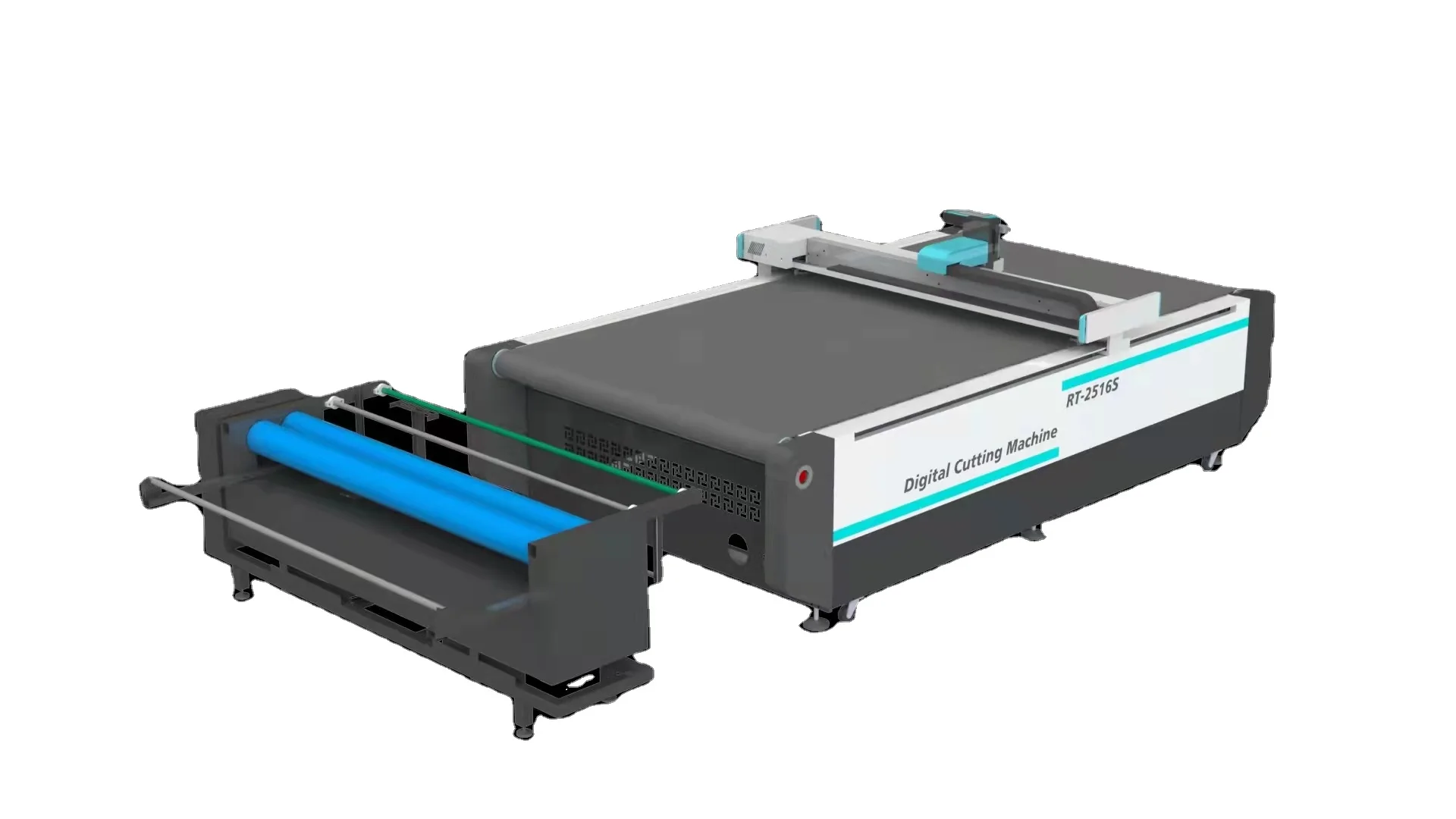
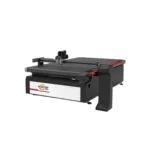
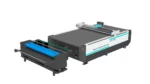
| Product Type | CNC Oscillating Knife Cutting Machine with Rotary Table |
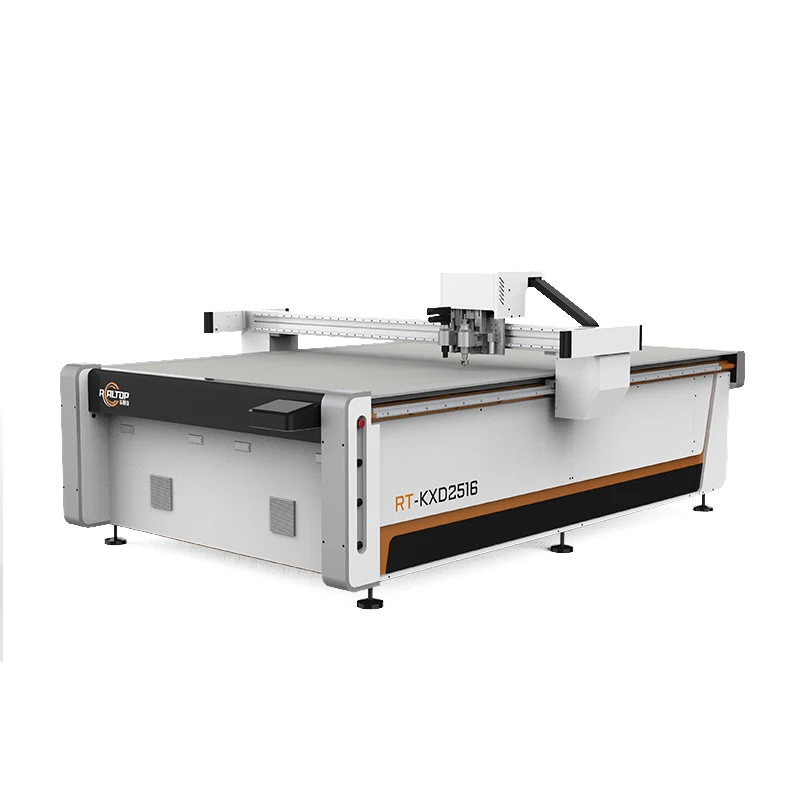
| Model | RT-D2516/RT-S2516 |
| Working Area | 1600×2500mm |
| Overall Dimensions (L×W×H) | 3450×2300×1250mm |
| Rated Power | 9kW |
| Voltage | 380V±10% (customizable) |
| Vacuum Pump Power | 7.5kW |
| Cutting Speed | 200–800mm/s (varies with material type and thickness; basis to be confirmed for specific stock) |
| Translational Velocity | 800–1200mm/s |
| Repeated Accuracy | ≤0.1mm |
| Cutting Thickness | ≤100mm (material dependent; basis to be confirmed) |
| Transmission System | Delta digital servo (IP67, optional Panasonic), Taiwan Hiwin linear guide, ball screw, synchronous belt |
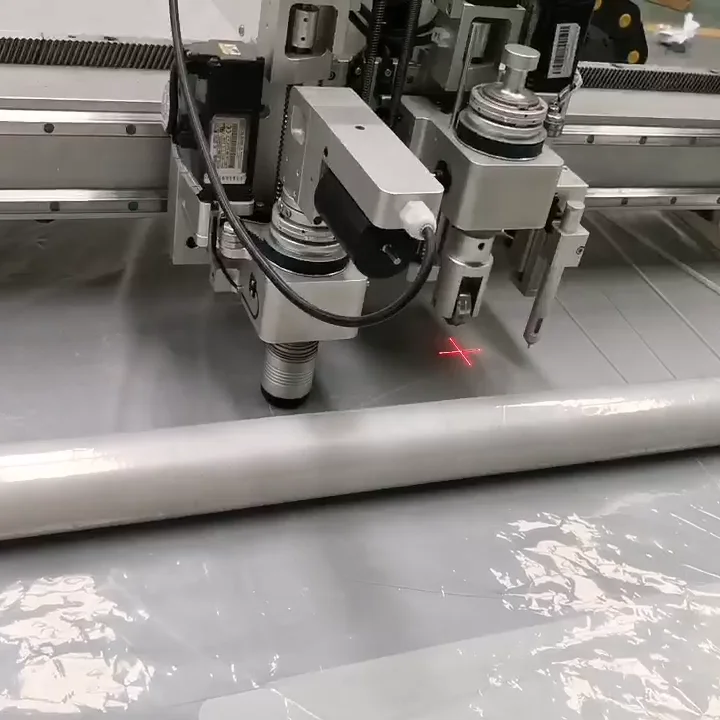
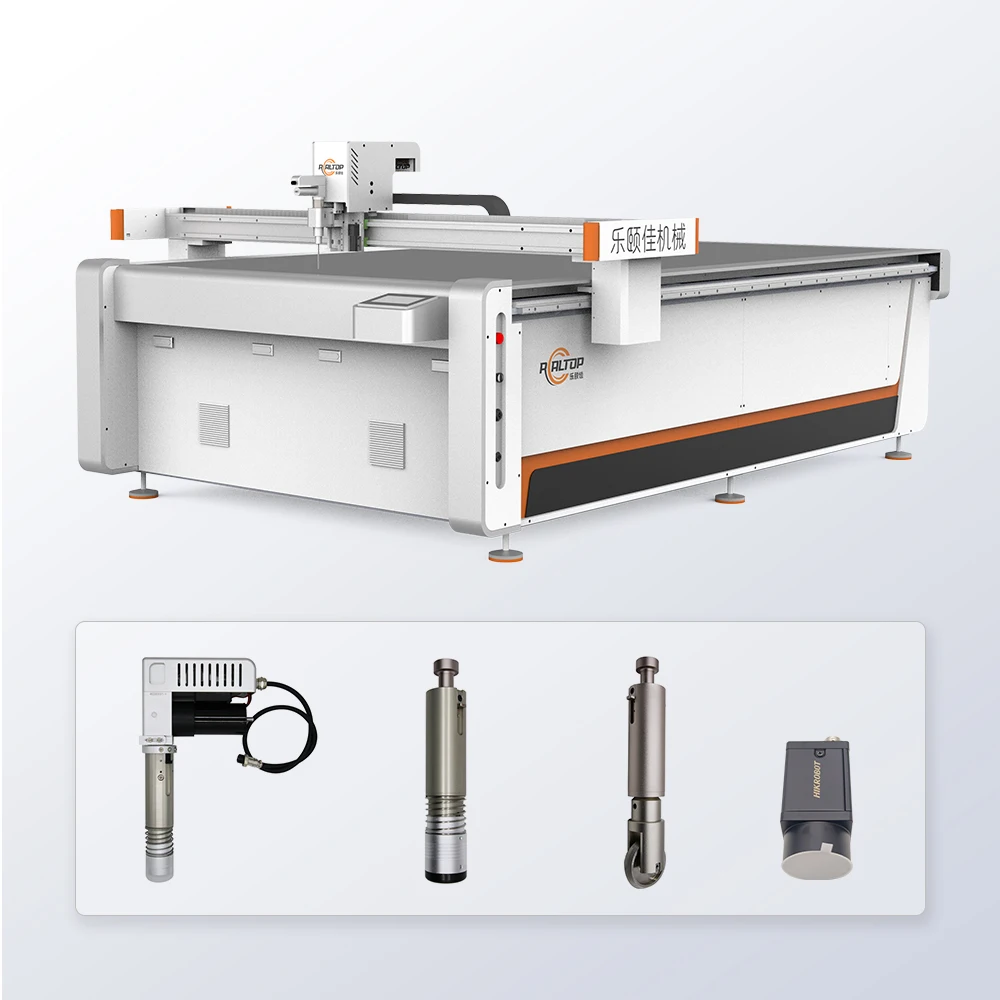
| Tool Head Options | Swiss imported oscillating knife, pneumatic knife, high-power vibrating knife, circular knife, V-cutting knife, drag knife, creasing wheel, dotted line knife, punching tool, brush |
| Visual Positioning | Small CCD camera mark point, panoramic camera recognition, projection positioning |
| Table Surface | Magnesium-aluminum alloy with fluorocarbon PVDF powder spraying, anodic oxidation, hard oxidation |
| Conveyor Belt | Germany imported |
| Control Format | HP-GL compatible |
| Key Features | Auto feeding, infrared safety blocking, anti-collision beam sensors, emergency stop with in-situ resume, fully assembled welded steel frame with high-temperature tempering |
| Software Language | English, Russian, Italian, Chinese (special languages customizable) |
Application Suitability
| Application | Material or Output |
|---|---|
| Garment and footwear panel cutting | Woven fabric, knit textile, leather, synthetic shoe uppers, lining cloth |
| Automotive interior component nesting | Headliner fabric, seat cover textile, floor carpet, sound insulation foam |
| Luggage and bag panel blanking | PU leather, PVC, non-woven fabric, canvas, nylon |
| Soft furnishing and carpet shaping | Upholstery cloth, sponge, carpet rolls, floor mat composites |
| Packaging sample and short-run die-free cutting | Corrugated cardboard, foam board, sticker film, plastic box stock |
| Gasket and sealing pad profiling | PTFE, ETFE, silicone sheet, rubber, fiberglass composite |
What "Working Area 1600×2500mm" Does Not Tell a Buyer
A flat bed dimension means nothing if the frame deflects, the vacuum zoning cannot hold small nested parts, or the tool head is mismatched to the stock.
I have watched a distributor commit to a 1600×2500 table after seeing a clean sample cut on standard woven cotton, only to discover on their own PVC-coated automotive textile that the oscillating knife frequency had to be completely re-tuned, the vacuum zones needed re-mapping, and the first roll produced ragged edges across three quarters of its length. A CNC oscillating knife cutting machine manufacturer that does not ask for your specific material before quoting is selling a frame, not a cutting solution. The voltage, the tool head, and the vacuum pump sizing all shift once the real stock is on the table [NEED_CITE: typical buyer specification oversights in CNC knife cutting procurement].
Frame Rigidity and Long-Term Geometric Stability
The RT-D2516/RT-S2516 starts from a welded thick-walled seamless steel structure that goes through high-temperature tempering before final machining on a CNC machining center. This sequence matters for a CNC oscillating knife cutting machine manufacturer evaluating build quality: tempering relieves the internal stress from welding, and the subsequent precision machining ensures the linear guide mounting surfaces stay flat. Without this, a frame that measured true on day one can drift after months of vibration from the oscillating head, pushing repeated accuracy outside the ≤0.1mm band.
Motion Components and Servo Sizing
Delta IP67-rated digital servo motors drive the axes through Taiwan Hiwin linear guides and ball screws, with Panasonic servos available as an alternative. The IP67 rating is not a marketing label here; it means the servo housing resists the dust and fiber debris that accumulate constantly in fabric and composite cutting environments. On a 1600×2500mm travel, undersized servos would lose positional hold at the far end of the stroke, which is exactly where nesting software tends to place the last pieces of a layout [NEED_CITE: servo ingress protection standards for industrial cutting environments].
Vacuum Table Engineering and Small-Part Holding
The magnesium-aluminum alloy table surface receives fluorocarbon PVDF powder spraying, anodic oxidation, and hard oxidation treatment in sequence. This combination resists the micro-scratches that develop when abrasive composites like fiberglass or carbon-fiber-reinforced sheets slide across the bed. The 7.5kW vacuum pump uses an integrated aviation aluminum shell with built-in silencer sponge, which keeps noise levels manageable in enclosed workshops. For buyers cutting small gaskets or narrow garment panels, zoning the vacuum table to match the part footprint is where real holding force comes from, not simply total pump capacity.
Specification Interpretation for Real Production Loads
Cutting speed is listed at 200–800mm/s, but that range only holds meaning when tied to material density and thickness. A single-layer non-woven fabric at 2mm might allow the upper end of that range, while a 20mm stack of EVA foam for automotive sound insulation will demand a much slower pass to keep the Swiss imported oscillating knife from deflecting. The same logic applies to cutting thickness: ≤100mm is the mechanical envelope, but whether you reach it depends on the knife type selected. A high-power vibrating knife handles dense rubber gaskets at depth, while a drag knife on thin sticker film runs shallow and fast. The CCD camera options — small mark point, panoramic recognition, or projection positioning — each suit different print registration workflows, and the wrong choice means contour tracking fails at production speed even if it worked on the sample.
The Hidden Cost of Skipping Material-Specific Configuration
When a buyer specifies a machine on working area and price alone, the first production run usually reveals the gap. Wrong tool head on coated textile produces crushed edges that force a secondary trimming pass. Insufficient vacuum zoning on small nested parts causes material lift mid-cut, turning an entire sheet into scrap. Voltage and frequency left unconfirmed until the crate arrives means the 380V±10 supply does not match the local grid, and the servo drives fault on start-up. Each of these failures traces back to a configuration decision that was never made before the order was placed [NEED_CITE: common configuration mismatches in exported CNC cutting equipment].
Why Source This Build From the Factory
The design team and production floor sit under one roof, so a distributor evaluating OEM capability can trace the frame weld, the motion assembly, and the tool head integration to a single quality chain. Tool head and vacuum table configuration is locked per material before production starts, not left as a field adjustment. Voltage, plug standard, and control language are confirmed on the electrical schematic before the machine enters assembly. Sample cutting on the buyer’s own stock is standard procedure, producing a cutting report that documents edge quality and speed before commitment. CE documentation is prepared where applicable for the destination market.
Documentation & Verification
- Machine specification sheet listing confirmed tool head and vacuum zone layout for your material
- Electrical schematic with voltage and frequency locked to your local grid standard
- Factory test record documenting cutting performance on your submitted fabric or composite sample
- Software licence with file format compatibility note for your existing nesting workflow
- Spare parts list matched to the tool head and pump configuration shipped
- Packing photographs showing frame bracing and head protection before crating
Installation, Commissioning & Support
- 3450×2300mm footprint requires level concrete floor with clear access on all four sides for maintenance
- 9kW rated power plus 7.5kW vacuum pump demands a dedicated 380V circuit with correct breaker sizing
- Fully assembled welded frame arrives ready for belt and vacuum line connection, no structural bolting on site
- First-run parameter tuning on your material stock with oscillating frequency and vacuum zone calibration
- Operator training covers HP-GL file import, CCD camera mark registration, and tool change procedures
- Spare knife blades and vacuum seals included with recommended reorder intervals by material type
Before You Send an Inquiry
To move past generic quoting, share the specific fabric, leather, or composite you cut, including thickness and whether the stock arrives in rolls or sheets. Confirm your local voltage and frequency, the control language your operators need, and whether your current nesting software exports HP-GL or requires a different format. If your material has a coating, lamination, or unusual fiber content, send a sample roll so the factory can run a cutting test before the configuration is finalized.
Frequently Asked Questions
Q: What OEM and customization range does the factory support for distributors?
A: The factory handles frame color, software language, voltage, plug standard, and tool head configuration per distributor agreement. OEM branding on the machine body and control interface is available for qualified regional partners. Each customization is documented on the specification sheet before production, so the distributor can verify the build against the agreed scope before the machine leaves the factory floor.
Q: How is the tool head and vacuum table matched to my material before order?
A: You submit a sample of your actual stock — fabric, leather, foam, or composite — along with thickness and daily volume. The factory runs test cuts with different knife types and vacuum zone layouts, then documents edge quality and achievable speed in a sample cutting report. The winning configuration is written into your order specification so the machine ships built for your material, not a generic default.
Q: What voltage, plug, and language options are confirmed before shipment?
A: Voltage is confirmed at 380V±10% or customized to your local grid, with frequency and plug type locked on the electrical schematic before assembly. Control interface language defaults to English, Russian, Italian, or Chinese, and special languages can be requested. The software language and file format compatibility note are included in the documentation package so operators can verify workflow before the machine is crated.
Q: How does the factory test performance on my own material before I commit?
A: After receiving your sample stock, the factory mounts it on the table and runs the configured tool head at production-representative speeds. The sample cutting report records edge condition, cutting depth achieved, CCD tracking accuracy if applicable, and any parameter adjustments needed. You review this report before approving the final order, and the documented parameters are loaded into the machine before dispatch.
Q: What does the spare parts and after-sales structure look like for overseas buyers?
A: Each machine ships with a spare parts list matched to the exact tool head and vacuum pump configuration. The one-year warranty covers parts and technical support domestically and abroad, with lifetime parts service available after the warranty period. Knife blades, vacuum seals, and CCD calibration targets are the typical consumables, and reorder intervals are noted in the maintenance manual based on the material you cut.
You may also like

商品评价
Clear filtersThere are no reviews yet.