



-
 Courier delivery
-
 DHL Courier delivery
-
 Warranty 1 year
-
 Free 30-Day returns

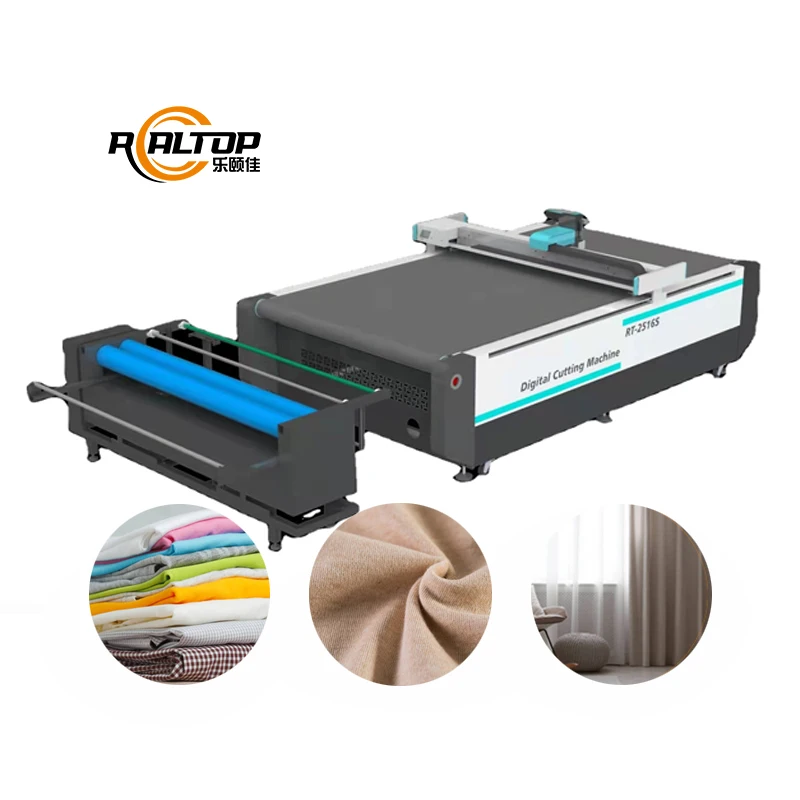
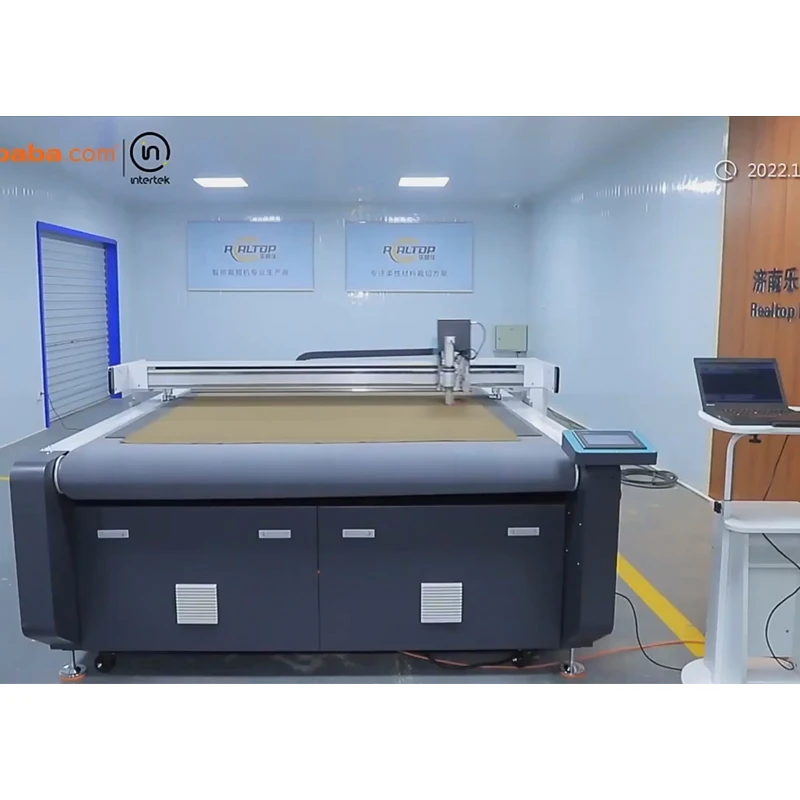
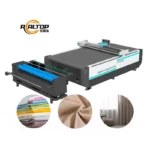
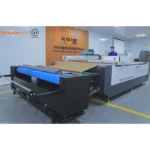
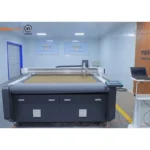
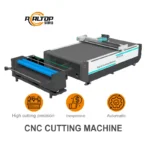
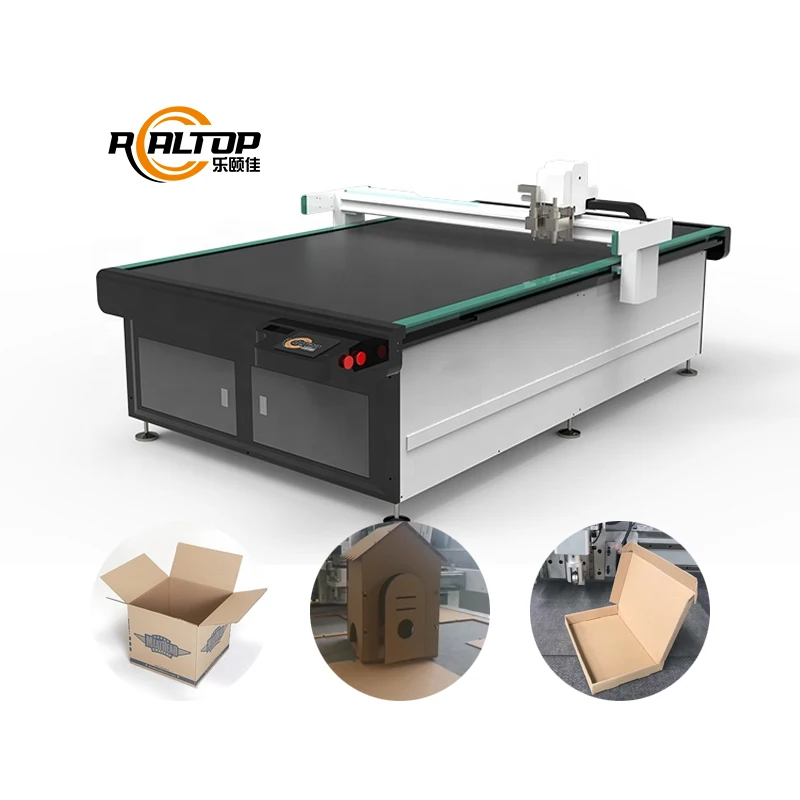
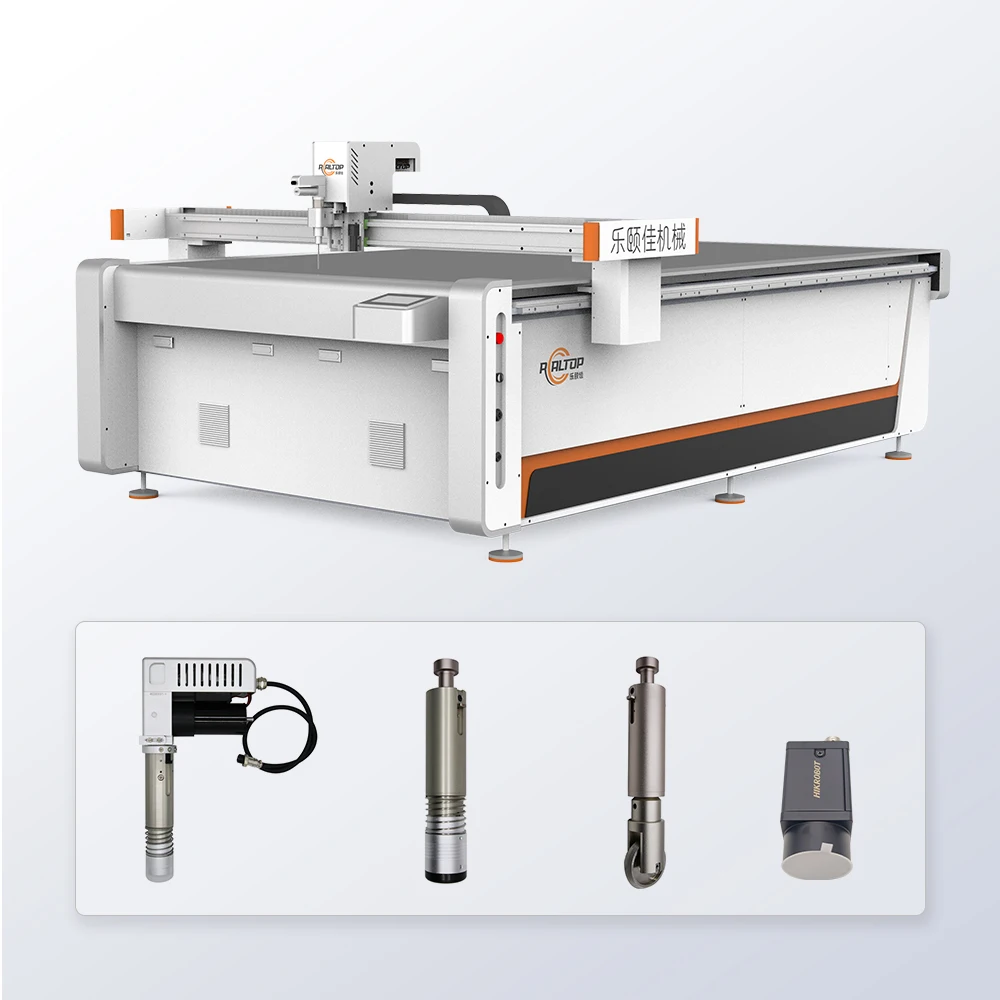
Factory-built knife cutting platform — in-house design and production covering both knife and laser technologies, so the cutting method matches your material rather than forcing one solution.
Technical Specifications
| Parameter | Value |
|---|---|
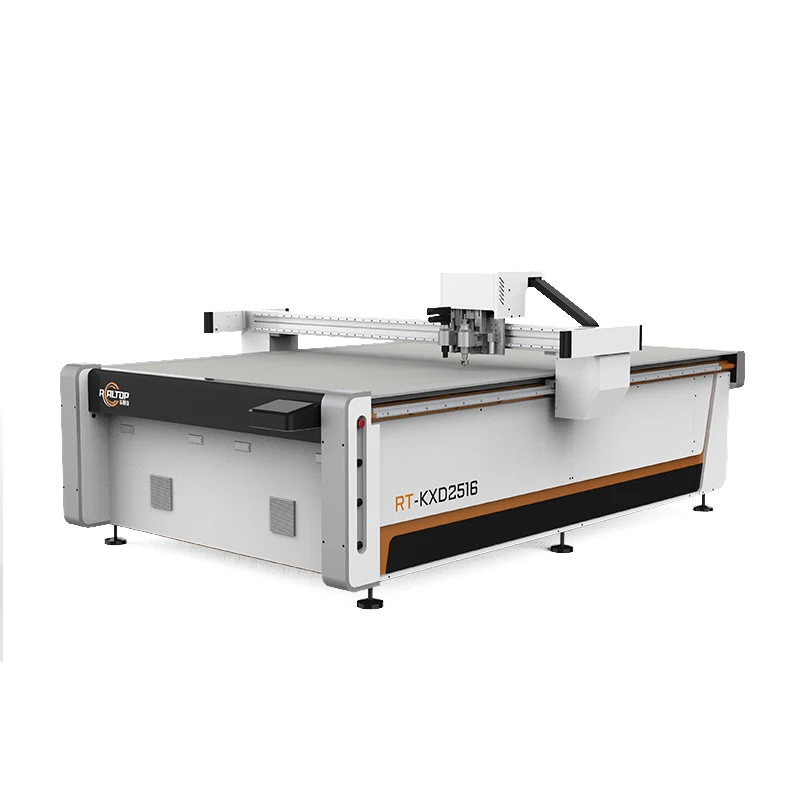
| Model | RT-D2516/RT-S2516 |
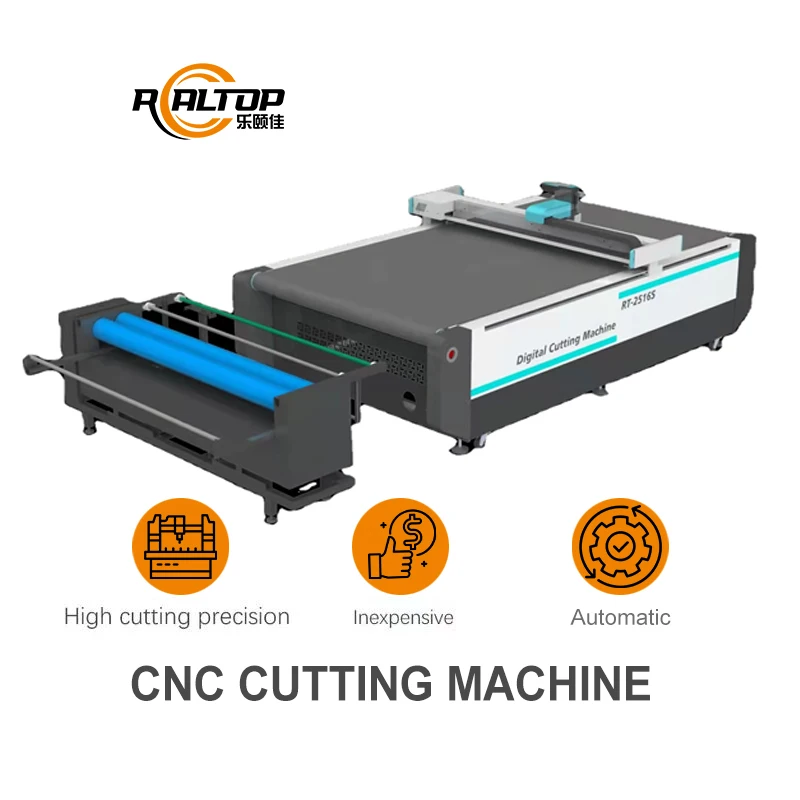
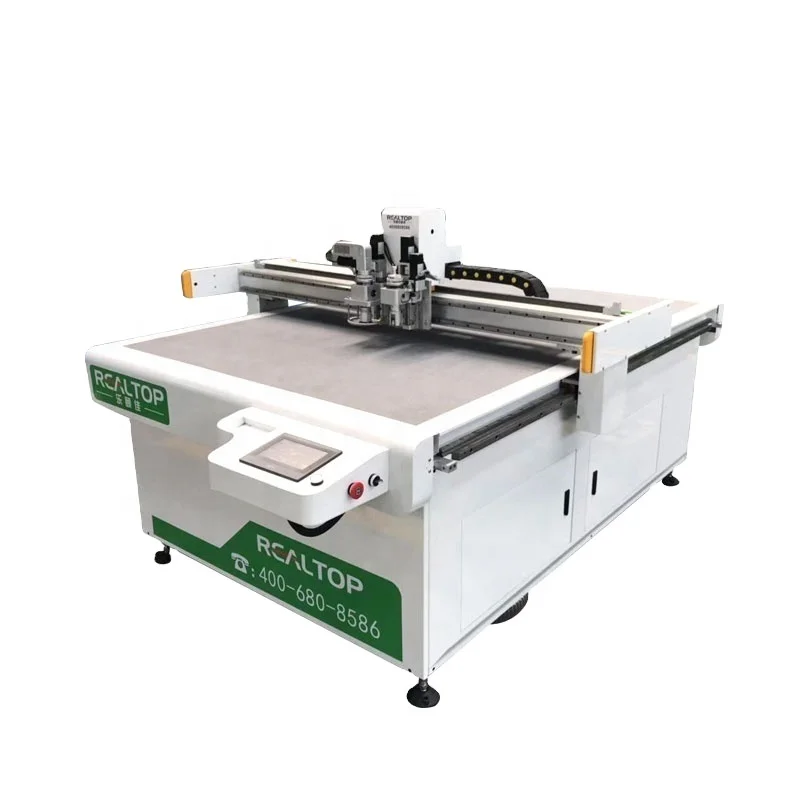
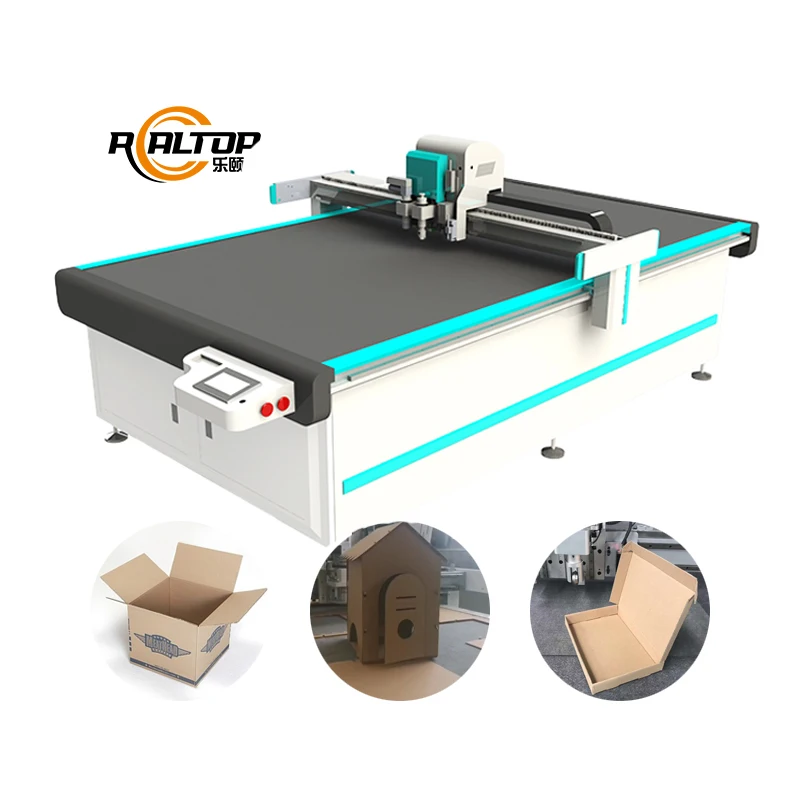
| Product Type | CNC Oscillating Knife Cutting Machine |
| Working Area | 1600×2500mm |
| Overall Dimensions (L×W×H) | 3450×2300×1250mm |
| Rated Power | 9kW |
| Voltage | 380V±10% (50/60Hz to be confirmed before order) |
| Table Type | Flat vacuum working table, magnesium-aluminum alloy with PVDF powder coating and anodic/hard oxidation treatment |
| Vacuum Pump | 7.5kW, aviation aluminum shell with built-in silencer sponge |
| Tool Head | Swiss imported knife with vibration full/half cutting; multifunctional head supports pneumatic knife, high-power vibrating knife, circular knife, V-cut, drag knife, creasing wheel, dotted line knife, punching, brush |
| Visual Positioning | Small CCD camera mark point, panoramic camera recognition, projection positioning |
| Translational Velocity | 800–1200mm/s |
| Repeated Accuracy | ≤0.1mm |
| Transmission System | Digital servo motor (Delta or Panasonic optional, IP67), linear guide, synchronous belt, ball screw; Taiwan Hiwin rail |
| Control System | HP-GL compatible format |
| Safety Devices | Infrared induction blocking, anti-collision sensors on beam, emergency stop with in-situ resume |
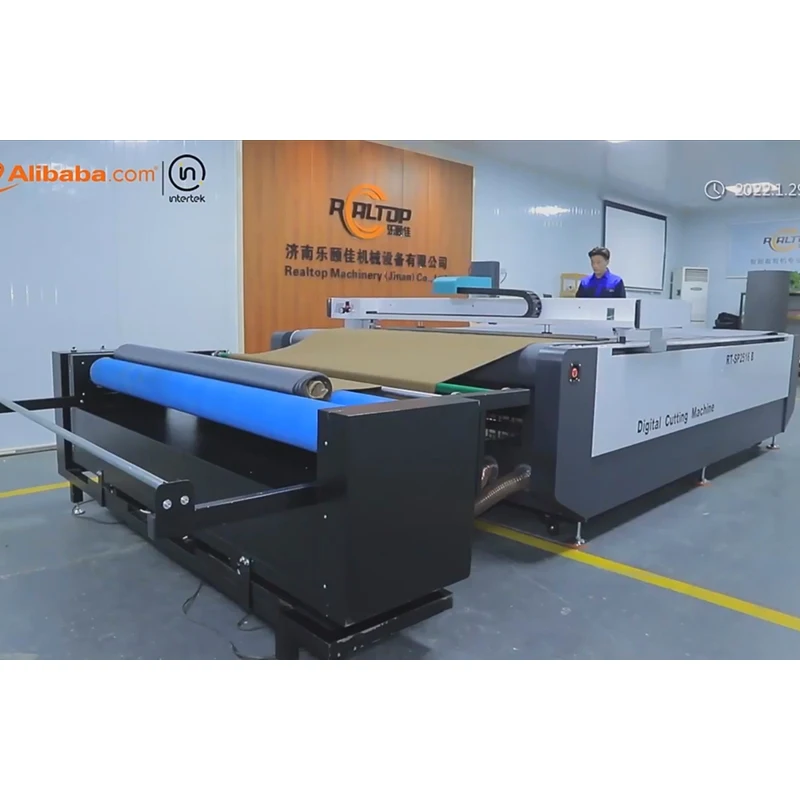
| Conveyor | Germany imported conveyor belt (auto feeding) |
| Language Options | English, Russian, Italian, Chinese; special languages customizable |
| Warranty | One year free; lifetime technical support and parts repair/replacement |
Application Suitability
| Application | Material or Output |
|---|---|
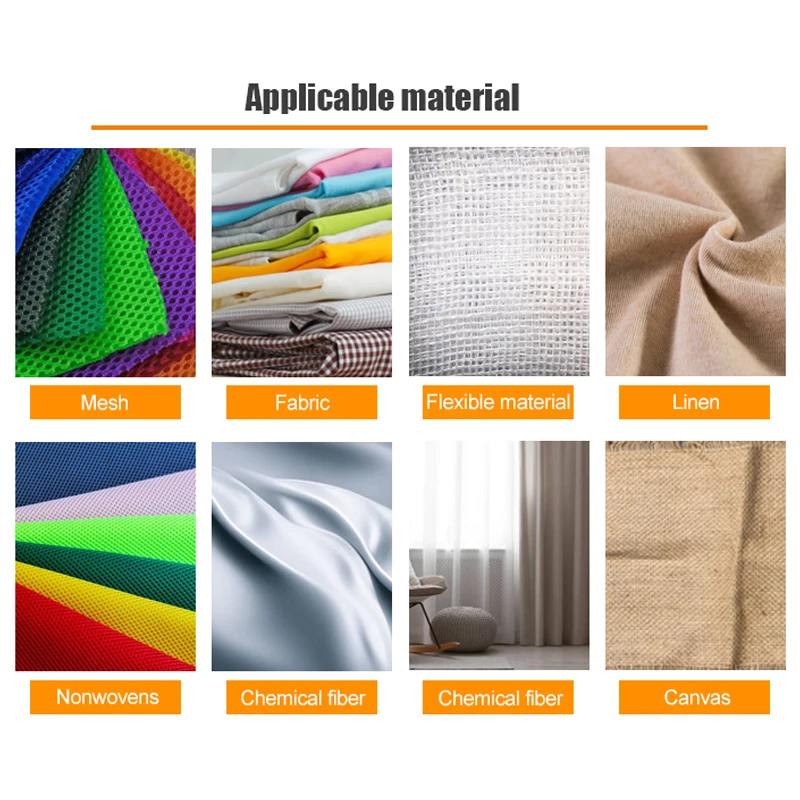
| Garment and footwear cutting | Fabric, textile, leather, shoe material, luggage material |
| Automotive interior and gasket fabrication | Foam board, sponge, PU, EVA, XPE, rubber, sealing pad composites |
| Packaging and carton sample making | Cardboard, corrugated cardboard, plastic box |
| Signage and graphic production | Sticker, film, PVC, PP, PE |
| Composite and technical textile processing | Fiberglass, PTFE, ETFE, non-woven fabric, carpet |
Why the Voltage Question Should Come Before the Price on Any CNC Knife Cutting Machine
Confirming voltage, frequency and plug type before production starts is non-negotiable.
I once watched a customer’s line stand still for three weeks because the machine arrived with a 380V/50Hz configuration while the workshop ran 440V/60Hz. The transformer retrofit cost time and money the production schedule could not absorb. When sourcing a CNC knife cutting machine manufacturer, the electrical specification discussion must happen at inquiry stage, not after the packing photographs are taken [NEED_CITE: voltage and frequency standards by export market].
Tool Head Selection Matched to Material Behavior
A single blade type does not cut fabric, foam and corrugated board equally well. The multifunctional head on the RT-D2516/RT-S2516 accommodates oscillating knife, drag knife, creasing wheel, circular knife, punching tool and more. This means the CNC knife cutting machine manufacturer selects the tool based on the buyer’s actual material stack rather than shipping a default configuration that produces ragged edges on technical textiles or crushes open-cell foam.
Vacuum Table Zoning and Small-Part Holding
The magnesium-aluminum alloy table surface with PVDF coating provides flatness that keeps thin film and fabric from wrinkling under the knife. More importantly, proper vacuum zoning determines whether small gasket parts or shoe upper pieces stay in place during the final cut pass. Without adequate zoning, parts lift, the knife catches, and the operator spends time repositioning rather than feeding [NEED_CITE: vacuum hold-down requirements for flexible material cutting].
Engineering Choices That Show Up on the Shop Floor
The welded thick-walled seamless steel frame undergoes high-temperature tempering before CNC machining center finishing, which removes residual stress and keeps the gantry geometry stable over years of continuous use. The Delta or Panasonic IP67 servo motors paired with Taiwan Hiwin linear guides maintain the ≤0.1mm repeated accuracy that contour-cutting jobs demand. Translational velocity reaches 800–1200mm/s, allowing the machine to traverse between cut paths without becoming a bottleneck. The 7.5kW vacuum pump with aviation aluminum shell and built-in silencer sponge reduces workshop noise compared to exposed pump installations. Cutting thickness capacity spans 20–80mm depending on material density and tool selection.
The Hidden Cost of Skipping Material Trials
Specifying a CNC oscillating knife cutting table on working area alone leads to unpleasant surprises at commissioning. A buyer cutting 40mm EVA foam may find the default oscillating knife struggles at full depth, while a pneumatic knife would handle it cleanly. Another buyer cutting printed fabric may discover the CCD camera cannot track low-contrast marks at production speed because the material was never tested. These issues surface during sample cutting — which is why material trials before order confirmation exist [NEED_CITE: material testing protocols for CNC cutting equipment].
Why Procurement Teams Source This Platform
In-house design and production cover both knife and laser cutting, so the cutting method is matched to the material rather than forced onto one technology. Tool head and table configuration are specified per material type, thickness and daily production volume. CCD camera positioning for printed contour work is verified on the buyer’s actual printed substrate before the machine ships. Software compatibility with HP-GL format and the buyer’s existing nesting workflow is confirmed at order stage. Voltage, control language and documentation are customized to the destination market. Sample cutting on the buyer’s own material is completed before commitment, producing a test report the buyer reviews.
Documentation & Verification
- Machine specification sheet listing confirmed tool head and table configuration
- Electrical schematic with voltage and frequency marked for target market
- Sample cutting report on buyer’s own material with edge quality assessment
- Factory test record documenting repeated accuracy and vacuum pressure readings
- Software licence and file format compatibility note for nesting workflow
- Packing photographs showing crate build and moisture protection before dispatch
Installation, Commissioning & Support
- Foundation must support 3450×2300mm footprint and 9kW continuous power draw
- Dedicated 380V±10% circuit with confirmed frequency required before arrival
- Machine ships fully assembled; positioning and level adjustment only on site
- First-run parameter tuning includes vacuum zoning calibration and CCD mark registration
- Operator training covers tool change procedure, HP-GL file import and safety sensor testing
- Spare parts list provided with recommended consumable blade and belt stock levels
What to Share When Requesting a Quotation
Send your material type, maximum thickness, sheet or roll dimensions and daily cutting volume. Confirm your workshop voltage, frequency and preferred control language. If your workflow relies on specific nesting software, share the file format so compatibility is verified before the order is placed.
Frequently Asked Questions
Q: How is the correct tool head selected for my material type and edge quality requirement?
A: We review your material composition, thickness range and edge finish standard. Based on that, we recommend the appropriate tool — oscillating knife for dense foam, drag knife for thin film, creasing wheel for carton folding lines. A sample cut on your actual material confirms the selection before the machine enters production.
Q: Can the CCD camera track printed marks reliably at full production speed on my material?
A: The panoramic camera and small CCD mark-point system are tested on your printed substrate before shipment. We verify mark contrast, size and spacing against the camera’s recognition capability at the translational velocity your production volume requires, and report the results.
Q: Is the vacuum table zoning sufficient for small parts, or will they lift during cutting?
A: The magnesium-aluminum alloy table is configured with zoning matched to your typical part geometry. Small gasket or garment pattern pieces require finer zone division than large signage panels. We confirm holding force on your smallest production part during the sample cutting stage.
Q: What voltage, plug type and control language will be confirmed before shipment?
A: Your local electrical standard — voltage, frequency and plug configuration — is documented in the electrical schematic before production begins. The control interface language is set to your preference from English, Russian, Italian, Chinese or a customized option, and verified during the factory test.
You may also like

商品评价
Clear filtersThere are no reviews yet.