



-
 Courier delivery
-
 DHL Courier delivery
-
 Warranty 1 year
-
 Free 30-Day returns

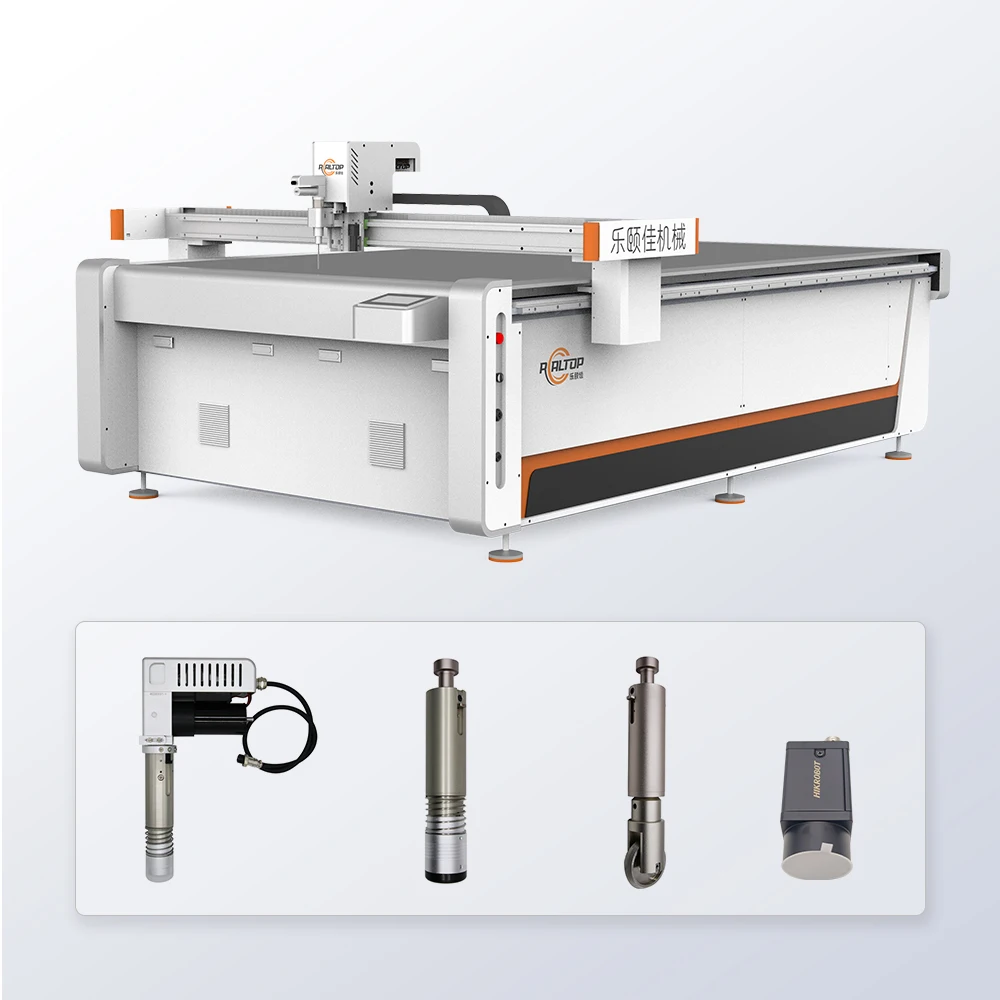
Configurable Multi-Tool Platform — Every tool head combination is matched to the buyer’s specific board grade and sample throughput during our pre-order testing protocol.
Technical Specifications
| Parameter | Value |
|---|---|
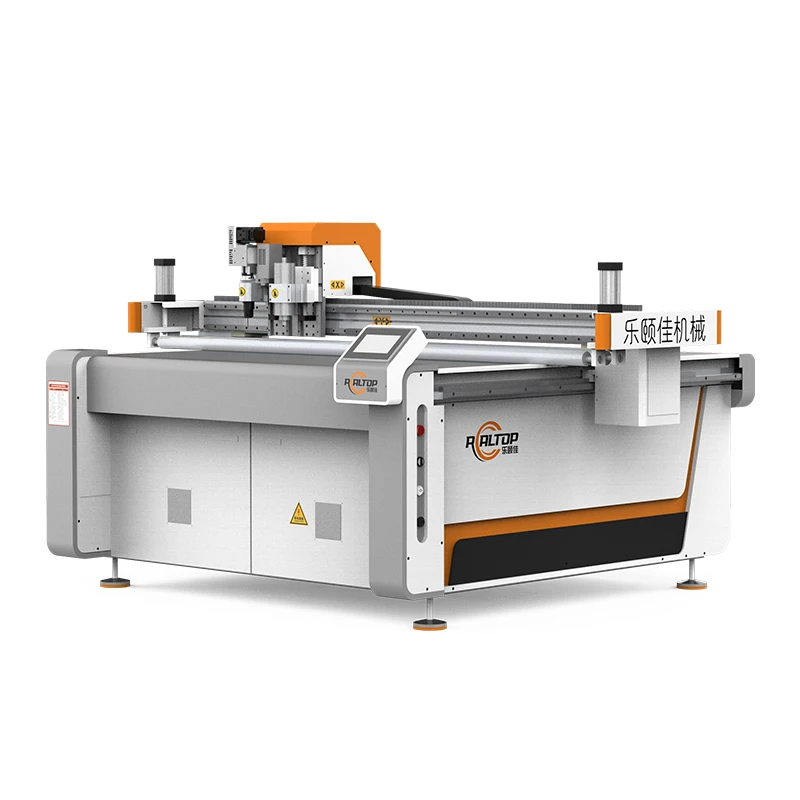
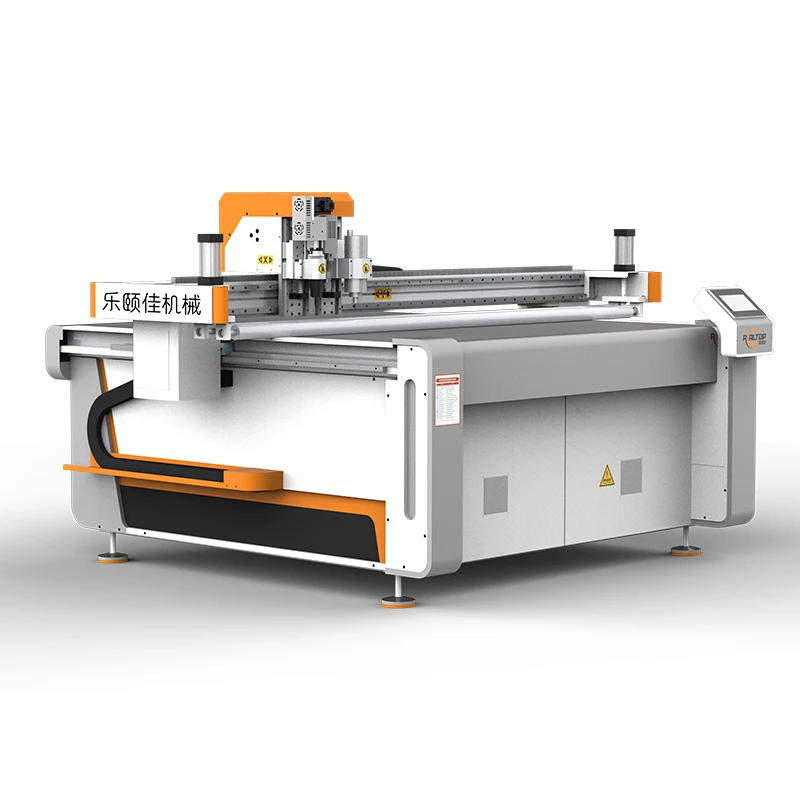
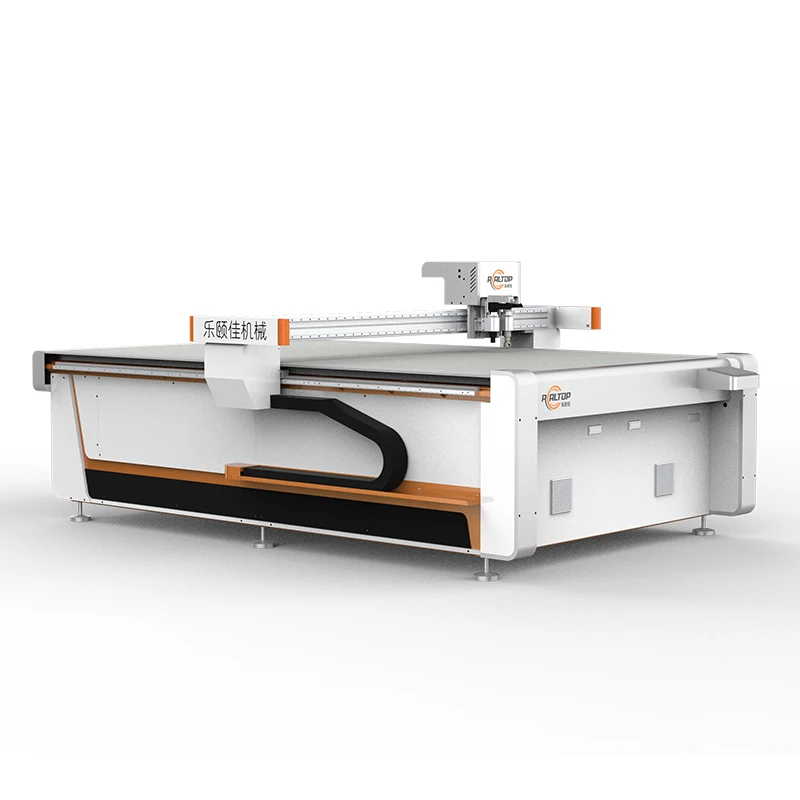
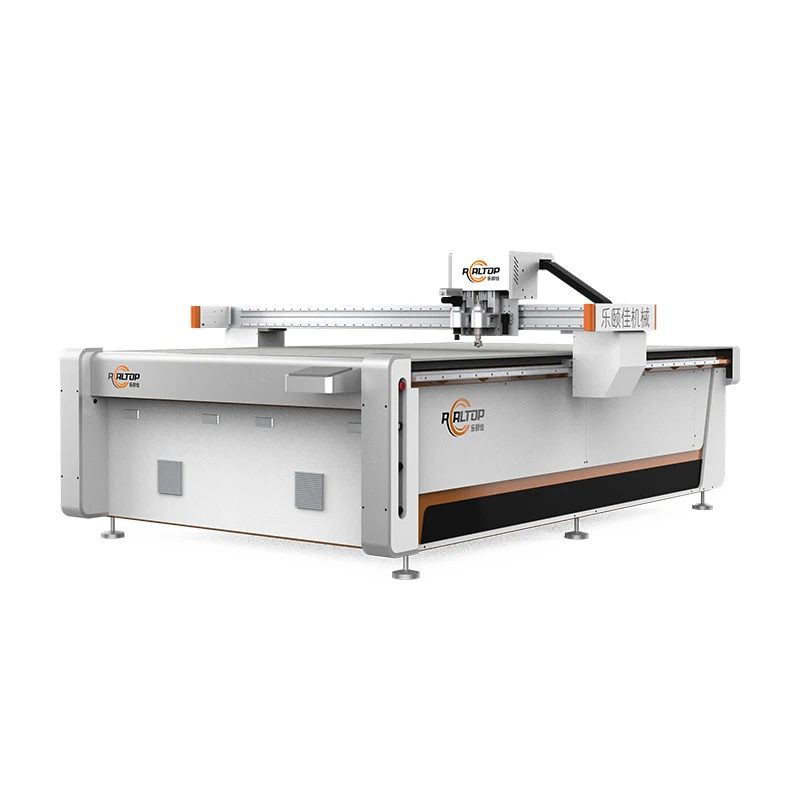
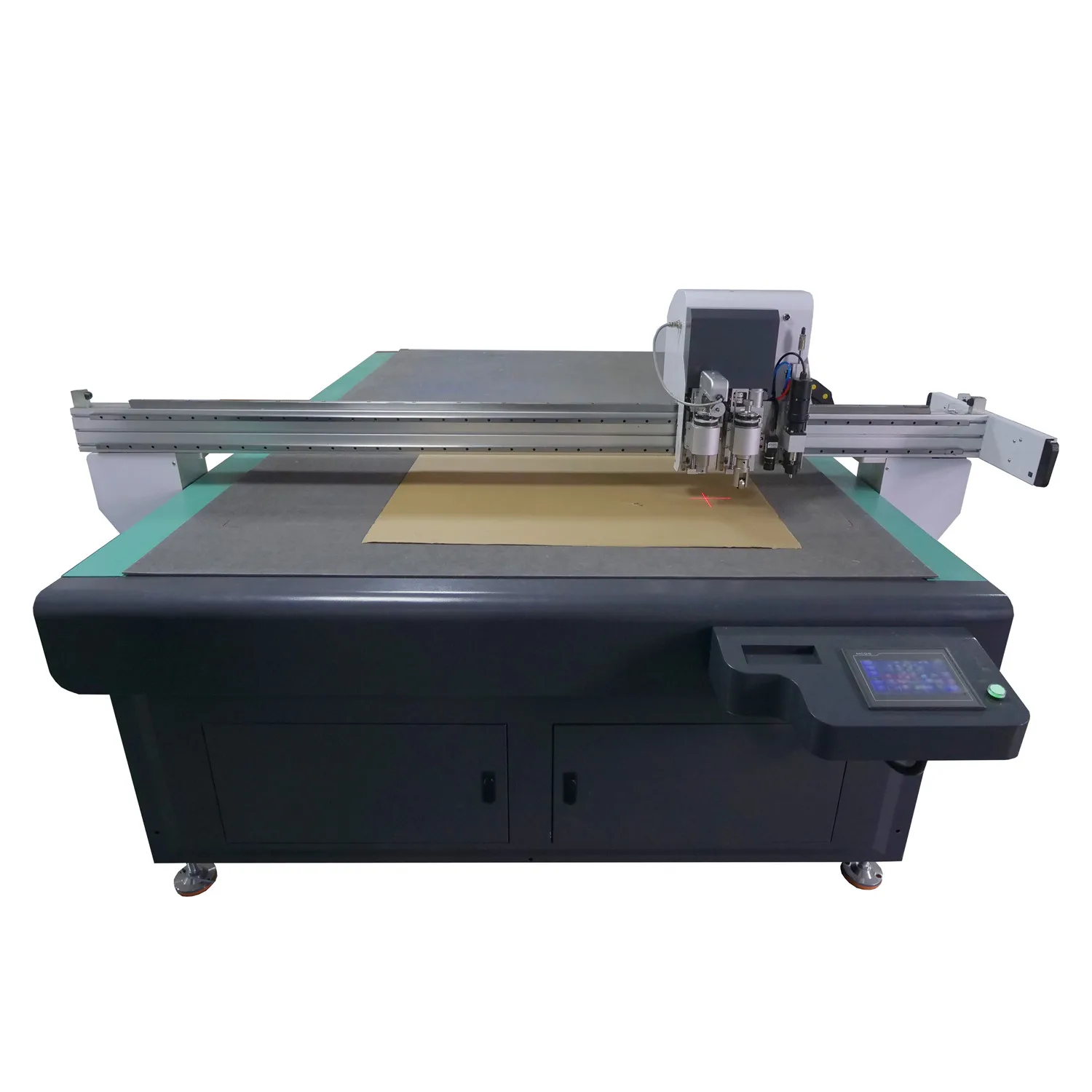
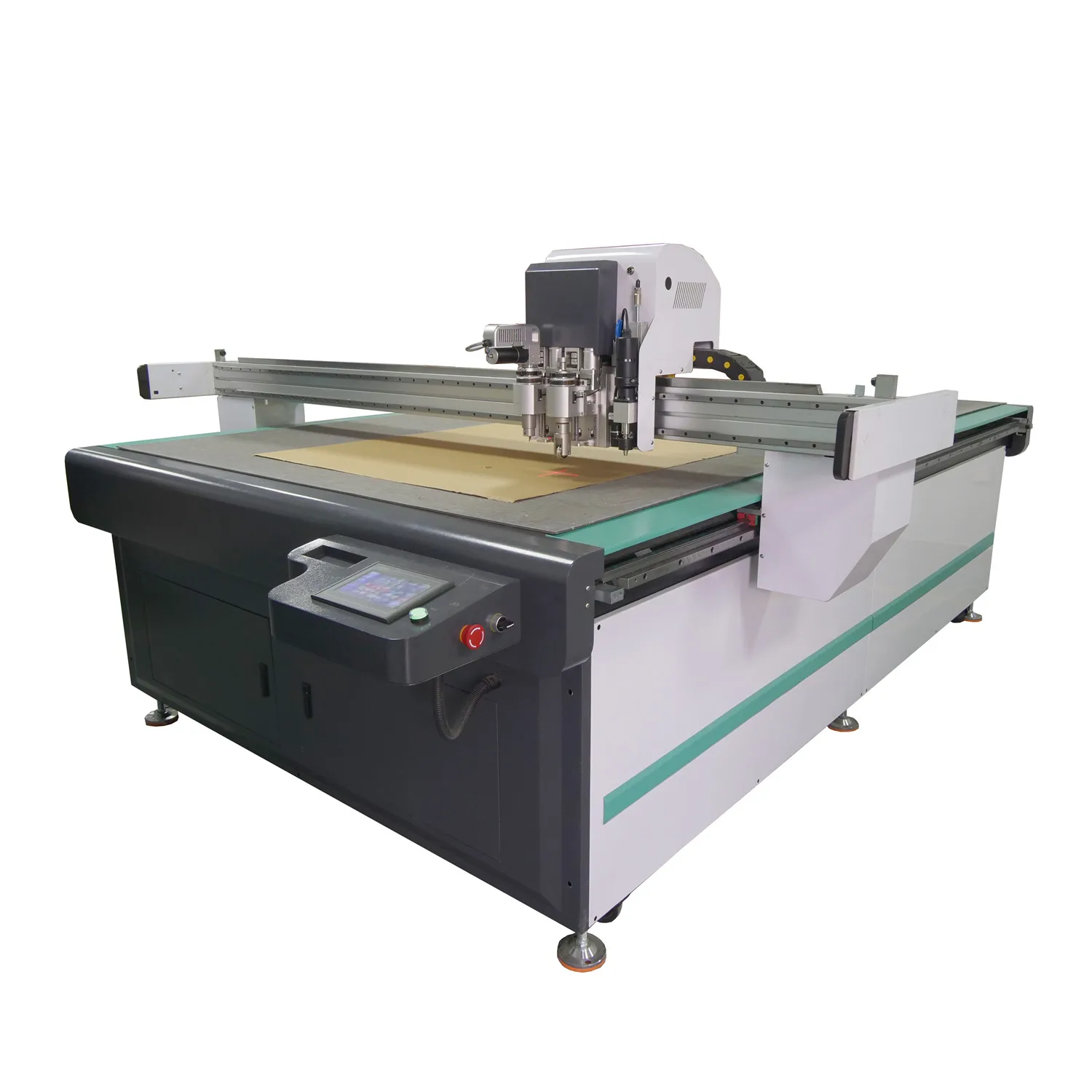
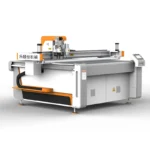
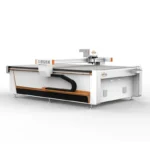
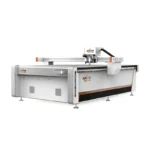
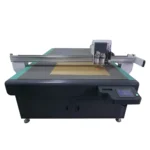
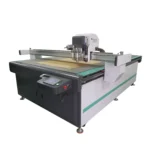
| Product Type | CNC Oscillating Knife Carton Sample Cutting Machine |
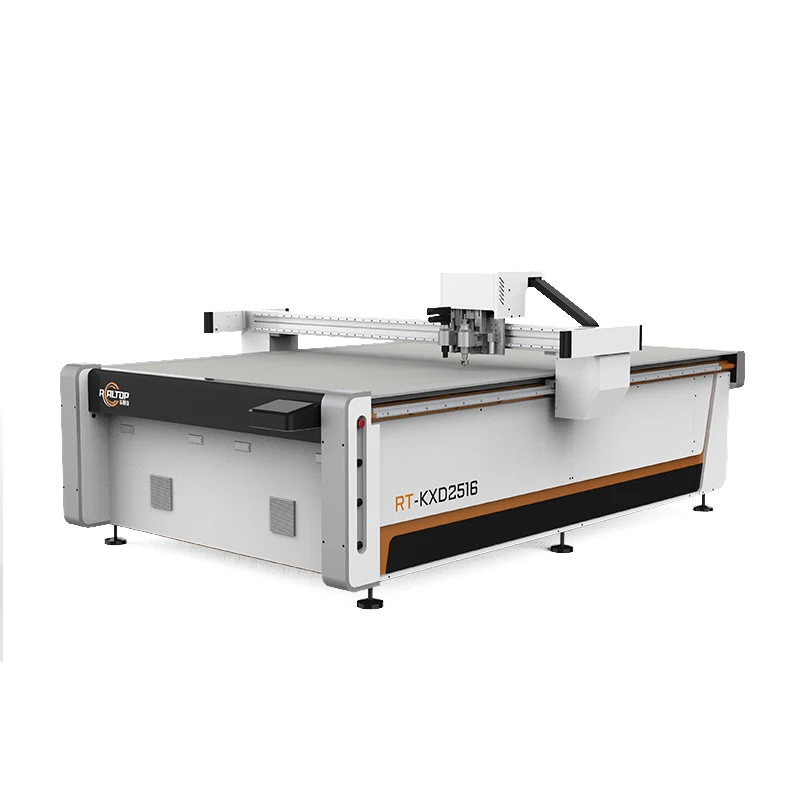
| Available Models | RT–R2513 / RT-D2513 / RT-S2516 |
| Working Area Options | 2500×1300 mm or 1600×2500 mm |
| Cutting Tool Options | Oscillating knife, Creasing tool, Kiss-Cut Knife, Round punch |
| Material Fixing Method | Vacuum system with zoned adsorption |
| Rated Power | 9 kW |
| Vacuum Pump | 7.5 kW |
| Cutting Thickness Capacity | Up to 18 mm (basis not stated in source — confirm material type and density) |
| Compatible Materials | Corrugated board, Cardboard, Paper, Stickers, PP Paper, Labels |
| Repeated Positioning Accuracy | <0.05 mm |
| Servo Motor Configuration | Dongling servo (Delta servo available on request) |
| Frame Construction | Welded thick square seamless steel with high-temperature stress relief |
| Vacuum Table Surface | Aluminum alloy honeycomb |
| Guide Rail | Taiwan Hiwin linear guide |
| Conveyor Belt Option | German-imported belt for auto-feeding setups |
| Supported File Formats | DXF, OLT, PDF, AI |
| Data Transmission | Ethernet port |
| Safety System | Infrared sensors |
| Operating Voltage | 380 V (frequency to be confirmed per destination market) |
| Standard Blade Allocation | 10 pieces of oscillating blades |
| Warranty Period | 1 year (excluding consumables: felt and knife blades) |
| Typical Lead Time | Under 30 working days |
Application Suitability
| Application | Material or Output |
|---|---|
| Short-run carton prototype making | E-flute, B-flute, and BC-flute corrugated board up to tested thickness limits |
| Custom packaging sample production | Greyboard, kraft paper, coated folding carton stock |
| Point-of-sale display and signage cutting | Honeycomb paperboard, foam PVC board, PP corrugated sheet |
| Label and sticker contour finishing | Self-adhesive vinyl, paper labels, sticker sheets |
| Gasket and seal prototyping | Non-metal gasket sheet, compressed fiber material |
Why "Up to 18 mm Cutting Depth" Needs Clarification Before You Commit
We never quote cutting depth without testing your exact board grade and flute profile first.
A CNC carton sample cutting machine manufacturer quoting maximum thickness without specifying material density is leaving you exposed. High-density double-wall corrugated behaves completely differently from single-wall B-flute at the same measured thickness. The knife will either crush the flutes or fail to penetrate cleanly, and you only find out after the machine arrives [NEED_CITE: material density effect on oscillating knife cutting performance]. We ask every buyer to send representative board samples before we finalize the tool head specification and oscillation frequency setting, because the difference between a clean sample edge and a crushed, delaminated cut comes down to matching the tool to the actual material on your floor.
Multi-Tool Head Sequencing for Complete Sample Finishing
A finished carton sample requires cutting, creasing, and sometimes perforation or kiss-cutting in a single production cycle. This CNC carton sample cutting machine accommodates an oscillating knife for through-cuts, a creasing wheel for fold lines, a kiss-cut knife for partial-depth label work, and a round punch for registration or hang holes. The control software sequences all tools within the same job file so a complete packaging prototype comes off the table finished and ready to fold, eliminating secondary operations between tools.
Vacuum Table Zoning for Small Blanks and Nested Layouts
Holding small carton blanks flat during cutting is a recurring challenge in sample making. The aluminum alloy honeycomb table is divided into adsorption zones that can be activated independently [NEED_CITE: vacuum zoning principles for flatbed digital cutting]. When cutting a nested sheet of small box blanks, only the zones under active material need to remain live, preventing the vacuum from pulling air through empty table areas and losing hold-down pressure on the pieces being cut. This is particularly important for lightweight carton stock that tends to lift at the edges during oscillating knife traversal.
Reading the Specs That Actually Determine Sample Quality
The repeated positioning accuracy of <0.05 mm ensures that crease lines land precisely where the cut outline expects them — a misalignment between cut and crease means the sample will not fold square. The 9 kW rated power covers both the 7.5 kW vacuum pump and the cutting head simultaneously, which matters because some configurations underpower the vacuum when the oscillating motor draws peak current during dense board penetration. The welded steel frame with high-temperature stress relief prevents the table geometry from drifting over months of use, because a frame that relaxes under load will introduce cumulative positioning errors across a 2500 mm cutting length. The Taiwan Hiwin linear guide specification relates directly to how smoothly the head traverses at speed, influencing edge quality on long straight cuts and tight-radius corners alike.
What Happens When the Wrong Tool Head Meets Your Board
Choosing an oscillating knife with the wrong stroke frequency for high-flute corrugated produces crushed edges that make the sample look unprofessional to your client. Selecting a drag knife instead of a creasing wheel for fold lines will cut through the top liner rather than compress it, leaving a weakened crease that cracks on folding. Insufficient vacuum zoning lets small carton blanks shift mid-cut, ruining the sample and wasting material [NEED_CITE: vacuum hold-down failures in digital cutting operations]. These are not theoretical issues — they are the exact failure modes we see when configuration is decided by working area alone rather than material testing.
Why Packaging Buyers Source This Equipment From Our Jinan Facility
Our in-house design team covers both the mechanical frame engineering and the software integration, meaning the creasing wheel pressure settings and the nesting algorithm are developed together rather than bolted on from separate vendors. We test every CNC carton sample cutting machine on the buyer’s own board stock before it leaves the factory, documenting edge quality and crease depth in a sample cutting report that ships with the machine. Voltage, plug type, and control language are confirmed against your facility’s electrical standard and operator preference before production begins. The tool head and table configuration list is written specifically for your stated materials and daily sample volume, not pulled from a generic catalog page. Our core factory handles frame welding, machining, assembly, and testing under one roof, which keeps lead times under 30 working days for standard configurations.
Documentation & Verification
- Machine specification sheet confirming final voltage, frequency, and plug type for your destination
- Sample cutting report produced on your supplied corrugated or card stock before order confirmation
- Tool head and vacuum table configuration list matched to your stated board grades and sample sizes
- Factory test record documenting repeated positioning accuracy and vacuum hold-down pressure readings
- Software licence file with confirmed language setting and supported DXF, AI, PDF, and OLT import formats
- Packing photographs showing machine condition and crate configuration before container loading
Installation, Commissioning & Support
- Requires a level concrete floor pad accommodating the 3550×1910 mm or 3450×2300 mm machine footprint plus operator clearance
- Dedicated 380 V three-phase circuit rated for the 9 kW total draw, with frequency matching confirmed before wiring
- Machine ships as a single assembled unit; vacuum pump may be separately mounted depending on configuration
- First-run commissioning includes vacuum zoning calibration and tool head offset setting for your specific board stock
- Operator training covers file import, nesting workflow, tool change procedure, and blade replacement intervals
- Spare parts allocation includes 10 oscillating blades; felt consumables and replacement blades available for reorder
- Routine maintenance schedule covers Hiwin guide rail lubrication intervals and vacuum pump filter replacement cycles
What We Need to Quote the Right Configuration
Send us the specific corrugated flute types and board grades you sample most often, along with typical sheet sizes and your daily sample output target. Confirm your workshop’s available voltage and frequency, and let us know which design software your team currently uses so we verify file format compatibility on our nesting platform. If you have printed carton samples requiring CCD contour alignment, share a print file so we can confirm registration mark recognition before you commit.
Frequently Asked Questions
Q: How do you verify that the machine will cut my specific corrugated flute profile cleanly?
A: We ask you to send a selection of your actual board samples — different flute types, thicknesses, and densities. Our team runs test cuts with various oscillation frequencies and blade angles, then ships a sample cutting report showing edge quality and crease depth results for each material. Configuration is only finalized after this test confirms clean cutting on your board.
Q: What electrical and language details do you confirm before building the machine?
A: Before production starts, we document your facility’s voltage, frequency, and plug type, then confirm the control interface language with your operators. The specification sheet reflecting these choices is signed off by both parties and attached to the build order, so there are no electrical or software surprises when the machine arrives at your workshop.
Q: When should I choose a creasing wheel over a drag knife for fold lines?
A: A creasing wheel compresses the board fibers to create a fold line without cutting through the surface liner, which is correct for carton samples that need to fold cleanly without cracking. A drag knife is suited for through-cutting outlines or kiss-cutting labels. We specify the creasing wheel for all carton fold-line work and reserve the drag knife for contour cutting only.
Q: Can the software import my existing DXF and AI design files without conversion issues?
A: The professional carton nesting software supports direct import of DXF, AI, PDF, and OLT formats. Before order confirmation, we ask you to send a representative design file so we can test the import, verify that layer assignments and cut/crease line types are interpreted correctly, and confirm the nesting workflow matches your current sample production process.
Q: How does the vacuum table handle very small carton blanks that tend to shift?
A: The aluminum honeycomb table features zoned vacuum adsorption, allowing the operator to activate only the sections directly under the material being cut. This concentrates hold-down force on the active cutting area and prevents small or lightweight blanks from lifting or drifting during the oscillating knife pass, maintaining positioning accuracy across the entire nested layout.
You may also like

商品评价
Clear filtersThere are no reviews yet.