


-
 Courier delivery
-
 DHL Courier delivery
-
 Warranty 1 year
-
 Free 30-Day returns

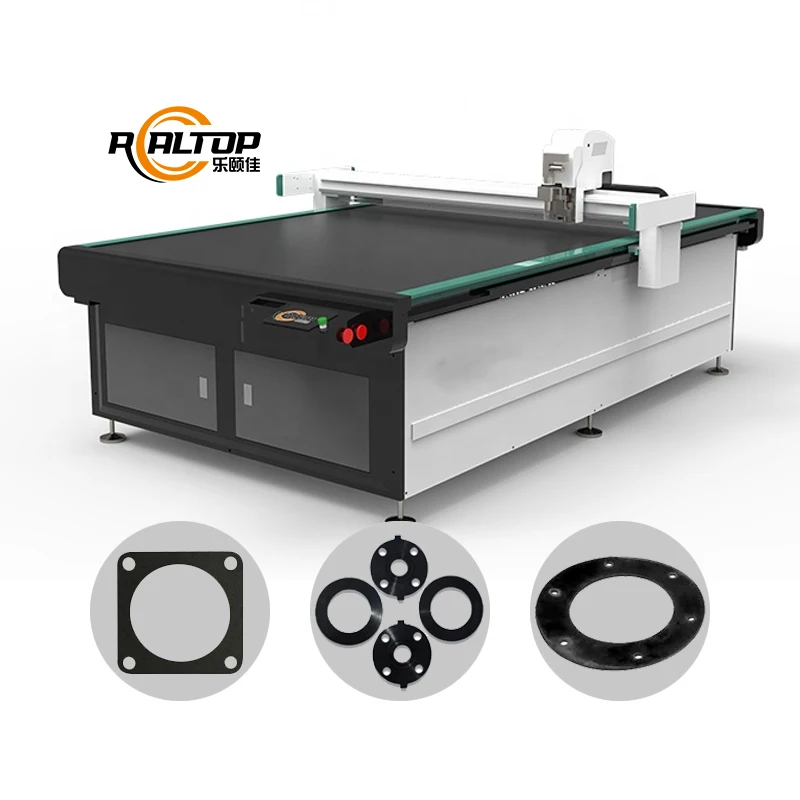
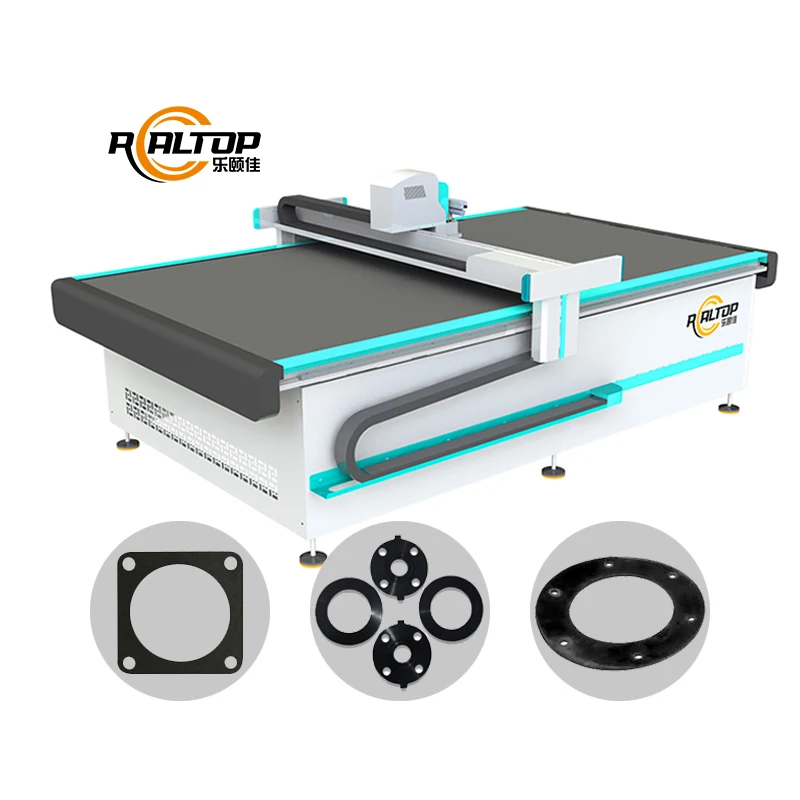
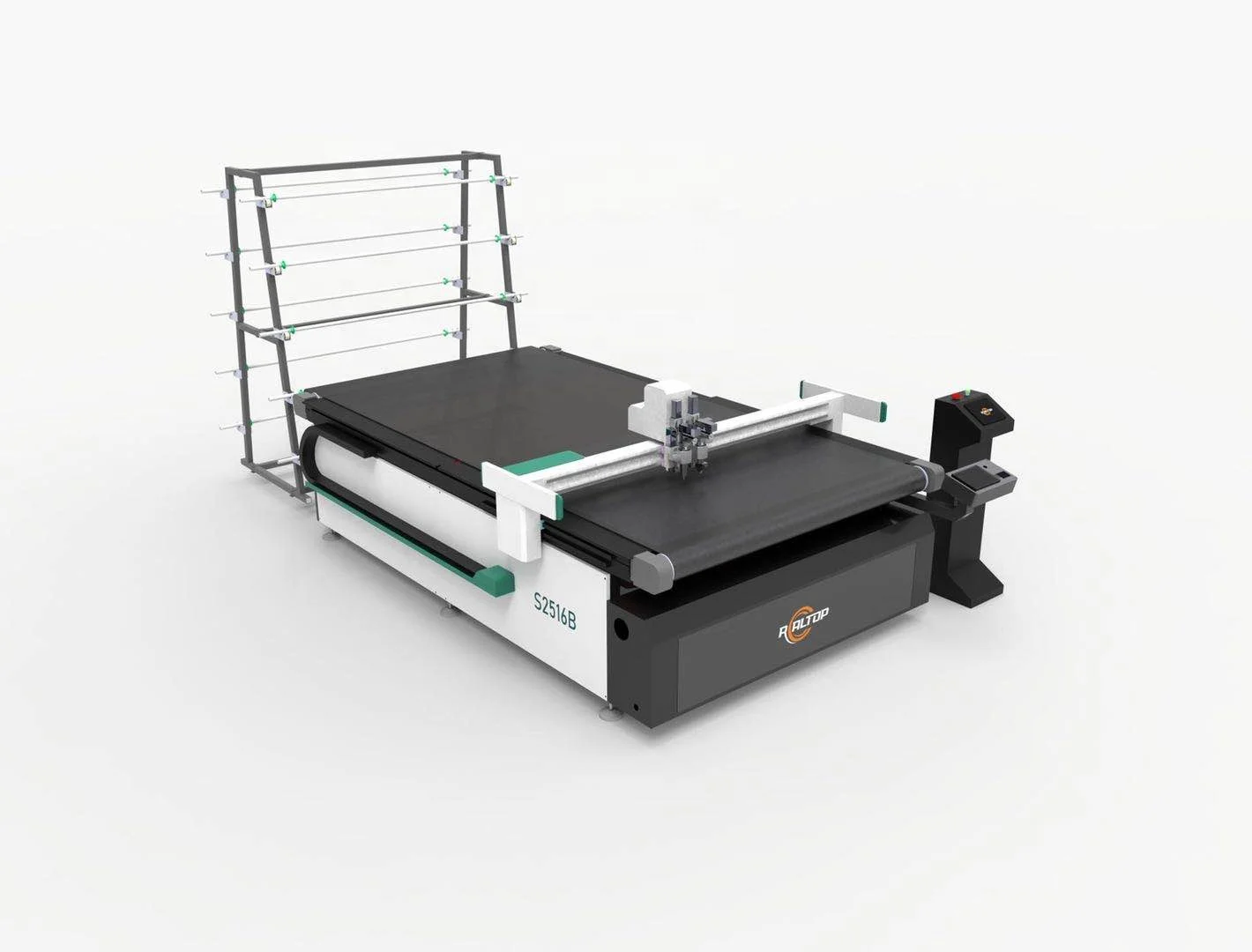
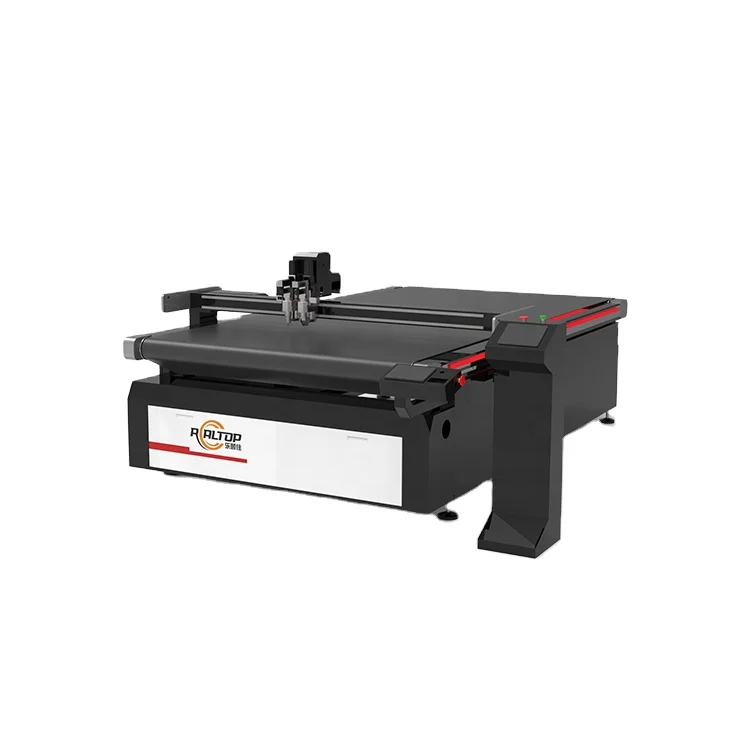
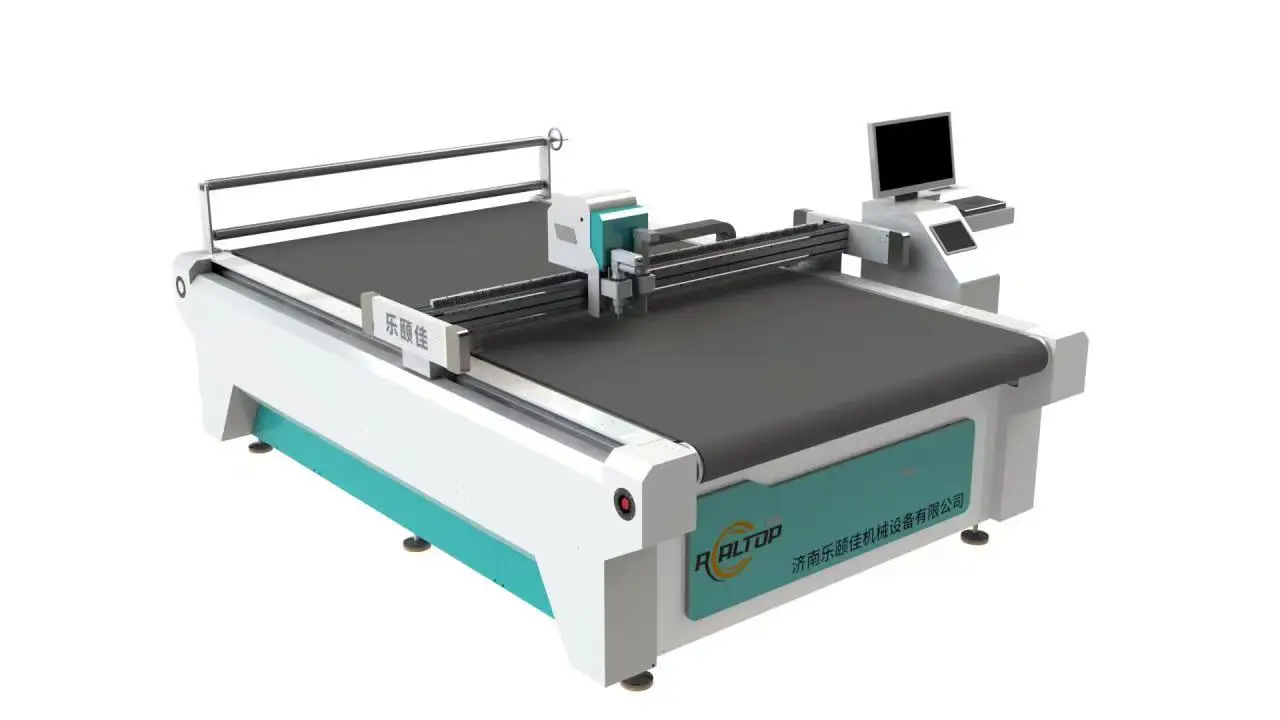
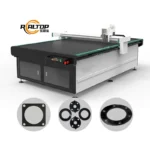
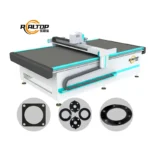
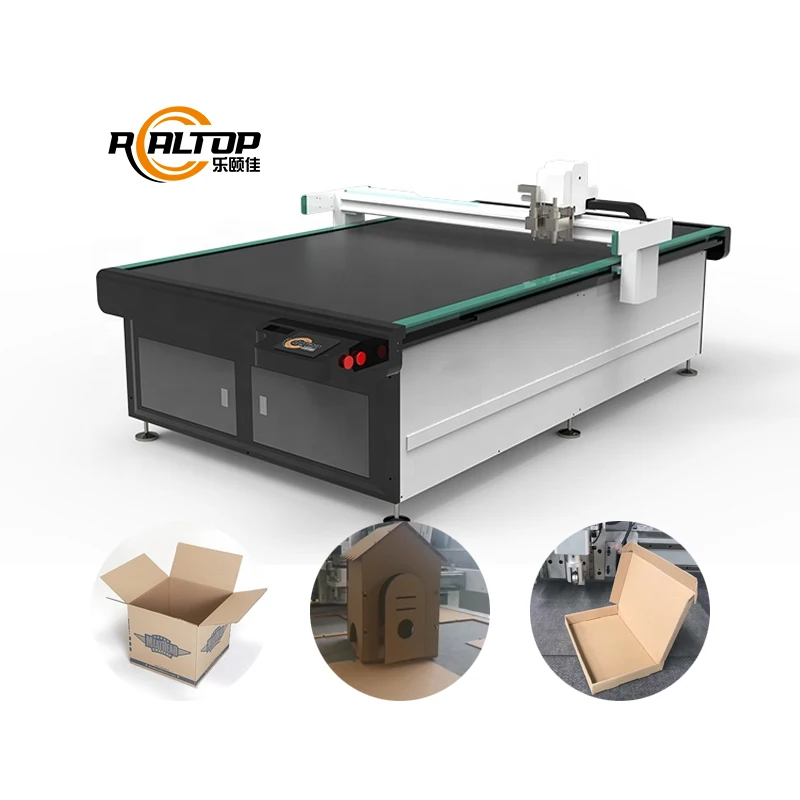
Frame Engineering and Motion Integrity — every RT-D2516/RT-S2516 platform is assembled from the ground up with specified motion components and tested under load before it leaves the Jinan floor.
Technical Specifications
| Parameter | Value |
|---|---|
| Model | RT-D2516 / RT-S2516 |
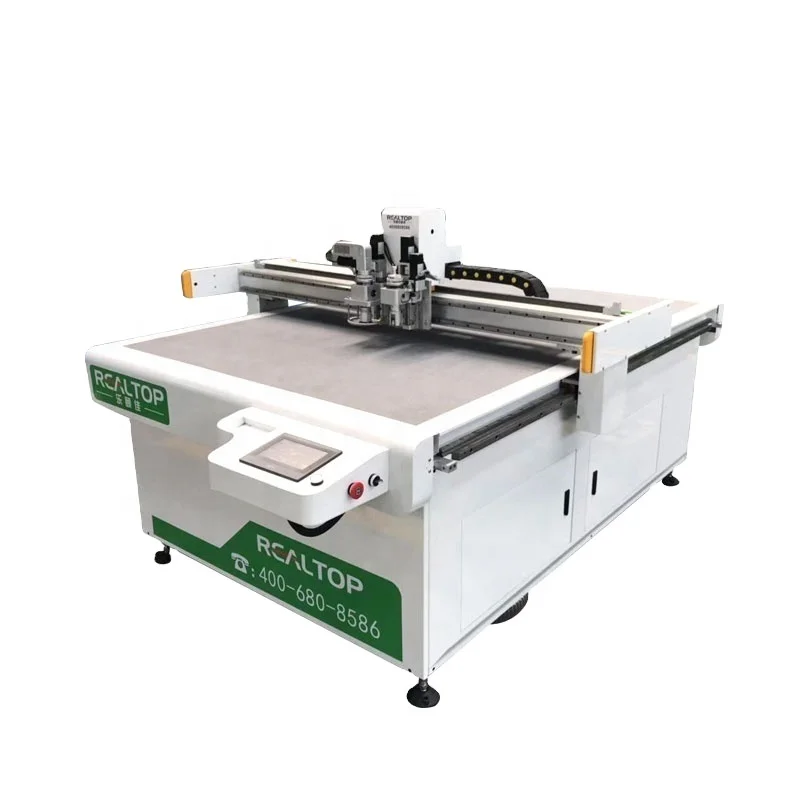
| Product Type | CNC Oscillating Knife Cutting Machine |
| Working Area | 1600 × 2500 mm |
| Overall Dimensions | 3450 × 2300 × 1250 mm |
| Rated Power | 9 kW |
| Table Type | Flat working table with vacuum, 7.5 kW vacuum pump |
| Tool Head | Swiss imported oscillating knife with full cut, half cut and cursor location |
| Transmission System | Delta digital servo motors, Taiwan Hiwin linear guides, ball screw, synchronous belt |
| Repeatability | ≤ 0.1 mm |
| Translational Velocity | 800–1200 mm/s |
| Cutting Speed | 200–800 mm/s (basis not stated in source) |
| Control System | HP-GL compatible format |
| Voltage | 380V ±10% |
| Safety Device | Infrared sensors |
| Conveyor Belt | German imported, auto feeding equipped |
| Warranty | 12 months for whole machine |
Application Suitability
| Application | Material or Output |
|---|---|
| Industrial gasket fabrication | Compressed non-asbestos fiber, aramid sheets, rubber-bound compounds |
| Sealing component production | Silicone sheet, soft glass, PTFE-filled materials |
| Automotive interior trimming | Sponge composite leather, PVC foam, textile laminates |
| Flexible material conversion | Natural and synthetic leather, garment textiles, rubber sheet stock |
Why "Working Area Alone" Fails Gasket Producers at Full Speed
A 1600 × 2500 mm bed only matters if the motion system holds tolerance when the knife is under load.
Many buyers specify a CNC oscillating knife cutting machine manufacturer based on table size and discover months later that the linear guides deflect during dense gasket material cuts, producing dimensional drift across the sheet. I have watched machines of this class start the morning with clean edges and end the shift with ragged corners because the ball screw and servo combination could not sustain repeatability through continuous production. The build behind the spec sheet determines whether you are looking at a sample-room prototype table or a machine that earns its keep on a real factory floor [NEED_CITE: industrial motion component lifespan under cyclic loading].
Frame Construction and Motion Component Selection
The RT-D2516 and RT-S2516 platforms use Taiwan Hiwin linear guides paired with ball screw drives on the critical axes, supported by Delta digital servo motors. This combination is chosen for gasket and sealing material work because the cutting forces generated by dense fiber and rubber compounds demand rigidity that belt-only drives cannot sustain over long production runs. A CNC oscillating knife cutting machine manufacturer that invests in named motion components gives the distributor a verifiable bill of materials to show end-users.
Build Quality Checkpoints Before Dispatch
Every platform goes through an in-house test protocol that runs the actual tool head against material samples at production speed. Frame welds, gantry squareness and vacuum table flatness are checked before the motion system is commissioned. For OEM partners evaluating a CNC oscillating knife cutting machine manufacturer, this means the factory test record documents real cutting results on specified materials rather than a dry-run of empty motion [NEED_CITE: factory acceptance test standards for CNC cutting equipment].
How Motion Specs Translate to Gasket Edge Quality
Repeatability rated at ≤ 0.1 mm matters directly when cutting multi-layer gasket stacks or producing nested sealing components where a 0.3 mm drift means the bolt-hole pattern no longer matches the flange. The Delta servo motors maintain positional accuracy through rapid direction changes that oscillating knife work demands, especially around tight radii on small gasket profiles. Translational velocity reaching 800–1200 mm/s allows the head to reposition quickly between cut paths, but the cutting speed of 200–800 mm/s is where edge quality is decided — and that speed depends entirely on the material density and thickness being processed. The 7.5 kW vacuum pump ensures the sheet stays flat against the table even when cutting small parts that would otherwise lift under knife vibration.
The Hidden Cost of Skipping Tool Head Specification
Choosing the wrong oscillating knife angle or amplitude for a given gasket material produces crushed edges on compressed fiber or incomplete cuts through reinforced rubber, forcing operators to run the path twice and halving effective throughput. I recall a visit to a sealing fabricator where the machine had been ordered with a standard knife setup, but their primary material was a high-durometer composite that needed a different blade geometry entirely. They ran that line for weeks before calling us in to reconfigure the tool station [NEED_CITE: oscillating knife blade selection for composite gasket materials].
Why Source This Platform from the Factory
The design team handles both knife and laser cutting platforms in-house, so a distributor can expand the product range without juggling multiple OEM relationships. Frame engineering, electrical layout and software configuration are controlled from one facility, meaning revisions stay consistent across batches. Voltage, plug type and control panel language are confirmed per destination market before production release. The OEM scope covers branding, color and documentation customization down to the spare parts labeling. Sample cutting on the buyer’s own gasket material is standard before order commitment, not an optional extra.
Documentation & Verification
- Machine specification sheet listing every motion component by brand and part origin
- Electrical schematic confirming voltage, frequency and plug type for destination market
- Factory test record documenting cut quality on buyer-supplied gasket material samples
- Tool head and table configuration list matched to specific material thickness range
- CE declaration documentation where applicable to the import market
- Spare parts list with oscillating knife consumables and belt replacement schedule
Installation, Commissioning & Support
- Foundation must support 3450 × 2300 mm footprint with level tolerance for vacuum table sealing
- Dedicated 380V ±10% circuit required to handle 9 kW rated draw plus vacuum pump startup surge
- Auto feeding conveyor arrives pre-mounted; final belt tensioning done on-site during commissioning
- First production run supervised to confirm repeatability holds at ≤ 0.1 mm on buyer’s material
- HP-GL compatible control system language set to operator preference before power-on training
- Oscillating knife blade rotation schedule and German conveyor belt inspection intervals documented
What to Include in Your Inquiry
Send the specific gasket or sealing material type, thickness range and sheet dimensions you plan to process, along with your local voltage and frequency standard. If you are a distributor evaluating this platform for your market, note the control language and documentation requirements your end-users expect. We will run sample cuts on your actual material and return the test report with the quotation so you can evaluate edge quality and dimensional accuracy before committing.
Frequently Asked Questions
Q: What does the OEM customization scope actually cover on this platform?
A: The factory handles logo placement, machine color, control panel language and electrical standard customization including voltage, frequency and plug configuration. Distributors can request branded documentation, packing photographs and private-label spare parts kits. All customizations are confirmed in writing before production release so there are no surprises at container loading.
Q: How is voltage confirmed for different export markets before production starts?
A: The buyer provides the destination country and local electrical standard during inquiry. The engineering team confirms voltage, frequency and plug type in the specification sheet, and this document must be signed off before the machine enters assembly. The 380V ±10% base configuration is adapted to match the target market’s supply, and the electrical schematic reflects the final build.
Q: What documentation ships with the machine for distributor acceptance?
A: Each unit ships with the machine specification sheet, electrical schematic, factory test record, sample cutting report on buyer material, operation and maintenance manual, software licence note with file format compatibility, spare parts list and packing photographs. CE declaration paperwork is included where applicable to the destination market’s import requirements.
Q: Can we audit the factory build process before our order ships?
A: Distributors and importers are welcome to visit the Jinan facility to review frame construction, motion component installation and quality control checkpoints. For buyers unable to travel, the factory provides staged build photographs and a video-recorded factory test run on the buyer’s material, covering repeatability measurement and cutting edge inspection under production conditions.
Q: What is the typical lead time and how is the machine packed for ocean freight?
A: Production dispatch typically requires seven to ten working days after specification sign-off, with transit time varying by destination. The machine is packed with frame protection, motion component immobilization and vacuum table surface covering. A container loading plan is shared with the distributor before shipment so inventory receiving can be planned in advance.
You may also like

商品评价
Clear filtersThere are no reviews yet.