


-
 Courier delivery
-
 DHL Courier delivery
-
 Warranty 1 year
-
 Free 30-Day returns

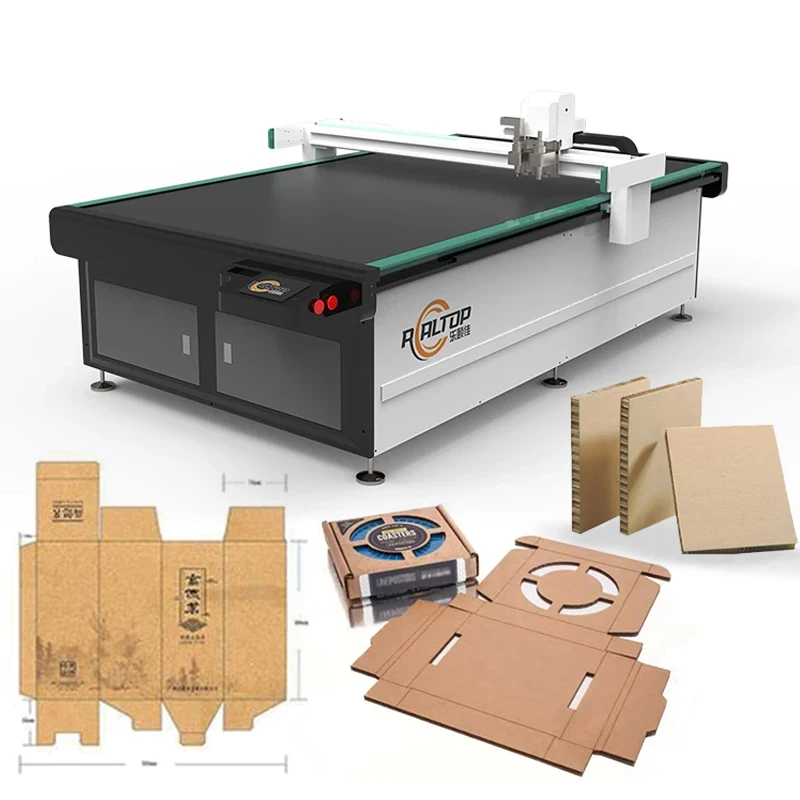
Factory-built machine configurations — Realtop specifies tool heads and vacuum zoning against the buyer’s actual corrugated flute stock rather than quoting a generic cutting envelope.
Technical Specifications
| Parameter | Value |
|---|---|
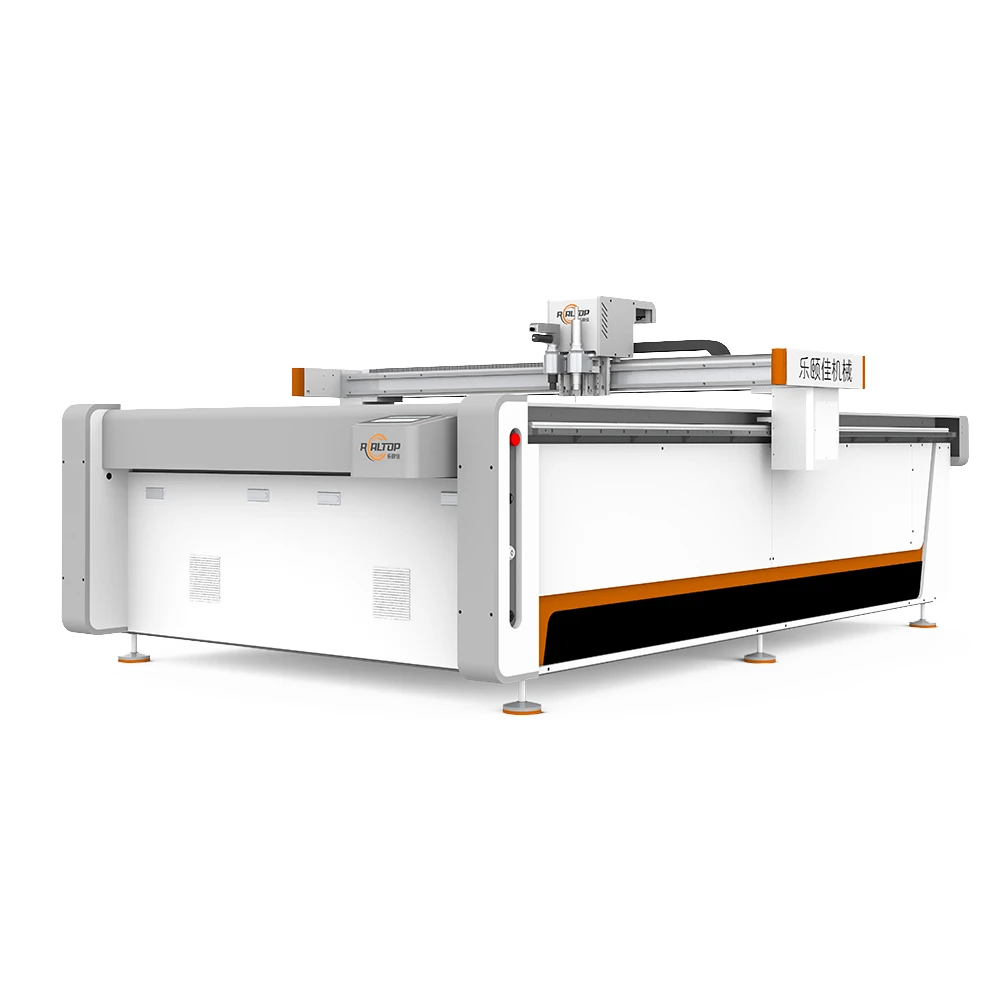
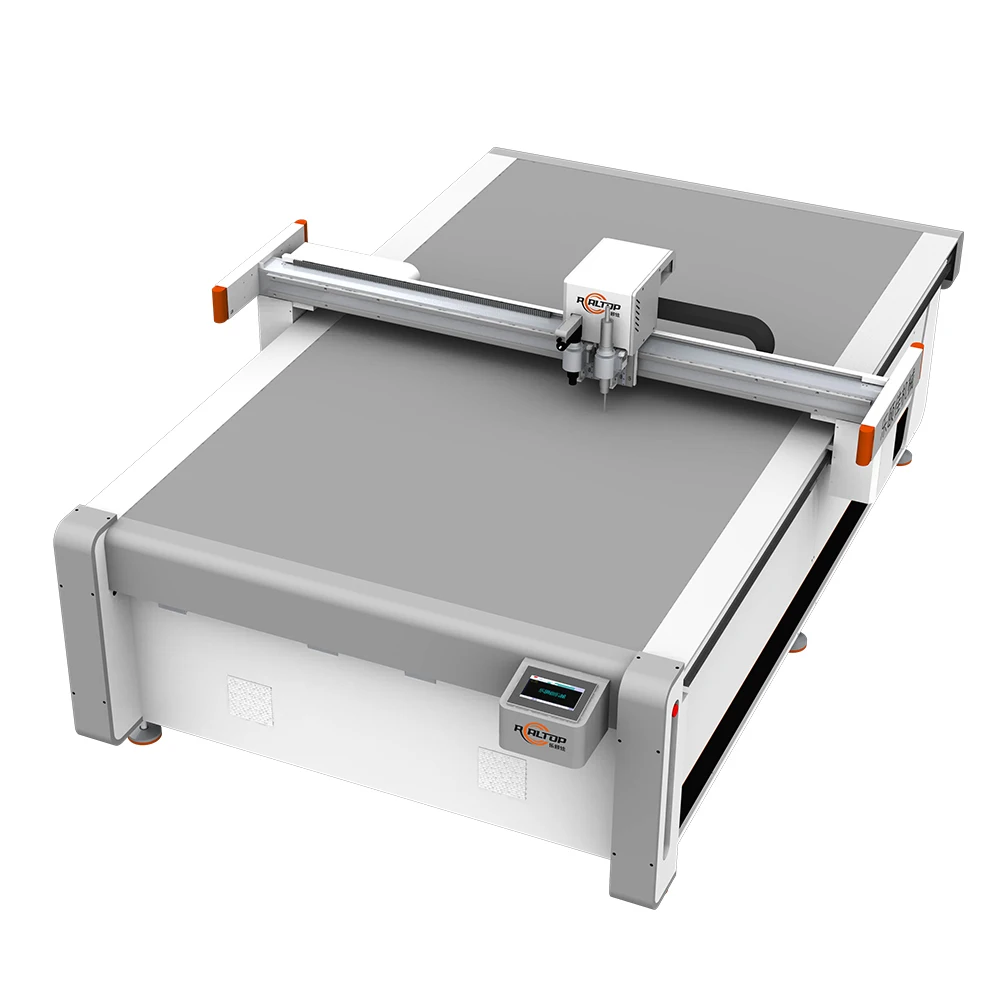
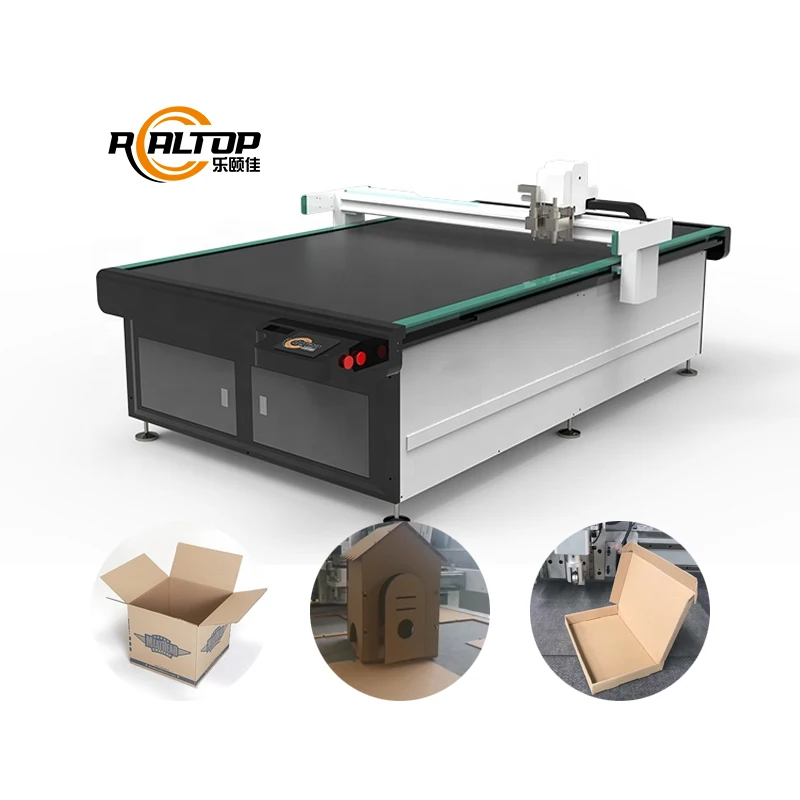
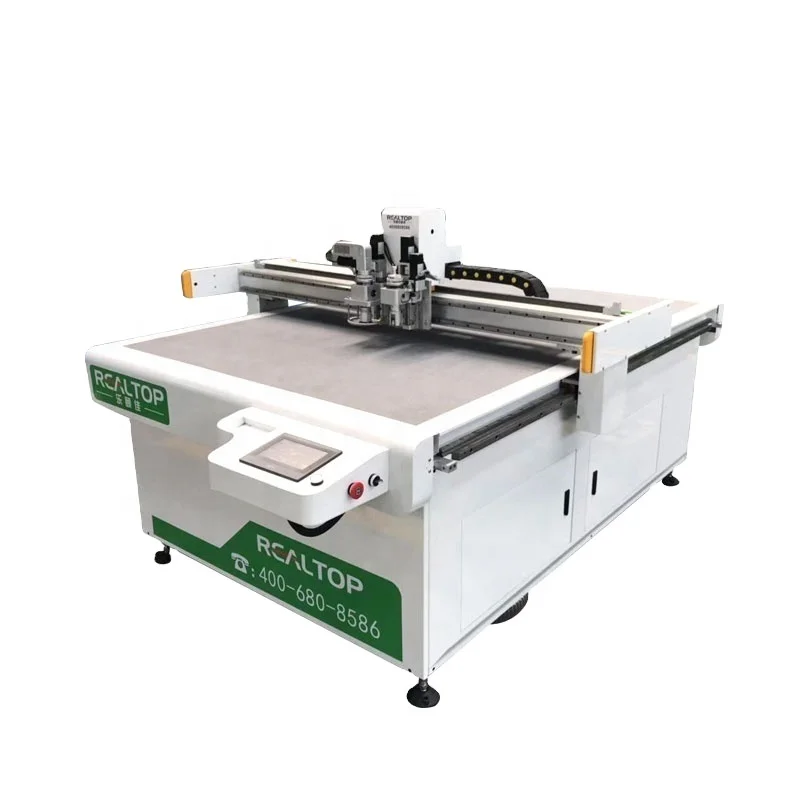
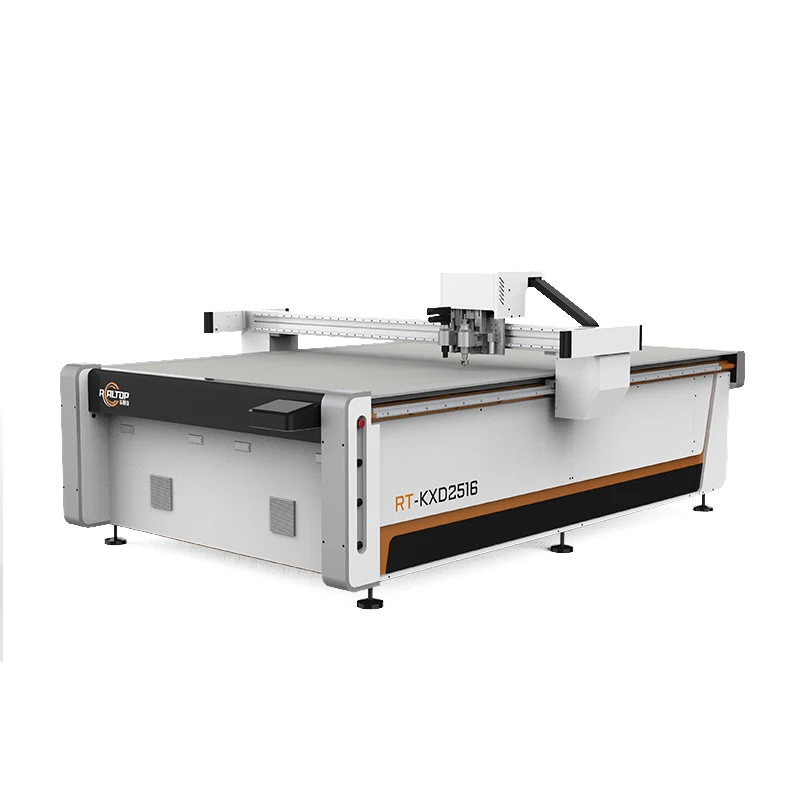
| Model | RT–R2513 / RT-D2516 / RT-S2516 |
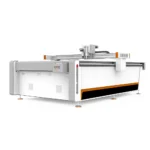
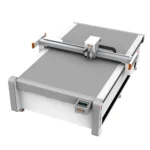
| Product Type | CNC Oscillating Knife Cutting Machine |
| Working Area | 2500×1300mm (RT–R2513) / 1600×2500mm (RT-D2516 / RT-S2516) |
| Overall Dimensions | 3550×1910×1400mm (RT–R2513) / 3450×2300×1250mm (RT-D2516 / RT-S2516) |
| Cutting Tools | Oscillating knife, Creasing tool, Kiss-Cut Knife Tool, Round punch |
| Cutting Thickness | ≤18mm (basis not stated in source — confirm material type and flute structure) |
| Repeated Accuracy | <0.05mm |
| Fixing Method | Vacuum system with aluminum alloy honeycomb table |
| Rated Power | 9 kW |
| Voltage | 380V (frequency to be confirmed per market) |
| Servo Motor | Dongling servo (Delta servo optional) |
| Guide Rail | Imported straight-line square guide |
| Transmission | Rack transmission, Ethernet port data transfer |
| File Formats | DXF, OLT, PDF, AI |
| Safety Device | Infrared sensors |
| Frame Construction | Welded thick square seamless steel, high temperature treated |
| Blade Supply | 10 pieces of oscillating blades included |
| Optional Configuration | 7.5 kW vacuum pump, Germany imported conveyor belt, auto feeding, Taiwan Hiwin rail |
| Warranty | 1 year (excluding felt and knife blades) |
| Delivery Time | <30 working days |
Application Suitability
| Application | Material or Output |
|---|---|
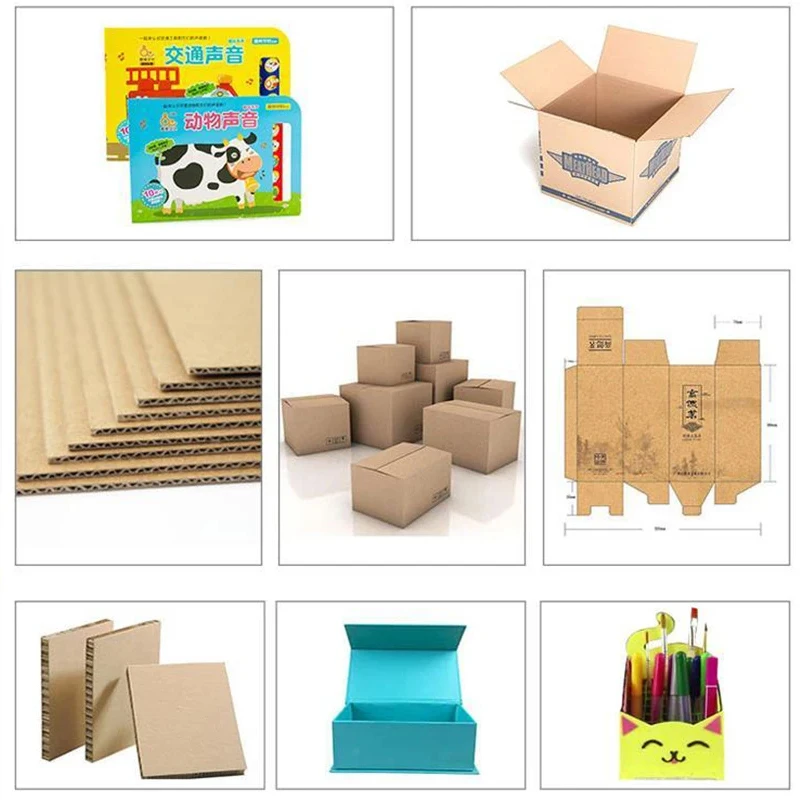
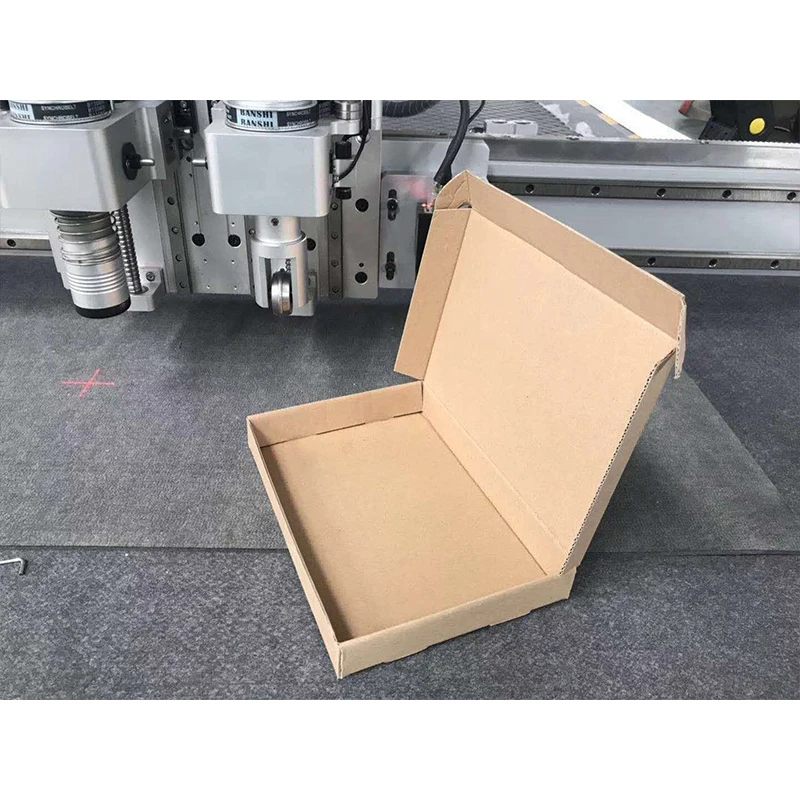
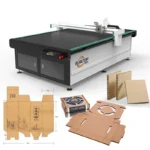
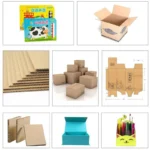
| Corrugated box and carton sample making | Single, double and triple-wall corrugated board up to the machine’s verified flute capacity |
| Sticker and label contour cutting | Self-adhesive vinyl, PP paper, coated label stock on release liner |
| Paper packaging prototyping | White card, grey board, kraft and coated folding carton stock |
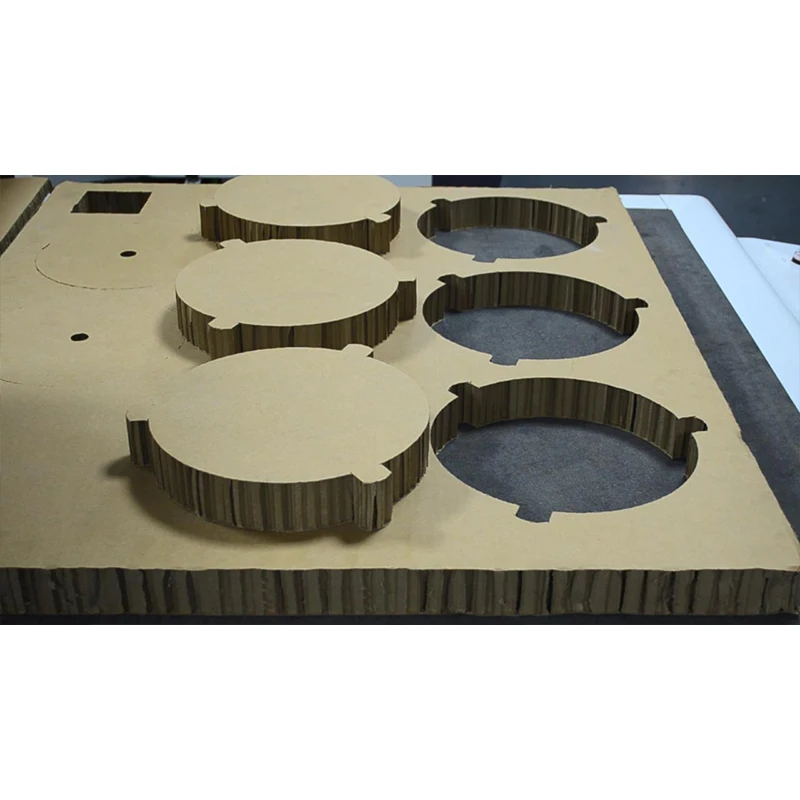
| Cardboard display and insert production | Honeycomb board, foam board and solid fibre partition material |
| Gift box and express paper box manufacturing | Laminated board, magnetic closure box wrap and rigid box board |
When the Flute Profile Doesn’t Match the Quoted Specification
A cutting machine specified on working area alone will fail at the point where board thickness meets tool head limitation.
I have watched containers arrive at port with machines that ran perfect samples on white card, only for the buyer to load five-layer corrugated on day one and see crushed edges across every sheet. The oscillating knife could not penetrate the combined flute depth, and the vacuum table lifted the board because zoning was set for small-format card rather than full-sheet corrugated. A CNC Corrugated Box Cutting Machine manufacturer must confirm the flute profile — B, C, E, BC or BE — and match the cutting depth against that specific construction before the order is placed [NEED_CITE: corrugated flute profiles and combined board thickness standards].
Matching the Tool Head to the Board Construction
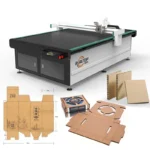
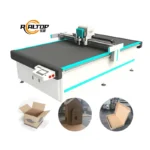
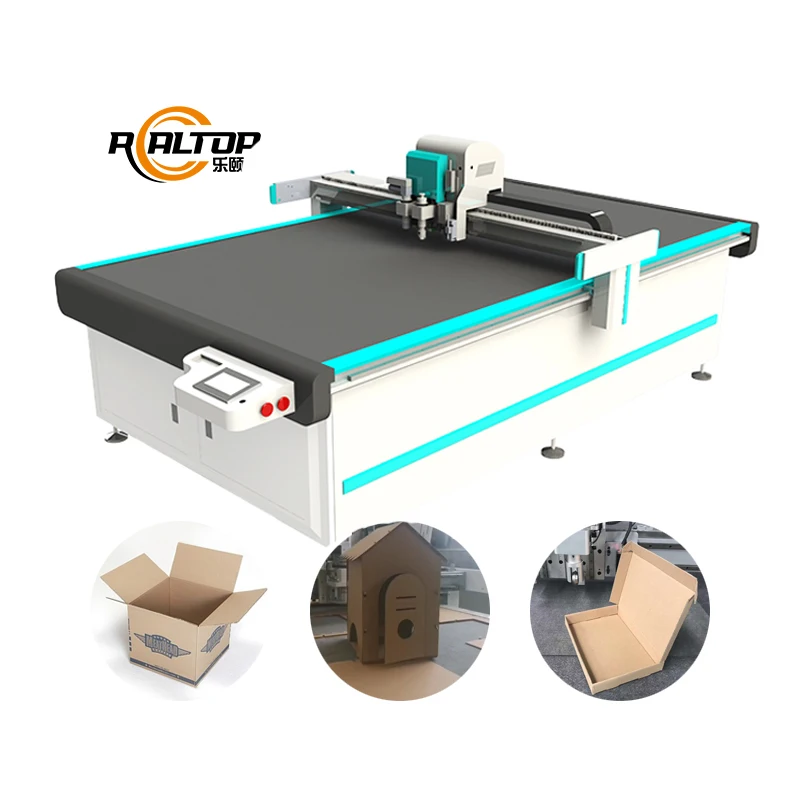
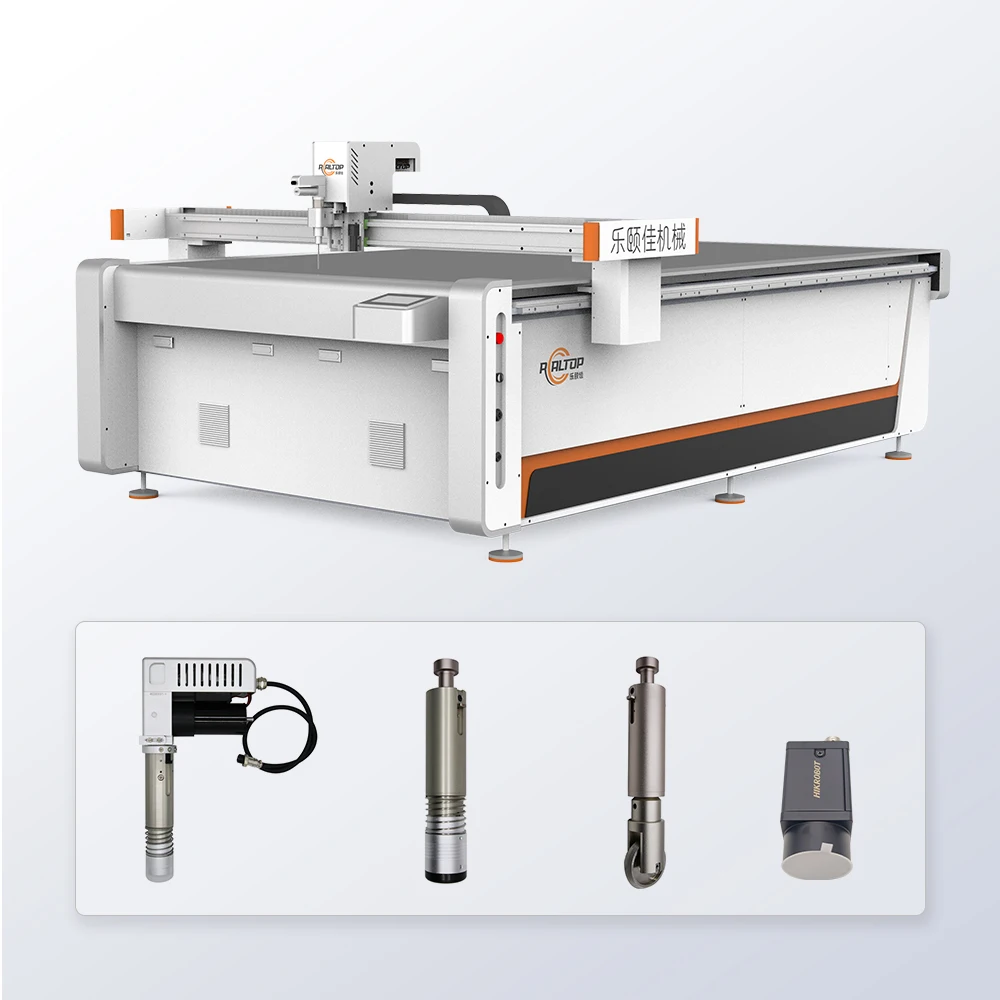
The RT–R2513, RT-D2516 and RT-S2516 each support an oscillating knife, creasing tool, kiss-cut knife and round punch within the same workstation. This multi-tool configuration means a single CNC Corrugated Box Cutting Machine manufacturer setup handles through-cutting of the outer profile, scoring fold lines to a controlled depth, die-cutting kiss-cut labels and punching hang holes — without the operator changing machines or sending the sheet to a second station. The creasing wheel depth is set against the buyer’s board calliper so the fold cracks cleanly without splitting the liner.
Vacuum Zoning That Holds Corrugated Without Crushing It
The aluminum alloy honeycomb vacuum table is divided into adsorption zones that can be activated or closed depending on the part size. When cutting small carton inserts from a full sheet, the operator opens only the zones beneath the cutting path so the vacuum grips the board firmly without pulling the unsupported flutes down into the table surface. This zoned approach prevents the board from lifting into the knife path during high-speed oscillation while avoiding the flute crush that occurs when full-table vacuum is applied to thin-walled micro-flute stock [NEED_CITE: vacuum hold-down principles for corrugated digital cutting].
Reading the Specification Sheet Against the Actual Production Run
The stated ≤18mm cutting thickness is a starting point, not a guarantee across every flute profile. A BC-flute double-wall board may sit within that number on paper, but the actual cutting resistance depends on liner weight, adhesive cure and moisture content. The 9 kW rated power must cover both the oscillating knife motor and the 7.5 kW vacuum pump option simultaneously, so buyers running continuous shifts on thick double-wall stock should verify that the electrical supply can sustain both loads without voltage drop. The <0.05mm repeated accuracy is achievable on the rack transmission with imported linear guides, provided the machine is levelled on a stable floor and the belt or conveyor feed does not introduce lateral drift during sheet loading.
What Happens When Configuration Is Skipped
A buyer who selects a machine on table size and price alone, without specifying the tool head against the material, will discover the problem only after production starts. The wrong oscillation frequency on a high-density triple-wall board produces ragged edges that fail the customer’s packaging quality check. A vacuum pump sized for single-face board will leave double-wall sheets drifting during the cut, ruining registration on printed contour work. These are not software fixes — they require physical component swaps and line downtime [NEED_CITE: digital cutting configuration mismatch consequences in corrugated packaging production].
Why Source This Machine From the Factory That Builds It
Realtop maintains an in-house design team covering both knife cutting and creasing mechanics, so the tool head specification is matched to the buyer’s board range rather than pulled from a default list. The welded thick square steel frame undergoes high-temperature treatment to relieve stress before machining, keeping the guide rail alignment stable through years of oscillating vibration. Voltage, plug type and control language are confirmed against the buyer’s market before production begins, not discovered at the port of entry. Sample cutting runs on the buyer’s own corrugated stock generate a report showing edge quality, crease depth and achievable speed before any commitment is made. The professional carton nesting software imports DXF, PDF, AI and OLT files directly, with language options locked in before the machine ships.
Documentation & Verification
- Electrical schematic with voltage and frequency confirmed for the buyer’s target market before production
- Sample cutting report on the buyer’s own corrugated board showing edge quality and crease depth
- Tool head and table configuration list matched to the buyer’s flute profiles and daily volume
- Software licence note confirming DXF, PDF, AI and OLT file format compatibility with the buyer’s CAD workflow
- Factory test record documenting repeated accuracy and cutting performance before dispatch
Installation, Commissioning & Support
- Levelled concrete floor required to maintain <0.05mm repeated accuracy across the 2500×1300mm or 1600×2500mm working area
- Dedicated 380V circuit with capacity for the 9 kW machine load plus the optional 7.5 kW vacuum pump running simultaneously
- Machine arrives with tool heads pre-calibrated; first-run parameter setting covers oscillation frequency and creasing depth for the buyer’s board range
- Operator training covers vacuum zone selection, blade replacement from the included 10-blade supply, and nesting software file import
- Infrared safety sensor alignment verified during commissioning to meet the machine’s CE documentation requirements
- Ongoing maintenance schedule addresses guide rail lubrication, rack transmission inspection and honeycomb table surface cleaning
Before You Send the Drawing
Tell us the exact corrugated flute profiles you run — single B, C, E, or combined BC and BE — along with the board calliper and liner weight. Share your typical sheet size and whether you need kiss-cut capability for labels alongside standard carton cutting. Confirm your workshop voltage, frequency and preferred control language so the electrical build and software interface are correct from day one. If you can send a sample of your most challenging board stock, we will run a cutting test and return a report before you place the order.
Frequently Asked Questions
Q: How is cutting thickness capacity verified against different corrugated flute profiles and board constructions?
A: We run a sample cut on the buyer’s actual board stock — testing each flute type from micro-flute through double-wall — and document the edge quality, crease depth and achievable speed in a report. The ≤18mm figure is a starting point; real capacity depends on liner weight and flute structure.
Q: What voltage, plug type and control language options are confirmed before shipment?
A: The electrical schematic is built to the buyer’s market standard. Voltage, frequency, plug type and software interface language are locked in during the specification confirmation stage, so the machine arrives ready for the local supply without adapters or rewiring.
Q: How is vacuum table zoning configured to prevent small carton parts from lifting during cutting?
A: The aluminum alloy honeycomb table has selectable adsorption zones. The operator activates only the zones beneath the active cutting path, holding the board firmly while preventing unsupported flutes from being pulled into the table surface during high-speed oscillation.
Q: Can the software import the buyer’s existing DXF or AI files and integrate with current nesting workflows?
A: The professional carton nesting software accepts DXF, OLT, PDF and AI file formats directly. File format compatibility is verified against the buyer’s existing CAD system before order confirmation, and the interface language is set to the buyer’s preference before shipment.
Q: What does the sample cutting test on the buyer’s material cover before commitment to order?
A: We cut the buyer’s own corrugated stock across their flute range, measuring edge cleanliness, crease fold quality, kiss-cut registration and cutting speed. The full report is shared for review so the buyer can evaluate production suitability before committing.
You may also like

商品评价
Clear filtersThere are no reviews yet.