

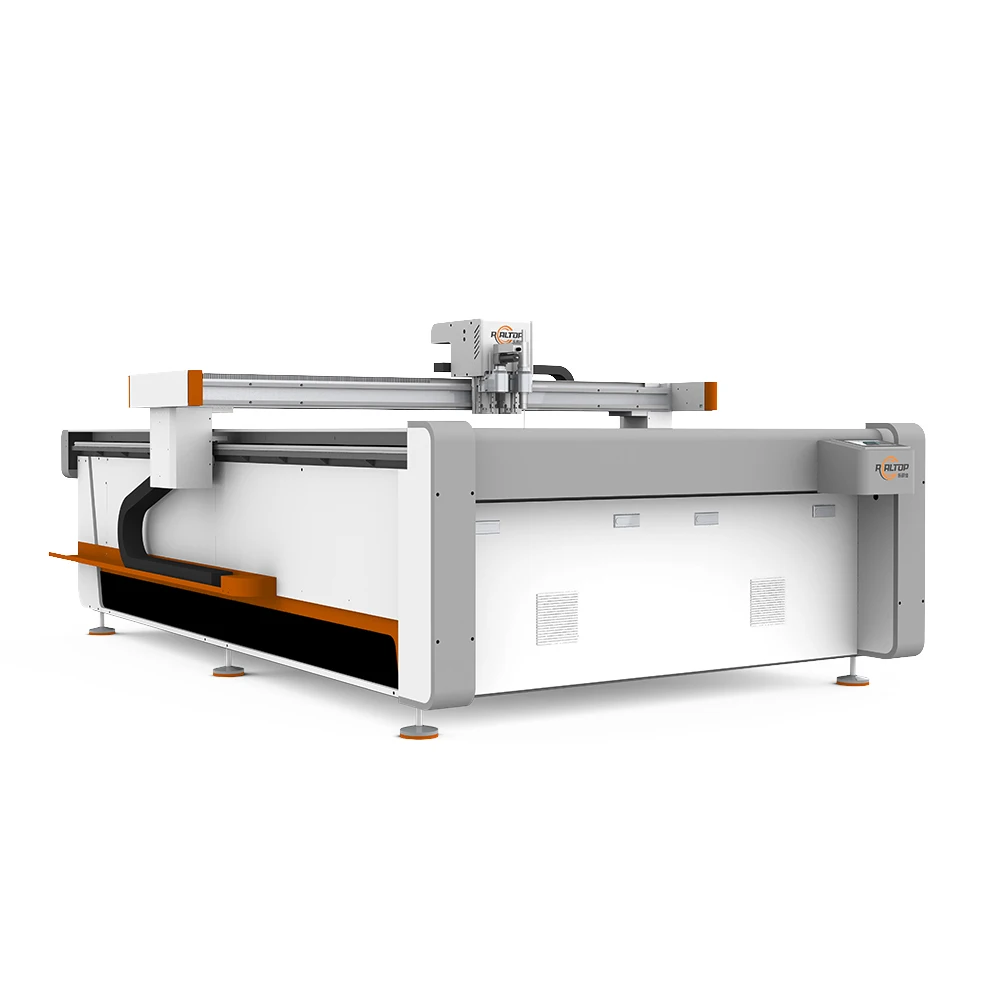
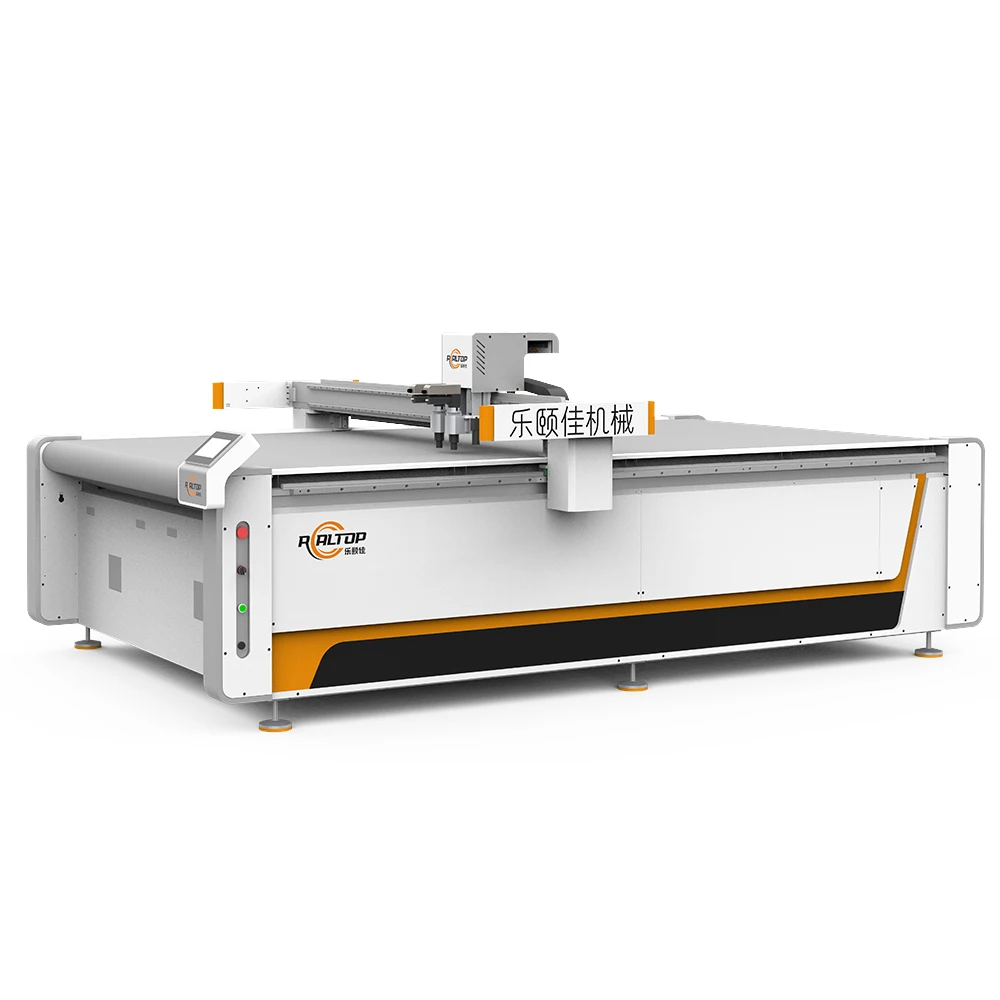
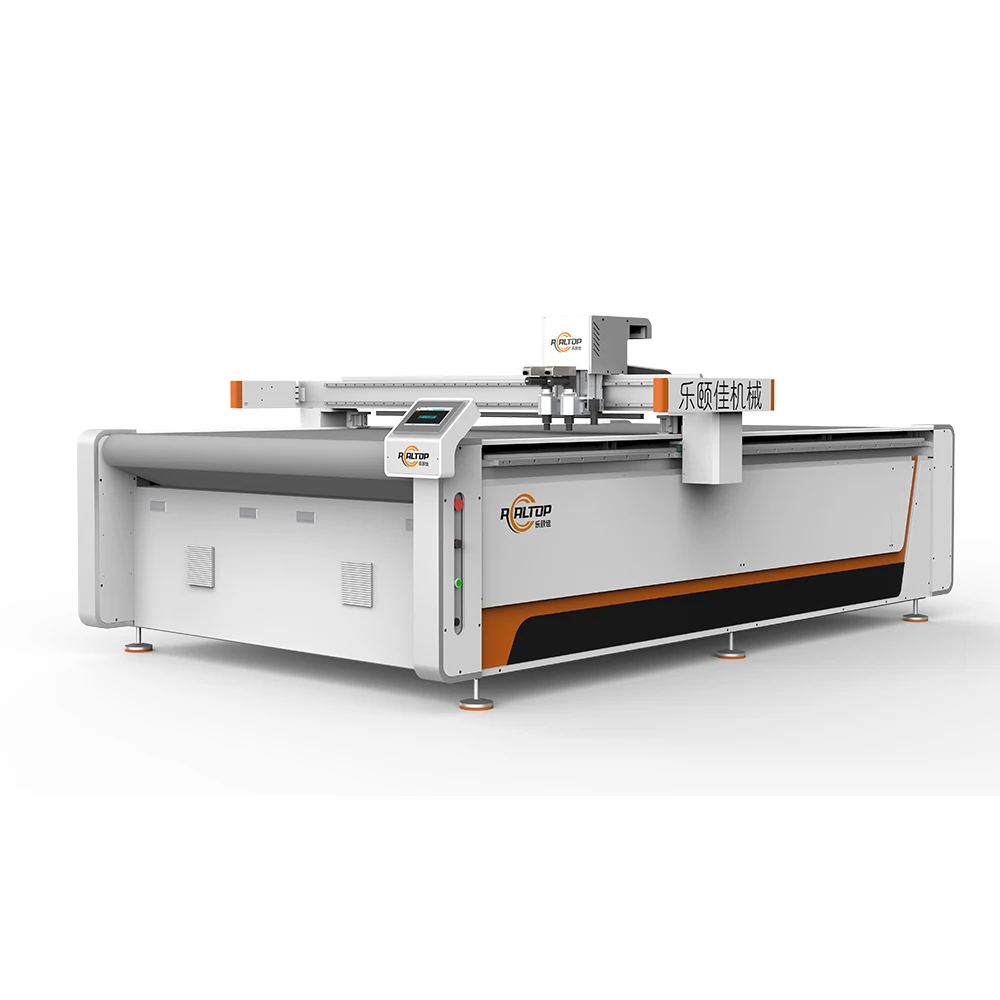
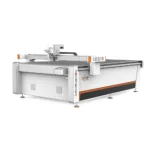

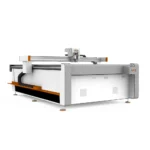
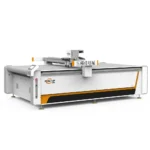
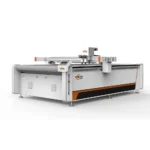


-
 Courier delivery
-
 DHL Courier delivery
-
 Warranty 1 year
-
 Free 30-Day returns

In-House Design & Build — REALTOP engineers configure oscillating knife, creasing wheel, and vacuum table zoning specifically for your board weight and flute profile before the order is confirmed.
Technical Specifications
| Parameter | Value |
|---|---|
| Product Type | CNC Oscillating Knife Cutting Machine |
| Working Area | 1600×2500 mm |
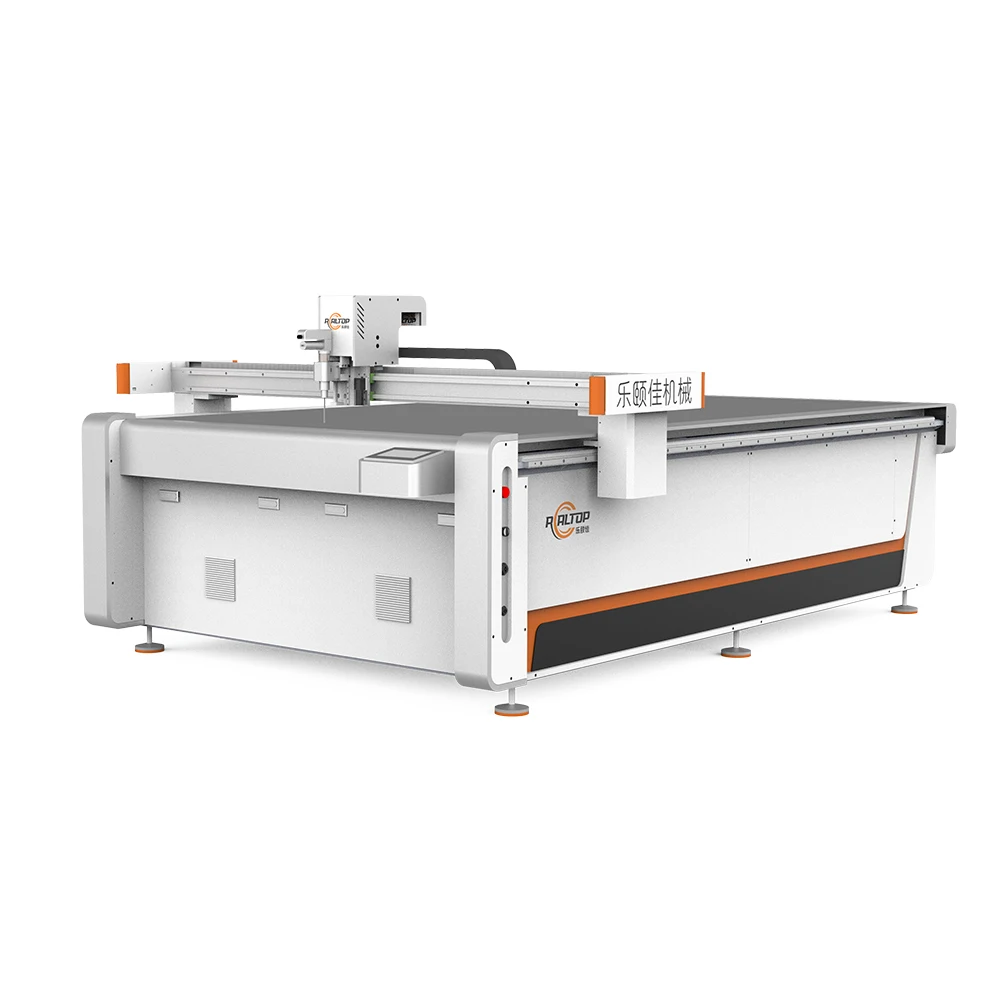
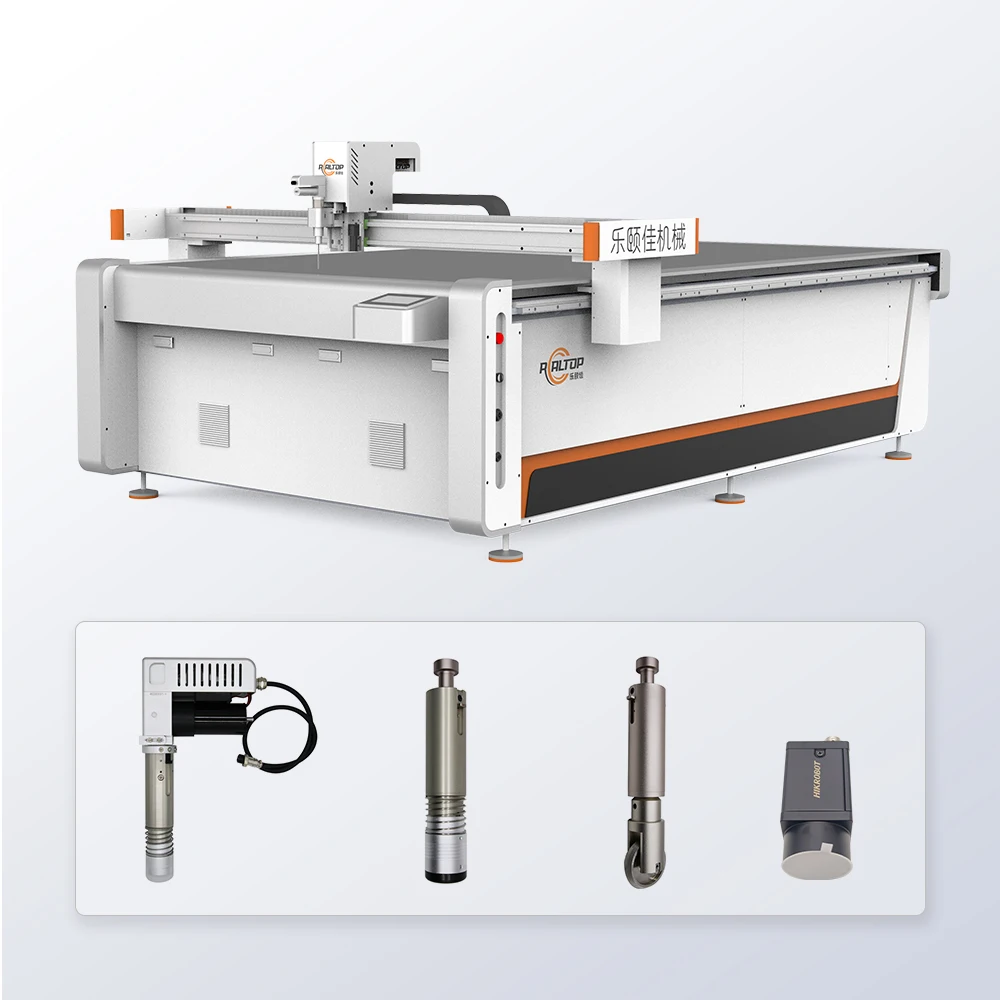
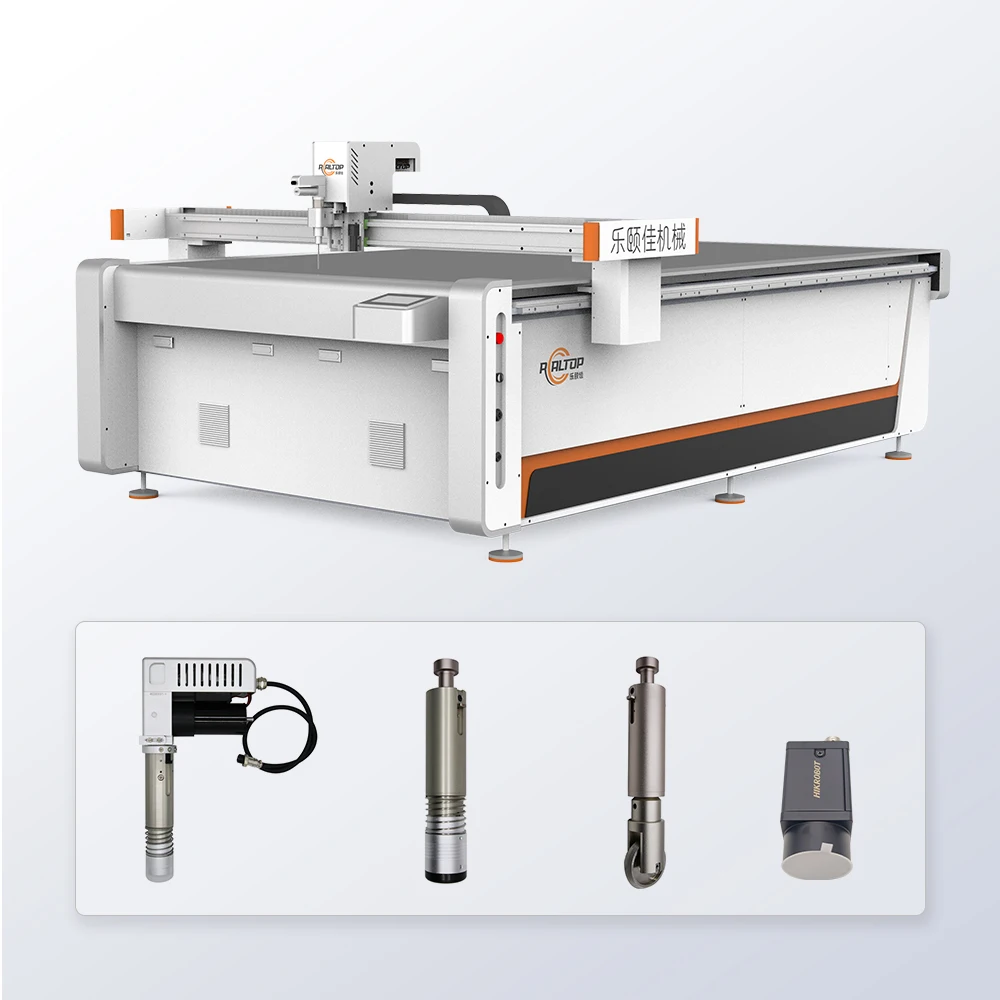
| Tool Head Options | Oscillating knife, Driven rotary knife, Creasing wheel, Kiss cutting tool, Pneumatic knife, Milling tool, V groove knife |
| Maximum Cutting Thickness | ≤ 40mm (basis not stated in source — confirm material type and density) |
| Cutting Speed | 0-1500 mm/s |
| Positioning Accuracy | ±0.1 mm |
| Vacuum Pump Power | 9 kW |
| Vacuum Table | Aluminum bellows vacuum table |
| Frame Construction | Heavy-duty frame with precision-ground surface |
| Servo Motor Options | Panasonic, Delta, Dorna |
| Voltage Options | Configurable from 110V, 220V, or 380V (rated or peak not specified) |
| Control System | PLC control panel with optional display languages |
| Software Compatibility | PLT, DXF, AI, PDF |
| Safety Devices | Infrared sensor device and emergency stop device |
| Machine Dimensions | 3300×2100×1350 mm |
| Standards | CE compliant configuration available |
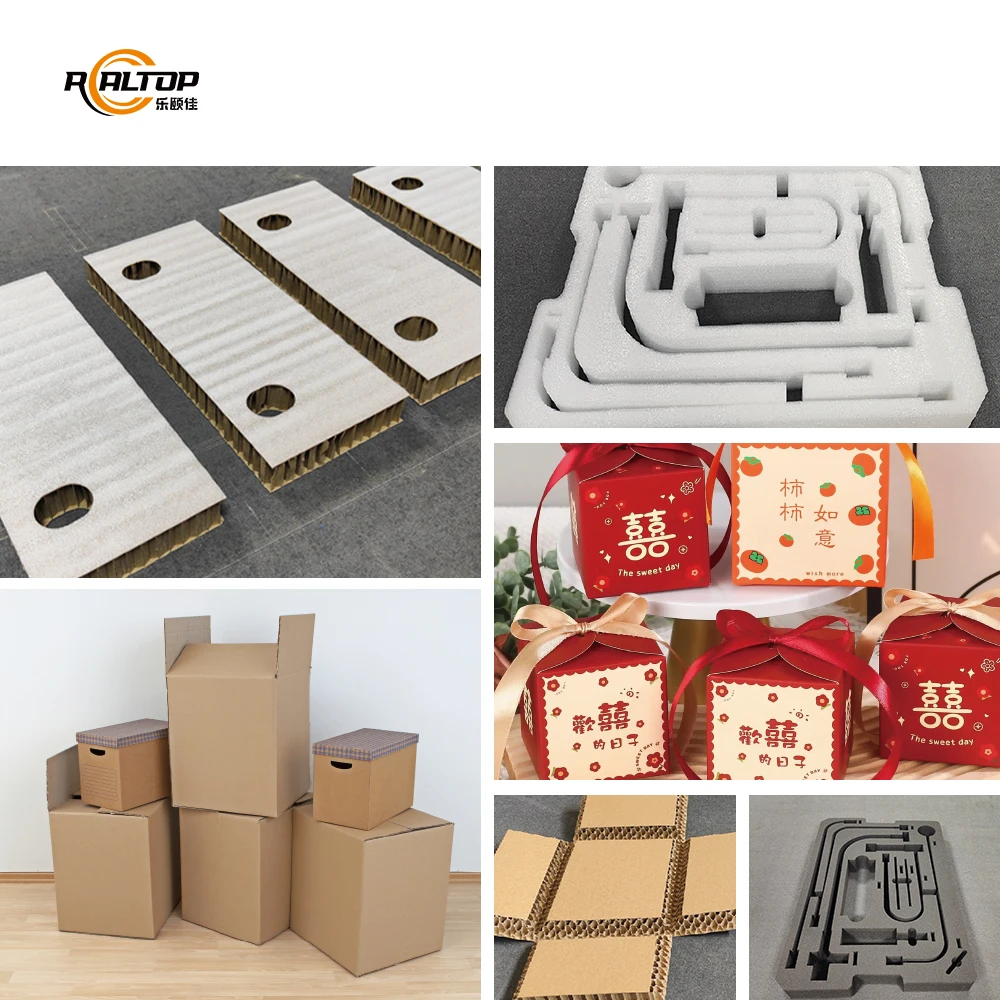
Application Suitability
| Application | Material or Output |
|---|---|
| Hard cover book board cutting | Greyboard and high-density book board |
| Corrugated box sample making and short runs | E-flute, B-flute, and BC-flute corrugated cardboard |
| Cardstock and specialty paper processing | Art paper, cardstock, and coated specialty stocks |
| Foam insert and protective packaging | EVA foam, EPE foam, and PU foam |
| Inner lining and velvet box production | Velvet, fleece fabric, non-woven fabric, and rubber mats |
| Blister and clamshell packaging components | Thin PVC and PET plastic sheets |
| Leather and synthetic leather goods packaging | Genuine leather and synthetic leather panels |
What "Maximum 40mm Cutting Depth" Actually Means on the Floor
Thickness is meaningless without material density and tool head context.
I learned this the hard way in Jakarta last year. A hardcover book bindery asked for a board cutter, we tested on their standard greyboard, and the edges came out clean. Then production started on a batch of high-density pressboard for premium gift boxes, and the oscillating knife edge chattered across the entire sheet, crushing the fold lines and ruining a full run of covers. The ≤ 40mm figure on a CNC oscillating knife cutting machine manufacturer spec sheet assumes a baseline material that is rarely the one sitting on your pallet. Every board grade, every foam density, and every composite layup reacts differently to the same blade frequency and downward force [NEED_CITE: material density and cutting tool interaction in digital flatbed systems].
Seven-Tool Head Configuration for Complete Packaging Structure Work
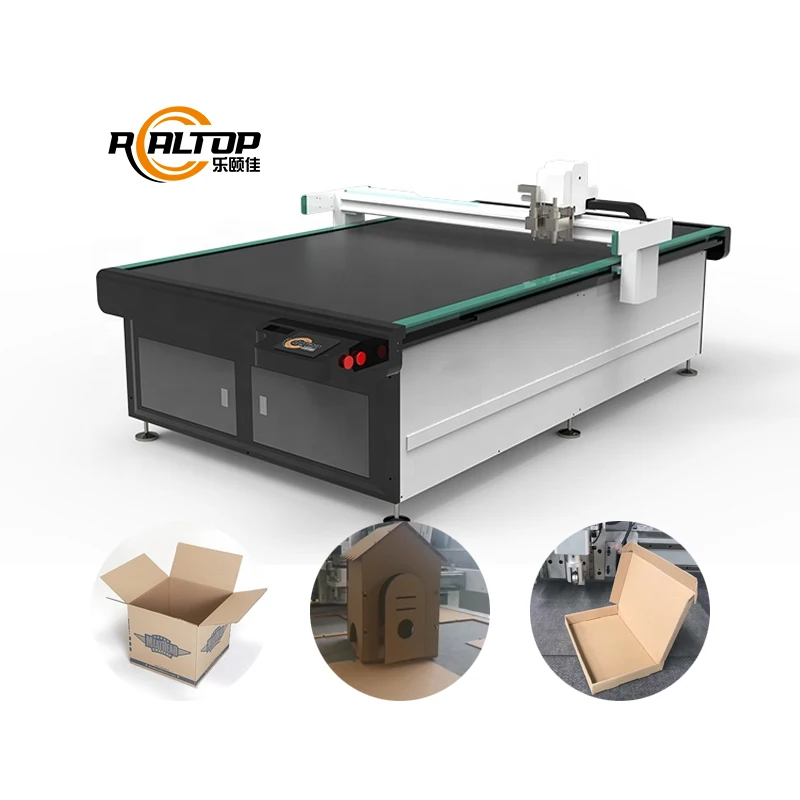
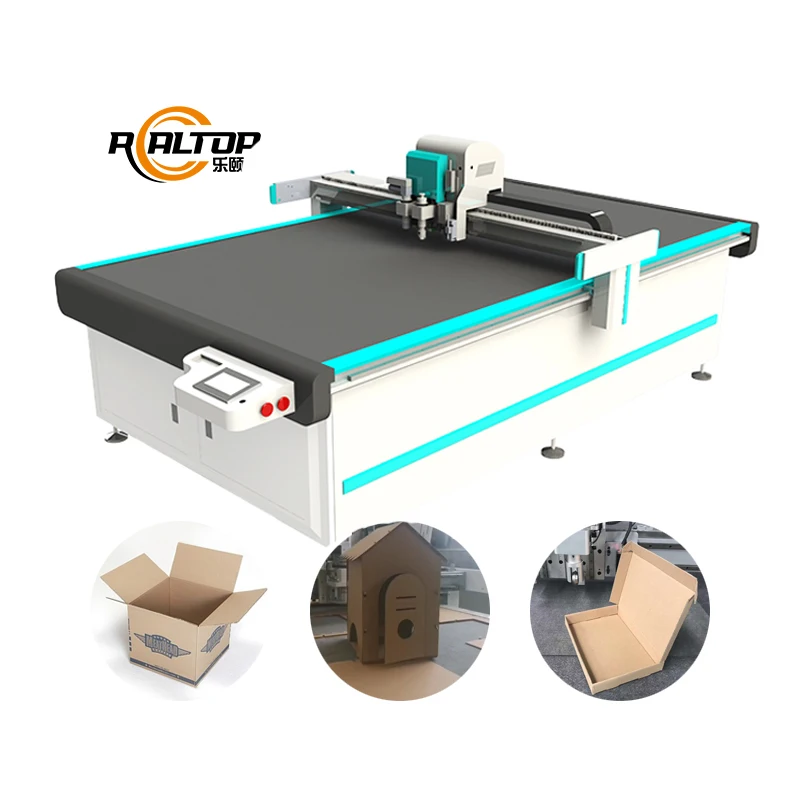
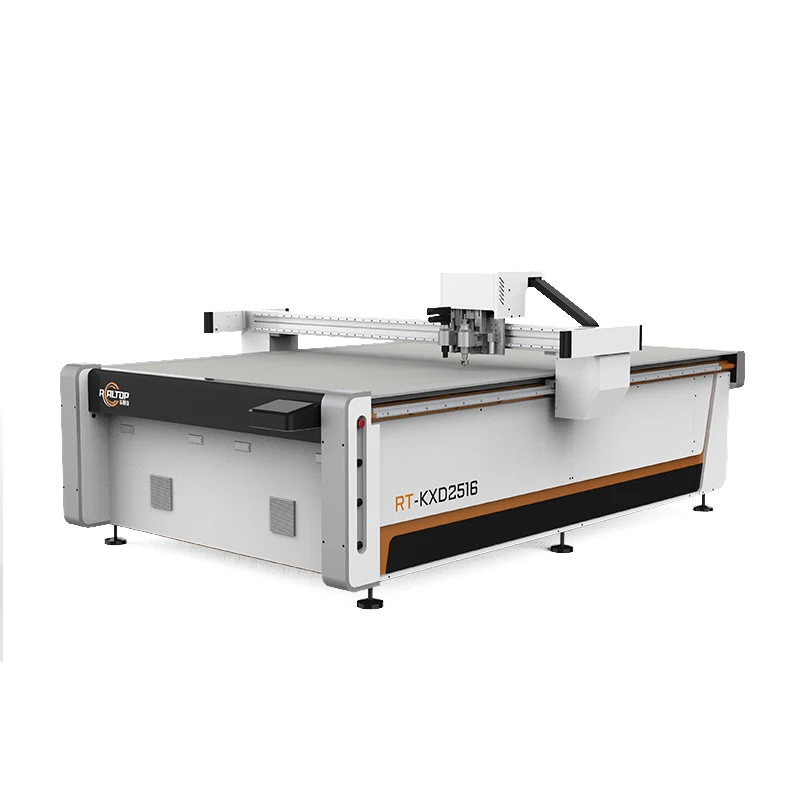
Packaging sample making demands more than a straight cut. A single box structure may require an oscillating knife for the outer contour, a creasing wheel for fold lines, and a V groove knife for rigid board mitre joints. This CNC oscillating knife cutting machine offers seven interchangeable tool heads on a single gantry, meaning the machine switches between cutting, creasing, scoring, and milling within one job file without manual tool changes. The driven rotary knife handles continuous contour work on woven and non-woven materials, while the kiss cutting tool scores adhesive-backed laminates without penetrating the release liner.
Vacuum Table Zoning and the Small-Part Problem
A 1600×2500 mm working area provides generous sheet coverage for full-size corrugated boards and large book board panels, but that same area creates a challenge when cutting small packaging components. Without proper vacuum zoning, the suction spreads across the entire bed, and small nested parts lose hold-down force, lifting during the final passes and producing ragged edges or shifting under the creasing wheel. The aluminum bellows vacuum table on this machine divides the bed into independently controlled zones. You activate only the sections directly beneath the material, concentrating the 9 kW pump’s suction where the material actually sits [NEED_CITE: vacuum hold-down force requirements for digital flatbed cutting of thin and small-format substrates].
Reading the Specification Sheet Against Your Material
Positioning accuracy of ±0.1 mm is the baseline for registration-dependent work like printed packaging where a CCD camera tracks contour marks — but that tolerance only holds when the frame and motion system are built to sustain it. The heavy-duty frame with a precision-ground surface provides the mass and flatness needed to prevent deflection across the full 2500 mm stroke, which matters when cutting thick greyboard where lateral blade pressure is significant. Servo motor selection — available from Panasonic, Delta, or Dorna — directly influences acceleration response and path-following precision at the upper end of the 0-1500 mm/s speed range. Software compatibility with PLT, DXF, AI, and PDF files ensures that packaging structures drawn in standard vector programs load without manual redraws, preserving crease-line placement and cut-order logic.
The Cost of Skipping Material Verification Before Shipment
Wrong tool head selection does not show up in the factory test because the factory tests on the material you tell them about, not the material you actually buy three months later. A creasing wheel set for 350 gsm cardstock will crush the surface fibers on a 2 mm greyboard, leaving visible scoring marks that reject the entire batch at the bindery’s quality gate. Vacuum table zones left unconfigured for nested small parts mean operators spend production hours taping material edges down, destroying the throughput advantage of going digital in the first place [NEED_CITE: common causes of edge quality failure in oscillating knife cutting of board materials].
Why Source This CNC Oscillating Knife Cutting Machine from REALTOP
REALTOP designs and produces both knife and laser cutting systems under one roof, so a packaging producer can evaluate whether oscillating knife or laser cutting better suits a specific material before committing to a platform. Tool head and table configuration is specified per material type and production volume, not left to a generic default. CCD camera positioning is available for contour recognition on pre-printed packaging stock, confirmed for tracking speed against the buyer’s actual print registration marks. Software compatibility and file format workflow are verified before order confirmation, not discovered during installation. Voltage, plug type, and control panel language are locked in during the quotation stage so the machine arrives ready for the facility’s electrical supply and operator language [NEED_CITE: pre-shipment verification protocols for exported CNC cutting equipment].
Documentation & Verification
- Machine specification sheet listing the confirmed tool head and table configuration per your material
- Electrical schematic with voltage and frequency matched to your facility supply
- Sample cutting report produced on your own board stock and thickness before commitment
- Tool head selection guide mapping each of the seven tools to your material list
- Software licence and file format compatibility note for PLT, DXF, AI, and PDF workflows
- Factory test record documenting cut quality and creasing accuracy on your specified materials
Installation, Commissioning & Support
- Heavy-duty frame requires a level concrete floor to maintain ±0.1 mm positioning across the 1600×2500 mm bed
- 9 kW vacuum pump and PLC system require dedicated electrical circuits at the confirmed voltage
- Machine ships in modular sections fitting through standard facility doors for on-site assembly
- First-run commissioning includes tool head calibration and vacuum zone mapping to your sheet sizes
- Operator training covers PLC panel controls in your confirmed display language
- Spare parts list covers oscillating blades, creasing wheels, and vacuum table seals
What to Include in Your Inquiry
Send your material type, board grade, thickness, and typical sheet size so the correct tool head and vacuum zone layout can be specified. Confirm your facility voltage and frequency, and note the control panel language your operators require. If your workflow depends on a specific file format or nesting software, provide a sample file for compatibility testing before quotation.
Frequently Asked Questions
Q: How is the maximum cutting thickness verified for my specific board material?
A: The ≤ 40mm specification depends on material density and composition, not thickness alone. A sample cutting test is run on your actual board stock — greyboard, corrugated flute, or foam — to confirm edge quality, cutting depth, and creasing accuracy before the configuration is finalized and the order is placed.
Q: Which tool head configuration should I choose for my packaging materials?
A: Tool head selection depends on your specific board weight, flute type, and whether you need creasing, scoring, or kiss cutting in addition to through-cuts. The seven available tools are matched to your material list during the quotation stage, and the configuration is documented in the specification sheet before production.
Q: Can the CCD camera track printed marks at full production speed?
A: CCD camera contour recognition is available as a configured option, but tracking reliability at production speed depends on mark size, contrast, and print consistency. This is verified during sample cutting using your actual printed stock before the system is confirmed for your workflow.
Q: How is electrical compatibility confirmed before the machine ships?
A: Voltage options include 110V, 220V, and 380V configurations. Your facility voltage, frequency, and plug type are confirmed during quotation, and an electrical schematic is provided showing the exact wiring so your electrician can prepare the dedicated circuit before the machine arrives.
You may also like

商品评价
Clear filtersThere are no reviews yet.