


-
 Courier delivery
-
 DHL Courier delivery
-
 Warranty 1 year
-
 Free 30-Day returns

In-house knife and laser engineering — REALTOP designs frame, motion and vacuum systems under one roof so the RT-D2516/RT-S2516 configuration matches your material rather than forcing a compromise.
Technical Specifications
| Parameter | Value |
|---|---|
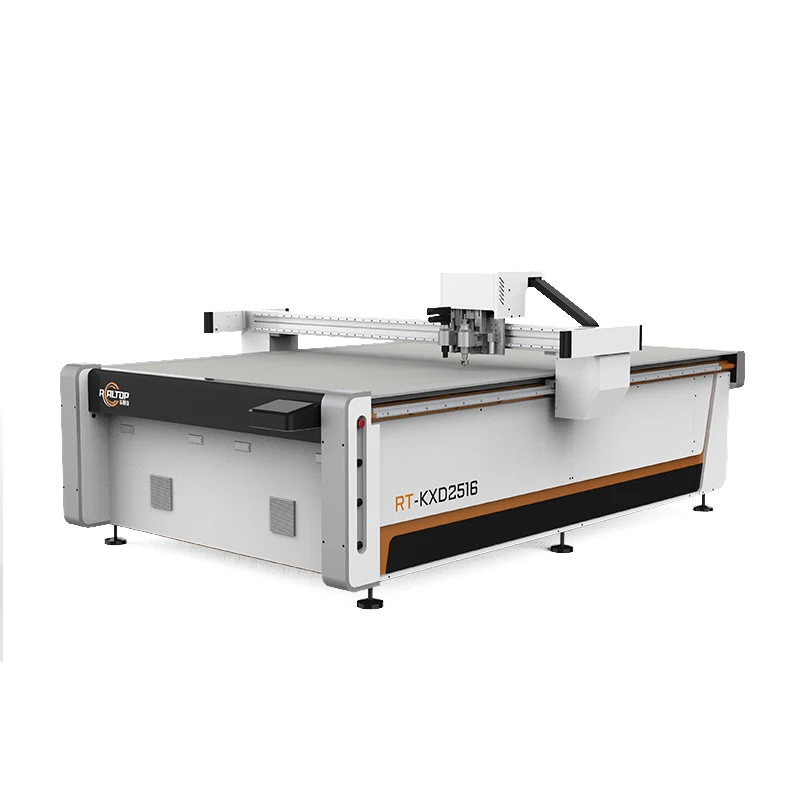
| Model | RT-D2516 / RT-S2516 |
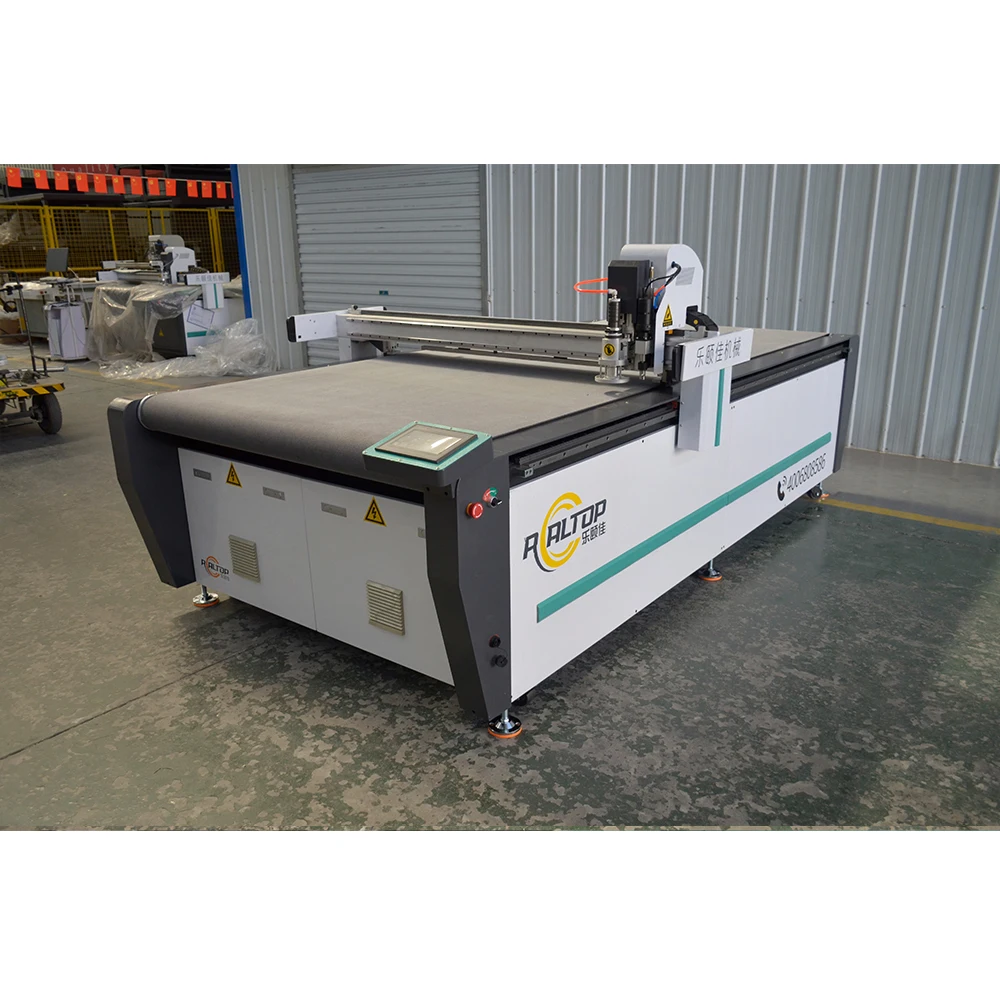
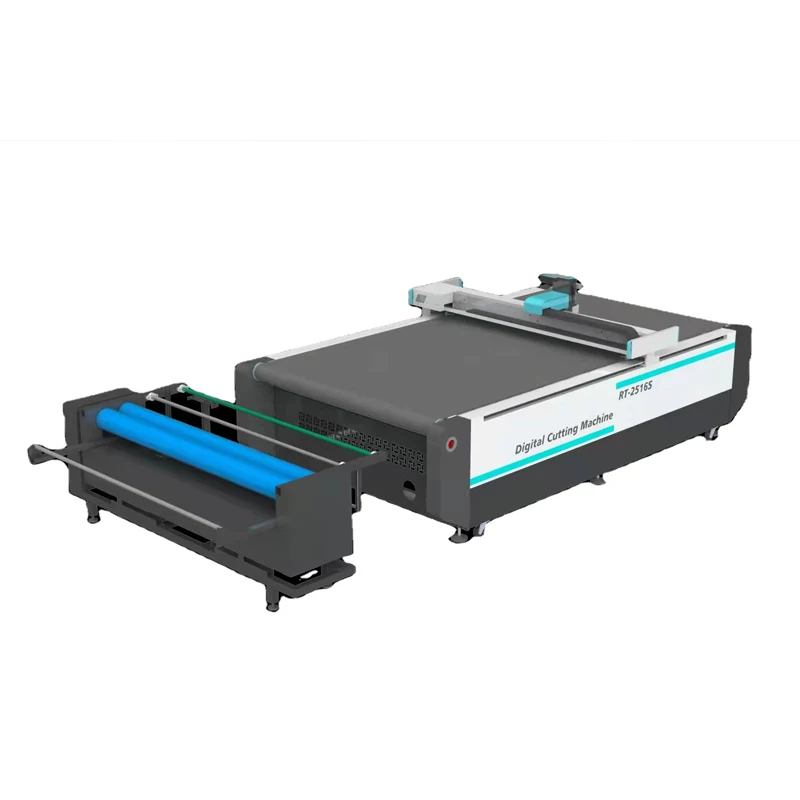
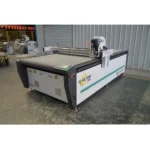
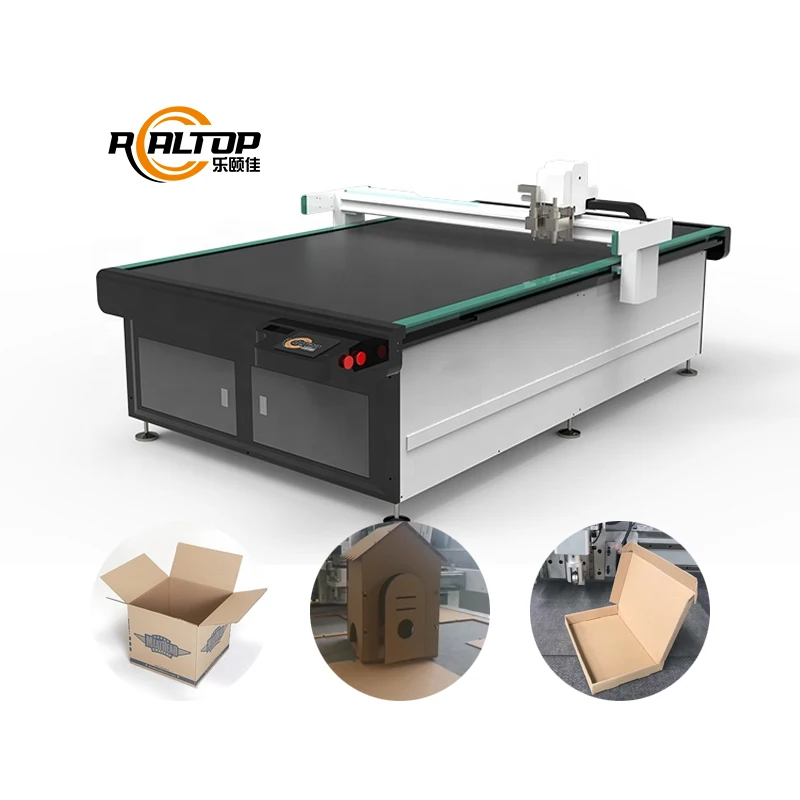
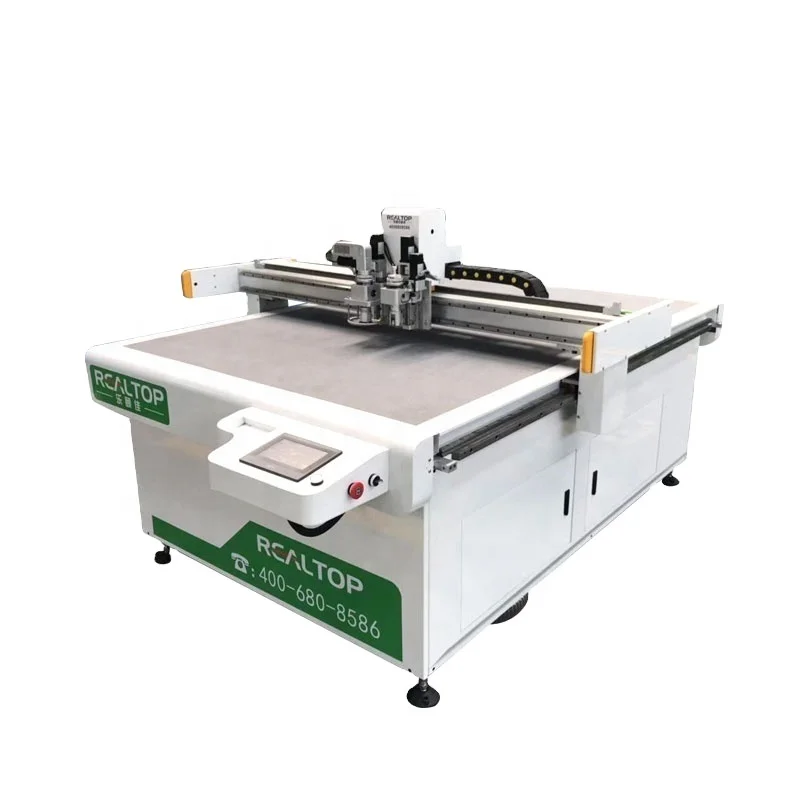
| Product Type | CNC Oscillating Knife Cutting Machine |
| Working Area | 1600 × 2500 mm |
| Machine Size | 3450 × 2300 × 1250 mm |
| Rated Power | 9 kW |
| Voltage | 380V ±10% (frequency and plug type configurable per market) |
| Vacuum Pump | 7.5 kW, aviation aluminum shell with integrated silencer |
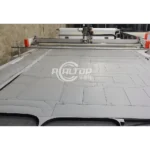
| Table Surface | Magnesium-aluminum alloy, multi-zone vacuum adsorption, PVDF powder coating with hard oxidation |
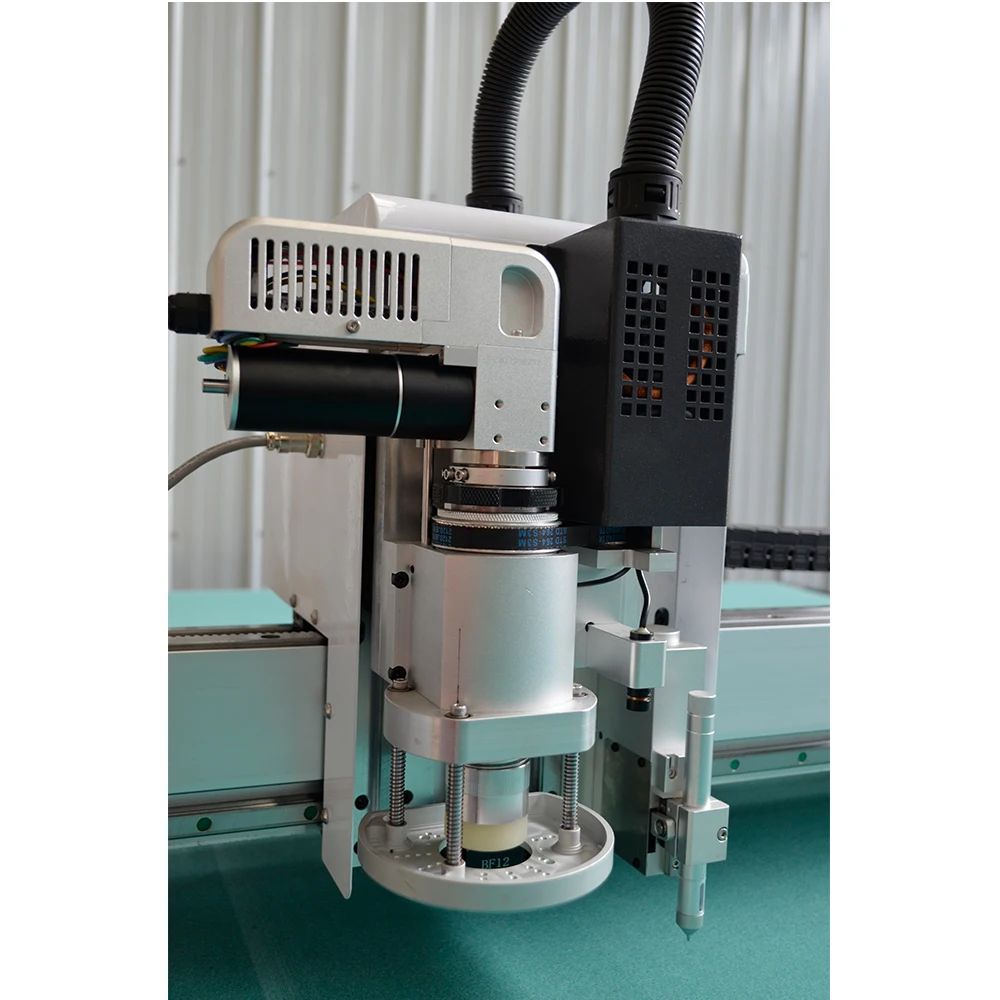
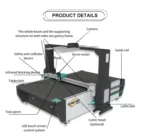
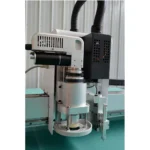
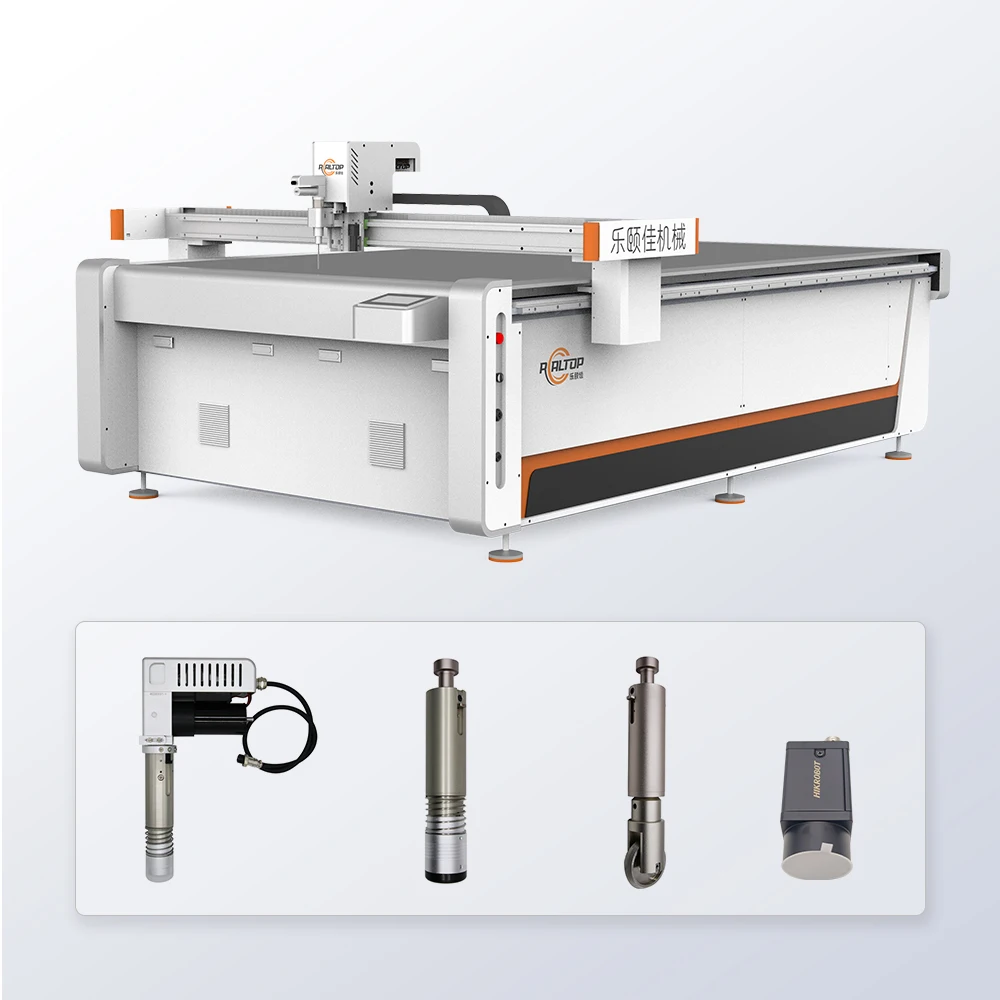
| Tool Head | Swiss imported multifunctional head — oscillating knife, pneumatic knife, high-power vibrating knife, circular knife, V-cutting knife, drag knife, creasing wheel, dotted line knife, punching, brush |
| Visual Positioning | Small CCD mark point, panoramic camera recognition, projection positioning |
| Translational Velocity | 800 – 1200 mm/s |
| Cutting Speed | 200 – 800 mm/s (material-dependent) |
| Cutting Thickness | ≤100 mm (varies with material) |
| Repeated Accuracy | ≤0.1 mm |
| Transmission | Delta digital servo motor (Panasonic optional), Taiwan Hiwin linear guide, synchronous belt, ball screw |
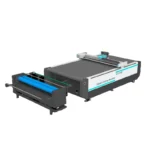
| Auto Feeding | Yes, Germany imported conveyor belt |
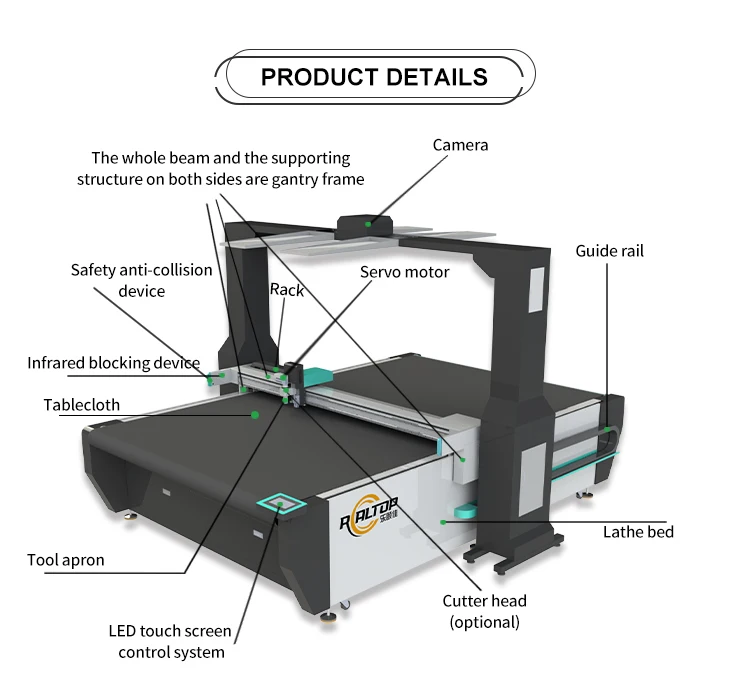
| Safety | Infrared induction blocking, dual-side beam anti-collision, emergency stop with in-situ resume |
| Control Language | English, Russian, Italian, Chinese; special languages available |
| Instruction Format | HP-GL compatible |
Application Suitability
| Application | Material or Output |
|---|---|
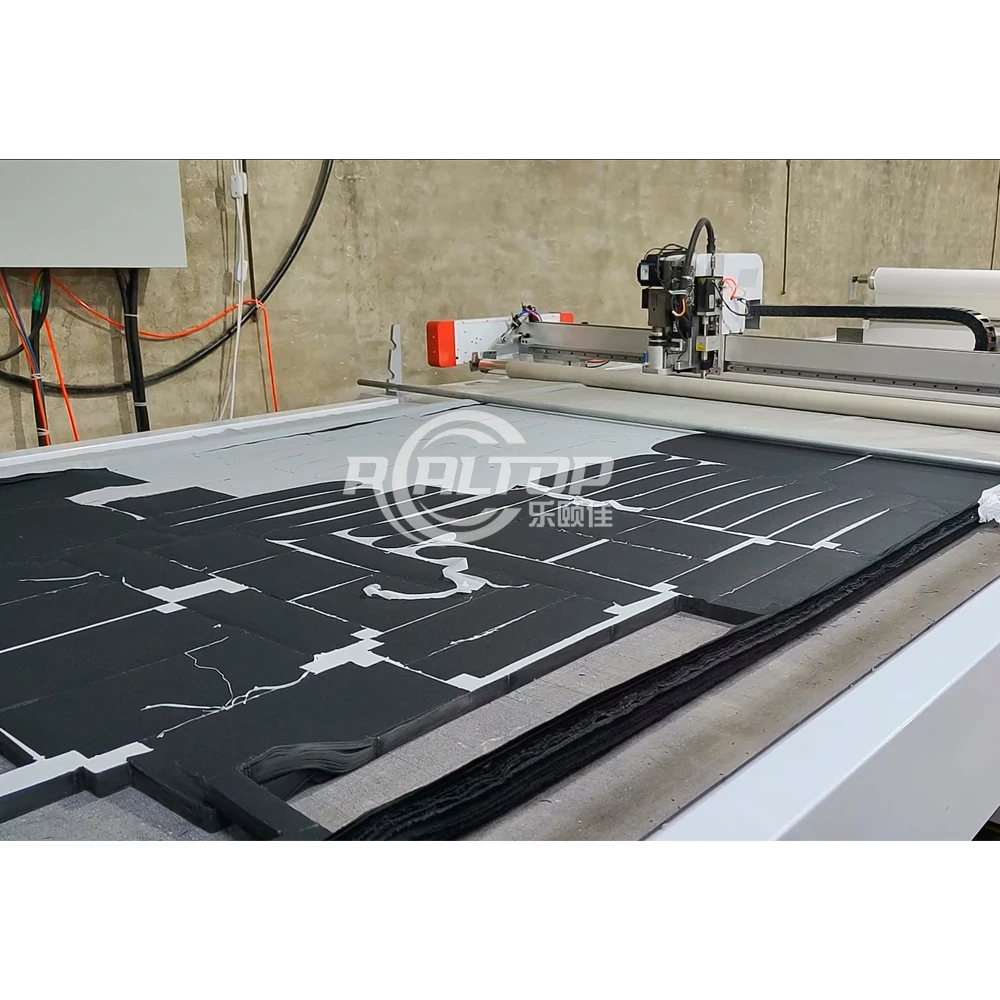
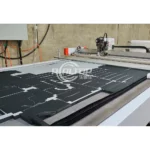
| Garment and footwear cutting | Multi-ply fabric, leather, shoe material, non-woven textile |
| Automotive interior trimming | PU, EVA, XPE foam, composite panels, carpet and floor mats |
| Soft furnishing production | Upholstery fabric, sponge, foam board, silicon rubber |
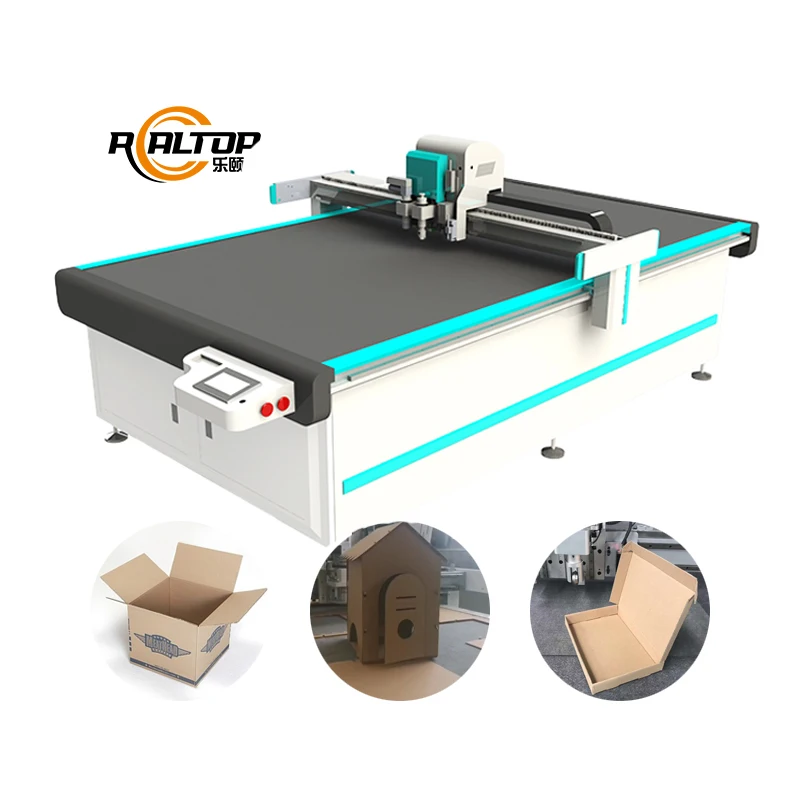
| Packaging sample making | Corrugated cardboard, cardboard, plastic box, sticker and film |
| Gasket and seal fabrication | PTFE, ETFE, rubber, fiberglass, soft glass |
| Luggage and bag manufacturing | Leather, PVC, PP, PE sheet, composite materials |
What Buyers Misread When They Focus Only on Working Area
A flatbed size tells you nothing about how the machine handles your specific material at production speed.
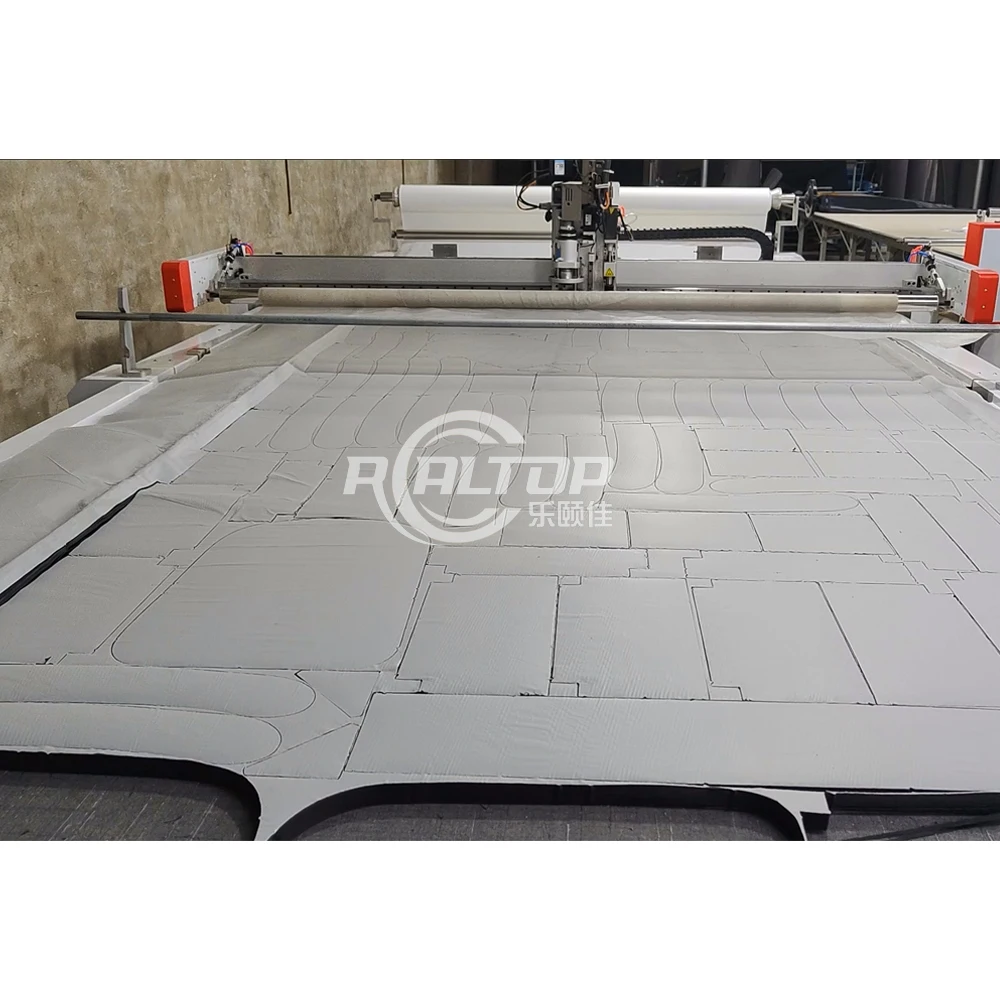
I spent weeks on-site at an automotive seat cover plant where the cutting line was bought on table dimensions alone. The fabric was a coated multi-layer composite, and the standard oscillating knife setup produced frayed edges and delaminated layers at throughput that was barely half of the sample test. The vacuum zones were too broad for the nested small pieces, so material lifted mid-cut. Only after re-mapping the adsorption zones and retuning vibration frequency did the line perform [NEED_CITE: vacuum zoning and material hold-down requirements for multi-ply textile cutting]. A CNC oscillating knife cutting machine manufacturer who skips the material conversation will leave you solving these problems on your own floor.
Frame Stability and Long-Term Dimensional Accuracy
The RT-D2516/RT-S2516 chassis is built from thick-walled seamless steel tube, welded and then subjected to high-temperature tempering before final machining on a CNC machining center. This sequence relieves residual stress from welding so the frame does not warp after months of vibration loading. For a machine with a 1600 × 2500 mm working envelope, frame rigidity directly governs whether the cutting head returns to the same coordinate after thousands of cycles. Any CNC oscillating knife cutting machine manufacturer cutting multi-ply fabric at 800 mm/s needs the beam to resist deflection across its full travel, because even sub-millimeter drift compounds into mis-nested panels over a long production run.
Vacuum Zoning for Small Parts and Thin Sheets
The magnesium-aluminum alloy table uses a multi-zone vacuum adsorption layout coated with fluorocarbon PVDF and hard-anodized for surface flatness. Each zone can be activated independently so suction concentrates under the workpiece footprint rather than bleeding across an empty table. This matters when cutting small gasket profiles or nested garment panels from thin PTFE or EVA — without zoning, those pieces drift under the knife and produce reject edges. The 7.5 kW vacuum pump sits in an aviation aluminum housing with a built-in silencer sponge, which reduces noise at the operator station without sacrificing suction pressure [NEED_CITE: industrial noise exposure limits for machine operators in manufacturing environments].
Reading the Specification Sheet Beyond Surface Numbers
The Swiss imported multifunctional tool head supports ten tool options in a single setup, but the real question is which combination your material demands. High-power vibrating knife handles thick foam and sponge up to 100 mm, while a drag knife suits corrugated board and cardboard sample making. The CCD mark point, panoramic camera, and projection positioning options cover different registration scenarios — mark point for pre-printed textiles, panoramic for large-format printed graphics, and projection for manual alignment of irregular hides. Translational velocity reaches 1200 mm/s, but actual cutting speed sits between 200 and 800 mm/s depending on material density and ply count, so quoting throughput on travel speed alone misrepresents real output. Repeated accuracy of ≤0.1 mm is maintained by Taiwan Hiwin linear guides paired with a Delta digital servo system, giving consistent coordinate return whether you are cutting a single leather panel or a full nest of shoe components. The conveyor uses a Germany imported belt rated for continuous auto-feeding cycles, which keeps rolled fabric under tension and aligned to the cutting origin.
The Hidden Cost of Unverified Configuration
Choosing a tool head based on catalog availability rather than material behavior is the most common source of edge quality failure. A pneumatic knife that slices cleanly through single-ply cotton will crush multi-layer foam if the vibration frequency and stroke are wrong for that density. Vacuum zones left at default full-table suction waste pump capacity and let lightweight films lift away from the surface. Electrical specifications quoted as 380V without confirming local frequency and plug type can lead to motor overheating or control board failure within the first week of operation [NEED_CITE: voltage and frequency mismatch consequences for three-phase industrial motors]. These are not warranty issues — they are configuration errors that fall on the buyer.
Why Sourcing from a Design-and-Build Facility Matters
REALTOP operates both knife and laser cutting technology in-house, so the decision between oscillating knife and CO2 laser is driven by your material properties rather than a single product line. The frame, motion system, and vacuum table are engineered and manufactured within the same facility, which means configuration changes — a wider table, a different conveyor, a custom control language — are handled at the design stage rather than bolted on after assembly. Sample cutting on your own material is required before order confirmation, producing a written report that documents edge quality, achievable cutting speed, and tool selection for your specific ply count and thickness. Electrical schematics and voltage specifications are confirmed against your market requirements before production begins, not assumed from a default list [NEED_CITE: export machinery electrical compliance documentation requirements]. Software file compatibility is verified so your existing DXF, PLT, or nesting workflow imports without conversion errors.
Documentation & Verification
- Machine specification sheet listing tool head and vacuum zone configuration matched to your material
- Electrical schematic confirming voltage, frequency and plug standard for your market
- Sample cutting report on your own fabric, foam or board before order placement
- Software licence document with confirmed file format compatibility list
- Factory test record documenting repeated accuracy and cutting speed on configured tooling
- Spare parts list covering knives, blades and vacuum seals with part numbers
Installation, Commissioning & Support
- 3450 × 2300 × 1250 mm machine footprint requires level concrete floor with clearance for conveyor feed and material roll loading
- 9 kW rated power plus 7.5 kW vacuum pump demand a dedicated 380V three-phase circuit with confirmed frequency and breaker rating
- Machine ships fully assembled; on-site positioning requires forklift access rated for the unit’s operating weight
- First-run commissioning includes vacuum zone mapping and tool head calibration against your actual material samples
- Operator training covers tool changeover procedures, CCD positioning setup and nesting software workflow
- Wear parts inventory includes oscillating knife blades, vacuum seals and conveyor belt sections
Preparing Your Inquiry
Send your material type, ply count, maximum sheet size and the daily volume you need to sustain. Include your local voltage and frequency standard, preferred control language, and whether your existing nesting software outputs DXF, PLT or HP-GL files. If your material has coatings, laminations or unusual density, arrange to ship a sample roll so the configuration can be validated before the machine enters production.
Frequently Asked Questions
Q: How do you determine the right tool head and vacuum zone layout for my material?
A: We run sample cutting tests on your actual fabric, foam or board using different knife types and vibration settings. The vacuum zone map is configured based on your typical nest size so suction concentrates where the material sits, preventing small parts from lifting during high-speed cuts. Results are documented in a written report shared before order confirmation.
Q: What electrical specifications are confirmed before the machine is built?
A: We verify your local voltage, frequency and plug standard during the specification stage. The 380V ±10% baseline is adapted to match your market, and the electrical schematic is sent for your approval before production. This prevents motor and control board issues caused by frequency mismatch at the installation site.
Q: Can my existing DXF or PLT nesting files be imported directly?
A: The control system supports HP-GL compatible formats as baseline. During the pre-order stage we test your specific file exports from your nesting software to confirm import accuracy. If conversion is needed, the software compatibility note in your documentation will specify the required workflow and any licensing terms.
Q: What does the factory test record include before shipment?
A: The record documents repeated accuracy measurement, cutting speed verification on your material sample, vacuum suction readings per zone, and tool head calibration values. You can witness sample cutting in person or via video call. The report travels with the machine and serves as your acceptance baseline upon arrival.
Q: Is OEM customization available for frame size, conveyor and control language?
A: Yes. Because the frame, motion and vacuum systems are designed and manufactured in-house, we can adjust table dimensions, integrate a specific conveyor type, or add a custom control interface language. These modifications are defined at the specification stage and reflected in the electrical schematic and configuration list before production begins.
You may also like

商品评价
Clear filtersThere are no reviews yet.