


-
 Courier delivery
-
 DHL Courier delivery
-
 Warranty 1 year
-
 Free 30-Day returns

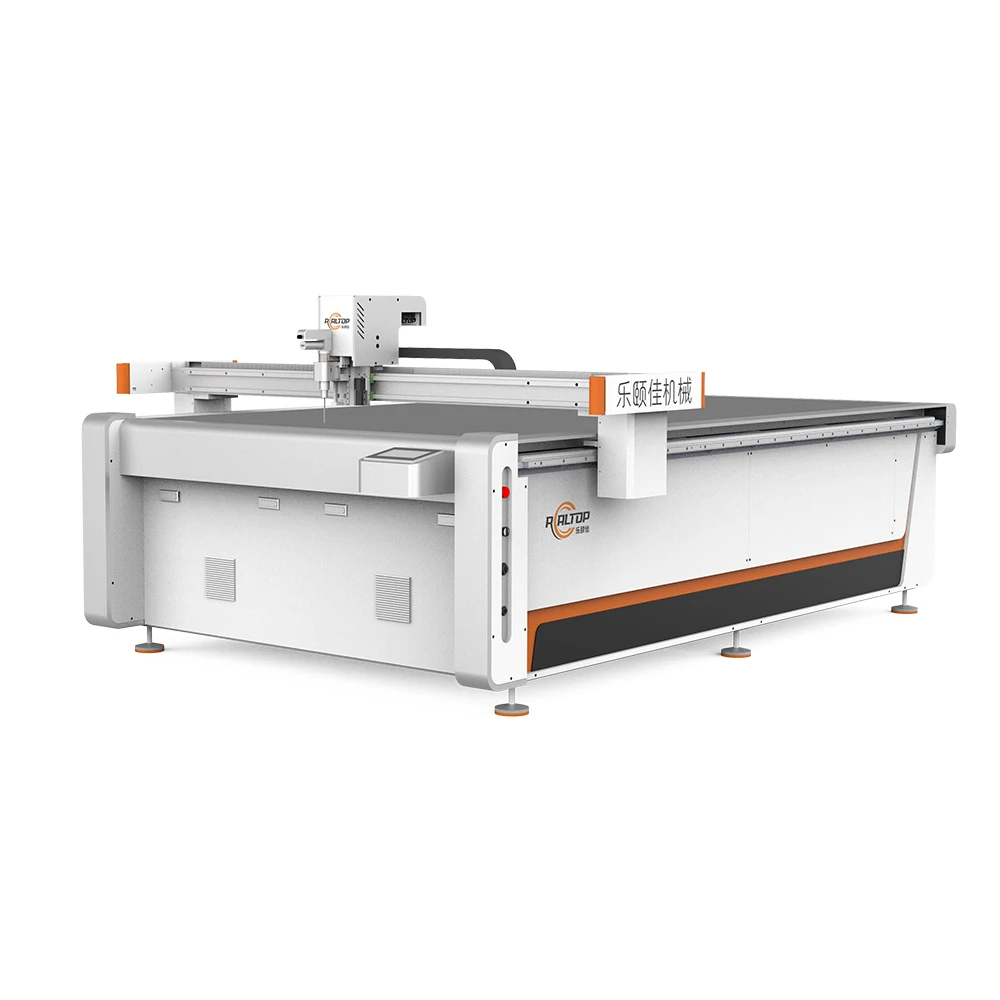
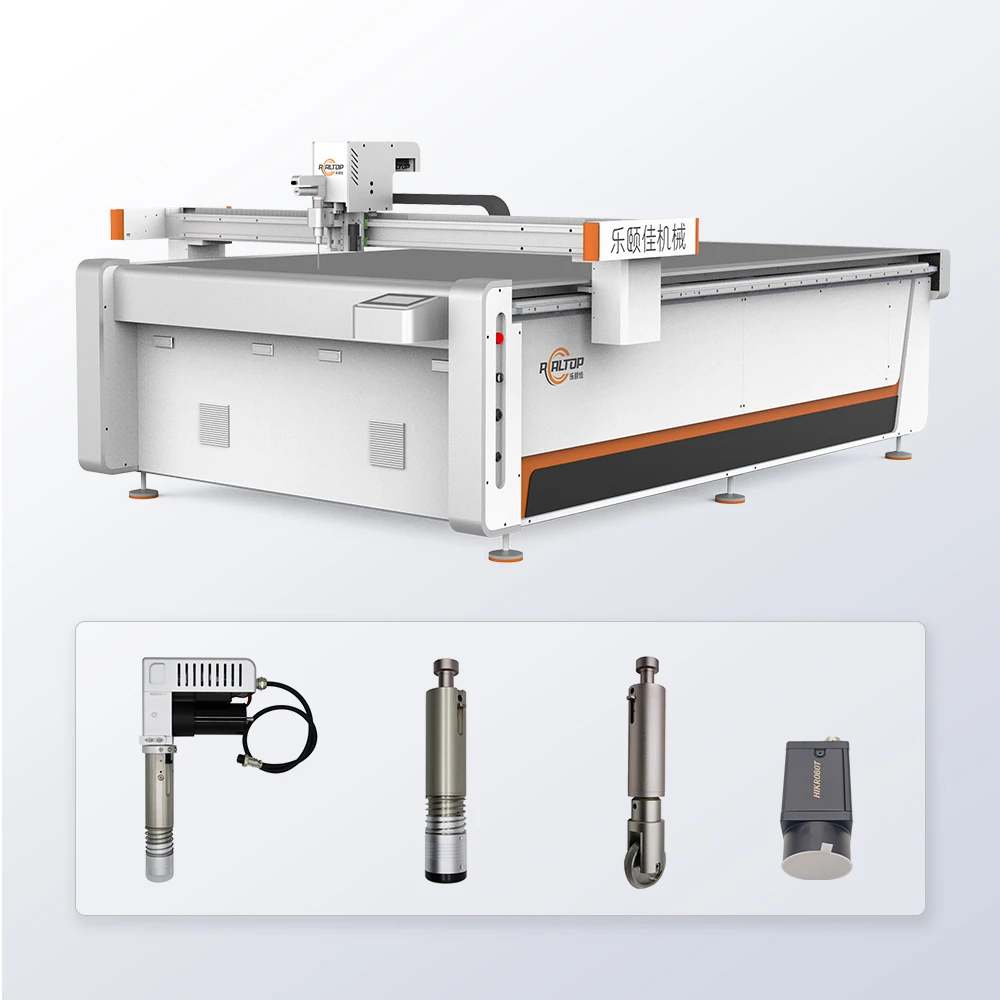
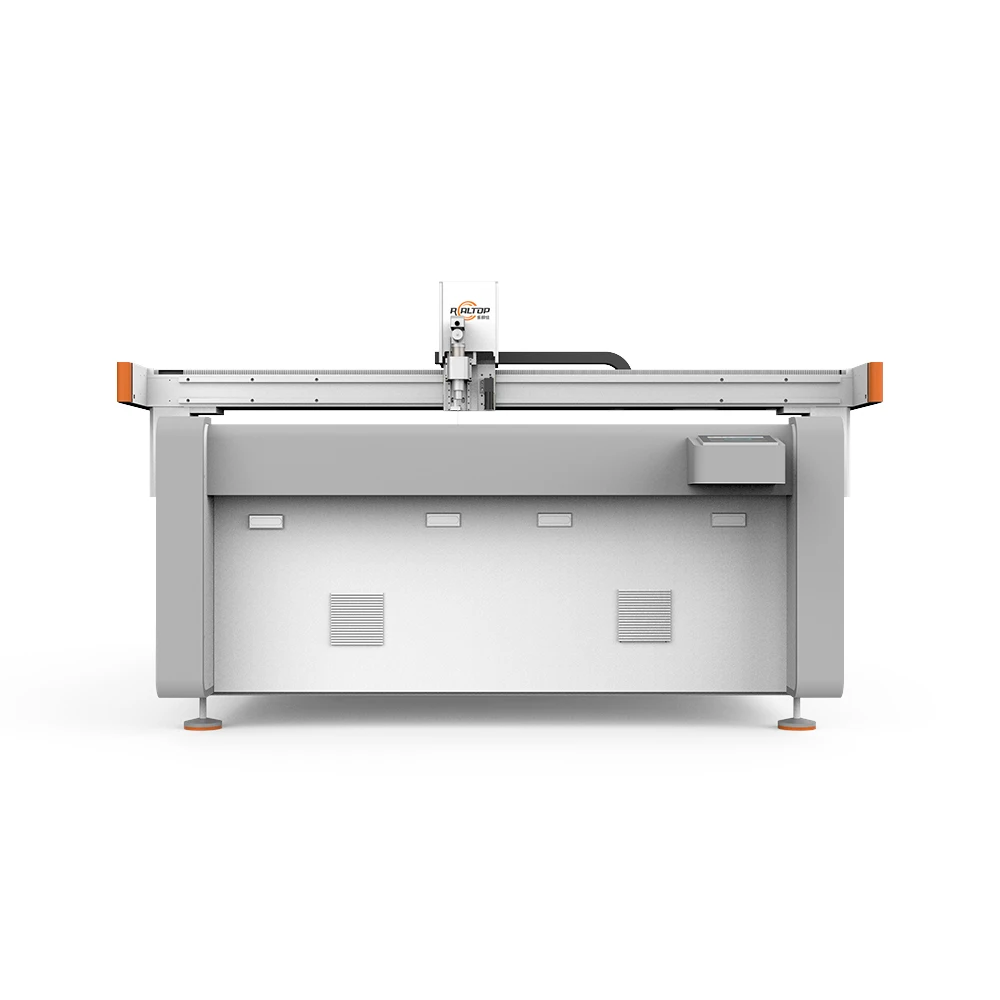
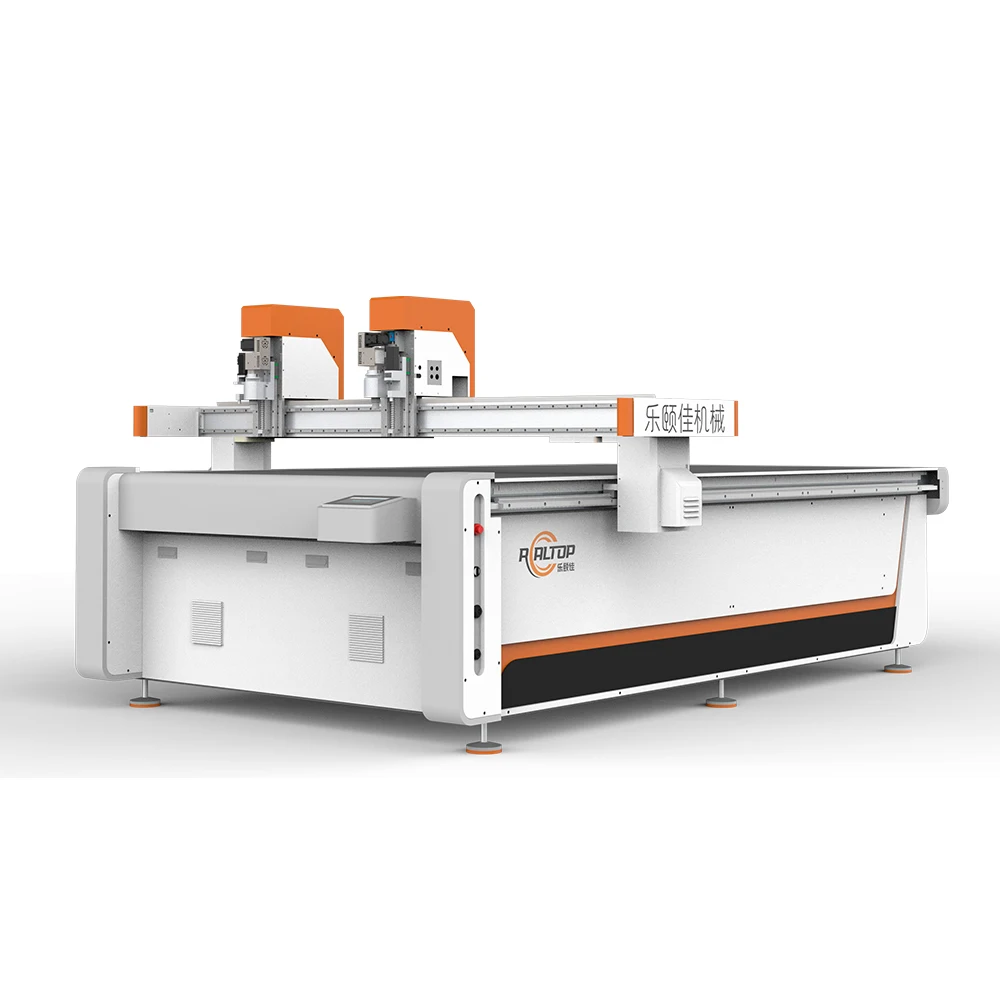
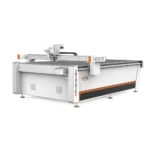
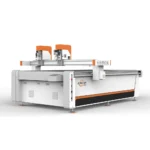
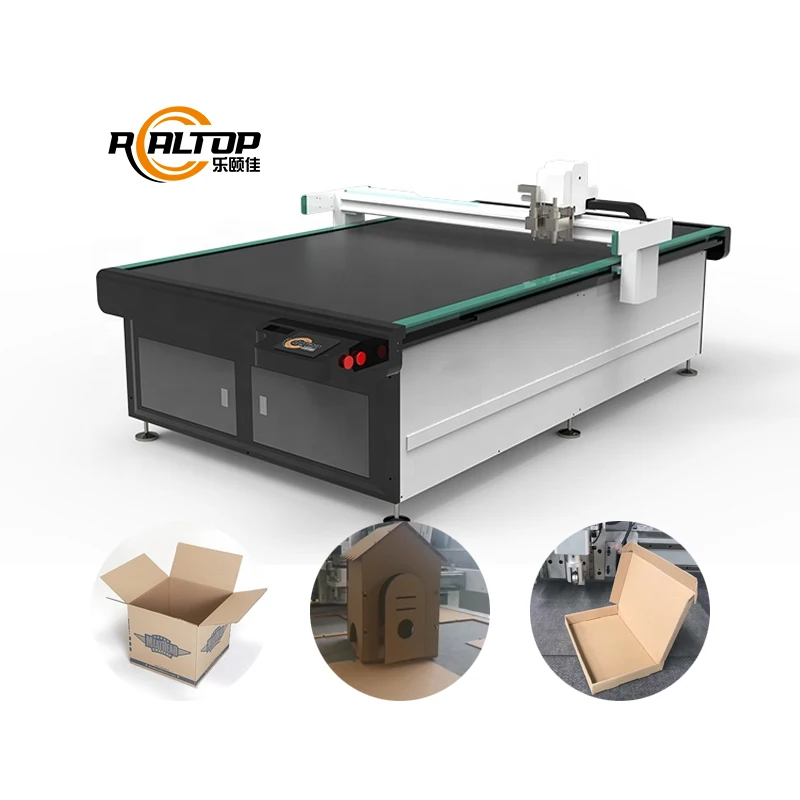
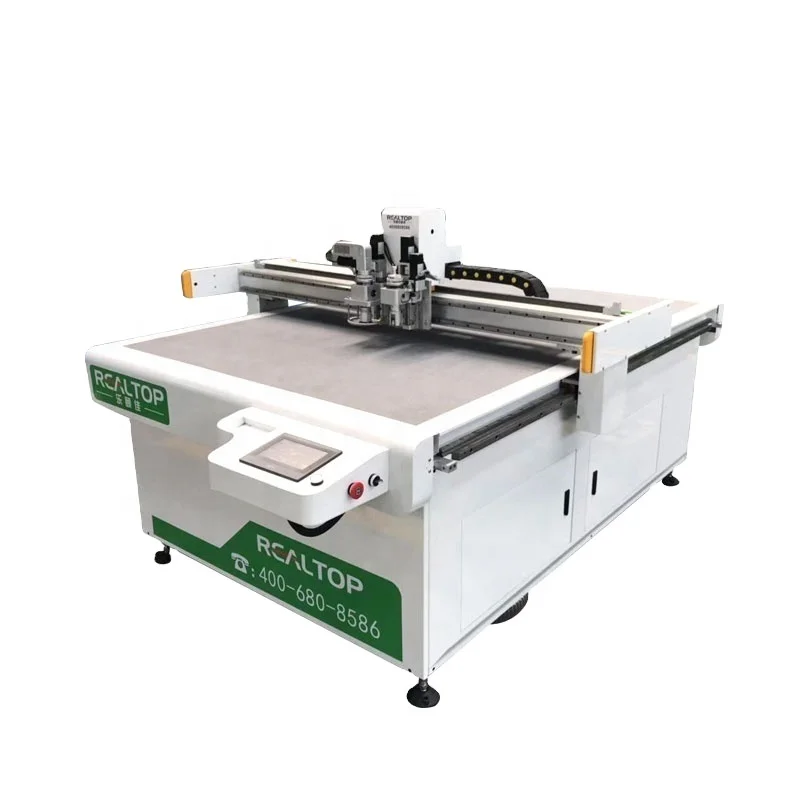
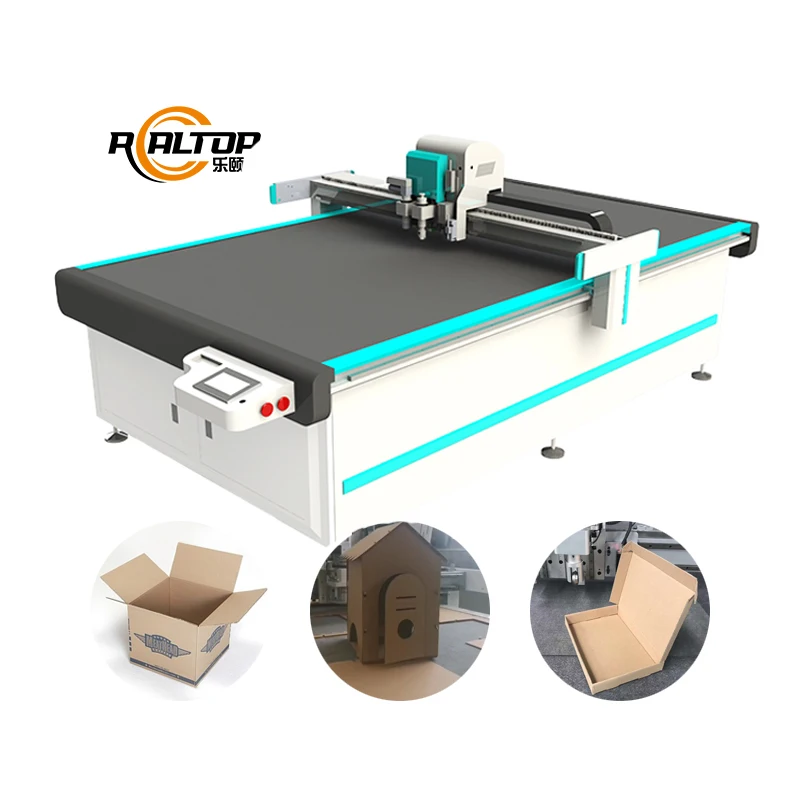
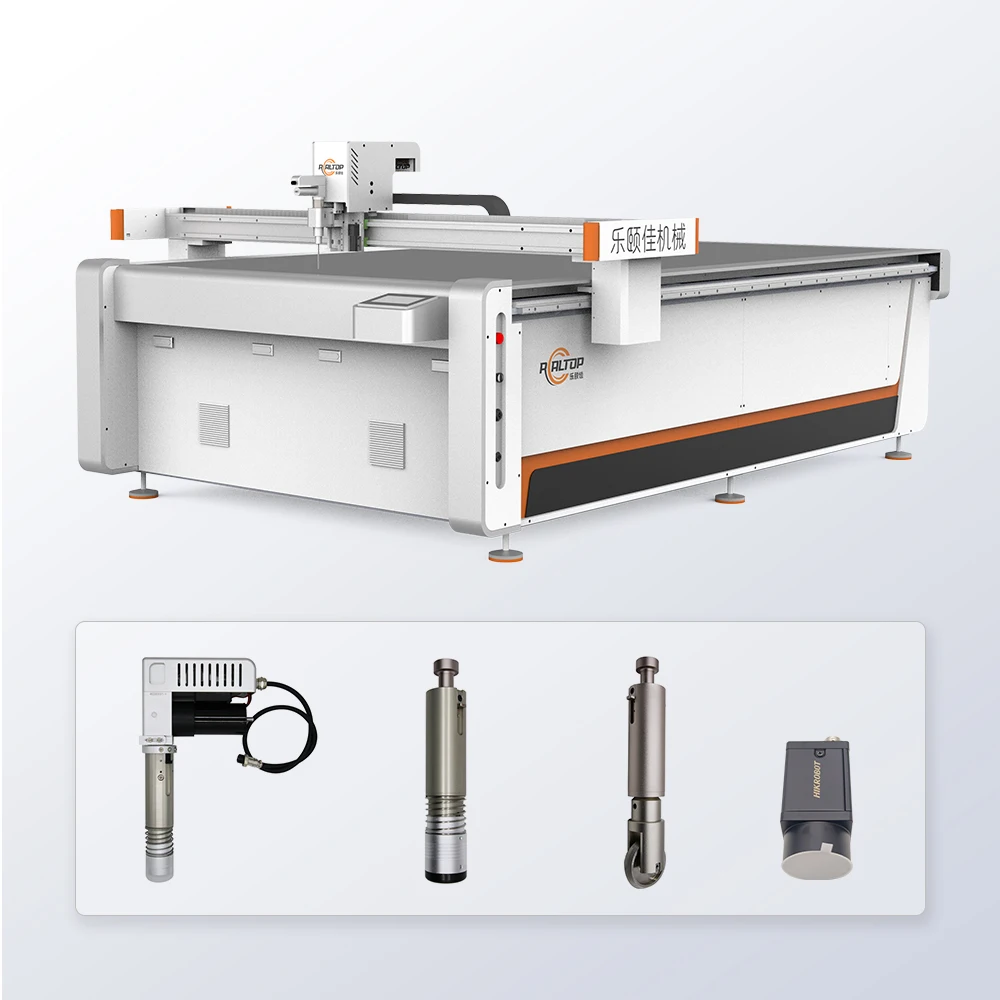
Precision tooling matched to material — REALTOP builds each CNC flatbed cutter in-house, specifying knife type, vacuum zoning and motion control around the buyer’s actual composite stack-up rather than shipping a standard configuration.
Technical Specifications
| Parameter | Value |
|---|---|
| Product Type | CNC Oscillating Knife Cutting Machine |
| Working Area | 1600×2500mm |
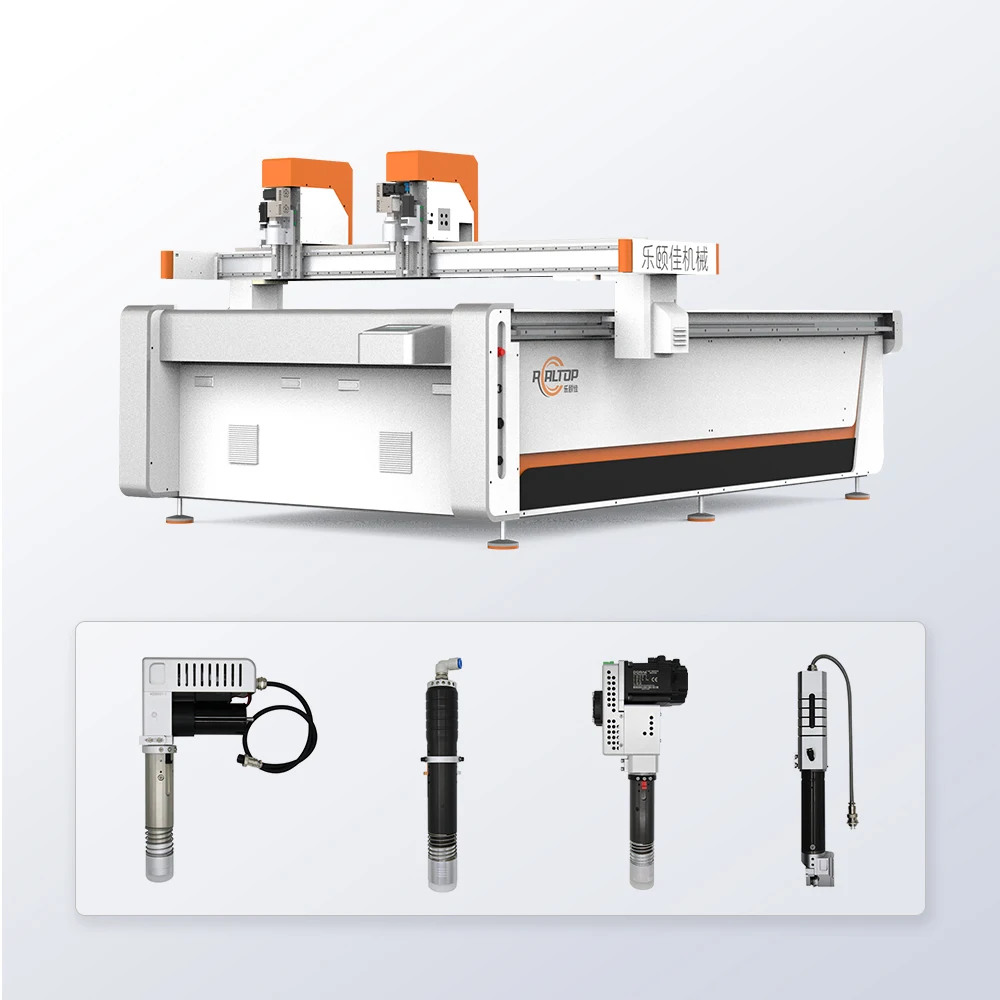
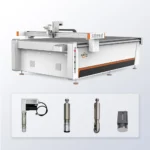
| Tool Head Options | Oscillating knife, Driven rotary knife, Creasing wheel, Kiss cutting tool, Pneumatic knife, Milling tool, V groove knife |
| Cutting Speed | 0-2000 mm/s |
| Cutting Thickness | ≤ 30mm (basis to be confirmed depending on material density) |
| Cutting Accuracy | ±0.1 mm |
| Vacuum Pump Power | 9KW |
| Vacuum Table Type | Aluminum bellows vacuum table |
| Voltage Options | 110V, 220V, 380V |
| File Formats Supported | PLT, DXF, AI, PDF |
| Safety Device | Infrared sensor device and emergency stop device |
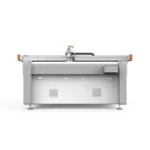
| Machine Dimensions (L×W×H) | 3300×2100×1350 mm |
| Control System | PLC control panel |
| Servo Motor Options | Panasonic, Delta, Dorna |
| Language Options | English, Russian, Italian, Chinese (custom languages available) |
| Compliance | CE |
Application Suitability
| Application | Material or Output |
|---|---|
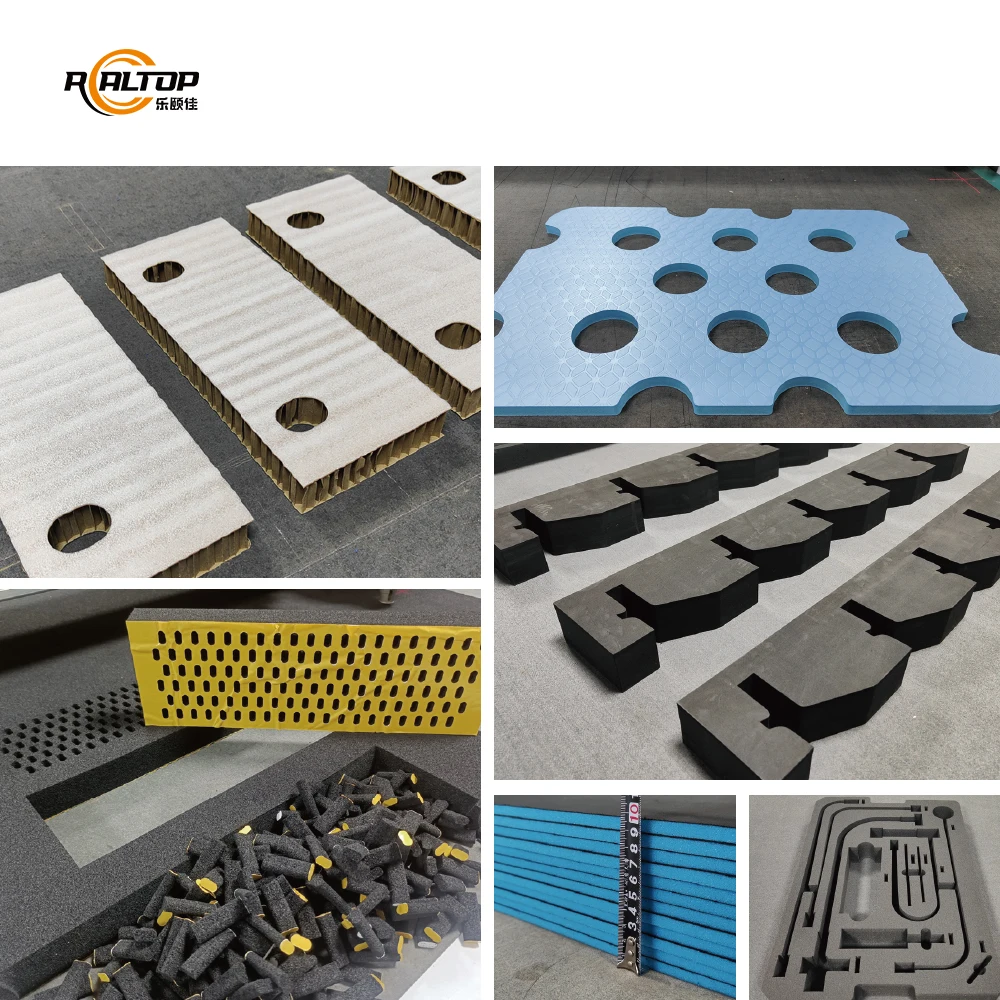
| Aerospace Composite Parts | Carbon fiber prepreg, aramid honeycomb, fiberglass cloth, thermal and acoustic insulation foam |
| Automotive and Rail Transit Interiors | Headliners, floor carpets, acoustic felt, damping pads, battery insulation pads |
| Wind Power and New Energy | Fiberglass cloth, carbon fiber cloth, vacuum infusion mesh, PET and PVC foam core |
| Sporting Goods and Leisure Equipment | Carbon fiber sheets, Kevlar, high-performance foam, surfboards, kayak components, skis |
Why the Voltage Question Should Come Before the Price
When evaluating a CNC oscillating knife cutting machine manufacturer, buyers often fixate on cutting speed and bed size while overlooking the electrical supply chain. Specifying voltage, frequency and plug standard after production starts is how you end up with a machine that cannot plug in on arrival.
I have watched containers reach port only for the importer to realize the control panel wiring does not match their shop’s three-phase supply. The motor spins, the PLC boots, but the vacuum pump stalls under load because the frequency is wrong. Rewiring at destination means pulling the machine apart, re-terminating every contactor, and sometimes replacing the servo drives entirely [NEED_CITE: voltage and frequency standards by export market].
Cold-Cutting Integrity for Resin-Based Laminates
Carbon fiber, Kevlar and aramid honeycomb degrade when exposed to the thermal shock of laser or plasma processes. The oscillating knife method keeps the material at ambient temperature throughout the cut, preserving the resin matrix and the fiber-resin bond that gives these composites their structural rating.
This CNC oscillating knife cutting machine manufacturer designs every tool head option around that cold-cutting principle. Whether you run a high-frequency oscillating blade through prepreg or a V groove knife through G10 epoxy board, the material sees mechanical shear only — no melt zone, no scorching, no fume extraction requirement.
Vacuum Hold-Down Across Large-Format Flexible Sheets
Wind blade infusion mesh and prepreg rolls present a flatness problem that small rigid sheets never encounter. These materials sag, shift and buckle when a knife passes through them at production speed, and the resulting tolerance drift accumulates across a nested sheet.
The aluminum bellows vacuum table on this system delivers full-surface adsorption with high flatness. The bellows structure maintains seal integrity even when cutting small parts near the table edge, which is where zoned vacuum systems typically lose grip [NEED_CITE: vacuum adsorption principles for flexible composite layup]. The 9KW pump generates enough differential pressure to hold thin fiberglass cloth flat without crushing foam core materials stacked underneath.
Reading the Specifications That Actually Matter
Cutting thickness is listed as ≤ 30mm, but that number changes the moment you swap EVA foam for carbon fiber board. Density, fiber orientation and resin hardness all determine how deep the oscillating knife can penetrate before deflection compromises accuracy. We treat that 30mm figure as a starting reference for soft composites and validate actual depth on the buyer’s material before confirming the order.
The ±0.1 mm accuracy rating holds meaning only if the servo drive maintains positional feedback under load. Choosing between Panasonic, Delta and Dorna servo options lets buyers align motion control with the service networks available in their region, which matters when a drive needs replacement two years after installation.
Tool head selection deserves the same scrutiny. A driven rotary knife handles woven fiberglass cloth cleanly where an oscillating blade would fray the edge. A pneumatic knife cuts through thick acoustic felt stacks without the drag that a mechanical blade generates. Matching the head to the material is not optional — it determines whether the finished part goes to assembly or to scrap.
The Cost of a Wrong Tool Head Choice
A buyer once specified a machine on working area alone, assuming any oscillating knife would handle their EVA gasket stock. The material density turned out to be double what the sample suggested, and every cut produced ragged edges with delamination along the fiber boundary. Production fell to half the expected rate because operators slowed the feed to compensate, and scrap costs consumed the margin they had counted on [NEED_CITE: composite cutting edge quality standards].
Selecting the wrong vacuum zoning pattern creates a parallel problem. Small nested parts lift off the table mid-cut when the surrounding zone cannot generate sufficient differential pressure, ruining both the part and the sheet it came from.
Why Buyers Source This Equipment Here
In-house design and production covers both knife tooling and vacuum table engineering, so configuration decisions happen on the factory floor rather than through a trading company guessing at what the end user needs.
Tool head and table layout are specified per material and confirmed in writing before production begins, removing the risk of receiving a cutter built for cardboard when the actual job involves carbon fiber prepreg.
Software compatibility — file format, nesting workflow, post-processor language — is validated against the buyer’s existing CAD environment during the sampling stage, not discovered after the machine is bolted to the floor.
Sample cutting on the buyer’s own composite material runs before order commitment, generating a documented report on edge quality, achievable tolerance and realistic feed rate for that specific layup.
Voltage, plug type and control interface language are locked in before the electrical cabinet is wired, so the machine arrives ready to connect rather than waiting for a local electrician to figure out the schematic.
Documentation & Verification
- Machine specification sheet detailing tool head configuration and vacuum zone layout for your material
- Electrical schematic with voltage confirmation matching your local supply standard
- Sample cutting report on your composite material documenting edge quality and tolerance
- Factory test record with run parameters before dispatch
- Software licence and file format compatibility note for your CAD workflow
- CE declaration for applicable import markets
Installation, Commissioning & Support
- 3300×2100mm footprint requires a level concrete floor with clearance for material loading on three sides
- 9KW vacuum pump demands a dedicated circuit separate from the PLC and servo drive supply
- Machine ships as a single skid; table and gantry require on-site alignment after positioning
- First power-on includes vacuum seal verification, servo tuning and test cuts on your material
- Operator training covers tool head changeover, nesting file import and daily blade inspection
- Spare parts list includes oscillating blades, vacuum seals and servo drive fuses sized to your voltage option
What to Include in Your Inquiry
Send the specific composite material you cut most often — layup schedule, thickness range and whether it arrives as sheet or roll. State your local voltage and frequency so we wire the cabinet correctly from the start. If your shop already runs nesting software, share a sample file so we can confirm import compatibility before building the machine.
Frequently Asked Questions
Q: How is cutting thickness capacity determined for different composite materials?
A: Thickness capacity depends on material density, fiber content and resin hardness rather than a single number. We run your actual composite sample through multiple passes to find where edge quality begins to degrade, then quote a realistic depth based on that test rather than a catalog maximum.
Q: How do I confirm voltage, plug standard and control language before shipment?
A: We collect your local supply specifications during the inquiry stage and lock them into the electrical schematic before production. The PLC panel language and plug type are verified on the factory test record you receive before the container is loaded.
Q: Can I send my composite material for sample cutting before placing an order?
A: Yes. We require a representative sample of your material — enough for multiple nested cuts — and return a report showing edge quality, tolerance achieved and recommended tool head for your production volume.
Q: How is the vacuum table zoned for both small parts and large sheets?
A: The aluminum bellows table provides full-surface adsorption, and zone layout is specified during configuration based on your typical nesting pattern. Small parts near the table edge receive the same hold-down pressure as center-placed sheets.
Q: What customization options are available for machine configuration?
A: Servo drive brand selection, control panel language, voltage and plug standard, and tool head combination are all configurable per order. Software integration with your existing nesting workflow is validated before production begins.
You may also like

商品评价
Clear filtersThere are no reviews yet.