


-
 Courier delivery
-
 DHL Courier delivery
-
 Warranty 1 year
-
 Free 30-Day returns

Precision-Matched Tooling Platforms — every oscillating knife and vacuum table configuration is validated on your specific leather hide before the build starts, so cutting depth and edge quality are confirmed rather than assumed.
Technical Specifications
| Parameter | Value |
|---|---|
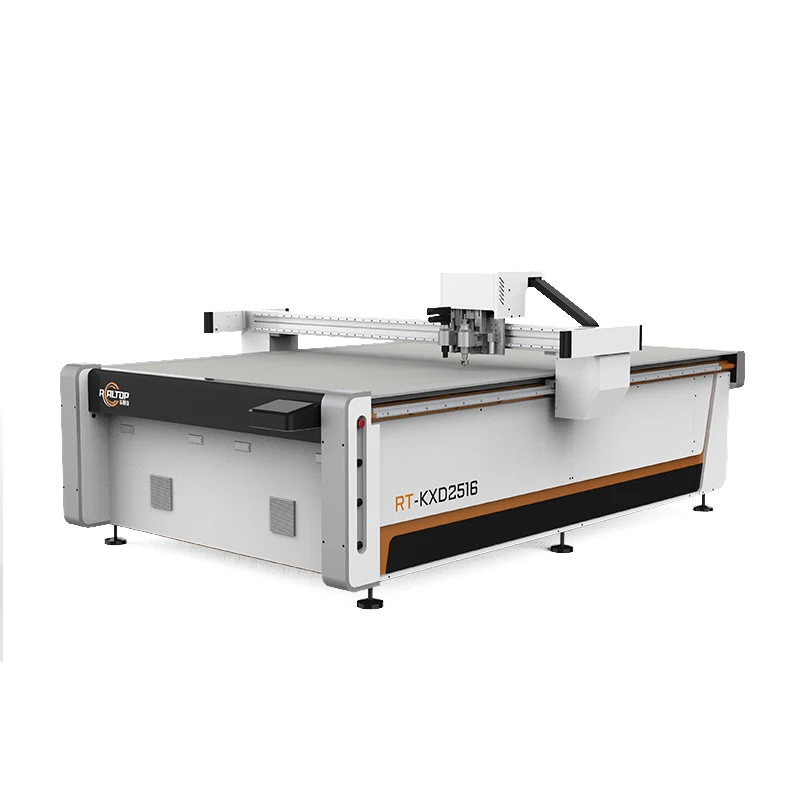
| Model | RT-D2516 / RT-S2516 |
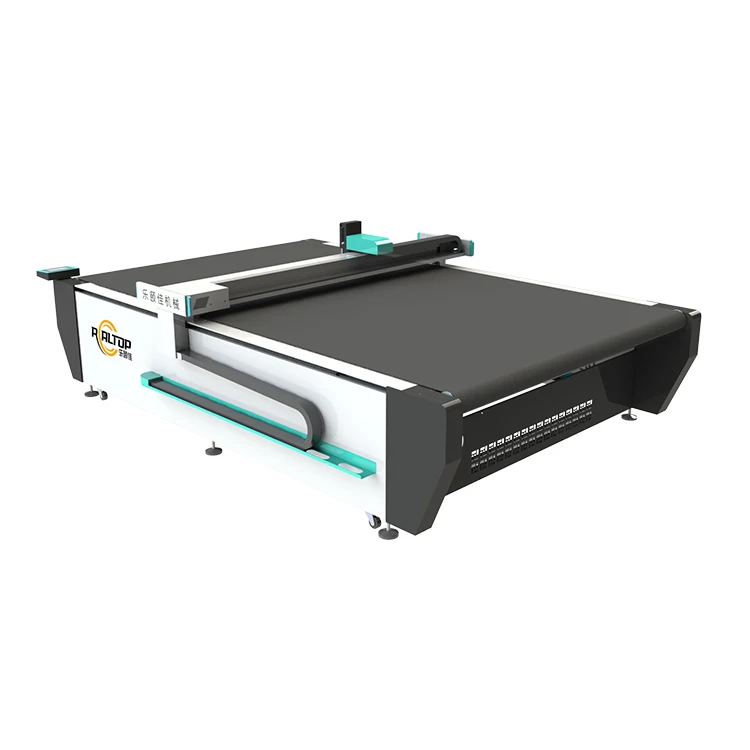
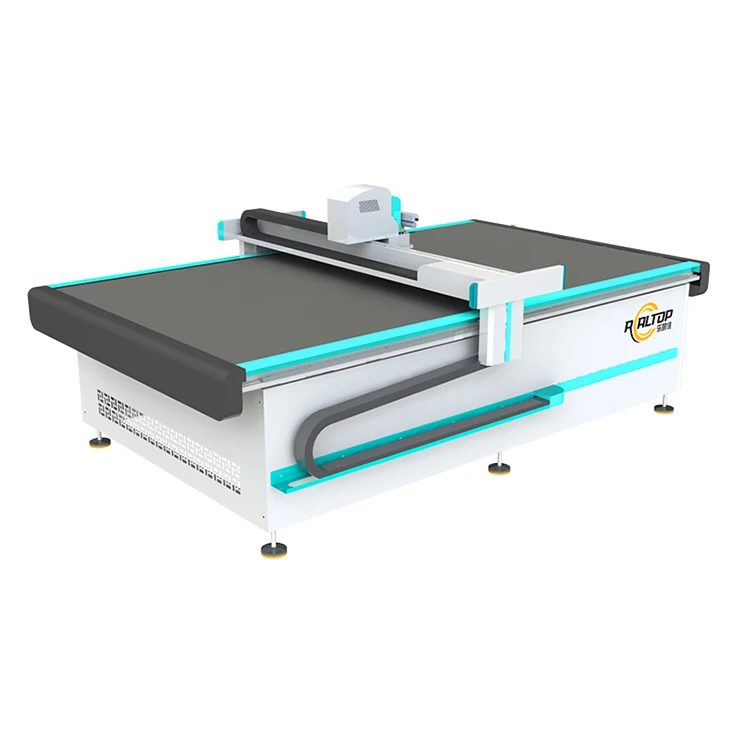
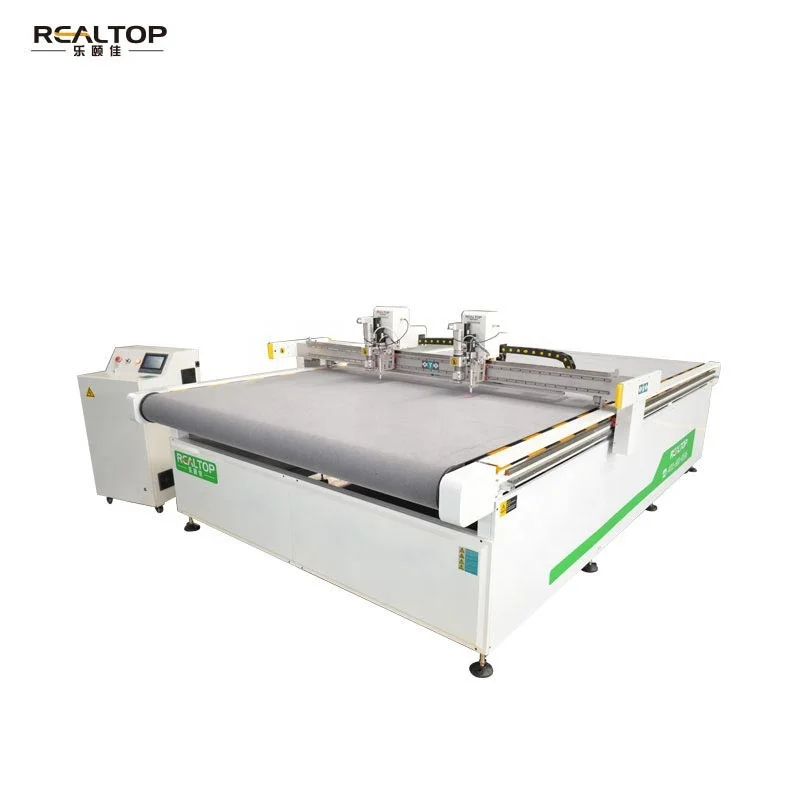
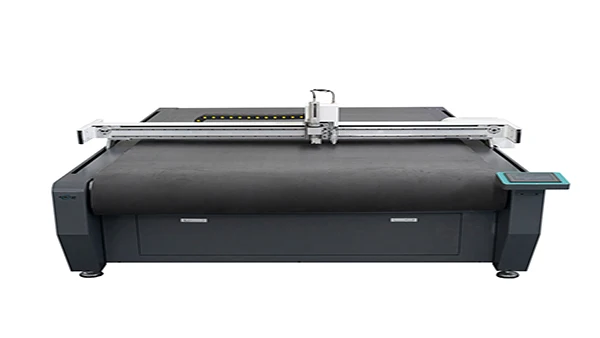
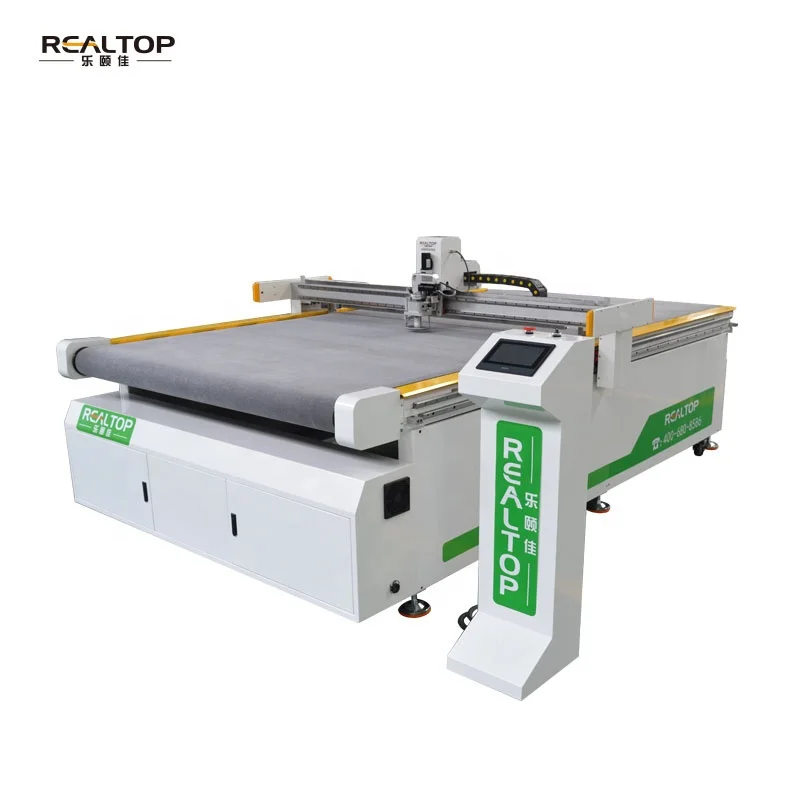
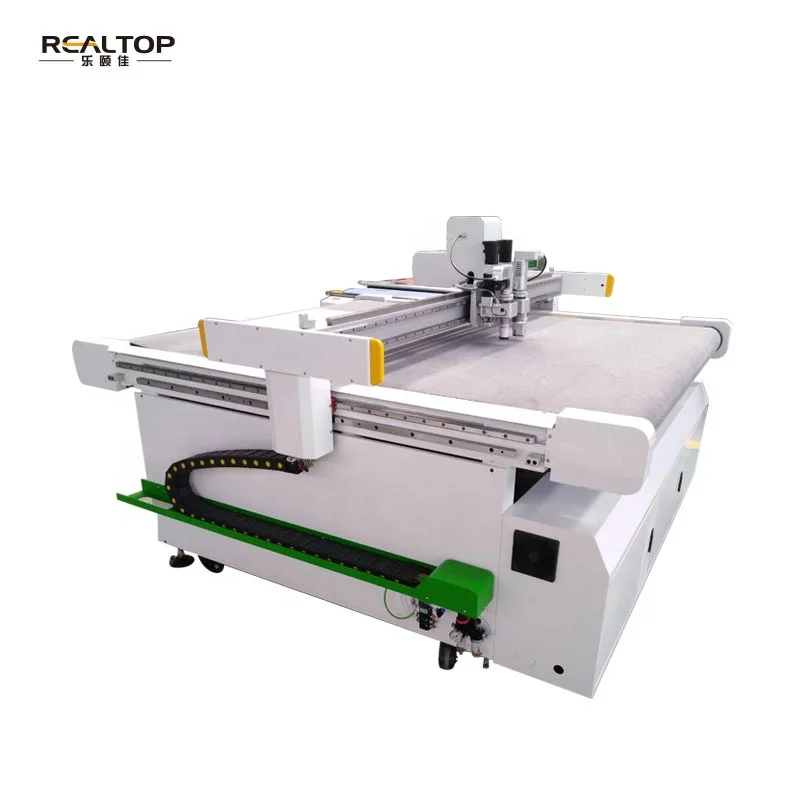
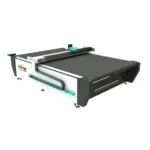
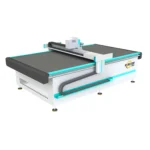
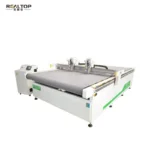
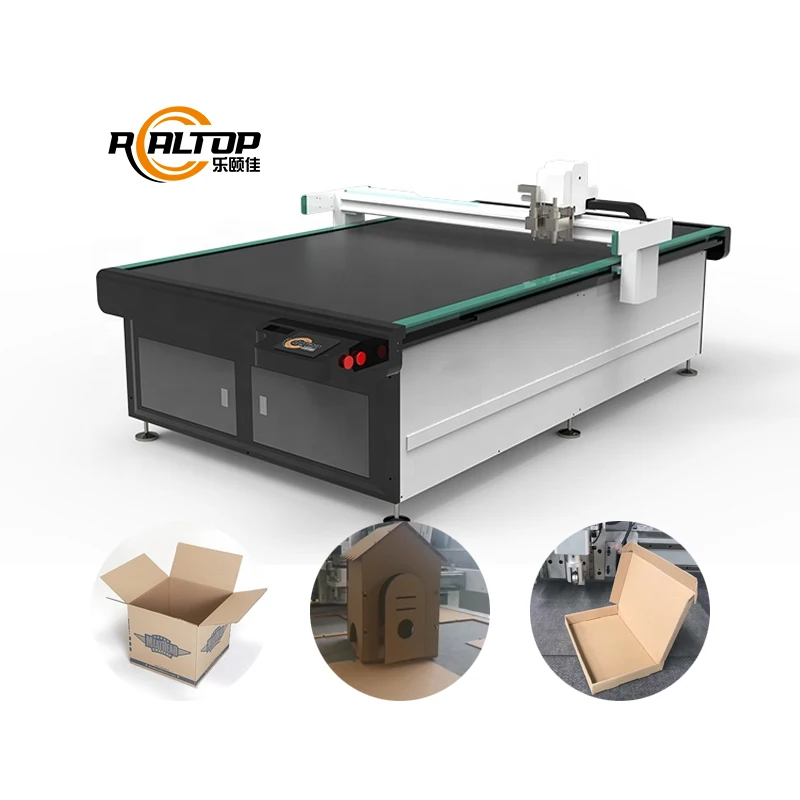
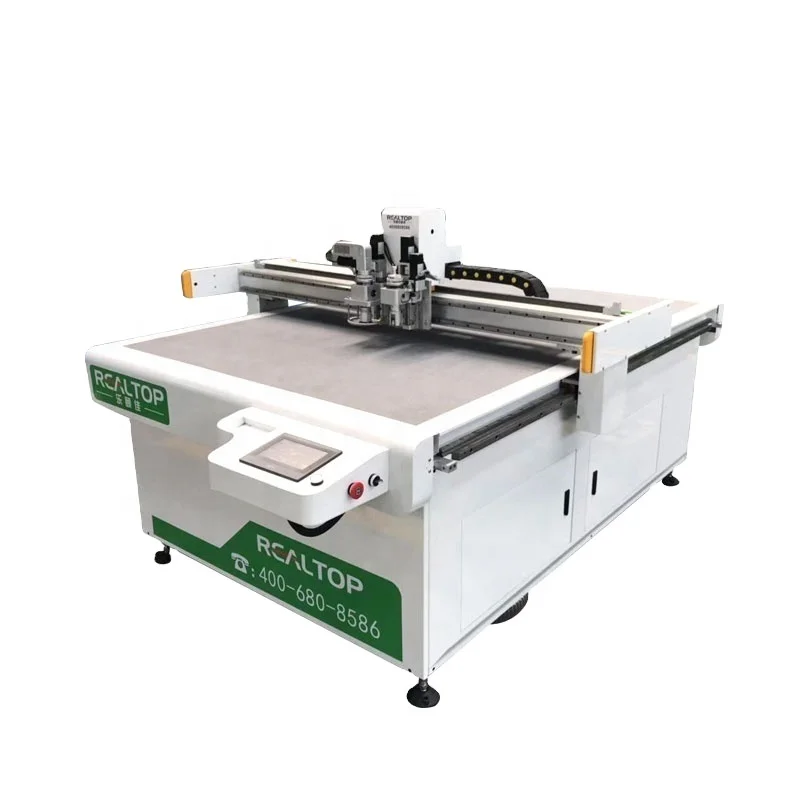
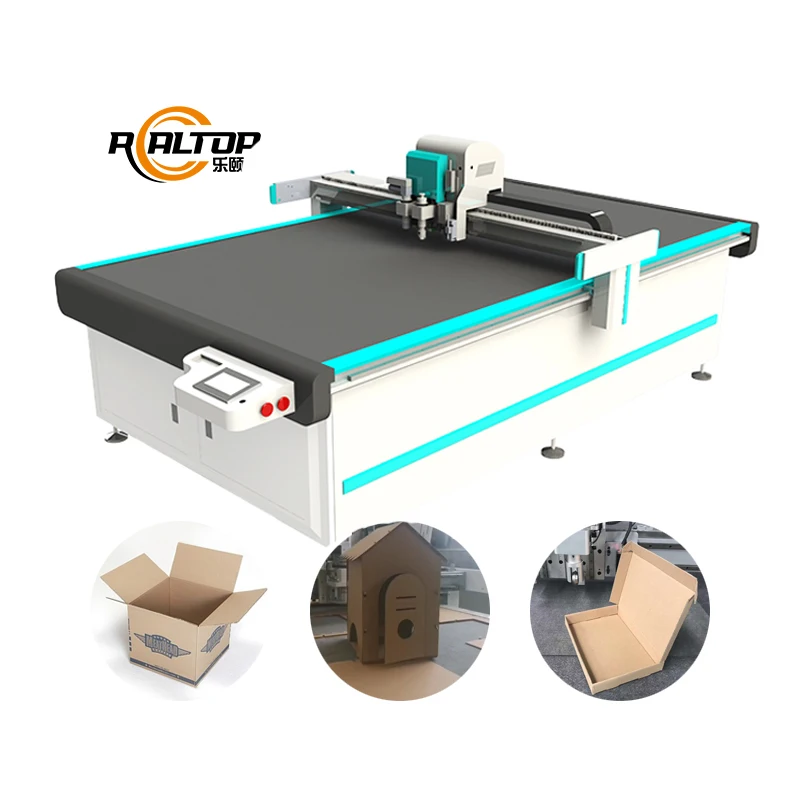
| Product Type | CNC Oscillating Knife Leather Cutting Machine |
| Working Area | 1600 × 2500 mm |
| Machine Dimensions (L × W × H) | 3450 × 2300 × 1250 mm |
| Rated Power | 11 kW |
| Operating Voltage | 380V ±10% (50/60 Hz to be confirmed) |
| Table Configuration | Flatbed with vacuum zones and auto-feeding Germany imported conveyor belt |
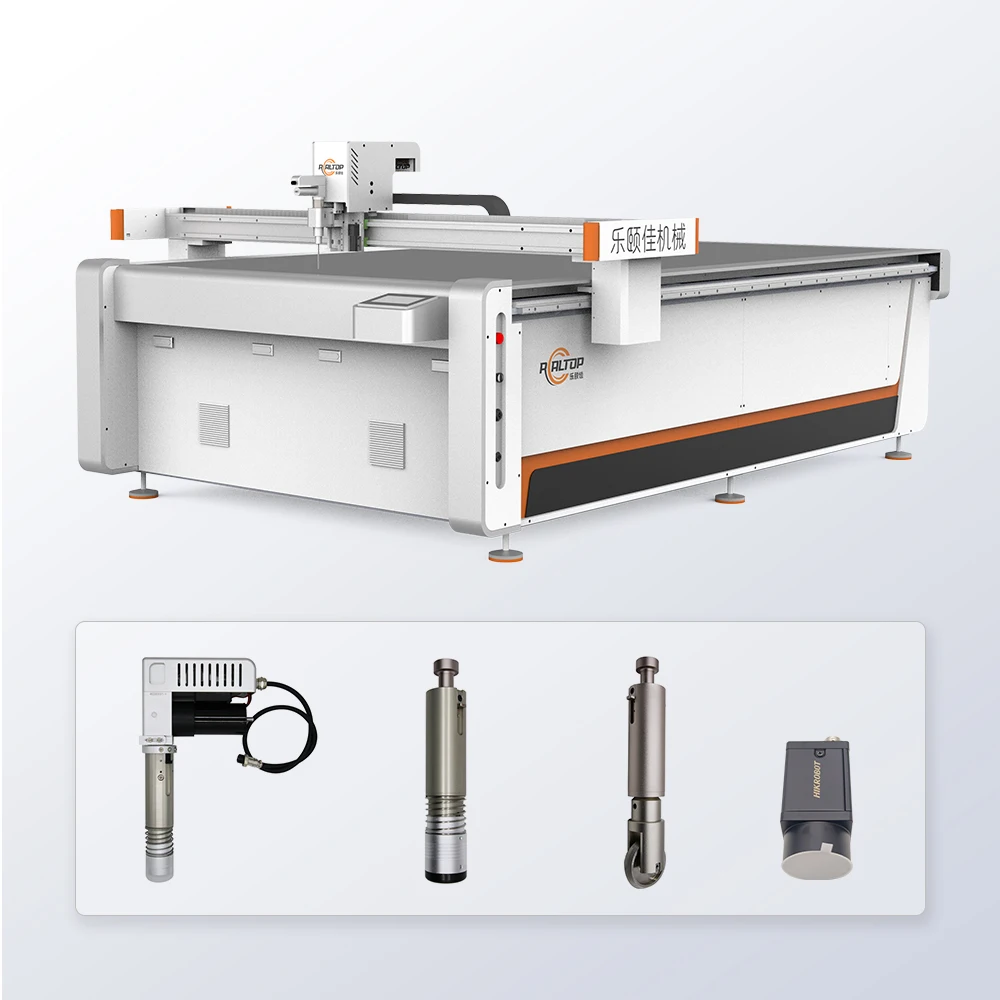
| Tool Head | Swiss imported oscillating knife — full cut, half cut, cursor location |
| Cutting Speed | 200–800 mm/s (varies by material density and thickness) |
| Translational Velocity | 800–1200 mm/s |
| Repeatability | ≤ 0.1 mm |
| Drive System | Digital servo motor with synchronous belt and ball screw |
| Servo Motor | Japanese Yaskawa |
| Linear Guide | Taiwan Hiwin rail |
| Vacuum Pump | 7.5 kW |
| Safety System | Infrared perimeter sensors |
| File Compatibility | HP-GL compatible format |
Application Suitability
| Application | Material or Output |
|---|---|
| Footwear sole and upper cutting | Genuine leather, PU leather, sponge composite leather |
| Garment pattern nesting | Flexible hides, soft textiles with irregular grain contours |
| Leather goods production | Premium cowhide and goatskin for bags, belts, and wallets |
| Automotive interior trim | Composite leather, PVC, and soft-touch panel materials |
| Gasket and seal fabrication | Rubber, silicon, and non-metallic composite sheets |
| Flexible industrial materials | Soft glass, silicon rubber, and layered sponge compounds |
What a Working Area Figure Leaves Out When Buying a CNC Oscillating Knife Leather Cutting Machine
Bed size alone never tells you whether the knife head can penetrate your thickest hide cleanly.
I once watched a footwear factory run production on a machine specified only by its 1600 × 2500 mm table. The genuine leather cut fine during trials, but when the buyer switched to sponge composite leather with a dense backing layer, the oscillating knife could not push through without crushing the foam core. Ragged edges appeared across every panel, and an entire batch of uppers had to be scrapped before the issue was traced back to insufficient downward stroke force. That kind of mismatch does not show up in a brochure — it shows up on your factory floor during a rush order [NEED_CITE: material structure verification before CNC cutting machine purchase].
A CNC oscillating knife leather cutting machine must be evaluated on tool head stroke, knife oscillation frequency, and vacuum hold-down adequacy for the specific hide thickness and composite structure you run daily. The RT-D2516 / RT-S2516 addresses this by pairing a Swiss imported oscillating knife head with a 7.5 kW vacuum system and a German conveyor belt, but configuration only matters if it is matched to your material stack before production begins.
Tool Head Configuration Drives Edge Quality on Every Hide
The oscillating knife on this CNC oscillating knife leather cutting machine supports full cutting, half cutting, and cursor location functions in a single tool head. Genuine leather requires a different stroke depth and oscillation frequency than PU or sponge composite leather, where the backing layer often demands higher downward pressure. The Swiss imported knife assembly provides the rigidity to handle dense composite structures without blade deflection, keeping edges clean across both natural grain hides and synthetic layered materials. Production teams working mixed material schedules can switch between leather types without changing tool heads mid-shift.
Vacuum and Conveyor Integration for Continuous Hide Feeding
The 7.5 kW vacuum pump paired with zoned flatbed table ensures that small footwear components and intricate garment patterns stay flat during high-speed oscillation. The auto-feeding Germany imported conveyor belt moves hides onto the cutting zone in sequence, reducing the manual repositioning that typically slows leather nesting operations. This combination matters most when cutting irregularly shaped hides where grain direction and defect avoidance require the operator to load each piece individually — the conveyor handles transport while vacuum zones secure the material precisely where the knife is working [NEED_CITE: vacuum zoning requirements for small leather parts on CNC flatbed cutting tables].
How Core Drive Components Affect Repeatability in Leather Cutting
The Japanese Yaskawa servo motors driving the system through Taiwan Hiwin linear rails deliver ≤ 0.1 mm repeatability across the full 1600 × 2500 mm working area. In leather cutting, this level of positional accuracy determines whether nested pattern pieces align with natural grain lines and avoid scars or stretch marks on premium hides. The synchronous belt and ball screw transmission system maintains this precision during the 200–800 mm/s cutting speed range, which varies depending on material density. For operations running high-value genuine leather where each hide represents significant material cost, repeatable accuracy directly affects yield and waste ratios. The 11 kW rated power supports sustained oscillation through thick composite layers without motor stall, a factor that becomes visible only during extended production runs rather than brief demonstrations.
The Cost of Discovering Configuration Errors After Delivery
When vacuum zoning proves inadequate for small parts, leather pieces lift off the table during cutting and produce incomplete cuts or dimensionally shifted patterns. Operators then slow the feed rate to compensate, which reduces throughput and introduces inconsistency between the first piece and the fiftieth in a batch. When the control system language is not confirmed before shipment, the production team spends days navigating menus in an unfamiliar language during commissioning, delaying the first production run. Electrical mismatches between the factory’s 380V ±10% supply and the local grid frequency create intermittent servo faults that are difficult to diagnose because they appear only under load [NEED_CITE: voltage and frequency mismatch symptoms in industrial CNC servo systems].
Why Production Teams Source This Platform from the Build Floor
The design team engineers both knife cutting and laser cutting platforms under one roof, which means the CNC oscillating knife leather cutting machine is specified as a complete system — tool head, vacuum table, and drive train matched to material rather than selected from a generic catalog. Sample cutting on your own leather stock happens before order confirmation, producing a documented report on edge quality and cutting depth for each hide type in your schedule. Voltage, frequency, plug type, and control language are confirmed against your facility’s electrical standard before the build enters assembly. Software compatibility with HP-GL format is verified alongside your existing nesting workflow to ensure file import runs without conversion errors on day one. Factory test records and packing photographs are shared before shipment, so the machine you receive matches the configuration you approved.
Documentation & Verification
- Sample cutting report on your genuine leather and composite hides before order confirmation
- Electrical schematic with 380V ±10% and frequency matched to your local grid standard
- Tool head and vacuum zone configuration list matching your material stack
- Software licence and HP-GL format compatibility note for your nesting workflow
- Factory acceptance test record with your production files run before dispatch
Installation, Commissioning & Support
- 3450 × 2300 × 1250 mm footprint requires level concrete floor with anchor provisions
- Dedicated 380V ±10% circuit with confirmed frequency and plug type for your market
- Vacuum pump 7.5 kW requires separate power circuit from servo drive system
- First-article cutting validation on your leather stock during commissioning
- Oscillating knife blade replacement intervals and spare parts list provided at delivery
Before You Request a Quote
Share the leather types in your production schedule — genuine, PU, sponge composite, or PVC — along with typical hide thickness and the largest panel dimension you cut. Confirm your facility voltage, frequency, and preferred control language so the electrical and interface configuration is locked before assembly. If you run an existing nesting software, provide a sample file so HP-GL import compatibility can be verified against your workflow.
Frequently Asked Questions
Q: How is cutting depth and edge quality verified on my leather before I commit?
A: We run sample cuts on your own leather stock — genuine, PU, or sponge composite — using the exact tool head and vacuum configuration proposed for your machine. A documented sample cutting report is provided showing edge quality, penetration depth, and any material-specific adjustments needed before order confirmation.
Q: Will the vacuum table hold small footwear parts flat during cutting?
A: The 7.5 kW vacuum system works with zoned table sections designed to maintain hold-down on small components. During sample cutting, we verify that your specific part geometry and material weight remain secure at production cutting speeds, and zoning is adjusted in configuration if needed.
Q: Can the control system language and electrical supply match my factory?
A: Voltage at 380V ±10% is the base specification, and frequency, plug type, and control interface language are confirmed with you before production begins. The electrical schematic is shared for your facility team to review against your local grid standard before the machine ships.
Q: Which tool head works best for genuine leather versus composite leather?
A: The Swiss imported oscillating knife handles full cut, half cut, and cursor location in one head. For genuine leather, stroke depth and oscillation frequency are tuned to preserve grain integrity. For sponge composite leather with dense backing, downward pressure and knife rigidity are prioritized to prevent core crushing.
Q: Do you test the machine with my file format before shipment?
A: Yes. The factory acceptance test includes running your actual production files in HP-GL compatible format through the complete cutting cycle. A test record with photographs is shared before dispatch, confirming that file import, nesting, and cutting output match your approved configuration.
You may also like

商品评价
Clear filtersThere are no reviews yet.