




-
 Courier delivery
-
 DHL Courier delivery
-
 Warranty 1 year
-
 Free 30-Day returns

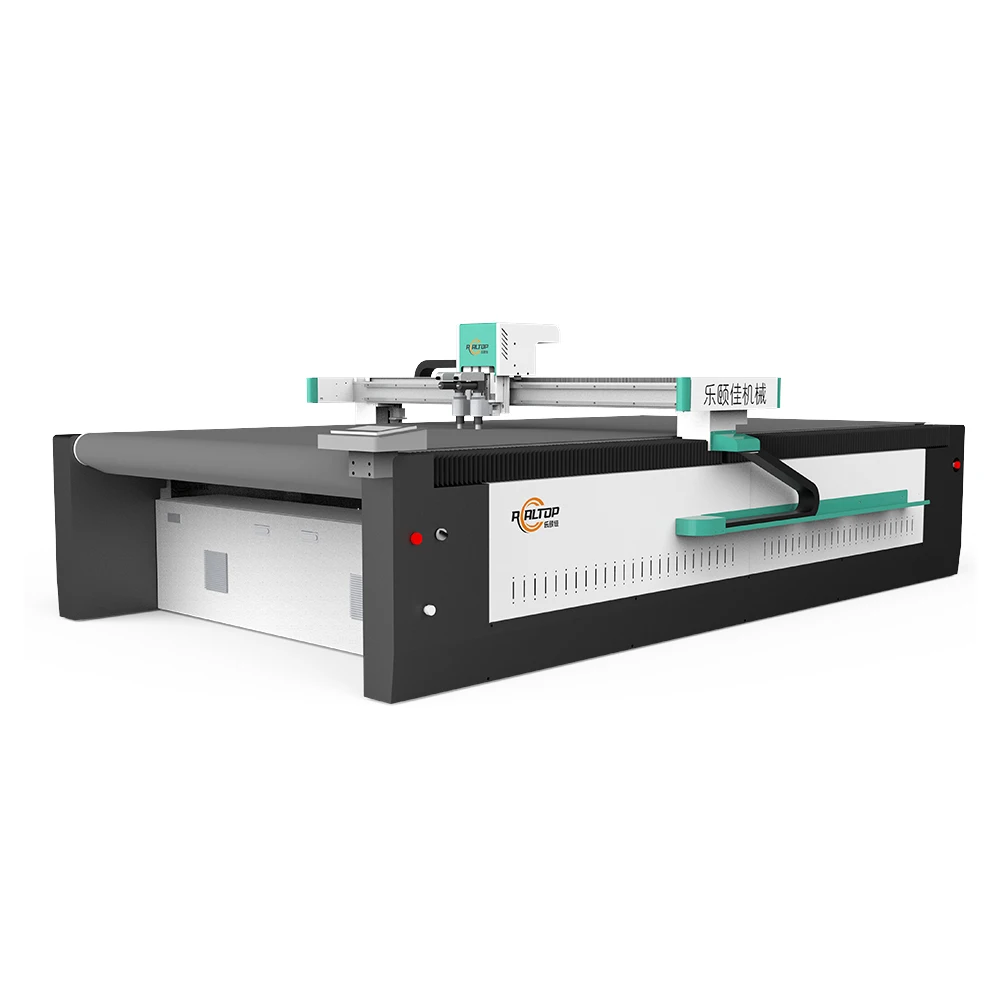
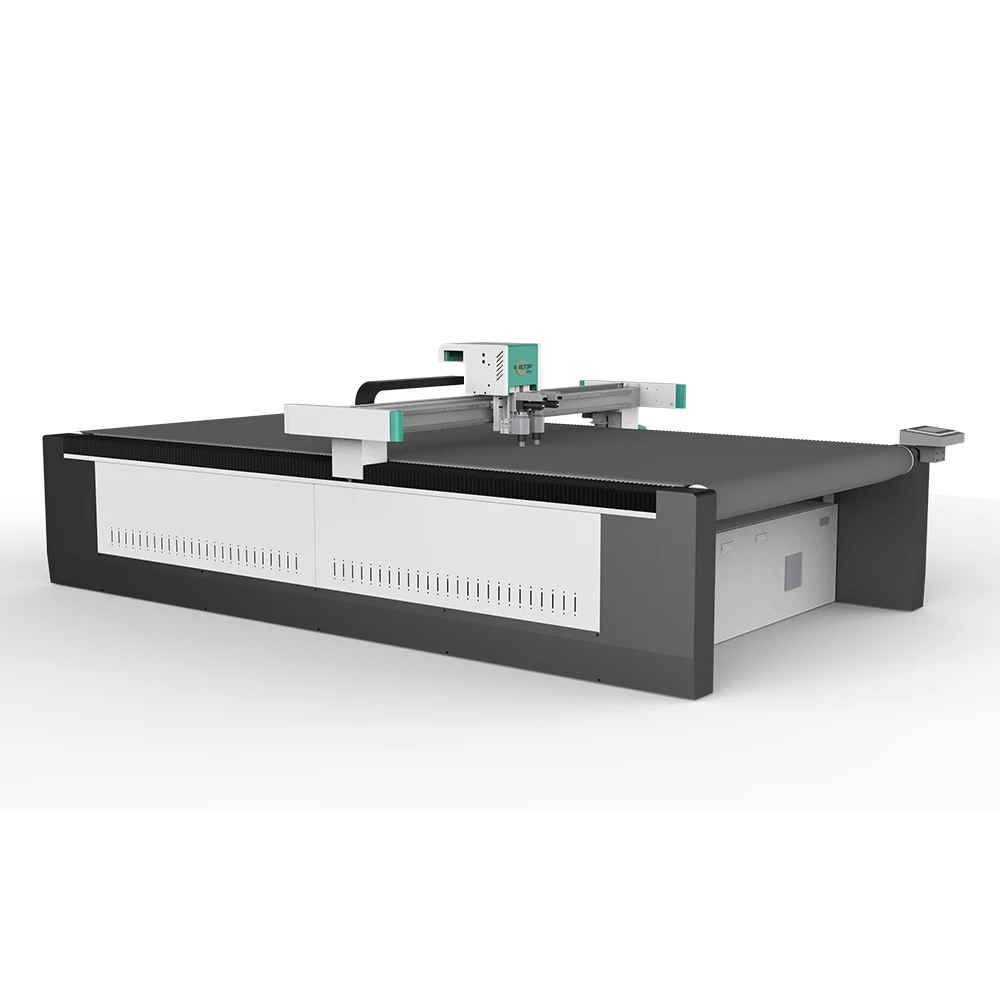
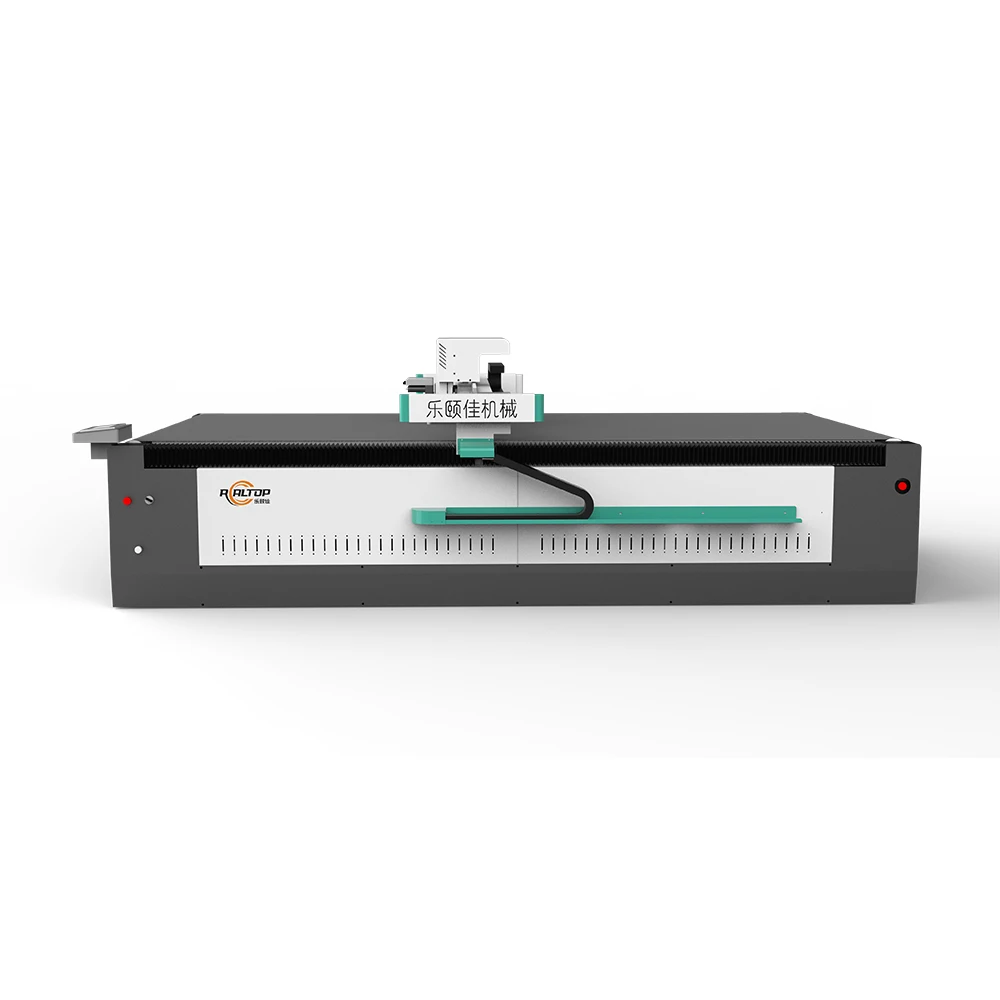
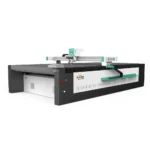
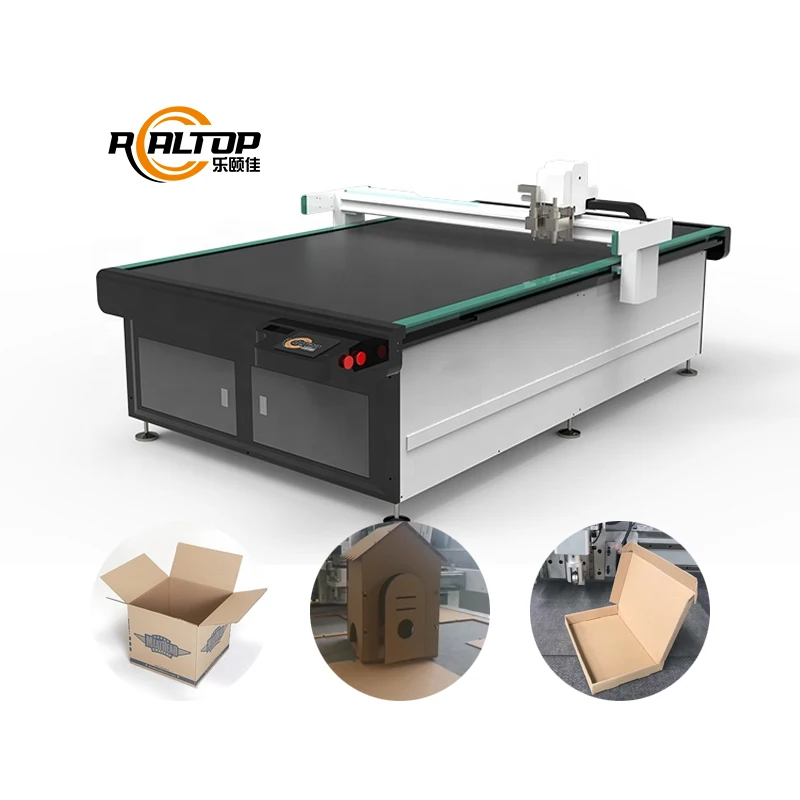
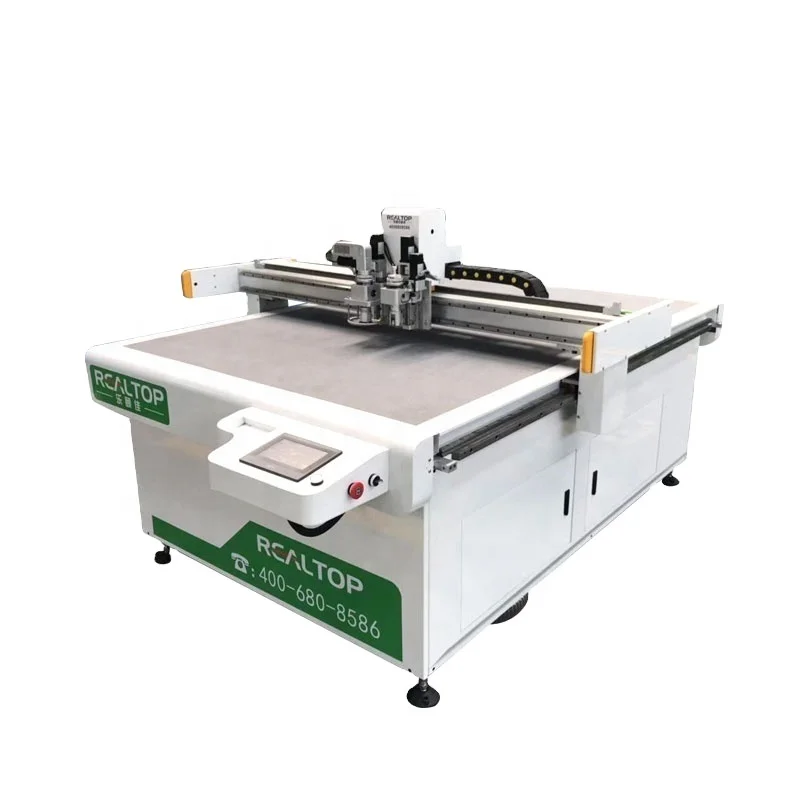
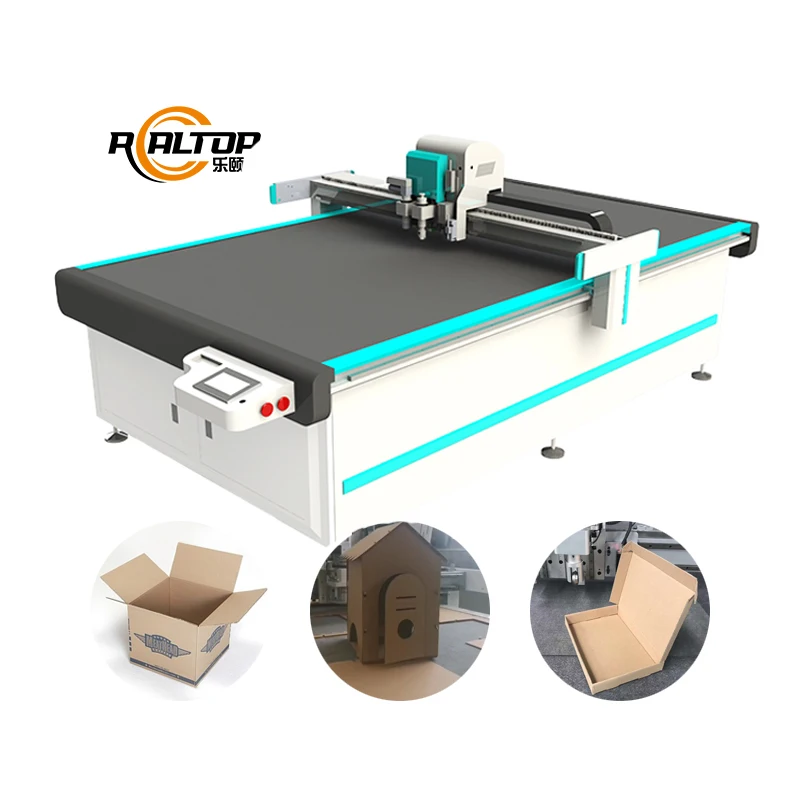
In-house Design and Build — Realtop engineers both the mechanical frame and the control logic for the 1625 oscillating knife cutting table, ensuring the vacuum zoning and tool head selection are matched to your specific gasket compound before the machine leaves the factory.
Technical Specifications
| Parameter | Value |
|---|---|
| Model | 1625 |
| Product Type | CNC Oscillating Knife Cutting Machine |
| Working Area | 1600 * 2500 mm |
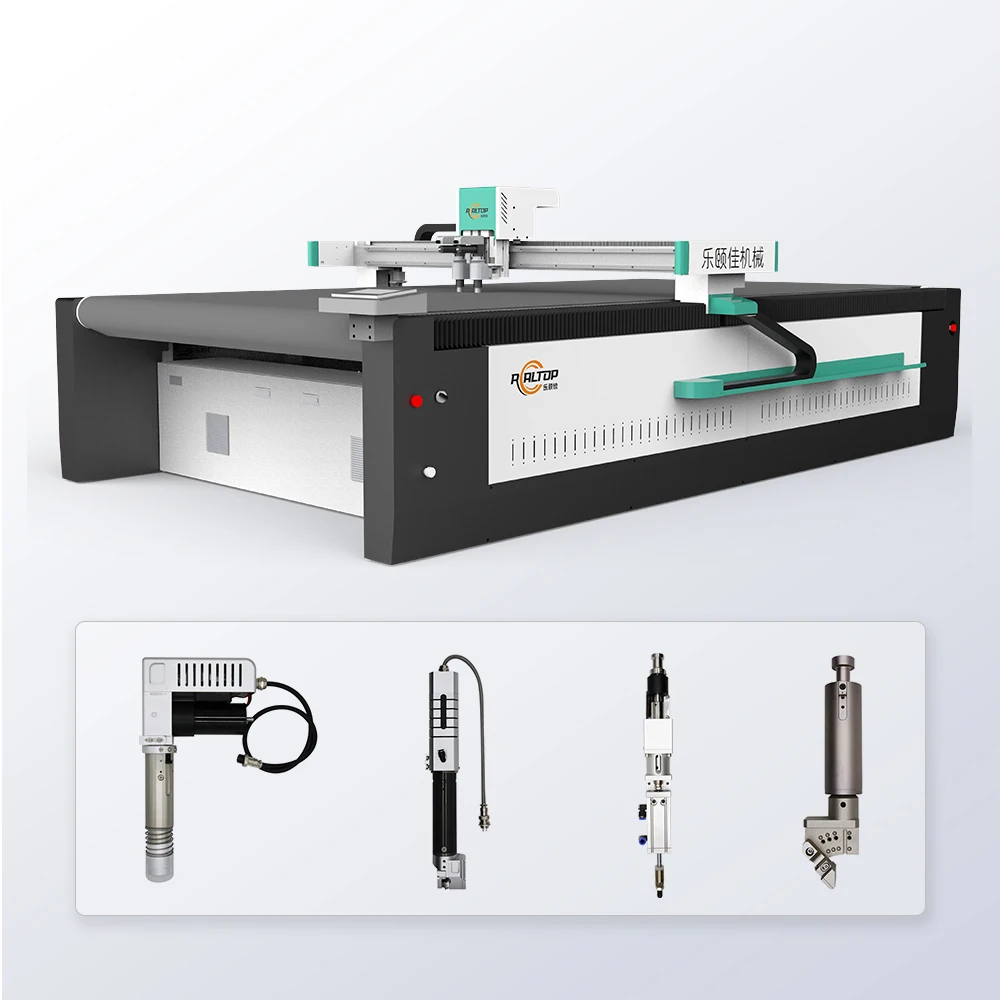
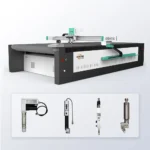
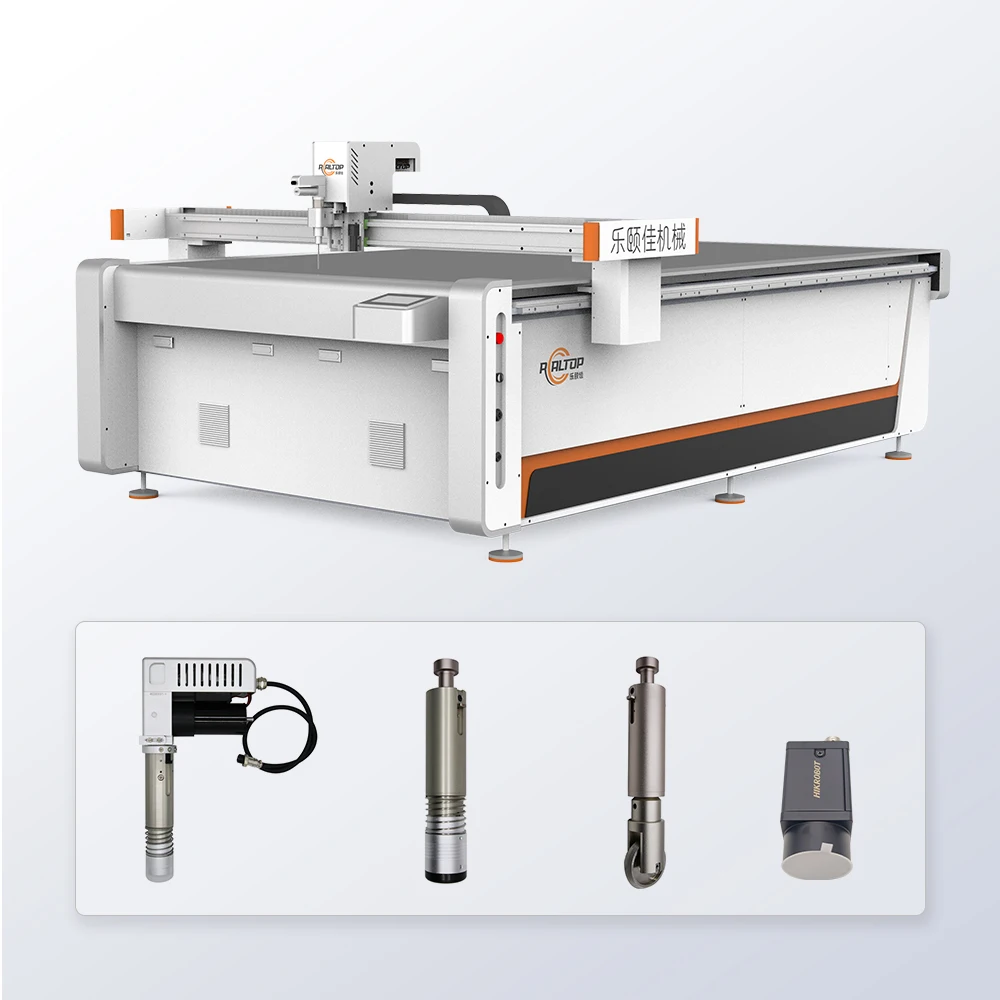
| Tool Head Options | Oscillating knife, Driven rotary knife, Creasing wheel, Kiss cutting tool, Pneumatic knife, Milling tool, V groove knife |
| Cutting Thickness Capacity | ≤ 30 mm |
| Cutting Speed Range | 0 – 2000 mm/s |
| Positioning Accuracy | ±0.1 mm |
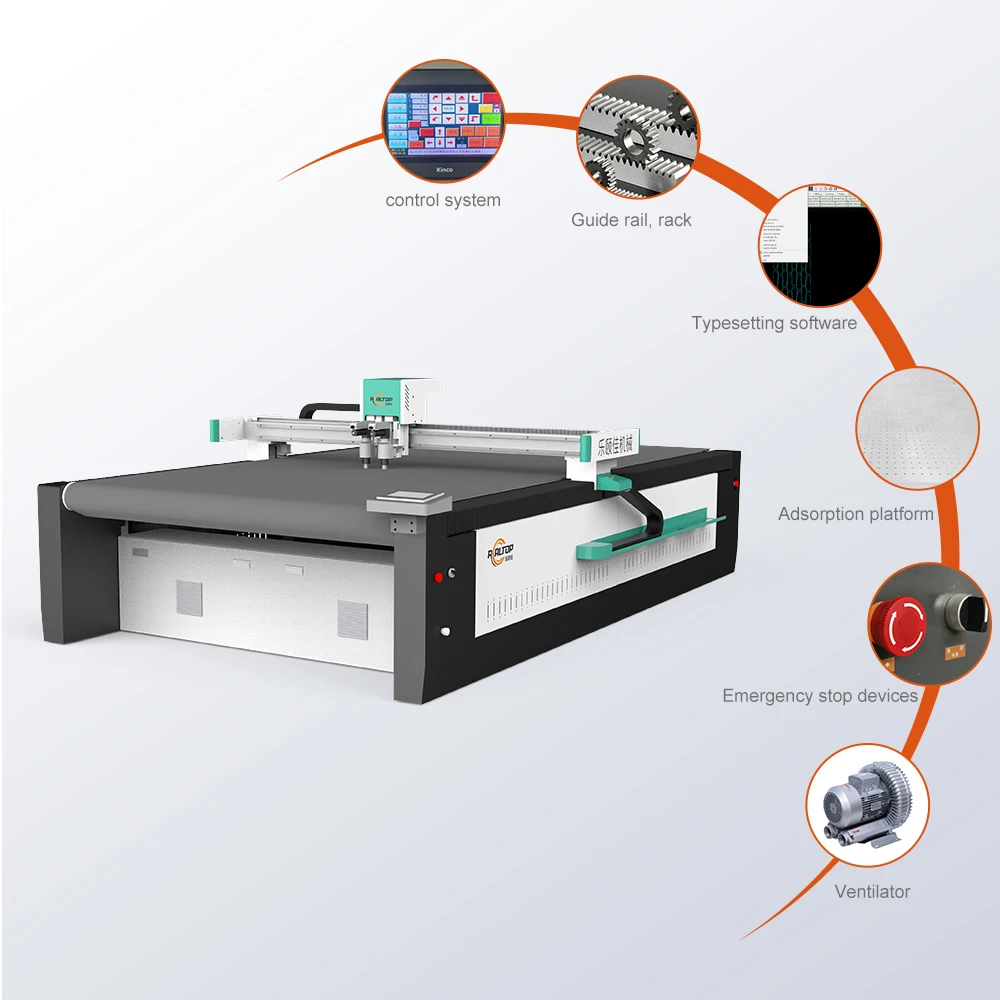
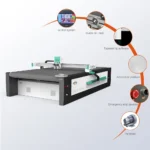
| Vacuum System | 9 kW Pump with Aluminum Bellows Table |
| Machine Frame | Heavy-duty steel with precision-ground surface |
| Control Interface | PLC panel with configurable display languages |
| Drive System | Servo motors (Panasonic, Delta, or Dorna options) |
| Electrical Input | 110V, 220V, or 380V configurable |
| File Compatibility | PLT, DXF, AI, PDF |
| Safety Systems | Infrared sensor array and emergency stop circuits |
| Machine Dimensions | 3300 2100 1350 mm |
Application Suitability
| Application Scenario | Material Processed |
|---|---|
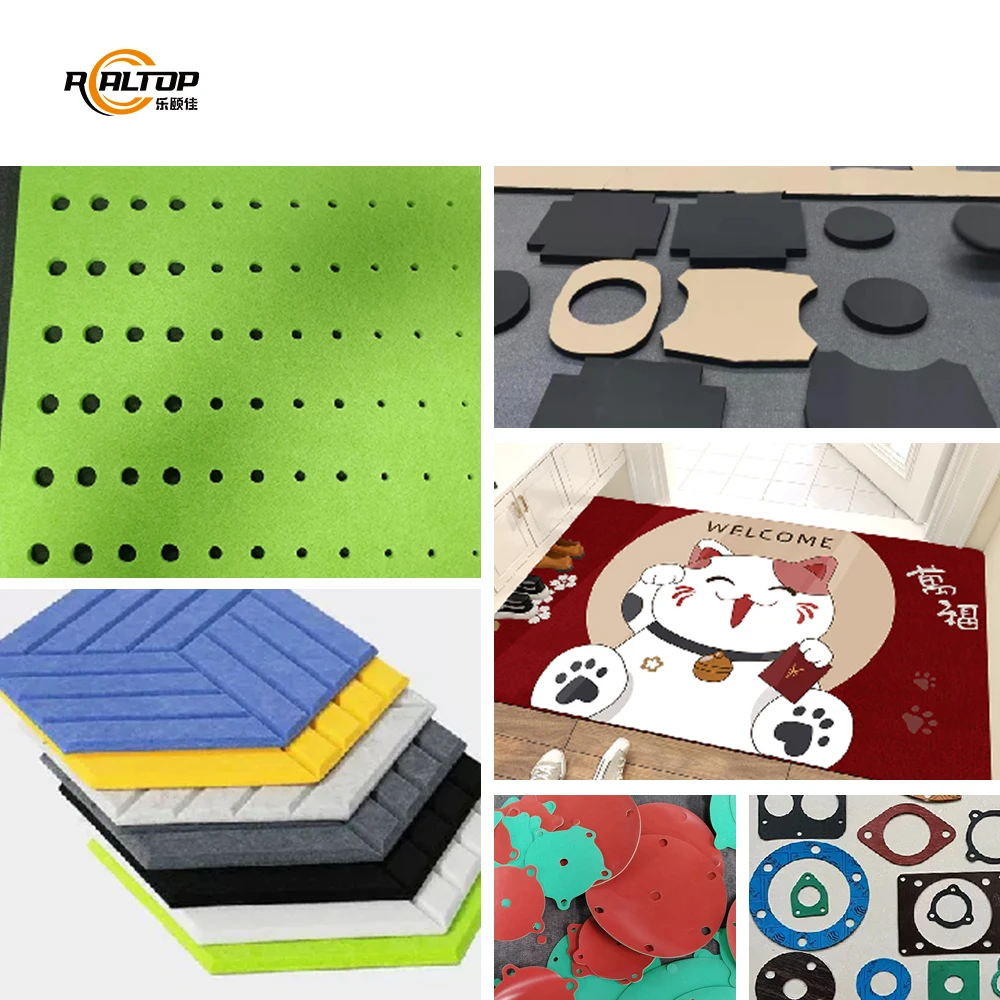
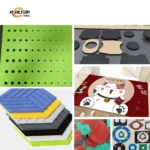
| Automotive Sealing & Gasket Production | Solid rubber, sponge rubber, PTFE, and fiber-reinforced composites |
| Aerospace Sealing Components | Aramid honeycomb, carbon fiber prepreg, and high-temp silicones |
| Industrial Flange & Valve Seals | Non-asbestos fiber, compressed cork, and graphite composites |
| Wind Power Blade Manufacturing | Infusion mesh, core material preforms, and structural foam |
| Heavy Machinery Vibration Dampers | High-density EVA, neoprene, and industrial foam sheets |
Why Material Thickness Dictates the Tool Head Choice
A machine specified only by working area often fails when the gasket material exceeds standard density or thickness limits.
I recall a project for an automotive supplier where the initial specification focused purely on the 1600x2500mm bed size. The buyer assumed a standard oscillating knife would handle their 25mm fiber-reinforced rubber. In reality, that material required a pneumatic knife tool with higher downward force to prevent edge delamination. When the cutting method is not validated against the actual stock, you risk ragged edges that compromise the seal integrity [NEED_CITE: mechanical properties of fiber-reinforced gasket materials]. A CNC gasket cutting machine manufacturer must confirm the tool head configuration based on your specific material sample, not just the sheet dimensions.
The Mechanics of the Oscillating Knife
The high-frequency vibration of the oscillating knife tool allows it to slice through fibrous gasket materials without dragging or fraying the edges. For a CNC gasket cutting machine manufacturer, selecting the right blade angle and vibration frequency is essential when processing aramid or fiberglass composites. This cold-cutting process preserves the mechanical properties of the sealing material, avoiding the thermal hardening that laser cutting can sometimes cause on organic compounds.
Vacuum Zoning and Part Stability
The aluminum bellows vacuum table on the 1625 model provides high flatness and consistent adsorption across the entire bed. Small gasket parts are prone to lifting during the cutting cycle if the vacuum zones are too large or poorly regulated. By segmenting the vacuum areas, the system holds intricate sealing shapes firmly in place, ensuring the ±0.1 mm cutting accuracy is maintained even when the tool head changes direction rapidly [NEED_CITE: vacuum adsorption principles in digital cutting tables].
Interpreting the 9kW Vacuum and Servo Drive
The 9kW vacuum pump is sized to maintain suction through the micro-perforations of the aluminum table, which is vital for holding porous materials like infusion mesh or cork composites. The servo motor options (Panasonic, Delta, Dorna) dictate the acceleration and deceleration curves of the gantry. In gasket production, where corners and tight radii are common, a high-response servo ensures the tool path remains precise without overshooting, directly affecting the fit of the final seal.
The Cost of Ignoring Voltage and Zoning
Overlooking the local voltage and frequency standards can lead to servo drives that overheat or fail prematurely in the target market. Furthermore, failing to specify the correct vacuum zoning for small, intricate gasket shapes results in material shift, leading to batches of scrap parts that do not meet sealing tolerances [NEED_CITE: electrical standards for industrial machinery exports]. These are avoidable failures that stem from incomplete technical dialogue during the ordering phase.
Engineering Verification at the Source
Realtop operates as both the design team and the core factory for these cutting tables. This means the frame welding, the precision grinding of the table surface, and the integration of the PLC logic are managed under one roof. We do not simply assemble sourced parts; we engineer the motion system to handle the specific vibration dampening required for knife cutting. This in-house control allows for rapid customization of the tool head carriage and the software nesting parameters to suit your production workflow.
Documentation & Verification
- Sample cutting report on your specific gasket material and thickness
- Tool head and vacuum table zoning configuration list matched to your stock
- Electrical schematic and voltage confirmation document for your local grid
- Factory test record verifying ±0.1 mm accuracy on your part geometry
- Operation and maintenance manual with PLC language customization
Installation, Commissioning & Support
- Foundation must be level to support the 330021001350 mm heavy-duty frame footprint.
- Dedicated circuit required for the 9kW vacuum pump and main servo drives.
- Assembly of the aluminum bellows table and gantry performed on-site by technicians.
- First-run parameter tuning for oscillating knife frequency and vacuum zoning.
- Training on PLC interface and nesting software for PLT and DXF file import.
- Spare parts list including replacement blades and vacuum seals provided.
Preparing Your Technical Inquiry
To ensure the 1625 CNC oscillating knife cutting table is configured for your facility, please provide the specific gasket material type, maximum thickness, and daily production volume. We also require your local voltage and frequency standards to correctly spec the electrical cabinet. If you are processing composite materials, sending a physical sample for our internal test cut is the most reliable way to finalize the tool head selection.
Frequently Asked Questions
Q: How is cutting accuracy verified on my specific gasket material and thickness before shipment?
A: We perform a sample cut using your exact material stock and a file containing your typical gasket geometries. The resulting parts are measured to verify the ±0.1 mm tolerance is achieved and that the edge quality meets your sealing requirements. A formal report is then provided for your approval.
Q: Which tool head is recommended for PTFE, rubber and composite gasket materials respectively?
A: PTFE and dense rubber typically require an oscillating knife for clean shearing, while fiber-reinforced composites may need a pneumatic or driven rotary knife to handle the tensile strength of the fibers. We determine the final selection during the material testing phase to ensure no edge fraying occurs.
Q: How does vacuum table zoning handle small gasket parts without lift or shift during cutting?
A: The aluminum bellows table is divided into zones that can be selectively activated or regulated. This concentrates the vacuum suction on the specific area where the cutting head is operating, ensuring even small, intricate sealing parts remain flat and stationary against the table surface.
Q: Can I send my material for sample cutting and receive a cutting report before placing the order?
A: Yes, sending your material is a standard step in our process. We run the test on a 1625 model configured with the proposed tool head and vacuum settings. You receive a detailed report on cutting speed, edge quality, and dimensional accuracy before any commercial commitment is made.
You may also like

商品评价
Clear filtersThere are no reviews yet.