





-
 Courier delivery
-
 DHL Courier delivery
-
 Warranty 1 year
-
 Free 30-Day returns

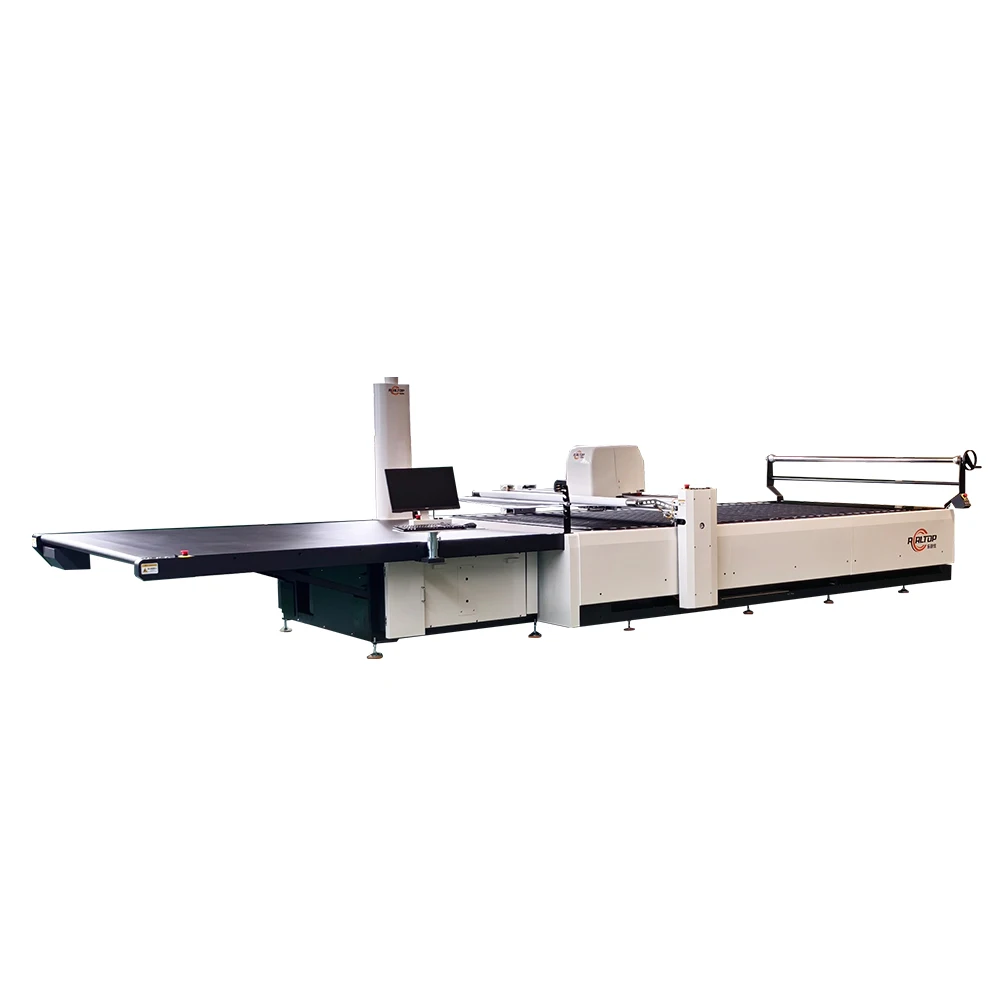
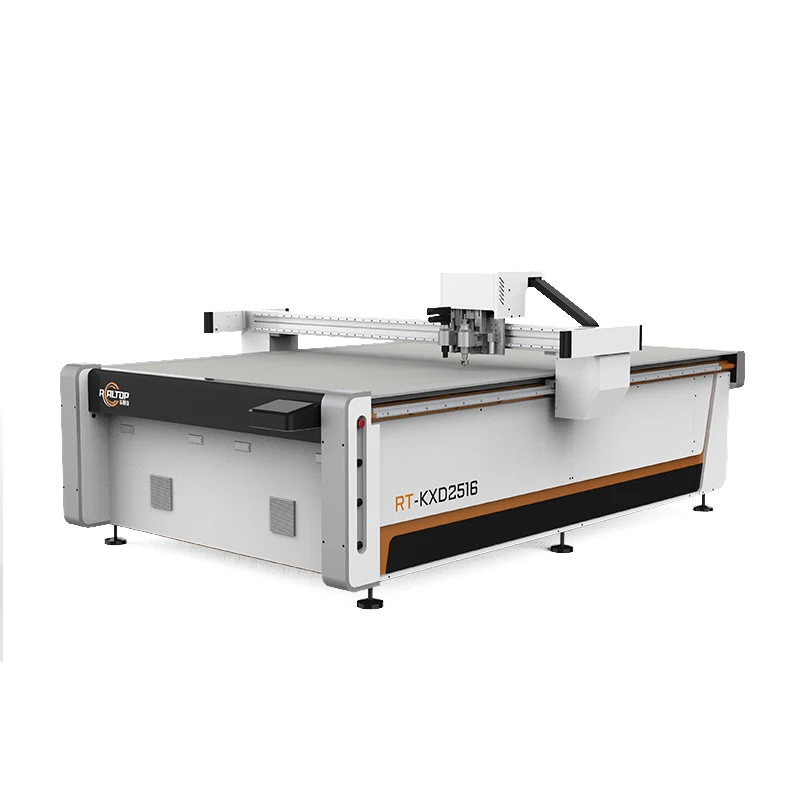
In-house engineering on every component — The core frame, motion system and control architecture are built and validated at the Jinan factory, so a fabric cutting line is configured from the ground up rather than assembled from third-party sub-systems.
Technical Specifications
| Parameter | Value |
|---|---|
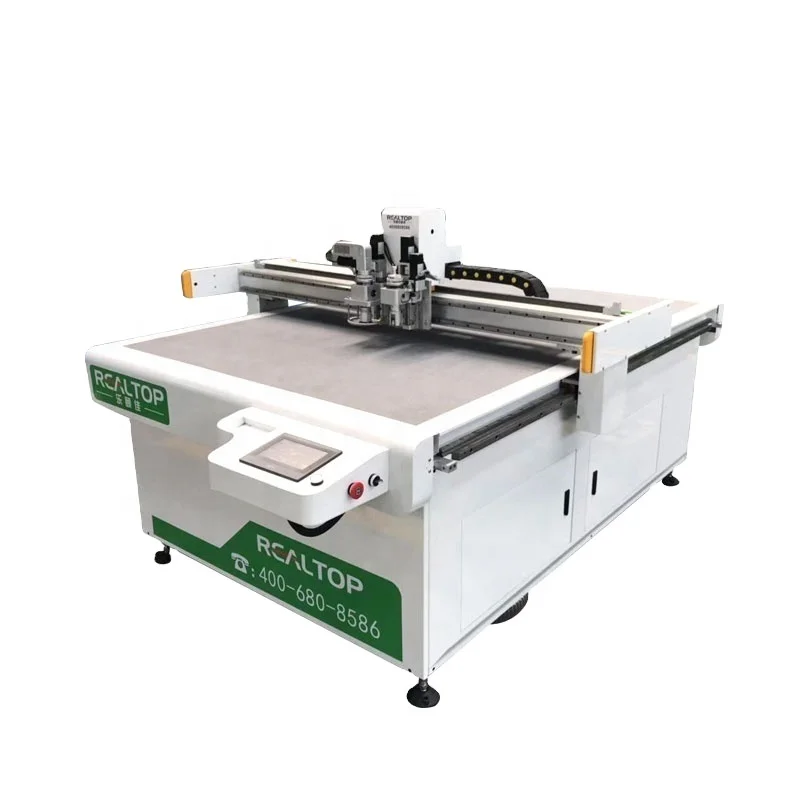
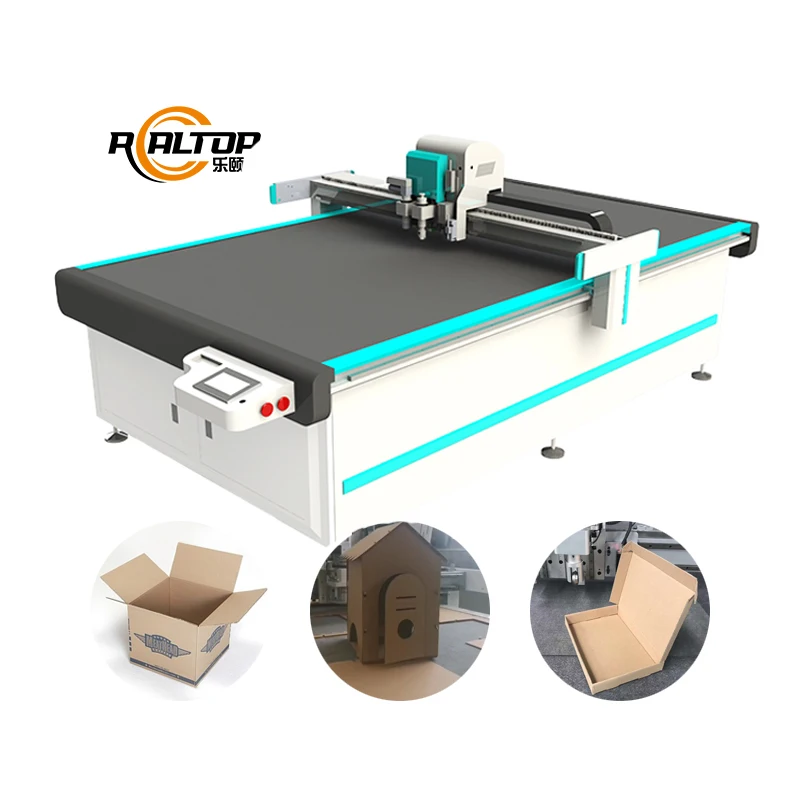
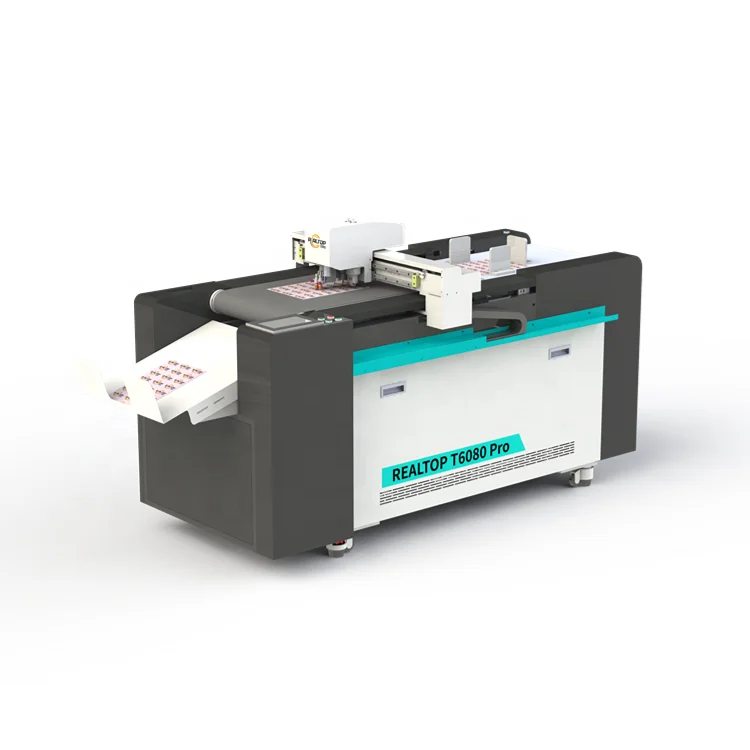
| Product Type | CNC Oscillating Knife Cutting Machine |
| Working Area | 1700×2000mm / 1900×2000mm / 2300×3300mm (selectable) |
| Max Operating Speed | 80 m/min |
| Average Cutting Speed | 12 m/min (basis not stated in source — confirm fabric type, layer count and thickness) |
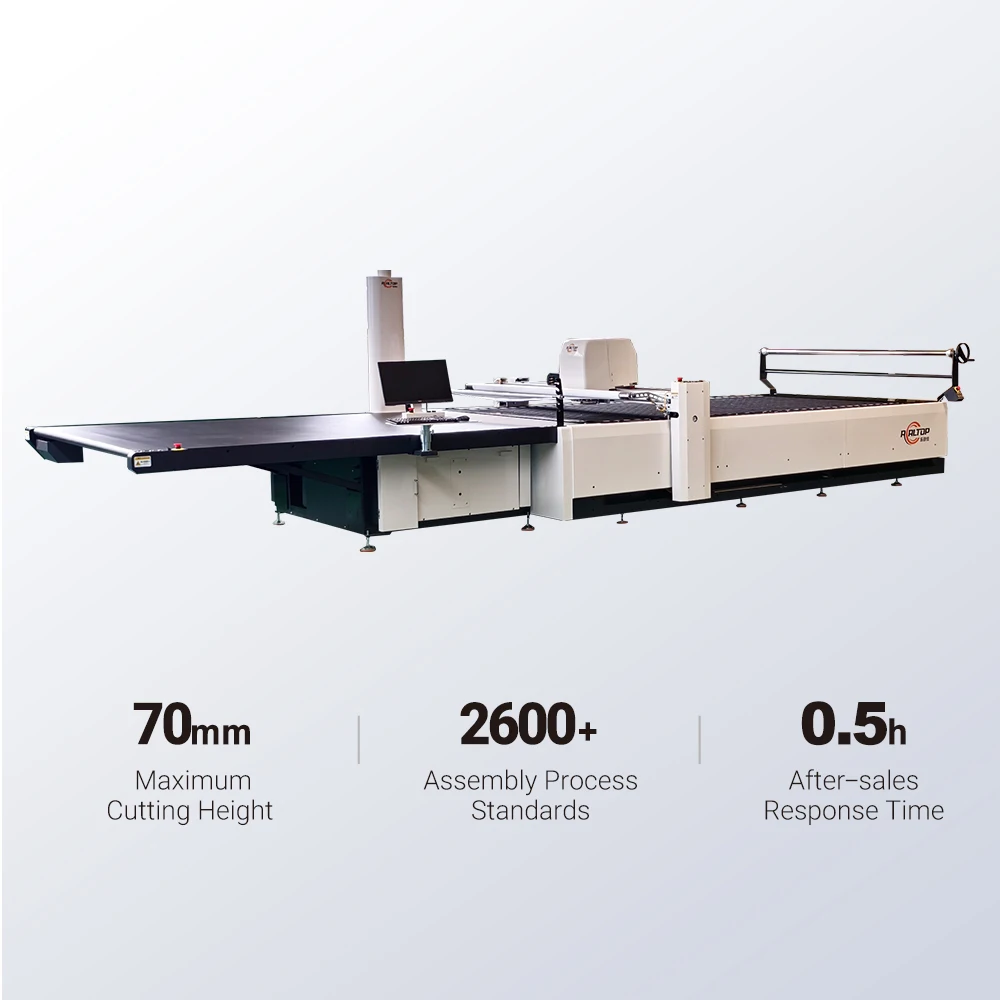
| Cutting Thickness | Up to 70 mm after vacuum adsorption |
| Voltage & Frequency | 380V / 50Hz (configurable for target market) |
| Max Power | 26 kW |
| Air Flow Volume | 160 L/min |
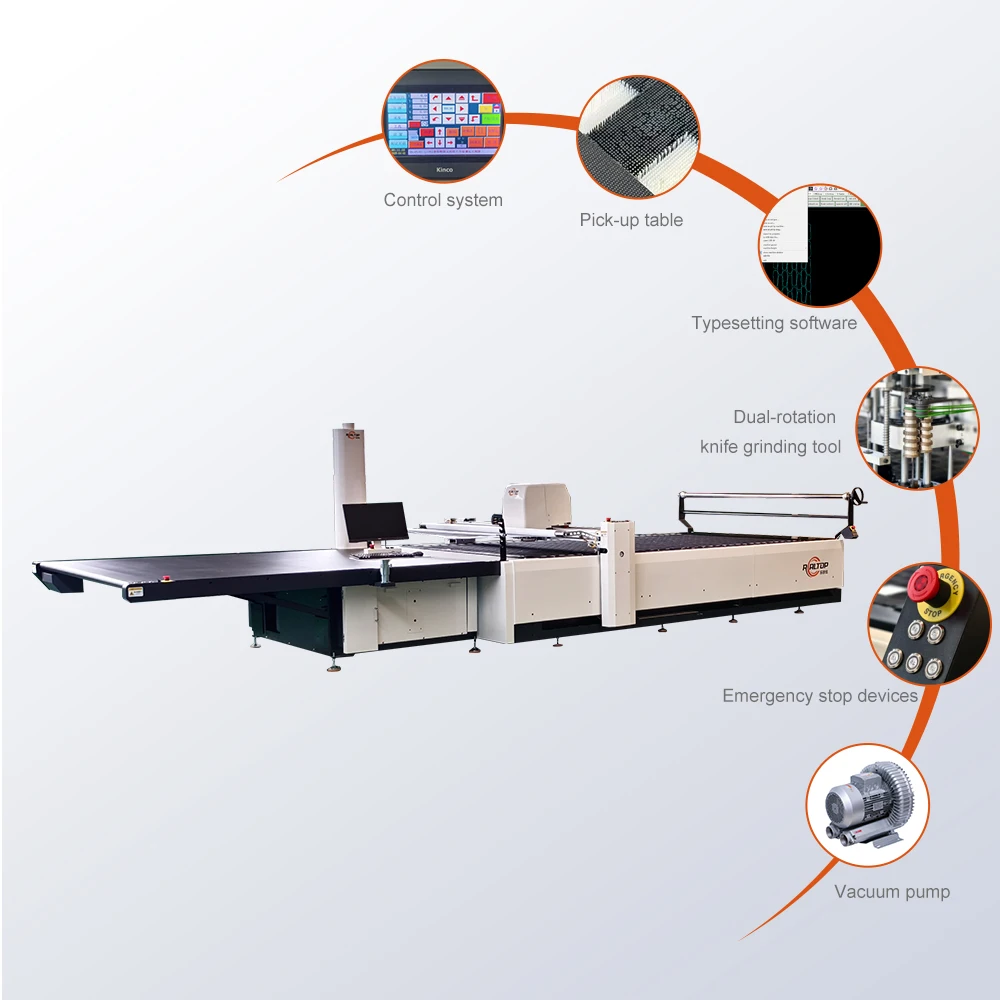
| Blade Grinding Method | Double rotary sharpener |
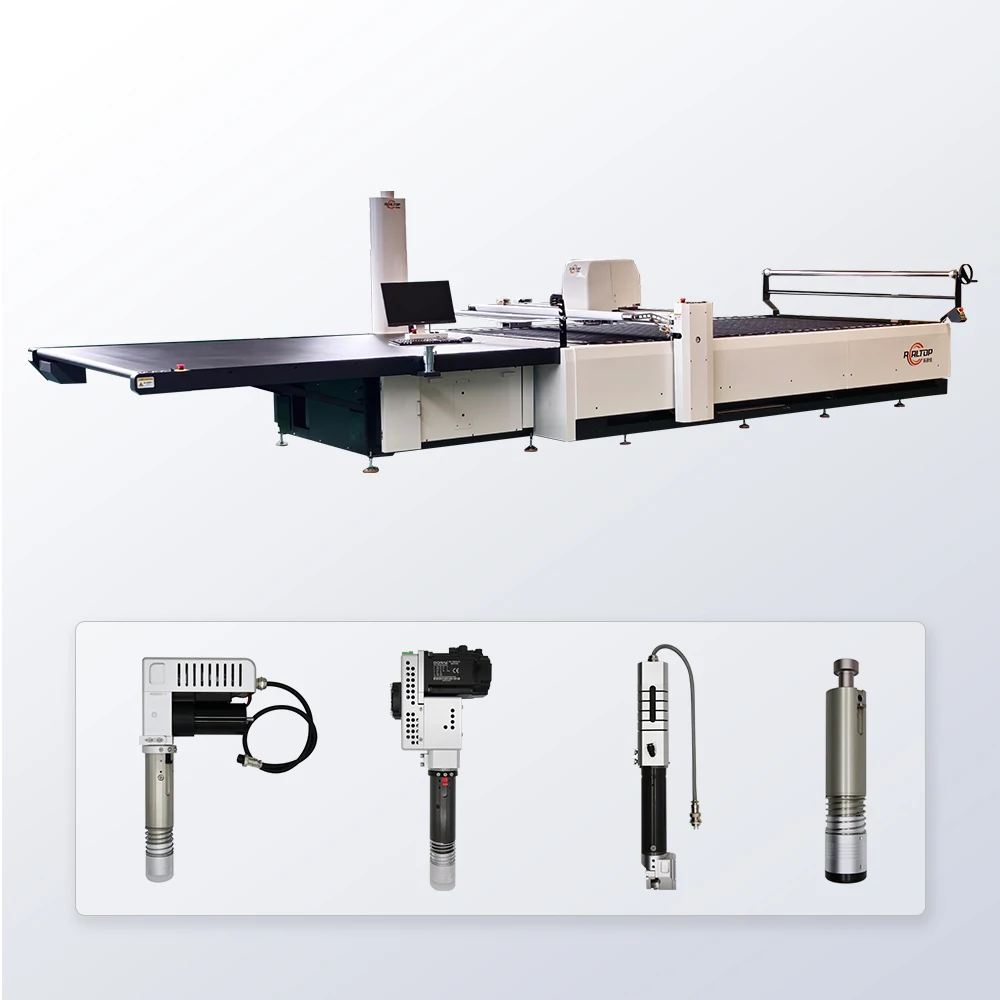
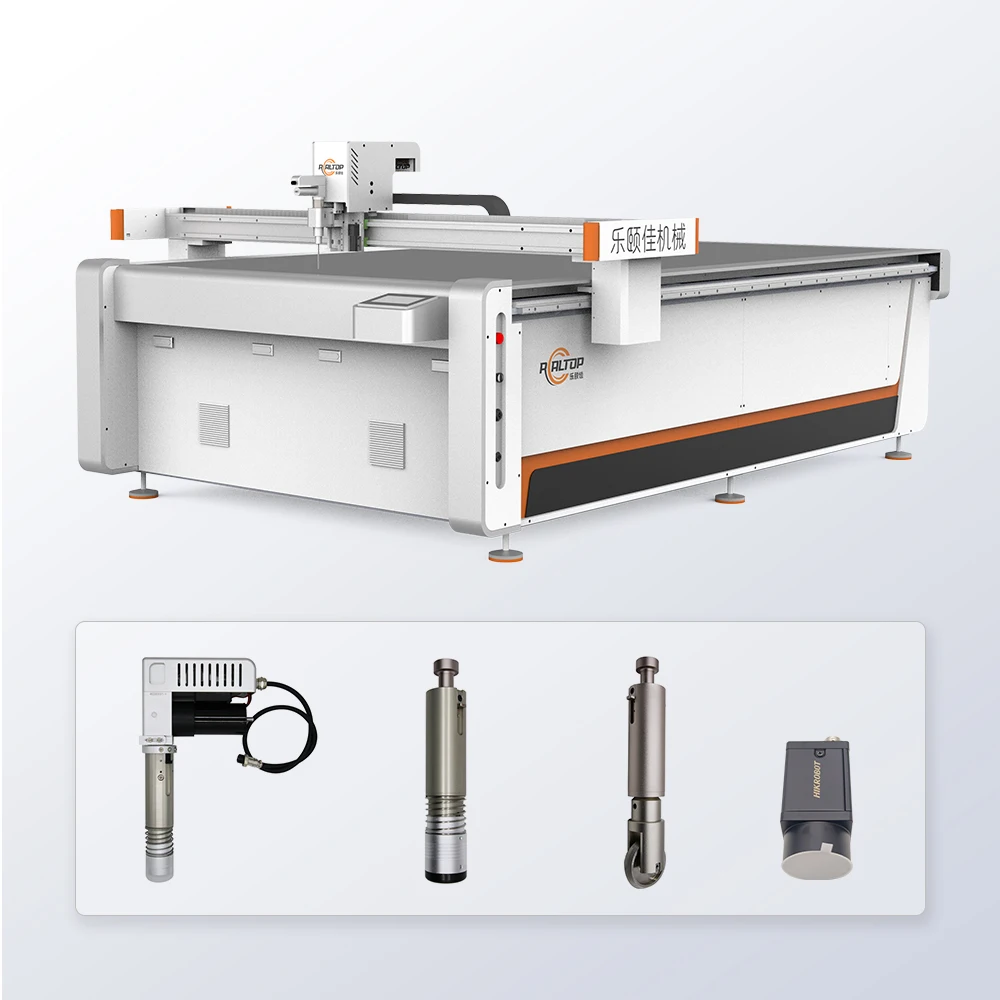
| Tool Head | Interchangeable oscillating knife |
| Vacuum Table | Aluminum bellows vacuum platform |
| Vacuum Pump | Aerospace-grade aluminum cast, high-efficiency |
| Control System | PLC panel with optional display languages |
| Servo Drive Options | Panasonic / Delta / Dorna (selectable) |
| Positioning Accuracy | ±0.1 mm repeatability |
| Software & File Formats | DXF / PLT / AI / PDF import; dedicated packaging box structure design software included |
| Language Options | English, Russian, Italian, Chinese (additional languages customizable) |
| Standards | CE |
Application Suitability
| Application | Material or Output |
|---|---|
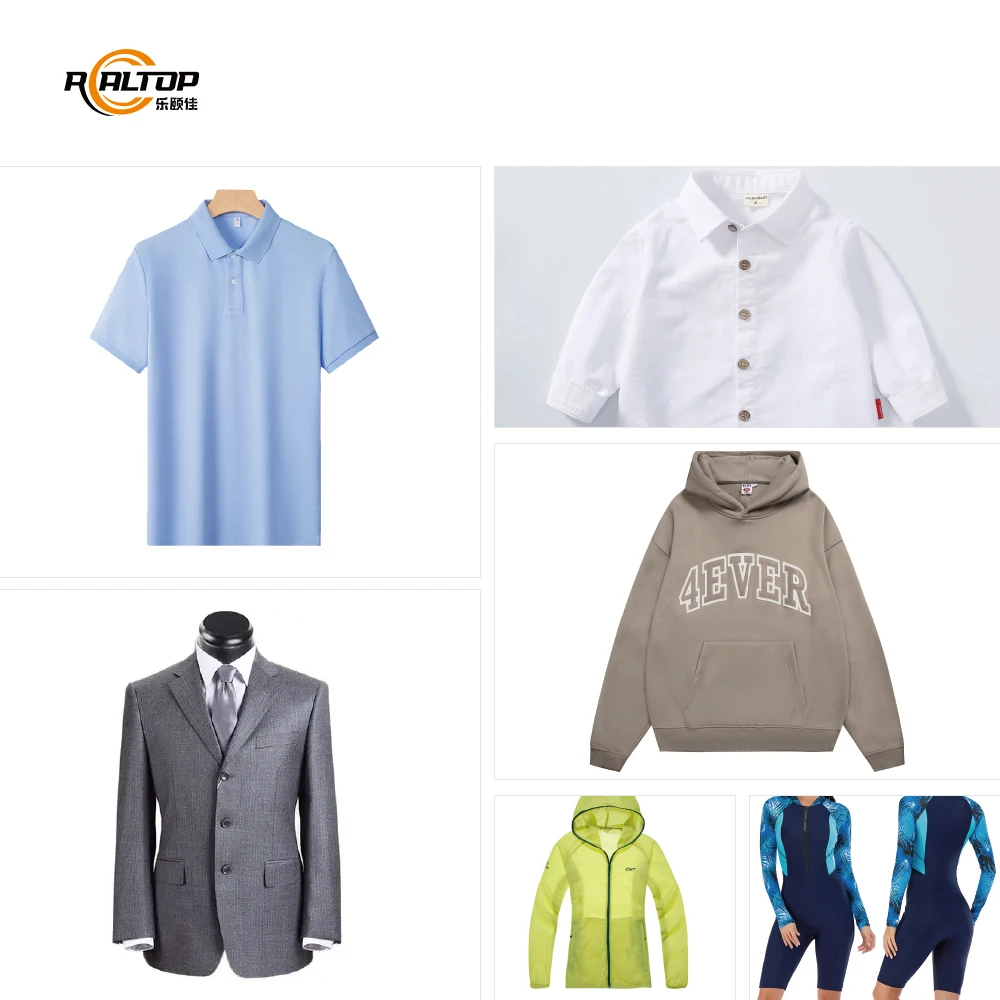
| Apparel manufacturing | Suits, knitwear, lace and complex patterned fabrics with pattern-matching nesting |
| Home textile production | Multi-layer sofa fabrics, heavy curtains and woven rugs |
| Flexible material fabrication | Knits, wovens, plush and blended textiles across the 0.1–70 mm thickness range |
| Automotive interior trimming | Seat cover panels and headliner fabric cut to contour profiles |
Why "Up to 70 mm" Does Not Mean Every Fabric at 70 mm
Cutting depth is a function of fabric density, layer adhesion and vacuum hold-down, not a single number on a spec sheet.
I spent two full days in an Egyptian sofa factory watching a CNC oscillating knife cutting machine manufacturer struggle because the sample they approved was plain polyester, but the production roll was a coated flame-retardant weave. The blade grabbed the coating and tore the top layers while the bottom plies shifted. We finally stabilized the cut by reducing layer count, adjusting oscillation frequency and re-zoning the vacuum table, but the downtime cost the buyer an entire production run [NEED_CITE: coating behavior under oscillating knife cutting]. A 70 mm rating holds only when the fabric compresses evenly under vacuum and the tool head is matched to the surface finish.
How the Oscillation Frequency Meets Different Fabric Structures
A standard woven sofa cloth cuts cleanly at moderate oscillation because the fibers separate predictably. Switch to a foam-backed blackout curtain and the same frequency crushes the foam layer before the knife penetrates the woven face. The interchangeable tool head on this CNC oscillating knife cutting machine allows the operator to swap blades and adjust stroke without halting the line, which matters when a single production run moves from lightweight linings to heavy upholstery.
Vacuum Zoning Decides Whether Small Pattern Pieces Stay Flat
The aluminum bellows platform divides into independent zones. On a full sheet of curtain fabric, opening all zones pulls the material tight and prevents wrinkling during long straight cuts. When the nesting software places small cushion piping strips near the sheet edge, only the zones directly under those strips need to stay active; full vacuum across the remaining area would lift the off-cuts into the blade path. Correct zoning is the difference between a clean edge and a ragged rejection pile at the sorting table [NEED_CITE: vacuum zone configuration on flatbed cutting tables].
What the Core Parameters Actually Control on the Shop Floor
The ±0.1 mm repeatability specification matters most when pattern-matching striped or checkered sofa fabric: a drift of even half a millimeter throws the motif alignment off across a three-seat cushion. The double rotary sharpener keeps the blade edge consistent over long runs, so the operator does not stop every twenty minutes to swap a dull blade — critical when cutting abrasive technical textiles. PLC control with selectable servo drives (Panasonic, Delta or Dorna) lets the buyer align spare parts sourcing with the brands already serviced in their local market. Software compatibility with DXF, PLT, AI and PDF means the nesting files from an existing design department import without re-drawing, protecting the yield calculations the buyer already validated.
The Hidden Cost of Skipping a Material Trial
When a buyer specifies a machine on working area alone, the first production run often reveals that the chosen tool head chews through coated fabrics or that the vacuum table lacks enough zoning granularity for small pattern pieces. Rectifying these issues after the machine is bolted to the floor involves re-wiring vacuum manifolds, re-commissioning servo parameters and discarding days of cut fabric [NEED_CITE: re-commissioning costs on installed CNC cutting lines]. Sending a roll of the actual production fabric for a sample cut before the purchase order is signed eliminates most of these surprises.
Why Buyers Source This Line From the Jinan Factory
The frame, motion components and vacuum platform are designed and assembled under one roof, so tolerance stack-up is controlled rather than passed between vendors. Tool head and table configurations are written into the order against the buyer’s specific fabric type and daily volume, not selected from a fixed catalog page. Sample cutting on the buyer’s own material generates a documented report that travels with the machine. Voltage, plug type and control language are confirmed on the electrical schematic before production starts, avoiding on-site transformer rentals. The in-house design team adjusts working area and conveyor length when a sofa factory needs a table longer than the standard 3300 mm format.
Documentation & Verification
- Machine specification sheet listing selected working area, tool head and vacuum configuration
- Electrical schematic with confirmed voltage, frequency and plug type for the destination market
- Sample cutting report on buyer’s own fabric showing edge quality and achievable layer count
- Software license and file format compatibility note covering DXF, PLT, AI and PDF workflows
- Factory test record documenting positioning accuracy and vacuum flatness before crating
- Spare parts list matched to the selected servo drive brand and blade type
Installation, Commissioning & Support
- Floor space plan accounting for the 2300×3300 mm maximum working area plus operator clearance
- Dedicated 380V circuit sized for the 26 kW maximum power draw with correct breaker rating
- Machine arrives fully assembled; leveling feet adjusted to the aluminum bellows vacuum platform
- PLC language set to the operator’s preference during on-site commissioning
- First-run parameter tuning on the buyer’s actual fabric roll, adjusting oscillation and vacuum zones
- Blade and sharpener consumable schedule aligned with local supplier lead times
Before You Request a Quotation
Share the exact fabric composition, weight per square meter and coating type you plan to run, along with the layer count and daily cut volume. Confirm the voltage and frequency at your facility and the control language your operators need. If your nesting workflow relies on specific DXF or AI file structures, send a sample file so software compatibility is validated before the order is placed.
Frequently Asked Questions
Q: How is the 12 m/min average cutting speed verified?
A: That figure depends on fabric type, layer count and thickness. Before the order is finalized, a sample cut on your actual material establishes the achievable speed while maintaining edge quality. The report documents the parameters used so your production team can replicate them from day one.
Q: How do I choose between oscillating knife and laser for my fabric?
A: Oscillating knife suits multi-layer woven and knit fabrics where sealed edges are not required. Laser is preferred when synthetic fibers need edge sealing to prevent fraying. The in-house design team reviews your material and recommends the method that matches your output quality target.
Q: What voltage, plug and control language are confirmed before shipment?
A: The electrical schematic lists the exact voltage, frequency and plug type for your market, and the PLC display language is set to your operators’ preference. Both are signed off before production begins, so no on-site electrical re-work is needed.
Q: Can the machine import my existing DXF or AI nesting files?
A: The control software accepts DXF, PLT, AI and PDF formats. A sample file is tested during the pre-order stage to confirm that layer naming, cut order and kerf compensation carry over correctly into the nesting workflow.
Q: How is vacuum table zoning configured for small pattern pieces?
A: The aluminum bellows platform is divided into independent zones. During nesting, only the zones beneath small pieces remain active, preventing off-cuts from lifting into the blade path while full vacuum holds the main sheet flat.
You may also like

商品评价
Clear filtersThere are no reviews yet.