



-
 Courier delivery
-
 DHL Courier delivery
-
 Warranty 1 year
-
 Free 30-Day returns

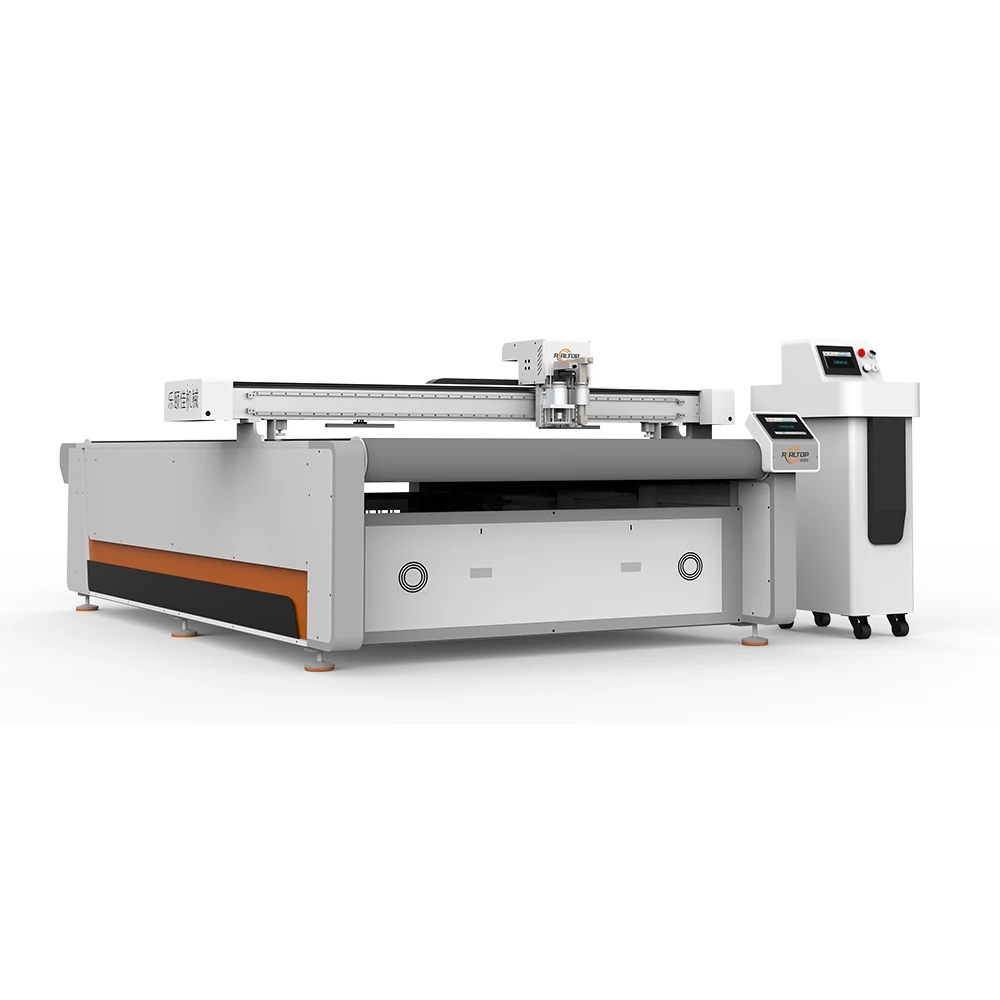
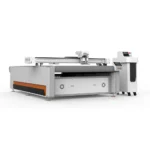
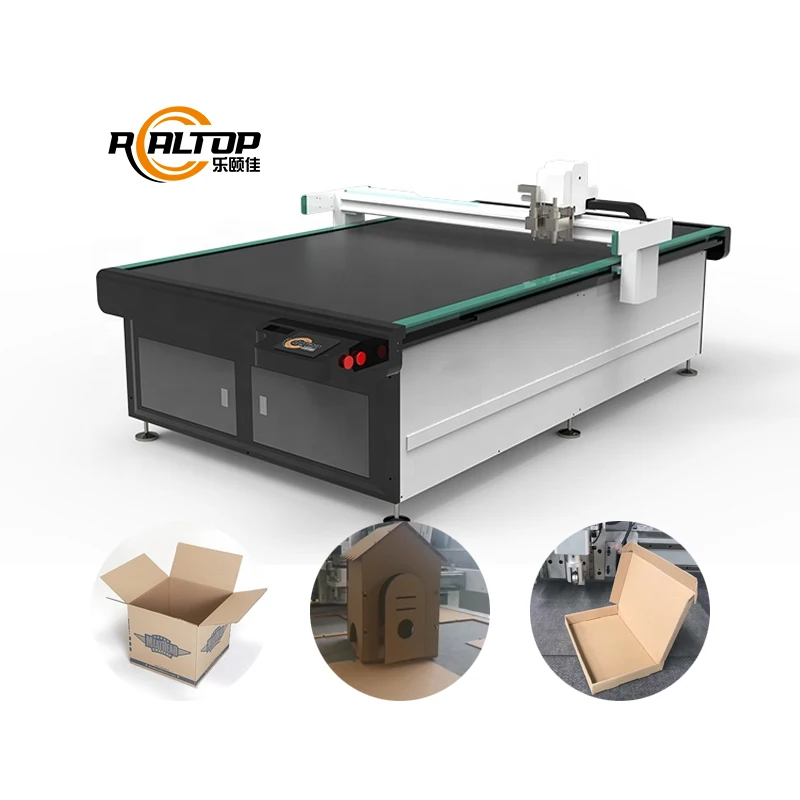
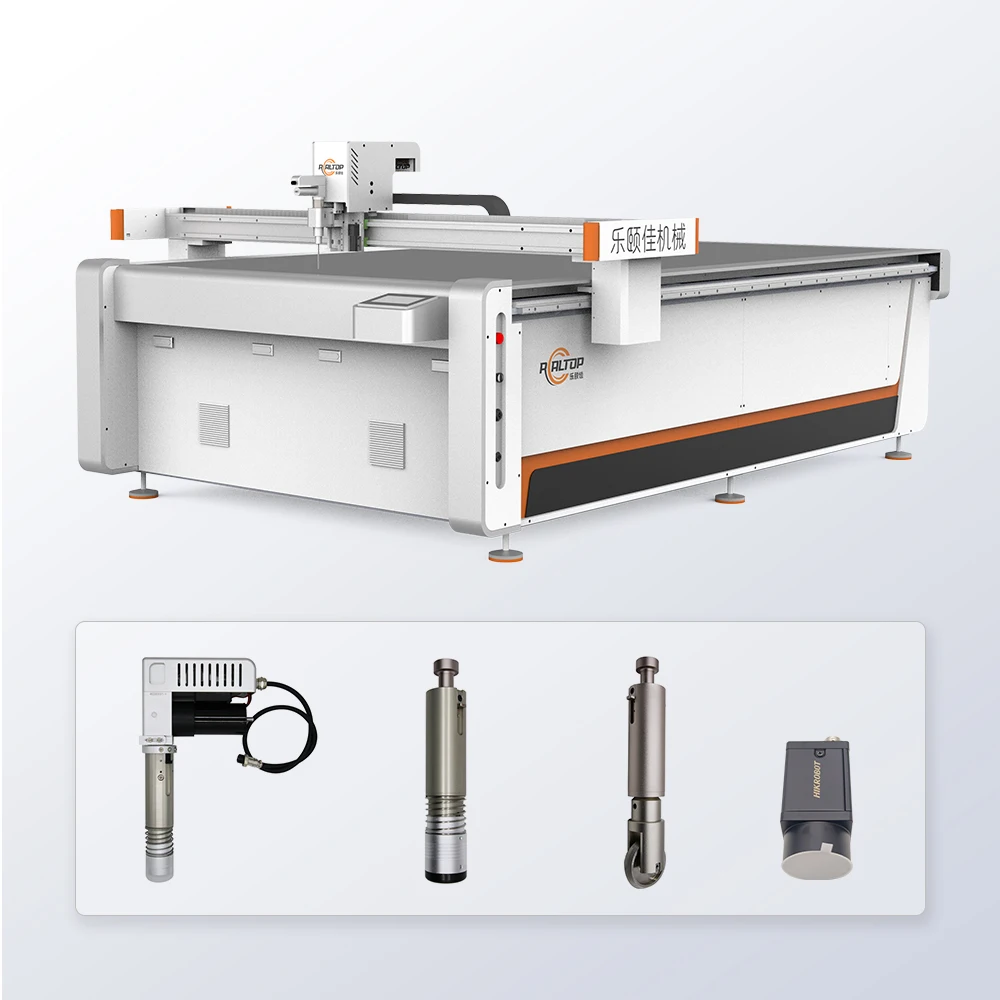
Built from the frame up — Realtop engineers both knife and laser platforms in-house, so the 1625 oscillating knife table is designed around cutting forces rather than adapted from a lighter laser chassis.
Technical Specifications
| Parameter | Value |
|---|---|
| Model | 1625 |
| Product Type | CNC Oscillating Knife Cutting Machine |
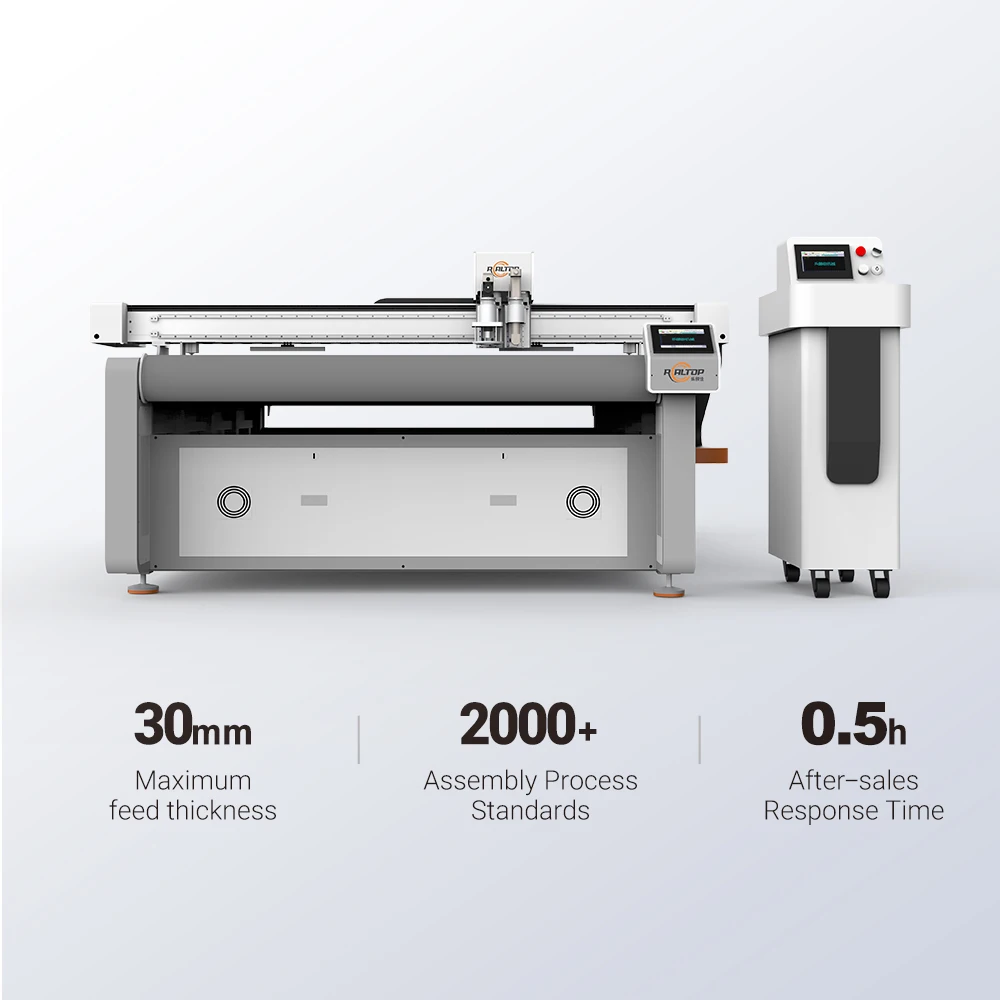
| Working Area | 1600×2500 mm |
| Overall Dimensions (L×W×H) | 3300×2100×1350 mm |
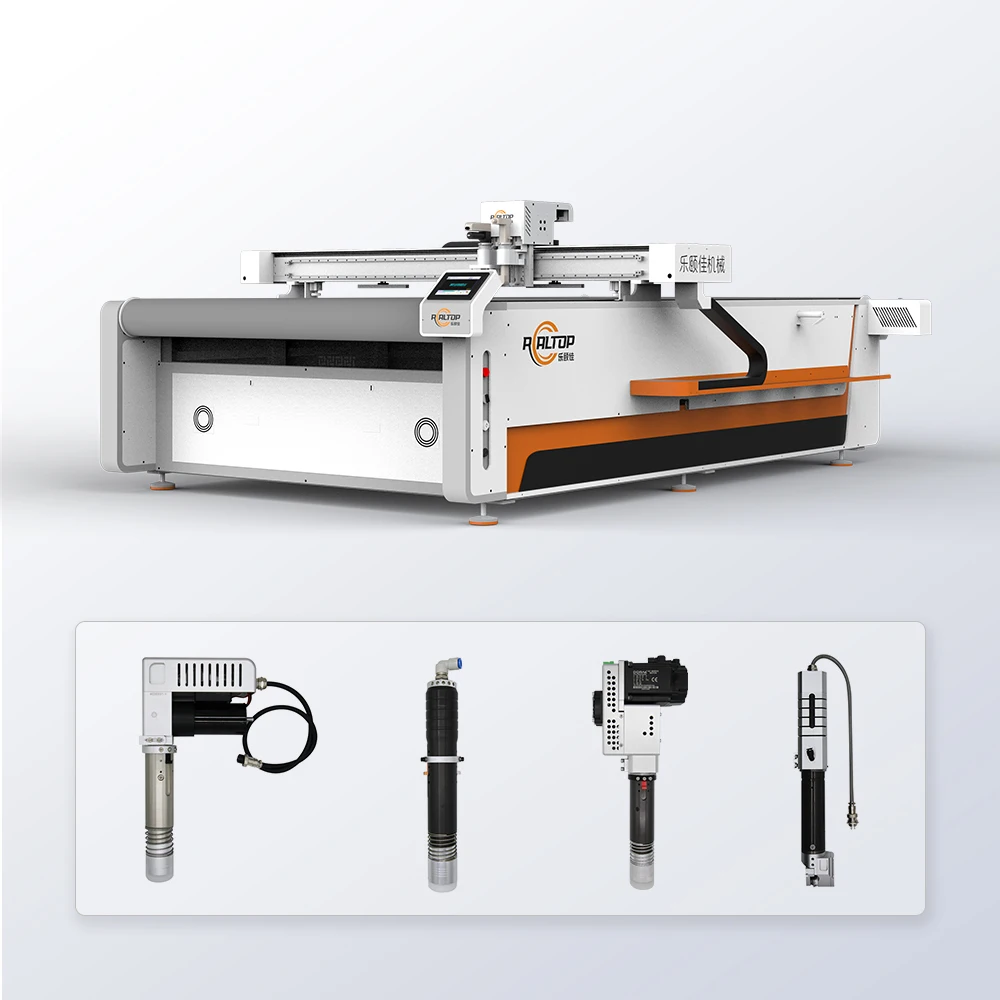
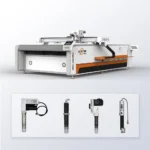
| Tool Head Options | Oscillating knife, Driven rotary knife, Creasing wheel, Kiss cutting tool, Pneumatic knife, Milling tool, V groove knife |
| Cutting Speed | 0–2000 mm/s |
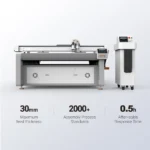
| Cutting Thickness | ≤ 30 mm (basis not stated in source — confirm material and block format) |
| Positioning Accuracy | ±0.1 mm |
| Vacuum Pump Power | 9 kW |
| Voltage Options | 110V, 220V, 380V (frequency to be confirmed) |
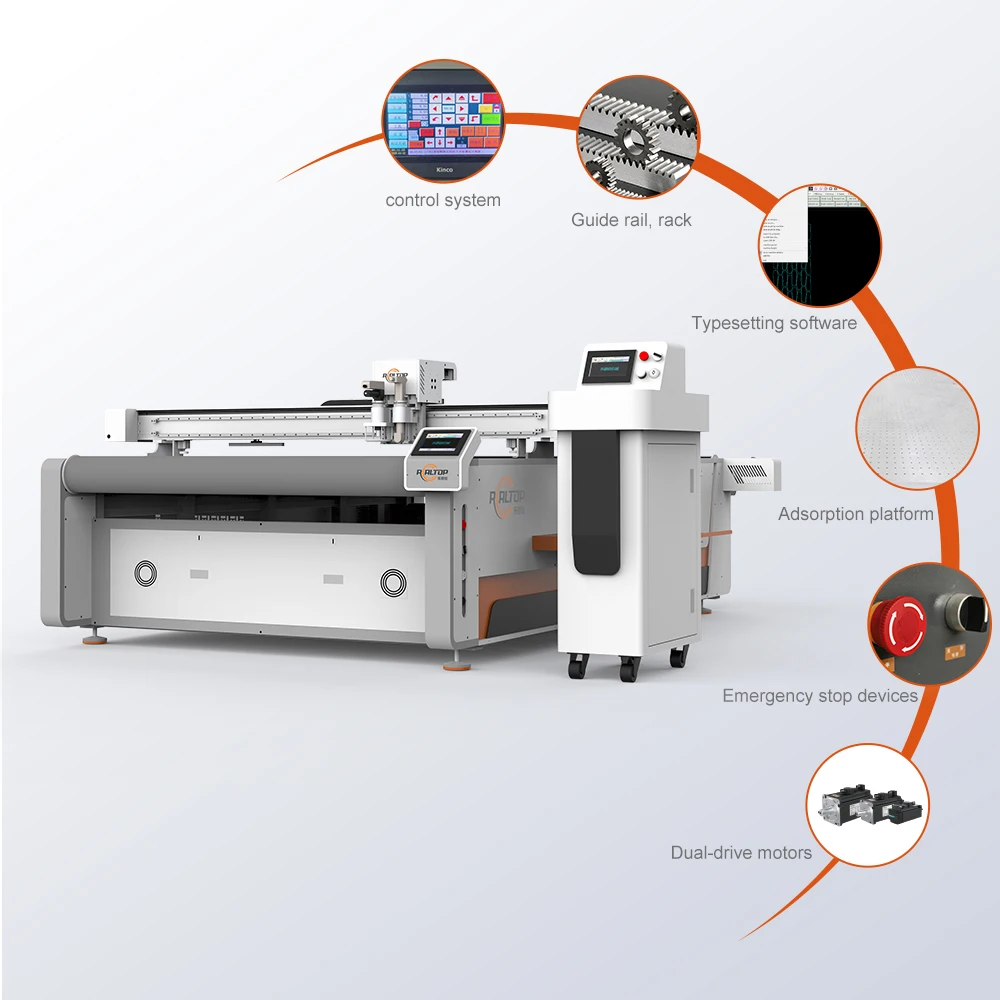
| Control System | PLC control panel with intuitive interface |
| Servo Drive Options | Panasonic, Delta, Dorna (rated or peak not specified in source) |
| Vacuum Table | Aluminum bellows vacuum table (zoning to be confirmed) |
| File Format Compatibility | PLT, DXF, AI, PDF |
| Safety Devices | Infrared sensor device, emergency stop device |
| Display Language Options | English, Russian, Italian, Chinese (custom languages available) |
| Software | Dedicated packaging box structure design software included |
| Certification | CE Certified |
Application Suitability
| Application | Material or Output |
|---|---|
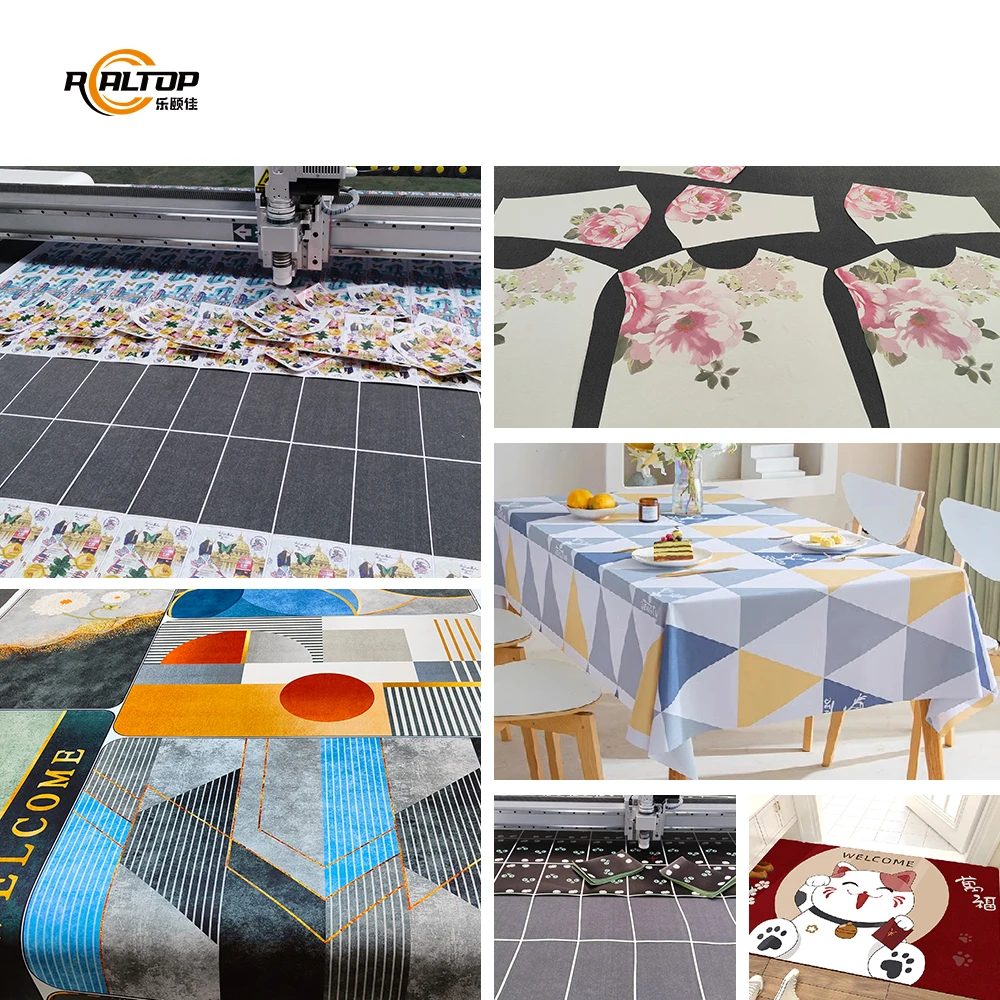
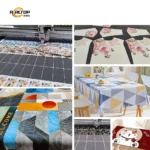
| Apparel manufacturing | Suits, knitwear, lace, complex fabrics, pattern-matching layouts |
| Automotive interiors | Seat fabrics, carpets, PVC mats |
| Home textiles | Sofa fabrics, curtains, rugs, multi-layer cutting |
| Composite material processing | Carbon fiber prepreg, aramid, specialty materials |
| Packaging and gaskets | Cardboard, carton, EVA, foam, PTFE, rubber |
| Signage and leather goods | PVC, leather, acrylic sheets |
Why Specifying Working Area Alone Leads to Ragged Edges
A 1600×2500 mm bed tells you nothing about how the machine handles six layers of bonded automotive leather.
I have watched buyers select a CNC oscillating knife cutting machine manufacturer based on table size, only to discover on commissioning day that the chosen tool head crushes multi-layer foam instead of shearing it cleanly. The oscillation frequency, blade geometry, and vacuum hold-down all need to match the actual stock you run. When those variables are guessed rather than tested, you end up with frayed edges, blade deflection, and hours of manual trimming that should never have been necessary [NEED_CITE: tool head selection criteria for multi-layer textile cutting].
Engineering the Frame for Continuous Knife Loads
Unlike a laser gantry that carries only a lightweight mirror carriage, an oscillating knife platform absorbs repeated lateral forces as the blade drives through dense composites. The 1625 uses a heavy-duty frame with a precision-ground mounting surface to keep the gantry square under continuous cutting loads. This matters when you run carbon fiber prepreg or stacked automotive carpet — any frame flex translates directly into dimensional drift across a long sheet.
Vacuum Hold-Down That Actually Grips Small Parts
The 9 kW vacuum pump feeds an aluminum bellows table designed to maintain suction across the full cutting area. Aluminum resists warping under thermal cycling better than phenolic beds, keeping the surface flat as ambient temperature shifts through a production day. Consistent adsorption prevents thin fabric or flexible PVC from lifting mid-cut, which is where most contour errors originate [NEED_CITE: vacuum table material comparison for CNC cutting beds].
Reading the Specs That Actually Govern Cut Quality
Positioning accuracy of ±0.1 mm sets the baseline for nested pattern layouts in garment cutting, where a cumulative drift of even half a millimeter wastes expensive fabric over a long run. The seven interchangeable tool heads — from oscillating knife to V-groove — let you match the cutting action to the material: a driven rotary knife slices woven textiles without fraying, while a pneumatic knife pushes through thicker foam stacks. Cutting speed reaches 2000 mm/s on open contours, but actual throughput depends on corner density and material resistance. File format compatibility with PLT, DXF, AI, and PDF means most buyer workflows import without intermediate conversion, reducing a common source of nesting errors.
The Cost of Skipping a Material Trial Run
When a buyer commits to a configuration without sending actual production material for a test cut, the first week on the shop floor becomes an expensive debugging session. Wrong vacuum zoning lets small gasket parts drift. An underspecified oscillation frequency leaves composite edges delaminated. These issues are solvable, but they consume production time and erode operator confidence in the equipment before it ever reaches steady state [NEED_CITE: common CNC knife cutting defects in composite materials].
Why Buyers Source This Platform Here
Realtop’s in-house design team covers both knife and laser technologies, so the 1625 is engineered specifically for knife cutting forces rather than adapted from a laser frame. Each tool head and vacuum zone is specified against the buyer’s material sample before the order is finalized. The PLC control panel ships with the buyer’s required language and voltage confirmed on the electrical schematic. Factory testing runs the buyer’s own material through the configured tool heads, producing a cutting report before crating. CE declaration and full documentation — schematics, spare parts lists, software licenses — accompany every shipment.
Documentation & Verification
- Machine specification sheet listing all configured tool heads and servo drive selection
- Electrical schematic with voltage and frequency matched to your facility supply
- Sample cutting report on your actual fabric or composite stock before dispatch
- CE declaration of conformity covering the configured machine variant
- Software license and file format compatibility note for your nesting workflow
- Spare parts list with oscillator blades, vacuum seals, and drive belts itemized
Installation, Commissioning & Support
- Verify floor levelness across the 3300×2100 mm footprint to prevent frame twist on the precision-ground bed
- Provide a dedicated circuit matching the confirmed voltage option and 9 kW vacuum pump draw
- Gantry and tool head carriage are assembled at the factory and shipped partially disassembled for container loading
- First power-on includes servo tuning, vacuum zone mapping, and test cuts on your material
- Operator training covers tool head changeover, PLC interface navigation, and blade replacement intervals
- Initial spare parts kit includes oscillating blades, vacuum bellows seals, and drive belt sets
Preparing Your Inquiry
Share your material type, ply count, and maximum sheet dimensions so the right tool head and vacuum configuration can be specified. Confirm your facility voltage and frequency along with the preferred control language. If you run a specific nesting software upstream, provide sample files so format compatibility is verified before the build begins.
Frequently Asked Questions
Q: How does the design team determine the right tool head for my material?
A: You send a sample of your actual production stock — including any bonding or backing layers. The team tests each relevant tool head, documents edge quality and achievable thickness, and recommends the configuration. This report ships with your quotation so you can verify the match before ordering.
Q: What OEM and customization options are available for distributors?
A: Frame color, control panel branding, packaging artwork, and documentation language are all configurable. Voltage and plug type are matched to your target market. The in-house design team accommodates private-label requirements while maintaining the same factory test protocol applied to standard builds.
Q: What factory testing records are provided before shipment?
A: Every machine runs a full cutting test on the buyer’s material before crating. The test record documents tool head settings, cutting speed, edge quality photographs, and dimensional accuracy readings. Electrical continuity and safety device function are verified and logged on the same report.
Q: How is the motion system built for long-term accuracy?
A: The frame uses a precision-ground mounting surface with heavy-duty linear guides sized for the lateral forces generated by knife cutting. Servo drive options from Panasonic, Delta, or Dorna are selected based on the buyer’s production intensity. Assembly is done in-house rather than outsourced to a third-party integrator.
You may also like

商品评价
Clear filtersThere are no reviews yet.