


-
 Courier delivery
-
 DHL Courier delivery
-
 Warranty 1 year
-
 Free 30-Day returns

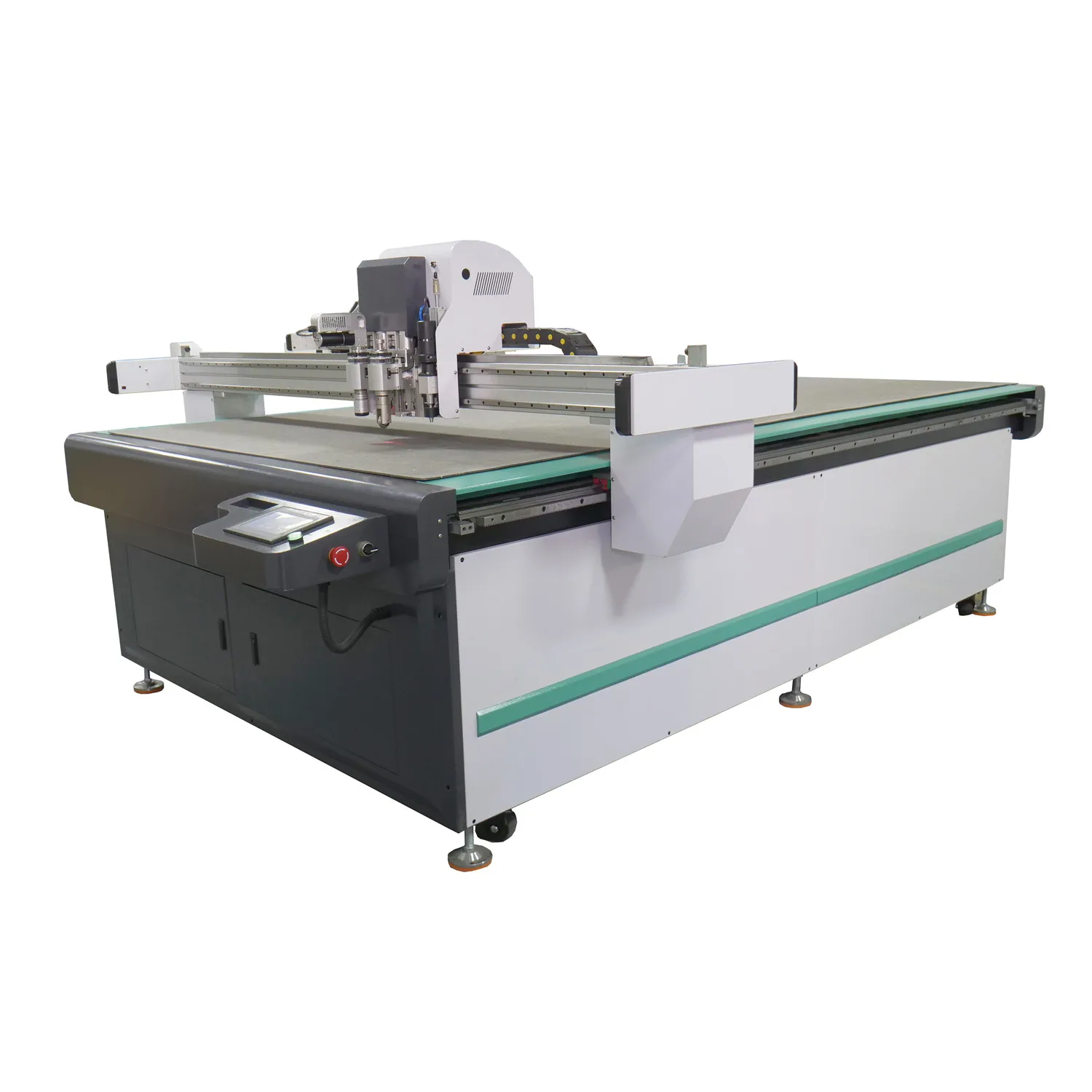
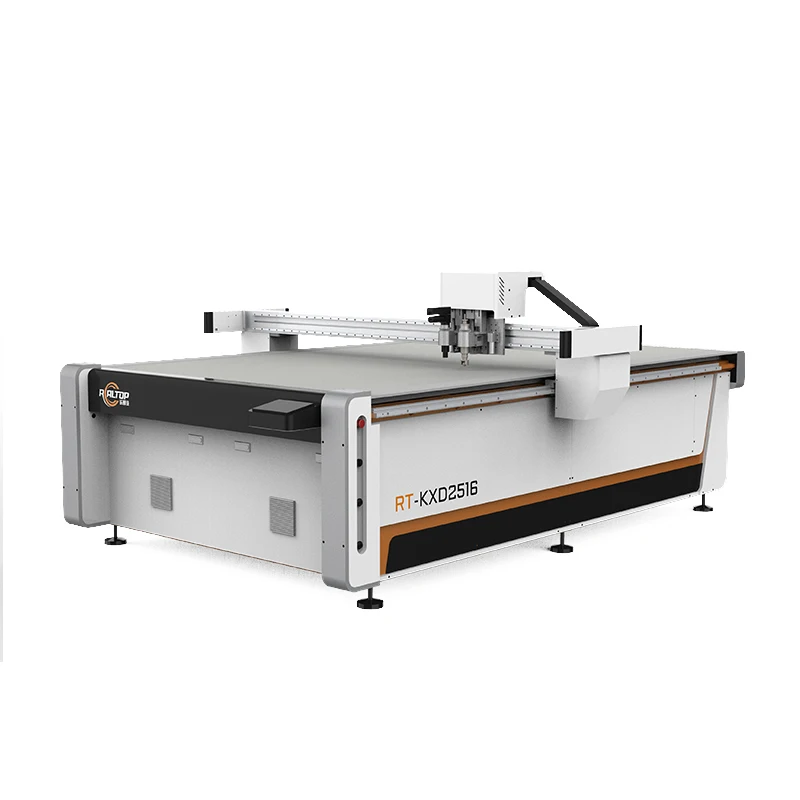
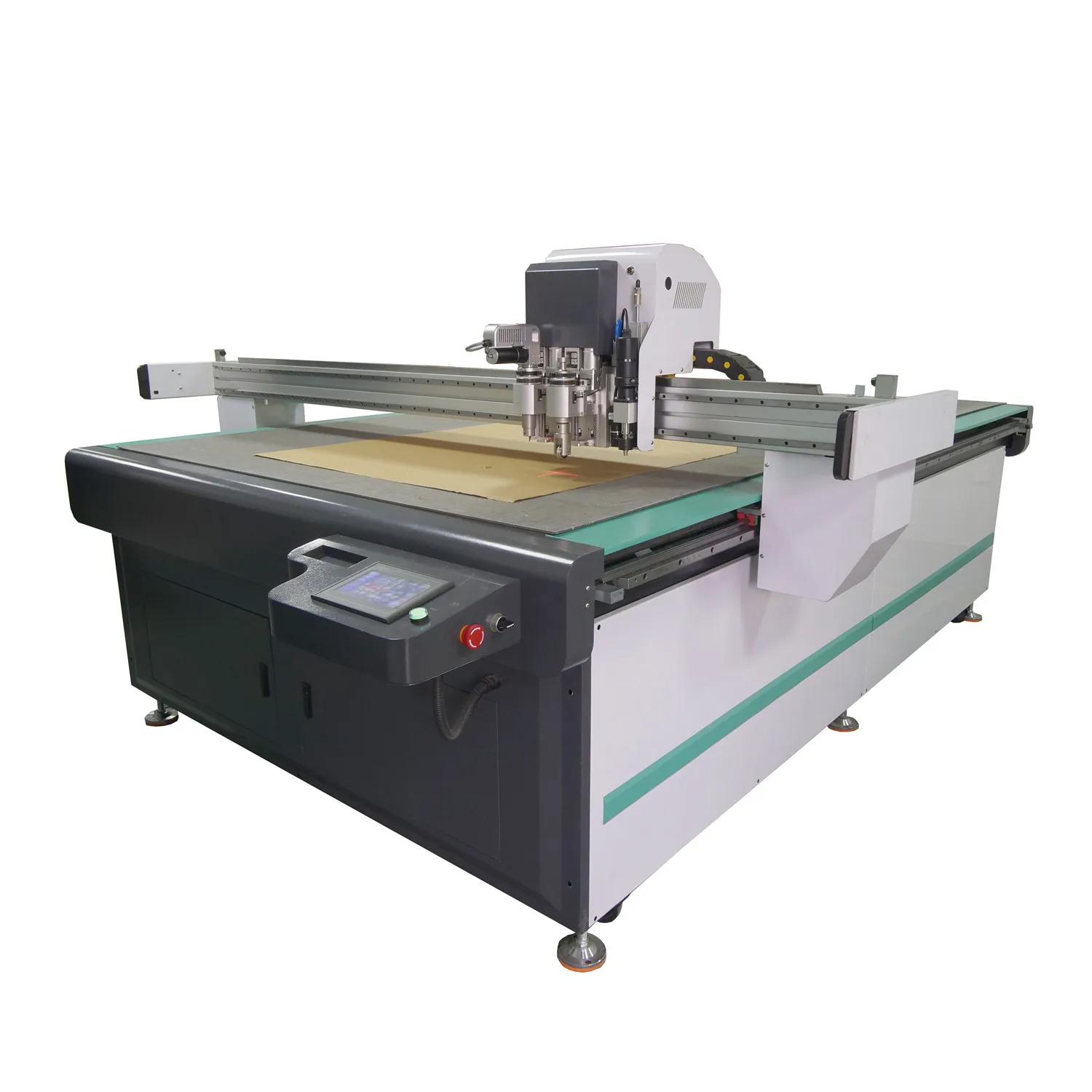
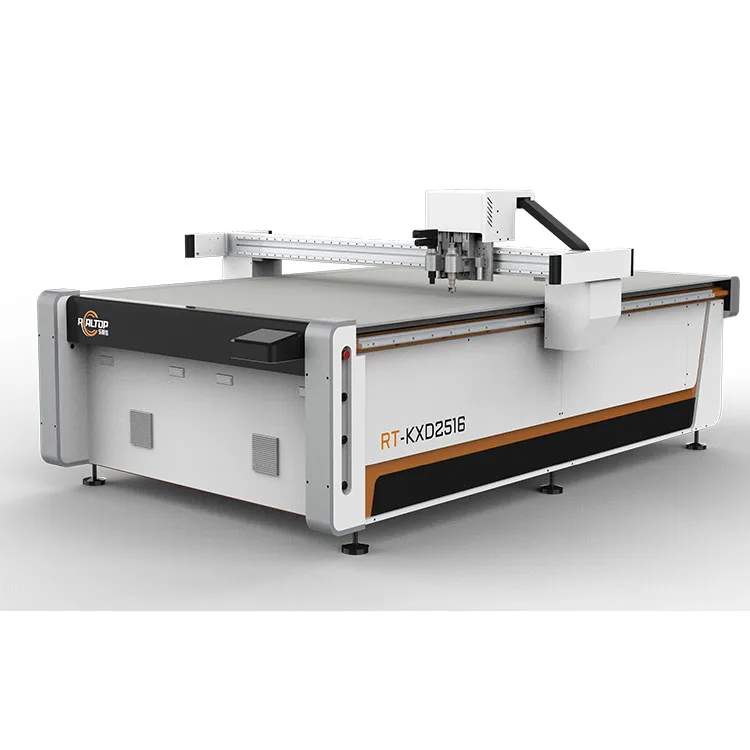
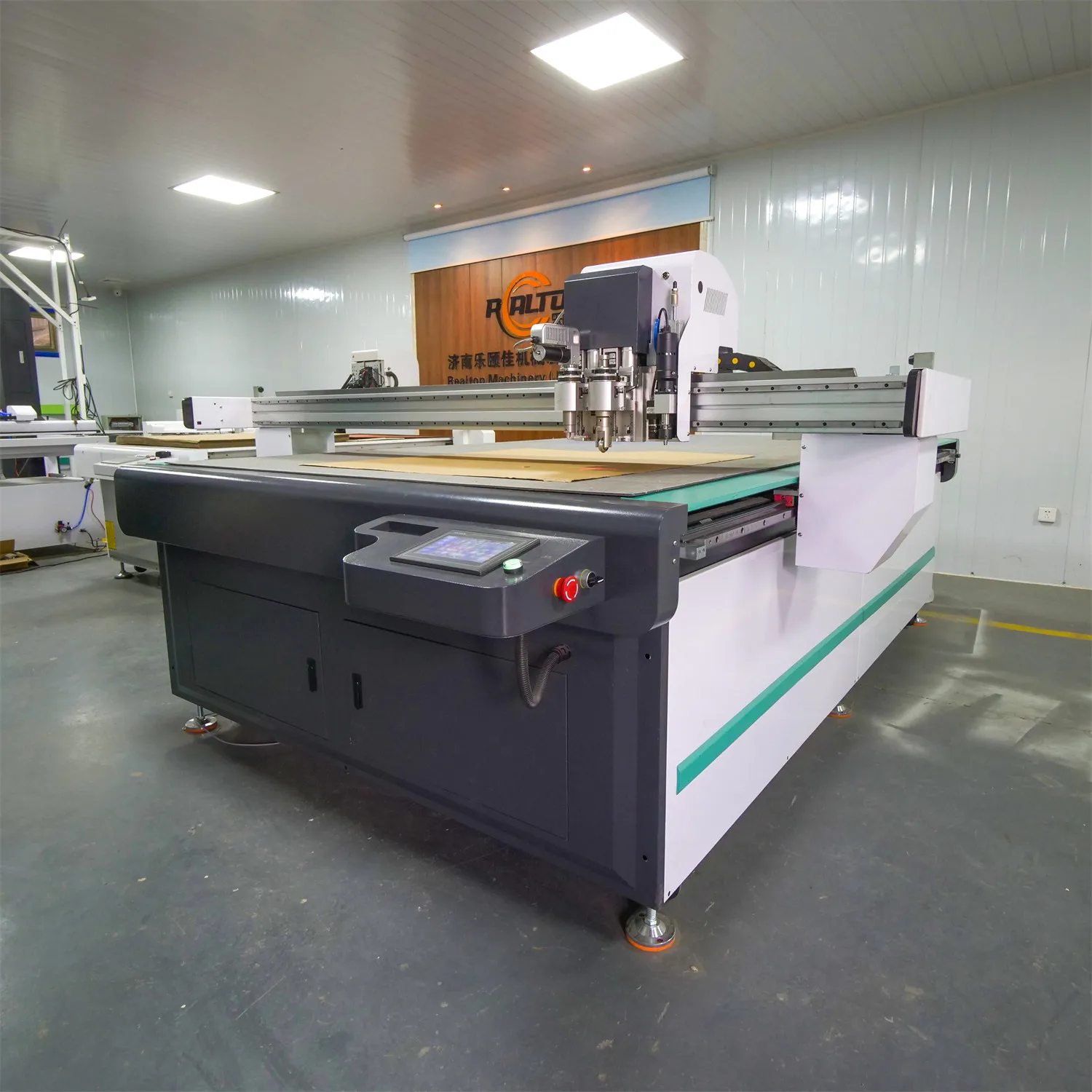
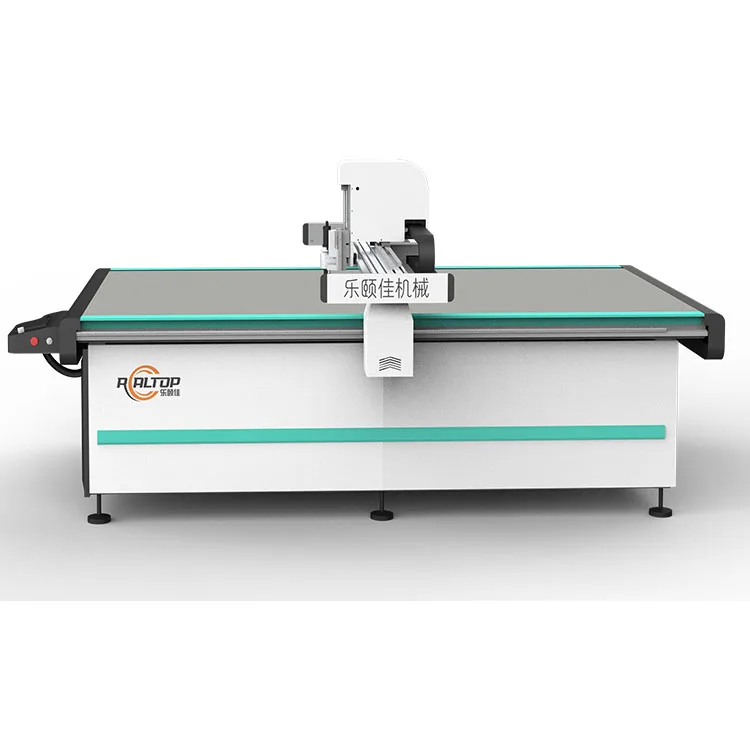
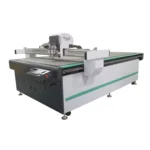
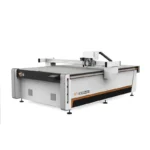
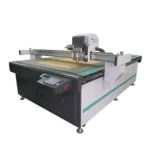
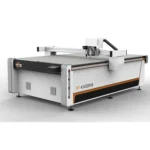
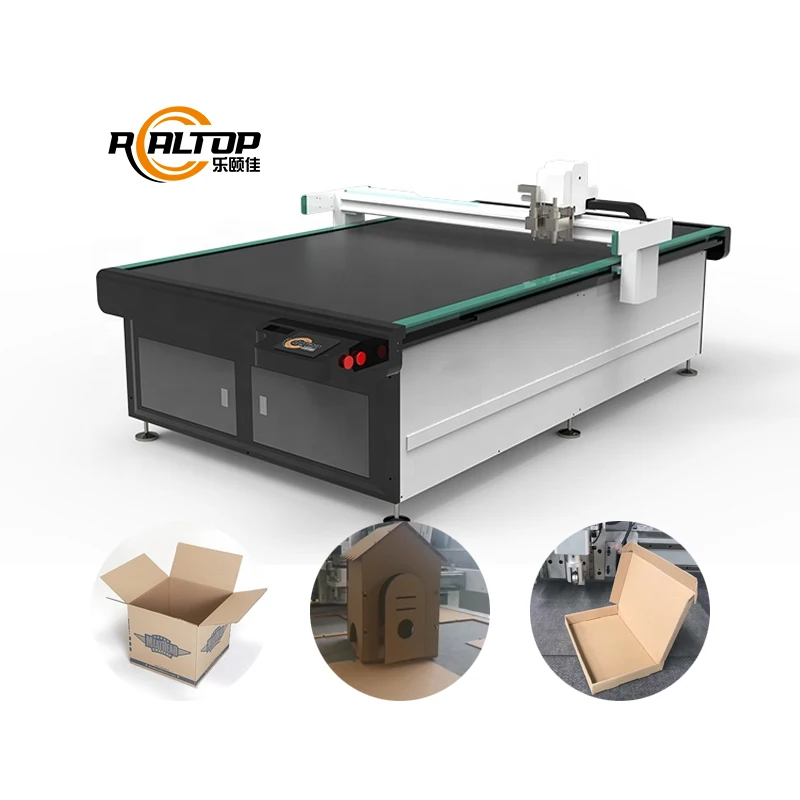
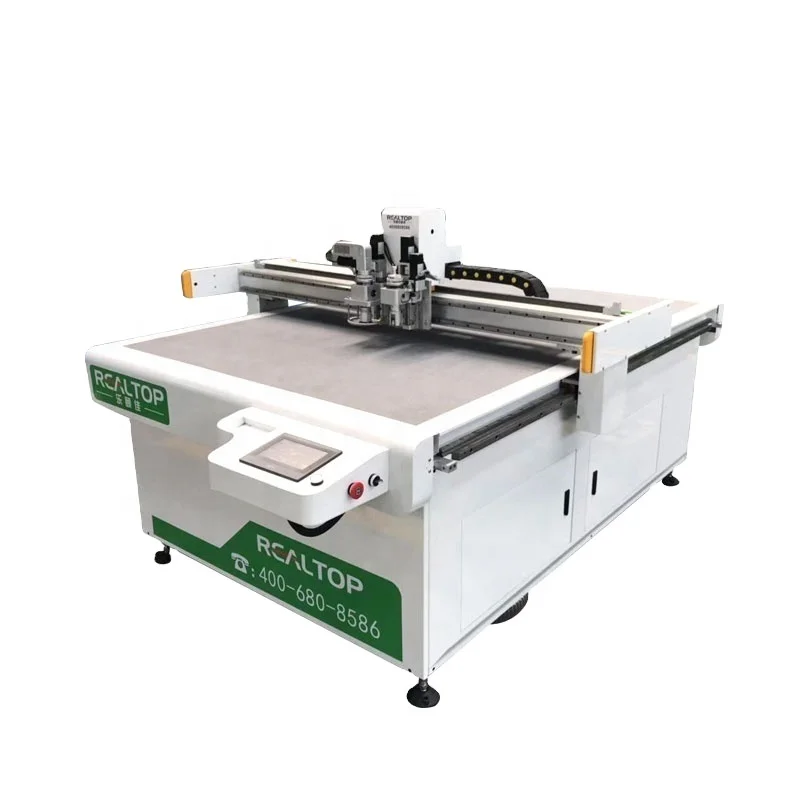
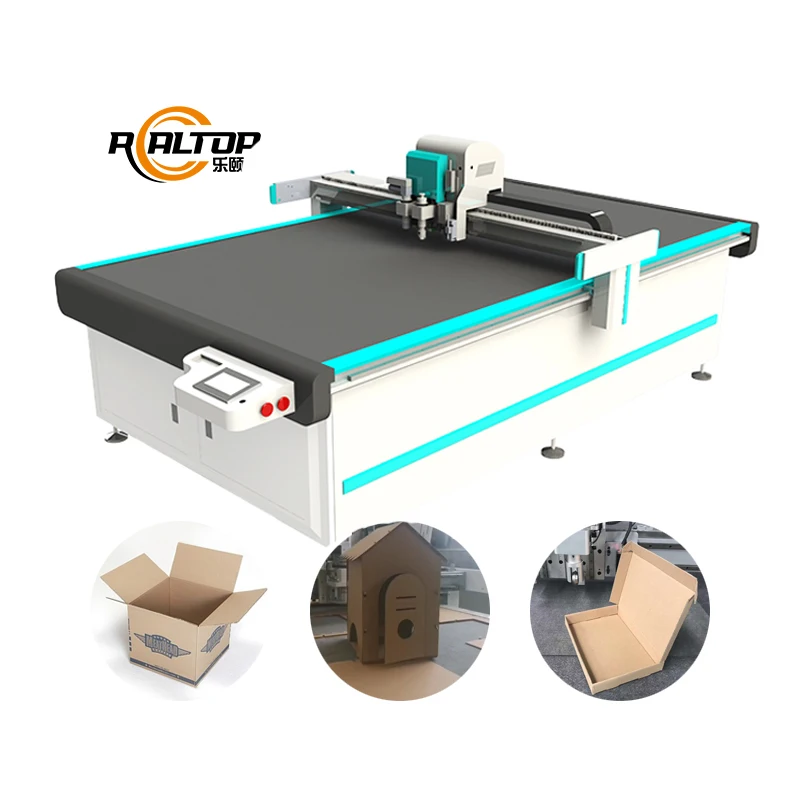
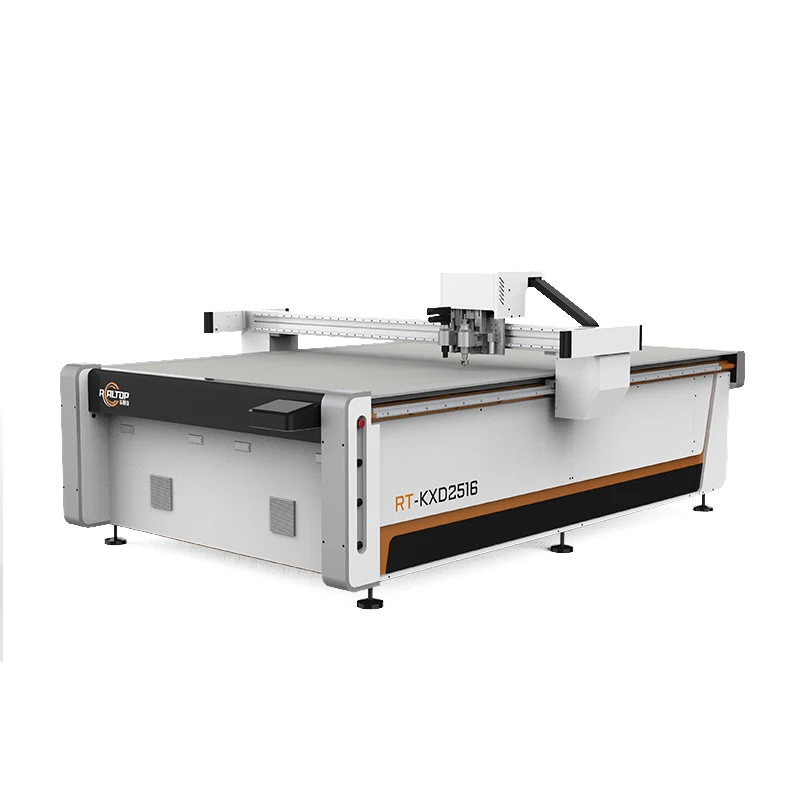
In-House Flatbed Engineering — The RT-D2516/RT-S2516 is built on a platform designed and assembled under one roof, matching oscillating knife and creasing tool heads directly to corrugated flute profiles instead of relying on generic tooling across all board grades.
Technical Specifications
| Parameter | Value |
|---|---|
| Product Type | CNC Oscillating Knife Cutting Machine for Packaging and Carton Sample Making |
| Model | RT-D2516 / RT-S2516 |
| Working Area | 1600 × 2500 mm |
| Machine Size | 3450 × 2300 × 1250 mm |
| Rated Power | 9 kW |
| Voltage | 380V ±10% |
| Frequency | 50Hz or 60Hz (to be confirmed per destination market) |
| Servo Motor | Delta (Taiwan) digital servo |
| Linear Guide | Taiwan Hiwin |
| Transmission | Synchronous belt and ball screw with imported linear guides |
| Vacuum Table | Aluminum alloy honeycomb structure, 7.5 kW vacuum pump |
| Auto Feeding | Germany imported conveyor belt |
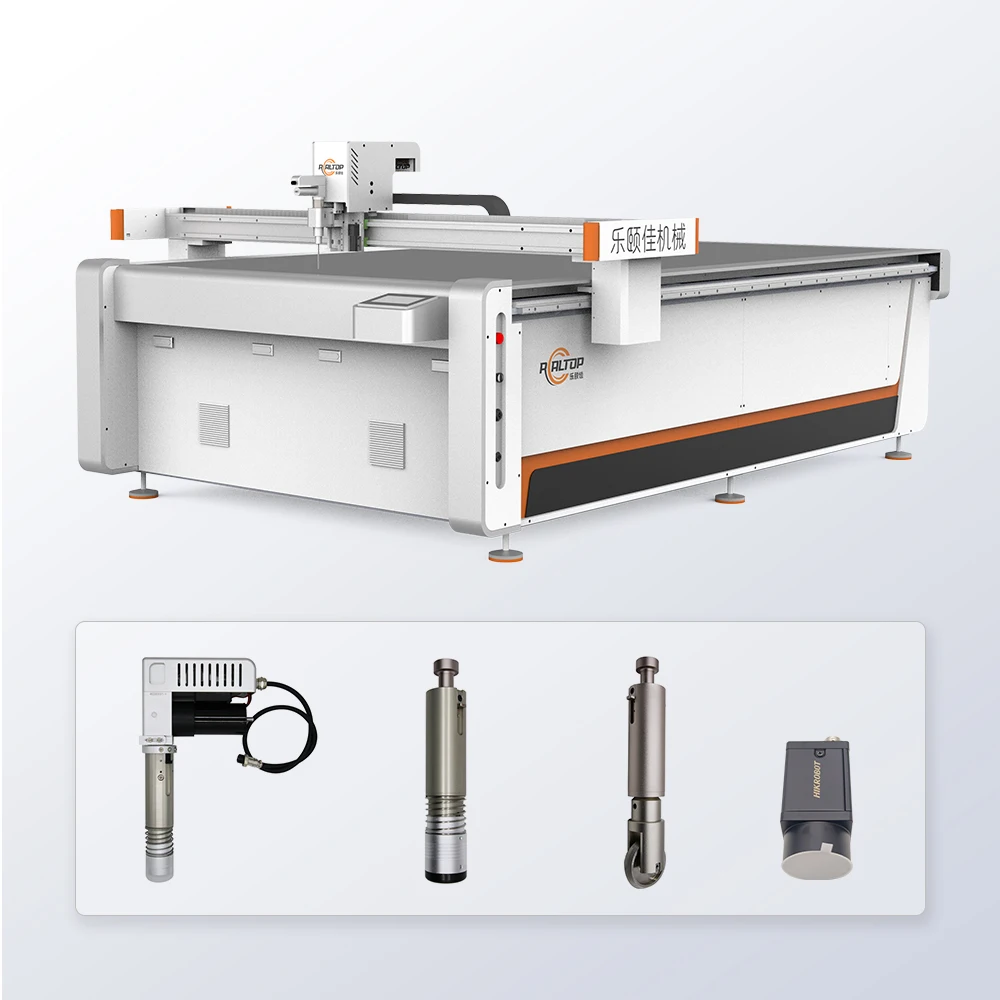
| Multifunctional Head | Swiss imported knife — vibration full cutting, vibration half cutting, cursor location |
| Translational Velocity | 800 – 2000 mm/s |
| Cutting Speed | 200 – 800 mm/s (varies with material) |
| Cutting Thickness | ≤100 mm (varies with material density and flute type) |
| Repeated Accuracy | ≤0.1 mm |
| Instruction System | HP-GL compatible format |
| Safety Devices | Infrared sensors, emergency stop |
| Language Options | English, Russian, Italian, Chinese; special languages customizable |
Application Suitability
| Application | Material or Output |
|---|---|
| Carton sample making and short-run prototyping | Corrugated board (E, B, C, BC flute), gray board, honeycomb cardboard |
| Shipping carton production for electronics and e-commerce | Single and double-wall corrugated, kraft liner |
| Snack food and premium gift box packaging | Folding carton board, coated and uncoated stock |
| Sticker and label contour cutting | Self-adhesive vinyl, sticker sheets with printed marks |
| Advertising billboard and signage blank cutting | PVC foam board, soft glass, lightweight corrugated plastic |
| Large appliance carton packaging | Heavy-duty double and triple-wall corrugated board |
When the Flute Profile Determines Whether the Machine Actually Works
A working area figure on the nameplate tells you nothing about how the tool head handles BC-flute at production speed.
I once watched a packaging shop receive a flatbed cutter specified purely on bed size, only to discover the drag knife crushed the flutes on their double-wall shipping cartons instead of shearing them cleanly. The vibration knife amplitude had not been matched to the board caliper, and the vacuum zoning left small die-line samples lifting off the table mid-cut. Half the first batch was scrapped before the real configuration conversation started. A CNC packaging cutting machine manufacturer worth working with will ask for your actual board samples before confirming the tool head order. [NEED_CITE: corrugated flute profiles and tooling selection for digital cutting]
Matching Knife Amplitude to Board Caliper
The RT-D2516/RT-S2516 uses a Swiss imported vibration knife head that handles full cutting, half cutting, and cursor location within a single tool station. For a CNC packaging cutting machine manufacturer building machines for mixed-flute environments, this matters because E-flute gift boxes and BC-flute shipping cartons demand very different stroke frequencies and blade geometries. A single fixed-frequency head either tears thin stock or fails to penetrate thick board. The multifunctional head on this platform lets the operator switch between full-depth through-cuts on heavy corrugated and kiss-cuts on sticker sheets without changing tool stations, keeping changeover time short across short-run jobs.
Vacuum Zoning That Holds Small Die-Line Pieces
The aluminum alloy honeycomb table is paired with a 7.5 kW vacuum pump and zone-following adsorption. On a 1600 × 2500 mm bed, a packaging sample job may nest dozens of small carton blanks alongside large shipping carton panels. Without zoning, the pump pulls air through uncovered areas and the small pieces drift during high-speed passes. Zone-following adsorption closes off vacuum only where material is present, concentrating hold-down force where it matters. This is the difference between clean crease lines on a folding carton sample and a lifted edge that ruins the fold tolerance. [NEED_CITE: vacuum table zoning requirements for flatbed digital cutting]
Reading the Specs Behind the Speed Numbers
The 200 – 800 mm/s cutting speed range depends entirely on material density and flute type — a figure that only becomes meaningful when paired with your actual stock. The Delta servo and Hiwin linear guide combination targets ≤0.1 mm repeated accuracy, which governs how tightly nested carton blanks can sit on a sheet without the crease lines drifting between passes. The HP-GL compatible instruction system and professional carton nesting software handle file imports from common packaging CAD workflows, sequencing cut, crease, and mark operations automatically. For shops running sticker contour jobs, the cursor location function in the tool head reads printed registration marks to align the cut path to pre-printed sheets, reducing misalignment waste on short runs.
What Happens When Configuration Is Skipped
The most common failure I see in packaging cutting installations is not mechanical — it is a mismatch between the ordered tool head and the buyer’s daily material mix. A creasing wheel specified for standard B-flute produces shallow, cracked fold lines on honeycomb board. A vibration knife set for thin carton tears through corrugated flute tips instead of shearing them. The vacuum pump capacity may be adequate for full-sheet nesting but insufficient when half the bed is empty and small parts lift at high traverse speeds. None of these show up on a specification sheet until the first production run fails, and by then the machine is already on the shop floor. [NEED_CITE: digital cutting machine tool head selection by material]
Why Source This Platform From the Factory
The design team engineers both the knife cutting and the table structure in-house, so the vacuum zoning layout is calculated for the specific 7.5 kW pump and honeycomb plate rather than adapted from a generic frame. Sample cutting on your own corrugated or sticker stock happens before the order is confirmed, producing a cutting report that locks in tool head, blade type, and speed parameters for your material. The electrical schematic and voltage confirmation sheet are reviewed against your local supply — 380V ±10% at 50Hz or 60Hz — before the machine enters assembly. Software file format compatibility is verified with your existing CAD or nesting workflow so there are no surprises at commissioning.
Documentation & Verification
- Factory test record run on your corrugated board grade and flute type before dispatch
- Electrical schematic with voltage and frequency confirmed for your local power supply
- Tool head and vacuum zone configuration list matched to your material mix
- Sample cutting report on buyer-supplied stock showing edge quality and crease depth
- Software licence and file format compatibility note for your CAD workflow
- Operation manual with control language set before shipment
Installation, Commissioning & Support
- 3450 × 2300 mm footprint requires a level concrete floor with clearance for conveyor infeed
- Dedicated 9 kW circuit at confirmed 380V ±10% with correct plug and breaker rating
- Machine ships in single-frame configuration; vacuum pump and conveyor bolt on at site
- First-run parameter tuning on your corrugated and sticker stock during commissioning
- Operator training covers crease, cut, and mark sequencing plus nesting software workflow
- Spare blade and creasing wheel kit included based on your material abrasiveness
Before You Request a Quote
Send the corrugated board grades and flute types you run most often, along with your typical sheet size and the thickest honeycomb or gray board in your mix. Confirm your local voltage, frequency, and the control language your operators need. If your workflow relies on a specific CAD or nesting file format, share a sample file so software compatibility is verified before the build begins.
Frequently Asked Questions
Q: How do I know which tool head to choose for my corrugated flute mix?
A: Send samples of your most common board grades — E-flute, B-flute, BC-flute, or honeycomb — along with your target cutting speed. We run sample cuts on each material and provide a report showing edge quality and crease depth, then confirm the vibration knife amplitude, creasing wheel diameter, and blade geometry before the order is locked in.
Q: What voltage and frequency confirmation do you need before building?
A: We require your local supply voltage, frequency (50Hz or 60Hz), and plug type before the machine enters assembly. The RT-D2516/RT-S2516 is rated at 380V ±10%, and the electrical schematic is confirmed against your site supply to prevent motor and vacuum pump issues at commissioning.
Q: Will the software accept files from my existing packaging CAD system?
A: The nesting software supports HP-GL compatible format and multiple file imports. Share a sample file from your current CAD or design workflow before ordering so we verify compatibility, including crease, cut, and mark sequencing. Any format gaps are identified before the machine ships, not after installation.
Q: Can the vacuum table hold small carton samples without them lifting?
A: The honeycomb table uses zone-following adsorption with a 7.5 kW pump, so vacuum is concentrated where material covers the bed. During sample cutting we test your smallest die-line shapes at full cutting speed to confirm hold-down is adequate. If zoning adjustments are needed, they are made before dispatch.
Q: What does the sample cutting process involve before I commit?
A: Ship us a representative range of your corrugated board, cardboard, or sticker stock. We run each material on the RT-D2516/RT-S2516 at production speeds and send back cut samples along with a report covering edge quality, crease accuracy, and recommended tool settings so you can evaluate results on your own stock before placing an order.
You may also like

商品评价
Clear filtersThere are no reviews yet.