



-
 Courier delivery
-
 DHL Courier delivery
-
 Warranty 1 year
-
 Free 30-Day returns

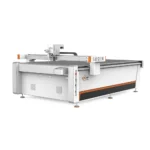
Core Factory Build — Every frame, motion rail, and vacuum zone on the 1625 is assembled and tested in our Jinan facility before crating, not outsourced to a trading company’s warehouse.
Technical Specifications
| Parameter | Value |
|---|---|
| Model | 1625 |
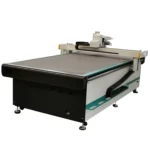
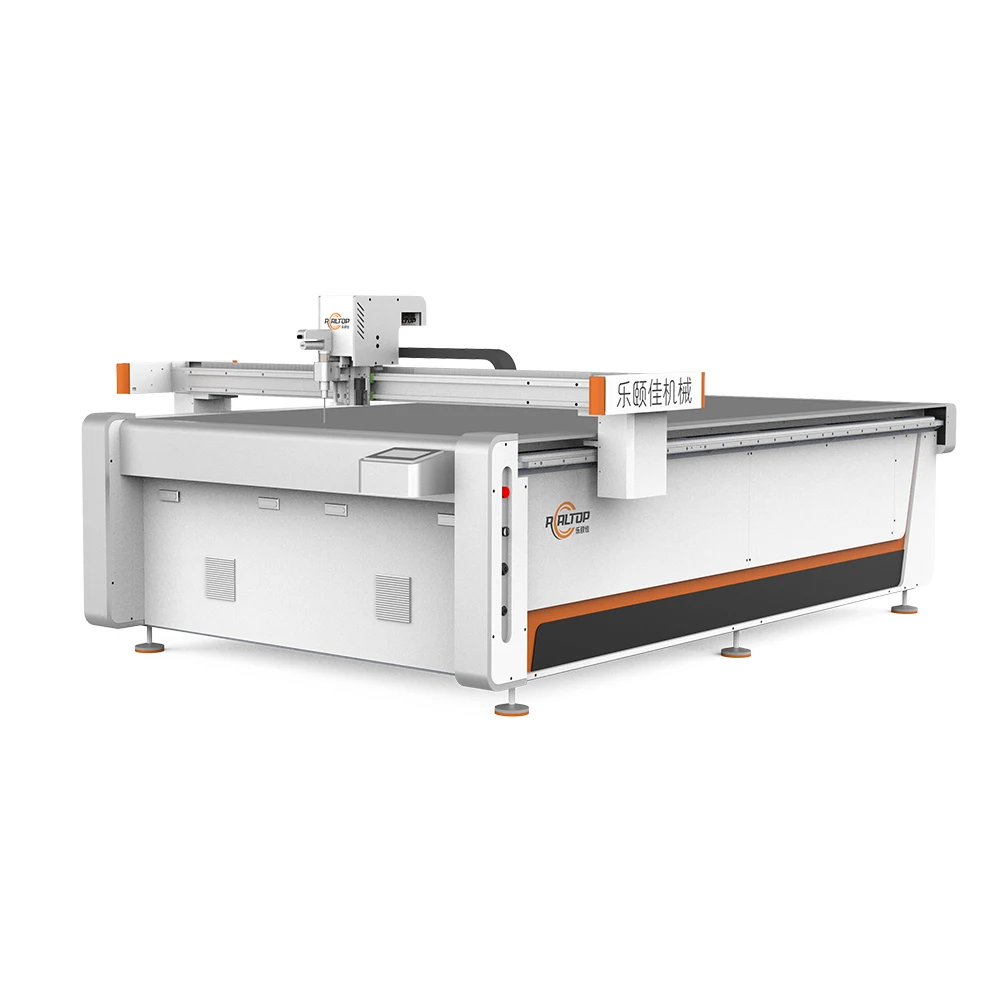
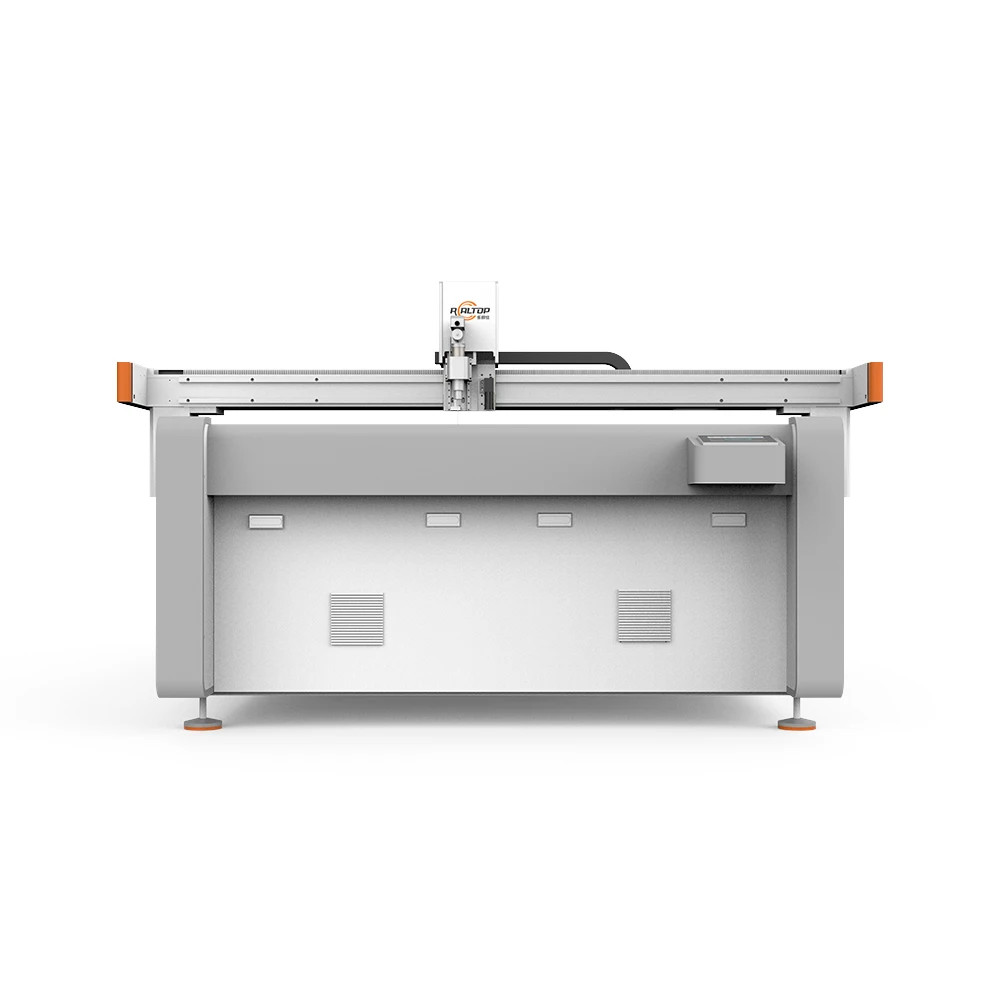
| Product Type | CNC Oscillating Knife Cutting Machine |
| Working Area | 1600 × 2500 mm |
| Cutting Speed | 0 – 1500 mm/s |
| Cutting Thickness | Up to 40 mm (basis not stated in source — confirm material and density) |
| Cutting Accuracy | ±0.1 mm |
| Vacuum Pump Power | 9 kW |
| Voltage Options | 110V / 220V / 380V (frequency to be confirmed) |
| Overall Dimensions | 3300 × 2100 × 1350 mm |
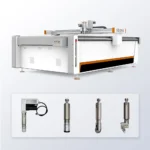
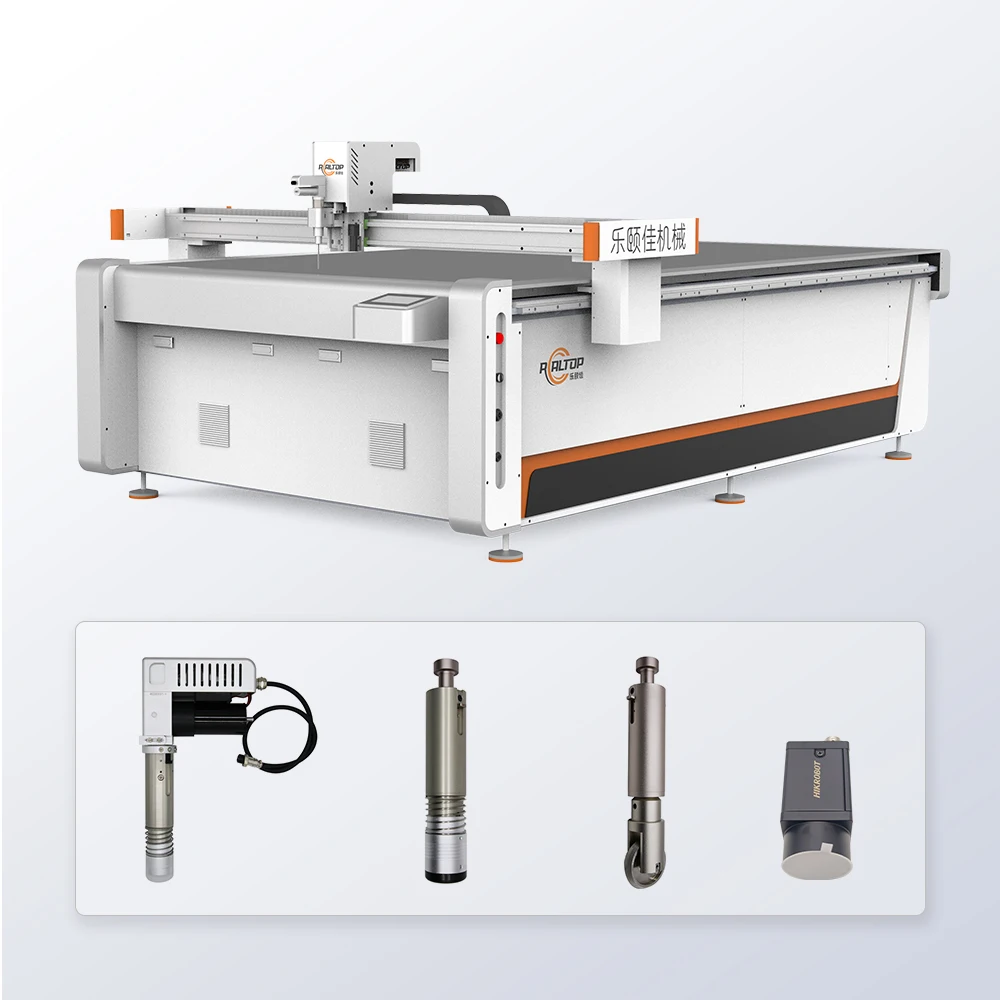
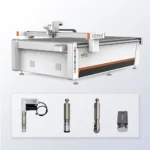
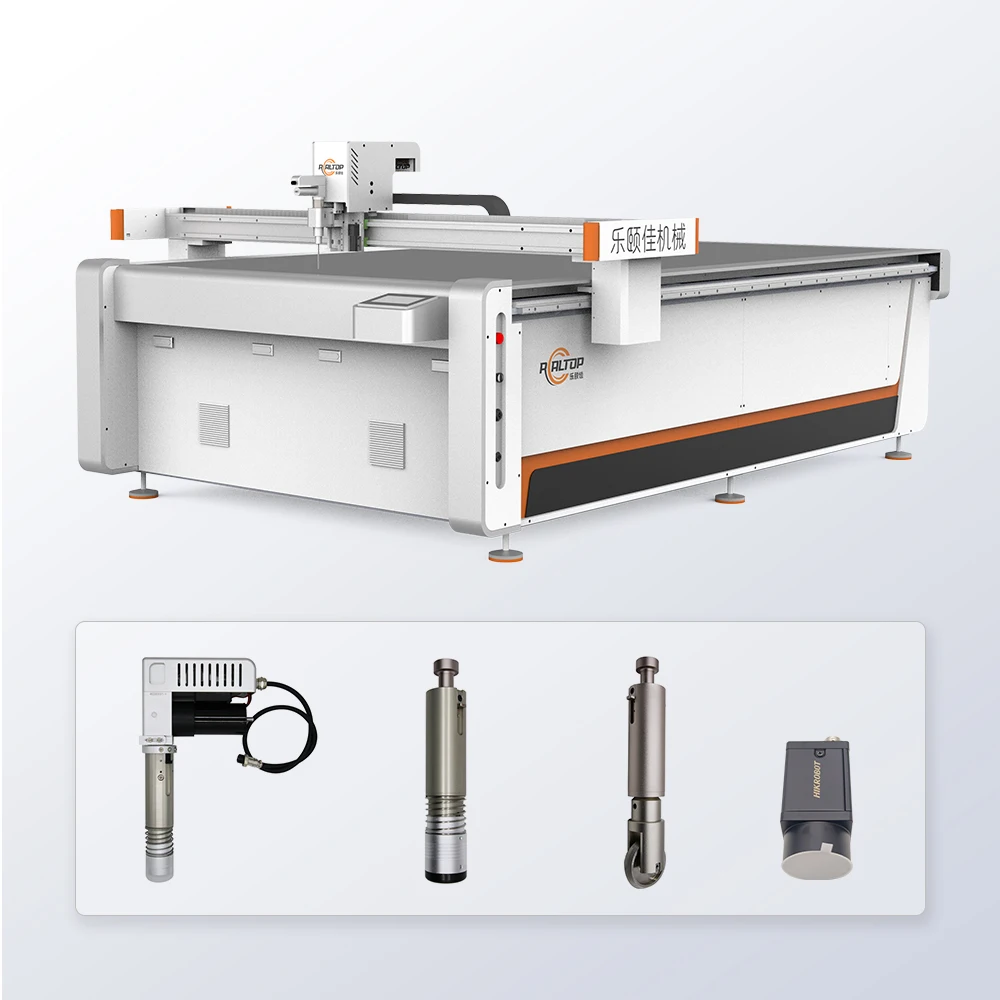
| Tool Heads Available | Oscillating knife, Driven rotary knife, Creasing wheel, Kiss cutting tool, Pneumatic knife, Milling tool, V-groove knife, CCD camera |
| Control System | PLC control panel with optional display languages |
| Software | Dedicated packaging box structure design software |
| File Formats Supported | PLT, DXF, AI, PDF |
| Vacuum Table | Aluminum bellows vacuum table (zoning configuration to be confirmed) |
| Servo Drive Options | Panasonic, Delta, Dorna (rated power to be confirmed) |
| Safety Device | Infrared sensor device and emergency stop device |
| Language Options | English, Russian, Italian, Chinese; special languages customizable |
| Certification | CE (declaration scope to be confirmed) |
Application Suitability
| Application | Material or Output |
|---|---|
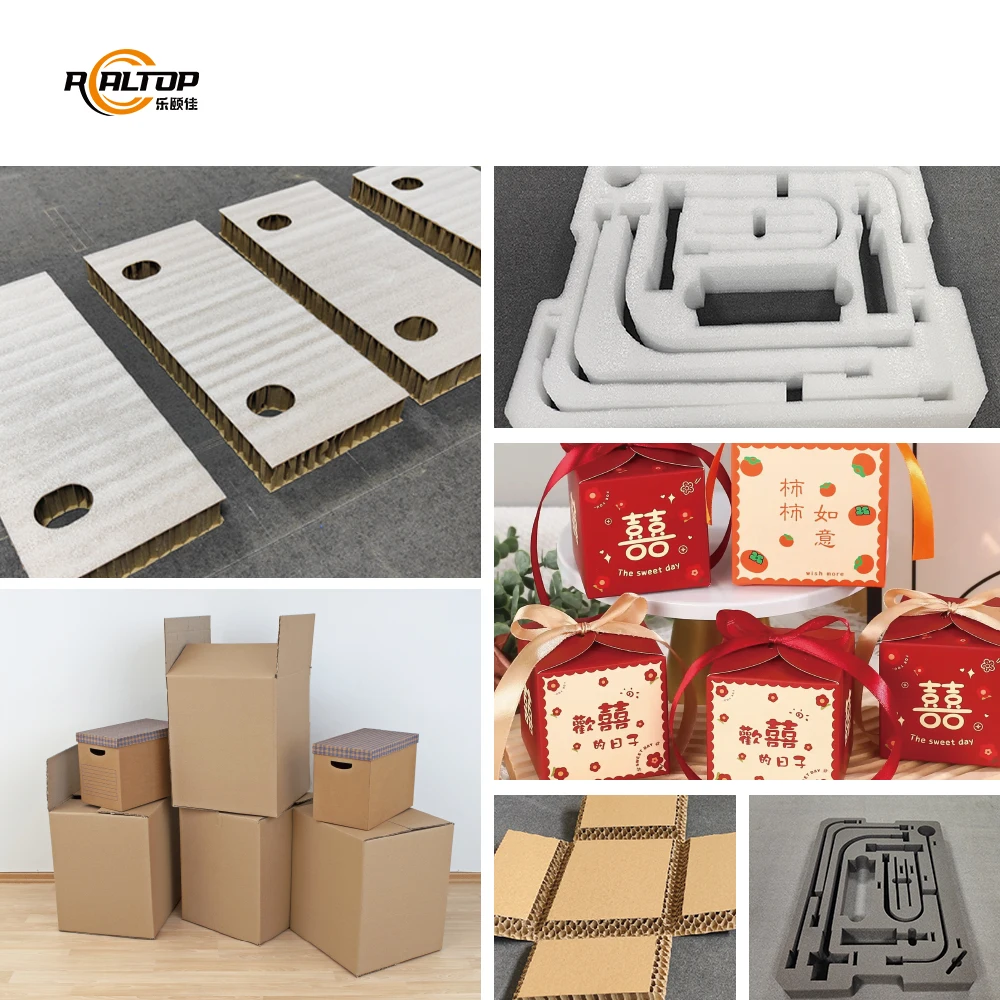
| Packaging sample making and short-run production | Corrugated cardboard (E-flute, B-flute, BC-flute), greyboard, cardstock, art paper, specialty paper |
| Foam and gasket fabrication | EVA, EPE, PU foam, rubber mats, Coroplast |
| Textile and leather cutting | Velvet, fleece fabric, non-woven fabric, leather, synthetic leather |
| Signage and composite processing | Thin PVC/PET sheets, composite and adhesive-backed materials |
Why the "Up to 40 mm" Claim Needs a Material Conversation
A thickness number without a density qualifier is where most CNC knife cutting machine factory quotations fall apart.
I remember a carton sample maker who ordered based on a working-area comparison alone. Their standard E-flute ran fine, but when they switched to double-wall BC-flute for a short-run premium box order, the oscillating knife left crushed edges and incomplete cuts at the crease lines. The vacuum table was holding the sheet, but the tool head lacked the stroke frequency to shear through the thicker flute structure cleanly. We swapped to a higher-frequency oscillating head and adjusted the vacuum zoning, and the machine ran the job properly — but that two-week detour could have been avoided with one material sample up front [NEED_CITE: relationship between flute profile and oscillating knife stroke requirements].
That is the reality of sourcing an OEM packaging cutting machine: the specification sheet tells you what the frame can physically accommodate, not whether your specific corrugated board, foam density, or adhesive-backed composite will cut cleanly at production speed. The 1625 supports a wide tool head range — oscillating knife, driven rotary, creasing wheel, kiss cutting, pneumatic knife, milling, and V-groove — but each one behaves differently against different substrates.
Frame and Motion: What You Cannot See in a Photo
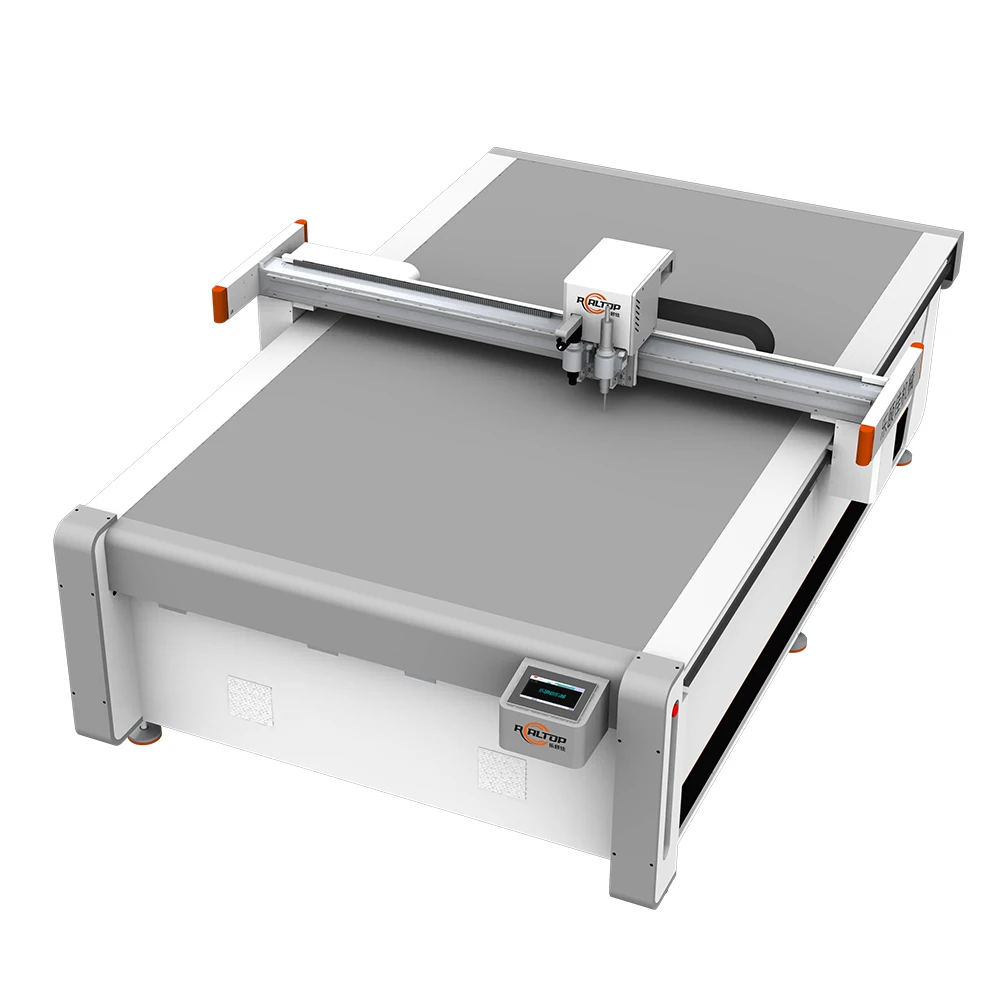
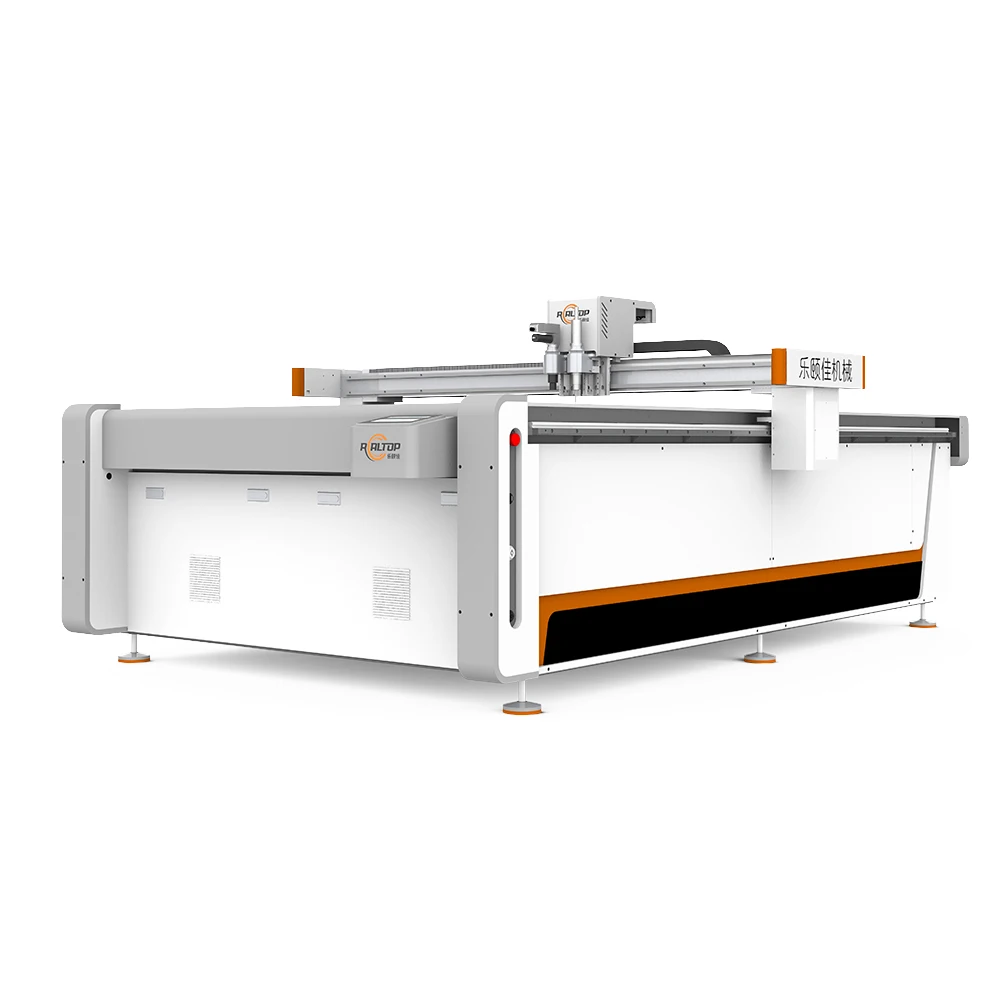
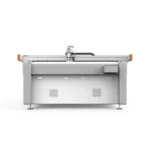
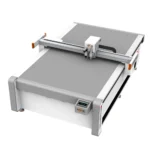
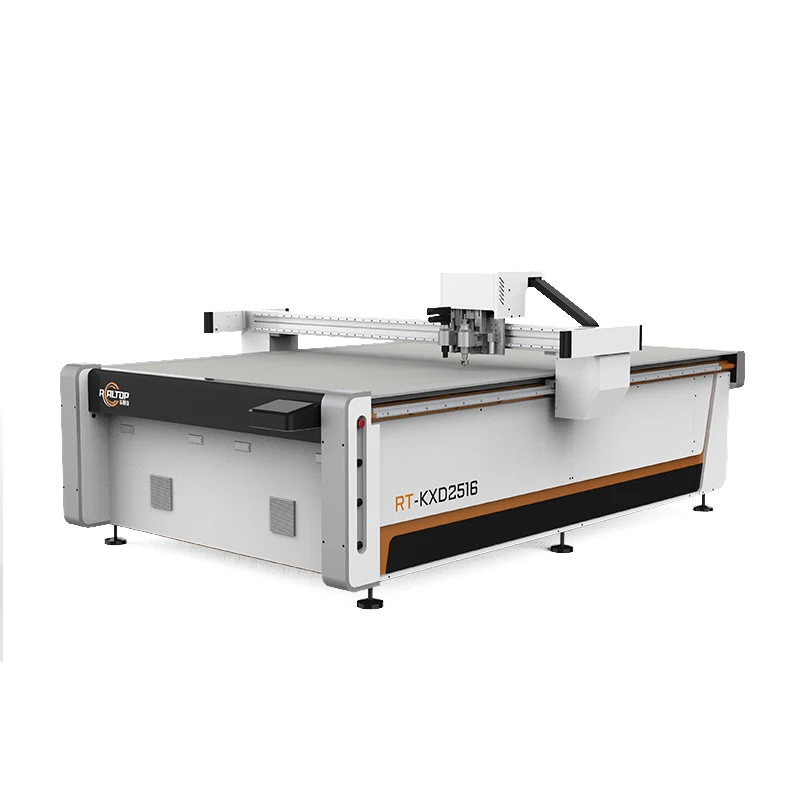
The 1625 rides on a heavy-duty welded frame with a precision-ground mounting surface, which matters more than it sounds. When a CNC oscillating knife cutting machine factory cuts corners on frame stress-relief or uses thin-gauge extrusions, the gantry deflects under acceleration and the ±0.1 mm accuracy claim only holds at the center of the bed. We build the frame in-house, machine the rail seats after welding, and run a full travel test before the table skin goes on. Servo drive options include Panasonic, Delta, and Dorna — the choice affects how aggressively the head can decelerate at corner points without overshooting, which directly shows up on small-radius crease patterns in packaging templates.
Vacuum Hold-Down: The Difference Between a Clean Cut and a Ruined Sheet
The aluminum bellows vacuum table on the 1625 provides a flat, sealed surface that keeps thin cardstock and heavy corrugated board alike from lifting under the knife. But flatness alone does not solve the problem of small parts. When you are cutting gasket profiles or short-run carton inserts with narrow offcuts, a single-zone vacuum pulls air through the gaps around the cut line and loses grip on the piece you are trying to hold [NEED_CITE: vacuum zoning strategies for small-part retention on flatbed cutting tables]. That is why we discuss vacuum zoning configuration during the specification stage — if your typical nesting layout leaves small parts near the sheet edge, the table needs independently controlled zones so the operator can isolate suction to the area still being cut.
Reading the Spec Sheet Against Your Actual Job
Cutting speed is listed at 0–1500 mm/s, but that is the travel speed of the head, not the effective throughput on your material. A driven rotary knife slicing through fleece fabric can approach the upper range; an oscillating knife working through BC-flute corrugated board at full 40 mm depth will run considerably slower to maintain edge quality. The dedicated packaging box structure design software imports PLT, DXF, AI, and PDF files, so a carton sample maker can pull a structural design from ArtiosCAD or Impact, nest it, and send it to the machine without re-drawing. The PLC control panel supports English, Russian, Italian, and Chinese as standard, with special languages available on request — a detail that matters when the operator on the floor does not read the language the software was originally configured in.
What Happens When Configuration Is Skipped
I have seen machines arrive at a buyer’s facility with the wrong tool head for their primary material because the order was placed on working area and price alone. The oscillating knife that handles cardstock beautifully will crush EVA foam if the amplitude and frequency are not matched to the foam’s shore hardness. A creasing wheel set for greyboard will score through art paper instead of folding it. These are not machine defects — they are specification gaps [NEED_CITE: tool head and material mismatch in digital flatbed cutting]. The consequence is a machine that sits idle while the buyer sources replacement tooling, re-tests parameters, and explains the delay to their own customers.
Why Procurement Teams Source This Machine From Jinan
Our design team engineers both the knife-cutting and laser-cutting platforms under one roof, so when a buyer’s material sits on the boundary between methods — say, a thin PVC sheet that could be kiss-cut by knife or sealed-edge cut by CO2 laser — we can test both and recommend based on the edge finish the end product requires, not on which machine we happen to have in stock. The 1625 goes through a factory test on the buyer’s own material before crating, generating a sample cutting report that documents tool head, speed, vacuum setting, and edge quality. OEM partners receive full electrical schematics, voltage confirmation matched to their market, and control language set before the panel is wired — not re-flashed on arrival.
Documentation & Verification
- Machine specification sheet listing the exact tool head and vacuum table configuration selected for your material range
- Electrical schematic with confirmed voltage and frequency for your destination market before wiring begins
- Sample cutting report produced on your actual corrugated board, foam, or fabric with measured edge quality
- CE declaration with scope matching the configured machine and tooling combination
- Operation and maintenance manual in the operator’s working language
- Software licence and file format compatibility note confirming PLT, DXF, AI, PDF import paths
Installation, Commissioning & Support
- Floor space allocation based on the 3300 × 2100 mm footprint plus operator clearance on three sides
- Dedicated power circuit sized for the 9 kW vacuum pump plus servo and control load at your confirmed voltage
- Machine arrives as a single-frame assembly; gantry and tool head carriage are pre-aligned and require leveling only
- First-run parameter setting covers tool head depth, oscillation frequency, and vacuum zone mapping for your primary material
- Operator training covers the PLC panel, packaging software nesting workflow, and file import from your existing design tools
- Spare parts list identifies wear items specific to your tool head configuration — oscillating knife blades, creasing wheel inserts, vacuum seals
What We Need to Build Your Configuration
Before we quote a 1625, send us a sample of the material you cut most often — type, thickness, and whether it is single-layer or stacked. Tell us your local voltage and frequency, the language your operators read, and whether your current design workflow uses PLT, DXF, AI, or PDF files. If you are evaluating this as an OEM partner, let us know the working area and tool head range your market demands so we can scope the build accordingly.
Frequently Asked Questions
Q: How do you determine which tool head fits my material?
A: We cut samples on your actual material using the candidate tool heads — oscillating knife, driven rotary, creasing wheel, or others from the available range — and document edge quality, cut completeness, and speed. The configuration list in your quotation reflects the tested result, not a generic recommendation. This applies to every material in your production mix, from E-flute corrugated to EVA foam.
Q: Can the voltage and control language be set for my market before shipment?
A: Yes. Voltage is confirmed from 110V, 220V, or 380V options and the frequency is matched to your grid before the electrical panel is wired. The PLC control panel language — English, Russian, Italian, Chinese, or a custom language — is loaded during factory testing so the machine is operable the day it is powered on at your facility.
Q: What does OEM customization cover on the 1625 platform?
A: Working area, tool head combination, vacuum table zoning, servo drive brand selection, voltage specification, control language, and software configuration are all open to OEM specification. We provide the distributor or importer with full electrical schematics, mechanical drawings, and a factory test record so the machine can be supported locally with complete technical documentation.
Q: Can I see the machine cut my material before I commit to an order?
A: We run a sample cutting session on your shipped material and provide a report covering tool head used, cutting speed, vacuum setting, and edge inspection. If the result does not meet your quality standard, we adjust the configuration and re-test before any production order is confirmed. This eliminates the risk of a machine arriving configured for the wrong substrate.
You may also like

商品评价
Clear filtersThere are no reviews yet.