



-
 Courier delivery
-
 DHL Courier delivery
-
 Warranty 1 year
-
 Free 30-Day returns

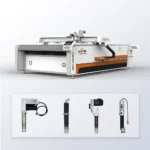
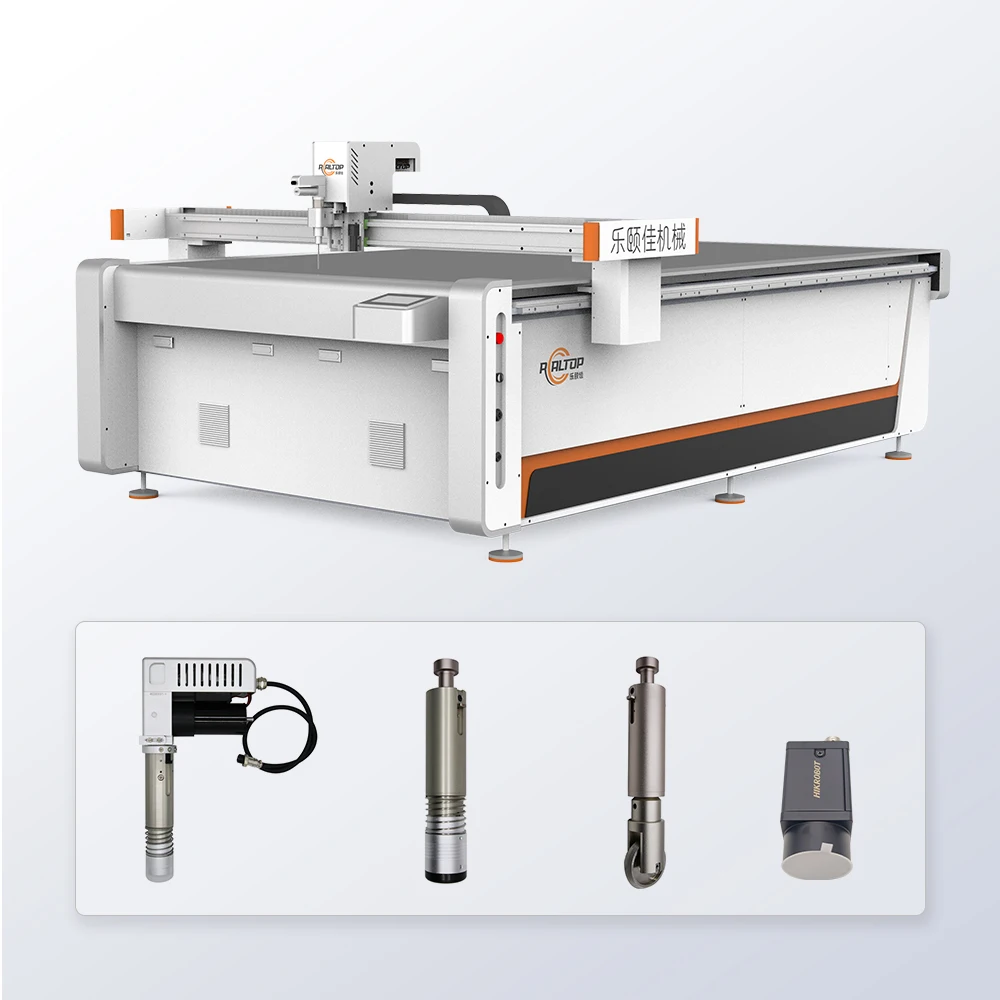
Material-Matched Tooling — every RT-D2516/RT-S2516 is configured with the exact oscillating knife, vacuum zoning and feed rate validated on your fabric roll before the order is locked.
Technical Specifications
| Parameter | Value |
|---|---|
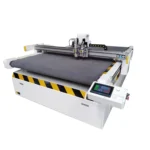
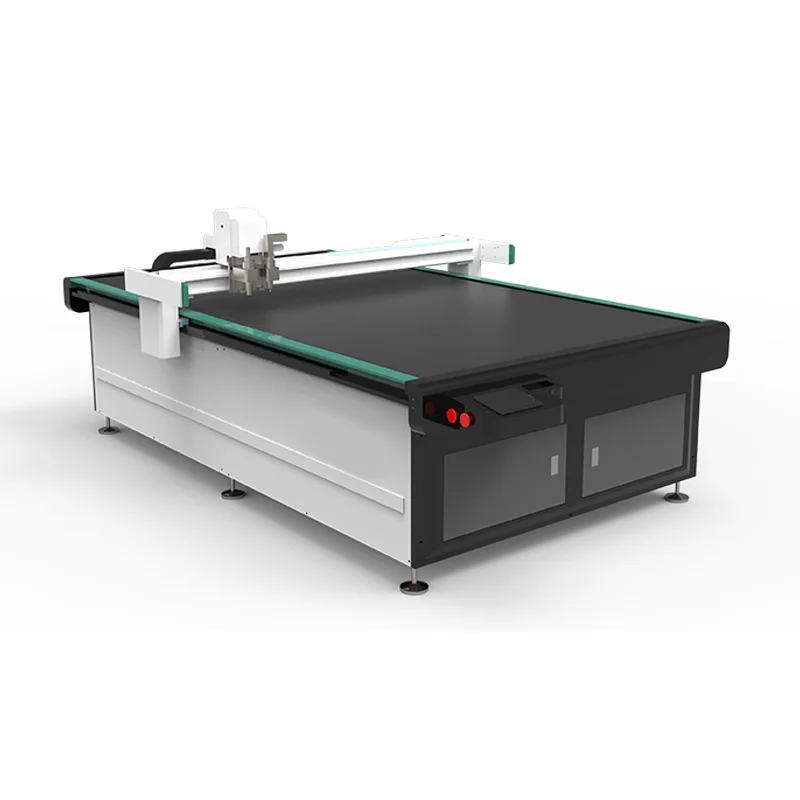
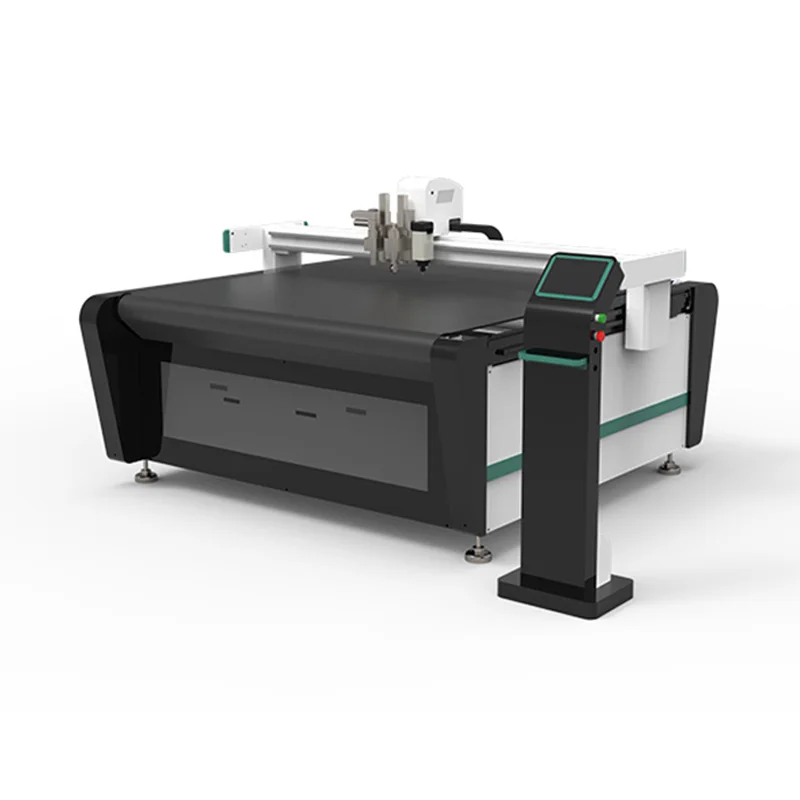
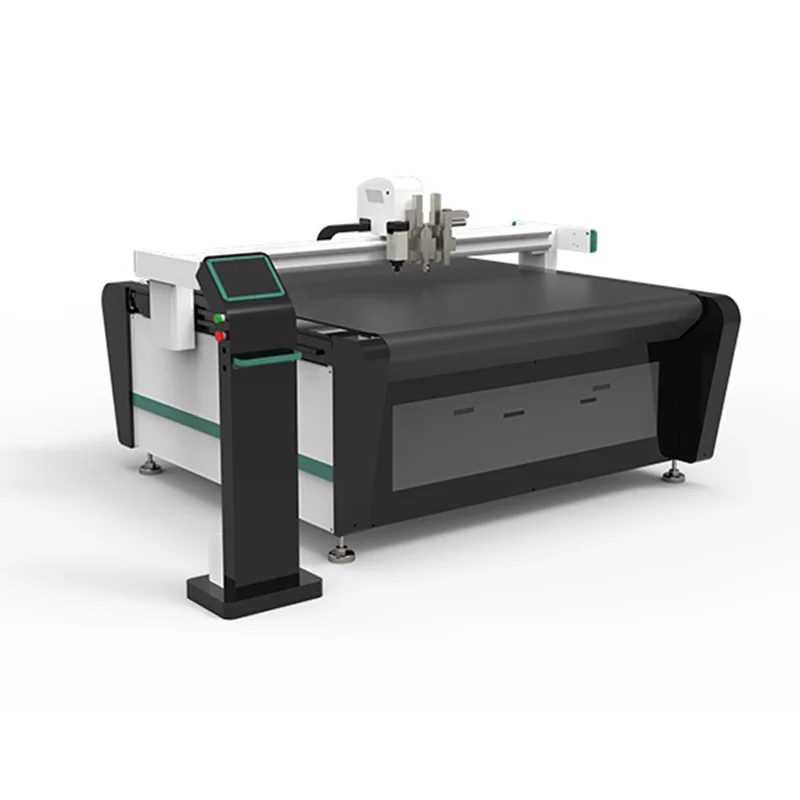
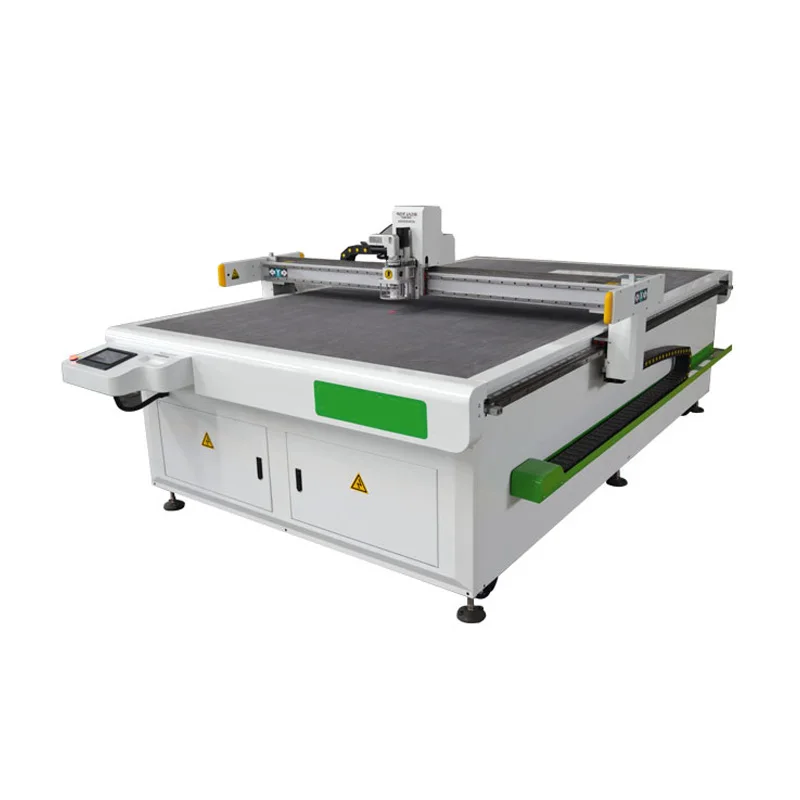
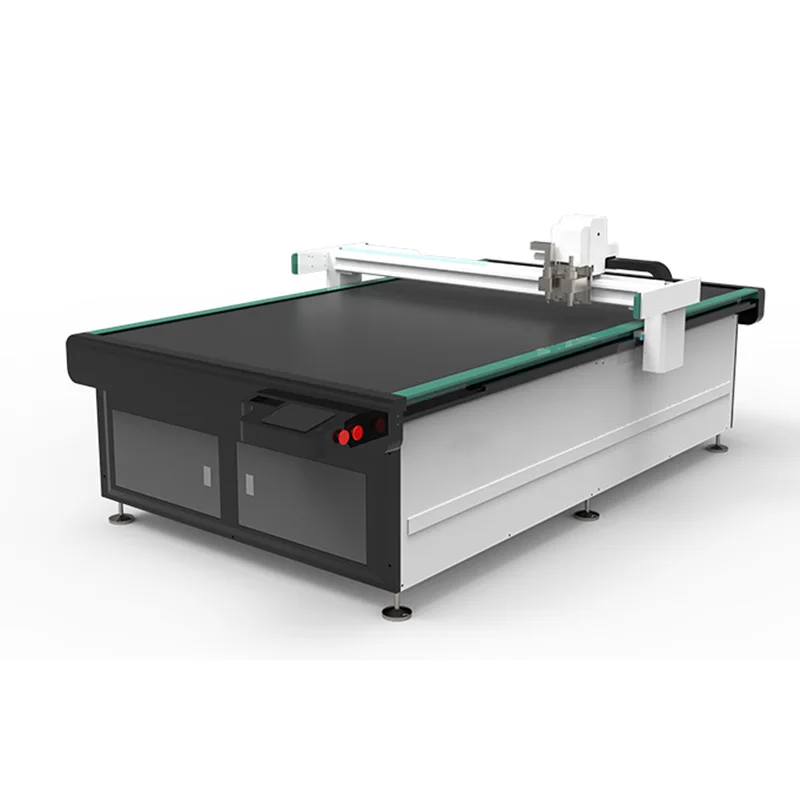
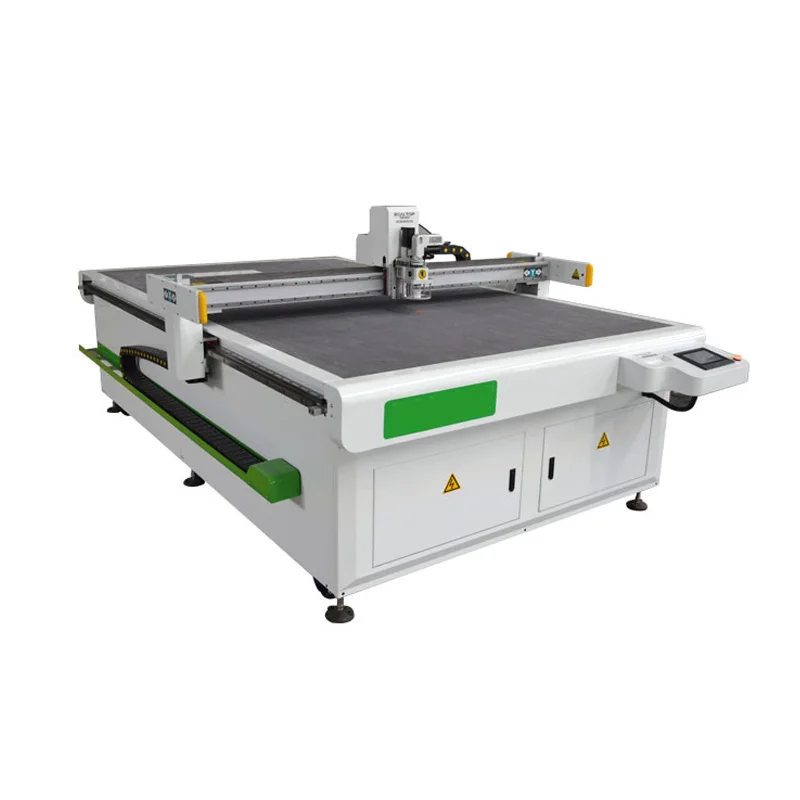
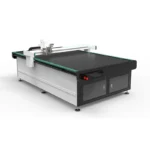
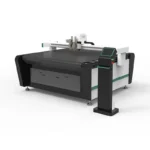
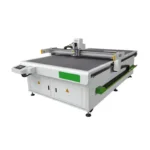
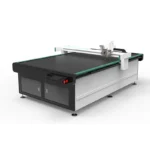
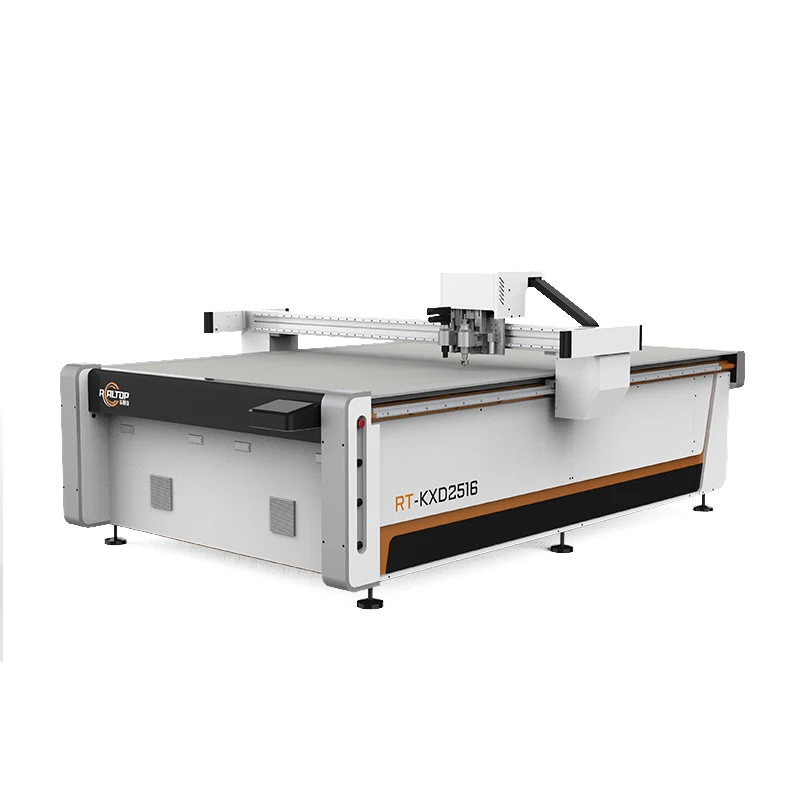
| Product Type | CNC Oscillating Knife Cloth Cutting Machine |
| Model | RT-D2516/RT-S2516 |
| Working Area | 1600×2500 mm |
| Overall Dimensions | 3450×2300×1250 mm |
| Rated Power | 11 kW |
| Voltage | 380V ±10% |
| Tool Head | Swiss imported oscillating knife with vibration full cutting, half cutting and cursor location |
| Translational Velocity | 800–1200 mm/s |
| Cutting Speed | 200–800 mm/s (basis to be confirmed with material type and thickness) |
| Repeatability | ≤0.1 mm |
| Transmission System | Digital servo motor, linear guide, synchronous belt, imported ball screw |
| Servo Motor | Japanese Yaskawa |
| Linear Rail | Taiwan Hiwin |
| Conveyor Belt | Germany imported |
| Vacuum Pump | 7.5 kW |
| Work Table | Flat working table with vacuum and auto feeding |
| Instruction System | HP-GL compatible format |
| Safety Device | Infrared sensors |
| Cutting Materials | Leather, garment flexible materials, sponge composite leather, PVC, soft glass, silicon, rubber |
Application Suitability
| Application | Material or Output |
|---|---|
| Garment and footwear pattern cutting | Multi-layer woven fabric, knitted textile, natural and synthetic leather |
| Automotive interior trim production | Sponge composite leather, coated fabric, acoustic insulation felt |
| Flexible gasket and seal fabrication | PVC sheet, silicon rubber, soft glass, elastomeric compounds |
| Luggage and leather goods nesting | Split leather, PU laminate, reinforcement interlining |
| Technical textile conversion | Coated industrial fabric, aramid weave, filter media |
Why Cutting Speed Claims Fail on Coated Fabric
A machine quoted at 800 mm/s on standard cotton can stall the moment it meets a polyurethane-coated textile, leaving ragged edges and forcing the operator to drop the feed rate manually. The cutting speed figure only holds meaning when tied to a specific material stack, ply count and coating weight. [NEED_CITE: fabric coating weight standards for technical textiles]
I once watched a Vietnam garment line lose three days of output because the cloth CNC cutting machine manufacturer had tested on uncoated poplin while the buyer’s actual roll carried a heavy acrylic backing. The oscillating knife could not penetrate cleanly at the quoted rate. Half-cut scoring failed entirely on the coated side, and the nesting software had no parameter slot for coating density. That line did not ship until we swapped the blade geometry and re-profiled the vacuum zones.
Servo and Rail Precision Across the Full Bed
The RT-D2516/RT-S2516 pairs a Japanese Yaskawa digital servo with a Taiwan Hiwin linear rail, delivering ≤0.1 mm repeatability from one corner of the 1600×2500 mm table to the other. For garment nesting, where pattern pieces share tight margins and a drift of even half a millimeter can push a sleeve panel into the adjacent piece, this tolerance envelope keeps yield loss to the expected kerf width alone. The servo responds to the instruction system in HP-GL format, so nesting files generated by common textile CAD packages import without manual re-tracing.
Vacuum Hold-Down Configured for Small Pattern Pieces
A 7.5 kW vacuum pump pulls air through the flat working table, but the real question is how the suction is zoned. Small collar stays, belt loops and interlining tabs lift under the knife if the vacuum field is uniform and unpartitioned. On this cloth CNC cutting machine manufacturer build, the table zoning is matched to the buyer’s typical piece footprint so that suction concentrates where the knife exits each contour. [NEED_CITE: vacuum table zoning practices for small-part nesting]
Reading the Spec Sheet Against Your Roll
The oscillating knife head here is Swiss-imported and supports full-cut, half-cut and cursor location functions, but the blade amplitude and stroke frequency must be dialed to the material. A lightweight silk lining needs a short, fast stroke to avoid fraying, while a five-ply automotive composite demands a longer stroke with higher downward force. The translational velocity of 800–1200 mm/s describes rapid traverse between cuts, not the engaged cutting speed of 200–800 mm/s which itself varies with ply count and coating thickness. Buyers should request the speed-to-thickness chart generated on their own sample roll rather than rely on the generic range printed in the brochure.
The Cost of Skipping Material Validation
When a buyer locks in a cloth CNC cutting machine manufacturer based on working area and price alone, the first production week often reveals the gap. Ragged edges on coated fabric mean re-cutting entire markers, which burns material and pushes delivery dates. A vacuum table without zoning causes small parts to shift, triggering a re-nest and wasting the original layout. Wrong blade geometry on sponge composite leather crushes the foam core instead of shearing it, and the downstream sewing line rejects the panels. [NEED_CITE: material-related cutting defects in flexible sheet production]
Why Source This Build From the Jinan Factory
The RT-D2516/RT-S2516 is designed and assembled under one roof, so the knife cutting technology team and the motion control team sit in the same building and resolve configuration conflicts before the frame is painted. Tool head selection is not a catalog checkbox; it is matched against the buyer’s sample roll in a dedicated cutting lab. Electrical schematics are drawn for the destination voltage before the cabinet is wired, avoiding field transformer add-ons. Factory test records include the buyer’s own nesting file run on the actual material, not a generic demo pattern. Post-shipment support reaches back to the engineers who built the unit, not a third-party reseller desk.
Documentation & Verification
- Machine specification sheet listing confirmed tool head and blade geometry
- Electrical schematic showing 380V ±10% wiring and breaker sizing
- Tool head and table configuration list matched to your material
- Sample cutting report with edge photographs on your fabric roll
- Factory test record running your HP-GL nesting file before dispatch
- Software licence and file format compatibility confirmation note
Installation, Commissioning & Support
- Floor plan showing 3450×2300 mm footprint with clearance for roll loading
- Dedicated 380V three-phase circuit sized for the 11 kW total load
- Conveyor belt tensioning and vacuum zone calibration on first power-up
- Oscillating knife stroke and amplitude tuning on your production fabric
- Operator training covering HP-GL file import and nesting workflow
- Spare blade and conveyor belt wear parts list with reorder intervals
What to Share With Your Inquiry
Tell us the fabric type, coating weight if any, number of plies you cut in a single pass, and the daily marker volume you need to clear. Confirm your workshop voltage and frequency so we can wire the cabinet and select the correct plug before crating. If you already run a nesting software, send us a sample HP-GL file so we can verify import and contour accuracy before the machine leaves the factory.
Frequently Asked Questions
Q: How is cutting thickness and speed confirmed for my specific fabric or composite material?
A: We ask you to send a roll or representative swatch of your actual production material. Our cutting lab runs a series of test markers using different blade geometries and stroke settings, then documents edge quality, penetration depth and achieved speed in a sample cutting report. Only after you approve that report do we lock the tool head configuration into the build.
Q: What voltage, plug type and control language options are available for my market?
A: The RT-D2516/RT-S2516 is rated for 380V ±10%, and we confirm your local supply frequency before wiring the cabinet. Plug type, cable length and control panel language are specified during the order confirmation stage so the machine arrives ready to connect without field modifications or third-party transformers.
Q: How do I choose between oscillating knife, drag knife and other tool heads for my material?
A: Oscillating knife suits most multi-layer fabrics and composite leathers where clean vertical edges matter. Drag knife is reserved for single-ply vinyl or thin gasket sheet. We recommend the tool head based on your sample cutting results, not a generic chart, and the configuration list documents exactly which head is mounted before shipment.
Q: Can the machine import my existing nesting files and HP-GL workflow?
A: The instruction system accepts HP-GL compatible format directly. During the factory test we load your own nesting file, run it on your material, and verify contour accuracy and cut sequence. If your software outputs a variant dialect, we confirm compatibility before production starts so there are no surprises at commissioning.
Q: What does sample cutting on my material look like before I commit to an order?
A: You ship us a roll or several meters of your actual production fabric. We run your nesting layout across multiple speed and stroke settings, photograph every edge, measure kerf width and ply separation, and send you a written report. You approve or request adjustments before the machine configuration is finalized.
You may also like

商品评价
Clear filtersThere are no reviews yet.