



-
 Courier delivery
-
 DHL Courier delivery
-
 Warranty 1 year
-
 Free 30-Day returns

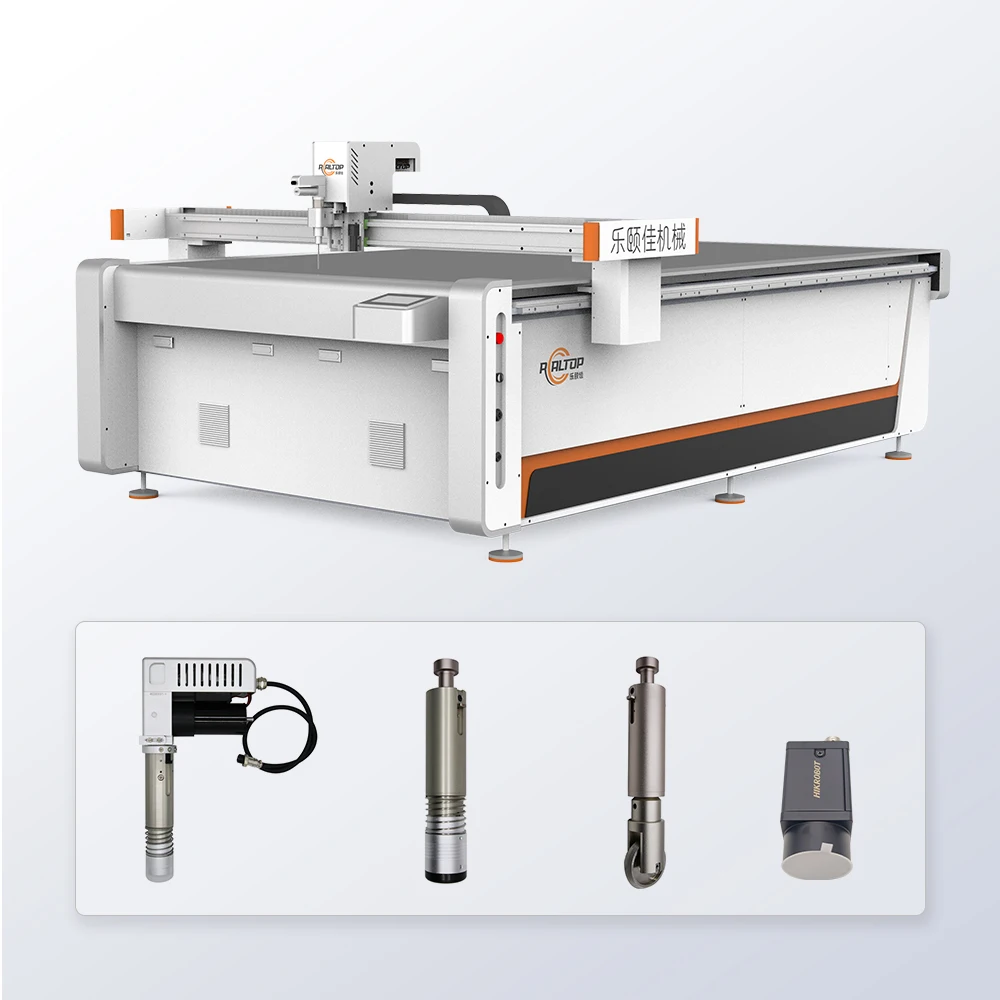
In-House Design Control — REALTOP engineers both the mechanical frame and the cutting process logic, matching tool head and vacuum zoning to your board grade instead of shipping a generic platform.
Technical Specifications
| Parameter | Value |
|---|---|
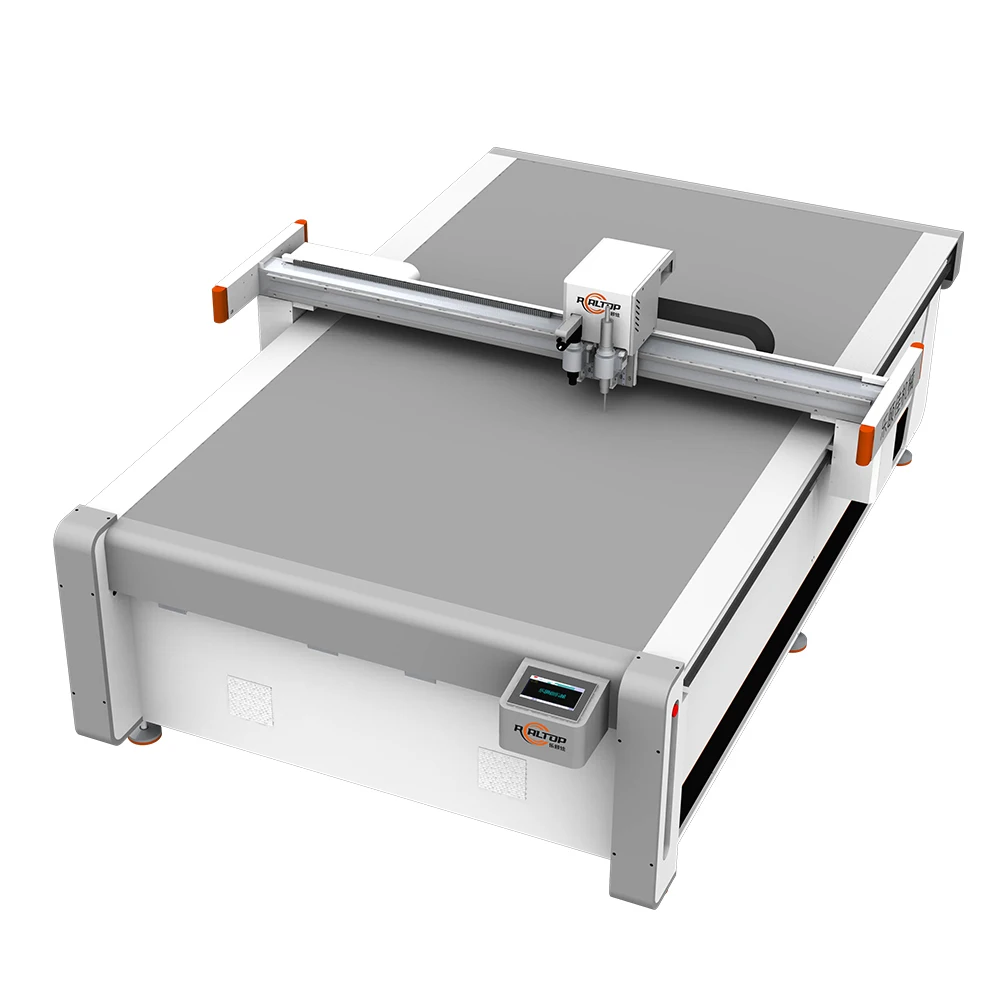
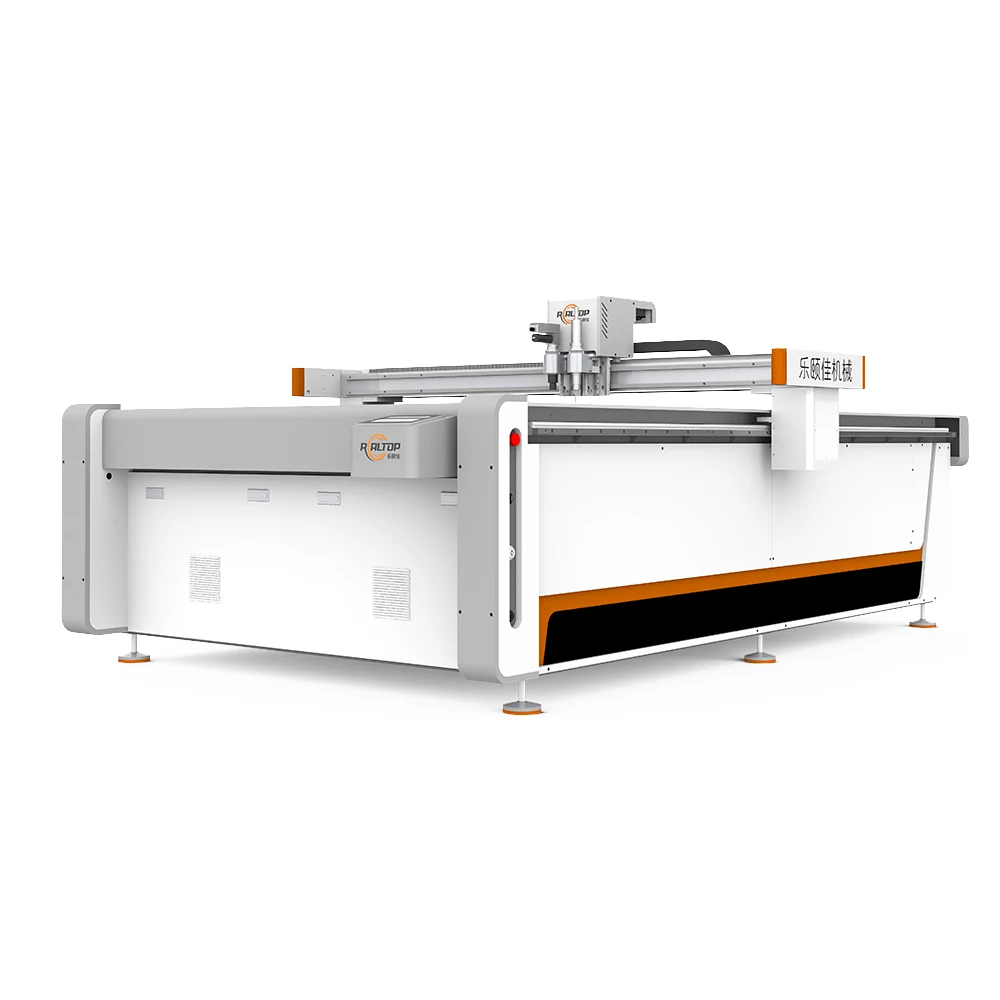
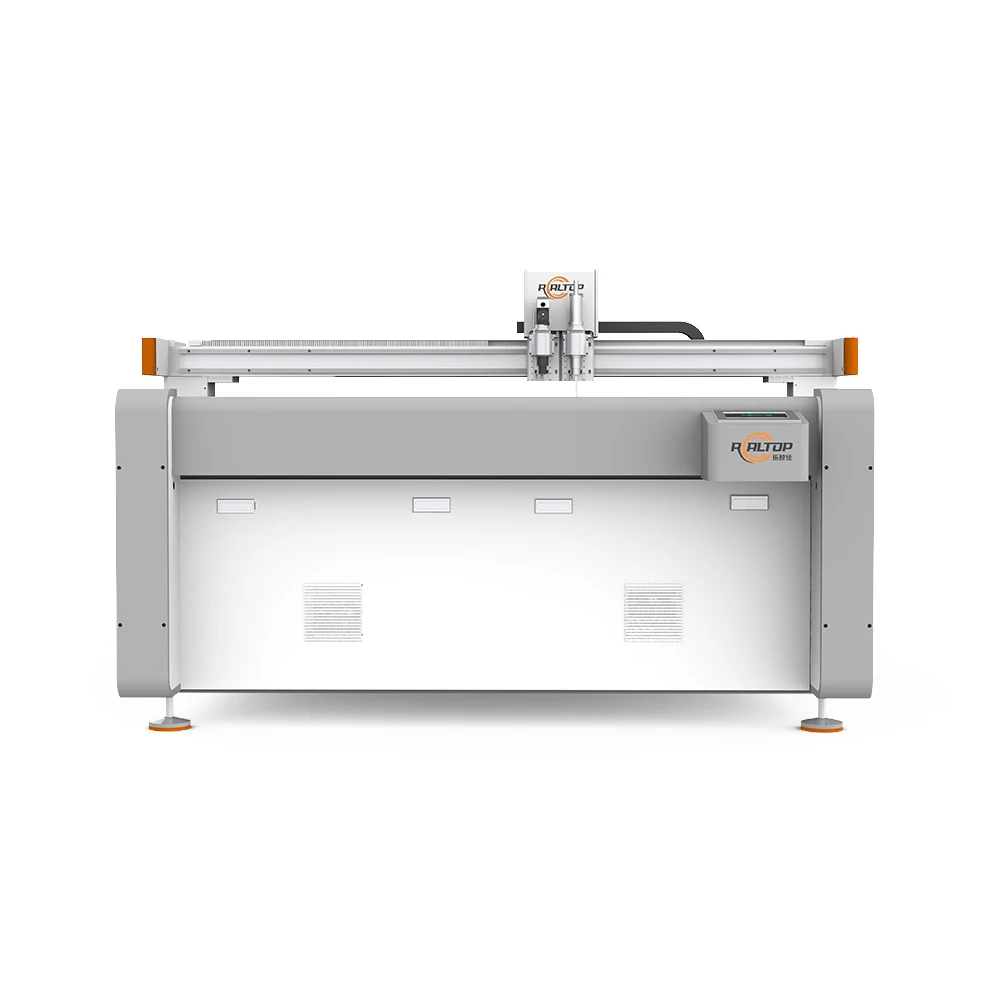
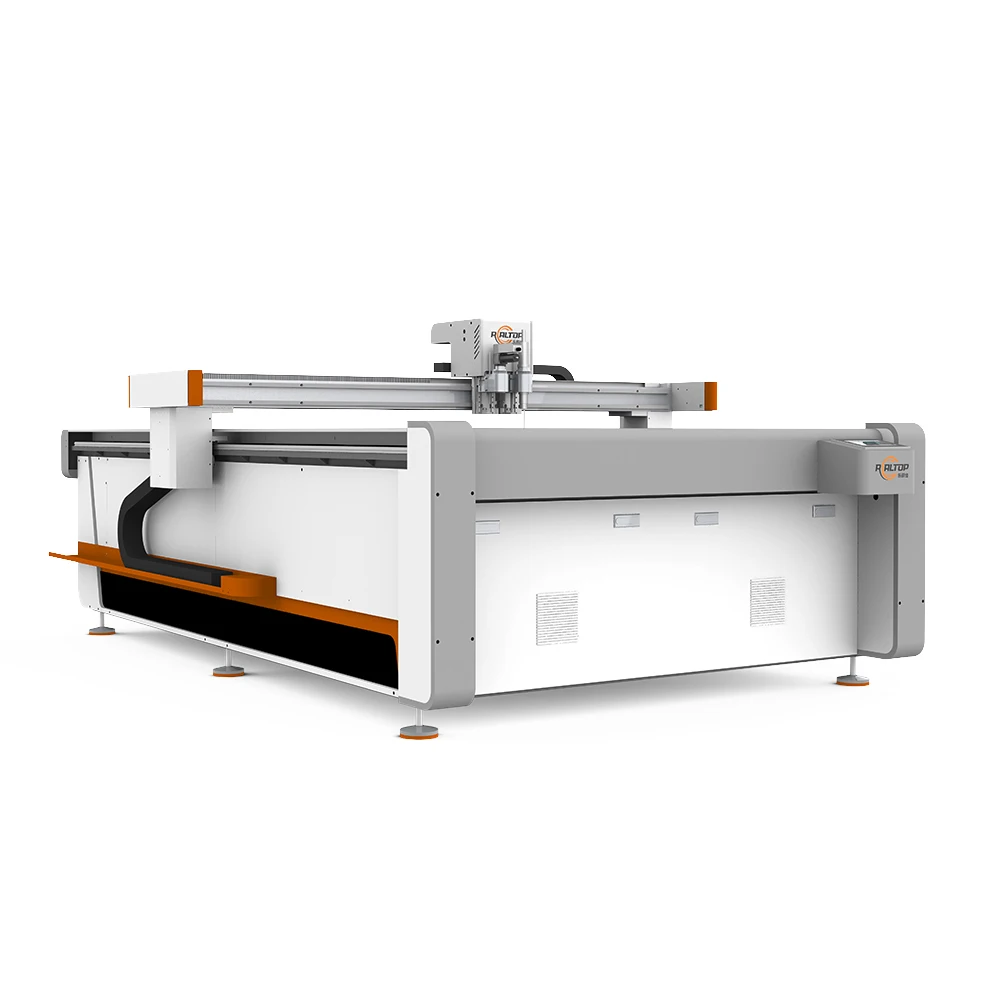
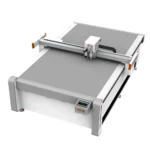
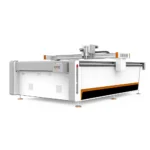
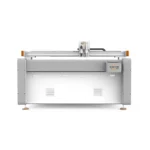
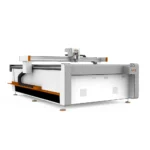
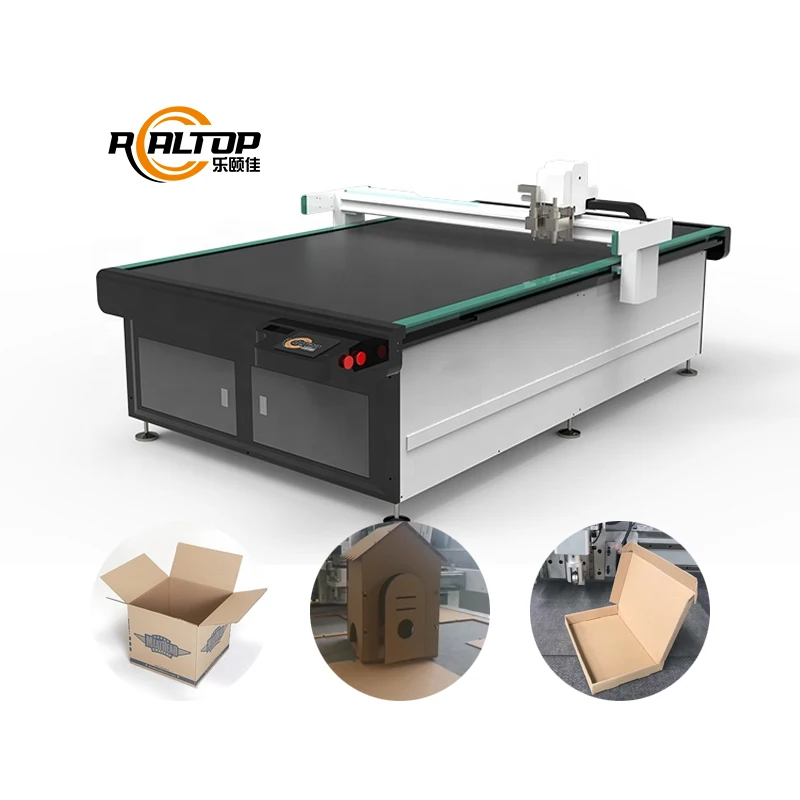
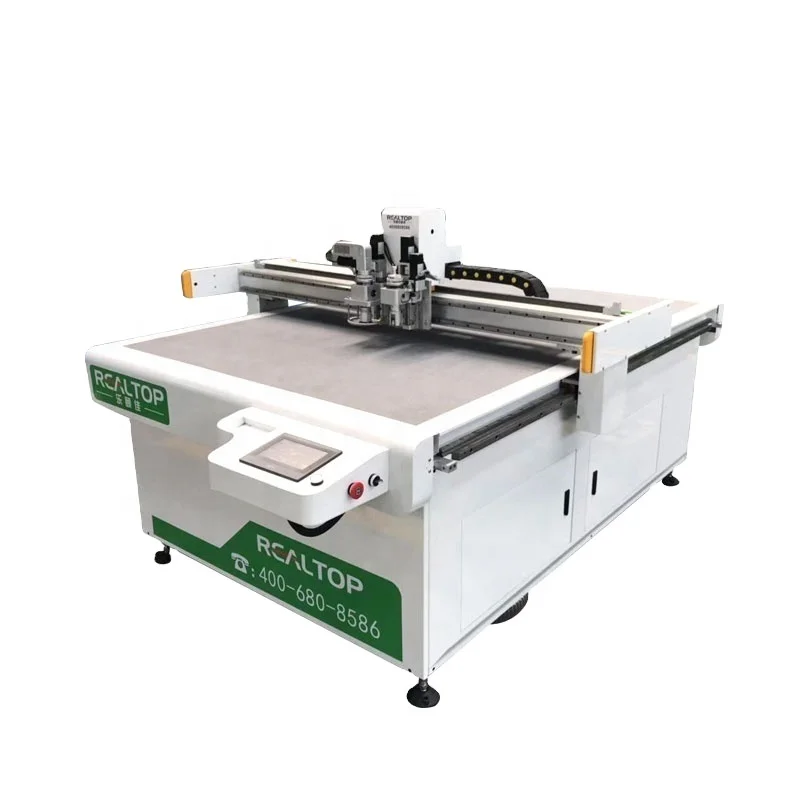
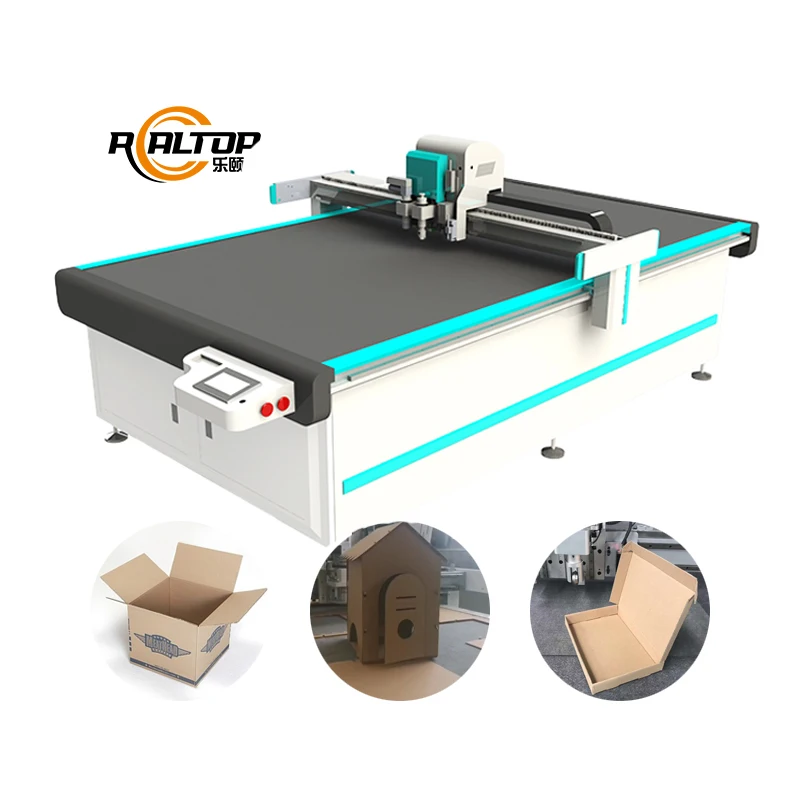
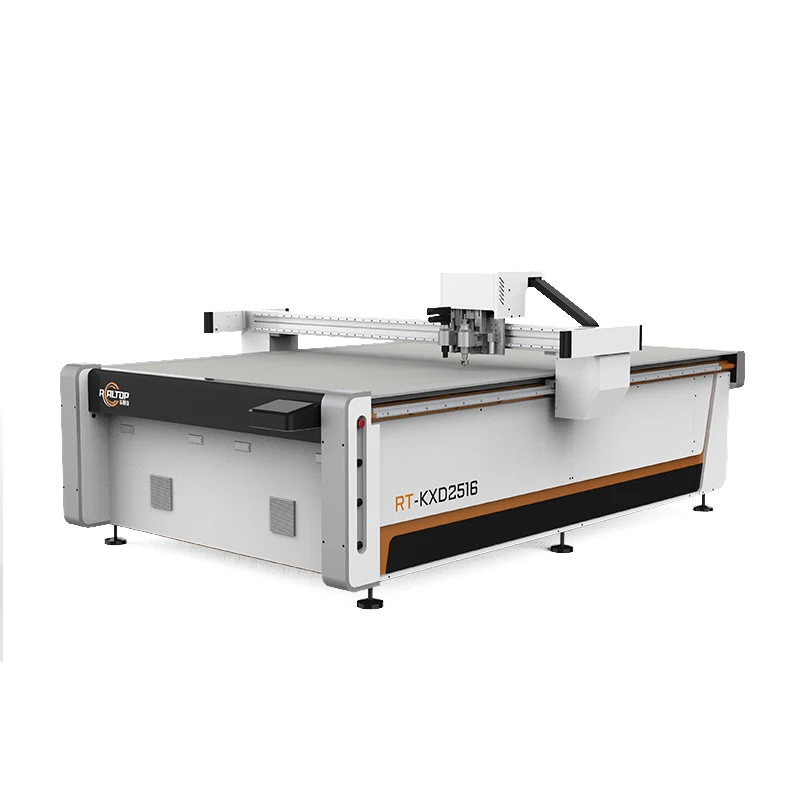
| Product Type | CNC Oscillating Knife Cutting Machine for Packaging |
| Working Area | 1600 × 2500 mm |
| Tool Head Options | Oscillating knife, Driven rotary knife, Creasing wheel, Kiss cutting tool, Pneumatic knife, Milling tool, V-groove knife |
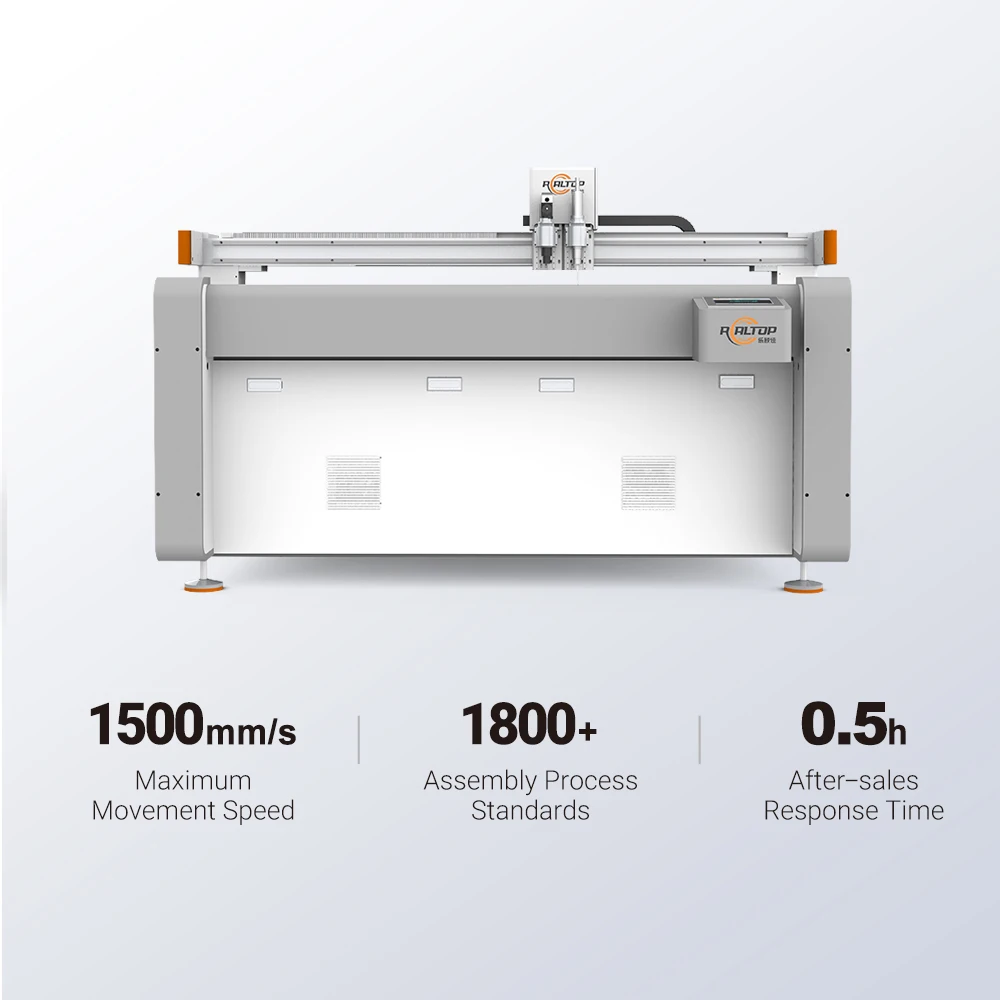
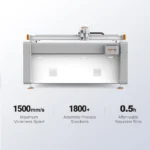
| Cutting Speed | 0 – 1500 mm/s |
| Cutting Thickness | Up to 40 mm (basis not stated in source — confirm material type and density) |
| Cutting Accuracy | ±0.1 mm |
| Vacuum Pump Power | 9 kW |
| Vacuum Table Type | Aluminum bellows vacuum table |
| Servo Motor Options | Panasonic, Delta, Dorna (rated power not stated in source) |
| Voltage Options | 110V, 220V, 380V (frequency not stated in source — confirm 50/60 Hz) |
| File Format Compatibility | PLT, DXF, AI, PDF |
| Control System | PLC control panel with optional display languages |
| Dedicated Software | Packaging box structure design software included |
| Safety Devices | Infrared sensor device, emergency stop |
| Machine Dimensions (L×W×H) | 3300 × 2100 × 1350 mm |
| Standards | CE |
Application Suitability
| Application | Material or Output |
|---|---|
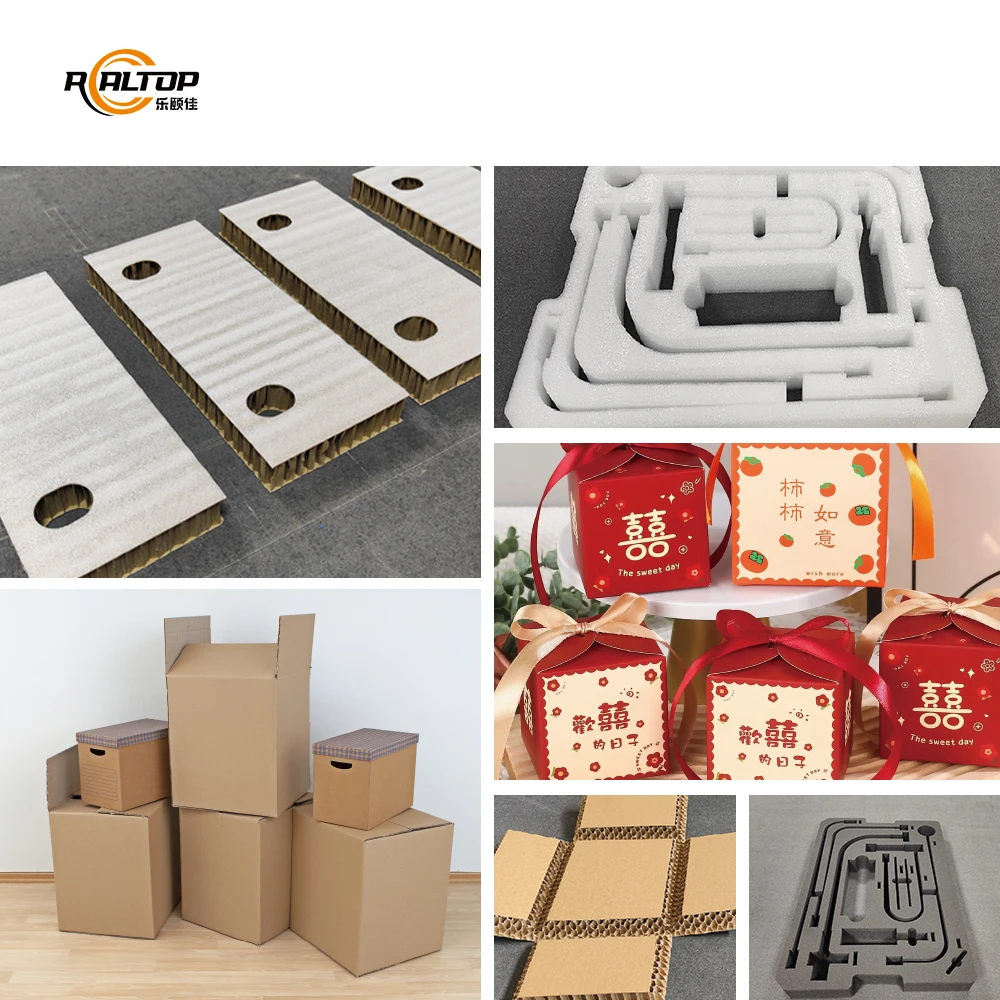
| Carton and corrugated box sample making | E-flute, B-flute, BC-flute corrugated board |
| Packaging prototype and short-run production | Greyboard, cardstock, art paper, specialty paper |
| Foam insert fabrication | EVA, EPE, PU foam stock |
| Protective packaging conversion | Rubber mat, velvet/fleece fabric, non-woven fabric |
| Thin plastic and leather processing | PVC, PET sheet, leather, synthetic leather |
| Composite material cutting | Adhesive-backed and multi-layer composite materials |
Why "Working Area" Alone Is the Wrong Starting Point for a CNC Oscillating Knife Cutting Machine Manufacturer
The cutting method must follow the material, not the table size.
Many packaging converters start their search by specifying a 1600×2500 mm bed and assume the rest will sort itself out. I have watched orders go sideways because the tool head was selected for standard single-wall corrugated, while the buyer was actually running triple-layer greyboard that crushes and delaminates under the wrong oscillation frequency. The machine arrives, the operator loads the board, and the edges crumble. Four days of downtime waiting for a replacement head to ship overseas. That is a procurement failure, not a machine failure. When evaluating any CNC oscillating knife cutting machine manufacturer, the first question should always be what you are cutting, how thick, and how many layers [NEED_CITE: common failure modes in CNC cutting procurement for corrugated packaging].
Matching the Tool Head to Board Grade and Flute Profile
A packaging operation rarely runs a single material. One week it is E-flute corrugated for retail boxes, the next it is 2 mm greyboard for luxury inserts. REALTOP’s engineering team specifies each tool head — oscillating knife, driven rotary, creasing wheel, V-groove, or kiss cutting — against the declared material set before the machine enters production. The creasing wheel, for example, must be matched to flute height so the fold line scores cleanly without cracking the liner. This is the kind of configuration detail that only a CNC oscillating knife cutting machine manufacturer with an in-house design team can control from the quoting stage onward.
Vacuum Table Zoning for Small Parts and Nested Layouts
When a corrugated converter nests dozens of small tray components across a 1600×2500 mm bed, standard full-surface vacuum can leave the smallest parts lifting during the final cuts. The aluminum bellows vacuum table is divided into zones that can be activated independently, holding only the area under active material. This zoning layout is confirmed against the buyer’s smallest part geometry during the sample cutting phase, not after installation. Proper adsorption across the working area keeps registration tight, which matters when the tolerance target is ±0.1 mm [NEED_CITE: vacuum table zoning requirements for small-part CNC cutting].
Reading the Specs That Actually Matter on the Floor
Cutting speed rated at 0–1500 mm/s tells you the servo system’s range, but what matters in production is how the machine behaves at speed on your specific flute. A BC-flute board demands a different oscillation frequency and downward pressure than art paper cardstock, and the PLC control system stores these profiles so operators can switch jobs without manual recalibration. The 9 kW vacuum pump provides the suction needed to hold thick corrugated sheets flat across the full aluminum table surface, while servo motor options from Panasonic, Delta, or Dorna are specified based on the torque requirement of the configured tool head combination. File format compatibility across PLT, DXF, AI, and PDF means the dedicated packaging box structure design software integrates directly with most existing design workflows without an intermediate conversion step.
The Hidden Cost of Skipping the Sample Cut
A buyer once sent me specifications for a standard corrugated carton cutter. Everything on paper matched. But when I asked him to mail actual board samples, I found he was running a coated duplex stock that the standard oscillating knife shredded on every pass. We switched to a pneumatic knife with adjusted downstroke pressure, tested it, and documented the edge quality before the machine left the factory. Skipping that sample step means discovering the mismatch at your loading dock instead of ours. Wrong tool head selection on composite or coated materials produces ragged edges, crushed foam cores, or delaminated layers — all of which look fine in a brochure but fail under production conditions [NEED_CITE: edge quality standards for die-cut alternative packaging converting].
Why Procurement Teams Source This Machine Here
REALTOP maintains in-house design and production for both the frame construction and the cutting tool logic, so a packaging converter is not forced to adapt a standard woodworking or textile platform for corrugated work. The tool head and table configuration are specified per material and production volume rather than pulled from a default catalog page. CCD camera positioning for printed contour work is confirmed against the buyer’s actual printed marks at running speed before the order is finalized. Software compatibility is verified against the buyer’s existing file formats and nesting workflow. Voltage, plug type, and control panel language are locked in during the specification phase so the operator sees a familiar interface on day one.
Documentation & Verification
- Machine specification sheet listing each tool head and table zone matched to your declared board grades
- Electrical schematic with voltage and frequency confirmation matched to your facility supply
- Sample cutting report on your own corrugated or foam stock documenting edge quality
- Factory test record with packing photographs before dispatch
- Packaging box structure design software licence with file format compatibility note
- Spare parts list with part numbers for each configured tool head
Installation, Commissioning & Support
- Level concrete floor required to support the 3300×2100×1350 mm frame footprint and dynamic cutting loads
- Dedicated circuit matching confirmed voltage option (110V, 220V, or 380V) with proper grounding for the 9 kW vacuum pump
- Machine ships in modular sections; on-site reassembly covers gantry, table, and control panel connection
- First-run commissioning includes PLC parameter loading for your specific board profiles and vacuum zone mapping
- Operator training covers tool head changeover, software nesting workflow, and emergency stop protocol
- Wearing parts kit includes oscillating blades, creasing wheels, and vacuum seals specific to your configuration
What to Include in Your Next Inquiry
Send the specific board grades, flute types, and foam densities you plan to run, along with typical sheet dimensions and daily volume targets. If your facility operates on a non-standard voltage or frequency, include that early so the electrical configuration is locked before production starts. And if you want a sample cut on your own material before committing, ship a few sheets to our factory — we will test, document, and report back before quoting.
Frequently Asked Questions
Q: How does the design team match tool heads to my specific board grade?
A: REALTOP engineers review your material samples, thickness range, and flute profile before recommending a tool head combination. The oscillating knife handles standard corrugated, while the pneumatic knife or driven rotary suits coated or dense boards. Creasing wheels are matched to flute height for clean fold lines without liner cracking.
Q: Can the factory customize the frame size or control system for my facility?
A: OEM capability covers working area dimensions, frame construction, servo motor brand selection, and PLC language configuration. Each customization is documented in the specification sheet and confirmed before the machine enters production, so the delivered unit matches your floor space and operator environment.
Q: How are voltage and control language confirmed before production?
A: During the specification phase, the buyer provides facility voltage, frequency, and plug type along with the preferred control panel language. These are recorded on the electrical schematic and the configuration checklist, both signed off before any fabrication begins at the core factory.
Q: Can I send my own packaging material for a sample cutting test?
A: Yes. Buyers are encouraged to ship actual corrugated board, greyboard, or foam stock to the factory. The engineering team runs a sample cut, documents edge quality and dimensional accuracy, and provides a written report so you can evaluate real results on your own material before placing an order.
You may also like

商品评价
Clear filtersThere are no reviews yet.