



-
 Courier delivery
-
 DHL Courier delivery
-
 Warranty 1 year
-
 Free 30-Day returns

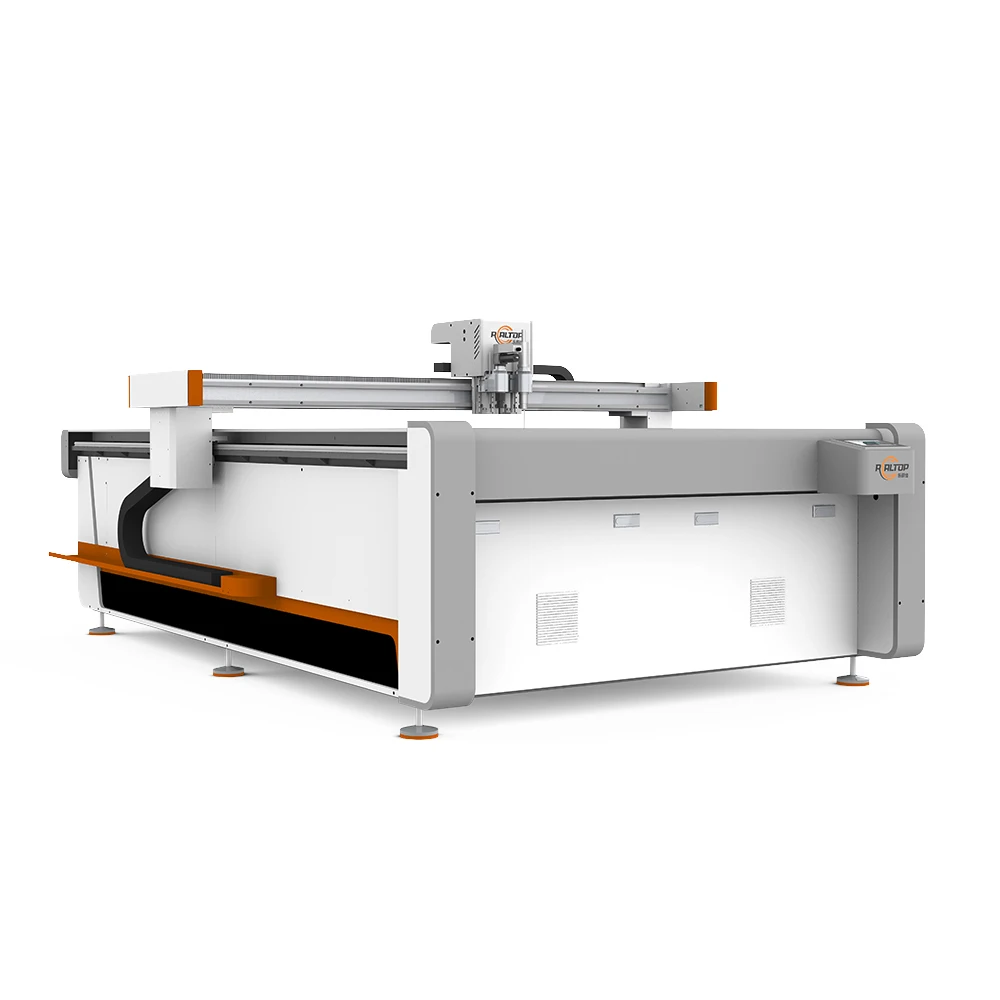
Integrated Knife and Laser Design — Real-top engineering covers both cutting methods, so a corrugated box plant or a gasket shop gets the process that fits their stock, not whatever one machine happens to do.
Technical Specifications
| Parameter | Value |
|---|---|
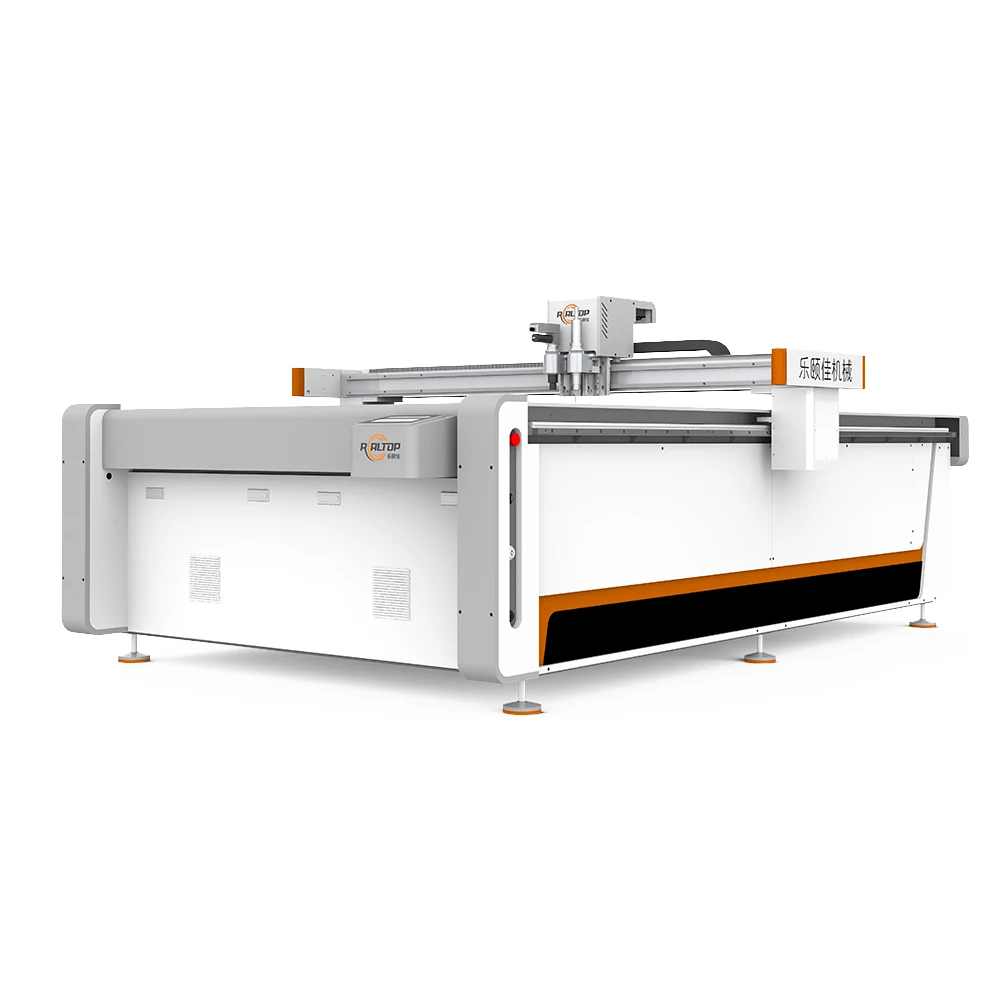
| Product Type | CNC Oscillating Knife Cutting Machine |
| Working Area | 1600 x 2500 mm |
| Machine Size | 3450 x 2300 x 1250 mm |
| Rated Power | 9 kW |
| Vacuum Pump | 7.5 kW |
| Translational Velocity | 800 – 2000 mm/s |
| Cutting Speed | 200 – 800 mm/s (material dependent) |
| Cutting Thickness | Up to 100 mm (basis to be confirmed) |
| Repeated Accuracy | ≤ 0.1 mm |
| Transmission System | Digital servo motor, linear guide, synchronous belt, ball screw |
| Table Type | Flat working table or auto-feeding conveyor option |
| Servo Motor Option | Delta servo motor or Japan-made alternative |
| Guide Rail | Taiwan Hiwin rail |
| Conveyor Belt | Germany-imported belt on feeding models |
| Voltage | 380 V ±10 % |
| Instruction System | HP-GL compatible format |
| Control Panel | Touch screen, multiple languages supported |
| Software Compatibility | PLT, DXF, AI and similar vector formats |
| Visual Positioning Option | Small CCD mark-point, panoramic camera, or projection positioning |
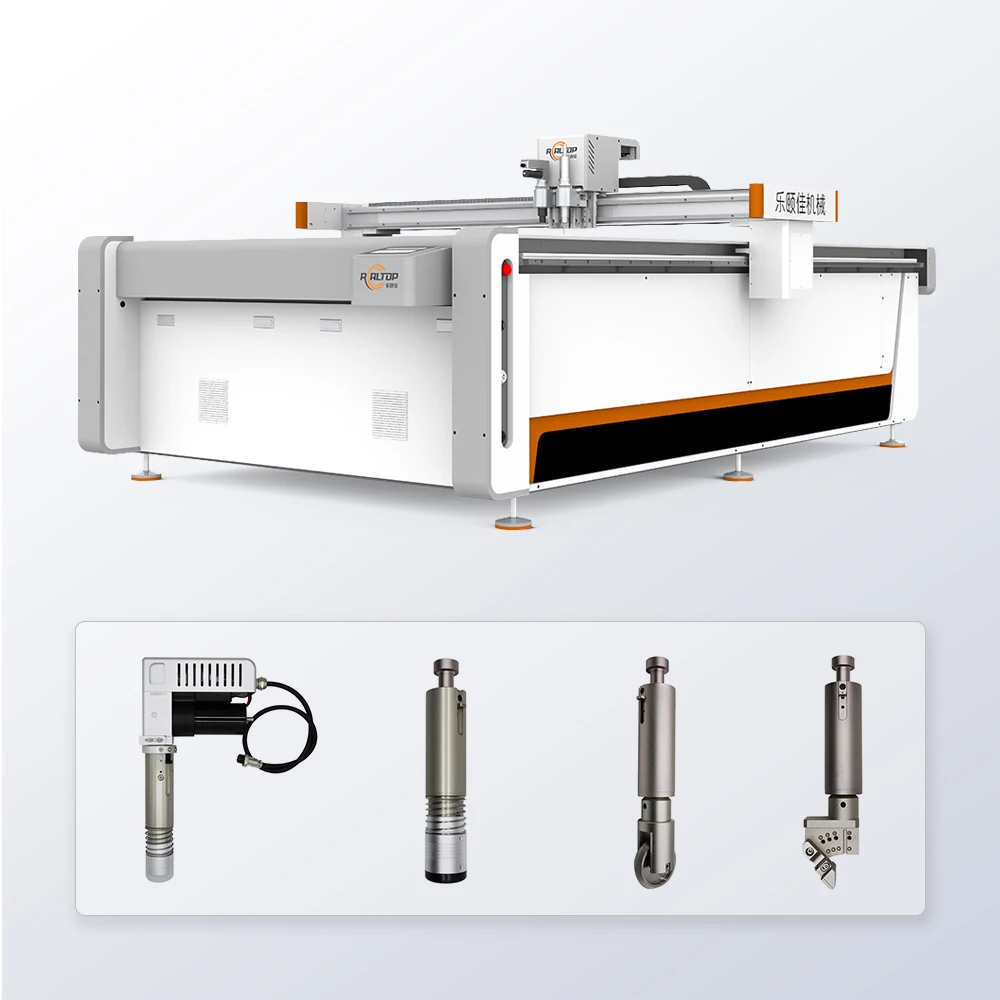
| Tool Head Options | Oscillating knife, pneumatic knife, high-power vibrating knife, circular knife, V-cutting knife, drag knife, creasing wheel, dotted-line knife, punch, brush |
| Vacuum Table | Aluminum air-box platform, integrated or split zoning |
Application Suitability
| Application | Material or Output |
|---|---|
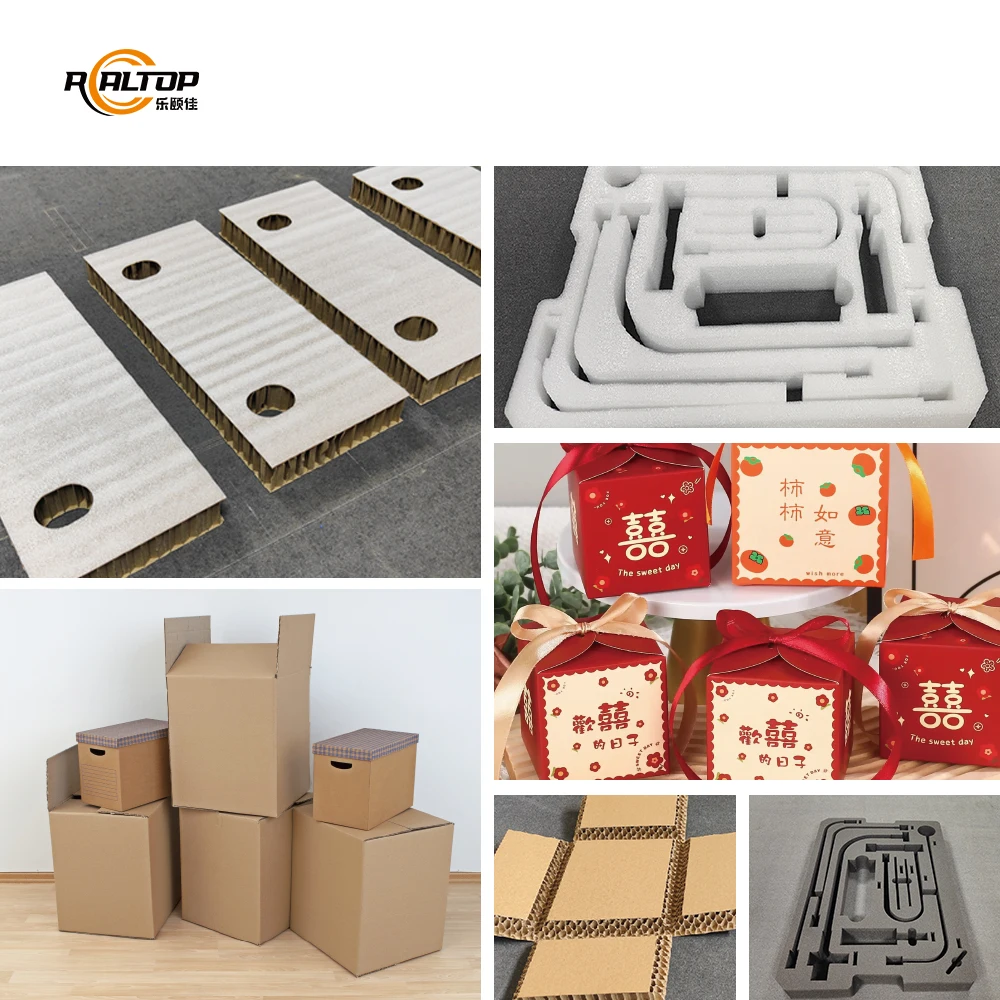
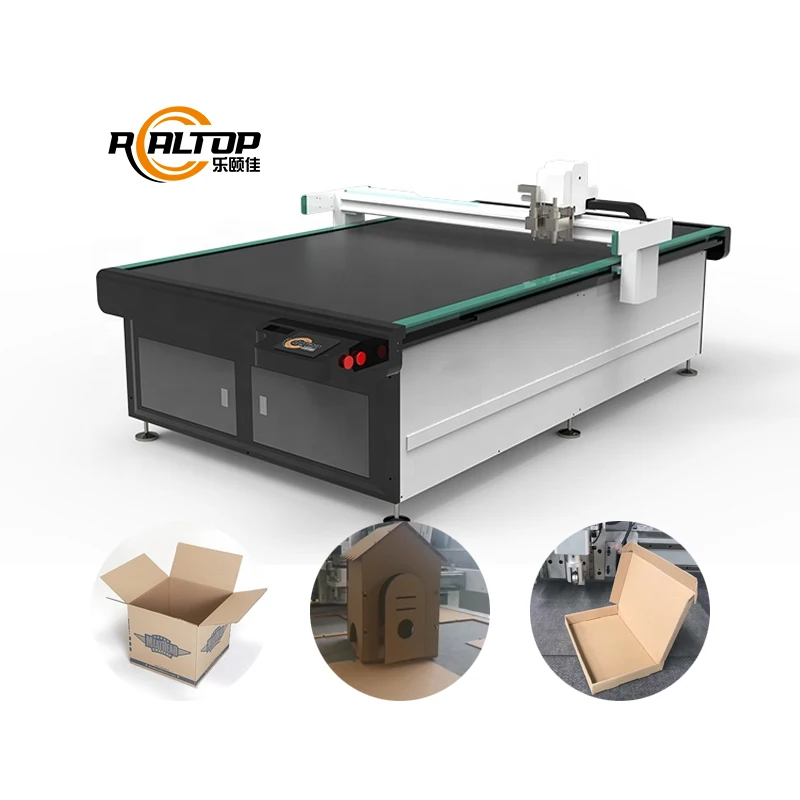
| Carton and packaging sample making | Corrugated cardboard, honeycomb board, greyboard up to several millimetres thick |
| Plastic box and blister sample work | PVC sheet, PP corrugated, PET |
| Advertising and signage production | Foam board, vinyl, corrugated plastic, acrylic-backed composites |
| Automotive interior and gasket cutting | Sponge composite leather, PU, EVA, XPE, rubber, PTFE, ETFE |
| Footwear and leather goods | Natural and synthetic leather, textile, non-woven fabric |
| Composite and foam fabrication | Carbon fiber prepreg, fiberglass, foam board, silicone |
When the Sample Board Isn’t the Board You Actually Run
A cutting machine proved on standard single-wall corrugated can still fail on the dense double-wall stock that reaches your line every morning.
I once watched a carton plant accept a CNC oscillating knife cutting machine based on a clean sample cut from the vendor’s demo sheet. When their own 3-ply honeycomb arrived, the knife stalled, the vacuum hold-down let edges drift, and the entire parameter set had to be rebuilt over several on-site days. That gap between demo material and daily production material is where most disputes start [NEED_CITE: buyer dispute frequency in packaging machinery commissioning]. Specifying tool head, vacuum zoning, and feed rate against the buyer’s actual stock removes that gap before the crate is nailed shut.
Why Tool Head Selection Is a Material Conversation, Not a Menu
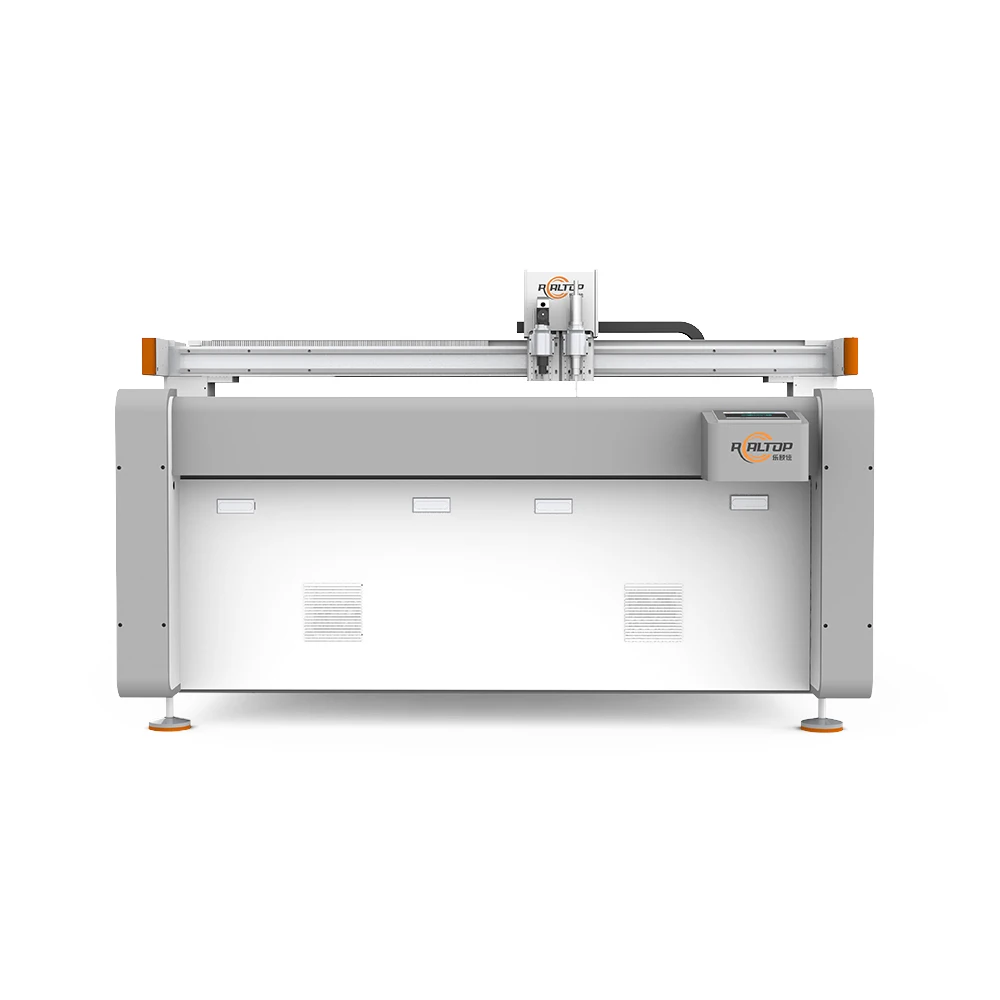
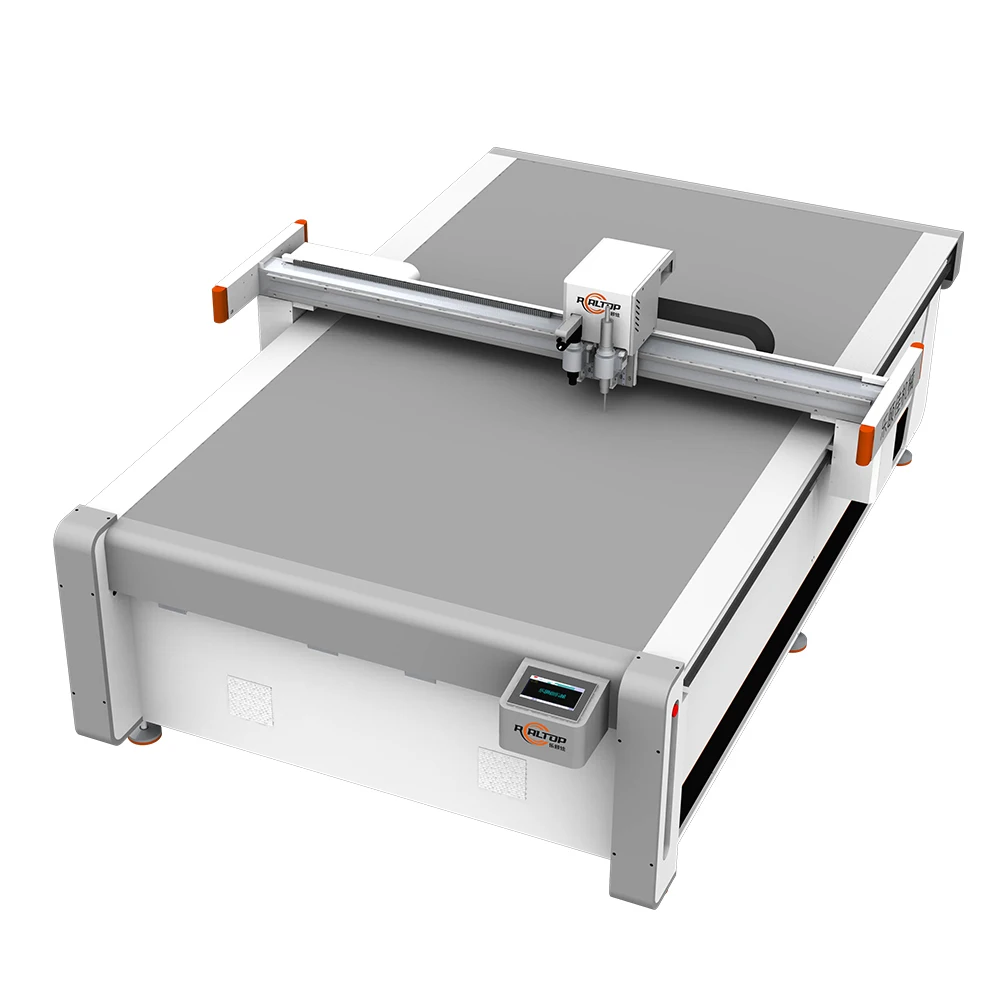
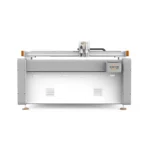
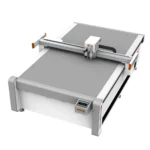
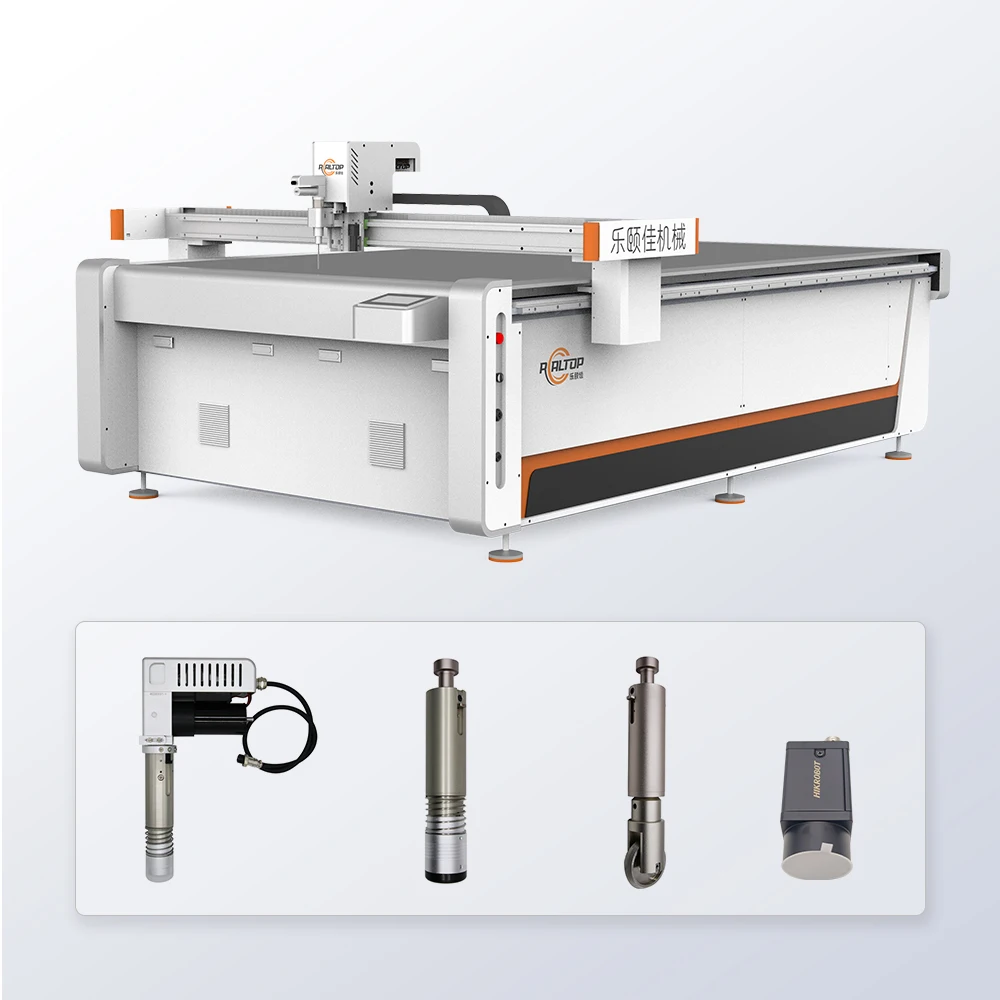
The Swiss-imported oscillating head on this platform handles full cutting, half cutting, and cursor location, but that is only one entry on a list that also includes a creasing wheel for fold lines, a V-cutting knife for mitred folds, and a pneumatic knife for heavier composites. A packaging sample house switching between 2 mm greyboard and 8 mm foam needs two of those heads on the same gantry, specified before assembly, not retrofitted after delivery. Real-top builds the gantry to accept the combination the buyer’s material mix demands, which keeps the CNC oscillating knife cutting machine manufacturer from shipping a one-tool solution into a multi-material workflow.
Frame Rigidity and the Accuracy Buyers Actually Measure
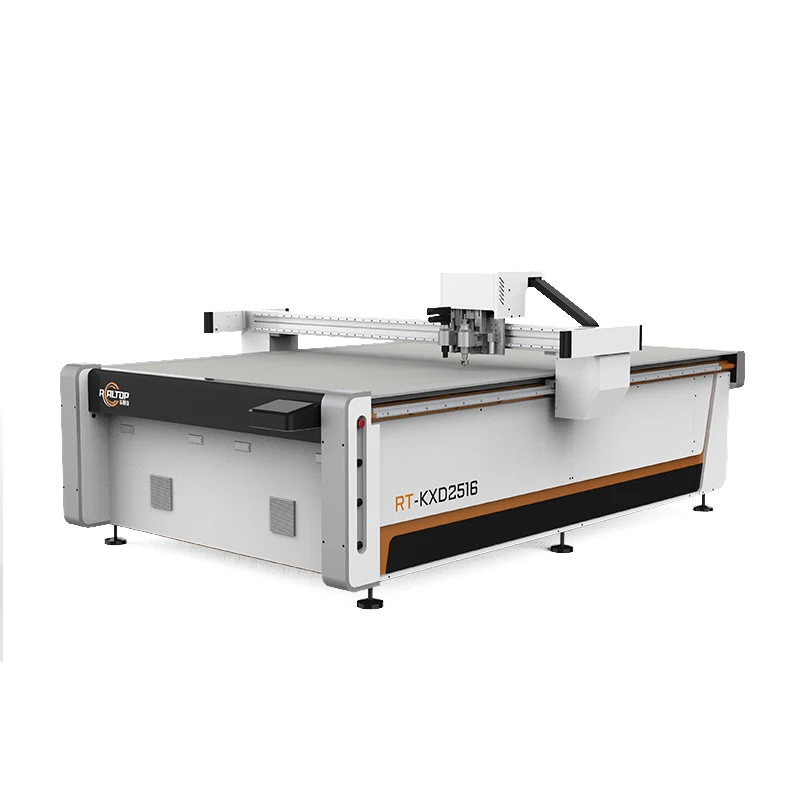
A thick-walled seamless steel welded frame, put through high-temperature tempering and finished on a CNC machining centre, is the reason the RT-D2516 holds ≤ 0.1 mm repeatability across a 2500 mm stroke. In a sample room where a single prototype can determine a packaging contract, that repeatability shows up as crease lines landing exactly on the printed score, batch after batch. An IP67 servo motor with vibration suppression and real-time gain adjustment keeps the carriage steady when the knife meets a density change mid-sheet, which is where cheaper drives tend to introduce visible chatter marks [NEED_CITE: servo vibration suppression in digital flatbed cutting].
What the Numbers in the Spec Sheet Actually Mean on the Shop Floor
The 7.5 kW vacuum pump paired with an aluminum air-box platform matters most when a nest of small carton blanks leaves large gaps between parts; split zoning lets the system pull vacuum only where material is present, preventing lift at the edges. A cutting thickness figure of up to 100 mm only applies to low-density foams — on dense honeycomb cardboard the practical limit is considerably lower, which is why sample cutting on the buyer’s own stock is a non-negotiable step. The 800–2000 mm/s translational speed is traverse, not cutting speed; actual cutting sits at 200–800 mm/s depending on fibre direction and resin content. Buyers comparing machines on the higher number alone will find their cycle times look nothing like the brochure.
The Hidden Cost of Skipping the Voltage and Language Check
Specifying a 380 V ±10 % machine for a workshop that runs on a 415 V local supply without a stabiliser leads to servo faults that show up only after the warranty clock has started. Control panels on this platform support English, Russian, Italian, Chinese, and custom languages, but the language has to be confirmed before the HMI is flashed — changing it on site means a firmware reload and a day of lost production. Plug type, frequency, and earth-loop requirements are the kind of details that belong on the electrical schematic sent before shipment, not on a troubleshooting call from the commissioning engineer [NEED_CITE: voltage and frequency standards by export market].
Why Procurement Teams Source This Platform Here
In-house design covers both knife and laser cutting technologies, so a buyer producing mixed-material packaging can match the method to the stock instead of forcing one process across everything. The tool head and table configuration is written into the order against a specific material list, not left as a generic default. CCD camera positioning — small mark-point or panoramic — is confirmed against the buyer’s print registration method before the camera is mounted. Software file-format compatibility is checked in the sample room, where the buyer’s own DXF or AI files are nested and cut before any commitment is made. Factory testing runs the buyer’s actual material through a full shift cycle, producing a test record that ships with the crate.
Documentation & Verification
- Machine specification sheet listing the exact tool heads and vacuum zoning ordered
- Electrical schematic confirming voltage, frequency, and plug type for destination country
- Sample cutting report produced on the buyer’s own cardboard or composite stock
- Factory test record showing repeatability measurements before dispatch
- Operation and maintenance manual in the confirmed control language
- Spare parts list with part numbers for knives, belts, and vacuum cups
Installation, Commissioning & Support
- 3450 x 2300 mm footprint requires a level concrete floor capable of supporting the frame plus dynamic cutting loads
- 380 V ±10 % three-phase supply with a dedicated breaker sized for the 9 kW rated load plus the 7.5 kW vacuum pump
- Gantry and table ship in one crate; re-assembly limited to conveyor belt tensioning and cable connections
- First-run parameter tuning performed on the buyer’s actual sheet stock and documented in the commissioning report
- Touch-screen operator training covers nesting software, tool-change routine, and vacuum-zone assignment
- Consumables kit includes Swiss oscillating blades, creasing wheel inserts, and spare vacuum cups
What to Send with Your Inquiry
Share the exact material grades, thicknesses, and sheet sizes you run most days, plus the daily volume the sample room or production line has to absorb. Confirm the local voltage and frequency, the control language your operators will read, and whether your existing nesting software outputs PLT, DXF, or AI. If your stock includes printed sheets requiring contour recognition, send a sample print so the correct CCD option can be matched before the quotation is finalised.
Frequently Asked Questions
Q: How does the factory verify build quality before shipping a packaging cutting table?
A: The welded steel frame undergoes high-temperature tempering and is finished on a CNC machining centre to secure flatness across the 1600 x 2500 mm working area. Every unit runs a factory test cycle using the buyer’s material, and the resulting test record, including repeatability measurements, ships inside the documentation pack.
Q: What OEM capability is available for branding and electrical customization?
A: The platform supports OEM branding on the gantry and control panel, voltage configuration matched to the destination market, and control-language flashing in English, Russian, Italian, Chinese, or a custom language. All electrical changes are captured on the schematic sent to the buyer for sign-off before the machine enters final assembly.
Q: How are tool heads matched to a specific packaging material mix?
A: The buyer provides the full list of stocks — corrugated grades, honeycomb, PVC, foam — and the engineering team specifies which combination of oscillating knife, creasing wheel, V-cutting knife, or drag knife the gantry will carry. Sample cuts on each material confirm edge quality and cycle time before the order is locked.
Q: Can I send my own material for a cutting sample before committing?
A: Yes. The standard process requires the buyer to ship representative sheets, which are cut, creased, and nested in the sample room. A sample cutting report documenting knife type, speed, vacuum pressure, and edge result accompanies the quotation so the buyer can compare against their current method.
Q: What documentation comes with the machine?
A: The pack includes the machine specification sheet, electrical schematic, CE declaration where applicable, factory test record, operation and maintenance manual in the agreed language, software licence and file-format note, and a spare parts list with identifiable part numbers for reordering.
You may also like

商品评价
Clear filtersThere are no reviews yet.