


-
 Courier delivery
-
 DHL Courier delivery
-
 Warranty 1 year
-
 Free 30-Day returns

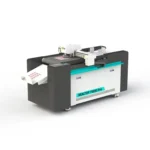
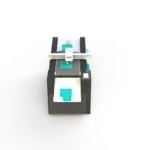
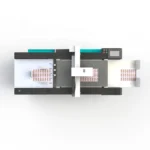
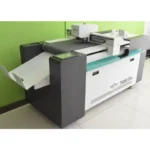
Factory-Built Core Frames — The RTT-6080 series is engineered and assembled in our Jinan facility, where every linear rail and servo mount is checked for parallelism before the CCD gantry is ever bolted on, ensuring distributors receive a plotter that meets spec without rework.
Technical Specifications
| Parameter | Value |
|---|---|
| Model | RTT-6080 / RTT-6080 Pro |
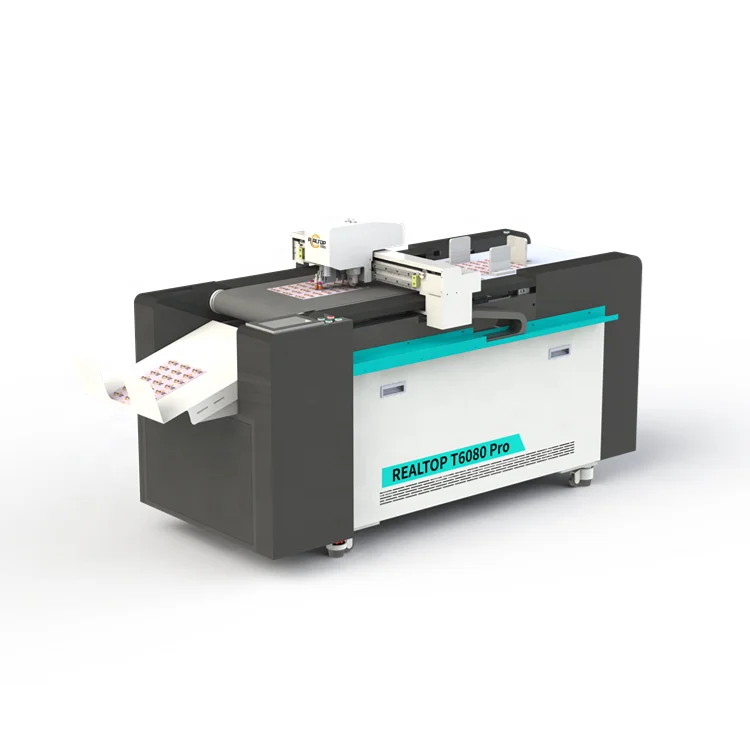
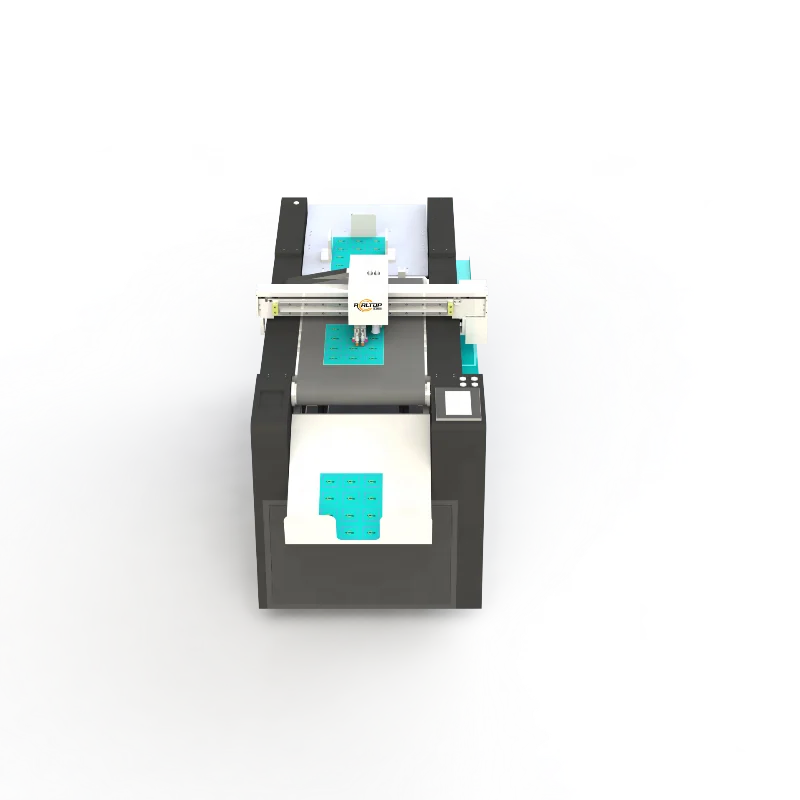
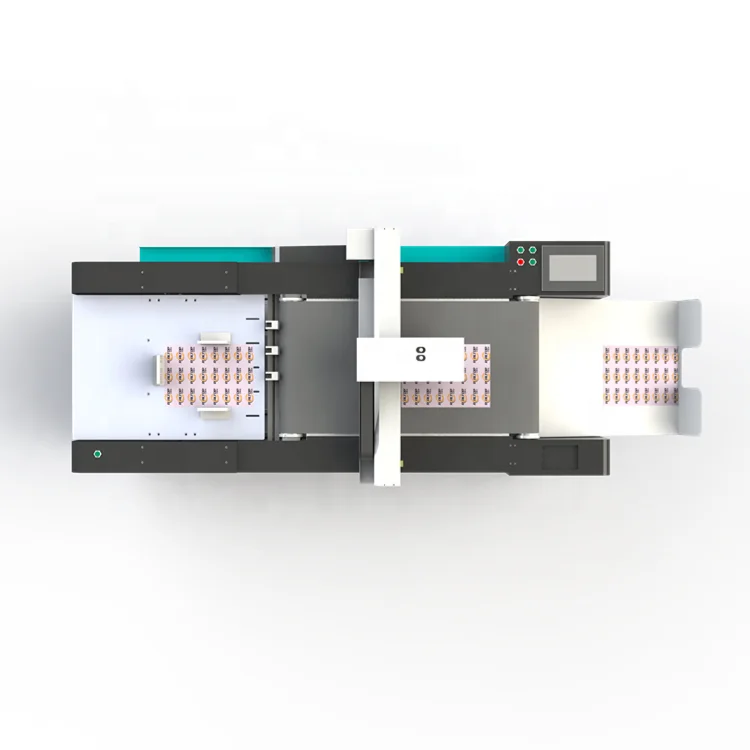
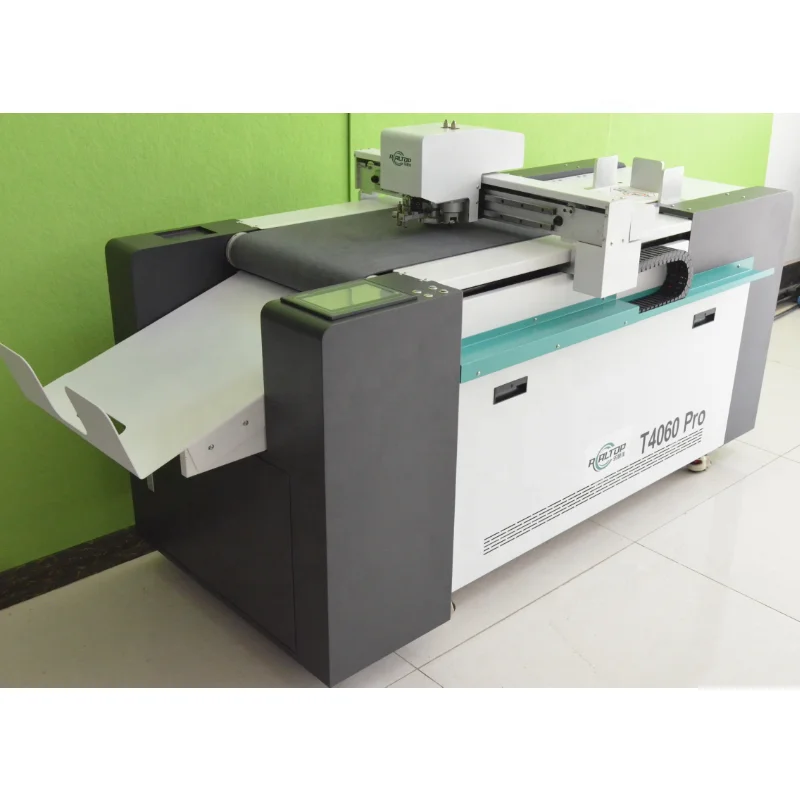
| Product Type | CNC Sticker Cutting Plotter with Contour Reader |
| Max Working Area | 600mm × 800mm |
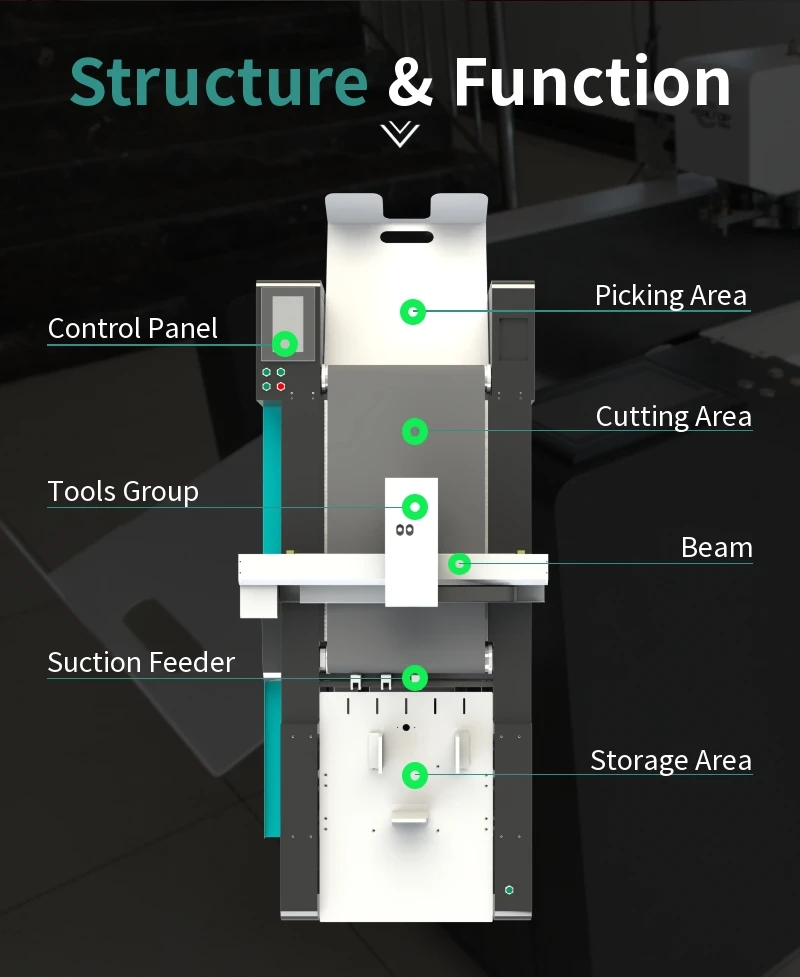
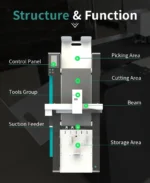
| Tool Group | Cutting tool, kiss cutting tool, creasing tool, CCD camera, high speed oscillating knife (Pro model only) |
| Max Cutting Speed | 1500mm/s (according to the material) |
| Cutting Thickness | ≤2mm (RTT-6080); ≤5mm (RTT-6080 Pro) |
| Positioning Accuracy | 0.05mm |
| File Format | DXF, PLT, PDF, AI |
| Transfer Method | Ethernet port |
| Rated Power | 3.2kW |
| Voltage | 220V/380V, 50Hz |
| Key Features | CCD contour recognition, multi-tool head configuration, Ethernet connectivity, CE referenced |
Application Suitability
| Application | Material or Output |
|---|---|
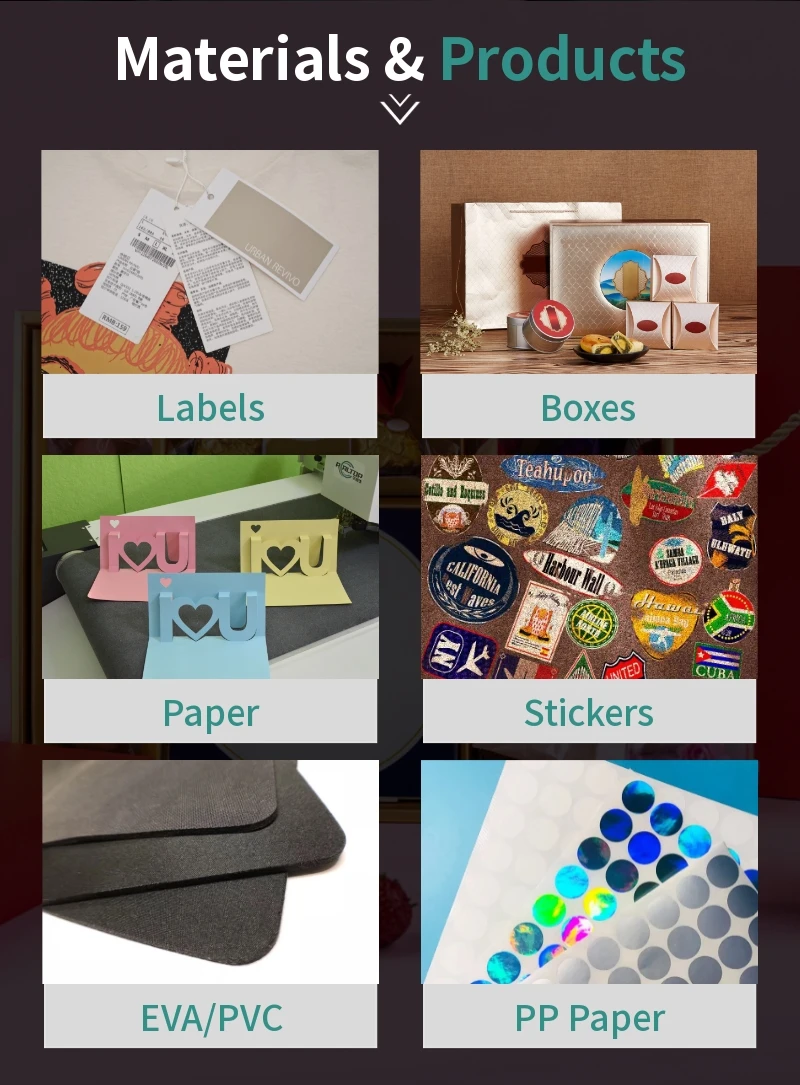
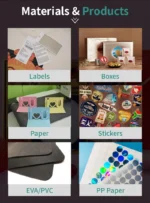
| Sticker and label contour cutting | Printed adhesive vinyl sheets requiring precise edge tracing |
| Packaging sample making | Thin folding carton, corrugated board, and magnetic vinyl |
| Signage graphic trimming | Reflective films and laminated decals on composite backing |
| Flexible gasket prototyping | Thin rubber sheets and non-asbestos fiber material up to 2mm |
| Automotive badge and trim cutting | Double-sided foam tape and thin adhesive foam profiles |
When "Contour Recognition" Fails on the Shop Floor
A CNC Knife Cutting Machine factory or OEM partner knows the real test of a vision system is not the brochure spec but the printed sheet that just came off a digital press with slight color variation and registration drift. We validate CCD tracking on the buyer’s actual printed stock before the crate is closed.
I have watched contour systems that performed perfectly on our in-house calibration sheets completely lose registration when faced with a client’s specific ink density and laminate gloss. The camera could not distinguish the registration mark from background noise at cutting speed, and the operator spent the entire shift babysitting the feed. That failure is why every RTT-6080 and RTT-6080 Pro leaving our Jinan floor runs a live print sample provided by the buyer, and the threshold and light source settings are locked only after the cuts track cleanly across the full 600mm × 800mm bed. [NEED_CITE: challenges with gloss laminate interfering with optical mark recognition]
Frame Rigidity and Motion Component Selection
Distributors evaluating a CNC Knife Cutting Machine factory or OEM source need to know what holds the gantry steady when the oscillating knife cycles at high frequency through dense vinyl. The RTT-6080 series frame is welded and stress-relieved before machining, which keeps the linear rail seats coplanar under the dynamic load of the Pro model’s high-speed oscillating knife. When the frame twists even fractionally, the CCD camera and the blade tip drift apart, and contour accuracy degrades across the working area.
Tool Head Configuration Matched to Material Stack
The standard RTT-6080 carries a cutting tool, kiss cutting tool, creasing tool, and CCD camera, handling materials up to 2mm thick, which covers the majority of adhesive vinyl, sticker sheets, and thin carton sample work. The RTT-6080 Pro adds a high-speed oscillating knife, extending cutting thickness to 5mm and enabling denser foam gaskets and multi-layer sticker stacks. Selecting the wrong tool head for the material produces ragged edges on vinyl or crushed fibers on carton, so we specify the tool group based on the buyer’s sample material before the build order is released. [NEED_CITE: oscillating knife frequency and stroke length impact on cut quality across material density]
Reading the Specs That Matter on the Production Floor
The 0.05mm positioning accuracy determines how tightly the CCD camera can follow a printed contour without leaving uncut bridges or cutting into the graphic, which is critical when die-cutting small labels where even a half-millimeter drift scrapes the design. The 1500mm/s maximum cutting speed is stated as material-dependent, meaning thin cast vinyl will run at the upper range while thicker adhesive foam requires a slower feed to maintain edge quality. The 3.2kW rated power covers the servo drives, vacuum pump, and spindle, so buyers need to confirm their workshop circuit can handle the continuous draw without voltage sag. Ethernet file transfer supports DXF, PLT, PDF, and AI formats, which avoids the common problem of a plotter that only accepts one proprietary format and forces the design team to rebuild every file.
The Cost of Skipping the Sample Cutting Step
Importers who order a plotter based solely on working area and quoted speed often discover the vacuum table zoning is insufficient for small sticker parts, causing the sheet to lift mid-cut and ruin the batch. Others find the CCD light source cannot penetrate their specific laminate, and recalibrating on-site requires a service visit that delays production by weeks. When voltage and plug type are not confirmed before shipment, the machine may arrive with a three-phase connection that does not match the buyer’s single-phase supply, adding a transformer cost that was never budgeted. [NEED_CITE: transformer and electrical adaptation costs for imported machinery]
Why Distributors Source the RTT-6080 Series From Our Jinan Floor
In-house design and production covering both knife and vision systems means the buyer can match the cutting method to the material rather than forcing one approach. Tool head and table configuration are specified per material and daily volume, so a label converter running thin vinyl gets a different setup than a gasket shop cutting 5mm foam. CCD camera positioning is validated on printed contour work with the buyer’s own ink and laminate before the machine is crated. Software compatibility and file format support are confirmed before the order is released, avoiding the scenario where the plotter arrives and cannot open the buyer’s existing nesting files. Voltage, control language, and plug type are customized to the target market, and sample cutting on the buyer’s own material is a standard gate before dispatch.
Documentation & Verification
- Machine specification sheet listing tool head options and bed configuration for RTT-6080 or RTT-6080 Pro
- Electrical schematic with voltage and frequency confirmation matching the destination market
- Factory test record showing CCD contour accuracy traced on the buyer’s printed sticker stock
- Software licence and file format compatibility note covering DXF, PLT, PDF, and AI workflows
- CE declaration referenced in the company documentation package where applicable
Installation, Commissioning & Support
- Confirm a dedicated 220V or 380V circuit rated for the 3.2kW continuous draw before delivery
- Level the 600mm × 800mm bed on a stable floor to preserve the 0.05mm positioning accuracy
- Ethernet port connection to the design workstation for immediate DXF and PLT file transfer
- CCD camera light source and threshold calibrated on-site using the buyer’s production print stock
- Oscillating knife stroke and frequency set during commissioning to match the target material thickness
- Spare cutting blades, kiss cutting tools, and CCD calibration targets included in the initial spares kit
Before You Send the Inquiry
To get a configuration that actually fits your production line, tell us the material type, thickness, and laminate you run, along with the maximum sheet size and daily cut volume. Confirm your local voltage, frequency, and preferred control language so the electrical and interface spec is locked before production starts. If you are evaluating us as an OEM partner, let us know your market requirements and whether you need custom branding or packaging documentation.
Frequently Asked Questions
Q: How is the CCD contour system calibrated and tested before shipment?
A: We run the buyer’s own printed sticker sheets through the RTT-6080 or RTT-6080 Pro and adjust the light source and recognition threshold until the camera tracks every registration mark cleanly across the full bed. A factory test record documenting this result ships with the machine.
Q: What is the difference between the RTT-6080 and RTT-6080 Pro configurations?
A: The RTT-6080 handles materials up to 2mm with standard cutting, kiss cutting, and creasing tools plus the CCD camera. The RTT-6080 Pro adds a high-speed oscillating knife, extending cutting capacity to 5mm for denser foam and multi-layer sticker stacks.
Q: Can voltage, plug type and control language be customized for my market?
A: Yes. The machine is built with either 220V or 380V at 50Hz, and the plug type is matched to the destination country. The control interface language is set during production so the operator panel reads in the local language on arrival.
Q: What file formats are supported and how is software compatibility confirmed?
A: The system accepts DXF, PLT, PDF, and AI files via Ethernet transfer. Before the order is released, we test your actual design files on the machine to confirm that contour paths, kiss-cut layers, and crease lines are interpreted correctly.
Q: What does the OEM and distributor partnership process look like?
A: We review your market requirements, agree on tool head configuration, voltage, branding, and documentation language, then build a sample unit for your evaluation. Once approved, production follows the same factory test gates as our standard machines.
You may also like

商品评价
Clear filtersThere are no reviews yet.