


-
 Courier delivery
-
 DHL Courier delivery
-
 Warranty 1 year
-
 Free 30-Day returns

Integrated Knife and Laser Engineering — our core factory builds both cutting platforms under one roof, letting you match the process to your material rather than compromise on one technology.
Technical Specifications
| Parameter | Value |
|---|---|
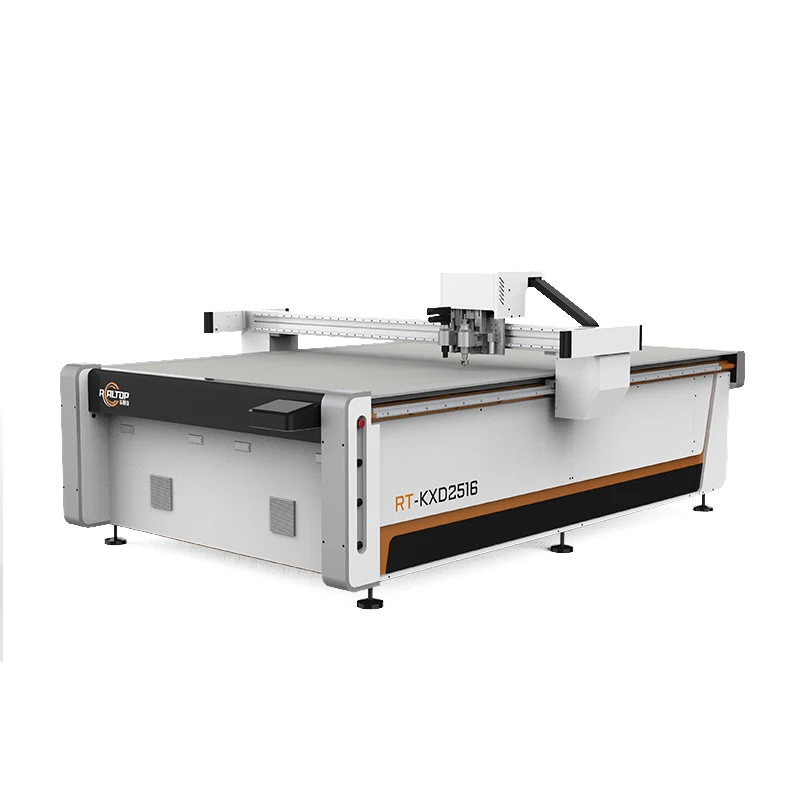
| Model | RT-D2516 / RT-S2516 |
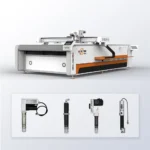
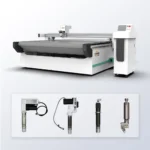
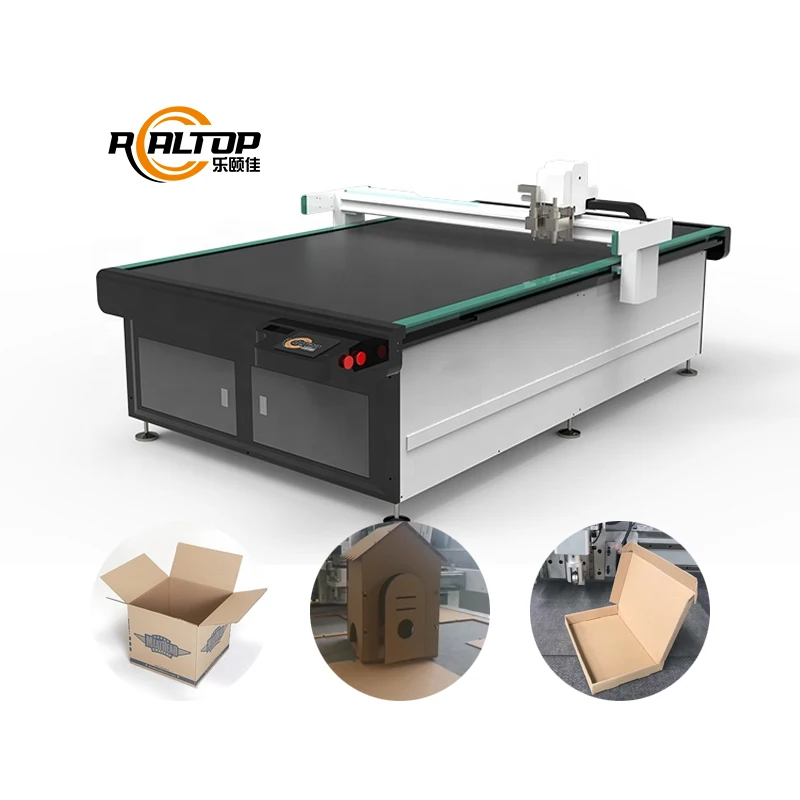
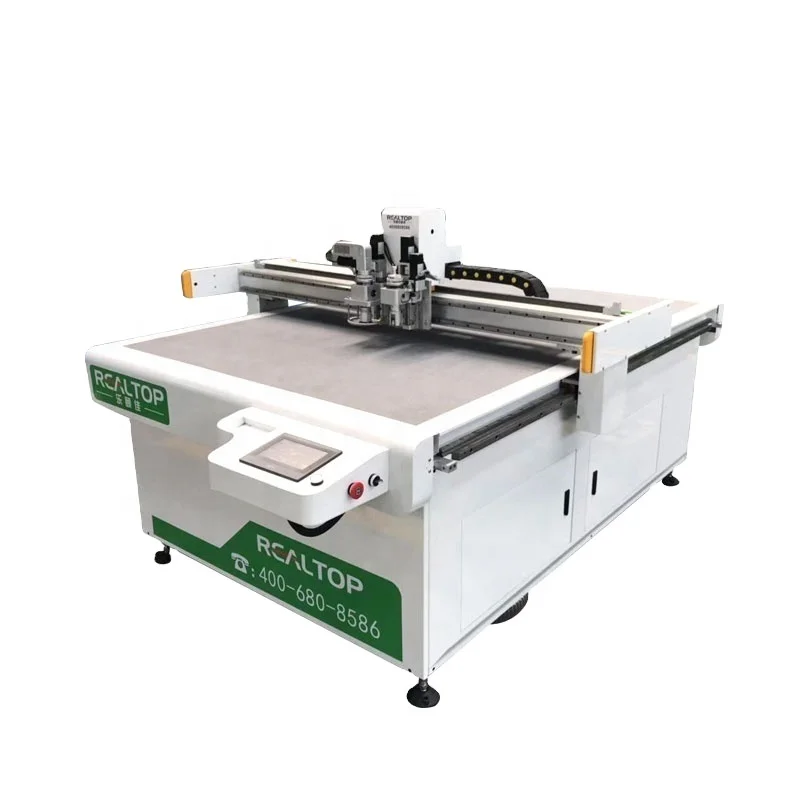
| Product Type | CNC Oscillating Knife Cutting Machine |
| Working Area | 1600 × 2500 mm |
| Machine Size | 3450 × 2300 × 1250 mm |
| Rated Power | 9 kW |
| Voltage | 380V ± 10% |
| Translational Velocity | 800 – 2000 mm/s |
| Cutting Speed | 200 – 800 mm/s (according to different cutting materials) |
| Cutting Thickness | ≤ 100 mm (varies with material) |
| Repeated Accuracy | ≤ 0.1 mm |
| Transmission System | Digital servo motor, linear guide, synchronous belt, ball screw |
| Servo Motor Options | Delta (Taiwan) or Panasonic (Japan) |
| Linear Guide | Taiwan Hiwin rail |
| Vacuum Table | Magnesium-aluminum alloy with PVDF coating, anodic oxidation, hard oxidation |
| Vacuum Pump | 7.5 kW, integrated aviation aluminum shell with built-in silencer |
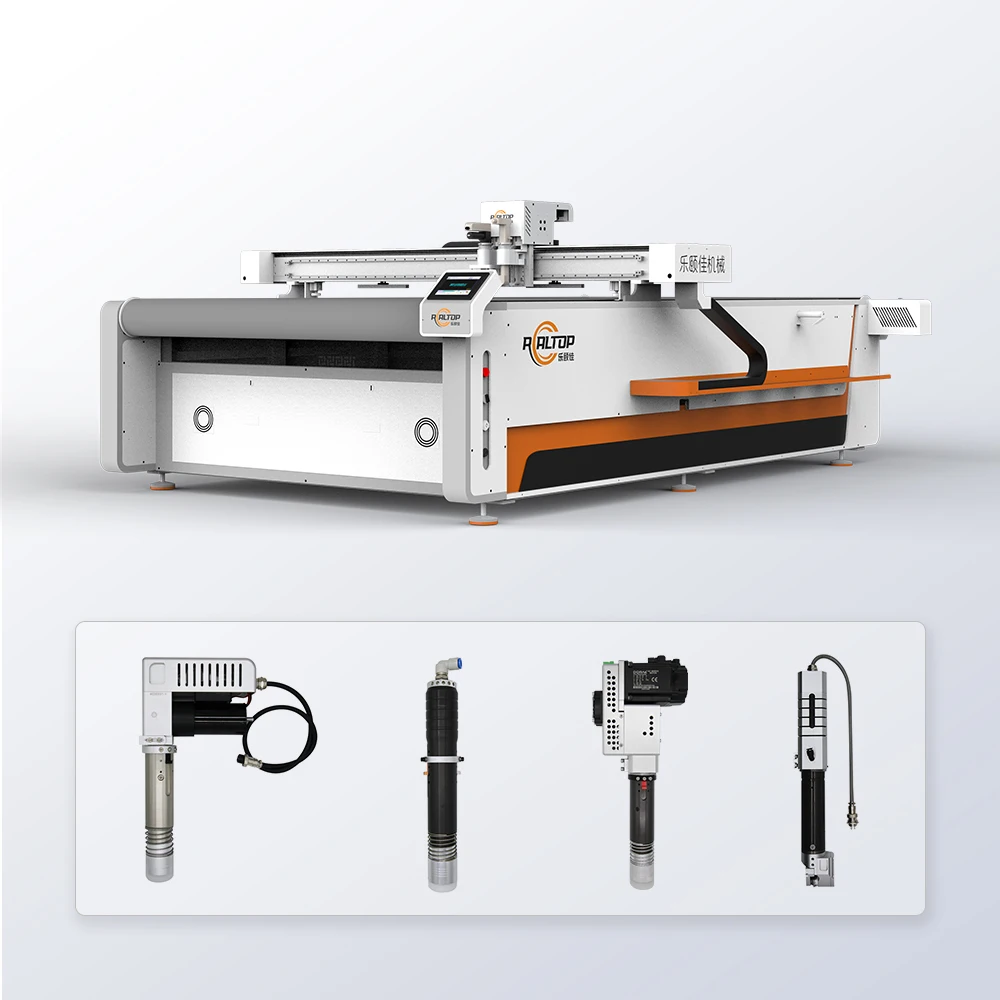
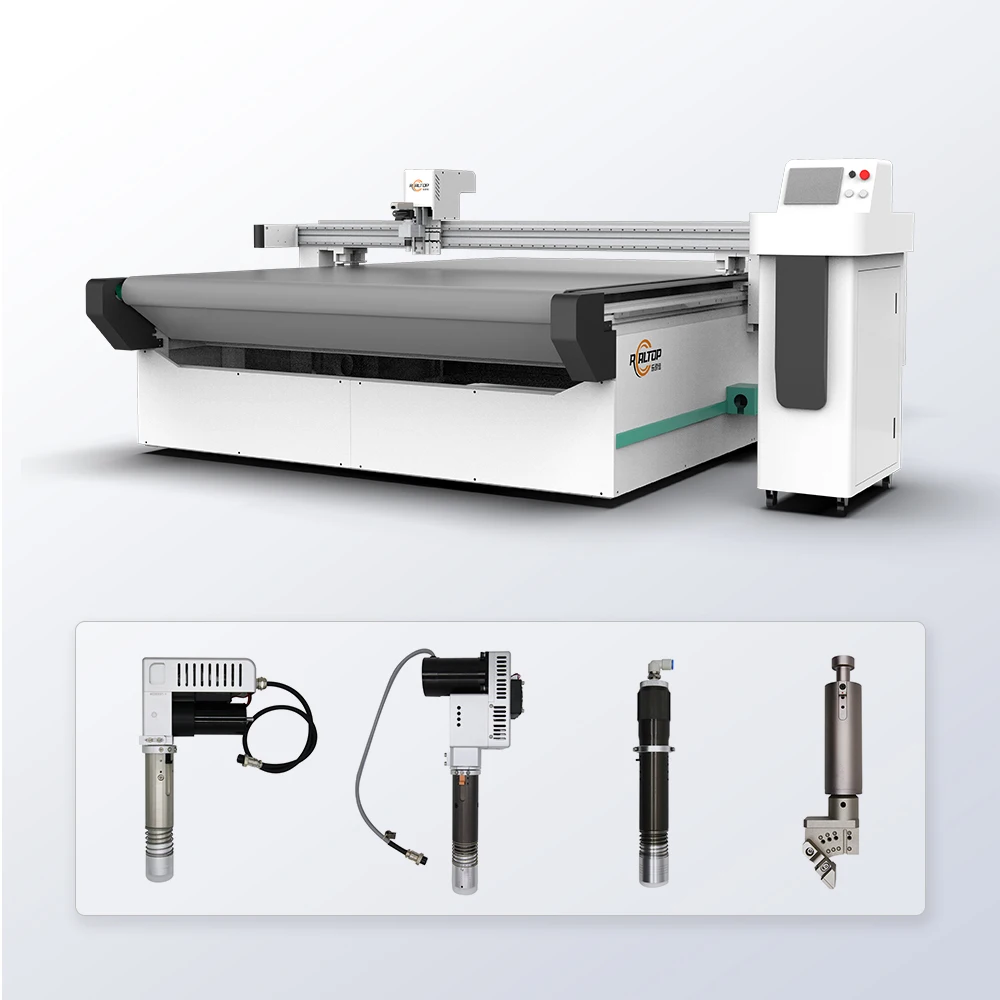
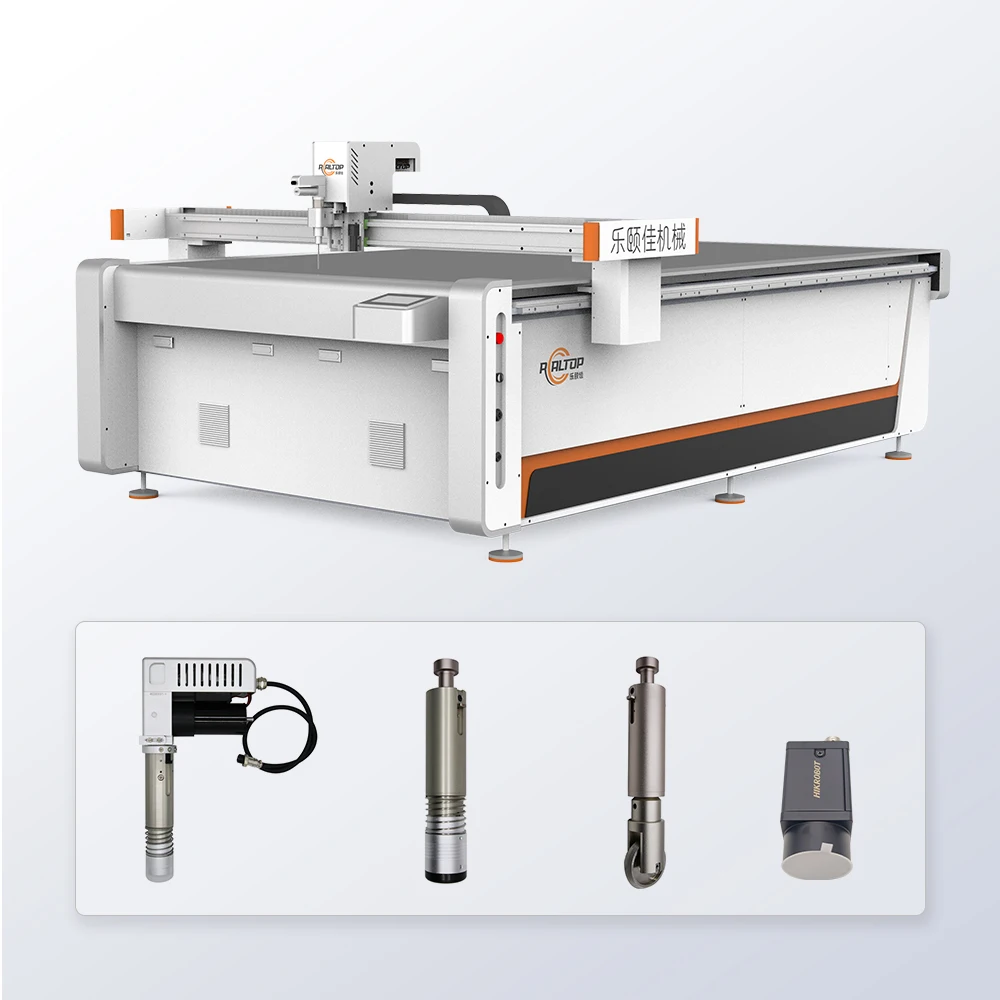
| Tool Head Options | Oscillating knife, pneumatic knife, high-power vibrating knife, circular knife, V-cutting knife, drag knife, creasing wheel, dotted line knife, punching, brush |
| Visual Positioning | Small CCD camera mark point positioning, panoramic camera recognition, projection positioning |
| Control System | Touch screen panel, HP-GL compatible |
| Language Options | English, Russian, Italian, Chinese (other languages customizable) |
| Software | Auto typesetting, supports PLT, DXF, AI |
| Table Options | Flat working table or auto-feeding table |
| Conveyor Belt | Germany imported |
| Safety Device | Infrared induction blocking, anti-collision, emergency stop |
| Multifunctional Head | Swiss imported knife with vibration full cut, half cut, cursor location |
Application Suitability
| Application | Material or Output |
|---|---|
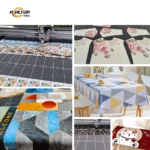
| Garment and footwear cutting | Natural leather, PU synthetic, textile, non-woven fabric, shoe material |
| Automotive interior production | Car upholstery fabric, headliner material, carpet, EVA foam, XPE |
| Gasket and sealing fabrication | PTFE, ETFE, rubber, composite gasket sheets |
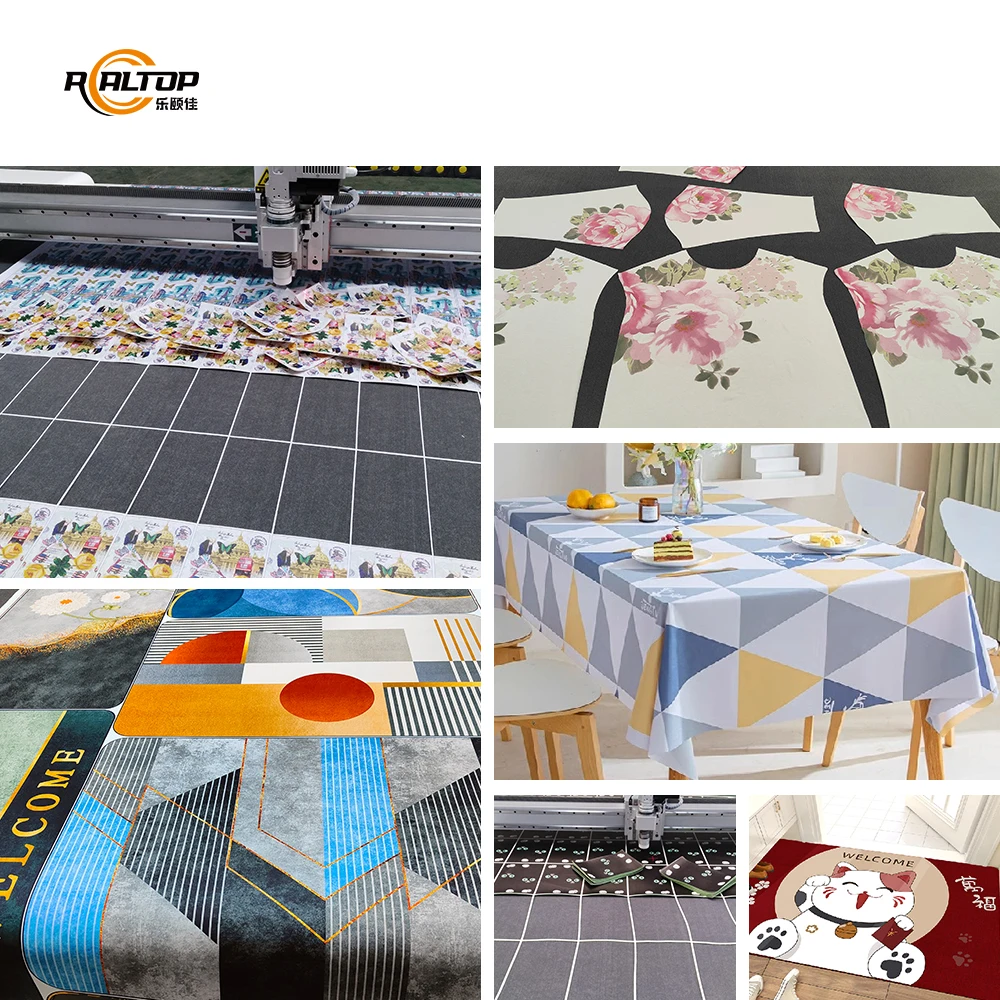
| Soft furnishing and home textile | Upholstery cloth, curtain fabric, carpet, sponge, PU foam |
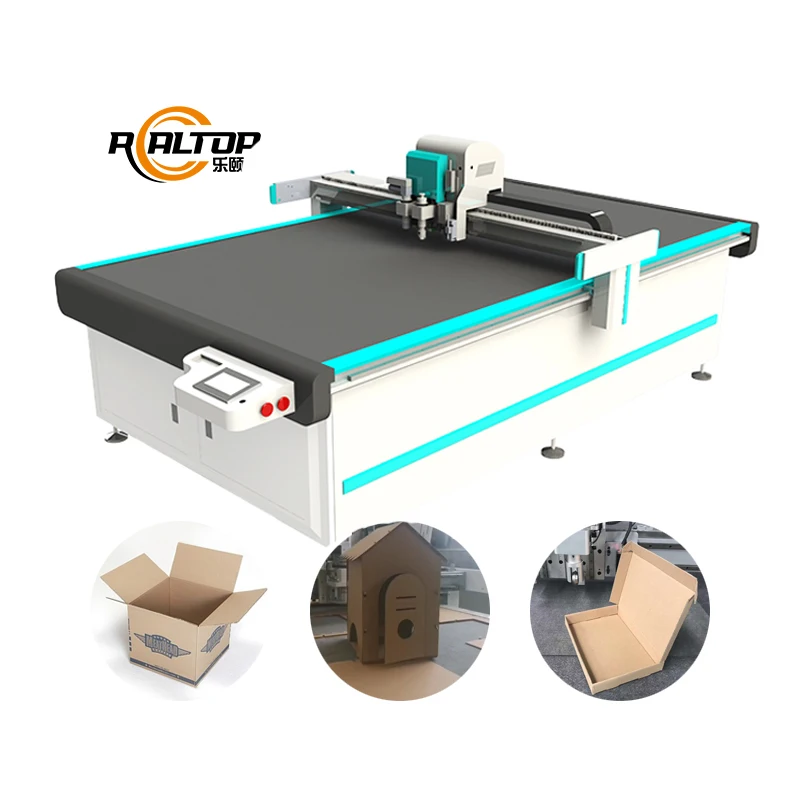
| Packaging and sample making | Corrugated cardboard, cardboard, sticker, film |
| Advertising and signage | PVC board, foam board, corrugated plastic, vinyl |
The Voltage and Language Problem No One Discusses Until the Crate Arrives
Every RT-D2516 / RT-S2516 ships with a documented electrical schematic, voltage confirmation sheet, and control language matched to the destination market before the frame leaves the factory floor.
I have stood in humid workshops watching operators stare at a Chinese-only touchscreen because nobody confirmed the language option before production. The machine runs fine mechanically, but the operator cannot change the vacuum zone settings or adjust the oscillating frequency for a different material. That downtime is not a warranty claim — it is an oversight that costs production days. The same applies to voltage: a 380V machine plugged into a 415V supply in West Africa will stress the servo drives and shorten component life. [NEED_CITE: voltage and frequency standards by export market]
This CNC oscillating knife cutting machine manufacturer confirms all three variables — voltage, plug type, and control language — in writing before the order enters the build schedule.
Frame Rigidity and Dimensional Stability Over Years of Operation
A cutting table is only as accurate as the frame holding it. The RT-D2516 / RT-S2516 frame is welded from thick-walled seamless steel, then high-temperature tempered to relieve internal stress before final machining on a CNC machining center. This sequence matters because untreated weldments slowly distort under thermal cycling and vibration, pulling the linear guides out of parallel. After tempering and precision finishing, the frame maintains its geometry through years of continuous cutting cycles. The result is sustained ≤ 0.1 mm repeatability across the full 1600 × 2500 mm working area, not just on the first day of operation.
Build Quality Controls from Welding to Final Inspection
The core factory runs a defined quality sequence that starts with incoming material inspection and ends with a loaded run test. Taiwan Hiwin linear guides are mounted on machined reference surfaces — not shimmed into position — so the carriage tracks true across the entire travel range. The servo motor selection between Delta and Panasonic is not cosmetic; each option has distinct torque curves and tuning parameters that affect acceleration behavior on heavy fabrics and dense foams. [NEED_CITE: CE machinery directive requirements for industrial equipment] Every unit undergoes a factory test that includes cutting the buyer’s actual material at production speed, and the test record ships with the machine documentation package.
Reading the Specification Sheet Against Your Actual Production Needs
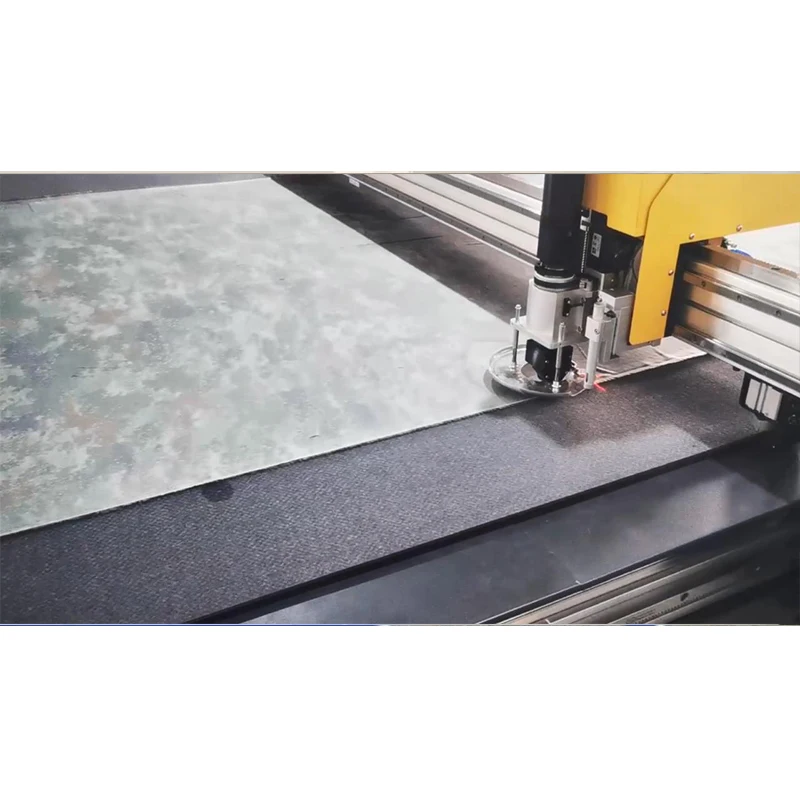
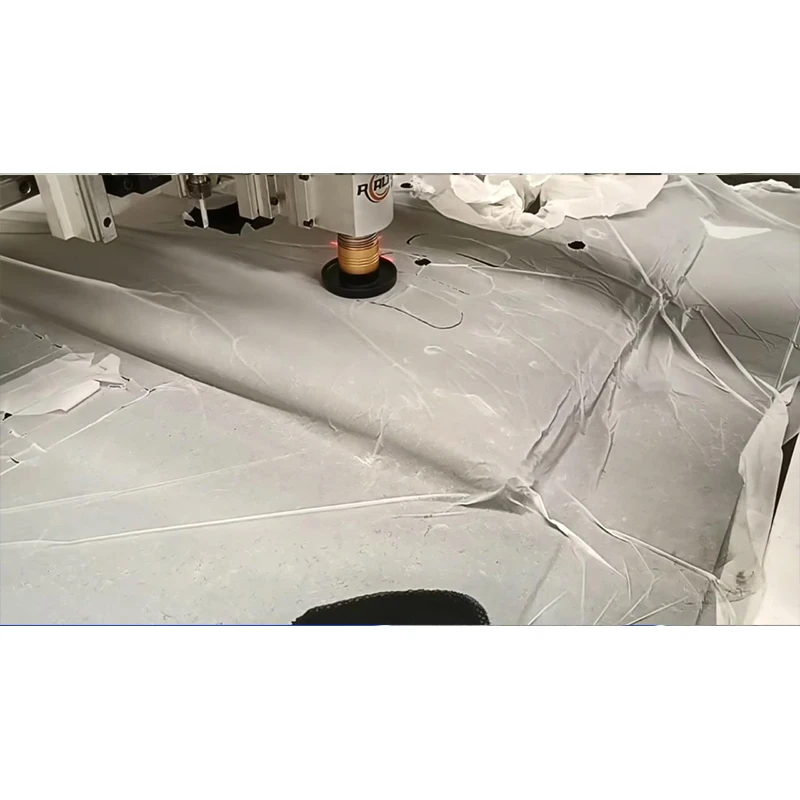
Cutting speed is listed at 200 – 800 mm/s, but the usable value depends entirely on what you are cutting. A thin woven cotton allows the upper range, while a multi-layer stack of neoprene or dense EVA foam demands the lower end with higher oscillation frequency. The ≤ 100 mm thickness rating similarly varies — a single layer of corrugated cardboard at 8 mm is straightforward, but 60 mm of bonded foam requires the high-power vibrating knife and reduced speed. The 7.5 kW vacuum pump with integrated silencer maintains uniform suction, though small parts near the table edges may need zone-specific valve adjustment. The magnesium-aluminum vacuum table with PVDF coating resists adhesive buildup from sticker and film cutting, which reduces cleaning intervals between material changeovers.
The Cost of Skipping Configuration Verification
Choosing the wrong tool head is the most common mistake I see in the field. A buyer orders an oscillating knife for leather cutting, but the specification actually calls for a drag knife on thin splits and a pneumatic knife on thick hides. The machine arrives, the first test cut produces ragged edges on curved sections, and the buyer assumes the machine is defective. The problem was configuration, not engineering. The same applies to vacuum table zoning: if your production runs are dominated by small die-cut shapes, a single-zone table will lose suction at the edges and parts will lift during the final pass. [NEED_CITE: vacuum adsorption requirements for small-part digital cutting] These issues are preventable when the CNC oscillating knife cutting machine manufacturer documents the tool head and table configuration against your specific material profile before build starts.
Why Distributors and Importers Source From This Factory
The in-house design team covers both knife and laser cutting technologies, so a distributor serving mixed-material markets can source a complete product family from one partner rather than splitting orders across unrelated factories. The core factory controls the entire build sequence — frame welding, heat treatment, CNC machining, assembly, and testing — which means OEM branding and configuration changes are handled internally without third-party delays. Sample cutting on the buyer’s own material happens before the commitment, eliminating the risk of selling a machine that cannot handle the customer’s actual production mix. Documentation packages arrive complete with electrical schematics, operation manuals in the local language, and spare parts lists that let distributors support their end users independently. Voltage and control customization is confirmed per destination market, reducing the post-delivery service calls that erode distributor margins.
Documentation & Verification
- Machine specification sheet listing every confirmed option including servo brand and table type
- Electrical schematic with voltage and frequency matched to destination country grid standards
- Tool head and table configuration list documented against your material type and thickness
- Factory test record showing cutting results on your supplied material at agreed production speed
- Operation and maintenance manual in confirmed language with software licence and file format note
- Spare parts list with part numbers for wear items including knife blades and vacuum pump filters
Installation, Commissioning & Support
- Requires a level concrete floor with minimum clearance around the 3450 × 2300 × 1250 mm machine envelope for maintenance access
- Dedicated 380V ± 10% three-phase circuit rated for the 9 kW total load including the 7.5 kW vacuum pump
- Machine ships partially disassembled; frame and table are bolted on-site and leveled using adjustable feet
- First commissioning includes servo tuning, vacuum zone calibration, and test cuts on your production material
- Operator training covers tool head changeover, CCD camera mark-point setup, and auto-typesetting software workflow
- Wear parts stock includes oscillating knife blades, drag knife tips, and vacuum pump silencer sponge replacements
What We Need to Quote Accurately
Send your material type, maximum thickness, and typical sheet or roll dimensions so we can recommend the correct tool head and table configuration. Confirm your local voltage, frequency, and preferred control language. If you run printed contour work, let us know the mark size and print registration tolerance so we can specify the appropriate CCD camera option. Material samples for a factory test cut should arrive before the build schedule is locked.
Frequently Asked Questions
Q: What OEM customization range does the factory offer for distributors?
A: Frame working area, tool head configuration, voltage and plug type, control panel language, and branding can all be customized per order. The in-house design team handles engineering changes internally, so OEM modifications do not depend on third-party suppliers. Each customization is documented in the specification sheet before production starts.
Q: How is build quality verified before shipment?
A: Every unit goes through a defined inspection sequence from weld inspection and heat treatment verification to assembly alignment checks. The final step is a loaded run test cutting the buyer’s actual material at production speed. The test record, including cut samples and dimensional measurement results, ships with the documentation package.
Q: What documentation is included with each machine delivery?
A: The package contains a machine specification sheet, electrical schematic with voltage confirmation, tool head configuration list, factory test record, CE declaration where applicable, operation manual in the confirmed language, software licence note, and a numbered spare parts list. All documents are prepared per destination market requirements.
Q: How does the manufacturer support distributor after-sales service?
A: Distributors receive complete documentation to handle first-line support independently, including electrical schematics and maintenance procedures. Spare parts lists with part numbers enable local stock ordering. Technical support is available for complex issues, and the factory can supply replacement components on an ongoing basis.
Q: What is the typical production lead time for a configured order?
A: Lead time depends on the customization scope and current factory scheduling. Standard configurations move through production faster, while orders requiring non-standard working areas, specialized tool heads, or unusual voltage setups follow a longer engineering and build cycle. The confirmed schedule is provided at quotation stage.
You may also like

商品评价
Clear filtersThere are no reviews yet.