


-
 Courier delivery
-
 DHL Courier delivery
-
 Warranty 1 year
-
 Free 30-Day returns

Frame Rigidity Per Material — Realtop welds and heat-treats the steel structure before motion components are mounted, matching the table to the actual board grade rather than a catalogue default.
Technical Specifications
| Parameter | Value |
|---|---|
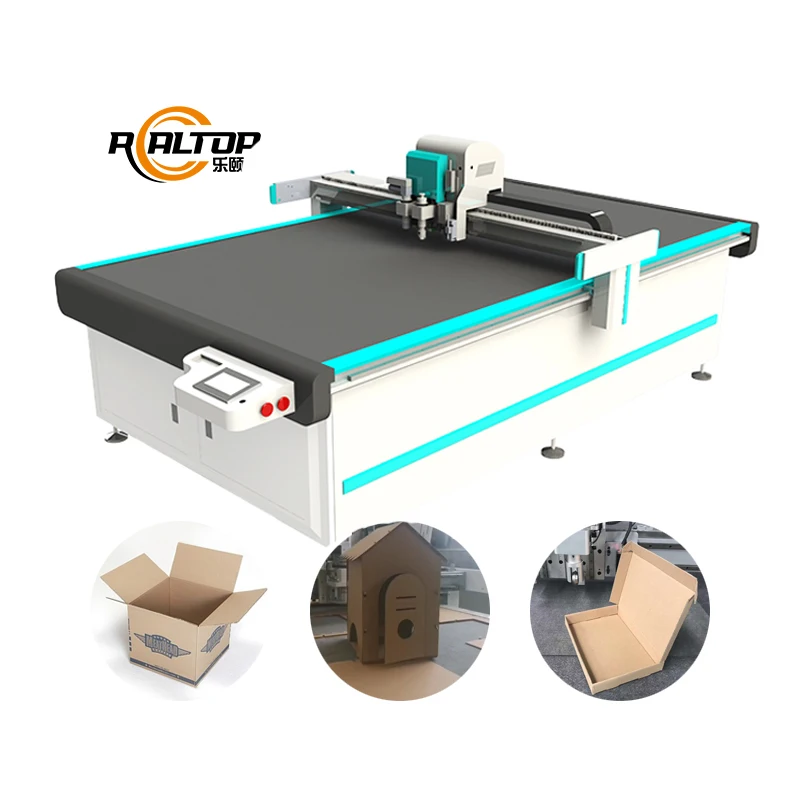
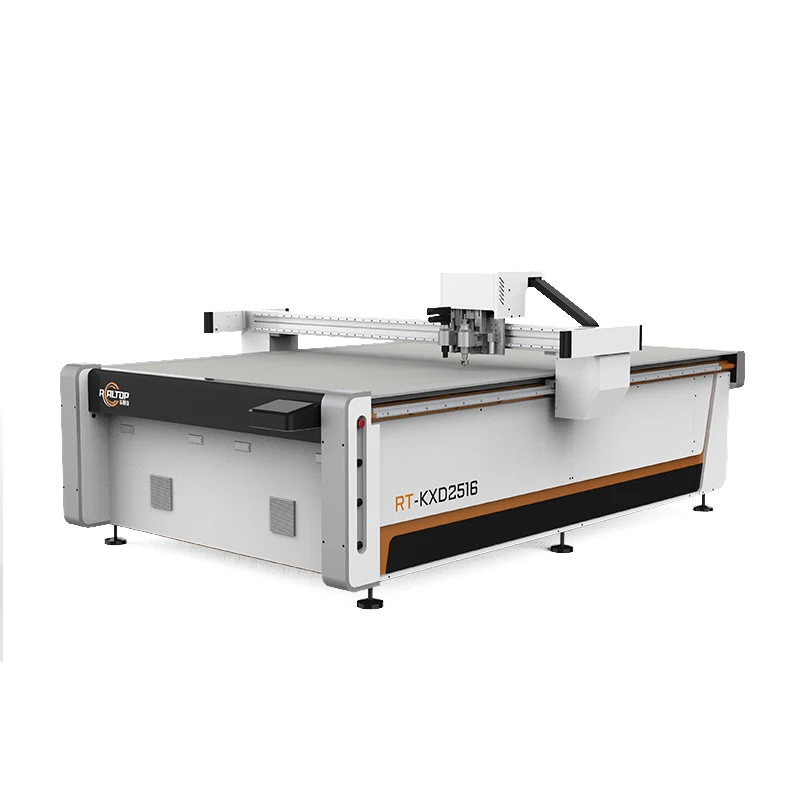
| Model | RT–R2513 / RT-D2516 / RT-S2516 |
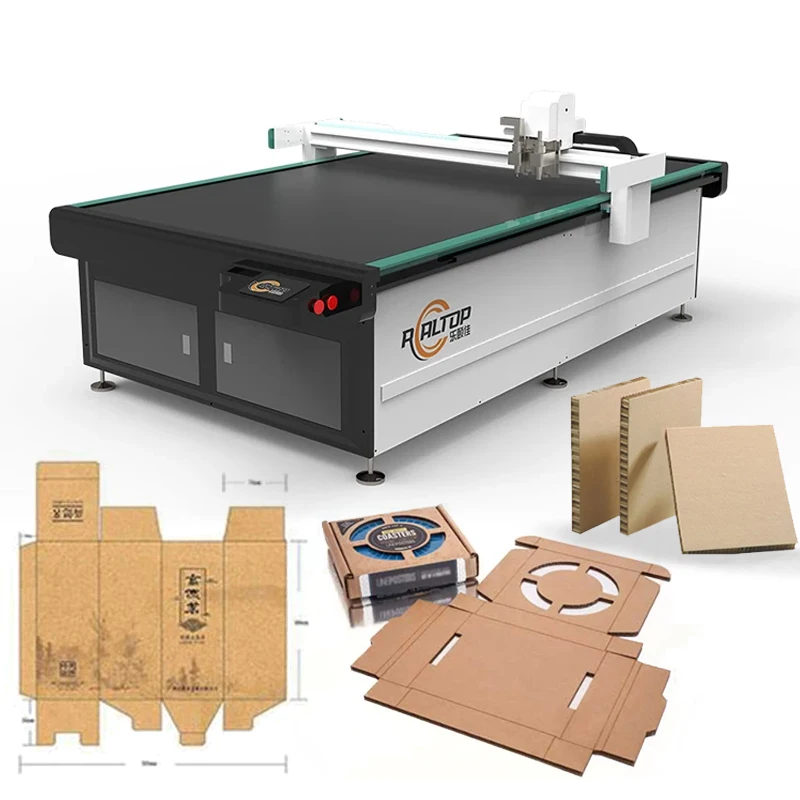
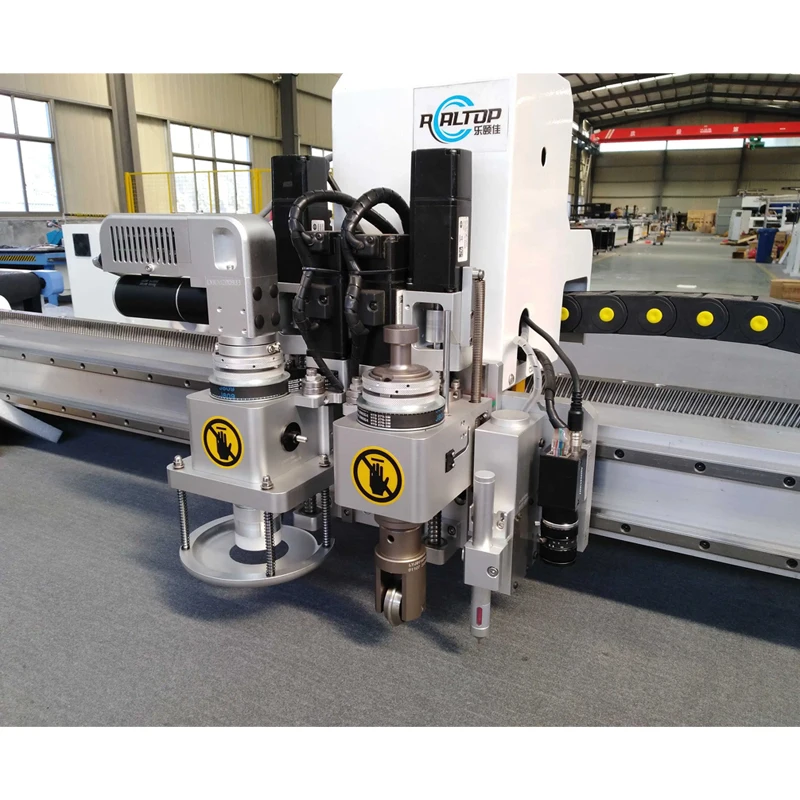
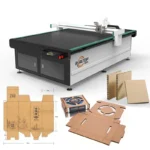
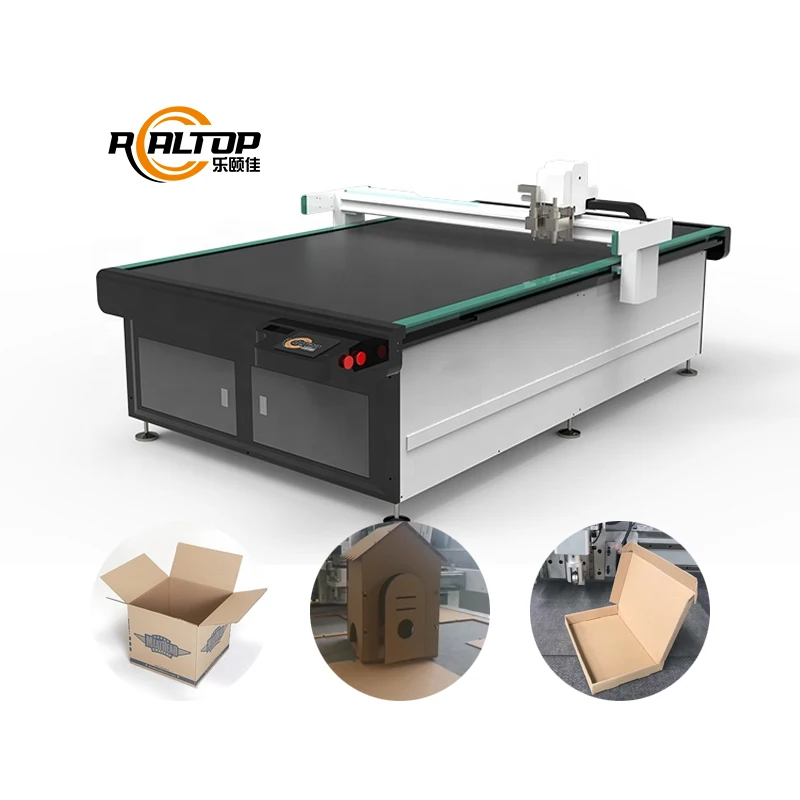
| Product Type | CNC Oscillating Knife Cutting Machine for Cardboard and Packaging |
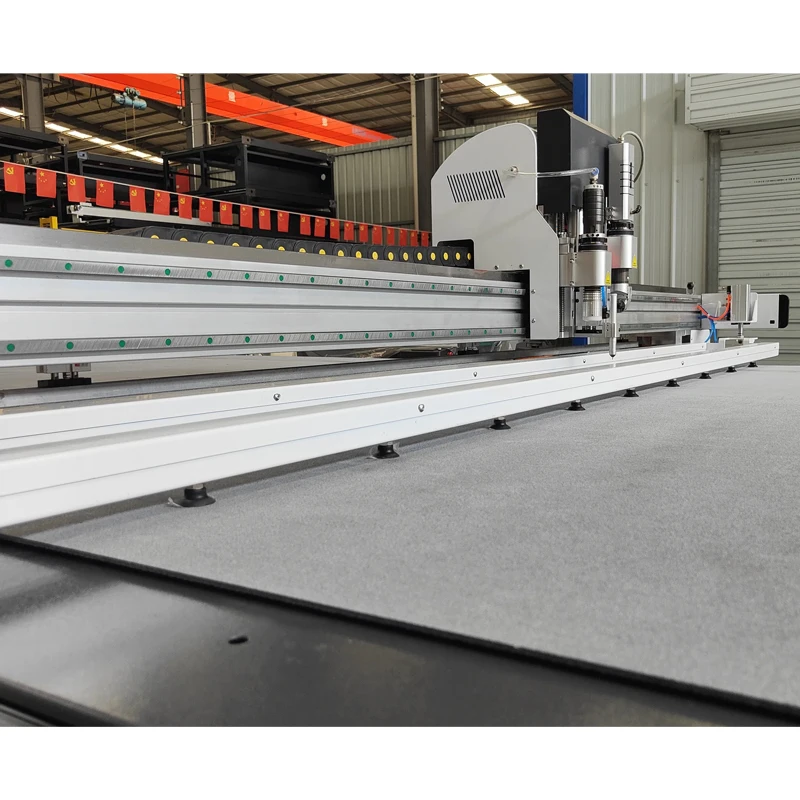
| Working Area | 2500×1300 mm (RT–R2513) / 1600×2500 mm (RT-D2516 / RT-S2516) |
| Machine Size | 3550×1910×1400 mm (RT–R2513) / 3450×2300×1250 mm (RT-D2516 / RT-S2516) |
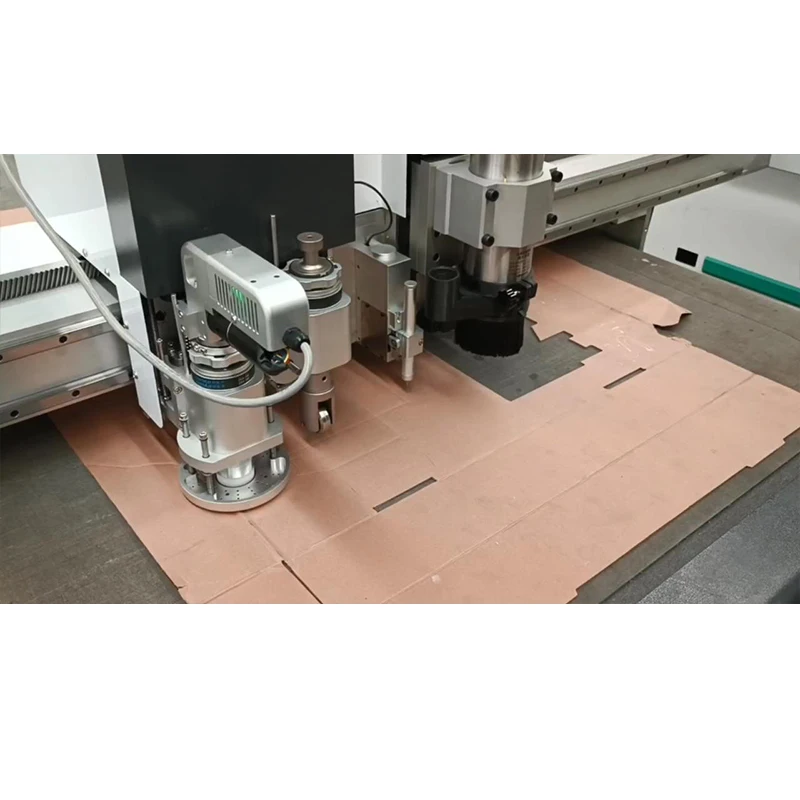
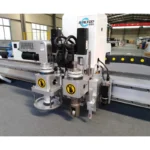
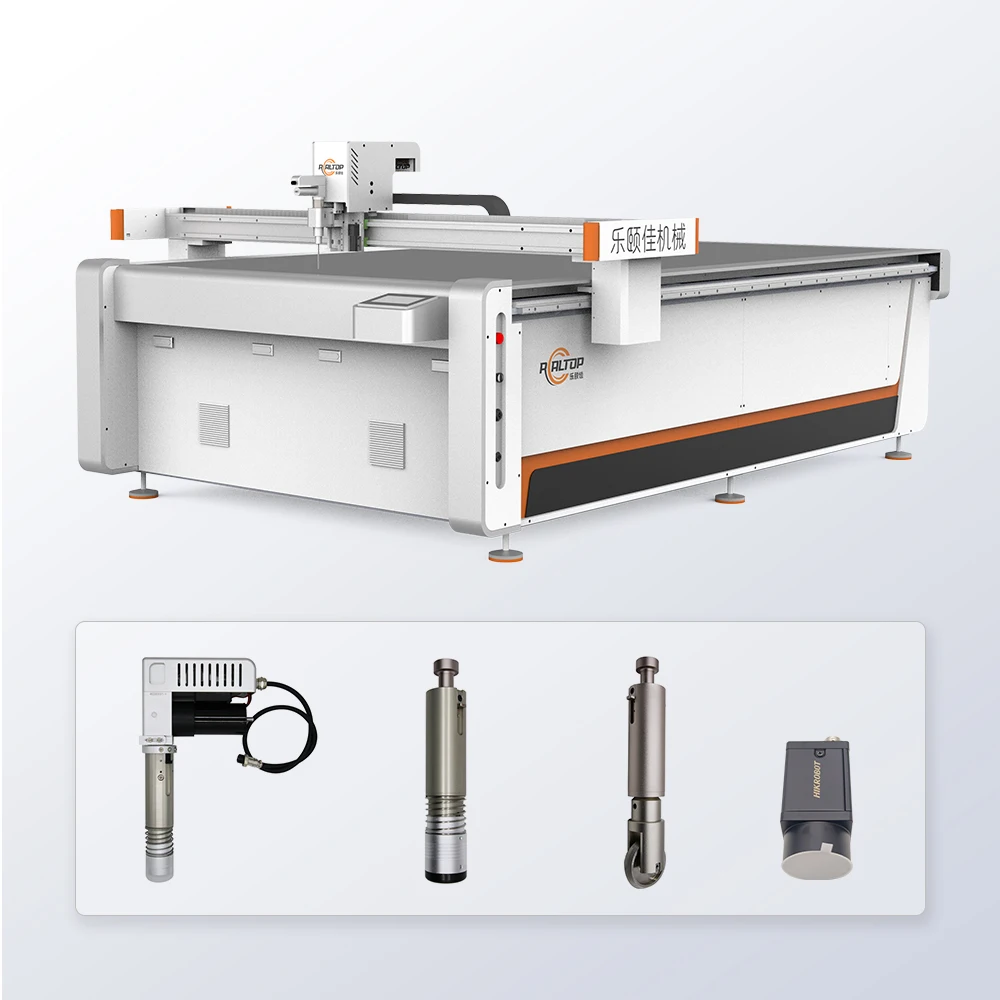
| Cutting Tools | Oscillating knife, Creasing tool, Kiss-Cut Knife Tool, Round punch |
| Fixing Method | Vacuum system |
| Vacuum Table | Aluminum alloy honeycomb structure vacuum adsorption platform |
| Vacuum Pump | 7.5 kW |
| Rated Power | 9 kW |
| Cutting Thickness | ≤18 mm (basis not stated in source — confirm material type and density) |
| Repeated Accuracy | <0.05 mm |
| Voltage | 380 V (frequency not specified in source) |
| Servo Motor | Dongling servo (Delta servo motor available under other configuration) |
| Transmission Method | Ethernet port |
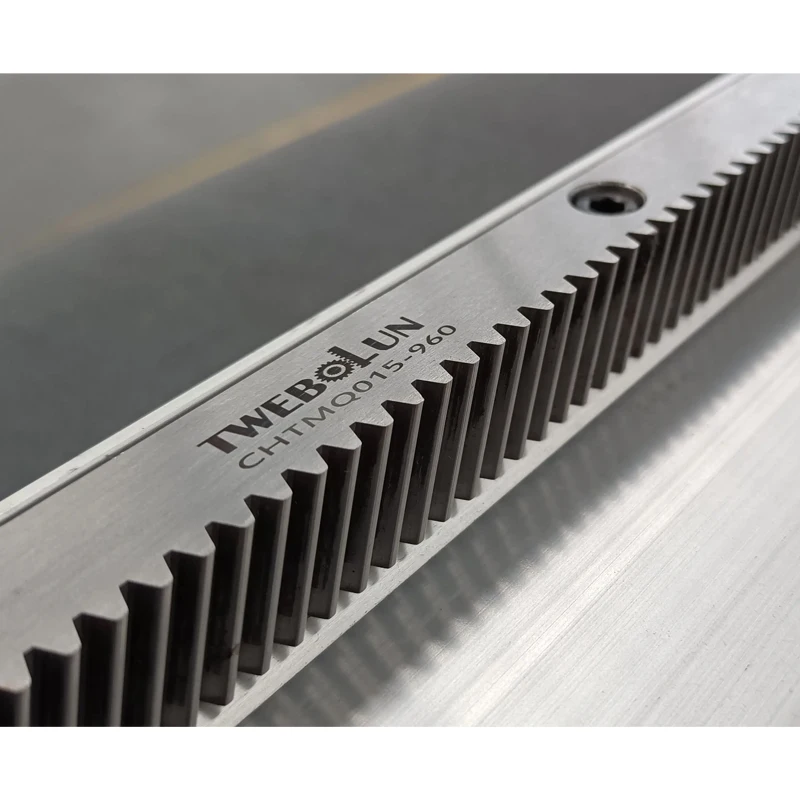
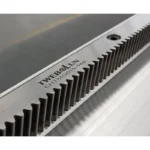
| Transmission Components | Rack transmission, imported straight-line square guide |
| Linear Guide | Taiwan Hiwin rail (under other configuration) |
| Conveyor Belt | Germany imported conveyor belt (under other configuration) |
| Auto Feeding | Available (under other configuration) |
| Blade Included | 10 pieces of oscillating blades |
| Profile Format | DXF, OLT, PDF, AI |
| Safety Device | Infrared sensors, emergency stop devices |
| Felt Belt | Wear-resistant anti-pull felt with composite fiber |
| Frame | Welded thick square seamless steel structure with high temperature treatment |
| Software | Professional carton nesting software, customized language support |
| Warranty | 1 year (excluding felt and knife blades) |
| Delivery Time | <30 working days |
Application Suitability
| Application | Material or Output |
|---|---|
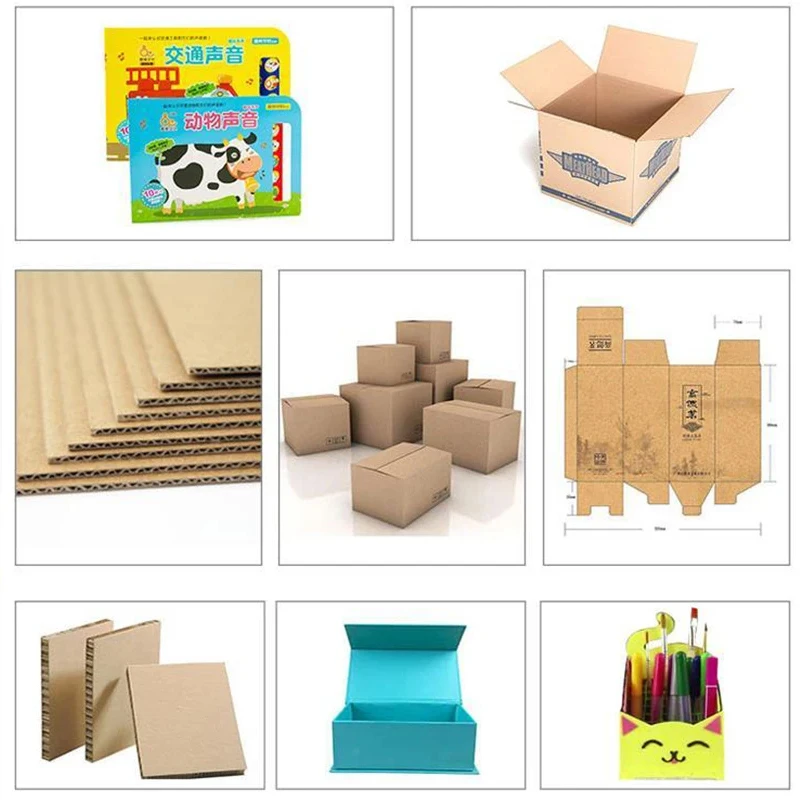
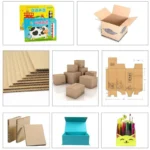
| Corrugated packaging prototyping | Single, double and triple-wall corrugated cardboard for short-run box samples |
| Carton sample making | Folding carton stock, greyboard and honeycomb paperboard for die-line verification |
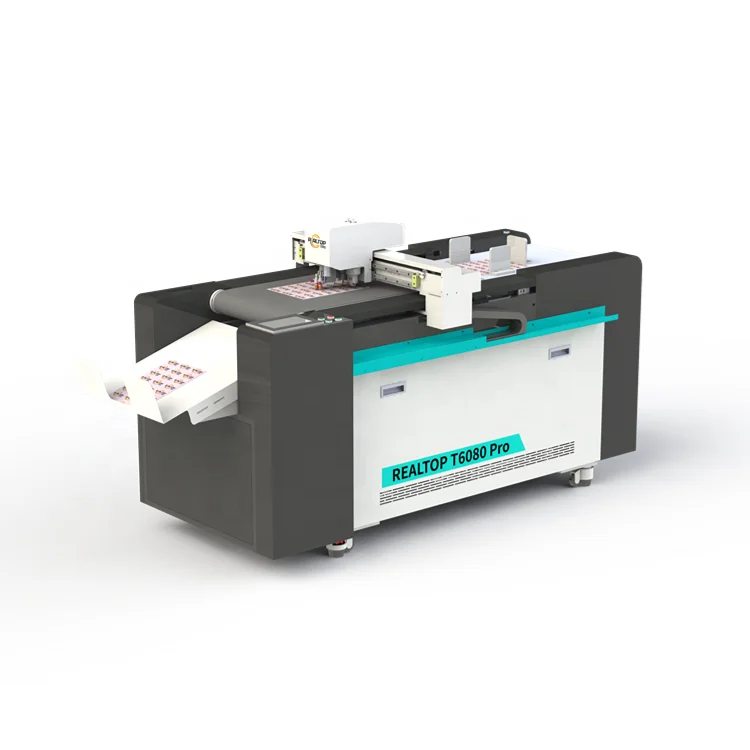
| Sticker and label contour cutting | Printed vinyl, PP paper and self-adhesive label stock on release liner |
| Signage and display production | Foam board, corrugated plastic and lightweight cardboard for retail displays |
| Business card and insert cutting | Coated card stock and specialty paper for finishing operations |
Why Specified Cutting Depth Fails on Five-Layer Corrugated
A thickness rating without material density is not a guarantee of cutting performance.
Buyers often assume that a machine rated for up to 18 mm cutting depth will handle any board within that range. In reality, a five-layer double-wall corrugated sheet with heavy kraft liners demands more from the oscillating knife than a single-wall sheet of the same measured thickness. The flute structure compresses differently under blade pressure, and the adhesive layers between flutes add resistance that a generic thickness spec does not account for. I have seen machines stall mid-sheet on production-grade double-wall board when the oscillation frequency and vacuum hold-down were configured only for lighter grades [NEED_CITE: oscillating knife cutting parameters by corrugated grade]. A CNC oscillating knife cutting machine manufacturer that does not ask for your actual board specification before quoting is guessing at configuration.
Tool Head Assignment Based on Board Grade
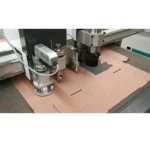
The tool head selection on these models covers oscillating knife, creasing tool, kiss-cut knife and round punch within a single work cycle. Each tool addresses a different operation in the packaging workflow. The oscillating knife handles through-cutting of corrugated and solid board, while the creasing tool scores fold lines without penetrating the full depth. Kiss-cutting is reserved for sticker and label stock where the backing liner must remain intact. Matching the correct tool to the board grade prevents crushed flutes on through-cuts and incomplete creases on heavy liner stock.
Vacuum Zoning for Mixed-Size Production Runs
The aluminum alloy honeycomb vacuum platform provides adsorption across the entire table surface, but small parts like labels and business card blanks require localized hold-down. Automatic zone-following concentrates suction only under the active cutting area, which keeps lightweight parts from lifting during high-speed passes while reducing overall pump load [NEED_CITE: vacuum table zoning requirements for small-format cutting]. Without proper zoning, a 7.5 kW vacuum pump running at full draw on a large table wastes energy and still fails to secure a 50×50 mm sticker near the table edge.
How Frame Stability, Transmission and Software Interact
The welded thick square seamless steel structure undergoes high temperature treatment before the rack transmission and imported straight-line square guides are mounted. This sequence matters because residual stress in an untreated frame will gradually distort the guide rail alignment, pushing the repeated accuracy beyond the stated <0.05 mm tolerance over months of operation. The rack-and-pinion drive paired with servo motors maintains positional repeatability across the full 2500×1300 mm or 1600×2500 mm working envelope. On the software side, the carton nesting package imports DXF, AI, PDF and OLT profiles directly, so a packaging designer’s existing die-line files move to production without manual redraw.
The Hidden Cost of Wrong Vacuum and Blade Configuration
When vacuum zoning is undersized for the part geometry, small sticker blanks lift off the felt during the return pass and jam the knife head. When the oscillating blade angle is too aggressive for thin liner stock, the kiss-cut tears through the backing and ruins the release function. These failures do not show up in a factory demo running large-format cardboard — they appear on the first day of mixed production at the buyer’s facility. Replacing a damaged blade holder and recalibrating the Z-axis zero point adds unplanned downtime to a machine that should have been running [NEED_CITE: common causes of downtime in CNC knife cutting operations].
Why Buyers Source This Equipment From Realtop
Realtop designs and produces both the knife cutting platform and the motion system in-house, so a buyer specifying a CNC oscillating knife cutting machine for a particular board grade gets a configuration built around that material rather than a fixed catalogue unit. The factory test record documents cutting performance on the buyer’s own corrugated stock before shipment. Voltage, plug type and control language are confirmed in the electrical schematic before production begins, avoiding rewiring costs at the destination. The professional carton nesting software ships with customized language support and file format compatibility verified against the buyer’s existing DXF or AI workflow.
Documentation & Verification
- Machine specification sheet listing confirmed tool heads and vacuum zone layout for your board grade
- Electrical schematic with voltage, frequency and plug type matched to your facility supply
- Sample cutting report on your corrugated material showing edge quality and crease depth
- Software licence and file format compatibility note for DXF, AI, PDF or OLT profiles
- Operation and maintenance manual with customized control language
- Spare parts list including oscillating blade type and felt belt specification
Installation, Commissioning & Support
- Foundation must be level to within 2 mm across the 3450 mm or 3550 mm machine footprint
- Dedicated 380 V circuit with capacity for 9 kW rated power plus 7.5 kW vacuum pump
- Machine ships in single-frame configuration requiring on-site utility connections only
- First-run commissioning includes tool head zero-point calibration and vacuum zone mapping
- Operator training covers profile import, nesting setup and blade replacement procedures
- Ten oscillating blades included; felt belt is a wear item excluded from warranty coverage
What to Prepare Before Requesting a Quotation
To get an accurate configuration, share the corrugated board grade, flute type and liner weight you plan to cut, along with your maximum sheet dimensions and daily volume. Specify your facility voltage, frequency and preferred control panel language. If you already run a nesting workflow, provide a sample DXF or AI file so file format compatibility can be verified before order confirmation. State whether you need auto-feeding or conveyor belt integration for your upstream printing line.
Frequently Asked Questions
Q: How is the cutting thickness verified for my specific corrugated board?
A: The stated thickness capacity requires confirmation against your actual material type and density. Realtop runs a sample cutting test on your supplied board before commitment, documenting edge quality, crease depth and achievable speed in a written report. This ensures the oscillating knife configuration matches your flute structure and liner weight rather than relying on a generic thickness figure.
Q: How do I choose between oscillating knife, creasing tool and kiss-cut knife for my jobs?
A: The oscillating knife performs through-cuts on corrugated and solid board. The creasing tool scores fold lines on carton stock without penetrating the full depth. The kiss-cut knife cuts printed sticker and label stock while leaving the release liner intact. Realtop specifies which tools are included based on your production mix, so you only pay for the heads your workflow actually requires.
Q: Can the vacuum table hold small sticker parts flat during high-speed cutting?
A: The aluminum honeycomb platform supports automatic zone-following, which concentrates vacuum suction under the active cutting area rather than across the full table. This keeps small-format parts like labels and business card blanks secured without requiring the 7.5 kW pump to run at full draw constantly. Zone layout is confirmed against your typical part geometry before order.
Q: What voltage and control language will the machine ship with?
A: The standard configuration runs on 380 V, but frequency and plug type must be confirmed for your destination market before production. Control panel language is customized per order and documented in the electrical schematic. This avoids rewiring costs and language barriers when the machine arrives at your facility.
Q: Will the software accept my existing DXF and AI die-line files?
A: The carton nesting software imports DXF, AI, PDF and OLT profile formats directly. File format compatibility is tested with your sample files before the order is finalized, and a written compatibility note ships with the machine. This prevents workflow delays caused by file conversion errors after delivery.
You may also like

商品评价
Clear filtersThere are no reviews yet.