






-
 Courier delivery
-
 DHL Courier delivery
-
 Warranty 1 year
-
 Free 30-Day returns

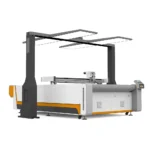
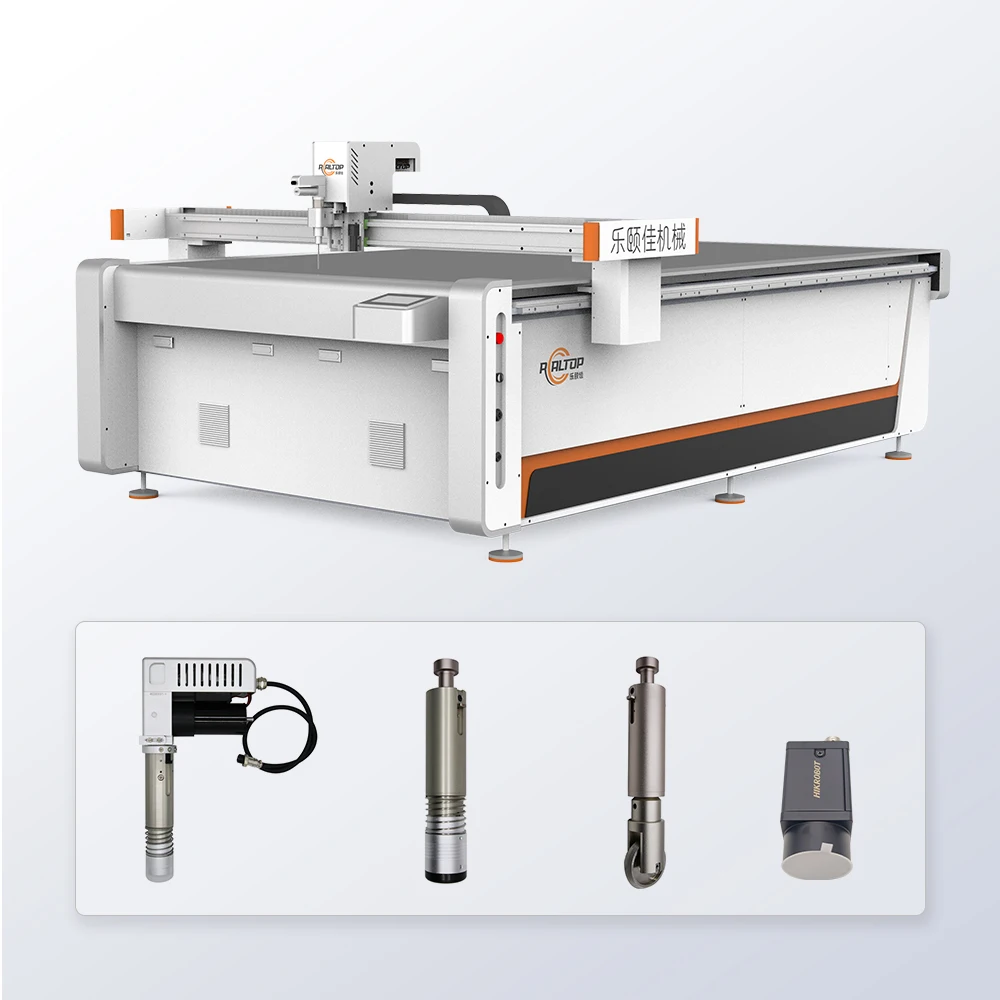
Design Authority — The 1625 platform is engineered and assembled under one roof, from frame stress analysis to servo tuning, so every exported unit matches the documented build standard.
Technical Specifications
| Parameter | Value |
|---|---|
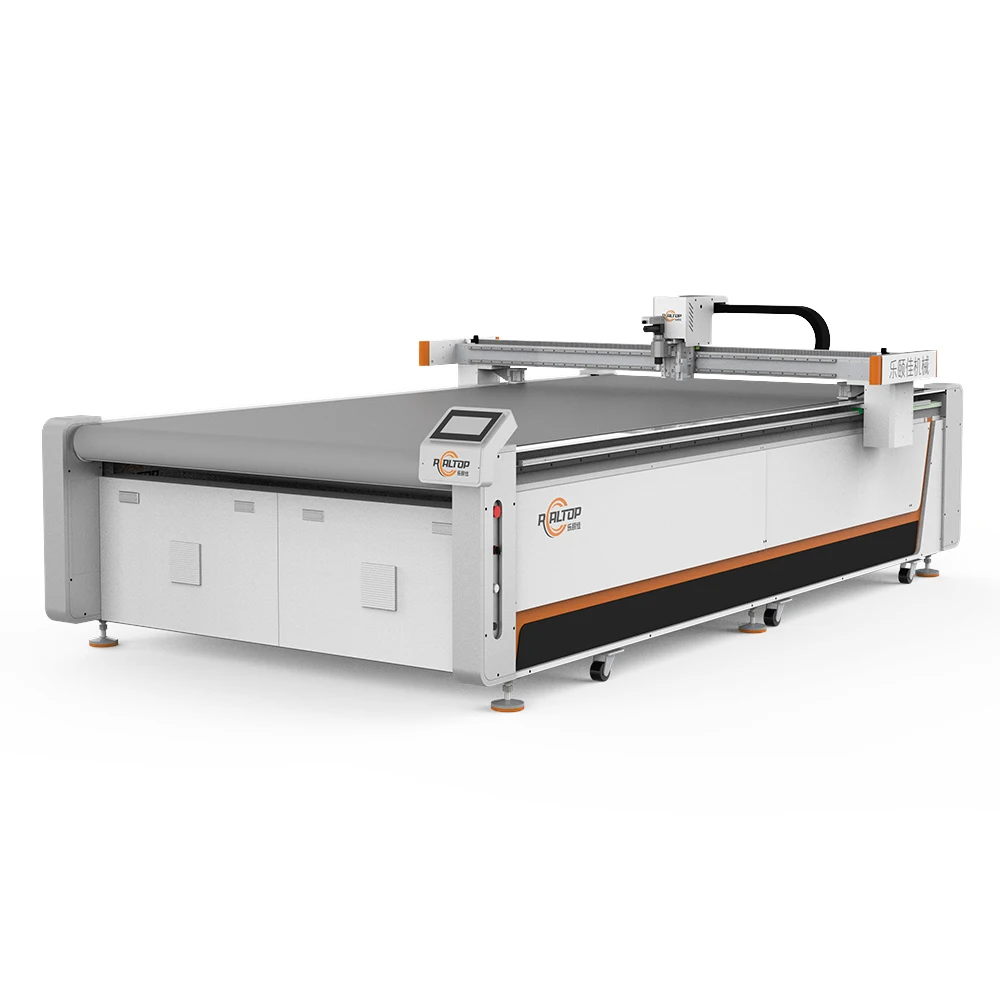
| Product Type | CNC Oscillating Knife Cutting Machine |
| Model | 1625 |
| Working Area | 1600 × 2500 mm |
| Tool Head Options | Oscillating knife, Driven rotary knife, Creasing wheel, Kiss cutting tool, Pneumatic knife, Milling tool, V-groove knife |
| Positioning System | CCD camera |
| Applicable Materials | Fabric, Cardboard, Carton, Mats, PVC, EVA, Leather, Acrylic, Foam, PTFE, Rubber |
| Cutting Speed | 0–1500 mm/s |
| Cutting Thickness | Up to 40 mm (basis not stated in source — confirm block format, material and thickness) |
| Positioning Accuracy | ±0.1 mm |
| Vacuum Pump | 9 kW |
| Vacuum Table | Aluminum bellows vacuum table |
| Voltage Options | 110V, 220V, 380V (configurable per destination market) |
| Supported File Formats | PLT, DXF, AI, PDF |
| Safety Device | Infrared sensor and emergency stop |
| Machine Size | 3300 × 2100 × 1350 mm |
| Control System | PLC control panel |
| Display Languages | English, Russian, Italian, Chinese (custom languages available) |
| Servo Motor Brands | Panasonic, Delta, Dorna (selectable) |
| Standards | CE declaration |
Application Suitability
| Application | Material or Output |
|---|---|
| Leather footwear uppers and linings | Genuine and synthetic leather up to specified thickness on 1600 × 2500 mm bed |
| Handbag and luggage panel cutting | Full-grain, split and bonded leather hides with CCD contour tracking |
| Automotive interior trim | Leather and synthetic upholstery for seats, door panels and headliners |
| Garment pattern sampling | Short-run leather apparel pieces with nested layout for material yield |
| Upholstered furniture components | Thick leather and foam laminate sections for seating and decorative panels |
What Voltage Verification Should Precede in Every Export Order
Confirming the three-phase supply format at the buyer’s workshop before production starts prevents on-site electrical rework that delays commissioning by weeks.
When a leather cutting line arrives in a region with a different voltage standard or plug configuration, the main control cabinet may not match the local grid. I once saw a three-phase machine sit idle in a Dubai workshop because the site electrician expected a different supply arrangement — the order nearly collapsed while the facility rewired the distribution board. That CNC oscillating knife cutting machine factory experience reinforced a simple rule: pull the single-line diagram, confirm voltage and frequency, then lock the cabinet spec before cutting steel. [NEED_CITE: voltage and frequency standards by export market]
Frame Rigidity as the Foundation of Repeatability
A heavy-duty frame with a precision-ground mounting surface keeps the gantry square across the full 1600 × 2500 mm travel. On leather hides where pattern pieces must align within ±0.1 mm, any torsional flex in the base translates directly into registration drift at the far end of the table. The 1625 structure is stress-analyzed in-house so the cutting envelope stays dimensionally stable under continuous oscillating loads.
Motion Component Selection by Buyer Preference
Servo drive options span Panasonic, Delta and Dorna, allowing importers to align motion components with the brands their local service technicians already support. This choice is locked at the quotation stage rather than left to default procurement, which means spare motor and driver availability is mapped to the destination market before the CNC oscillating knife cutting machine factory begins assembly. [NEED_CITE: industrial servo brand service networks in Middle East and Europe]
Reading the Specs That Actually Affect Leather Output
The 9 kW vacuum pump paired with an aluminum bellows table addresses a common problem in hide cutting: small pattern pieces lifting off the bed mid-cut. High suction distributed across zoned segments keeps irregularly shaped leather scraps pinned without requiring full-table coverage. CCD camera positioning handles printed registration marks on synthetic leather rolls, but buyers must verify that the camera firmware matches the print contrast of their specific material supplier. Tool head selection matters equally — an oscillating knife works for most leathers up to moderate thickness, while a driven rotary knife suits long continuous cuts on softer hides. The PLC control panel with selectable display languages ensures operators in different regions can read alarms and set cutting parameters without translation guesswork.
The Hidden Cost of Skipping a Factory Run-Off
Machines that leave the floor without a documented test on the buyer’s actual leather stock often reveal problems only after installation. Edge quality issues — ragged cuts on suede or crushed grain on full-hide — show up once the material is loaded and the oscillation frequency meets real fiber density. Requesting a sample cutting report on your specific hide type and thickness before shipment compresses that discovery cycle into the production phase instead of the commissioning phase. [NEED_CITE: leather density variation effects on oscillating knife edge quality]
Why Procurement Starts at the Source
The in-house design team controls the 1625 from frame layout through motion tuning, so distributor requests for private labeling and specification changes are handled at the drawing level rather than patched onto a third-party platform. Factory test records are generated on material samples the buyer provides, giving importers documented evidence of cutting performance before container loading. Electrical schematics are issued with voltage and frequency locked to the destination grid, reducing the on-site wiring disputes that delay commissioning. Multi-language PLC interfaces are configured at build, not retrofitted. CE documentation accompanies each unit where applicable, supporting customs clearance in regulated markets.
Documentation & Verification
- Machine specification sheet listing every configurable parameter locked at order
- Electrical schematic showing confirmed voltage, frequency and plug standard
- Factory test record cut on buyer-supplied leather sample with measured tolerances
- CE declaration package for regulated import markets
- Tool head and vacuum table configuration list matching material requirements
- Spare parts list with servo brand and part numbers aligned to local supply
Installation, Commissioning & Support
- 3300 × 2100 mm footprint requires level concrete floor with anchor bolt provisions
- 9 kW vacuum pump plus servo drives demand a dedicated three-phase circuit matching confirmed voltage
- Machine ships partially disassembled; gantry and table sections bolt together on-site
- First power-on includes PLC language verification and servo homing calibration
- Operator training covers tool head changeover and CCD mark registration workflow
- Oscillating knife blades and vacuum seals listed as routine consumables
Request a Configuration Review
Share your leather type, typical hide dimensions and maximum thickness so we can map the correct tool head and vacuum zoning. Specify the workshop supply voltage and frequency to lock the cabinet build before production begins. If your operators need a specific control language or your existing nesting software exports in a particular file format, confirm compatibility at the inquiry stage.
Frequently Asked Questions
Q: What is the production capacity for bulk orders of this model?
A: Output depends on the specific configuration and order volume agreed at the quotation stage. The factory schedules production slots based on confirmed specifications, with typical multi-week lead times for standard builds and longer windows for units requiring custom voltage cabinets, private labeling or non-standard servo brand selections.
Q: Can the machine carry our branding and match our market’s electrical standards?
A: Yes. The 1625 supports OEM branding on frame panels and control interfaces. Voltage is configurable across 110V, 220V and 380V, with the electrical schematic locked to your destination grid standard before assembly begins. Display language on the PLC panel is set during production to match your operator requirements.
Q: What quality checks are completed before the machine is crated for shipment?
A: Each unit undergoes a factory test that includes gantry squareness verification, servo tuning across the full travel range, and a sample cut on buyer-supplied material. Results are recorded in a test report that ships with the machine, documenting positioning accuracy and edge quality against agreed tolerances.
Q: How are specification changes handled once an order is placed?
A: Design modifications are reviewed by the in-house engineering team before production release. Changes to tool head configuration, vacuum zoning or control language are incorporated at the drawing level, with revised schematics and specification sheets issued for buyer approval prior to fabrication.
Q: What documents support import clearance and on-site commissioning?
A: The shipment includes the CE declaration where applicable, a full electrical schematic, operation and maintenance manual in the confirmed language, software license with file format compatibility notes, and a spare parts list cross-referenced to local supplier part numbers.
You may also like

商品评价
Clear filtersThere are no reviews yet.