






-
 Courier delivery
-
 DHL Courier delivery
-
 Warranty 1 year
-
 Free 30-Day returns

In-House Build — Every oscillating knife unit leaves our Jinan facility with tool head and table configuration verified against your composite or gasket sample before it ships.
Technical Specifications
| Parameter | Value |
|---|---|
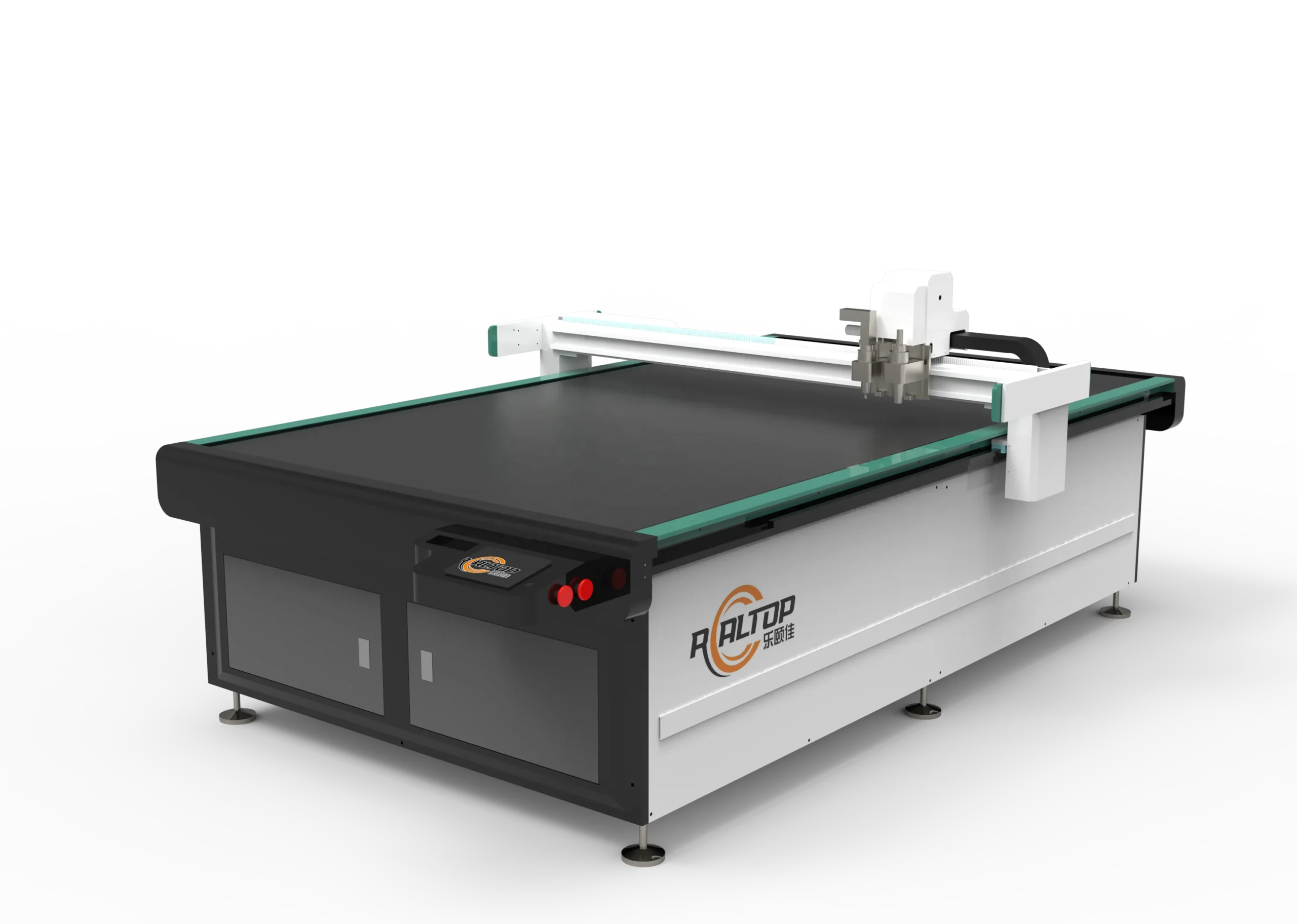
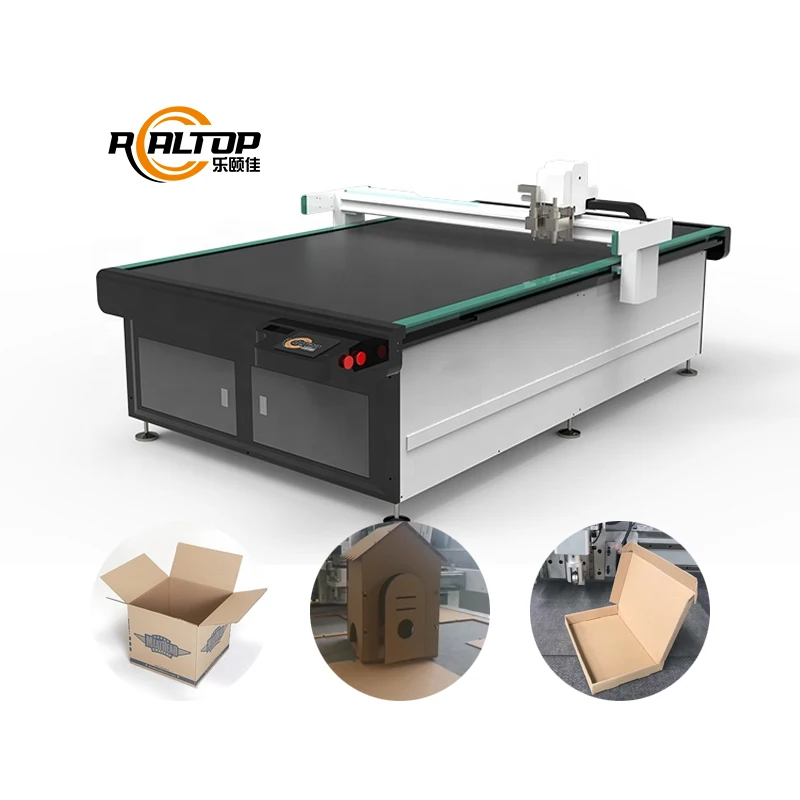
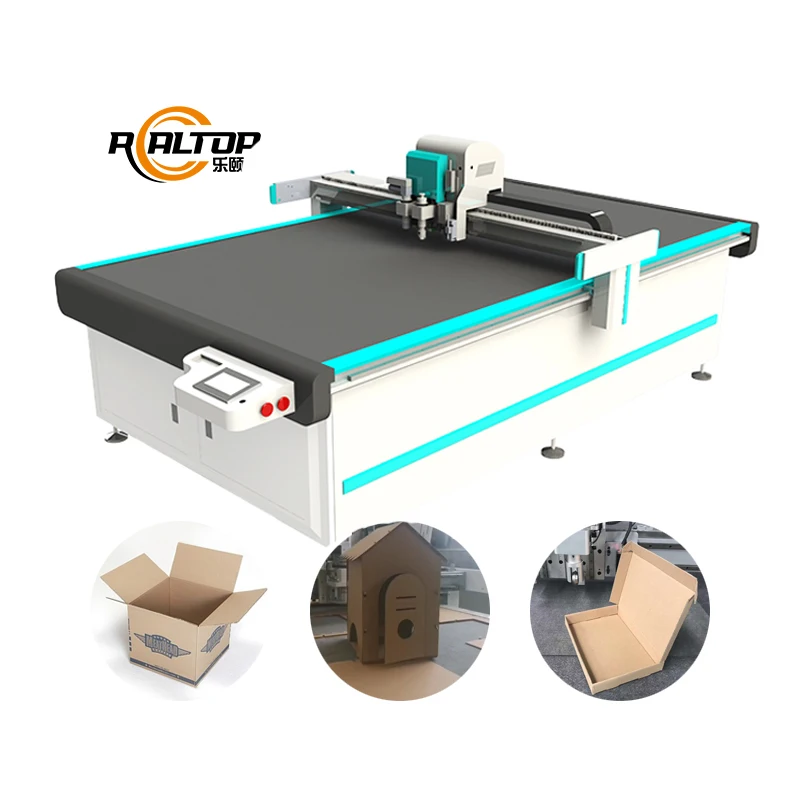
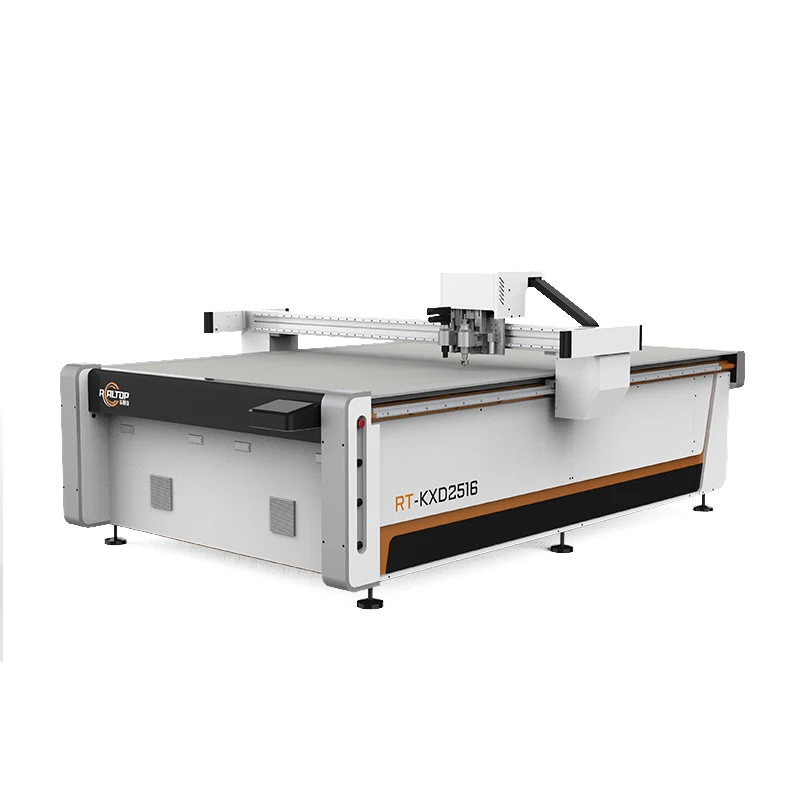
| Product Type | CNC Oscillating Knife Cutting Machine |
| Working Area | 1600×2500 mm |
| Cutting Speed | 0–2000 mm/s |
| Cutting Thickness | ≤ 30mm (basis not stated in source) |
| Positioning Accuracy | ±0.1 mm |
| Vacuum Pump Power | 9 kW |
| Voltage Options | 110V, 220V, 380V (frequency not specified in source) |
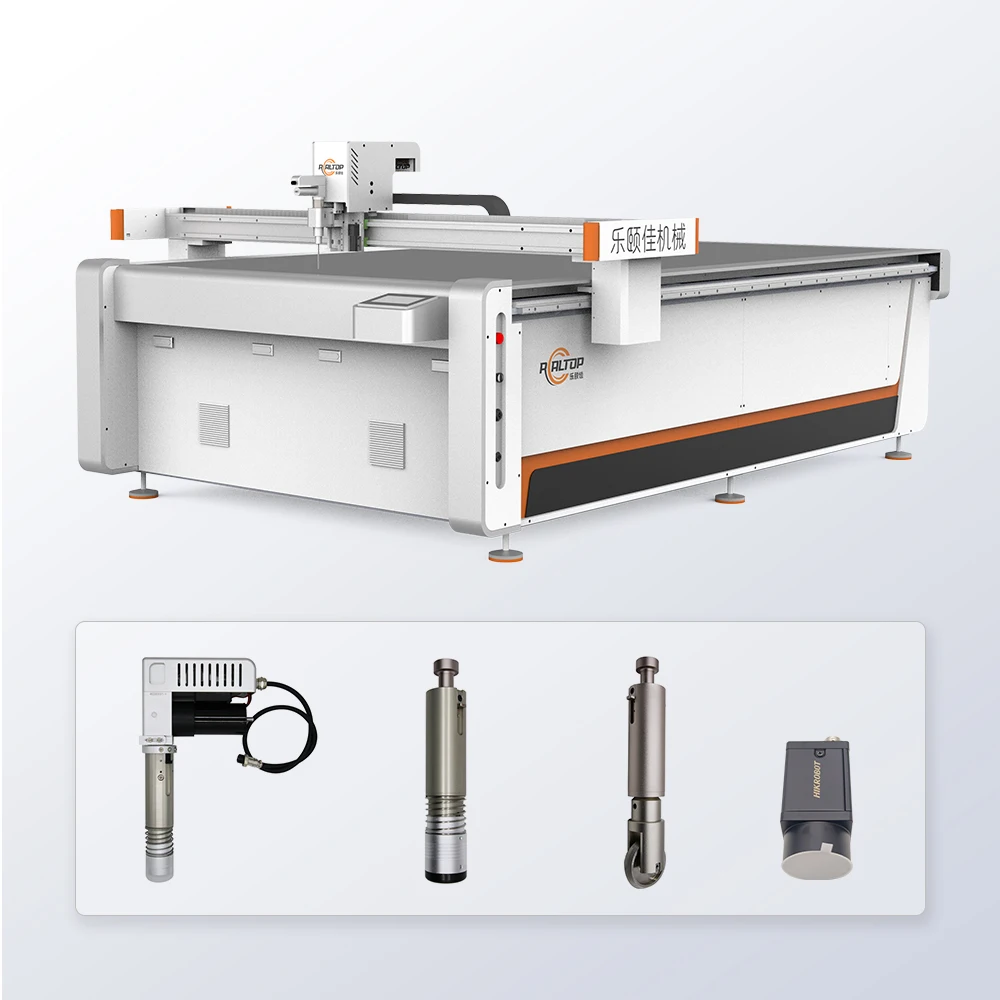
| Tool Head Options | Oscillating knife, Driven rotary knife, Creasing wheel, Kiss cutting tool, Pneumatic knife, Milling tool, V groove knife |
| File Formats Supported | PLT, DXF, AI, PDF |
| Control System | PLC control panel with intuitive interface |
| Servo Drive Options | Panasonic, Delta, Dorna (rated or peak not specified in source) |
| Vacuum Table | Aluminum bellows vacuum table |
| Overall Dimensions | 3300×2100×1350 mm |
| Safety Features | Infrared sensor device, emergency stop device |
Application Suitability
| Application | Material or Output |
|---|---|
| PTFE and rubber gasket fabrication | PTFE sheets, reinforced rubber, fiber-filled compounds |
| Automotive interior components | Sealing strips, acoustic felt, damping pads, insulation sheets |
| Aerospace composite layup | Carbon fiber prepreg, aramid honeycomb, thermal insulation foam |
| Wind power blade manufacturing | Fiberglass cloth, carbon fiber sheets, foam core materials |
| Sporting goods production | Kevlar layers, high-performance foam cores, carbon fiber sheets |
Why Material Verification Must Precede the Machine Order
A CNC oscillating knife cutting machine manufacturer that quotes based on sheet size alone is guessing at your actual cutting conditions. The machine must be configured around your specific material compound, not just its dimensions.
I have seen buyers order a unit based on a standard PTFE sample cut, only to run glass-fiber-reinforced modified compounds on the production floor. The result is rapid blade wear and frayed edges that force unplanned tooling changes mid-shift. Confirming the exact material composition and selecting the matching tool head before the machine leaves the factory prevents weeks of production disruption [NEED_CITE: composite cutting tool selection parameters].
Cold Cutting for Heat-Sensitive Composite Structures
Thermoset resins in carbon fiber prepreg and aramid honeycomb degrade when exposed to laser or friction heat. The oscillating knife method keeps the cutting zone at ambient temperature, preserving the resin matrix and fiber alignment at the edge. This matters most in aerospace layup, where delamination at the cut boundary can reject an entire panel during ultrasonic inspection.
Matching Tool Head Geometry to Material Behavior
The seven interchangeable tool heads cover materials that respond differently to blade geometry and stroke. An oscillating knife handles rigid foam and rubber cleanly, while a driven rotary knife suits flexible fabric layers that shift under reciprocating force. For glass-fiber-reinforced PTFE, a milling tool removes material rather than slicing through it, avoiding the fiber pull-out that a standard blade causes. Specifying the correct head at the order stage avoids retrofit costs later [NEED_CITE: tool head selection for fiber-reinforced polymers].
Reading the Specification Sheet Against Your Production Reality
The ±0.1 mm positioning accuracy determines how tightly nested gasket profiles can be cut without overlap errors — critical when blanking small sealing rings from expensive PTFE stock. The aluminum bellows vacuum table maintains surface flatness across the full 1600×2500 mm working area, but small gasket parts require zoned vacuum to prevent lift at the edges during cutting; verify zone count against your smallest part footprint. The 9 kW vacuum pump generates sufficient hold-down force for both rigid composites and flexible rubber sheets, though high-porosity materials like open-cell foam may need a secondary cover sheet to maintain suction.
The Configuration Mistakes That Surface After Delivery
Wrong tool head selection shows up immediately as ragged edges or crushed foam cores, but the buyer often blames the blade supplier before tracing the issue back to machine specification. Insufficient vacuum zoning causes small parts to shift mid-cut, producing scrap that looks like a programming error. When voltage and plug type are not confirmed against the facility supply, the servo drives can overheat or fail to reach rated speed, and the cost of a replacement drive board and downtime exceeds the price of the verification step [NEED_CITE: servo drive failure causes in industrial CNC equipment].
Why Buyers Source This Equipment From Our Facility
Realtop designs and produces both knife and laser systems under one roof, which means the oscillating knife configuration is selected based on material testing rather than pushed as the only available option. The in-house design team adjusts vacuum table zoning, tool head selection, and control language to match the buyer’s exact production setup. Every unit undergoes factory testing with the buyer’s material sample before packing, generating a cutting report that documents edge quality and dimensional accuracy. Documentation ships with the machine, including electrical schematics matched to the confirmed voltage, a software license note with file format compatibility, and a spare parts list built around the specific tool heads installed.
Documentation & Verification
- Machine specification sheet reflecting your confirmed tool head and vacuum table configuration
- Electrical schematic with voltage and frequency matched to your facility supply
- Sample cutting report on your composite or gasket material with edge quality documentation
- Software license and file format compatibility note for PLT, DXF, AI, and PDF workflows
- Factory test record with dimensional verification against your drawing tolerances
Installation, Commissioning & Support
- 3300×2100×1350 mm footprint requires level concrete floor with clearance for material loading on both sides
- 9 kW vacuum pump plus servo drives require dedicated circuit matching confirmed voltage option (110V/220V/380V)
- Machine ships partially assembled; frame leveling and vacuum table calibration completed on-site
- First-run parameter setting includes vacuum zone mapping, tool head stroke tuning, and PLC interface language confirmation
- Operator training covers tool head changeover, nesting software import, and file format workflow
- Spare blade and tool head list provided based on your material abrasiveness and daily cutting volume
What to Include in Your Technical Inquiry
Send the exact material type and compound specification, including any fiber reinforcement or filler content, along with the sheet dimensions and thickness range you run. Specify your local voltage and frequency standard, the control language your operators require, and whether you want sample cutting performed on your material before the configuration is finalized.
Frequently Asked Questions
Q: How is cutting thickness verified for my specific material before commitment?
A: We request a sample of your actual production material and run cutting tests at your specified thickness. The sample cutting report documents edge quality, tool head used, and achievable accuracy. This report is shared before the order is finalized so the configuration matches your real conditions.
Q: Which tool head is correct for my composite or gasket material?
A: The selection depends on fiber content, material hardness, and thickness. Oscillating knives suit homogeneous rubber and foam; driven rotary handles flexible fabrics; milling tools are required for fiber-reinforced compounds that cause blade wear. We determine this during sample cutting on your material.
Q: What voltage and control language options are confirmed before shipment?
A: The machine is available in 110V, 220V, and 380V configurations. Frequency and plug type are confirmed against your facility supply. The PLC interface is set to English, Russian, Italian, or Chinese, with custom languages available upon request.
Q: Can the vacuum table zoning handle small gasket parts without material lift?
A: The aluminum bellows vacuum table provides full-surface adsorption, but small parts require sufficient zone density to prevent edge lift during cutting. Zone count and layout are specified during configuration based on your smallest part footprint and material porosity.
You may also like

商品评价
Clear filtersThere are no reviews yet.