

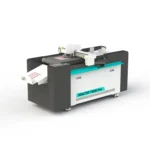
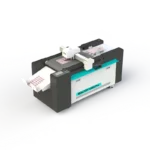
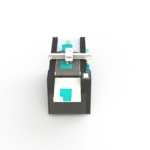
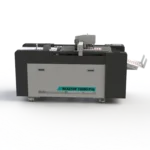

-
 Courier delivery
-
 DHL Courier delivery
-
 Warranty 1 year
-
 Free 30-Day returns

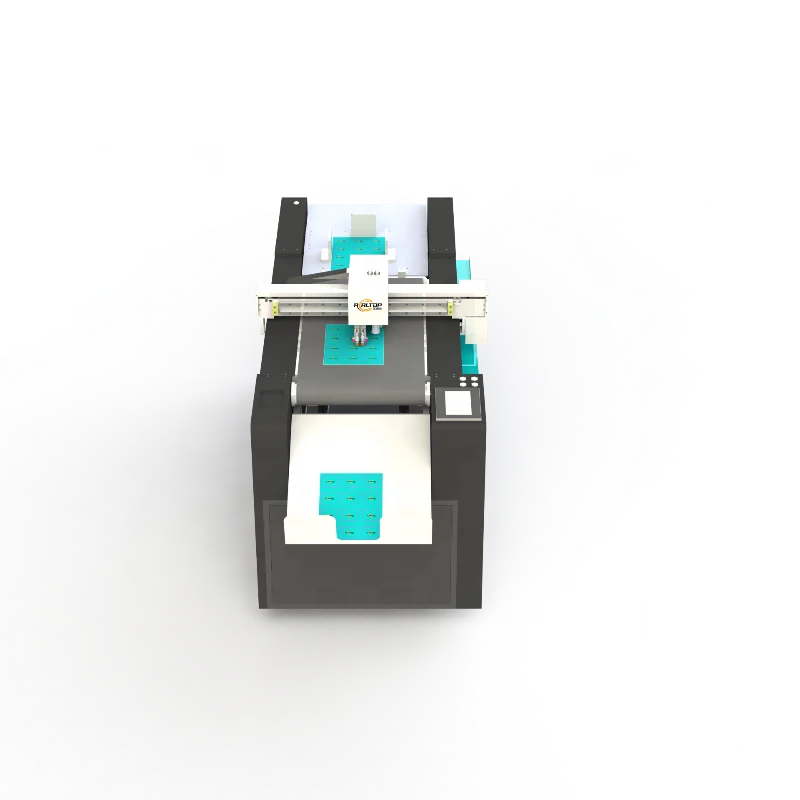
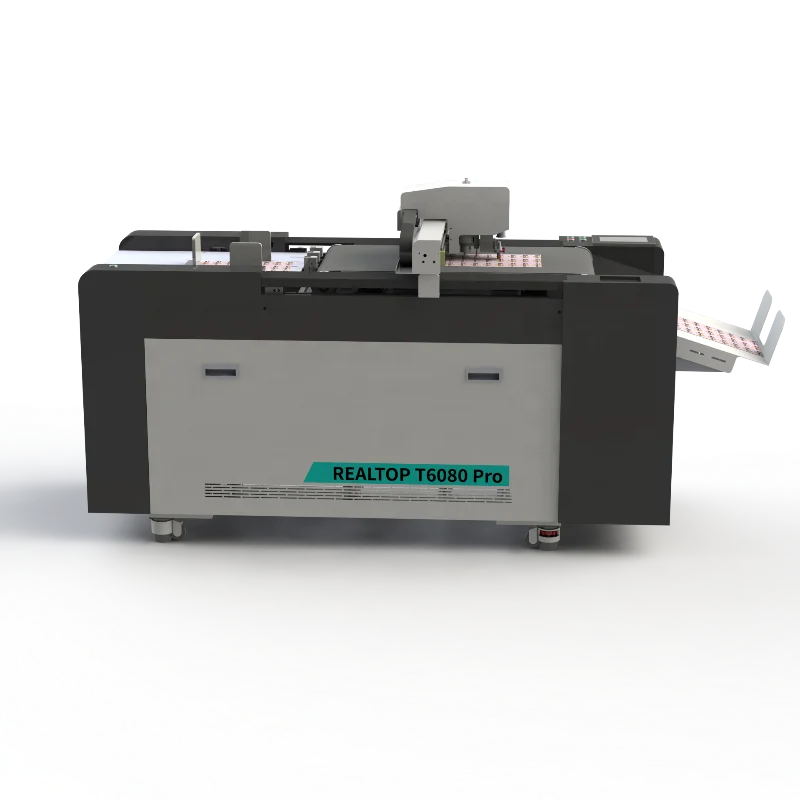
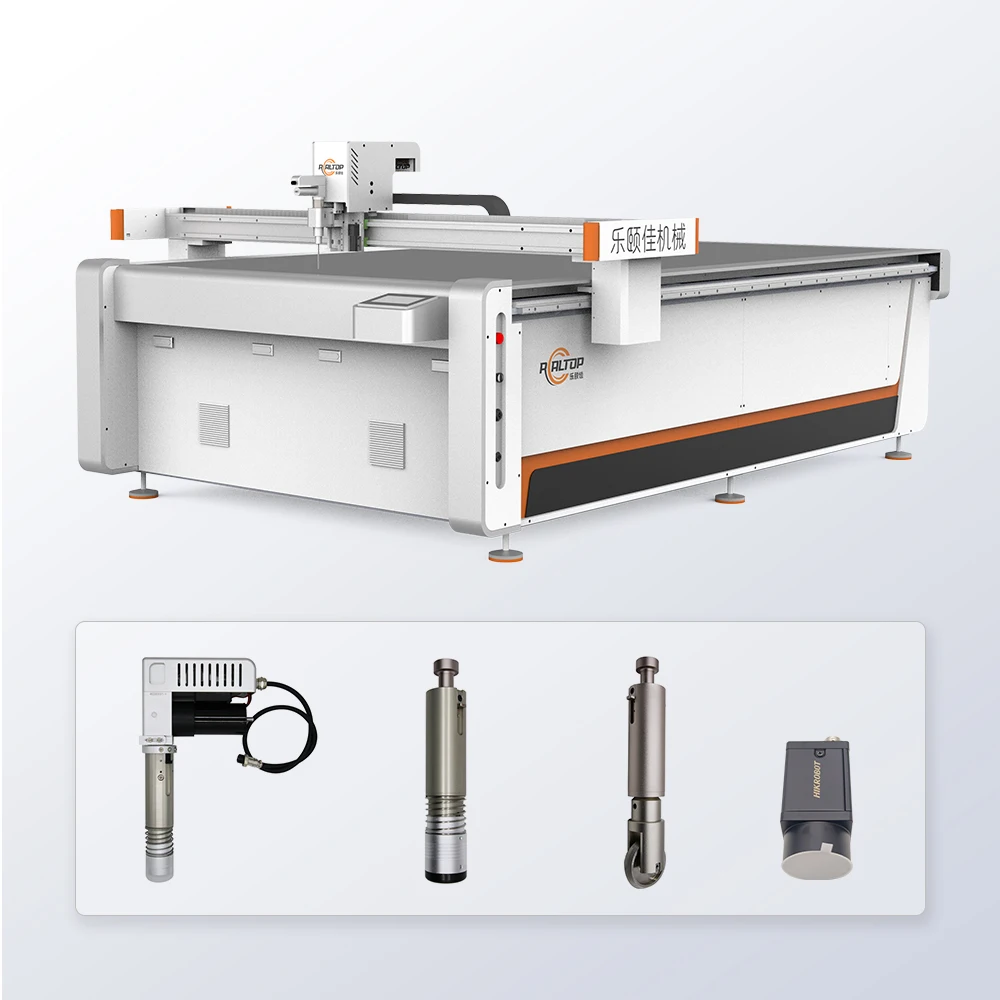
In-house tool head engineering — Every oscillating knife, drag knife and CCD mount on the RTT6080 series is designed and machined within the same facility that builds the frame, eliminating the alignment drift that occurs when cutting heads are sourced separately from the table.
Technical Specifications
| Parameter | Value |
|---|---|
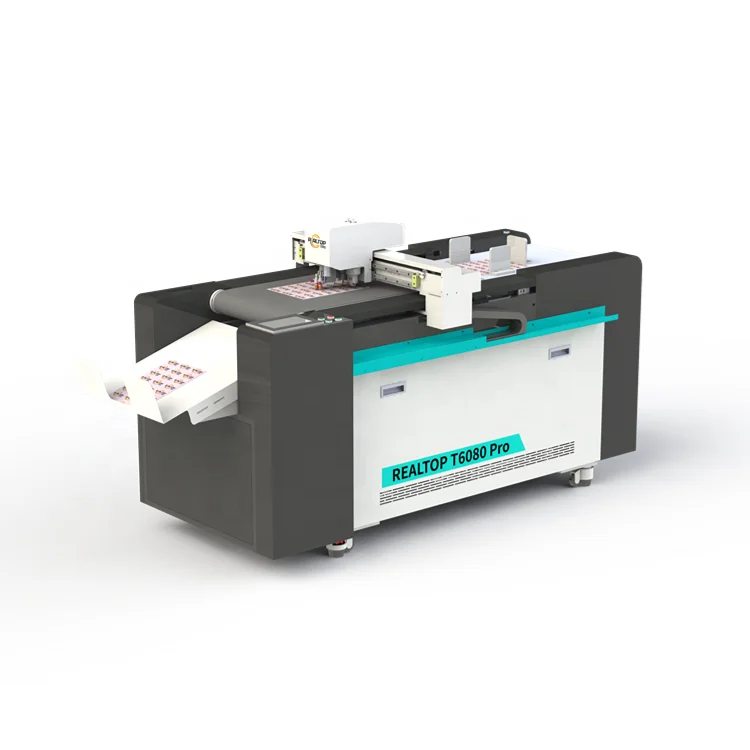
| Model | RTT6080 / RTT6080 Pro |
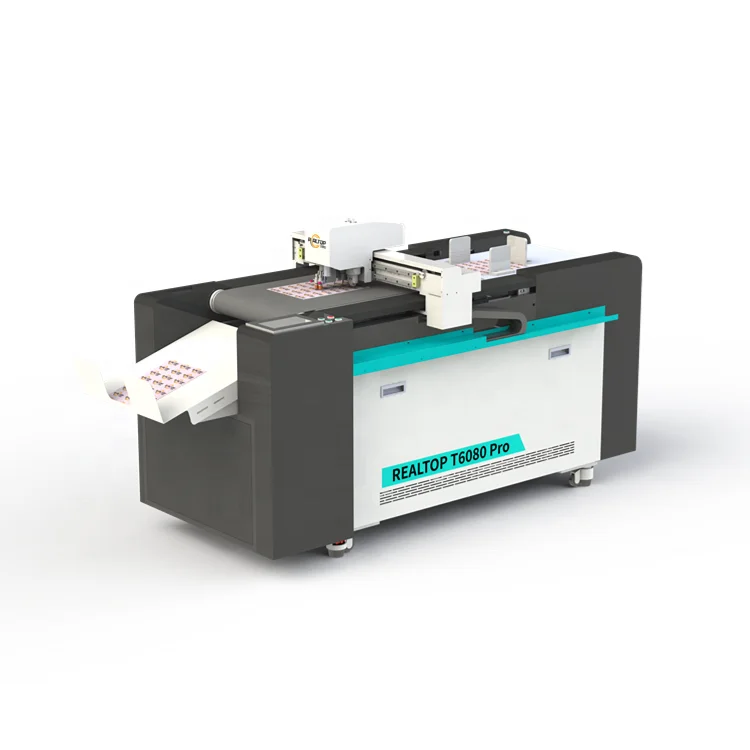
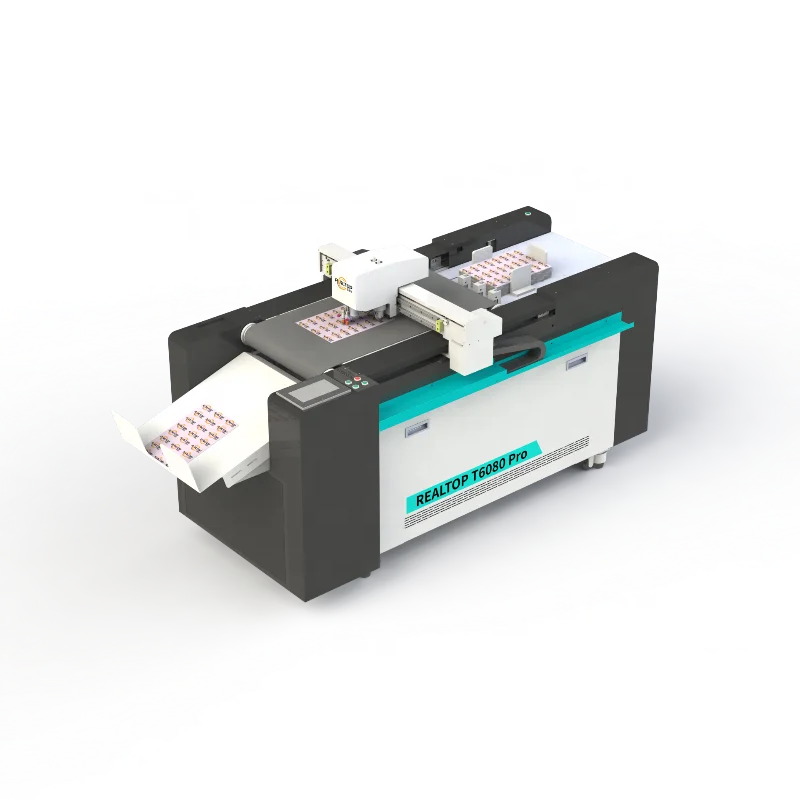
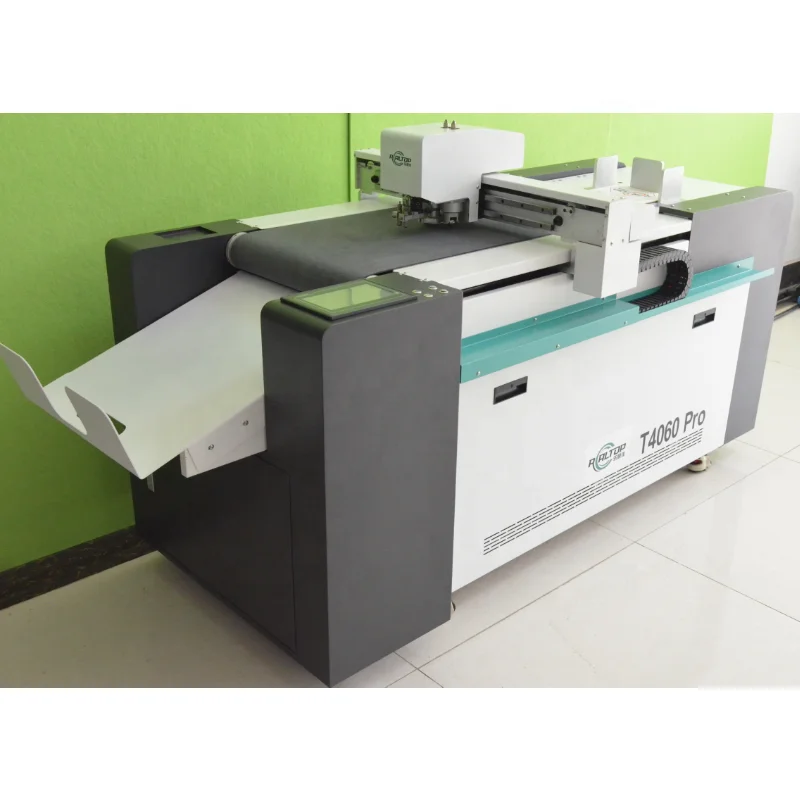
| Product Type | CNC Plotter Cutting Machine with Auto Label Die-Cut |
| Max Working Area | 600mm × 800mm |
| Tool Group | Cutting tool, kiss cutting tool, creasing tool, CCD camera, high speed oscillating knife (Pro version) |
| Max Cutting Speed | 1500mm/s (according to the material) |
| Cutting Thickness (RTT6080) | ≤2mm |
| Cutting Thickness (RTT6080 Pro) | ≤5mm |
| Positioning Accuracy | 0.05mm |
| File Format | DXF, PLT, PDF, AI |
| Transfer Method | Ethernet port |
| Rated Power | 3.2kW |
| Voltage | 220V / 380V, 50Hz |
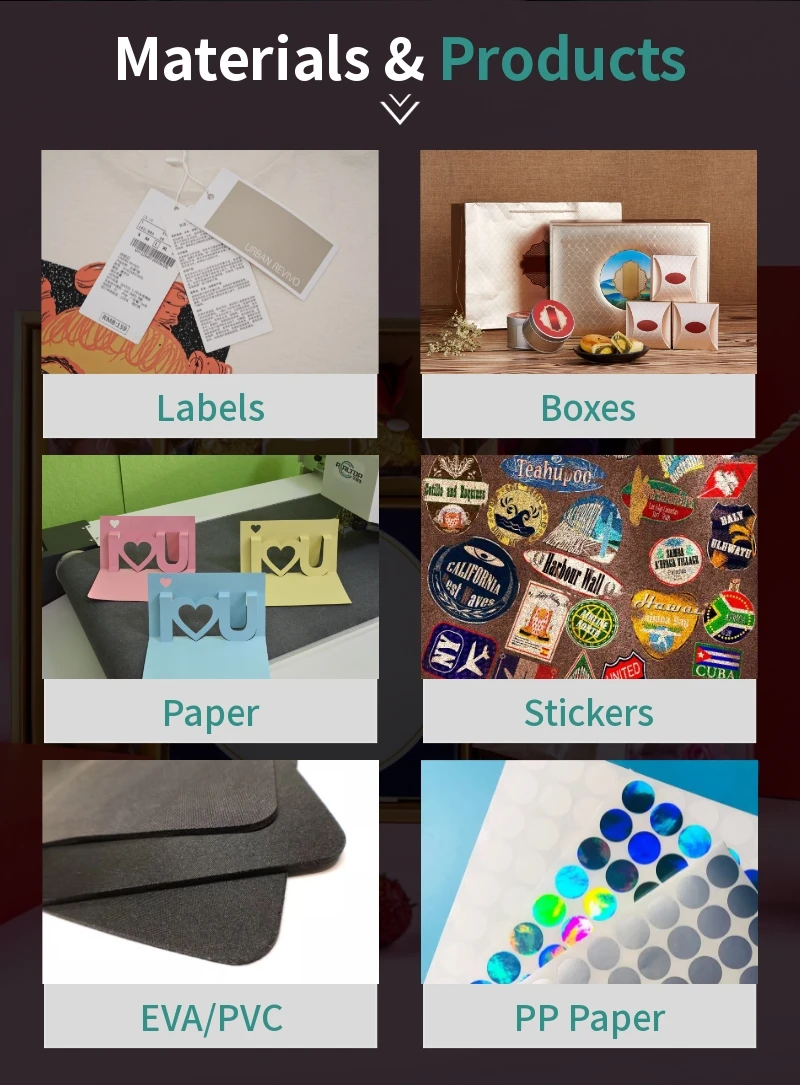
Application Suitability
| Application | Material or Output |
|---|---|
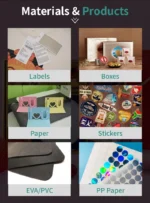
| Label and sticker die-cutting | Printed vinyl, adhesive paper, reflective film with CCD contour tracking |
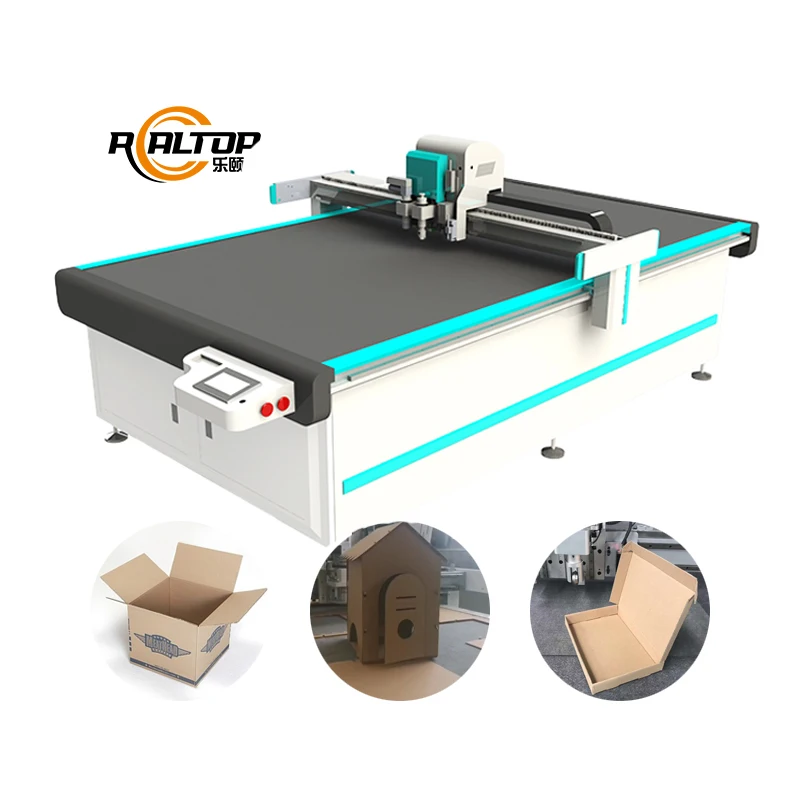
| Packaging and carton sample making | Corrugated board, cardstock, grey board with creasing and cut |
| Small-format garment and textile parts | Cotton, polyester, woven labels, thin foam interlining |
| Gasket and seal production | Non-asbestos fiber, PTFE sheet, thin rubber up to 5mm on RTT6080 Pro |
| Sticker kiss-cutting | Adhesive laminates on release liner without cutting through backing |
| Automotive interior sample cutting | Thin synthetic leather, headliner fabric, sound-deadening foam |
What "1500mm/s Cutting Speed" Leaves Out When the Tool Head Is Wrong for the Job
Cutting speed only matters once the tool, blade and vacuum zone match the actual material on the table.
I spent years on the assembly and testing floor here in Shandong before moving into technical support, and the most expensive downtime I witnessed came from a vibration knife machine shipped to a customer cutting automotive floor mats. The vacuum zoning was set for large panels, but his nesting layout was full of small pieces; mid-cut a part lifted off the table, caught the blade and bent the entire tool head. Production stopped while we sent replacements. After that, every machine I sign off on has its vacuum zones, blade type and stroke rate verified against the buyer’s real layout — not just the headline material. When a CNC plotter cutting machine manufacturer quotes a top speed figure, ask what material and what piece geometry that figure was measured on [NEED_CITE: oscillating knife cutting speed dependence on material density and part geometry]. A 1500mm/s headline means very little if your label stock chatters at anything above half that rate.
Frame Rigidity That Holds 0.05mm Across the Full Bed
The RTT6080 series starts from a welded steel frame stress-relieved before machining, which is the baseline needed to keep positioning accuracy at 0.05mm when the tool head reverses direction at high traverse rates. On a 600mm × 800mm table the gantry span is short enough that deflection stays within tight limits even during aggressive cornering on label contour paths. This is the foundation that lets the CCD camera register printed marks and send offset corrections to the controller without the frame movement adding its own error on top. A CNC plotter cutting machine manufacturer that skips stress relief on the frame will see accuracy drift as the welds settle over the first months of operation.
CCD Contour Recognition on Real Production Stock, Not Just a Demo Sheet
The CCD camera on the RTT6080 is integrated into the tool group rather than bolted on as an afterthought, which keeps the focal distance fixed relative to the cutting blade. Before any machine leaves the factory we run the buyer’s own printed label or decal stock through a full contour cycle — at production cutting speed, not slowed down for a video [NEED_CITE: CCD mark-tracking reliability at varying print contrast and laminate gloss levels]. If the registration marks are low contrast, partially covered by lamination or printed with a slight color shift, we adjust the recognition threshold or recommend a different mark layout before the buyer commits. Too many suppliers promise contour cutting on a hand-picked demo sheet and then the camera loses tracking once real production variance shows up.
How the Specification Sheet Translates to Actual Cutting Results
The 0.05mm positioning accuracy spec governs how tightly the blade follows a vector path after the CCD camera hands off the registration offset — critical when kiss-cutting adhesive labels where a 0.1mm drift leaves the backing scored. The ≤2mm cutting thickness on the RTT6080 and ≤5mm on the RTT6080 Pro are measured with standard oscillating knife strokes on homogeneous materials; dense gasket stock may require a slower feed rate to maintain edge squareness through the full depth. The 3.2kW rated power covers the servo drives, vacuum pump and spindle motor simultaneously, so there is no power shortage when all axes accelerate together. File formats DXF, PLT, PDF and AI are processed natively, which means the nesting software does not have to convert through an intermediate format that can collapse small-radius corners on intricate label shapes. Ethernet transfer keeps the machine on the shop network without the cable-length limits and driver issues of USB, a practical detail when the design office sits across the floor from the cutting table [NEED_CITE: industrial Ethernet versus USB reliability in CNC machine data transfer].
The Downtime Cost of Skipping the Tool-Head Conversation
A buyer once specified a CNC plotter cutting machine on working area alone, assuming the standard drag knife would handle everything from sticker kiss-cuts to 4mm foam gaskets. The drag knife produced a clean kiss-cut on labels but crushed the foam edges instead of shearing through them, and the customer spent two weeks trying to force feed-rate adjustments to compensate. By the time we swapped in the oscillating knife head and re-ran the samples, the production schedule was already late. Wrong tool head selection is not a cosmetic issue — it shows up as ragged edges that get rejected downstream, crushed foam that will not seal, or creasing wheels that crack the coating on laminated board [NEED_CITE: tool head selection impact on edge quality in digital flatbed cutting]. Every configuration conversation should start with the material stack, not the machine model.
Why Buyers Source This Machine Directly From the Factory Floor
The tool heads and the table are designed and built under one roof, so the CCD camera offset, the knife stroke length and the vacuum zone layout are tuned as a single system rather than assembled from separate vendor sub-assemblies. Every RTT6080 and RTT6080 Pro goes through a factory test on the buyer’s own material before dispatch — not a generic demo sheet — with a cutting report that documents edge quality, contour tracking accuracy and vacuum hold at the buyer’s actual production speed. The electrical schematic and voltage confirmation are locked in before production starts, so a 220V 50Hz market does not receive a 380V cabinet by mistake. Software license and file format compatibility are confirmed at order stage, meaning DXF, PLT, PDF and AI imports are verified against the buyer’s existing workflow. Sample cutting on the buyer’s own material is offered before commitment, removing the guesswork from thickness ratings and tool head selection.
Documentation & Verification
- Machine specification sheet listing the exact tool heads, blade types and vacuum zone layout configured for your material
- Electrical schematic and voltage confirmation document matching your site supply before the cabinet is wired
- Sample cutting report on your own label stock, gasket sheet or fabric, with measured edge quality and CCD tracking results
- Software license and file format compatibility note covering DXF, PLT, PDF and AI import paths verified with your files
- Factory test record documenting axis accuracy, vacuum pressure and tool change cycle times before crating
- Packing photographs showing machine condition, cable routing and crate bracing at the point of dispatch
Installation, Commissioning & Support
- 3.2kW rated power requires a dedicated circuit; confirm breaker sizing for continuous servo and vacuum pump draw
- 600mm × 800mm working area fits through standard doorways, so no wall removal is needed for ground-floor placement
- Ethernet port connection to the shop network is configured during commissioning for file transfer from the design station
- Vacuum pump and solenoid valve zoning are calibrated on-site to match the buyer’s nesting layout and smallest part size
- Tool head changeover between cutting, kiss cutting, creasing and CCD is demonstrated with the buyer’s operators during training
- Spare blade and creasing wheel list is provided at handover with reorder intervals based on the buyer’s material abrasiveness
What We Need to Quote the Right Configuration
Send us the material type, thickness range and whether you need full cut, kiss cut or creasing — or a combination on the same sheet. Let us know your typical label or part dimensions, the smallest piece in your nesting layout and whether the stock is printed with registration marks for CCD tracking. Confirm the voltage and frequency at your site along with the control language your operators need, and whether you want us to run sample cuts on your own material before the order is finalized.
Frequently Asked Questions
Q: How is cutting thickness verified for my specific material, and what does the ≤2mm or ≤5mm rating actually cover?
A: The ≤2mm rating on the RTT6080 and ≤5mm on the RTT6080 Pro are based on standard oscillating knife cuts on homogeneous materials. Dense or abrasive stocks like reinforced gasket may cut at those depths but need slower feed to hold edge squareness. We verify on your actual material and document the result in the sample cutting report before you commit.
Q: Can the CCD camera reliably track printed marks on my label stock at full cutting speed?
A: Reliability depends on mark contrast, laminate gloss and print consistency. We test the CCD on your own printed stock at production speed during the sample cutting stage and adjust the recognition threshold if needed. If your mark layout needs modification, we flag it before the order rather than after delivery.
Q: Which tool head configuration is right for my material — knife, kiss cut, creasing or a combination?
A: That depends on the material stack and the end product. Kiss cutting suits adhesive labels on release liners, creasing fits cardstock and corrugated sample making, and the oscillating knife handles thicker foam and gasket. We specify the tool group from the available options based on your material samples and production layout.
Q: Is the control software and language configurable for my market, and which file formats are supported natively?
A: DXF, PLT, PDF and AI are processed natively without intermediate conversion. The control language is configurable at order stage, and we confirm the software license and file format compatibility against your existing design workflow before production begins so there are no import surprises on the shop floor.
Q: What voltage, plug and electrical documentation do you confirm before shipment?
A: We confirm voltage and frequency — 220V or 380V at 50Hz — along with the plug type required at your site before the cabinet is wired. The electrical schematic and voltage confirmation document are included in the shipping documentation so your electrician has everything needed for connection on arrival.
You may also like

商品评价
Clear filtersThere are no reviews yet.