



-
 Courier delivery
-
 DHL Courier delivery
-
 Warranty 1 year
-
 Free 30-Day returns

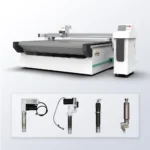
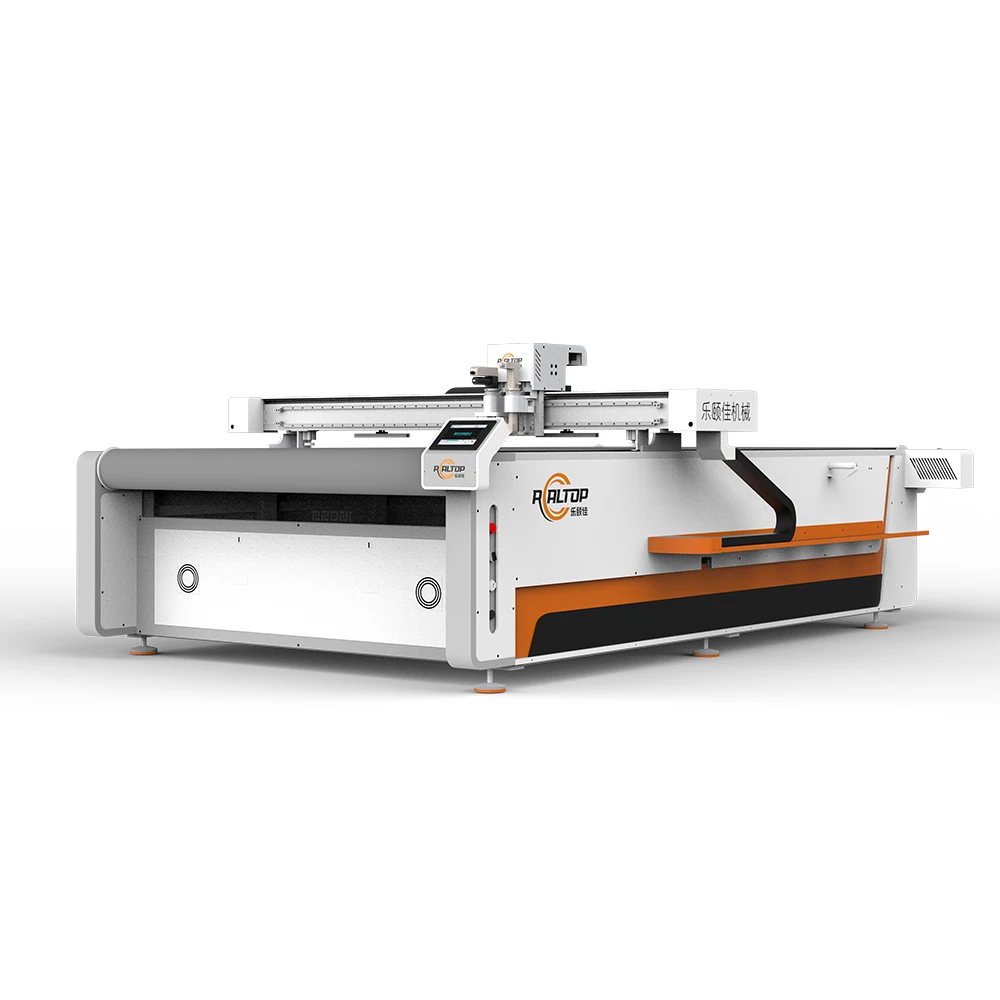
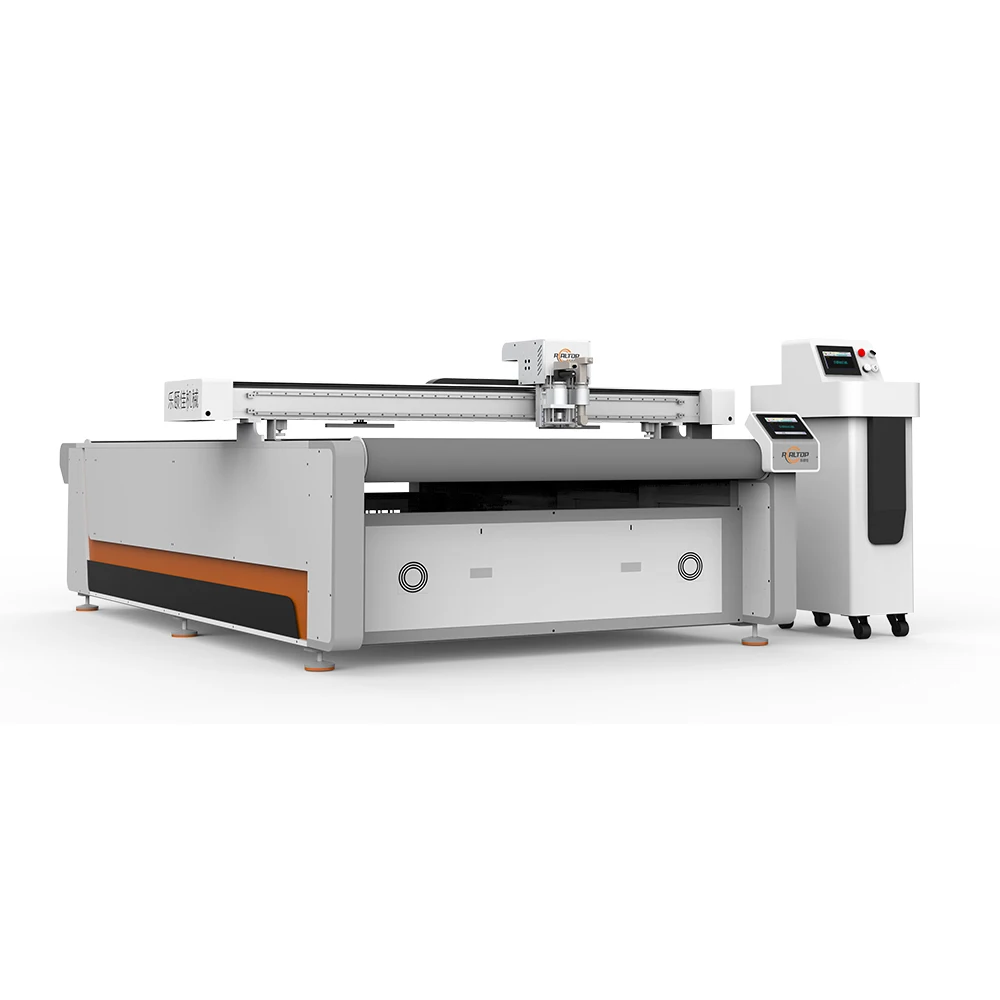
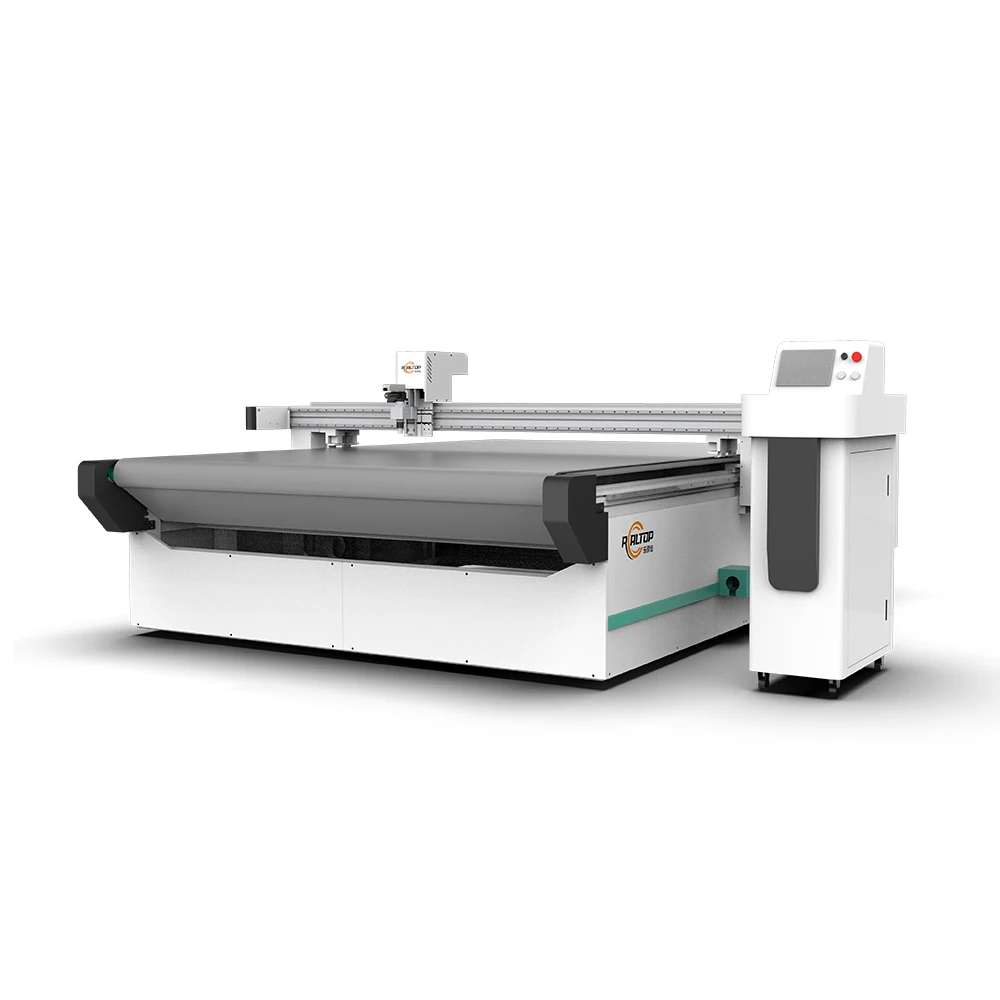
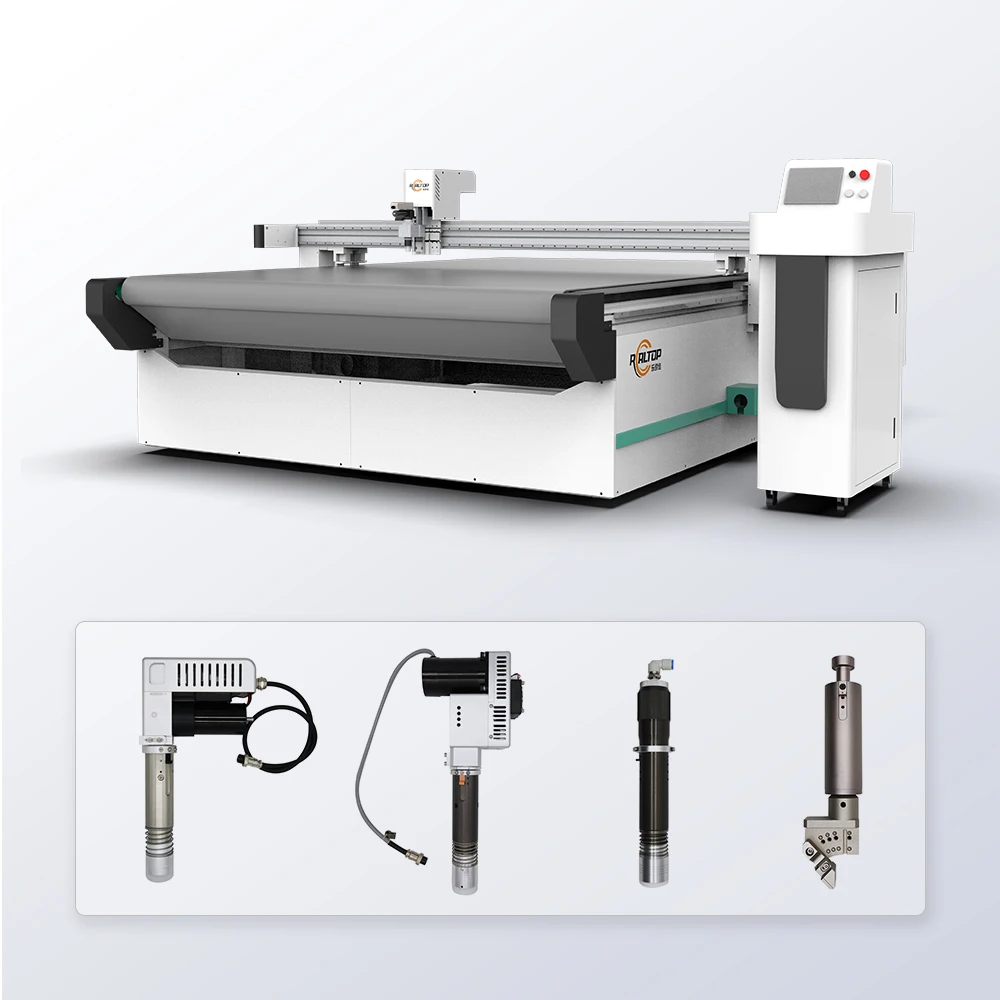
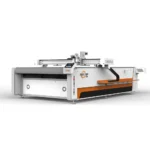
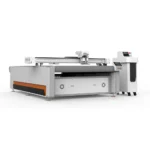
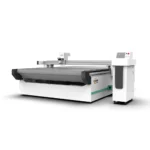
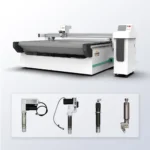
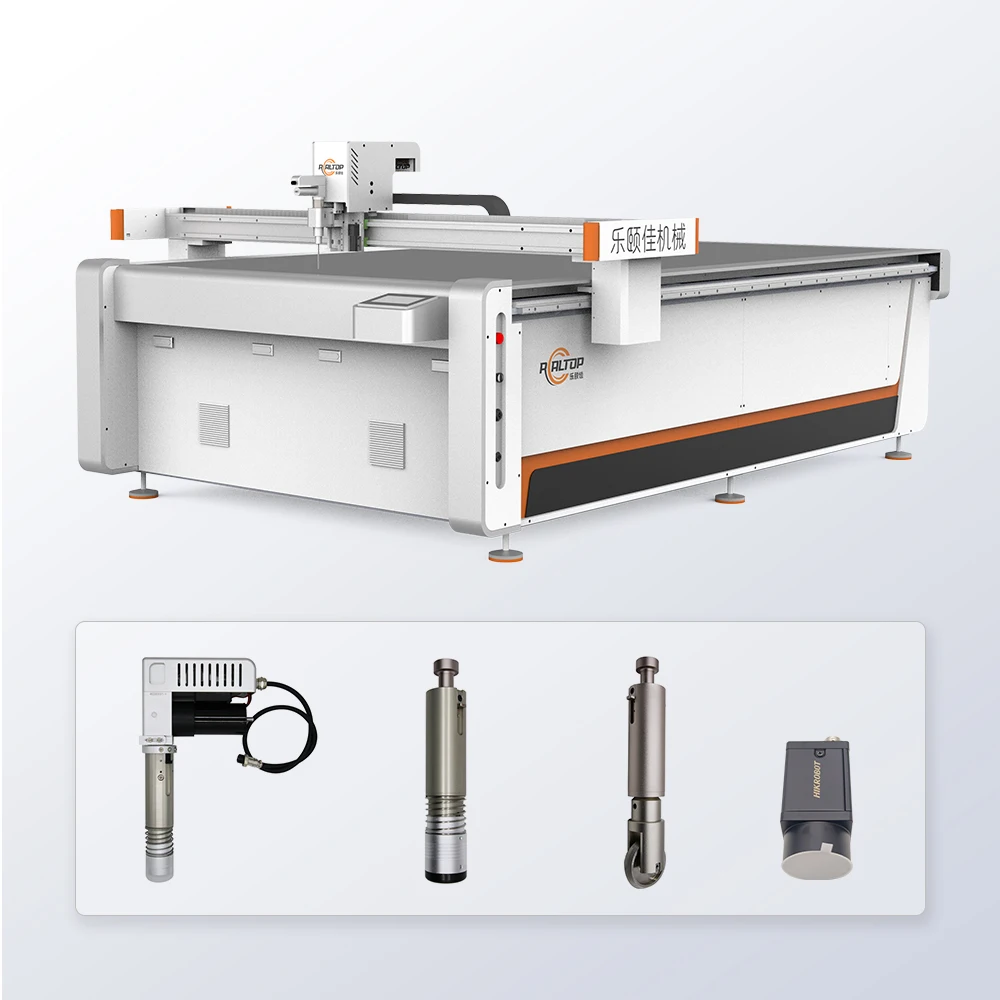
Multi-Tool Cutting Integration — Oscillating knife, driven rotary, creasing wheel, and pneumatic knife heads are engineered on a single 1625 gantry so fabric converters match tooling to material construction rather than forcing one method across the line.
Technical Specifications
| Parameter | Value |
|---|---|
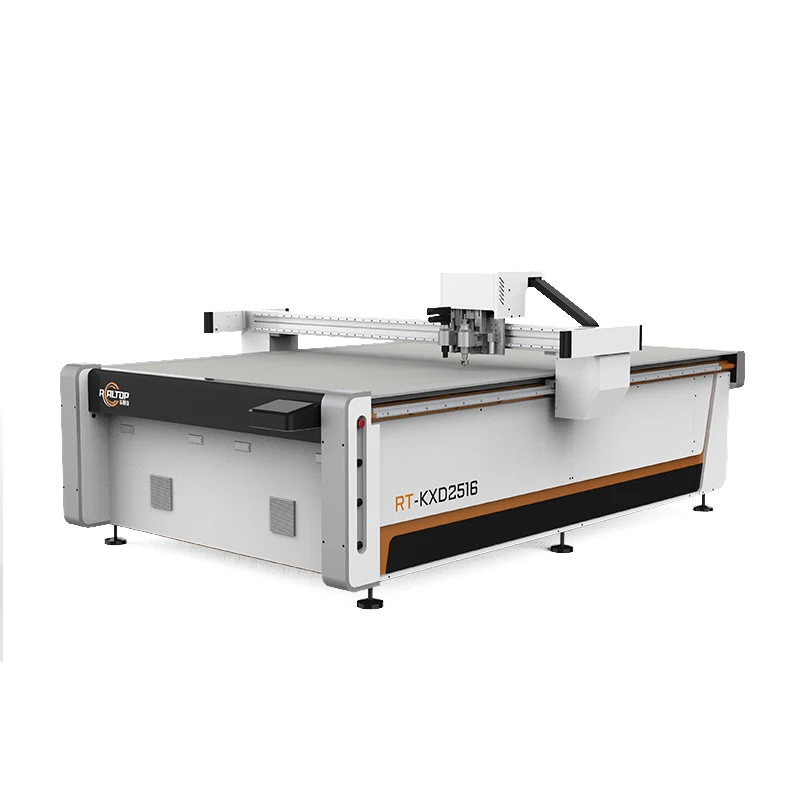
| Model | 1625 |
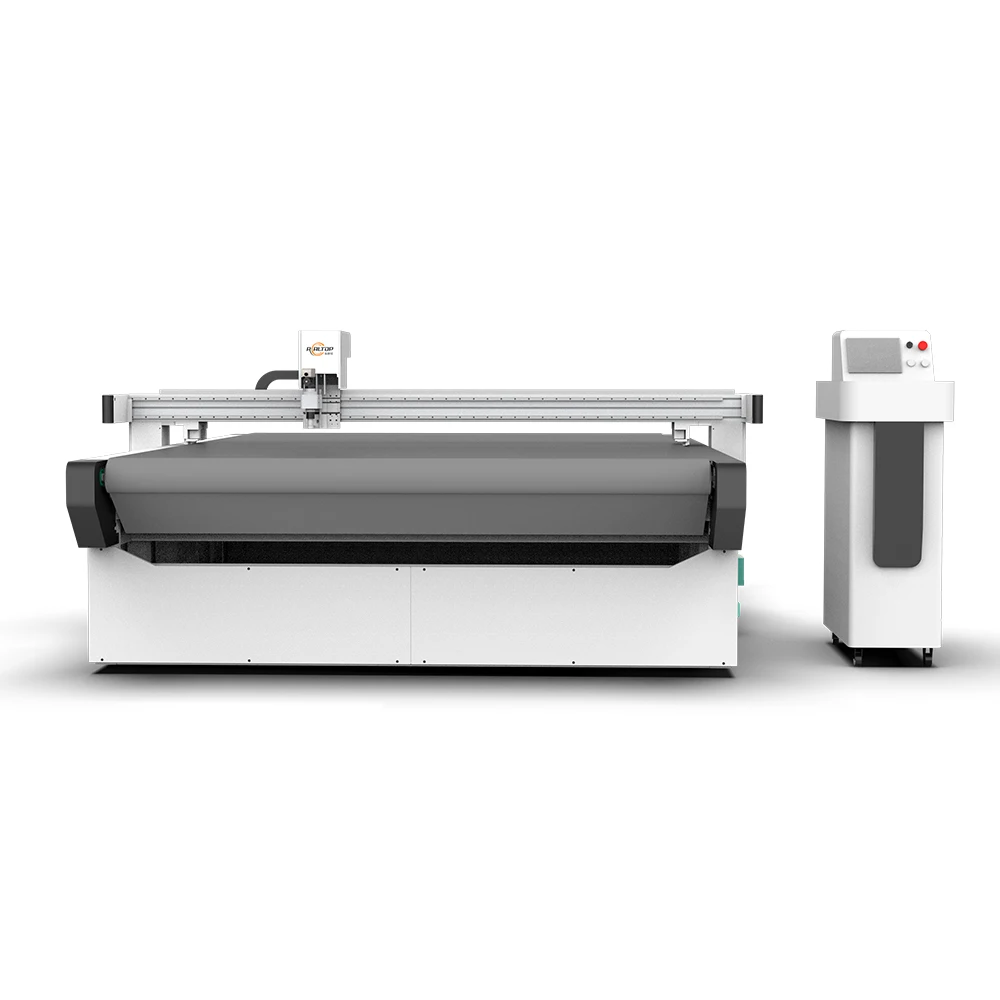
| Product Type | CNC Oscillating Knife Cutting Machine |
| Working Area | 1600 × 2500 mm |
| Tool Head Options | Oscillating knife, Driven rotary knife, Creasing wheel, Kiss cutting tool, Pneumatic knife, Milling tool, V groove knife |
| Cutting Speed | 0–2000 mm/s |
| Cutting Thickness | ≤ 30 mm (basis not stated in source — confirm material type and density) |
| Positioning Accuracy | ±0.1 mm |
| Vacuum Pump Power | 9 kW |
| Vacuum Table Type | Aluminum bellows, full surface adsorption |
| Control System | PLC control panel |
| Servo Motor Options | Panasonic, Delta, Dorna |
| Supported File Formats | PLT, DXF, AI, PDF |
| Voltage Options | 110V, 220V, 380V |
| Language Options | English, Russian, Italian, Chinese, custom languages available |
| Safety Features | Infrared sensor device, emergency stop |
| Machine Dimensions | 3300 × 2100 × 1350 mm |
| Included Software | Dedicated packaging box structure design software |
Application Suitability
| Application | Material or Output |
|---|---|
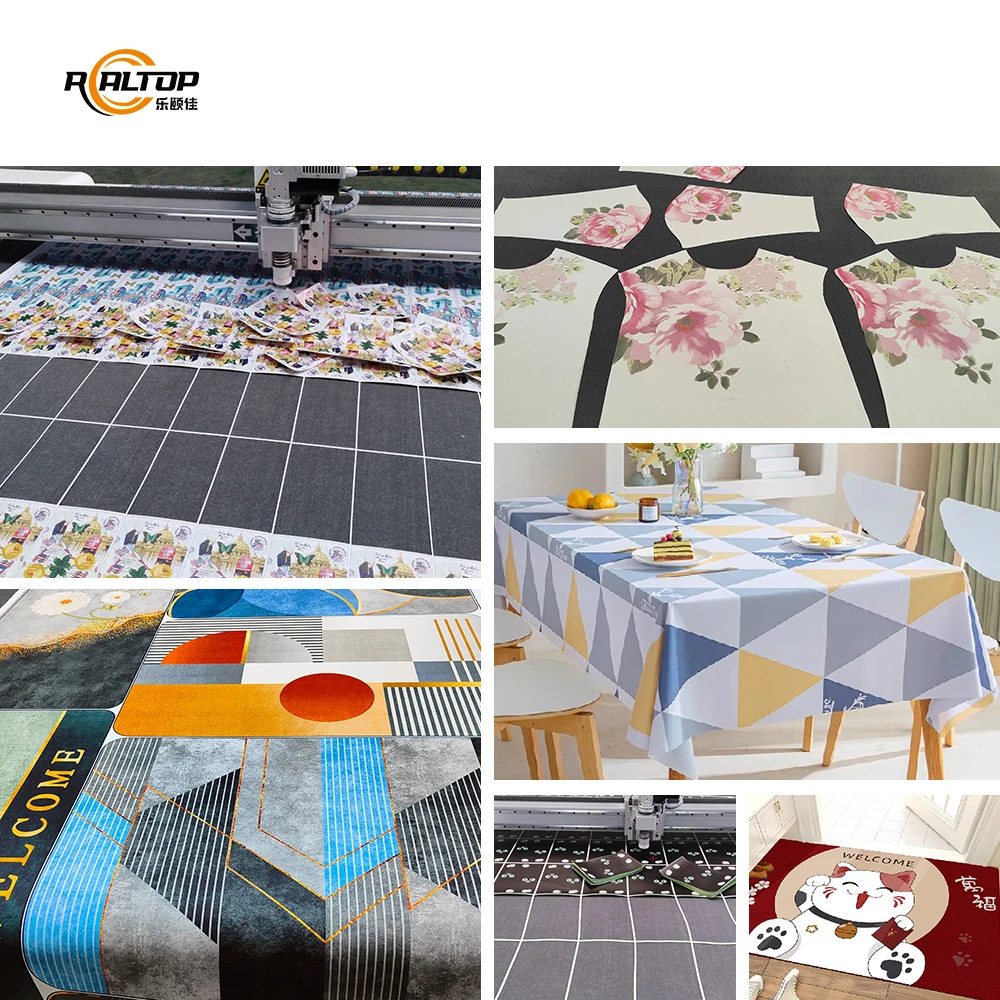
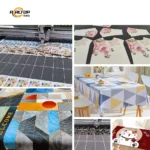
| Apparel manufacturing | Suits, knitwear, lace, complex woven and knitted fabrics |
| Automotive interiors | Seat fabrics, carpets, PVC floor mats |
| Home textiles | Sofa upholstery, curtains, rugs |
| Composite processing | Carbon fiber prepreg, aramid sheets |
| Gasket and sealing | PTFE, rubber, EVA foam |
What "Cutting Thickness ≤ 30mm" Actually Means for Your Fabric
A thickness rating on a spec sheet is only valid when the material type, density, and layer count are defined together.
When I installed fabric cutting systems across Latin America, the most common failure wasn’t the machine — it was the specification. A buyer in Mexico ordered a unit rated for 30mm cutting depth, expecting clean edges on multi-layer coated textiles. The first production run produced frayed edges and delaminated layers because the coating changed how the blade engaged the material. We ended up reconfiguring the tool head and adjusting vacuum zoning before the line could run. [NEED_CITE: fabric density and layer adhesion effects on oscillating knife cutting performance]
A CNC Oscillating Knife Cutting Machine manufacturer should always validate thickness capacity against the buyer’s specific fabric stack, not a generic test piece. Without that sample report, the 30mm figure is a starting point for conversation, not a guarantee.
Tool Head Selection Based on Fabric Construction
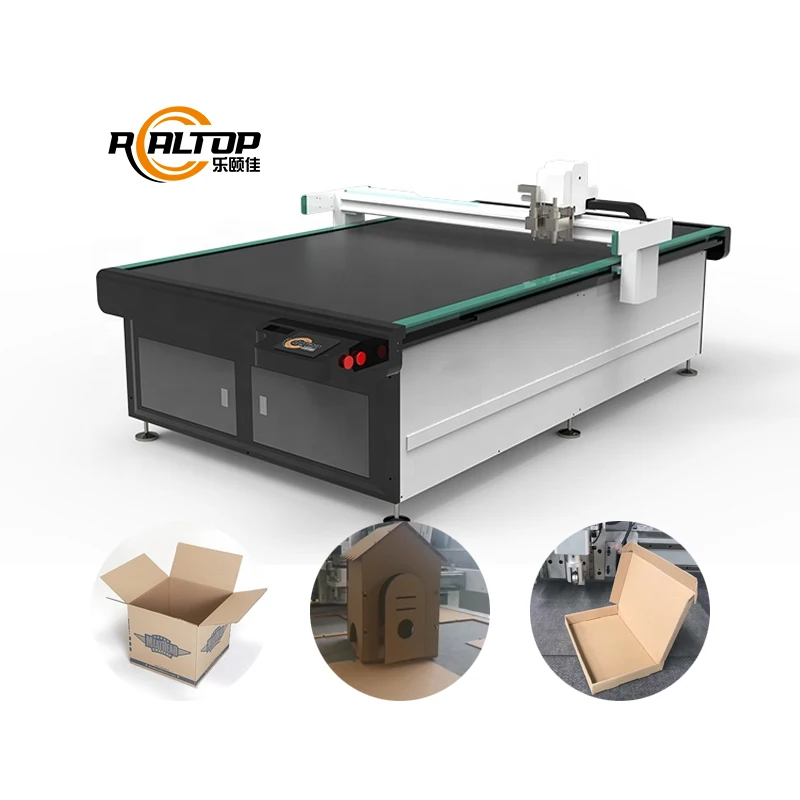
Woven cotton, coated synthetics, and non-woven felts each respond differently to blade action. The oscillating knife handles standard fabric stacks with vertical reciprocation, while the driven rotary knife suits tightly woven or slippery materials where a dragging blade would pull the top layer. For crease lines on packaging samples, the creasing wheel replaces the cutting tool entirely. The 1625 platform allows these heads to be specified at order based on the buyer’s material library, and swapped on the gantry as production requirements shift.
Vacuum Zoning and Small Part Stability
The aluminum bellows vacuum table provides full surface adsorption across the 1600 × 2500 mm bed. In practice, small garment pattern pieces require zoned vacuum control to prevent lift at the cut boundary — when the blade exits a contour, unsecured edges can drift by fractions of a millimeter, enough to cause nesting misalignment downstream. The 9 kW vacuum pump supports this, but the zoning configuration must be specified to match typical part size. [NEED_CITE: vacuum table zoning requirements for small nested fabric parts]
Reading the Specs That Matter
The ±0.1 mm positioning accuracy governs how tightly pattern pieces can be nested, directly affecting material yield in high-volume garment production. The 0–2000 mm/s cutting speed range must be read alongside material behavior — aggressive speed on stretch knit fabric produces distortion at contour changes, so the PLC control must allow per-contour speed override. The 9 kW vacuum pump power determines hold-down force; heavier or more porous fabrics demand higher suction to maintain flatness during multi-layer cuts. Servo motor selection — Panasonic, Delta, or Dorna — influences repeatability across long production runs and maintenance availability in different regions.
The Cost of Wrong Tooling on Coated Materials
Running a coated textile with a standard oscillating knife often produces burrs at the coating boundary and delamination between layers. The buyer then faces material waste, re-cuts that delay shipment schedules, and tool wear that shortens blade life. In one installation, switching from a standard oscillating head to a pneumatic knife for a PVC-coated polyester eliminated edge defects entirely. [NEED_CITE: tool head mismatch consequences on coated and laminated fabrics] The cost of getting this wrong at the ordering stage is always higher than a sample test before commitment.
Why Source This Machine From the Build Floor
The design and production of knife cutting systems happens in-house, so tool head configuration and vacuum table zoning are specified per buyer material rather than pulled from a standard catalog. Sample cutting runs on the buyer’s actual fabric generate a documented report that locks parameters before shipment. Voltage, plug type, and control language are confirmed at order stage, not discovered at customs. Software file format compatibility — PLT, DXF, AI, PDF — is verified against the buyer’s existing nesting workflow. The 1625 frame and motion components are assembled and tested under factory conditions before packing, so commissioning time at the buyer’s floor is reduced.
Documentation & Verification
- Factory test record on buyer’s fabric type with cutting edge quality assessment
- Electrical schematic confirming voltage, frequency, and plug type for destination market
- Tool head and vacuum zone configuration list matched to buyer’s material catalog
- Software license and confirmed file format compatibility note for nesting workflow
- Operation and maintenance manual in selected control language with spare parts list
Installation, Commissioning & Support
- 3300 × 2100 × 1350 mm machine footprint requires level concrete floor with clearance for material feed and offcut removal
- Dedicated electrical circuit sized for 9 kW vacuum pump plus servo load, with confirmed voltage at point of use
- Gantry and tool head assembly on site with vacuum table leveling and belt tension verification
- First-run parameter setting on buyer’s fabric stock, with speed and vacuum adjustments per material type
- Operator training on PLC control panel in selected language, covering tool change and nesting import
- Spare oscillating knife blades and vacuum seals provided with recommended replacement intervals
What to Include With Your Inquiry
Provide the fabric type, weight per square meter, and whether it is coated, laminated, or multi-layer. Specify the maximum stack height you plan to cut and the smallest part dimension in your nesting patterns. Confirm your facility voltage, frequency, and the control language your operators will need.
Frequently Asked Questions
Q: How is cutting thickness verified for my specific fabric before shipment?
A: The buyer sends a representative material sample, and a cutting test is performed with the proposed tool head and vacuum configuration. The test produces a documented report showing edge quality, layer separation behavior, and achievable speed. Parameters that pass are locked into the machine’s control system before dispatch, so the unit arrives pre-configured for the buyer’s production stock.
Q: Which voltage and control language options are available for export markets?
A: The 1625 platform supports 110V, 220V, and 380V configurations. The correct voltage must match the buyer’s facility supply, confirmed before production begins. Control language options include English, Russian, Italian, Chinese, and custom languages on request. The PLC interface and included packaging design software are both set to the selected language before factory testing.
Q: How do I choose the right tool head for my material?
A: Tool head selection starts with material construction — woven, knitted, coated, or composite — and the required edge quality. Oscillating knives suit standard fabric stacks, driven rotary knives handle slippery or tightly woven materials, and pneumatic knives manage coated textiles where standard blades produce burrs. A sample test on the buyer’s material confirms which head delivers clean edges at production speed.
Q: Can the vacuum table hold small nested parts without lift?
A: The aluminum bellows table with 9 kW vacuum pump provides strong full-surface adsorption, but small parts require zoned vacuum to concentrate suction where material exists. The zoning layout is specified based on the buyer’s typical nesting patterns during the ordering stage. Without proper zoning, small garment pieces can lift at cut boundaries and shift by fractions of a millimeter.
Q: What factory documentation ships with the machine?
A: Each unit ships with a factory test record performed on the buyer’s material, an electrical schematic confirming destination voltage, a tool head and vacuum configuration list, software license documentation with file format compatibility notes, and an operation manual in the selected language. Packing photographs are provided before crate sealing for shipping verification.
You may also like

商品评价
Clear filtersThere are no reviews yet.