


-
 Courier delivery
-
 DHL Courier delivery
-
 Warranty 1 year
-
 Free 30-Day returns

Specified Cutting Depth — verified against your fabric stack and layer count before the RT-D2516/RT-S2516 goes into build.
Technical Specifications
| Parameter | Value |
|---|---|
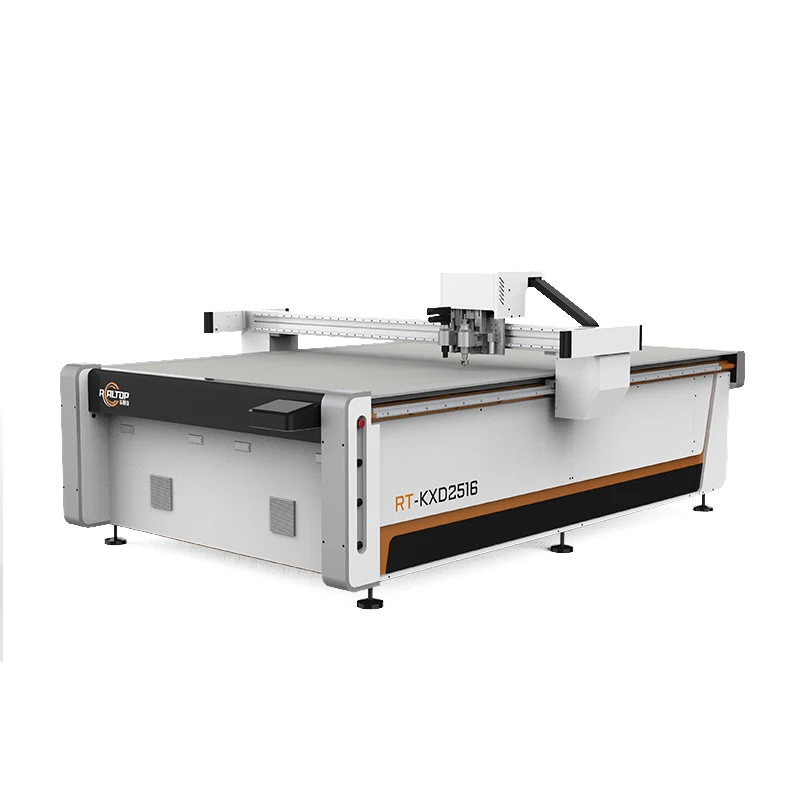
| Model | RT-D2516/RT-S2516 |
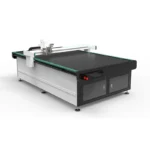
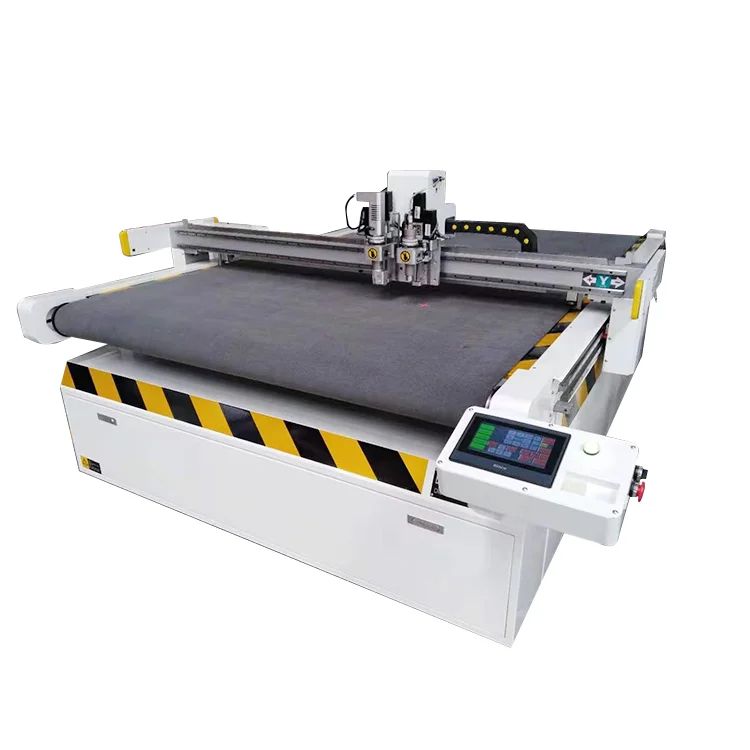
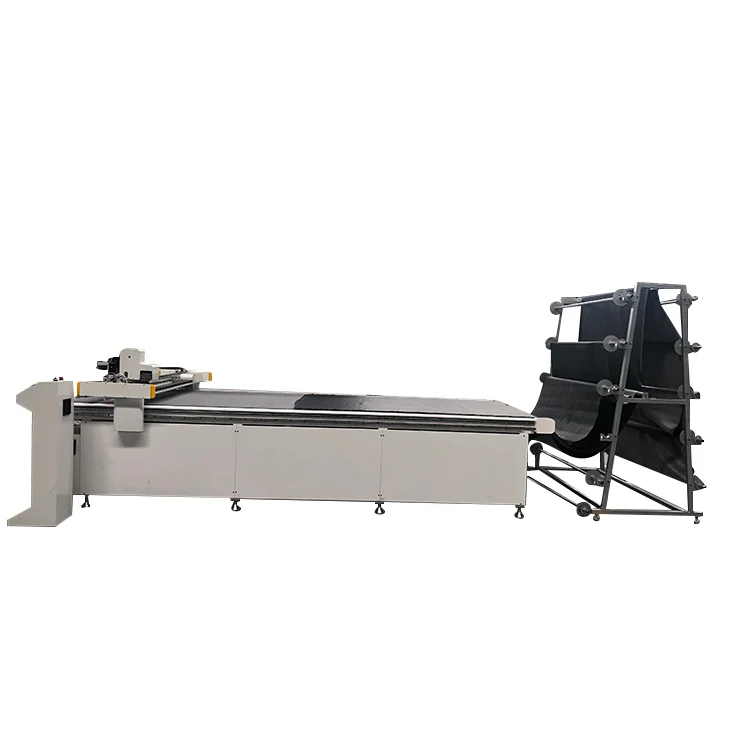
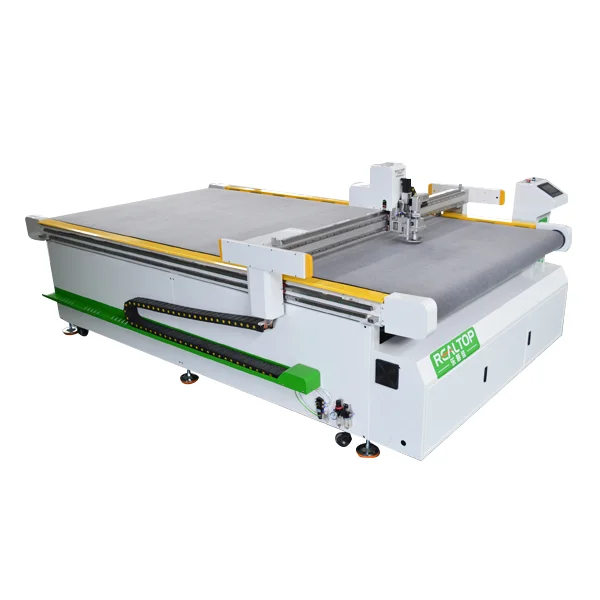
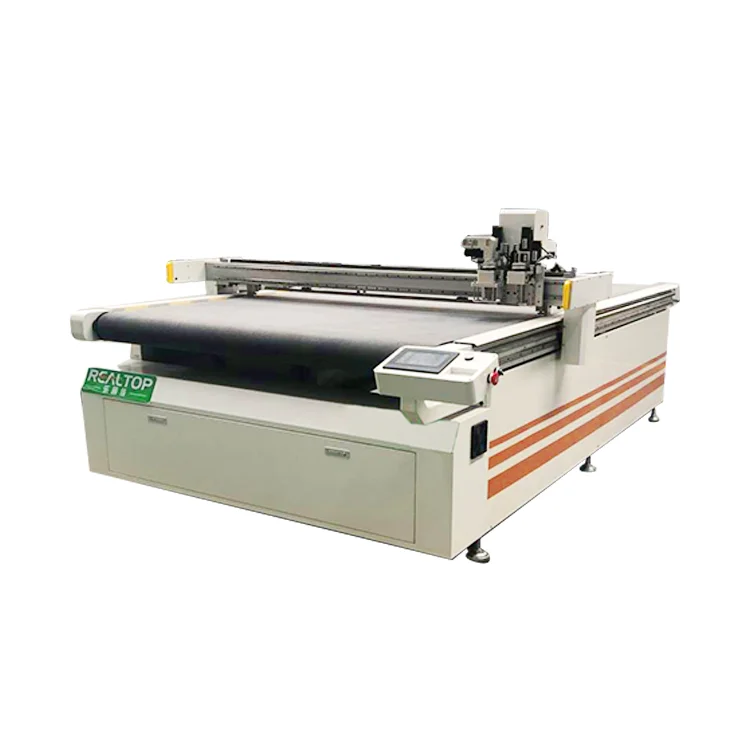
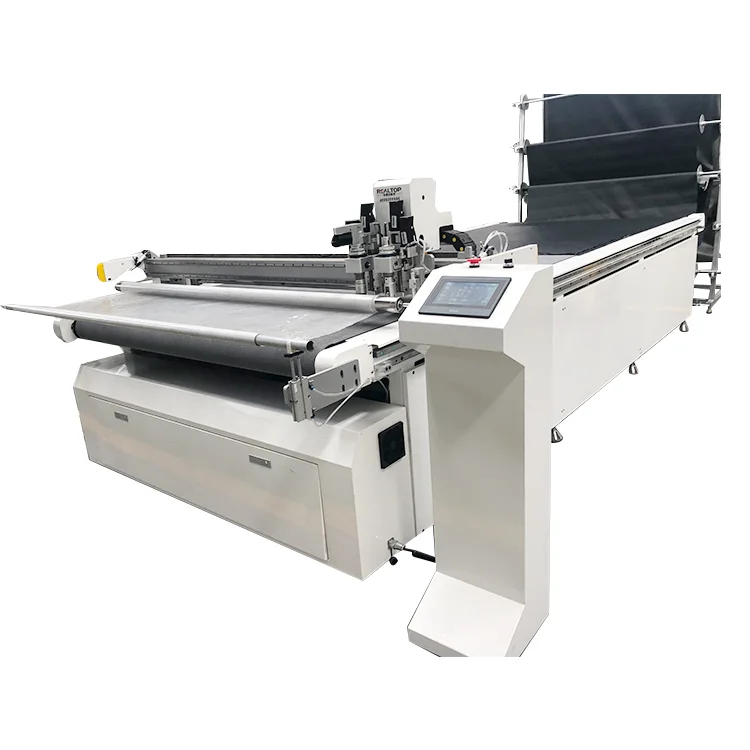
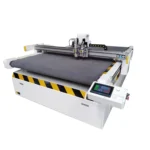
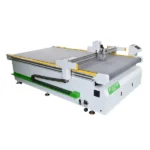
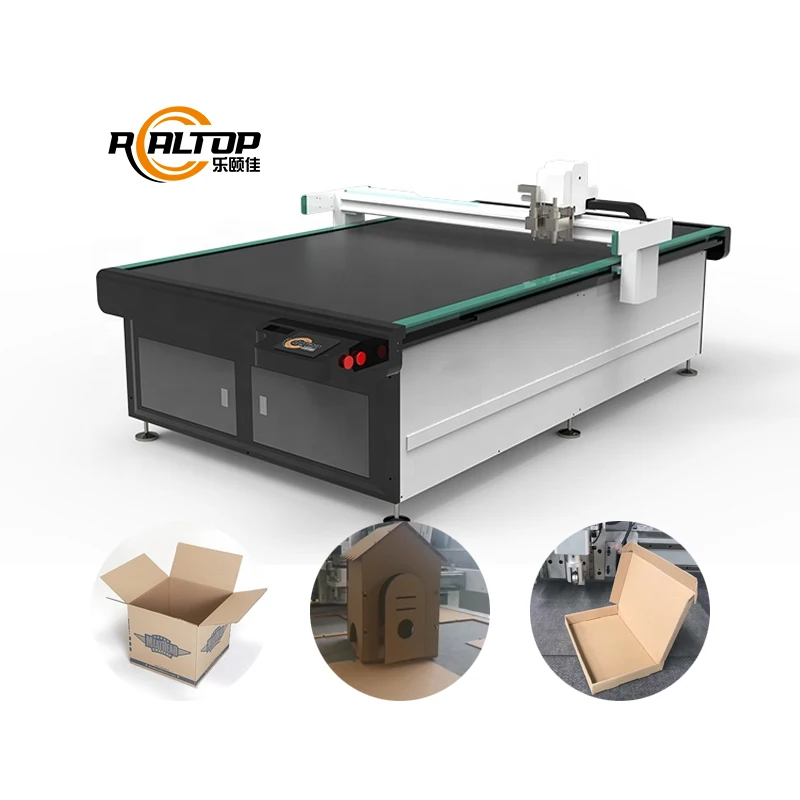
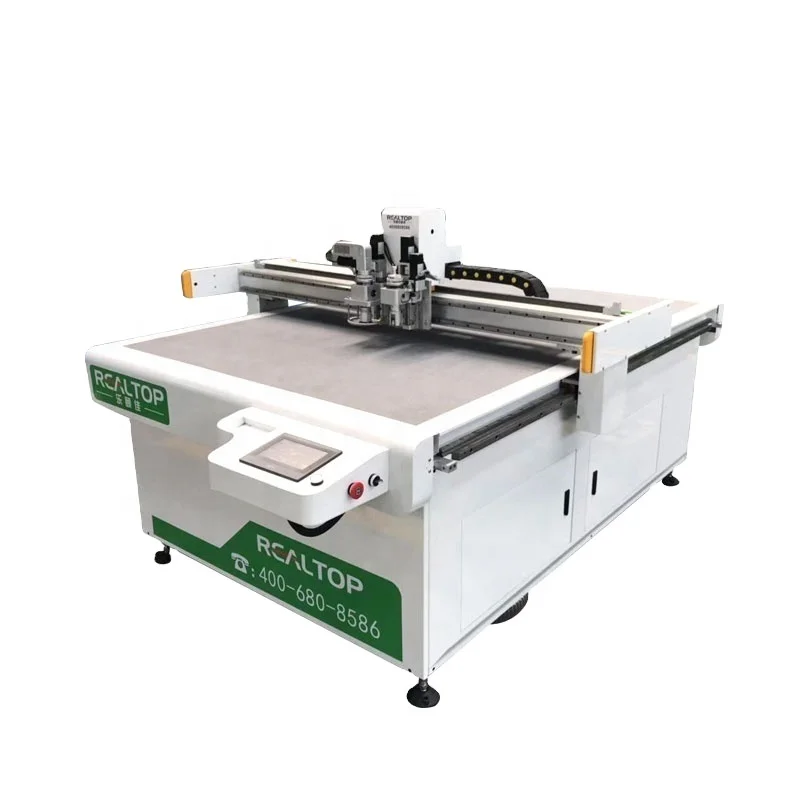
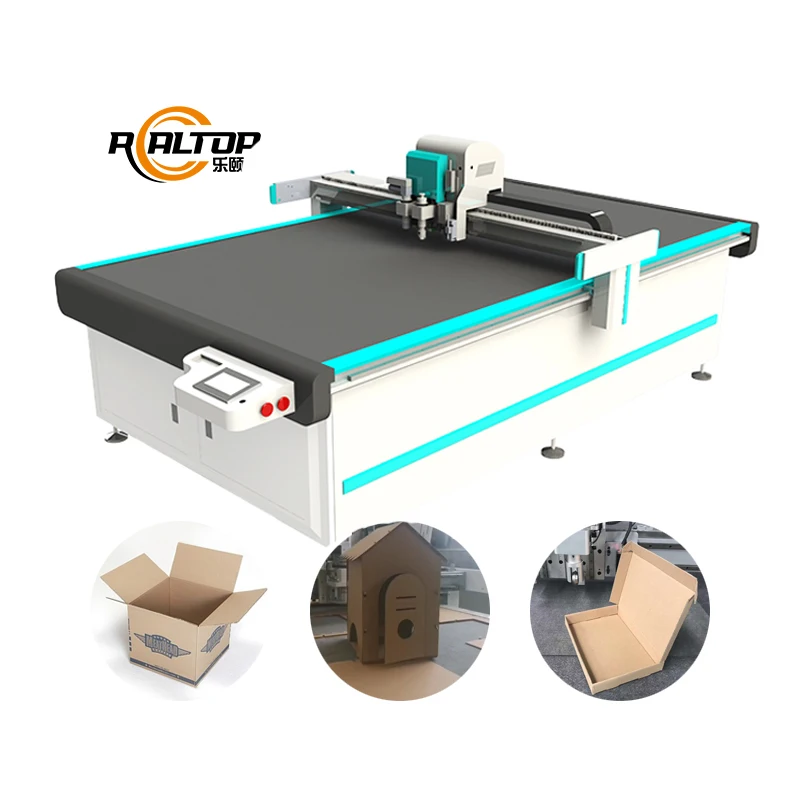
| Product Type | Multi-Layer CNC Oscillating Knife Cutting Machine |
| Working Area | 1600 × 2500 mm |
| Overall Dimensions (L×W×H) | 3450 × 2300 × 1250 mm |
| Rated Power | 9 kW |
| Voltage | 380V ± 10% |
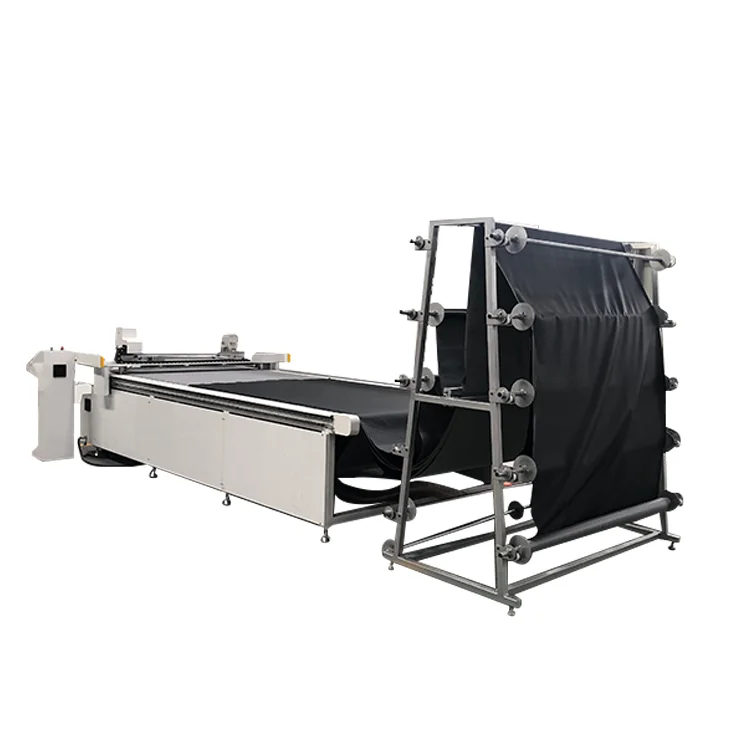
| Table Type | Flat working table with vacuum and auto-feeding conveyor |
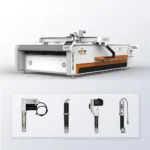
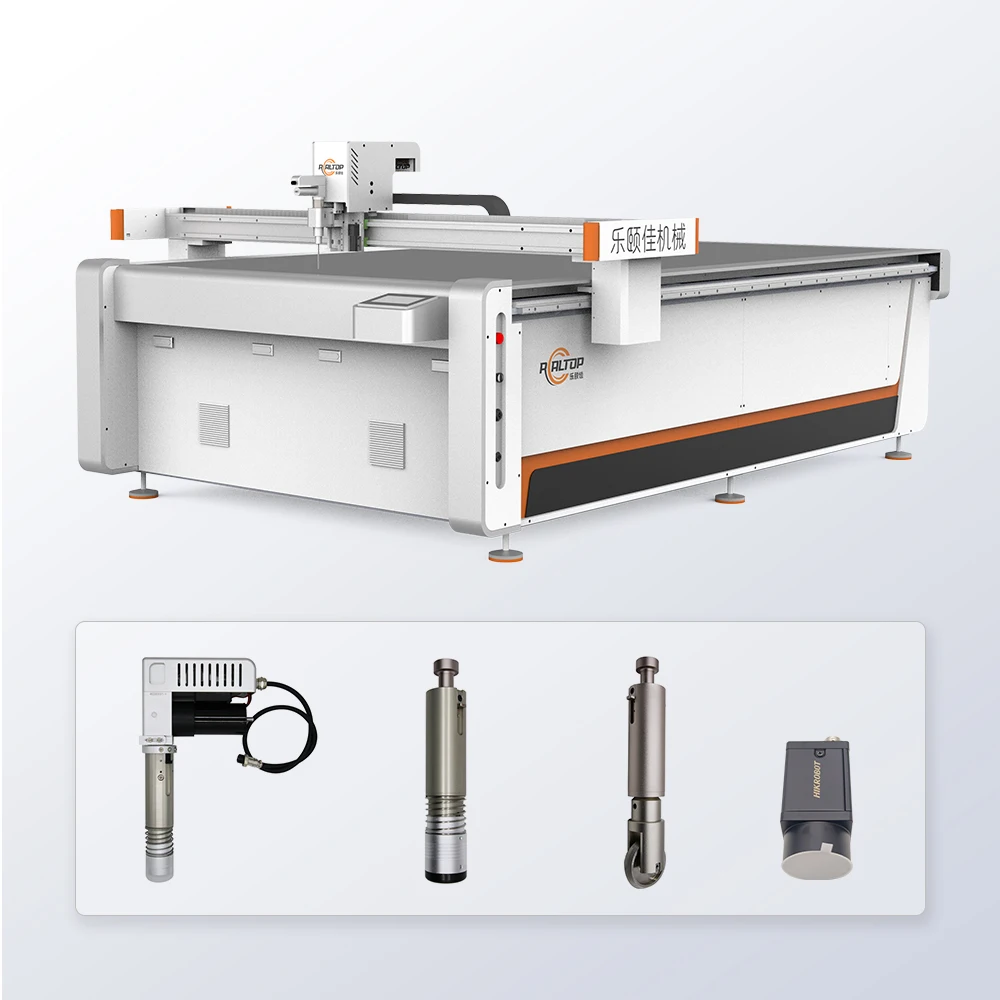
| Tool Head | Swiss imported oscillating knife (full cut, half cut, cursor location) |
| Translational Speed | 800 – 1200 mm/s |
| Cutting Speed | 200 – 800 mm/s (basis not stated in source) |
| Cutting Thickness | Up to 120 mm (basis not stated in source) |
| Repeatability | ≤ 0.1 mm |
| Vacuum Pump | 7.5 kW |
| Servo Motor | Japanese Yaskawa |
| Linear Rail | Taiwan Hiwin |
| Conveyor Belt | Germany imported |
| Safety Device | Infrared sensors |
| Instruction Format | HP-GL compatible |
Application Suitability
| Application | Material or Output |
|---|---|
| High-volume garment and apparel cutting | Multi-layer woven, knit and technical fabric stacks |
| Footwear and leather goods production | Natural leather, composite leather, sponge-backed materials |
| Automotive interior soft trim | Synthetic leather, foam laminates, acoustic insulation textiles |
| Flexible gasket and foam fabrication | PVC, soft glass, silicone, rubber sheets |
Why "120 mm Cutting Thickness" Needs a Material Caveat
A thickness rating means nothing without the fabric type, layer count and compression method attached.
I have stood beside a cutting table watching a perfectly specified oscillating knife head stall halfway through a stack of densely woven denim because the vacuum zoning was set for large panels, not the small pocket pieces the factory actually ran. The blade dragged, the bottom layers shifted, and the entire lay was scrapped. A multi-layer CNC oscillating knife cutting machine manufacturer who quotes cutting depth without asking for your specific fabric stack is quoting a number from a different job [NEED_CITE: oscillating knife cutting performance variables across textile densities]. Before we build your RT-D2516/RT-S2516, we run your material on our sample table and record the result layer by layer.
Knife Configuration Matched to Your Fabric Stack
The Swiss imported oscillating knife head on this unit handles full cutting, half cutting and cursor positioning in a single tool station. That means a garment manufacturer cutting compressed multi-layer cotton can switch between through-cutting entire lays and kiss-cutting pattern markings without stopping to change tooling. We configure the oscillation frequency and blade geometry after reviewing your actual fabric composition and ply count, because a blade profile that produces a clean edge on fleece will crush and fringe the edge on thin nylon ripstop.
Vacuum Zoning and Conveyor Continuity
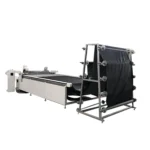
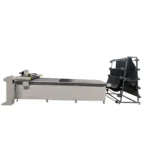
The 7.5 kW vacuum pump is paired with a flat table divided into zones, and the Germany-imported conveyor belt feeds fresh material as cut parts are cleared. For high-volume apparel production, this continuous workflow matters because operators are not manually lifting heavy fabric rolls between lays. We adjust the vacuum zoning to match the smallest part in your nesting layout so that cut pieces do not lift off the table under the knife [NEED_CITE: vacuum hold-down requirements for small garment pattern pieces].
Motion Components and Positional Accuracy
The combination of Japanese Yaskawa digital servo motors with Taiwan Hiwin linear rails delivers ≤ 0.1 mm repeatability across the full 1600 × 2500 mm working area. For nested garment panels where a two-piece sleeve must match within a millimeter, this tolerance keeps downstream sewing operations consistent. Ball screws and synchronous belts distribute drive force evenly, preventing the axis drift that accumulates over long production runs on lesser assemblies.
Reading the Specs That Actually Affect Your Output
The 9 kW rated power covers the servo drives, oscillating knife head and conveyor motor combined, not the vacuum pump, which draws its own 7.5 kW — so confirm your workshop circuit can supply both loads on separate breakers. Cutting speed is listed at 200 – 800 mm/s, but the achievable speed on your RT-D2516/RT-S2516 depends entirely on fabric density and layer count; a 60-layer polyester stack will run slower than a 10-layer felt lay to maintain edge quality. Translational speed of 800 – 1200 mm/s governs how fast the head repositions between cuts, which directly affects total cycle time on complex nested layouts with many short segments.
The Cost of Skipping Material Verification
When a buyer specifies a cutting table on working area alone and skips the sample run, the consequences surface on the first production day. A vacuum zone that is too broad leaves small pattern pieces floating; a blade chosen for foam tears the face fabric on a laminate; a conveyor belt tensioned for light cotton slips under the weight of dense denim rolls. Each of these failures wastes material, operator time and the production schedule [NEED_CITE: material waste causes in automated textile cutting operations].
Why Source This Table Directly from the Factory
Realtop designs and builds both knife and laser cutting systems under one roof, so we recommend the cutting method your material actually needs rather than forcing every fabric onto a single technology. The RT-D2516/RT-S2516 is configured per order with your tool head, vacuum layout and conveyor specification confirmed against your production volume. Every machine leaves the factory with a test record on your own material, not a generic certificate.
Documentation & Verification
- Machine specification sheet listing tool head and table zones matched to your fabric
- Electrical schematic with voltage and breaker rating confirmed for your facility
- Sample cutting report on your fabric stack with layer count and edge photographs
- Factory test record covering full cutting, half cutting and cursor positioning accuracy
- Software licence with file format compatibility note for your nesting workflow
- Packing photographs showing conveyor belt tension and vacuum line connections
Installation, Commissioning & Support
- 380V ± 10% three-phase supply with dedicated 16 kW breaker for combined machine and vacuum loads
- Flat concrete floor level within 5 mm across the 3450 × 2300 mm footprint
- Assembly of conveyor and vacuum lines completed on-site after frame positioning
- First-run calibration of Yaskawa servos against your nesting file and fabric stack
- Operator training covering blade change, vacuum zone adjustment and HP-GL file loading
- Spare blade inventory and belt tension gauge included in the initial parts kit
What We Need to Configure Your Machine
Send your fabric type, layer count and the thickest stack you plan to cut, along with your nesting file format and daily cut volume. Tell us your workshop voltage and frequency, the control language your operators prefer, and whether your existing conveyor or upstream spreading equipment needs to interface with the table.
Frequently Asked Questions
Q: How is cutting thickness verified against my specific fabric stack before I commit?
A: We ask for a representative fabric sample and your standard layer count, then run a test cut on our sample table. The report records blade type, oscillation setting, vacuum zone and edge quality at each layer depth, so you see the result on your own material before the order is confirmed.
Q: How is voltage and control language confirmed for my country before shipment?
A: During the specification stage we collect your local supply voltage, frequency and plug standard, then confirm the motor wiring and transformer match. The control interface language is set in the software before the factory test, and verified on video with your operator before packing.
Q: How do I confirm the software imports my existing nesting files?
A: We request a sample nesting file in your current format during the inquiry stage and load it onto the machine controller. The test run confirms geometry, kerf compensation and tool path order. A compatibility note is included in the documentation so your IT team has the exact file path and version recorded.
Q: What does the factory test record include before dispatch?
A: The record covers repeatability measurement across the 1600 × 2500 mm table, cutting accuracy on your supplied fabric sample, vacuum hold-down test at each zone, and conveyor feed alignment. You receive photographs and measured values alongside the operation manual and spare parts list.
Q: What spare parts are included and how are replacements supplied after delivery?
A: The initial kit contains replacement oscillating blades, vacuum zone seals and a conveyor belt tension gauge. Consumable parts are listed in the spare parts document with part numbers, and replacement orders are fulfilled directly from the factory with typical multi-week lead times for international shipment.
You may also like

商品评价
Clear filtersThere are no reviews yet.