


-
 Courier delivery
-
 DHL Courier delivery
-
 Warranty 1 year
-
 Free 30-Day returns

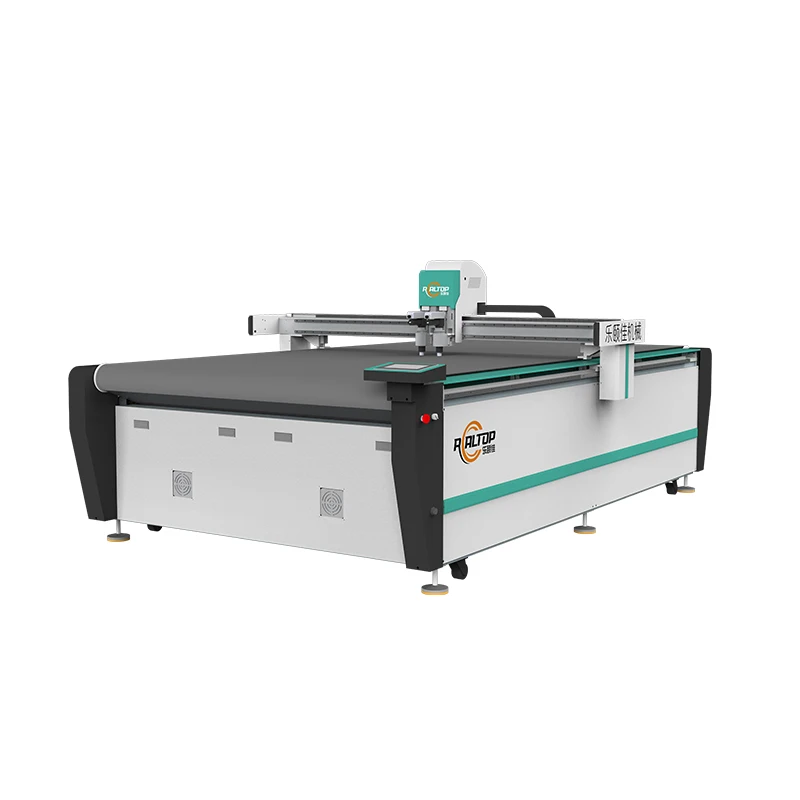
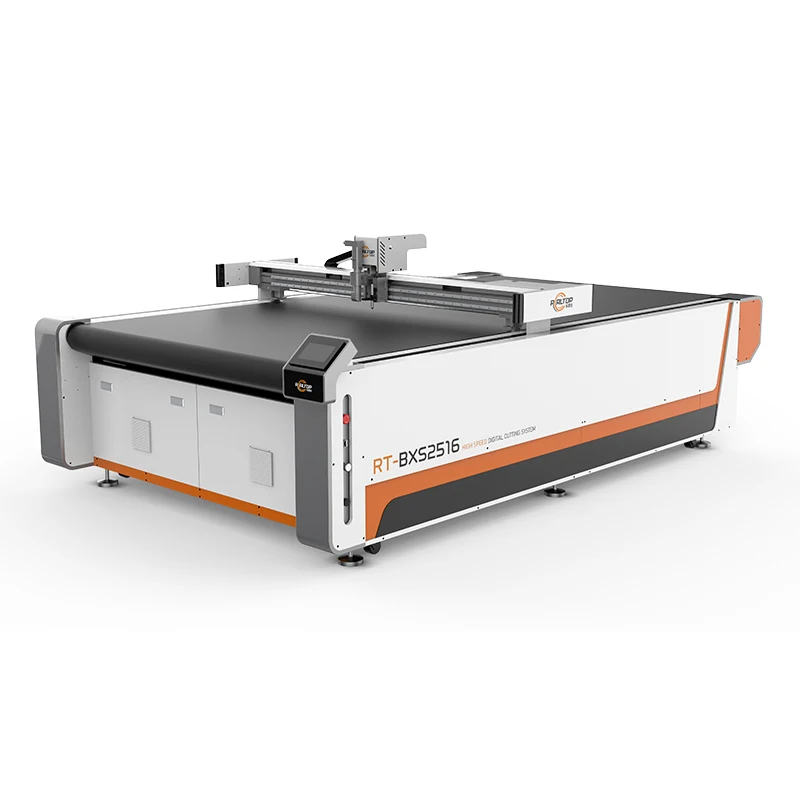
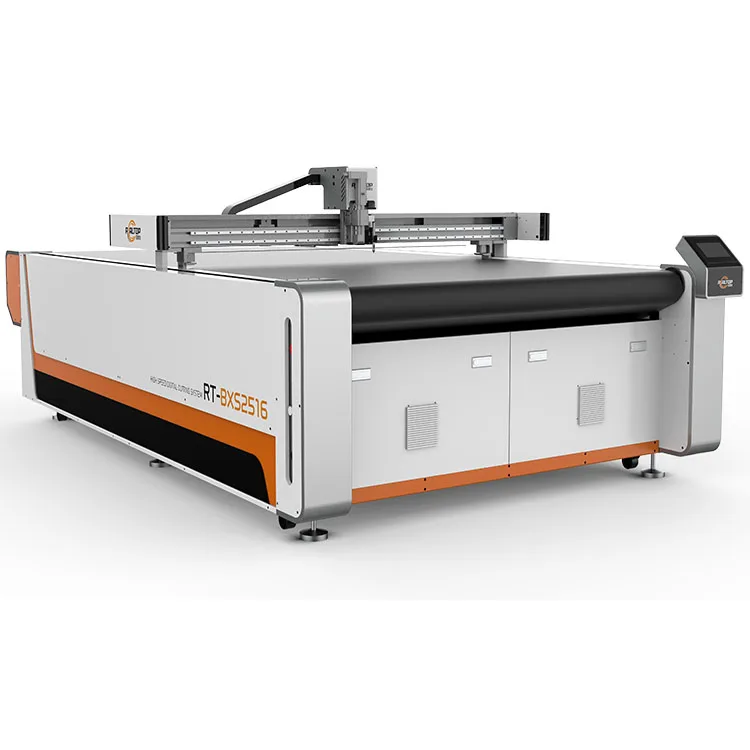
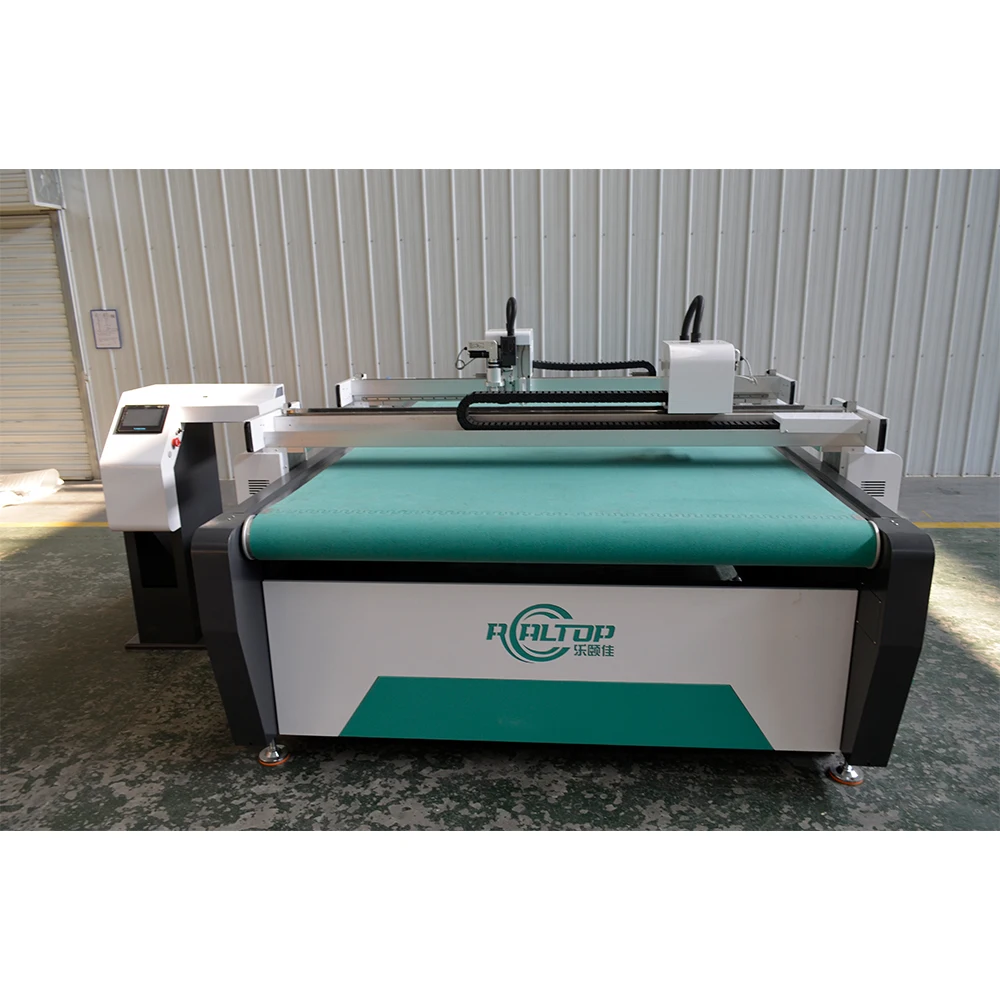
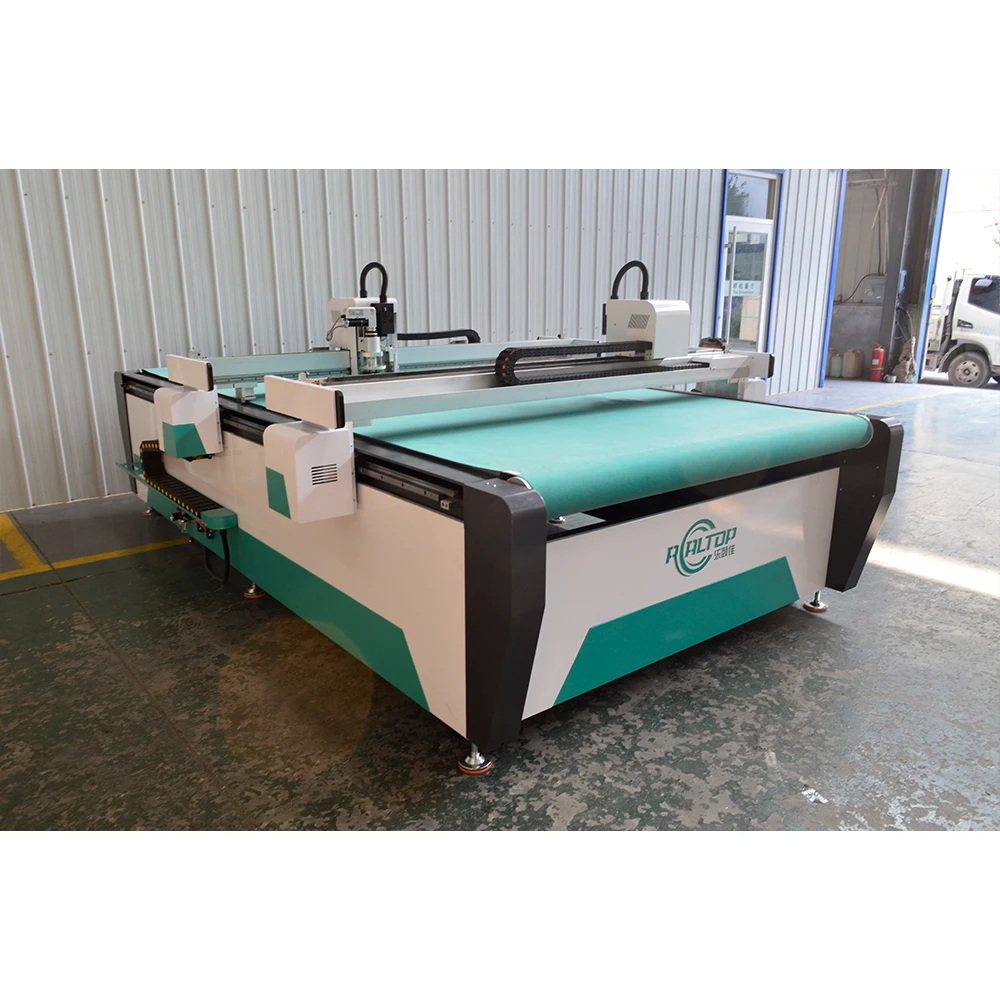
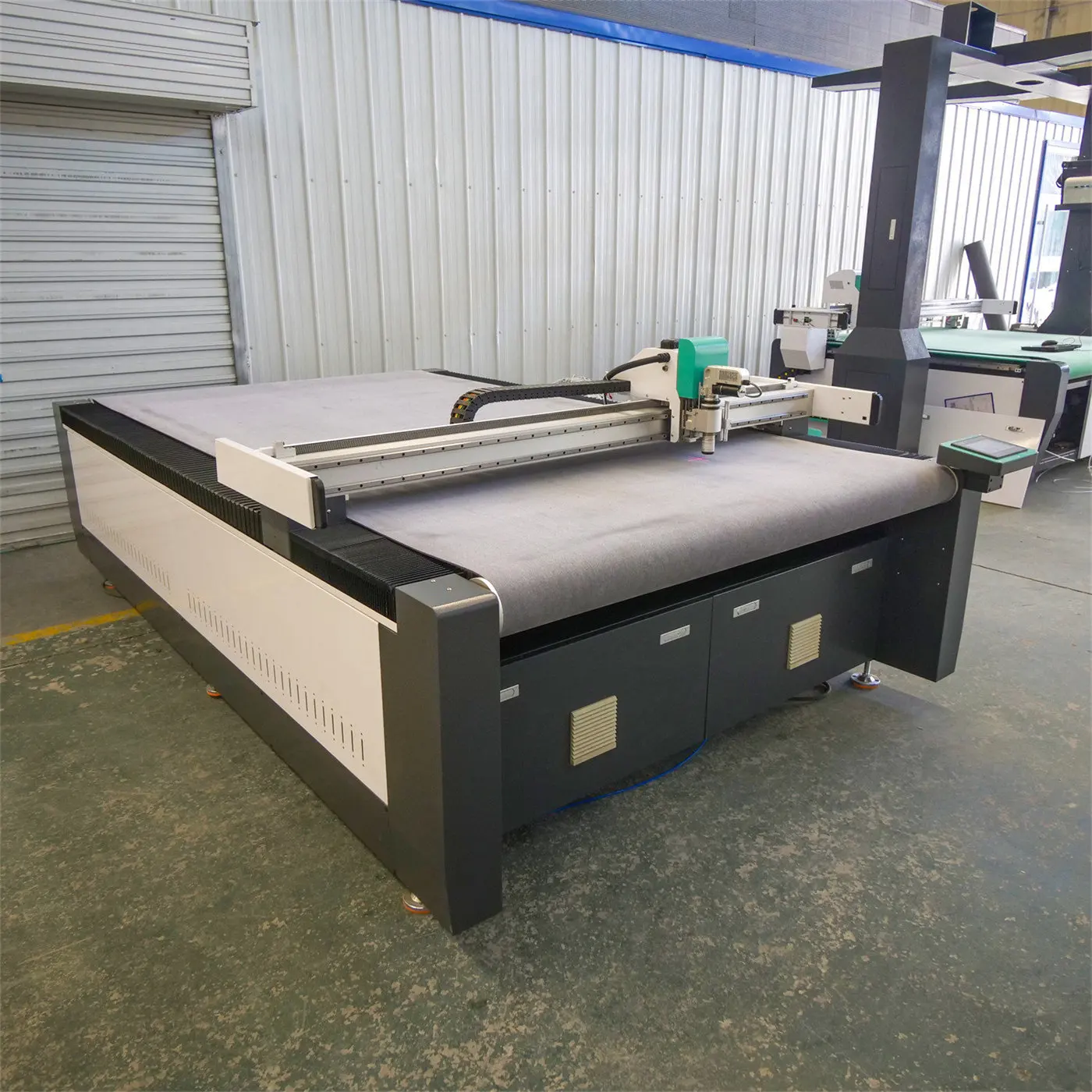
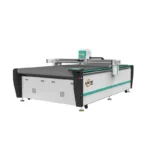
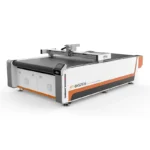
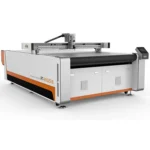
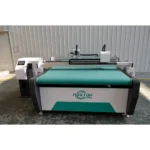
Core Factory Engineering — Heavy-duty seamless steel frames machined in-house ensure each RT-D2516/RT-S2516 oscillating knife table maintains ≤0.1mm repeatability across years of continuous leather cutting production.
Technical Specifications
| Parameter | Value |
|---|---|
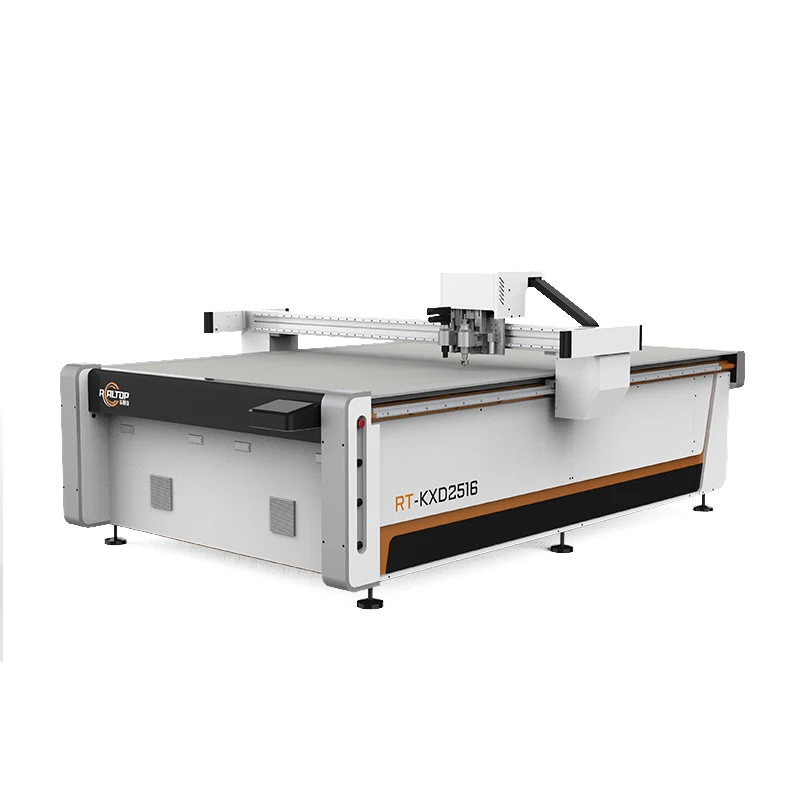
| Model | RT-D2516 / RT-S2516 |
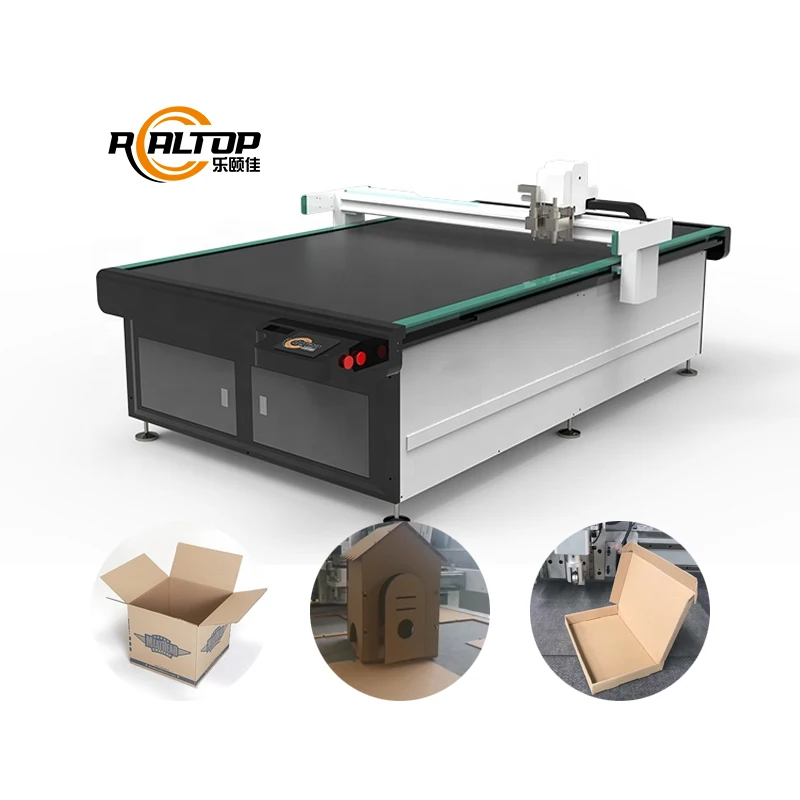
| Product Type | CNC Oscillating Knife Cutting Machine |
| Working Area | 1600 × 2500 mm |
| Overall Dimensions | 3450 × 2300 × 1250 mm |
| Rated Power | 9 kW |
| Voltage | 380V ±10% |
| Table Type | Flat magnesium-aluminum alloy vacuum table with PVDF powder coating |
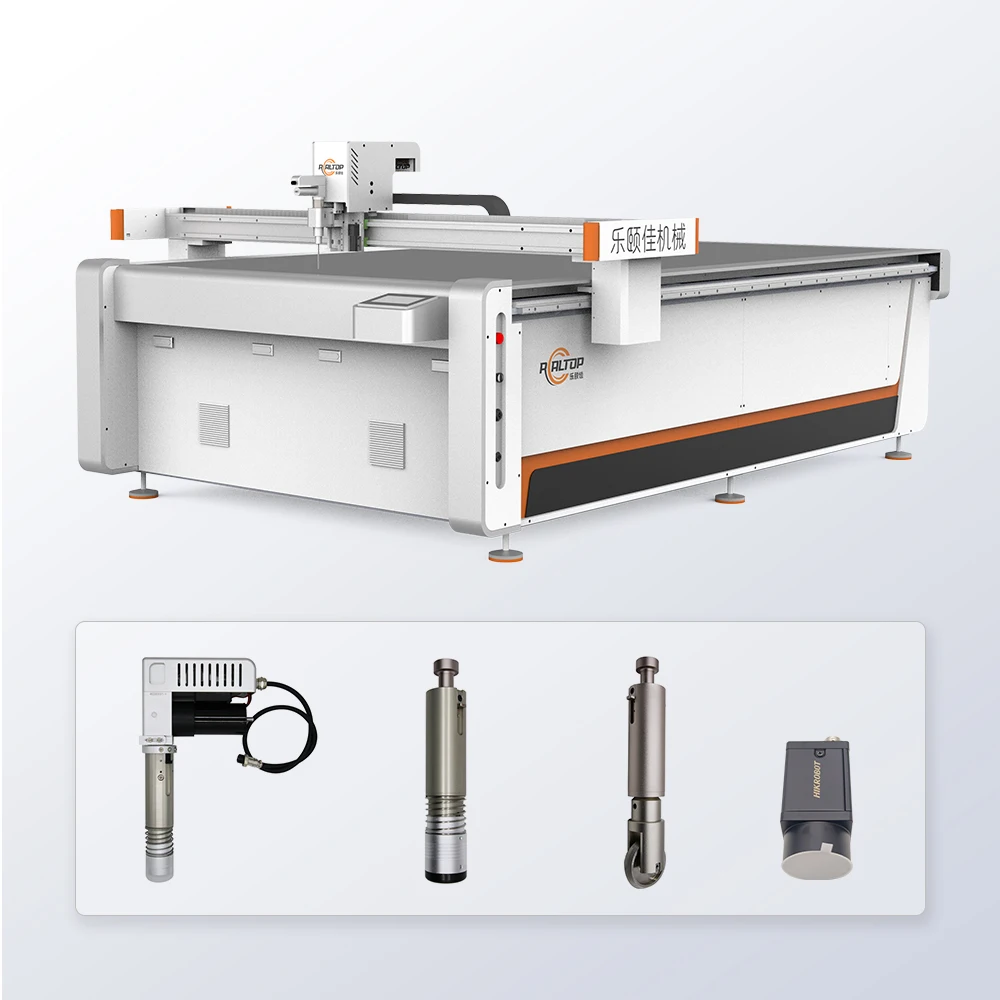
| Multifunctional Head | Swiss imported knife (vibration full cutting, half cutting, cursor location) |
| Tool Head Options | Oscillating knife, pneumatic knife, high-power vibrating knife, circular knife, V cutting knife, drag knife, creasing wheel, dotted line knife, punching, brush |
| Translational Velocity | 800–1200 mm/s |
| Cutting Thickness | 20–80 mm depending on material (basis not stated in source — confirm block format / material / thickness) |
| Repeated Accuracy | ≤0.1 mm |
| Transmission System | Digital servo motor, linear guide, synchronous belt, imported ball screw |
| Servo Motor | Delta or Panasonic (optional), IP67 waterproof |
| Vacuum Pump | 7.5 kW, integrated aviation aluminum shell with built-in silencer sponge |
| Visual Positioning | Small CCD camera mark point, panoramic camera recognition, projection positioning |
| Frame Construction | Thick-walled seamless steel, high-temperature tempering, CNC machining center finish |
| Safety Device | Infrared sensors |
| Instruction System | HP-GL compatible format |
| Language Options | English, Russian, Italian, Chinese, custom languages available |
| Guide Rail | Taiwan Hiwin rail (optional configuration) |
| Conveyor Belt | Germany imported (optional configuration) |
| Auto Feeding | Available (optional configuration) |
| Standards | CE declaration where applicable |
Application Suitability
| Application | Material or Output |
|---|---|
| Shoe and bag manufacturing | Natural leather hides with flaw detection and contour nesting |
| Footwear upper processing | Sponge composite leather, PVC, and synthetic uppers |
| Garment and apparel production | Flexible clothing materials, textiles, and layered fabrics |
| Automotive interior trimming | Leather and composite panels for seats, door cards, and headliners |
| Home furnishings fabrication | Upholstery leather, soft furnishing textiles, and foam-backed materials |
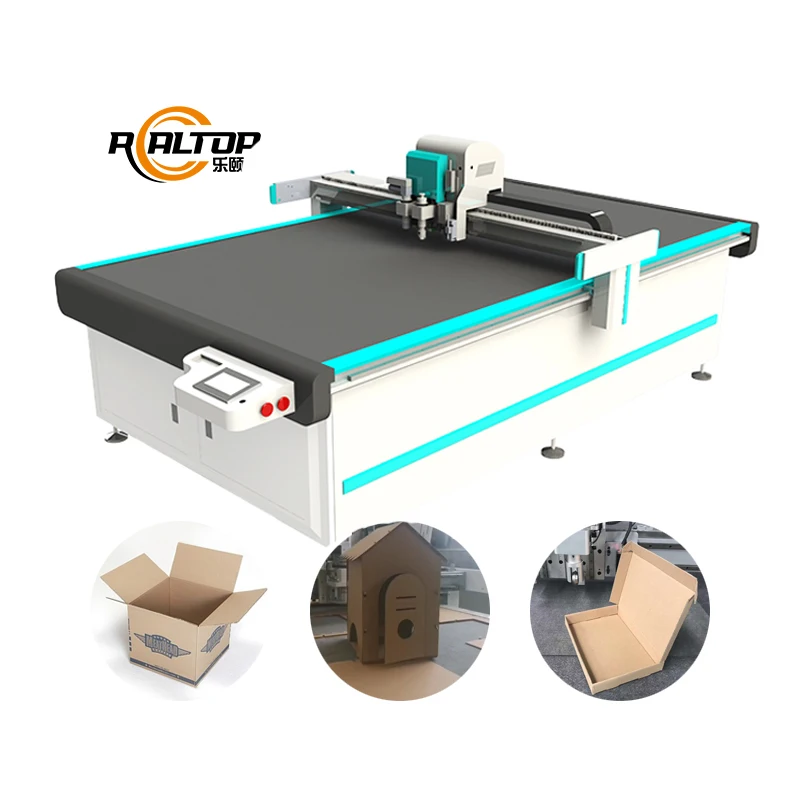
| Carton and packaging sampling | Corrugated board, card stock, and gasket materials |
Why Working Area Alone Cannot Define a Leather CNC Cutting Machine
A cutting table must be configured around the material behavior, not just the sheet size.
I once watched a production line in a shoe factory grind to a halt because the vacuum zoning on a newly installed table was set up for full-hide layouts. The moment the operator switched to small cut pieces for shoe uppers, the vacuum could not hold the offcuts, and the knife dragged them across the table surface, ruining the nesting layout entirely [NEED_CITE: vacuum table zoning requirements for small part cutting on oscillating knife systems]. The machine had the correct working area, but the vacuum zones had never been mapped to the buyer’s actual part geometry.
When evaluating a CNC Knife Cutting Machine factory for leather work, the conversation has to go beyond the 1600 × 2500 mm envelope. The vacuum pump capacity, zone segmentation, tool head selection, and software nesting logic all need to align with the specific hide sizes, material thicknesses, and part volumes that the buyer runs every day. A machine that performs well on full-hide contour cutting can fail completely on small-piece production if those parameters are not addressed before the machine leaves the factory floor.
Frame Rigidity and Long-Term Precision in Leather Cutting
The RT-D2516 and RT-S2516 models are built on a thick-walled seamless steel structure that undergoes high-temperature tempering before final machining. This process relieves internal stresses in the weldment, which is essential for a CNC Knife Cutting Machine factory to guarantee that the frame does not warp or settle over months of high-speed reciprocating knife operation. The bearing surfaces and rail mounting planes are finished on a CNC machining center, ensuring flatness and parallelism across the full 1600 × 2500 mm working area.
Without this level of frame preparation, the linear guides and ball screws cannot maintain their alignment under the dynamic loads produced by an oscillating knife cutting through dense composite leather at high translational speeds. Frame deflection under cutting load is one of the primary causes of dimensional drift in flatbed cutting tables, and it compounds over time if the base structure was not properly stress-relieved during manufacturing.
Motion Component Sourcing and Assembly Quality
The transmission system pairs imported ball screws and linear guides with digital servo motors, with Delta or Panasonic IP67-rated servos available as options. For leather and flexible material processing, the servo system must deliver smooth acceleration and deceleration to prevent the knife from tearing or puckering the material at direction changes. The IP67 rating is particularly relevant in leather workshops where fine dust and occasional moisture exposure are routine conditions [NEED_CITE: IP rating standards for servo motors in industrial cutting environments].
Taiwan Hiwin guide rails are available as an optional configuration for buyers who specify them for their market requirements. The guide rail and ball screw combination, when properly preloaded and aligned during assembly, is what allows the machine to hold ≤0.1mm repeated accuracy across the entire cutting bed — a tolerance that directly affects nesting yield and part-to-part consistency in production leather cutting.
How Tool Head Selection and Vacuum Design Shape Cutting Results
The multifunctional head accepts a Swiss imported oscillating knife capable of full cutting, half cutting, and cursor location, which covers the majority of natural leather processing requirements including contour following and flaw avoidance. But leather work often demands more than a single tool. Pneumatic knives handle thicker composite stacks, drag knives score crease lines on packaging samples, and circular knives perform straight-line rough cuts on bulk material. The ten available tool head options mean the machine can be configured to match the exact workflow of a shoe factory, bag workshop, or automotive interior supplier rather than forcing a single cutting method across incompatible materials.
The vacuum table uses a magnesium-aluminum alloy base with fluorocarbon PVDF powder spraying and anodic oxidation for wear resistance. The 7.5 kW vacuum pump features an integrated aviation aluminum shell with built-in silencer sponge that reduces operating noise noticeably. For small-part leather cutting — shoe uppers, bag components, gasket pieces — the vacuum zoning must be configured so that individual zones correspond to the buyer’s typical part sizes. A full-bed vacuum pull wastes energy and can lift adjacent material; properly zoned vacuum holds each part firmly while allowing surrounding offcuts to be cleared without disrupting the cut layout.
The Hidden Cost of Skipping Material-Specific Factory Testing
Buyers sometimes specify a machine based solely on working area and price, then discover at installation that the tool head cannot handle their material thickness, or that the vacuum table holds full hides adequately but fails on the small pieces that represent most of their daily production [NEED_CITE: common causes of CNC cutting machine rejection at buyer site]. Edge quality degrades, nesting yield drops, and the operator spends more time repositioning material than actually cutting. By that point, the machine is already on the factory floor, and reconfiguration means additional tooling orders, vacuum table modification, and production downtime that could have been prevented by a factory test on the buyer’s own leather samples before shipment.
Why Source This Machine from a Core Factory
In-house design and production cover both the mechanical structure and the cutting system integration, meaning frame engineering, tool head calibration, and vacuum table zoning are developed together rather than assembled from unrelated components. Each RT-D2516/RT-S2516 undergoes factory testing on the buyer’s actual material before dispatch, so cutting depth, edge quality, and vacuum hold-down are verified against real production conditions. Voltage, plug type, control language, and software file format compatibility are confirmed at the order stage, eliminating the common situation where a machine arrives on site with mismatched electrical supply or incompatible nesting files.
OEM customization extends to working area dimensions, tool head combinations, conveyor integration, and auto-feeding systems, allowing distributors and importers to specify machines that match the exact requirements of their end-user markets. The combination of Swiss imported knife technology, IP67 servo protection, and configurable vacuum zoning gives this CNC Knife Cutting Machine factory the flexibility to serve footwear, bag, automotive, and furnishing manufacturers from a single platform without compromising on build quality or long-term precision.
Documentation & Verification
- Machine specification sheet listing frame construction, motion components, and tool head options for your leather type
- Electrical schematic with voltage and frequency confirmation matched to your facility supply
- Factory test record showing cutting results on your actual leather samples before dispatch
- Tool head and vacuum table configuration list specified per your material and production volume
- Software licence documentation with HP-GL file format compatibility confirmation
- Packing photographs documenting machine condition and component completeness at crate closure
Installation, Commissioning & Support
- Foundation must support the 3450 × 2300 mm footprint and 9 kW rated power draw with a dedicated circuit
- 380V ±10% supply verification required before energizing the servo drives and 7.5 kW vacuum pump
- Machine ships partially disassembled; frame and table require on-site leveling and rail alignment check
- First-run commissioning includes vacuum zone mapping to your typical leather part geometry and nesting layout
- Operator training covers tool head changeover, CCD camera positioning setup, and oscillating knife depth adjustment
- Spare parts list provided with Swiss knife blades, vacuum seals, and drive belt replacements for initial stock
Preparing Your Inquiry for Accurate Configuration
To recommend the correct tool head combination, vacuum zoning layout, and optional features such as auto-feeding or CCD camera positioning, we need details on your primary leather types, typical hide sizes, material thickness range, and daily cutting volume. Please also confirm your facility voltage and frequency, preferred control language, and any existing nesting software or file format workflows that the machine must integrate with. If you have specific leather samples that represent your most demanding cutting tasks, sending them for a factory test run allows us to verify cutting quality and vacuum performance before finalizing the configuration.
Frequently Asked Questions
Q: How does the factory ensure frame precision and long-term rigidity on these cutting tables?
A: The frame is fabricated from thick-walled seamless steel and undergoes high-temperature tempering to relieve welding stresses before final machining. All bearing surfaces and rail mounting planes are finished on a CNC machining center, ensuring flatness across the full 1600 × 2500 mm working area. This process prevents frame settlement and maintains the ≤0.1mm repeated accuracy specification throughout the machine’s operational life.
Q: What OEM and customization options are available for distributors and importers?
A: Customization covers working area dimensions, tool head combinations from ten available options, voltage and plug configurations, control language selection, and optional features including auto-feeding, conveyor systems, and CCD camera positioning. Each machine is built to order based on the distributor’s end-user requirements, with full specification confirmation before production begins.
Q: How are motion components and core parts sourced and quality-controlled?
A: The transmission system uses imported ball screws and linear guides paired with Delta or Panasonic IP67-rated digital servo motors. Taiwan Hiwin guide rails are available as an optional upgrade. Components are inspected upon receipt and again after assembly, with full-axis motion testing performed during the factory acceptance procedure to verify repeatability and smooth acceleration across the cutting envelope.
Q: What factory test procedures are performed before shipment?
A: Each machine undergoes a full functional test including vacuum zone verification, tool head calibration, and servo motion profiling. When the buyer provides sample leather material, a production-representative cutting test is performed to confirm edge quality, cutting depth, and vacuum hold-down performance under conditions matching the buyer’s actual workflow. Test results are documented and shared before the machine is cleared for packing.
Q: How is the machine packed and what installation support is provided for importers?
A: The machine is partially disassembled for shipping, with the frame, table, and control cabinet packed separately. Packing photographs document the condition and completeness of all components at crate closure. On-site installation guidance covers frame reassembly, leveling, rail alignment, vacuum zone configuration, and first-run commissioning with operator training on tool head operation and software workflow.
You may also like

商品评价
Clear filtersThere are no reviews yet.