




-
 Courier delivery
-
 DHL Courier delivery
-
 Warranty 1 year
-
 Free 30-Day returns

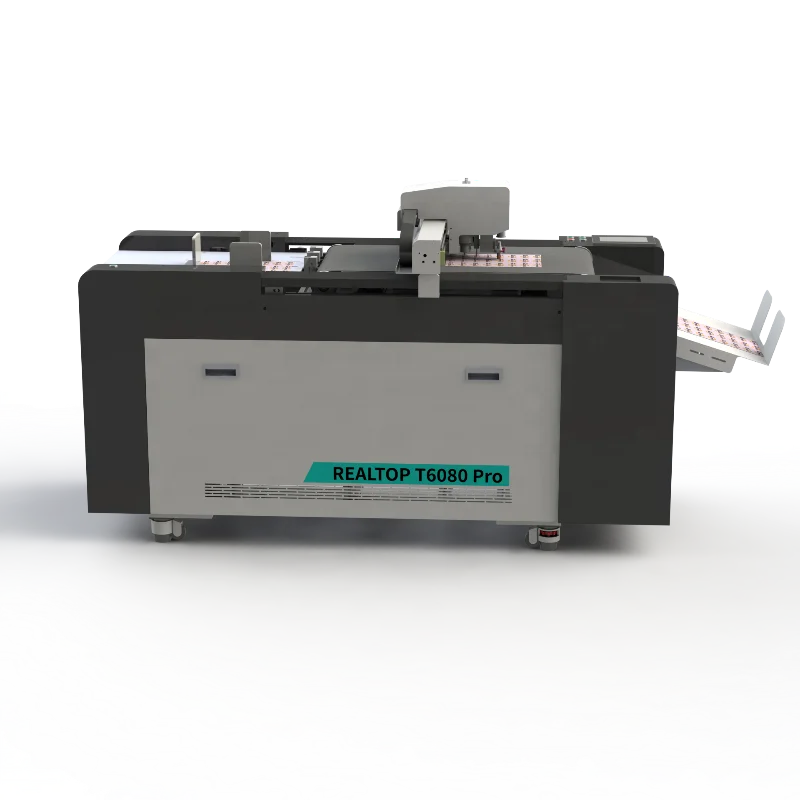
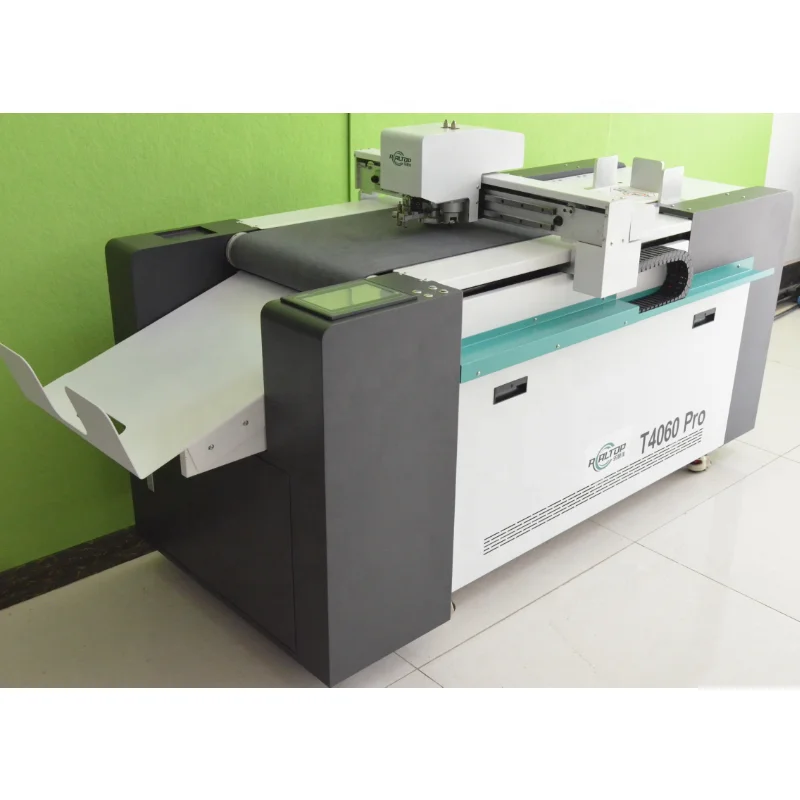
Precision-Built Configuration — In-house engineering matches knife tooling and vacuum zoning to your specific material profile before the RTT4060 is built.
Technical Specifications
| Parameter | Value |
|---|---|
| Model | RTT4060 / RTT4060 Pro |
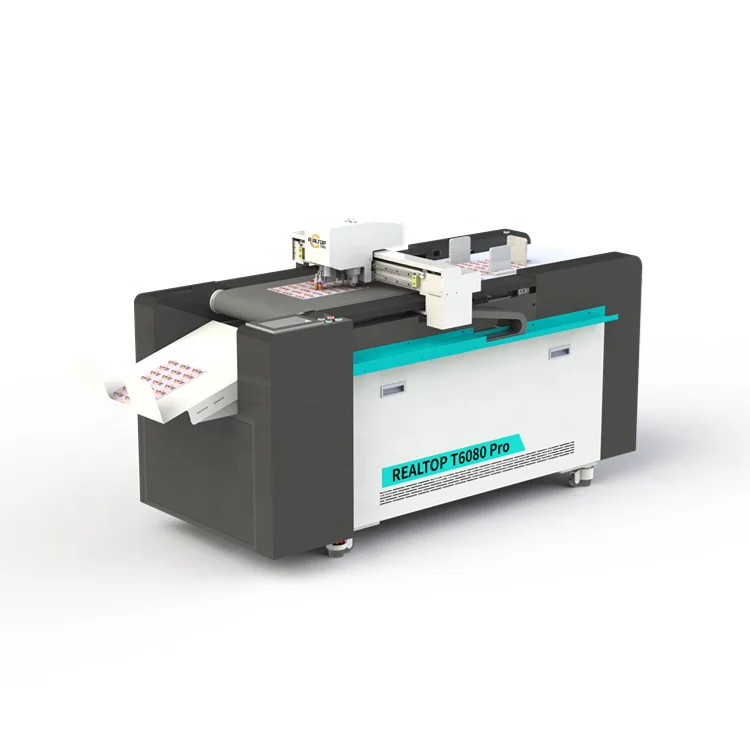
| Product Type | CNC Oscillating Knife Cutting Machine |
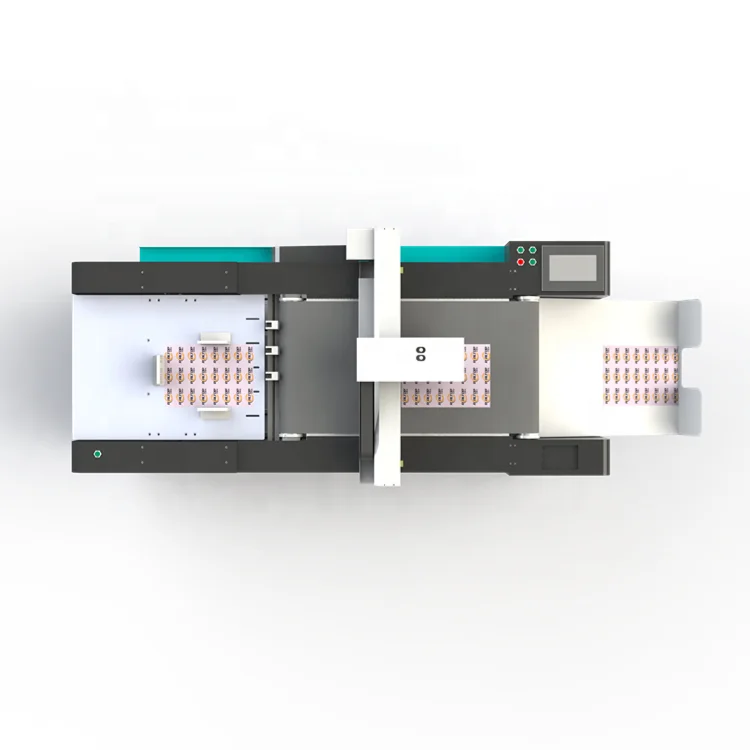
| Max Working Area | 400mm x 600mm |
| Tools Group | Cutting Tool; Kiss-cutting Tool; Creasing Tool; CCD Camera; High Speed Oscillating Knife (Pro only) |
| Max Cutting Speed | 1500mm/s (according to the material) |
| Cutting Thickness | <2mm (RTT4060) / <5mm (RTT4060 Pro) |
| Positioning Accuracy | 0.05mm |
| Profile Format | DXF, OLT, PDF, AI |
| Transmission Method | Ethernet port |
| Rated Power | 2.5kW |
| Standards | CE declaration where applicable |
Application Suitability
| Application | Material or Output |
|---|---|
| Packaging and Carton Sample Making | Corrugated board, folding carton, grey board, and magnetic box prototypes |
| Advertising and Signage Production | Vinyl decals, foam board, PVC signage, and printable magnet sheets |
| Small-Format Fabric and Leather | Gaskets, leather patches, shoe uppers, and textile appliqués |
| Graphic Contour Cutting | Printed self-adhesive vinyl, reflective sheeting, and heat transfer materials |
What the Max Cutting Speed Figure Actually Means for Small-Format Work
A machine specified solely on speed often struggles when tool head drag and vacuum hold-down fail to match the material’s surface tension.
When evaluating a CNC Oscillating Knife Cutting Machine manufacturer, buyers often see a top speed of 1500mm/s and assume that translates directly to their production floor. In reality, that figure represents the machine’s rapid traverse capability on an empty table. Once the tool head engages dense foam board or heavily grained leather, the feed rate must drop to maintain edge quality and prevent the material from lifting at the edges [NEED_CITE: typical knife cutting feed rates for dense gasket materials]. The 400mm x 600mm footprint of the RTT4060 series is designed for short-run prototyping and intricate contour work, where positional accuracy of 0.05mm matters far more than raw traverse speed.
Configuring the Tool Group for Packaging Prototype Work
A small-format CNC knife cutting table lives or dies by its tool head configuration. The RTT4060 platform includes a cutting tool, kiss-cutting tool, creasing tool, and a CCD camera as standard. The creasing tool is particularly important for packaging sample makers who need to fold carton stock cleanly without tearing the outer liner. The CNC Oscillating Knife Cutting Machine manufacturer must verify which combination of these tools handles your specific board weight and flute profile before the machine is assembled.
The Pro Model Difference in Cutting Depth and Oscillation Frequency
The standard RTT4060 handles thicknesses up to 2mm, which covers most vinyl and thin carton applications. The RTT4060 Pro extends that capacity to under 5mm and introduces a high-speed oscillating knife to the tool group. This addition changes the machine’s capability entirely when cutting dense EVA foam, rubber gasket material, or multi-layered textile stacks. The oscillation frequency allows the blade to shear through fibrous materials without dragging or compressing the edges, which a standard drag knife would struggle to achieve [NEED_CITE: oscillation frequency impact on fibrous material edge quality].
Interpreting the 0.05mm Accuracy and Ethernet Workflow
The 0.05mm positioning accuracy is a mechanical specification that dictates how closely the knife follows the toolpath generated by the nesting software. For printed contour cutting using the CCD camera, this tolerance ensures the blade tracks registration marks accurately even on complex die-lines with tight inside corners. The Ethernet port transmission method means the machine accepts profile files—DXF, OLT, PDF, AI—directly from a networked workstation. This eliminates USB transfer delays and supports design departments that maintain a centralized file server for version control and batch nesting.
The Cost of Specifying Working Area Without Material Context
When a buyer selects a machine based on table size alone, the most common failure occurs when the vacuum hold-down cannot secure small parts during high-speed cutting. A 400mm x 600mm table cutting multiple small gasket pieces requires sufficient vacuum zoning; otherwise, parts lift and shift, producing ragged edges or damaging the cutting mat. The second issue arises when the CCD camera promised for contour work cannot track printed marks reliably at the buyer’s actual production speed, resulting in misaligned cuts and wasted printed stock [NEED_CITE: vacuum table zoning requirements for small-format nested cutting].
Why Buyers Choose This Platform for Prototyping and Short Batches
The design and production team covers both knife and laser technologies in-house, meaning a buyer is guided toward the cutting method that suits their material rather than forced into a single technology. The RTT4060’s tool head and table configuration are specified per material sample before the order is finalized. CCD camera positioning is integrated for printed contour work, and software compatibility is confirmed against the buyer’s existing DXF or AI files. Voltage, control language, and plug type are customized to the destination market’s electrical standards, preventing on-site commissioning delays.
Documentation & Verification
- Machine specification sheet detailing RTT4060 or RTT4060 Pro tool group and cutting depth
- Electrical schematic and voltage confirmation matching destination grid frequency
- Tool head and vacuum table configuration list by material type and thickness
- Sample cutting report executed on buyer’s specific board, foam, or gasket material
- Software licence note confirming DXF, OLT, PDF, and AI file format compatibility
- Factory test record with positioning accuracy verification before crating
Installation, Commissioning & Support
- Level floor surface required; RTT4060 footprint allows placement against standard workshop walls
- 2.5kW rated power demands a dedicated single-phase or three-phase circuit per local code
- Ethernet port connection requires a standard RJ45 drop at the machine location
- CCD camera calibration performed on-site using buyer’s printed registration mark files
- Vacuum pump commissioning and zone testing on buyer’s smallest nested part geometry
- Spare cutting blades and creasing wheels supplied per the material profile list
Preparing Your RFQ for Small-Format Knife Cutting
When requesting a quotation, provide the specific material types, their thickness range, and typical sheet dimensions you will process. Include your local voltage, frequency, and plug type, along with your preferred control software language. If you currently use specific nesting files or design formats, attach sample DXF or PDF files so the software workflow can be verified against the RTT4060’s control system before the machine enters production.
Frequently Asked Questions
Q: How is the correct tool head selected for my material type and thickness?
A: The selection process begins with a sample of your actual material. We test the cutting tool, kiss-cutting tool, creasing tool, and oscillating knife on your stock to determine which produces the cleanest edge and cleanest release from the cutting mat. This result defines the tool group installed on your RTT4060 or RTT4060 Pro before shipment.
Q: What is the real cutting depth capability between the RTT4060 and RTT4060 Pro?
A: The standard RTT4060 handles materials under 2mm thick, which suits vinyl, thin carton, and light gasket work. The RTT4060 Pro extends capacity to under 5mm and adds a high-speed oscillating knife, making it capable of denser foam, rubber, and multi-layer fabric stacks that would compress under a standard drag knife.
Q: Can the CCD camera reliably track printed registration marks at production speed?
A: The CCD camera on the RTT4060 series is integrated for printed contour cutting and reads registration marks on your vinyl or board stock. The actual tracking speed depends on the mark contrast, size, and the complexity of the cut path. We verify this during the sample cutting stage using your specific printed files.
Q: What voltage, plug type, and control language options are confirmed before shipment?
A: Before the machine is wired, we confirm your local grid voltage and frequency, the required plug or terminal connection type, and the language for the control software interface. This information is documented on the electrical schematic to ensure the RTT4060 is ready for immediate commissioning upon arrival.
Q: Is sample cutting available on my own material before I commit to an order?
A: Yes, we require samples of your specific materials—whether carton board, vinyl, leather, or foam—to run cutting tests. The resulting sample cutting report confirms achievable thickness, edge quality, and the recommended tool head configuration for your RTT4060 series machine.
You may also like

商品评价
Clear filtersThere are no reviews yet.