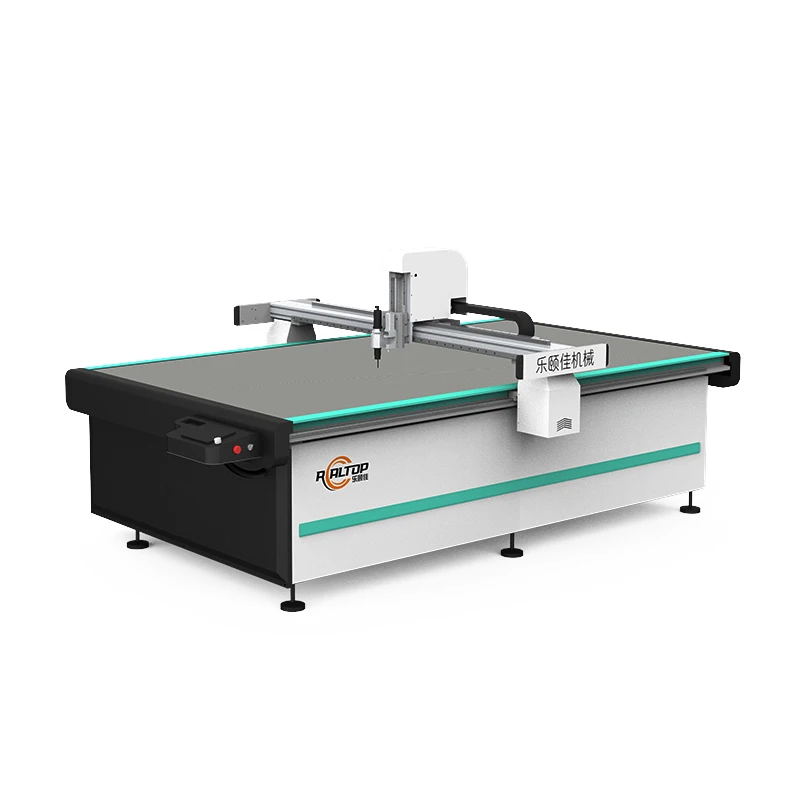
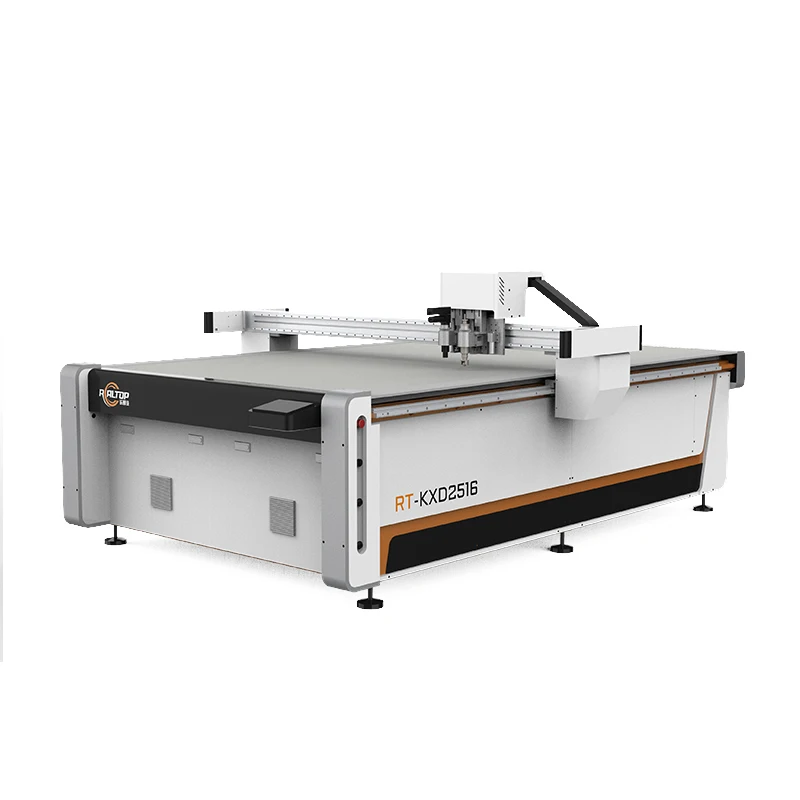
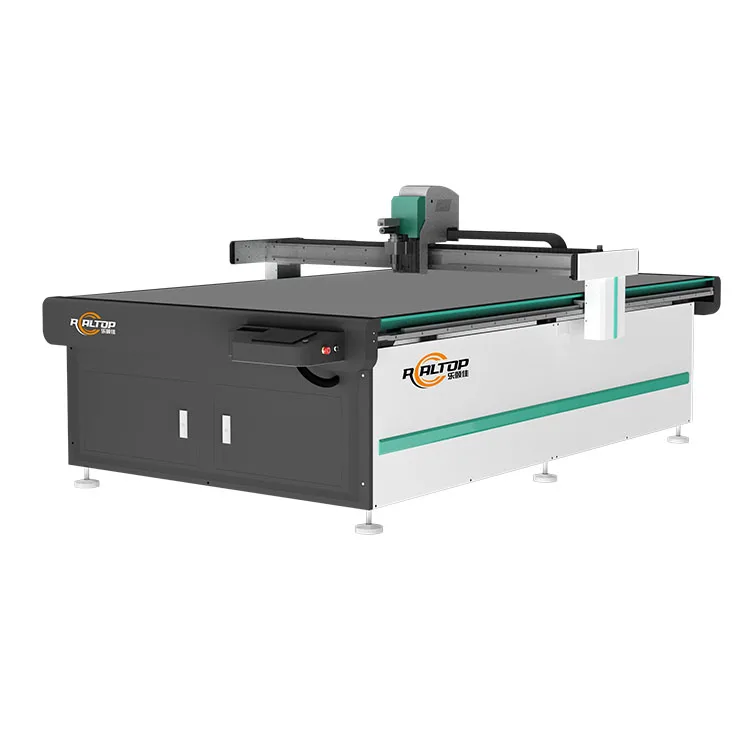
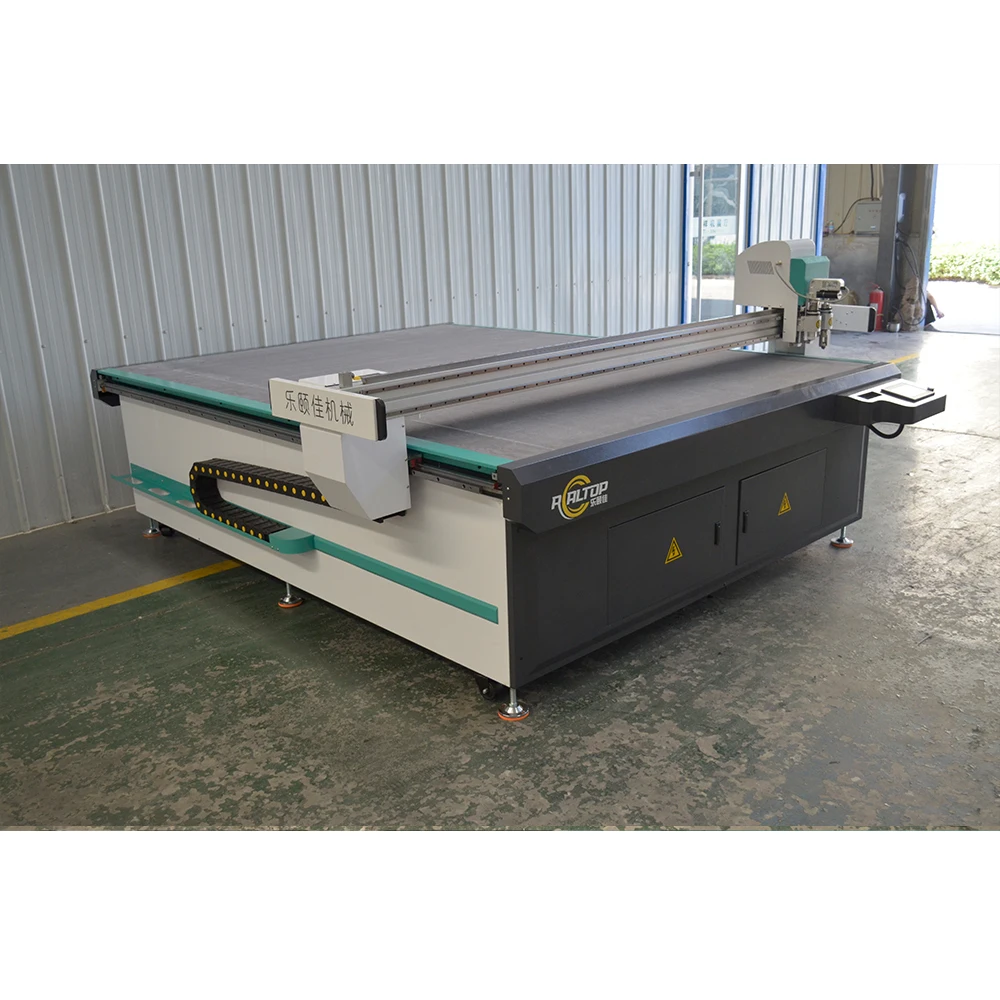
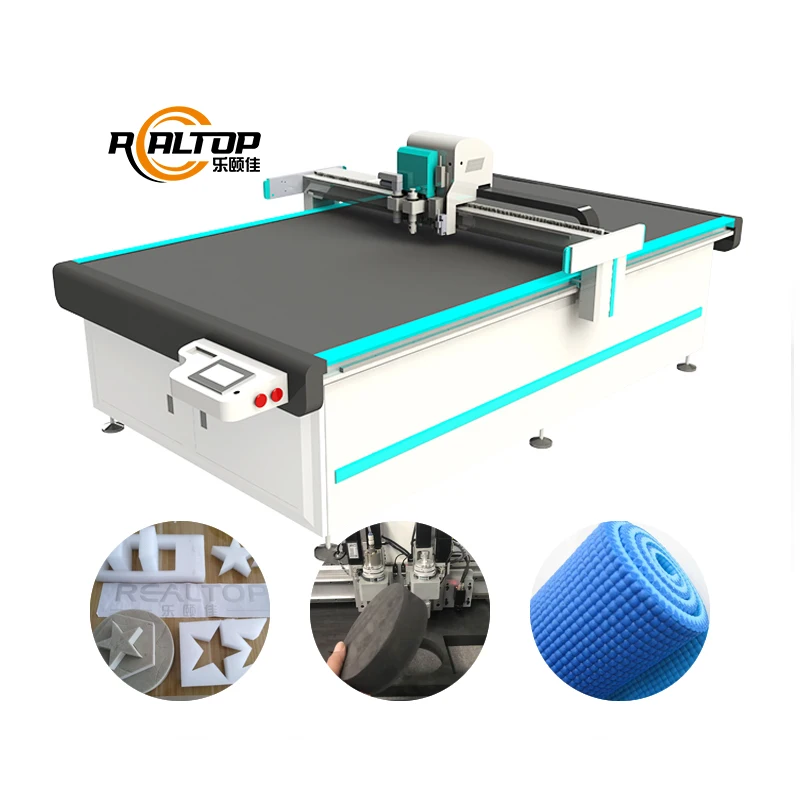
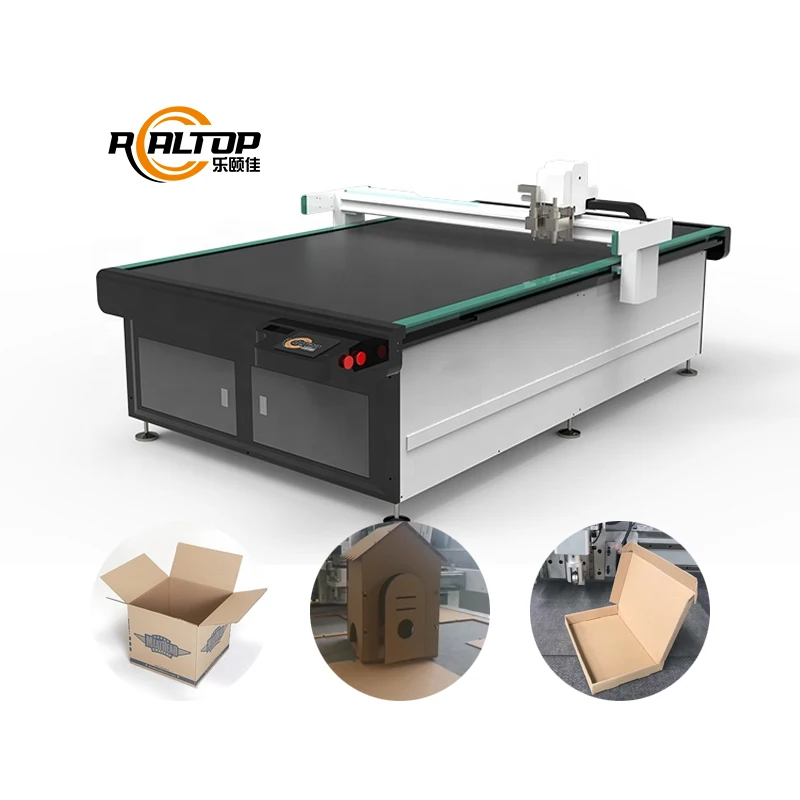
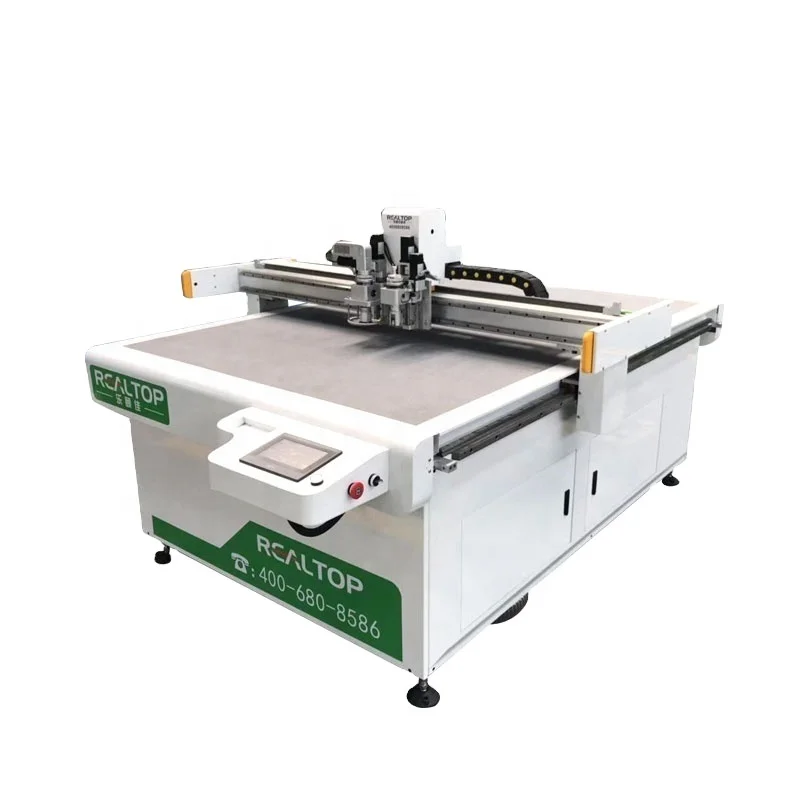
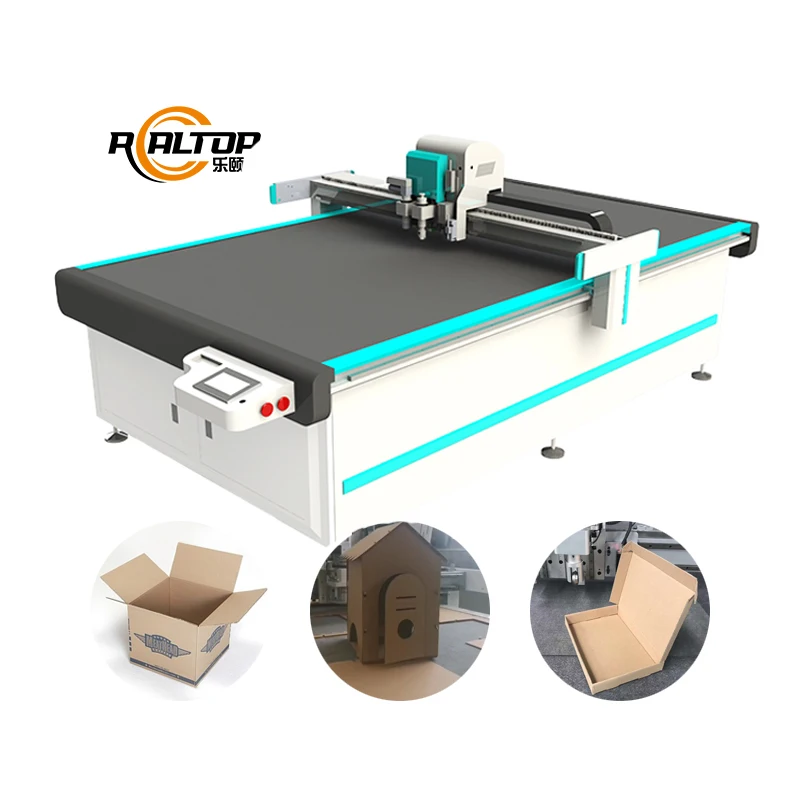
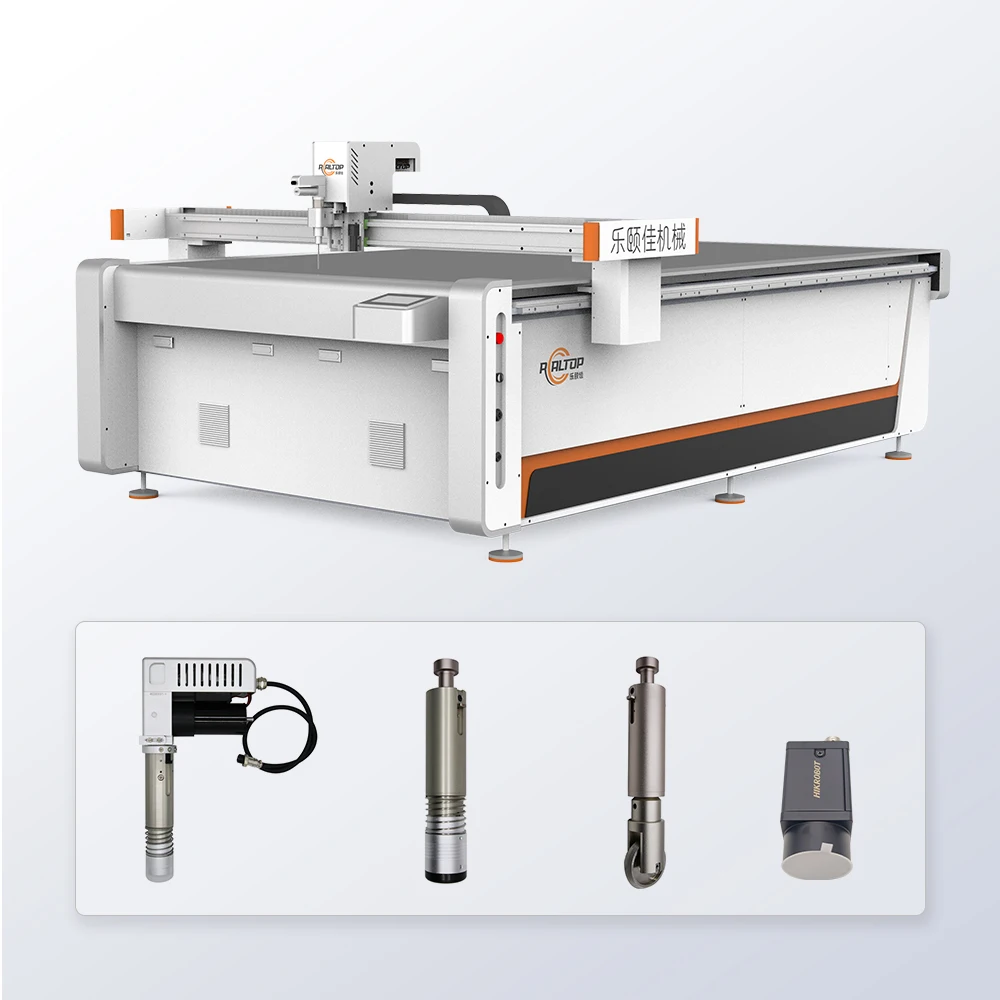
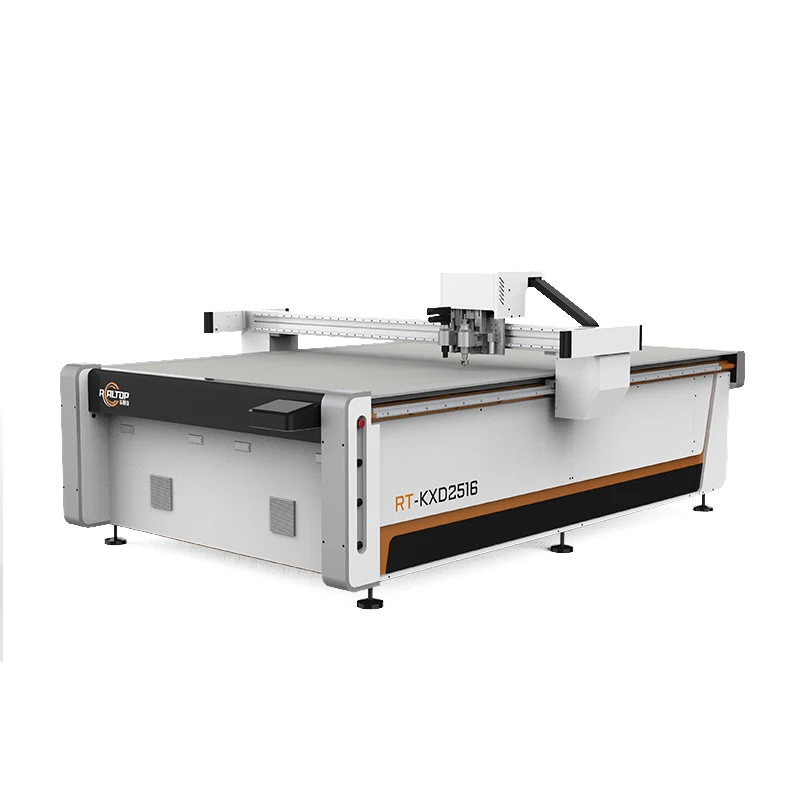
RT-D2516/RT-S2516 CNC Oscillating Knife Cutting Machine, 1600×2500mm working area, ≤100mm cutting thickness — configured with multi-functional tool heads for foam insert and composite material processing.
Built by a manufacturer with in-house design and production covering both knife and laser technologies, this platform features a thick-walled seamless steel frame with high-temperature tempering and CNC-machined finish for long-term dimensional stability. Magnesium-aluminum alloy vacuum table with PVDF coating ensures uniform suction across flexible and composite sheets.
Delta servo motor and Taiwan Hiwin guide rails for ≤0.1mm repeated accuracy
CCD camera and panoramic visual positioning options available for printed contour work
Voltage, control language and software format confirmed before shipment
Sample cutting on buyer’s own material provided prior to order commitment
OEM Manufacturing Capability — our in-house design team and core factory control every stage from frame welding to final assembly, ensuring build quality traceability for distributors evaluating long-term supply partnerships
Technical Specifications
Parameter
Value
Model
RT-D2516/RT-S2516
Product Type
CNC Oscillating Knife Cutting Machine
Working Area
1600×2500 mm
Machine Dimensions
3450×2300×1250 mm
Rated Power
9 kW
Vacuum Pump Power
7.5 kW
Translational Velocity
800–2000 mm/s
Cutting Speed
200–800 mm/s (varies by material density and thickness)
Matching the tool head, vacuum zoning and cutting method to your actual material stack is the only way to avoid a machine that cannot perform on arrival.
I once shipped a unit to a Middle East converter who had specified based on table size alone. His team was cutting high-density cross-linked polyethylene foam inserts for instrument cases. We had sampled on standard EVA during the pre-sale test — a softer, more forgiving material. On site, the blade chattered through the denser foam, shredded a dozen blades in the first shift and left ragged edges that failed the customer’s visual inspection. The production line stopped until we air-shipped a high-power vibrating knife head and re-tuned the vacuum zoning. Since then, I insist on receiving the buyer’s actual material sample before finalizing any tooling configuration on a CNC oscillating knife cutting machine manufacturer order [NEED_CITE: material density effects on oscillating knife cutting performance].
Frame Construction and Thermal Treatment
The RT-D2516/RT-S2516 platform is built on a thick-walled seamless steel welded frame that undergoes high-temperature tempering treatment followed by CNC machining center finishing. This sequence relieves internal welding stresses and produces a reference surface that resists dimensional drift under continuous vibration loads. For a CNC oscillating knife cutting machine manufacturer, frame rigidity directly governs the repeatability of cut paths over multi-shift production runs.
Motion Component Sourcing and Assembly Discipline
Linear motion is handled by Taiwan Hiwin guide rails paired with Delta servo motors (Panasonic available as an alternative) driving synchronous belts and ball screws. The guide rail mounting surfaces are machined flat after tempering, which prevents the alignment errors that appear when rails are bolted to untreated weldments. Distributors inspecting our factory can verify rail parallelism with a dial indicator on the assembly bench before the table skin is fitted [NEED_CITE: linear guide alignment standards for CNC cutting equipment].
Reading the Specification Sheet for Production Reality
Cutting speed is listed at 200–800 mm/s, but the real variable is the material. A 3 mm PVC soft glass sheet allows the upper end of that range, while a 50 mm cross-linked polyethylene foam block demands slow passes with a high-amplitude oscillating stroke. The ≤100 mm thickness rating applies to low-density foams; denser composites may require multiple passes or a pneumatic knife head instead. The 7.5 kW vacuum pump must be evaluated against your part geometry — small gasket profiles need tightly zoned vacuum chambers to prevent lift, while large-format foam inserts draw sufficient hold-down from broader zones. Repeated accuracy of ≤0.1 mm ensures that nested parts cut from the same sheet stay within tolerance for downstream assembly, but only if the vacuum table surface flatness is maintained. The magnesium-aluminum alloy table with PVDF powder spraying and hard oxidation treatment resists the scoring and resin buildup that degrades suction over time.
The Cost of Skipping the Material Sample
When a converter orders without providing a material sample, the tool head is configured on assumption. A drag knife meant for thin vinyl will stall on 20 mm foam, producing crushed edges and delaminated layers. Vacuum zones sized for full-sheet cutting leave small nesting parts floating mid-cut, causing dimensional errors that accumulate across a production batch. These failures appear on the first day of operation, not during the acceptance test [NEED_CITE: vacuum hold-down requirements for nested small-part cutting].
Why Source From This Production Floor
Our design team engineers both knife and laser cutting platforms in-house, so we recommend the cutting method that suits the material rather than forcing every job onto one technology. Tool head and vacuum table configurations are specified per material type and production volume, documented in the configuration list before production begins. Voltage, plug type and control interface language are confirmed against the destination market’s electrical standards during the order stage, not discovered at the port. Every unit is sample-cut on the buyer’s own material, and the cutting report ships with the documentation package. Factory test records capture actual positional accuracy readings, not catalog values.
Documentation & Verification
Machine specification sheet with tool head and vacuum zone layout matched to your material stack
Electrical schematic confirming 380V ±10% wiring and circuit protection for your facility
Sample cutting report on your actual foam, composite or leather with measured edge quality
Factory test record documenting repeated positioning accuracy on the assembled unit
Spare parts list itemizing blades, belts and vacuum seals with part numbers
Packing photographs showing crate bracing and moisture protection before container loading
Installation, Commissioning & Support
Foundation must support 3450×2300 mm footprint with level tolerance for the vacuum table frame
Dedicated 380V circuit with capacity exceeding 9 kW rated draw plus vacuum pump startup surge
Table skin and gantry ship partially assembled; final alignment verified on site with dial indicator
First-run parameter tuning includes oscillation frequency, vacuum zone mapping and feed rate calibration for your material
Operator training covers tool head changeover between oscillating knife, creasing wheel and drag knife configurations
Spare blade inventory and vacuum seal replacement schedule provided per your daily cutting volume
Before You Send an Inquiry
To move past the catalog stage, we need your actual material samples with thickness and density data, your target daily output by part type, and the electrical standards at your destination facility. If your workflow depends on printed contour cutting, share a sample print so we can verify CCD or panoramic camera recognition accuracy. Confirm whether your existing nesting software exports in HP-GL compatible format or if you need a conversion pathway validated before the machine ships.
Frequently Asked Questions
Q: How are frame and motion components selected and controlled during manufacturing?
A: The frame uses thick-walled seamless steel, welded and high-temperature tempered before CNC machining center finishing. Taiwan Hiwin guide rails are mounted on machined surfaces, and Delta or optional Panasonic servo motors are bench-tested for positional accuracy before the table is fitted. Each assembly stage is documented in the factory test record.
Q: Can voltage, plug type and control interface language be customized?
A: Yes. The standard configuration is 380V ±10%, but we confirm the destination market’s voltage and frequency standards during the order stage. Plug type, circuit breaker rating and control panel language are documented in the electrical schematic before production. This prevents rewiring costs and commissioning delays at your facility.
Q: What OEM configuration options are available for distributors?
A: Tool head selection — oscillating, pneumatic, drag knife, creasing wheel, punching — is matched to your target customer base. Vacuum table zoning can be configured for small-part nesting or full-sheet hold-down. Visual positioning options include small CCD mark point, panoramic camera or projection systems. All configurations are listed in the specification sheet before production.
Q: How is software and file format compatibility confirmed?
A: The instruction system accepts HP-GL compatible formats. If your nesting or CAD workflow uses a different output, we run a file conversion test on your sample design before the order is finalized. The software license and file format compatibility note ship with the documentation package so your operators know which formats are validated.
Q: What documentation arrives with the machine and is CE available?
A: The shipment includes the machine specification sheet, electrical schematic, factory test record, operation and maintenance manual, spare parts list, packing photographs and the software compatibility note. CE declaration is available for markets requiring it and is referenced in the documentation package [NEED_CITE: CE machinery directive scope for industrial cutting equipment].






 Courier delivery
 DHL Courier delivery
 Warranty 1 year
 Free 30-Day returns


商品评价
Clear filtersThere are no reviews yet.